Mastering the Unix Kernel
A Comprehensive Guide to Advanced Linux and Unix Systems Programming
Many programmers believe that mastering Linux and Unix systems programming is an insurmountable challenge reserved only for the most elite developers.
284 pages14 chaptersAug 14, 2025Operating SystemsCreated by Rusty
About this book
This common misconception often leads to missed opportunities and underutilized system capabilities. "Mastering the Unix Kernel: A Comprehensive Guide to Advanced Linux and Unix Systems Programming" shatters this myth, providing you with a clear, accessible path to becoming proficient in advanced systems programming techniques. This book is tailored specifically for systems administrators looking to elevate their skills and create more powerful, efficient applications. You'll dive deep into the intricacies of the Unix kernel, exploring everything from fundamental concepts to cutting-edge techniques. With a focus on practical application, you'll learn how to harness the full potential of Linux and Unix systems, mastering topics such as concurrency, signal processing, interprocess communication, and system optimization. By the time you finish this guide, you'll have the confidence and expertise to tackle complex programming challenges, optimize system performance, and develop robust, scalable applications that fully leverage the power of Unix-based systems.
Table of contents
- IntroductionOverview of Unix and Linux Systems, Understanding the Kernel, Programming Fundamentals for Systems Development, How to Use This BookRead below
- Chapter 1: Unix Architecture and System CallsKernel Structure and Components, The System Call Interface, libc and System Call Wrappers, Creating Custom System Calls
- Chapter 2: Process Management and SchedulingProcess Creation and Termination, Process States and Transitions, Scheduling Algorithms and Priorities, Process Forking and exec Family
- Chapter 3: Memory Management TechniquesVirtual Memory and Address Spaces, Dynamic Memory Allocation, Using mmap for File and Memory Mapping, Memory Optimization Strategies
- Chapter 4: File I/O and File System OperationsFile Descriptors and Basic I/O, Advanced I/O Operations, File Locking Mechanisms, Directory and File System Operations
- Chapter 5: Signals and Asynchronous EventsSignal Concepts and Types, Implementing Signal Handlers, Real-time Signals, Asynchronous I/O
- Chapter 6: Interprocess CommunicationPipes and Named Pipes (FIFOs), Shared Memory, Message Queues, System V IPC vs POSIX IPC
- Chapter 7: Concurrency and SynchronizationIntroduction to POSIX Threads, Mutexes and Semaphores, Condition Variables, Implementing Concurrent Algorithms
- Chapter 8: Socket Programming and Network ProtocolsSocket Basics and Types, TCP Socket Programming, UDP Socket Programming, Implementing Network Protocols
- Chapter 9: Daemon Processes and ServicesCreating Daemon Processes, Service Management and Initialization, Logging Techniques for Daemons, Security Considerations for Daemons
- Chapter 10: I/O Multiplexing and Event-driven Programmingselect() and poll(), epoll and kqueue, Implementing Event Loops, Non-blocking I/O Techniques
- Chapter 11: Kernel Modules and Device DriversKernel Module Basics, Writing Kernel Modules, Introduction to Device Drivers, Character Device Drivers
- Chapter 12: Debugging and Optimization TechniquesDebugging Tools and Techniques, Performance Profiling, System Optimization Strategies, Advanced Error Handling
- Chapter 13: Security Considerations in Unix ProgrammingSecure Coding Practices, Access Control and Privileges, Cryptography Basics, Security Auditing and Penetration Testing
- Chapter 14: Advanced Shell ScriptingShell Programming Concepts, Debugging Shell Scripts, Performance Tuning for Shell Scripts, System Automation with Shell Scripts
- Conclusion
- AppendixPOSIX Standards and Compliance, Common System Calls Reference
- Glossary
Introduction
Welcome to "Mastering the Unix Kernel: A Comprehensive Guide to Advanced Linux and Unix Systems Programming." This book is designed to be your companion on the journey to becoming a proficient systems programmer, capable of harnessing the full power of Unix-based operating systems. Whether you're looking to enhance your skills as a systems administrator or aiming to develop more efficient and robust applications, this guide will provide you with the knowledge and tools necessary to excel in the world of Unix and Linux systems programming.
The Unix operating system, with its various derivatives including Linux, has been a cornerstone of computing for decades. Its influence extends far beyond traditional server environments, powering everything from embedded devices to supercomputers. As a systems administrator with a background in Electrical Engineering, you are already familiar with the basics of these systems. However, to truly master Unix and Linux, one must delve deep into the kernel – the core of the operating system that manages hardware resources and provides essential services to user-space applications.
Throughout this book, you will explore advanced concepts and techniques that will elevate your understanding and capabilities in systems programming. You'll learn how to interact directly with the kernel, manage system resources efficiently, and create powerful applications that take full advantage of the Unix architecture. By the end of this journey, you'll have the skills to tackle complex programming challenges, optimize system performance, and develop robust, scalable solutions that fully leverage the power of Unix-based systems.
This introduction will lay the groundwork for your exploration of advanced Unix and Linux systems programming. We'll begin with an overview of Unix and Linux systems, delve into the basics of kernel architecture, discuss fundamental programming concepts essential for systems development, and outline how to make the most of this book. Let's embark on this exciting journey into the heart of Unix systems programming.
Overview of Unix and Linux Systems
Unix, first developed in the late 1960s at Bell Labs, has evolved into a family of powerful, multi-user, multi-tasking operating systems. Its philosophy of simplicity, modularity, and the use of plain text for data storage has influenced countless other operating systems and software designs. Linux, created by Linus Torvalds in 1991, is a Unix-like operating system that has become one of the most widely used and influential implementations of Unix principles.
At the core of both Unix and Linux is the kernel, which serves as the bridge between hardware and software. The kernel manages system resources, provides essential services to user-space applications, and enforces security policies. It's responsible for process management, memory allocation, file system operations, device drivers, and network stack implementation, among other critical functions.
One of the key strengths of Unix and Linux systems is their modular design. This modularity is evident in the separation between kernel space and user space. Kernel space is where the core operating system functions reside, while user space is where applications run. This separation enhances security and stability, as user applications cannot directly interfere with critical system operations.
Another fundamental concept in Unix systems is the "everything is a file" philosophy. This abstraction simplifies interaction with various system resources, as devices, processes, and even network sockets can be manipulated using file I/O operations. This consistency in interface design is one of the reasons Unix and Linux are favored by developers and system administrators.
Unix and Linux systems also excel in their support for multitasking and multiuser environments. The preemptive multitasking model allows multiple processes to run concurrently, with the kernel managing task switching to ensure fair resource allocation. The multiuser design, coupled with a robust permissions system, enables secure sharing of system resources among multiple users.
Networking capabilities are deeply integrated into Unix and Linux systems. The Berkeley sockets API, which originated in BSD Unix, has become the standard for network programming across many operating systems. This powerful and flexible API allows for the development of complex networked applications and has played a crucial role in the growth of the internet.
The shell, another key component of Unix and Linux systems, provides a powerful command-line interface for system interaction and automation. Shells like Bash (Bourne Again Shell) offer scripting capabilities that allow system administrators and developers to automate complex tasks and create sophisticated system management tools.
Unix and Linux systems are known for their stability, scalability, and performance. They can run on a wide range of hardware, from embedded devices to supercomputers, and can handle workloads ranging from simple personal computing tasks to managing large-scale data centers. This versatility, combined with the open-source nature of many Unix-like systems, particularly Linux, has led to their widespread adoption in various domains, including web servers, cloud computing, scientific computing, and mobile devices (Android, which is based on the Linux kernel).
As a systems programmer, understanding the architecture and principles of Unix and Linux is crucial. It allows you to write more efficient code, leverage system resources effectively, and create applications that integrate seamlessly with the operating system. In the following chapters, we'll explore how to interact with and extend the capabilities of the Unix kernel, enabling you to create powerful, efficient, and robust systems and applications.
In the next section, we'll dive deeper into the kernel itself, examining its structure and the critical role it plays in Unix and Linux systems. This understanding will form the foundation for the advanced programming techniques we'll explore throughout the book.
Understanding the Kernel
The kernel is the heart of any Unix or Linux system, serving as the core software component that manages hardware resources and provides essential services to user-space applications. It acts as an intermediary between hardware and software, abstracting the complexities of hardware interactions and providing a consistent interface for applications. Understanding the kernel's structure and functions is crucial for advanced systems programming, as it allows you to leverage the full power of the operating system and write more efficient, robust code.
At its most basic level, the kernel is responsible for four main tasks: process management, memory management, device drivers, and system calls and security. Let's explore each of these areas in more detail:
1. Process Management: The kernel is responsible for creating, scheduling, and terminating processes. It implements a sophisticated scheduling algorithm to ensure fair allocation of CPU time among running processes. The kernel maintains process control blocks (PCBs) that store information about each process, including its state, priority, and memory usage. Understanding how the kernel manages processes is crucial for developing efficient multi-threaded applications and for implementing advanced features like inter-process communication.
2. Memory Management: The kernel manages the system's physical memory and implements virtual memory, which provides each process with its own address space. This includes handling memory allocation and deallocation, managing the page table, and implementing swapping when physical memory is exhausted. The kernel's memory management subsystem is critical for understanding concepts like memory-mapped files, shared memory, and memory protection.
3. Device Drivers: The kernel includes drivers for various hardware devices, providing a uniform interface for interacting with diverse hardware. Device drivers abstract the details of hardware operation, allowing user-space applications to interact with devices through standard system calls. As a systems programmer, you may need to develop or modify device drivers to support new hardware or to optimize performance for specific devices.
4. System Calls and Security: The kernel provides a set of system calls that allow user-space applications to request kernel services. These system calls form the primary interface between user space and kernel space. The kernel is also responsible for enforcing security policies, managing user permissions, and protecting system resources from unauthorized access. Understanding how system calls work and how to use them effectively is fundamental to advanced Unix programming.
The Unix kernel is typically monolithic, meaning that all operating system services run in kernel space. However, modern Unix-like systems, including Linux, often employ a modular design that allows certain functions to be loaded and unloaded as kernel modules. This design provides flexibility and allows for easier maintenance and upgrades.
One of the key concepts in Unix kernel design is the separation between kernel space and user space. Kernel space is a privileged mode where the kernel code executes with full access to hardware resources. User space, on the other hand, is where normal applications run with limited privileges. This separation enhances system security and stability by preventing user applications from directly interfering with critical system operations.
The kernel implements various subsystems to manage different aspects of the operating system. These include:
- The Process Scheduler: Responsible for determining which process runs at any given time.
- The Memory Management Unit (MMU): Handles virtual memory operations and memory protection.
- The Virtual File System (VFS): Provides a uniform interface for different file systems.
- The Network Stack: Implements networking protocols and manages network interfaces.
- The Inter-Process Communication (IPC) Mechanisms: Facilitates communication between processes.
Understanding these subsystems and how they interact is crucial for advanced systems programming. It allows you to make informed decisions about how to structure your applications, how to optimize resource usage, and how to implement complex features that require close interaction with the operating system.
The kernel also plays a crucial role in system initialization. During the boot process, the kernel is loaded into memory, initializes hardware devices, sets up system data structures, and starts the init process (or systemd in many modern Linux distributions), which in turn starts other system services.
As you delve deeper into Unix and Linux systems programming, you'll find that many advanced techniques involve direct interaction with the kernel or leveraging kernel features. For example, implementing high-performance I/O often involves understanding and using kernel mechanisms like epoll or kqueue. Similarly, developing secure applications requires a thorough understanding of how the kernel enforces security policies and manages user permissions.
In the subsequent chapters of this book, we'll explore various aspects of kernel functionality in detail, including process and thread management, memory allocation techniques, file system operations, and network programming. We'll also look at how to develop kernel modules and device drivers, allowing you to extend the kernel's functionality for specific needs.
By gaining a deep understanding of the kernel, you'll be better equipped to write efficient, robust, and secure applications that fully leverage the power of Unix and Linux systems. You'll be able to make informed decisions about system design, optimize performance, and implement advanced features that require close interaction with the operating system.
Programming Fundamentals for Systems Development
Systems programming in Unix and Linux environments requires a solid foundation in several key programming concepts and practices. While you likely have experience with many of these fundamentals given your background in Electrical Engineering and systems administration, it's worth revisiting these concepts in the context of advanced systems development. This section will outline the essential programming fundamentals that form the backbone of Unix and Linux systems programming.
1. C Programming Language: C is the language of choice for Unix and Linux systems programming. Developed alongside Unix, C provides low-level access to memory and hardware, making it ideal for systems programming. Key C concepts crucial for systems programming include:
- Pointers and memory management
- Structures and unions
- Bit manipulation
- Function pointers
- Preprocessor directives
Understanding these concepts is essential for effective systems programming, as they allow for efficient memory usage, complex data structures, and flexible program design.
2. POSIX Standard: The Portable Operating System Interface (POSIX) is a set of standard operating system interfaces based on Unix. Familiarity with POSIX is crucial for writing portable code that can run on various Unix-like systems. Key POSIX concepts include:
- Process creation and management (fork, exec, wait)
- File and directory operations
- Signals and signal handling
- Interprocess communication (pipes, message queues, shared memory)
- Thread management (POSIX threads)
3. System Calls and Library Functions: Understanding the difference between system calls and library functions is crucial. System calls are direct requests to the kernel for service, while library functions may or may not involve system calls. Key points include:
- Common system calls (open, read, write, close, fork, exec)
- Standard C library functions
- Error handling (errno, perror)
- System call wrappers in the C library
4. Process and Thread Management: Effective management of processes and threads is fundamental to systems programming. This includes:
- Process creation, termination, and synchronization
- Thread creation and synchronization
- Concurrency issues (race conditions, deadlocks)
- Scheduling and priorities
5. Memory Management: Understanding how Unix systems manage memory is crucial for writing efficient and secure code. Key concepts include:
- Virtual memory and address spaces
- Dynamic memory allocation (malloc, free)
- Memory mapping (mmap)
- Memory protection and segmentation faults
6. File I/O and File System Operations: File operations are central to Unix philosophy. Important concepts include:
- File descriptors and their management
- Regular files, directories, and special files
- File permissions and ownership
- Advanced I/O operations (select, poll, epoll)
7. Networking Fundamentals: Unix systems excel in networking capabilities. Key networking concepts include:
- Socket programming (TCP and UDP)
- Network protocols and the OSI model
- Byte ordering and data serialization
- Non-blocking I/O and event-driven programming
8. Security Concepts: Security is paramount in systems programming. Essential security concepts include:
- User and group permissions
- Secure coding practices
- Buffer overflow prevention
- Cryptography basics
9. Debugging and Profiling: Effective debugging and performance analysis are crucial skills. Key areas include:
- Using debuggers like gdb
- Core dump analysis
- Profiling tools (gprof, Valgrind)
- System monitoring tools (top, ps, netstat)
10. Build Systems and Version Control: Understanding build processes and version control is important for managing complex projects:
- Make and Makefiles
- Autotools (autoconf, automake)
- Version control systems (Git)
These fundamentals form the foundation upon which advanced Unix and Linux systems programming is built. Throughout this book, we'll delve deeper into each of these areas, exploring how they apply to real-world systems programming challenges. We'll see how these concepts interrelate and how they can be leveraged to create efficient, robust, and secure systems and applications.
As we progress through the chapters, you'll have the opportunity to apply these fundamentals in increasingly complex scenarios. You'll learn how to combine these concepts to solve real-world problems, optimize system performance, and create sophisticated applications that fully leverage the power of Unix and Linux systems.
Remember, mastering systems programming is an ongoing journey. The landscape of Unix and Linux systems is constantly evolving, with new features and optimizations being introduced regularly. By building a strong foundation in these fundamentals and cultivating a mindset of continuous learning, you'll be well-equipped to tackle current and future challenges in systems programming.
How to Use This Book
"Mastering the Unix Kernel: A Comprehensive Guide to Advanced Linux and Unix Systems Programming" is designed to be a thorough and practical resource for systems administrators and developers looking to deepen their understanding of Unix and Linux systems. To get the most out of this book, it's important to approach it with a strategy that aligns with your learning style and professional goals. Here's a guide on how to effectively use this book to enhance your skills in systems programming.
1. Sequential Reading: While it's tempting to jump directly to topics of immediate interest, the book is structured to build your knowledge progressively. Each chapter builds upon concepts introduced in previous chapters. Starting from the beginning and working your way through sequentially will provide you with a comprehensive understanding of Unix systems programming.
2. Hands-On Practice: Throughout the book, you'll find code examples and practical exercises. It's crucial to not just read these examples, but to actually implement them on your own system. Hands-on experience is invaluable in systems programming. Set up a development environment (preferably a Unix-like system such as Linux) where you can experiment with the concepts and code presented in the book.
3. Chapter Projects: At the end of each chapter, you'll find a project that integrates the concepts covered. These projects are designed to challenge you and provide real-world context for the material. Completing these projects will solidify your understanding and give you practical experience in applying the concepts.
4. Code Repository: All the code examples and project starter files mentioned in this book are available in an online repository. Clone this repository to your local machine so you can easily access and work with the code as you progress through the book.
5. Supplementary Reading: While this book aims to be comprehensive, the field of systems programming is vast. Throughout the text, you'll find references to additional resources and documentation. Take the time to explore these references to deepen your understanding of specific topics.
6. Active Learning: As you read, make notes, draw diagrams, and try to explain concepts in your own words. This active engagement with the material will help reinforce your learning and identify areas where you might need more clarification.
7. Incremental Application: Try to apply what you're learning to your current work or personal projects. Even if you're not working directly on systems programming tasks, understanding these concepts can often lead to insights and improvements in other areas of software development and system administration.
8. Community Engagement: Join online forums or local user groups focused on Unix/Linux systems programming. Engaging with the community can provide valuable insights, help you stay updated with the latest developments, and give you opportunities to discuss complex concepts with peers.
9. Revisiting Complex Topics: Some concepts in systems programming can be challenging to grasp on the first encounter. Don't hesitate to revisit chapters or sections that you find particularly complex. Often, these concepts become clearer as you gain more context from later chapters.
10. Exploring the Kernel: While this book provides a deep dive into kernel concepts, nothing beats exploring the actual kernel source code. The book will guide you on how to read and understand kernel source code, which is an invaluable skill for advanced systems programmers.
11. Patience and Persistence: Systems programming is a complex field that requires time and practice to master. Be patient with yourself as you work through challenging concepts, and remember that even experienced systems programmers continually learn and refine their skills.
12. Applying Security Practices: As you work through the examples and projects, always keep security in mind. Practice writing secure code from the start, as this is a critical skill in systems programming.
13. Performance Considerations: Throughout the book, pay special attention to discussions about performance. Understanding how to write efficient code is crucial in systems programming, where resources are often constrained.
14. Debugging Skills: Take time to master the debugging techniques presented in the book. The ability to effectively troubleshoot issues is one of the most valuable skills you can develop as a systems programmer.
15. Exploring Further: Use this book as a springboard for further exploration. Each chapter concludes with suggestions for additional areas of study related to the topic. Following these paths can lead you to specialized areas of systems programming that align with your interests and career goals.
Remember, the goal of this book is not just to impart knowledge, but to help you develop the skills and mindset of an advanced systems programmer. By actively engaging with the material, practicing consistently, and applying what you learn, you'll be well on your way to mastering Unix and Linux systems programming.
As you progress through the book, you'll find yourself gaining a deeper understanding of how Unix and Linux systems work at a fundamental level. This knowledge will empower you to write more efficient code, design more robust systems, and solve complex problems in system administration and software development.
Enjoy your journey into the fascinating world of Unix and Linux systems programming. With dedication and practice, you'll soon be able to harness the full power of these versatile and powerful operating systems in your professional work.
This is the end of the free sample. The full book has 14 chapters.
Want this book written for you?
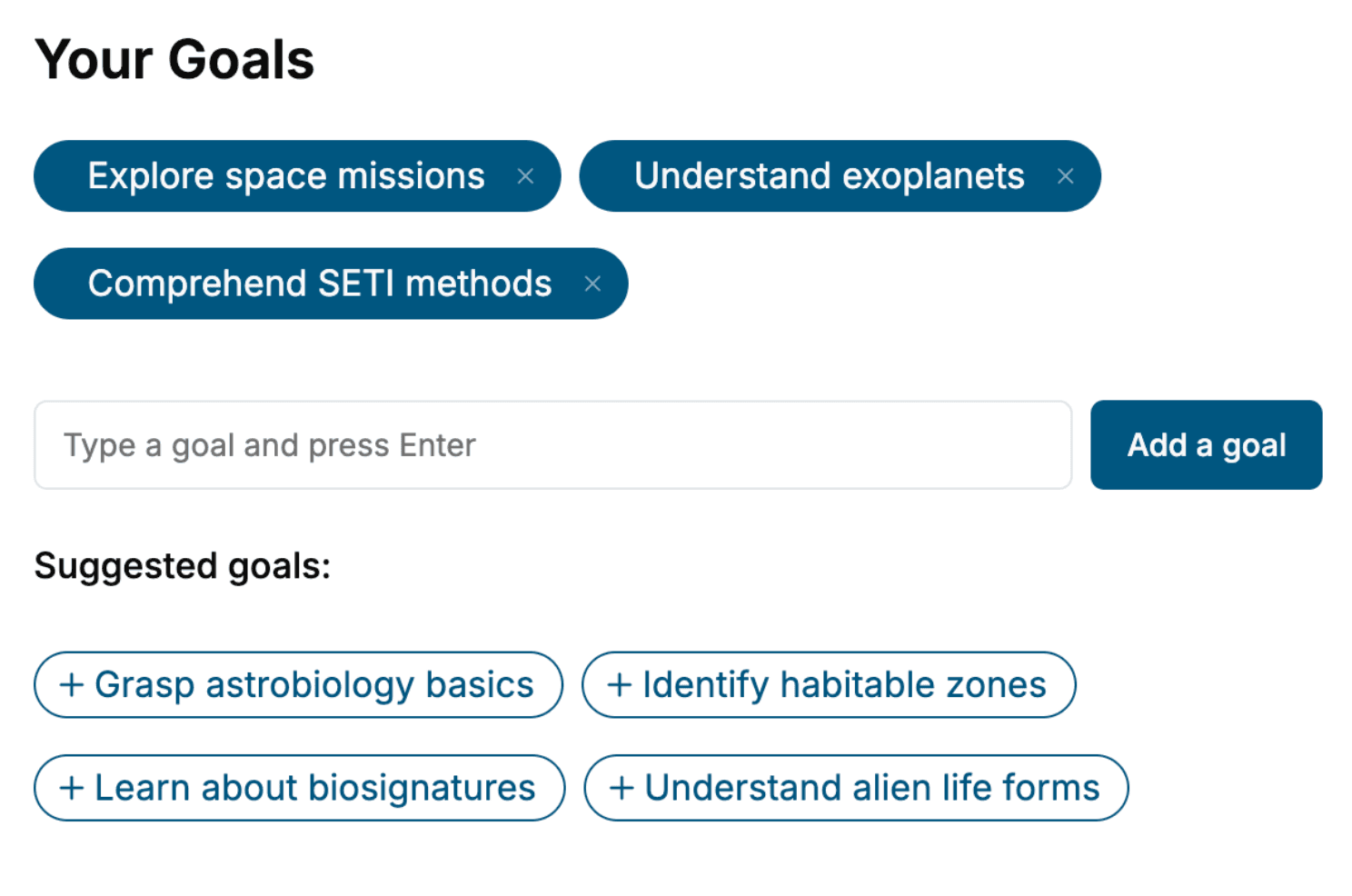
Tell us your goals and background, and get your own version of this book, tailored by AI to you.


Benefits of AI-tailored books
- Read one book, not ten:
- all the Operating Systems knowledge you need, gathered into a single book.
- Save days of learning:
- tell us your goals, choose your topics, and the whole book is built around them.
- Learn effortlessly:
- Operating Systems book written for your specific background and expertise.
- Understand at a glance:
- includes charts, tables, timelines, checklists, decision trees, and more.
- Stay current:
- written the day you order it, not years ago.
- Trust what you read:
- every book is checked for accuracy, with real research when your subject needs it.
Create your unique book in 3 steps
- 1. Select your focus
Select the focus of your Operating Systems book and share your background
- 2. Personalize your book
Specify your goals and choose sub-topics to include
- 3. Get your tailored book
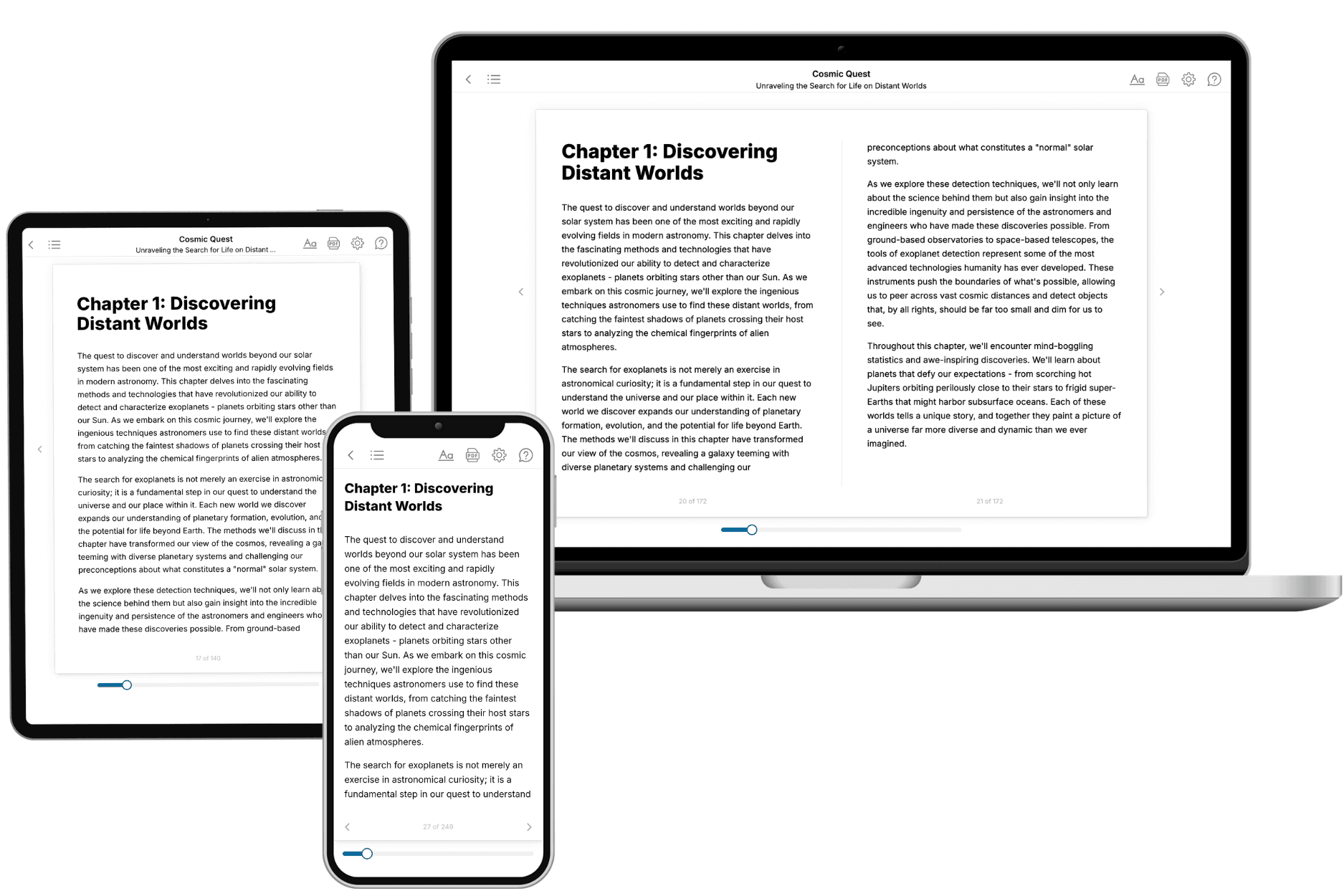
Your book is ready in 10 minutes. Read it online, download as EPUB or PDF, or send to Kindle.

Frequently asked questions
- What is TailoredRead?
TailoredRead creates complete, full-length nonfiction ebooks, written specifically for you. Tell us what you want to learn and why, and TailoredRead writes you a complete ebook on it, with charts, tables, and diagrams throughout. Read it online, on Kindle, or on any e-reader, or download it as a PDF or EPUB. Every book is written fresh the day you order it.
- How is the book tailored to me?
Before anything is written, you answer a few short questions about your goals, your background, and the topics you care about. Your book is then planned around your answers: written at your level, focused on your goals, and covering the topics you chose, instead of the one-size-fits-all book a store sells everyone.
- Will it read like generic AI content?
No. Your book isn't a chat transcript: it's planned chapter by chapter before a single word is written, told in a clear book voice, and explains ideas visually with charts, tables, and diagrams. After writing, every book goes through an editorial pass that polishes chapters so the book reads consistent from start to finish. Judge for yourself: browse thousands of sample books on our Explore Books page.
- How accurate is the content?
Our AI first checks whether your subject needs live research. Niche and fast-moving subjects are researched before writing, and the book plan and chapters are grounded in what it finds. After writing, every book goes through a quality pass that checks its facts and consistency, and researched books list their sources in a Notes section at the back.
- How long is the book?
You choose the length: Comprehensive (250-300 pages), Detailed (150-200 pages), Essential (70-100 pages), or Short (30-50 pages).
- Does the book include visuals?
Yes. Every book includes charts, tables, and diagrams: timelines, checklists, step-by-step guides, decision trees, comparison tables, matrices, and bar charts. A typical book includes dozens of these visual elements.
- Can I read it on Kindle? What formats can I download?
Yes. Every book can be read in our online reader or downloaded as a PDF or EPUB. The EPUB can be opened with Kindle, Apple Books, Kobo, and any e-reader. The Commercial and Author licenses also include an editable Word (DOCX) and Markdown download.
- How much does it cost?
About the price of a regular ebook. The exact price depends on your book's length and complexity, from $2 for the shortest books to $35 for the most comprehensive, and it's shown when you review your book, before you commit to anything. Each book is a one-time purchase, yours to keep, no subscription. Licenses that let you share, teach, or publish your book range from $35.99 to $49.99.
- Can I preview the book before purchasing?
Before you pay, you'll see what your book will cover: the title, a detailed description, the estimated length, and the complete chapter-by-chapter table of contents, so you know what you're getting before you decide. The full text itself is written after you purchase.
- How long does it take to create a book?
About 10 minutes. You can start reading the opening chapters while the rest is still being written.