Mastering Zend Framework
Build Scalable, Professional Web Applications with Modern PHP Architecture
Imagine building web applications that scale effortlessly, maintain clean code across thousands of lines, and integrate seamlessly with enterprise systems.
222 pages12 chaptersMar 15, 2026PHP
About this book
This comprehensive guide takes you from intermediate PHP knowledge to mastery of Zend Framework, one of the most powerful and flexible frameworks in the PHP ecosystem. You'll discover how to architect applications using proven MVC patterns, implement robust security measures, and leverage Zend's extensive component library to solve real-world development challenges. Through practical examples and detailed explanations, you'll learn to configure complex applications, manage databases efficiently, validate user input securely, and deploy with confidence. Whether you're building APIs, content management systems, or enterprise applications, this book equips you with the knowledge and techniques to write professional-grade code that other developers will admire and maintain easily.
Table of contents
- IntroductionWhy Zend Framework Matters in Modern Development, What You'll Learn in This Book, How to Use This Book Effectively, Prerequisites and SetupRead below
- Chapter 1: Zend Framework FundamentalsUnderstanding the Framework Architecture, The MVC Pattern Explained, Exploring the Component Library
- Chapter 2: Setting Up Your Development EnvironmentInstallation and Initial Setup, Organizing Your Project Structure, Configuration Basics and Best Practices
- Chapter 3: Bootstrapping and Application FlowUnderstanding the Bootstrap Process, Initializing Your Application, The Request-Response Cycle
- Chapter 4: Routing and Request HandlingRouting Fundamentals and URL Mapping, Advanced Routing Techniques, Working with Request Objects
- Chapter 5: Controllers and ActionsBuilding Effective Controllers, Implementing Action Methods, Leveraging Controller Plugins
- Chapter 6: Views and Template ManagementView Fundamentals and Rendering, Using Template Helpers Effectively, Managing Layouts and Nested Views
- Chapter 7: Database Integration and ORMDatabase Abstraction Layer, Table Gateway and Data Mapper Patterns, Building and Executing Queries
- Chapter 8: Forms, Validation, and FilteringCreating and Managing Forms, Implementing Validation Rules, Filtering and Sanitizing User Input
- Chapter 9: Authentication and AuthorizationBuilding Authentication Systems, Implementing Access Control Lists, Managing Sessions Securely
- Chapter 10: Testing and Quality AssuranceUnit Testing Your Components, Integration Testing Strategies, Debugging Tools and Techniques
- Chapter 11: Performance Optimization and CachingImplementing Caching Strategies, Profiling and Identifying Bottlenecks, Optimization Techniques and Best Practices
- Chapter 12: Deployment and Production ConsiderationsDeployment Strategies and Tools, Managing Environment Configurations, Production Best Practices and Monitoring
- ConclusionYour Mastery Journey Continues, Next Steps and Further Learning
Introduction
There is a moment every developer knows well. You are staring at a codebase that started clean and simple, and somewhere along the way it became a maze of tangled logic, duplicated functions, and fragile dependencies. Adding a new feature breaks something unrelated. Fixing a bug introduces two more. The application works, but maintaining it feels like defusing a bomb in the dark. If that experience sounds familiar, you are in exactly the right place.
Zend Framework was built to solve that problem at its root. Rather than patching over bad architecture with clever workarounds, it gives you a structured, component-based foundation that encourages clean separation of concerns from the very first line of code. It is one of the most mature and battle-tested frameworks in the PHP ecosystem, trusted by enterprises and development teams around the world to power applications that handle millions of requests every day. Understanding it deeply is not just a career skill. It is a shift in how you think about building software.
This book is a practical guide for intermediate PHP developers who want to move beyond the basics and build applications with real architectural discipline. Every chapter is grounded in real-world scenarios, concrete code examples, and the kind of decision-making context that separates a developer who uses a framework from one who truly masters it. By the time you reach the final chapter, you will not just know how Zend Framework works. You will understand why it works the way it does, and that understanding will make you a better developer regardless of what tools you use in the future.
Before diving into the technical content, this introduction covers four important areas. First, it explains why Zend Framework remains relevant and valuable in today's development landscape. Second, it gives you a clear map of what this book covers and what you will be able to build after reading it. Third, it offers practical guidance on how to get the most out of the material. Finally, it outlines the prerequisites and environment setup you need before writing your first line of framework code.
Why Zend Framework Matters in Modern Development
The PHP framework landscape is crowded. Laravel, Symfony, CodeIgniter, and dozens of others compete for developer attention. So why invest time in Zend Framework specifically? The answer lies in what Zend was designed to do from the beginning. Unlike frameworks that prioritize rapid prototyping or developer convenience above all else, Zend Framework was architected with enterprise-grade applications in mind. It emphasizes modularity, extensibility, and strict separation of concerns in ways that pay dividends as applications grow in complexity.
Zend Framework has a long and credible history. It was originally released by Zend Technologies in 2006 and has since evolved through multiple major versions, with the project eventually transitioning into the Laminas Project under the Linux Foundation.[1] This transition ensured community-driven governance and long-term support, making it a safe investment for teams building applications that need to last years, not months. The codebase reflects decades of real-world feedback from enterprise developers.
One of Zend's most distinctive strengths is its component-based architecture. Unlike monolithic frameworks that force you to adopt the entire stack, Zend allows you to use individual components independently. Need a robust form validation library without the full framework overhead? You can pull in just zend-inputfilter. Need a powerful database abstraction layer? Use zend-db on its own. This flexibility makes Zend Framework uniquely composable, and it means the skills you build here transfer directly to working with Laminas components in any PHP project.
Enterprise adoption is another strong signal of Zend's relevance. Companies in finance, healthcare, government, and e-commerce have relied on Zend-based applications for years. These are domains where security, auditability, and maintainability are not optional features. They are requirements. Zend's design philosophy aligns naturally with those demands, offering built-in tools for authentication, access control, input filtering, and configuration management that meet professional standards out of the box.
It is also worth addressing a common misconception directly. Some developers assume that because Laravel has dominated PHP mindshare in recent years, learning Zend Framework is somehow outdated. That view misses the point. Many large organizations run Zend-based systems that need skilled developers to maintain, extend, and modernize them. Beyond that, the architectural patterns Zend teaches, including MVC, service locators, dependency injection, and table gateway patterns, are universal. Mastering them in Zend makes you more capable in any framework, not less.
Finally, Zend Framework's documentation and community resources are extensive. The official documentation covers every component in depth, and the transition to Laminas brought renewed community investment in tutorials, migration guides, and package maintenance. You are not learning an abandoned technology. You are learning a mature, well-documented system with active support and a clear evolutionary path forward.
What You'll Learn in This Book
This book covers Zend Framework from the ground up in a structured, progressive sequence. Each chapter builds on the previous one, so by the end you will have a complete mental model of how a Zend application is constructed, from the initial bootstrap process all the way through to production deployment. Here is a clear picture of the journey ahead.
The first section of the book focuses on foundations. You will start with Zend Framework fundamentals, including the overall architecture, the MVC pattern, and the component library. From there, you will set up a proper development environment and learn how to organize a project structure that scales cleanly. These early chapters are not just setup instructions. They explain the reasoning behind each decision so you can adapt the patterns to your own projects confidently.
The middle section goes deep into the core mechanics of a Zend application. You will learn how the bootstrap process works and how the request-response cycle flows through the framework. You will master routing and URL mapping, including advanced techniques for building flexible, RESTful URL structures. Controllers, actions, views, and layouts each get dedicated coverage, with practical examples showing how they interact in real application scenarios.
The data layer gets thorough treatment as well. You will work with Zend's database abstraction layer, implement the Table Gateway and Data Mapper patterns, and build queries that are both powerful and safe from SQL injection. Form handling, validation, and input filtering follow, giving you the tools to accept user data securely and reliably. These are areas where many applications have critical vulnerabilities, and Zend's built-in tools address them systematically.
Security is woven throughout the book, but it gets dedicated focus in the chapter on authentication and authorization. You will build login systems, implement Access Control Lists (ACLs), and manage sessions in ways that protect user data and application integrity. The testing chapter then shows you how to write unit and integration tests for Zend components, so you can ship with confidence and catch regressions before they reach production.
The final section covers performance and deployment. You will learn caching strategies that dramatically reduce response times, profiling techniques to identify bottlenecks, and optimization approaches that keep your application fast under load. The deployment chapter covers dependency management, environment-specific configuration, and production best practices including monitoring and error handling. By the end, you will have a complete toolkit for building, testing, optimizing, and shipping professional Zend applications.
To make this concrete, here is a summary of the key skills you will have after finishing this book:
- Architect a Zend application using clean MVC separation and modular design
- Configure routing for both simple and complex URL structures
- Build controllers and views that are maintainable and testable
- Interact with databases safely using Zend's abstraction layer
- Validate and filter user input to prevent security vulnerabilities
- Implement authentication and role-based access control
- Write unit and integration tests for your application components
- Apply caching and optimization techniques for production performance
- Deploy applications with proper environment configuration and monitoring
These are not abstract skills. Every one of them maps directly to tasks you will encounter in professional PHP development, whether you are building a new application from scratch or working on an existing Zend codebase.
How to Use This Book Effectively
This book is designed to be read sequentially, especially if you are new to Zend Framework. The chapters follow a logical progression where each concept builds on what came before. Jumping ahead to the database chapter without understanding the MVC structure, for example, will leave gaps that make the later material harder to apply. That said, if you already have experience with specific areas, the chapters are self-contained enough to serve as reference material when you need to revisit a topic.
The most important habit you can develop while reading this book is writing code alongside the text. Reading about routing or form validation is useful, but the concepts only become truly yours when you implement them yourself. Every chapter includes code examples that you should type out, run, and experiment with. Change a parameter. Break something intentionally. See what error you get and trace it back to its source. That kind of active engagement accelerates learning far more than passive reading.
Each chapter follows a consistent structure to help you navigate the material efficiently:
- Concept introduction: A clear explanation of what the topic is and why it matters
- How it works: The mechanics of the feature or pattern, with annotated code examples
- Practical application: Real-world scenarios showing the concept in context
- Common pitfalls: Mistakes developers frequently make and how to avoid them
- Best practices: Recommendations for professional-quality implementation
When you encounter a code example, resist the urge to copy and paste it directly. Typing it out forces your brain to process each line individually, which builds muscle memory and helps you notice details you might otherwise skim over. Once you have it working, then experiment. Modify the example to solve a slightly different problem. This is how you move from understanding an example to owning the underlying concept.
Pay special attention to the sections on configuration and project structure in the early chapters. These are areas where developers often make decisions quickly without fully understanding the implications, and those early choices can create significant technical debt later. The time you invest in understanding the "why" behind configuration decisions will save you hours of debugging and refactoring down the road.
If you get stuck on a concept, do not skip it and move on. Zend Framework's components are interconnected, and a shaky understanding of one area will compound into confusion in later chapters. Instead, revisit the official Zend or Laminas documentation for that component, search for additional examples online, and experiment in isolation before continuing. Building a small throwaway project to test a specific concept is one of the most effective debugging strategies available to you.
Finally, treat the footnotes and references throughout the book as starting points for deeper exploration. The official documentation, RFC discussions, and community resources linked throughout the text contain a wealth of detail that goes beyond what any single book can cover. Developing the habit of consulting primary sources will serve you well throughout your career, not just while learning Zend Framework.
Prerequisites and Setup
This book assumes you are an intermediate PHP developer. You do not need to be an expert, but you should be comfortable with the fundamentals before diving in. Specifically, you should have a working understanding of the following areas before starting Chapter 1:
- PHP syntax and core concepts: Variables, arrays, functions, classes, interfaces, and namespaces
- Object-oriented programming: Inheritance, encapsulation, polymorphism, and basic design patterns
- HTTP fundamentals: GET and POST requests, headers, status codes, and how browsers communicate with servers
- Basic SQL: SELECT, INSERT, UPDATE, and DELETE queries, and how relational databases are structured
- Composer: Installing packages, managing dependencies, and understanding the
composer.jsonfile - Command line basics: Navigating directories, running scripts, and using package managers
If any of those areas feel shaky, it is worth spending a few hours reviewing them before continuing. The PHP Manual[2] is an excellent reference for language fundamentals, and the Composer documentation[3] covers dependency management clearly. A solid foundation in these areas will make everything in this book significantly easier to absorb.
For your development environment, you will need the following tools installed and configured before working through the examples:
- PHP 8.0 or higher: The examples in this book use modern PHP features including typed properties, named arguments, and union types. PHP 8.x is strongly recommended.
- Composer: The standard PHP dependency manager, used to install Zend/Laminas components and manage autoloading.
- A local web server: Apache or Nginx configured to serve PHP applications. Docker-based setups work well and are covered briefly below.
- A relational database: MySQL or MariaDB for the database chapters. PostgreSQL works too, with minor syntax differences.
- A code editor or IDE: PhpStorm is the most feature-rich option for PHP development, but VS Code with the PHP Intelephense extension is a strong free alternative.
The fastest way to get a consistent local environment running is with Docker. A basic docker-compose.yml file can spin up PHP, Nginx, and MySQL in minutes without polluting your host system with conflicting dependencies. If you are not familiar with Docker, tools like Laravel Herd (which works for any PHP project, not just Laravel) or XAMPP provide simpler alternatives that get you running quickly. The key requirement is that your environment supports PHP 8.0 or higher with the standard extensions enabled, including pdo, pdo_mysql, intl, and mbstring.
To verify your PHP version and confirm the required extensions are available, run the following commands in your terminal:
php --version
php -m | grep -E "pdo|intl|mbstring"
You should see output confirming PHP 8.0 or higher and the listed extensions. If any extensions are missing, your PHP installation's configuration file (php.ini) will need to be updated to enable them. Most standard PHP installations include these extensions by default, so this is usually a quick check rather than a significant setup task.
Once your environment is ready, install the Zend Framework skeleton application using Composer. This gives you a working project structure to experiment with as you work through the early chapters:
composer create-project zendframework/skeleton-application my-zend-appIf you are working with the Laminas version (the actively maintained successor to Zend Framework), use the Laminas MVC skeleton instead:
composer create-project laminas/laminas-mvc-skeleton my-laminas-appBoth commands create a fully functional project skeleton with the directory structure, configuration files, and autoloading setup you need to follow along with the examples in this book. Chapter 2 walks through this structure in detail, explaining what each directory and file is responsible for. For now, having the skeleton installed and accessible in your browser is all you need to get started.
A note on version compatibility: the concepts and patterns covered in this book apply to both Zend Framework 3.x and its Laminas MVC successor. Where there are meaningful differences in syntax or configuration between versions, those differences are called out explicitly. The architectural principles, however, are consistent across both. Whether you are working on a legacy Zend 3 application or a new Laminas project, the knowledge in this book applies directly.
With your environment set up and your expectations calibrated, you are ready to begin. The chapters ahead will take you from the foundational concepts of framework architecture all the way through to deploying a production-ready application. The path is clear, the examples are practical, and the skills you build will serve you for years. Let's get started.
Notes
Introduction
This is the end of the free sample. The full book has 12 chapters.
Want this book written for you?
Tell us your goals and background, and get your own version of this book, tailored by AI to you.


Benefits of AI-tailored books
- Read one book, not ten:
- all the PHP knowledge you need, gathered into a single book.
- Save days of learning:
- tell us your goals, choose your topics, and the whole book is built around them.
- Learn effortlessly:
- PHP book written for your specific background and expertise.
- Understand at a glance:
- includes charts, tables, timelines, checklists, decision trees, and more.
- Stay current:
- written the day you order it, not years ago.
- Trust what you read:
- every book is checked for accuracy, with real research when your subject needs it.
Create your unique book in 3 steps
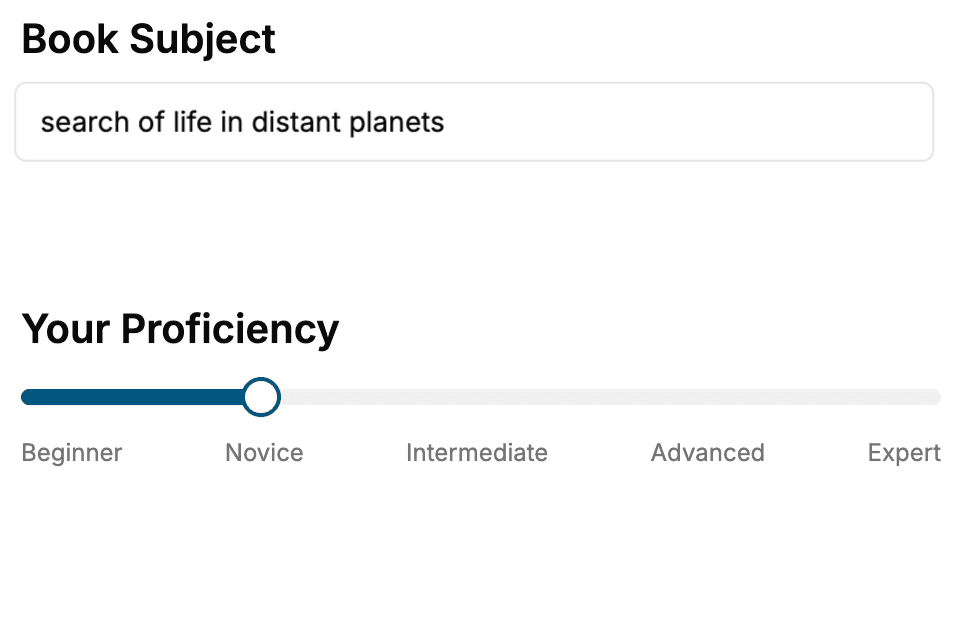
- 1. Select your focus
Select the focus of your PHP book and share your background
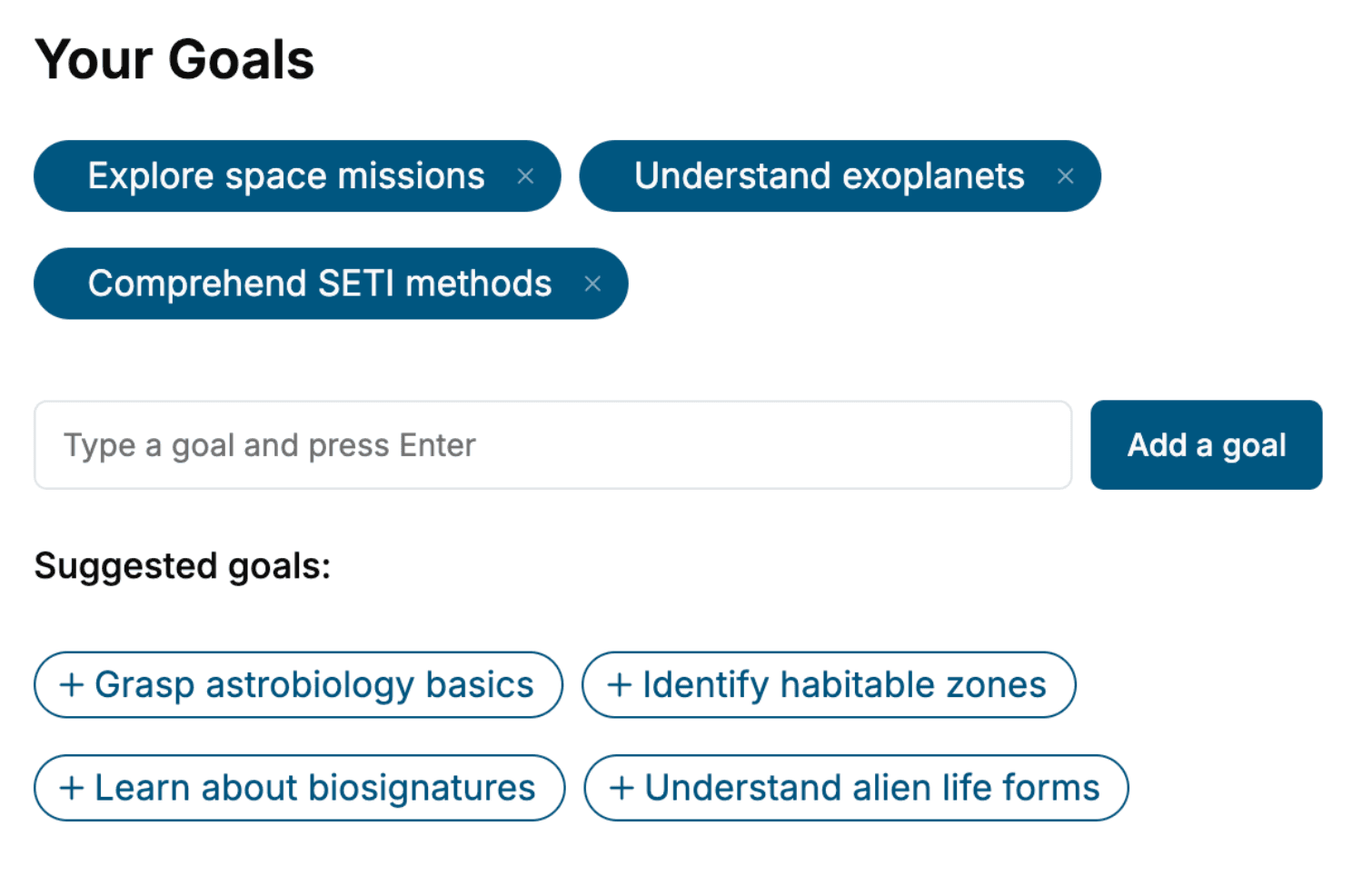
- 2. Personalize your book
Specify your goals and choose sub-topics to include
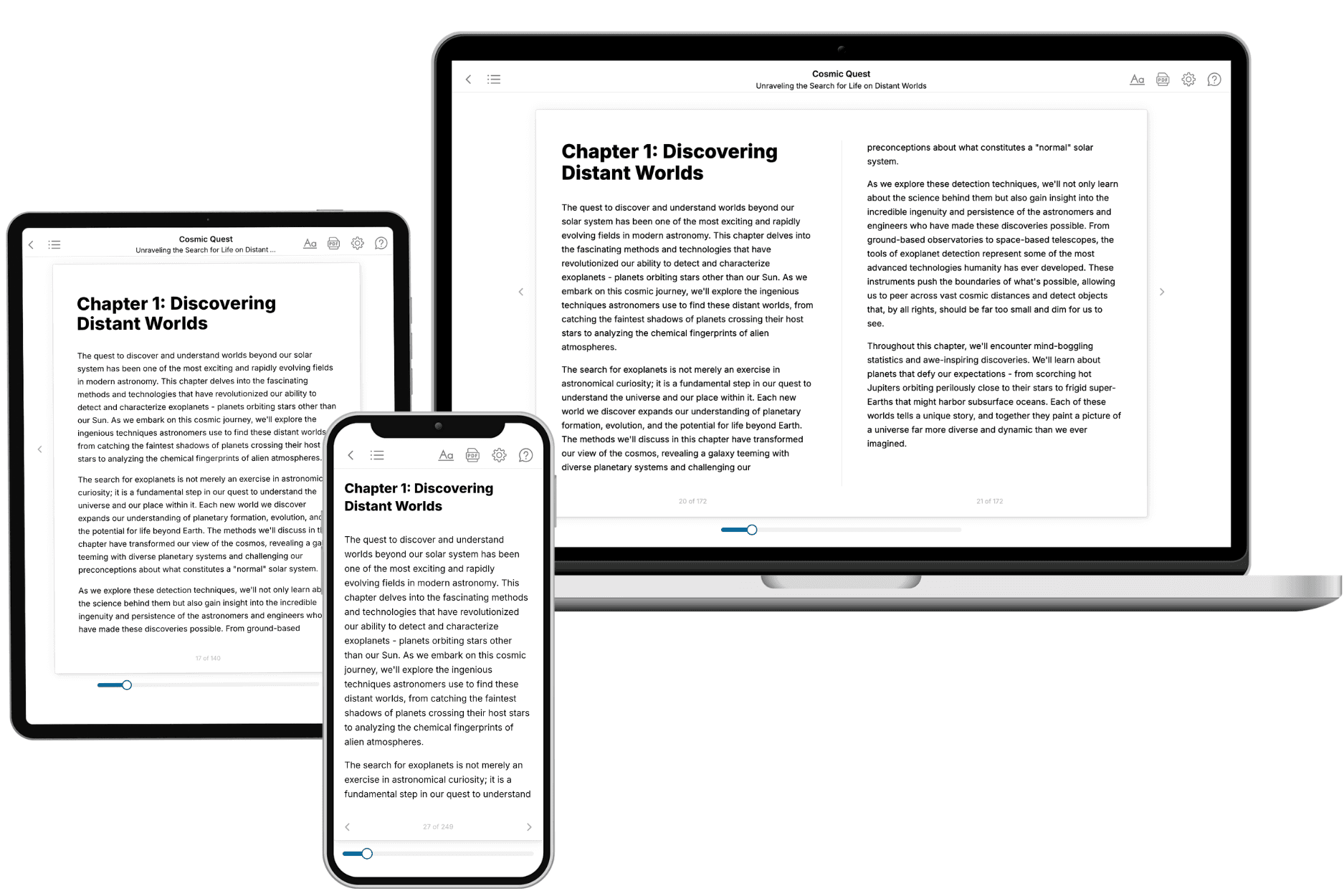
- 3. Get your tailored book
Your book is ready in 10 minutes. Read it online, download as EPUB or PDF, or send to Kindle.
Frequently asked questions
- What is TailoredRead?
TailoredRead creates complete, full-length nonfiction ebooks, written specifically for you. Tell us what you want to learn and why, and TailoredRead writes you a complete ebook on it, with charts, tables, and diagrams throughout. Read it online, on Kindle, or on any e-reader, or download it as a PDF or EPUB. Every book is written fresh the day you order it.
- How is the book tailored to me?
Before anything is written, you answer a few short questions about your goals, your background, and the topics you care about. Your book is then planned around your answers: written at your level, focused on your goals, and covering the topics you chose, instead of the one-size-fits-all book a store sells everyone.
- Will it read like generic AI content?
No. Your book isn't a chat transcript: it's planned chapter by chapter before a single word is written, told in a clear book voice, and explains ideas visually with charts, tables, and diagrams. After writing, every book goes through an editorial pass that polishes chapters so the book reads consistent from start to finish. Judge for yourself: browse thousands of sample books on our Explore Books page.
- How accurate is the content?
Our AI first checks whether your subject needs live research. Niche and fast-moving subjects are researched before writing, and the book plan and chapters are grounded in what it finds. After writing, every book goes through a quality pass that checks its facts and consistency, and researched books list their sources in a Notes section at the back.
- How long is the book?
You choose the length: Comprehensive (250-300 pages), Detailed (150-200 pages), Essential (70-100 pages), or Short (30-50 pages).
- Does the book include visuals?
Yes. Every book includes charts, tables, and diagrams: timelines, checklists, step-by-step guides, decision trees, comparison tables, matrices, and bar charts. A typical book includes dozens of these visual elements.
- Can I read it on Kindle? What formats can I download?
Yes. Every book can be read in our online reader or downloaded as a PDF or EPUB. The EPUB can be opened with Kindle, Apple Books, Kobo, and any e-reader. The Commercial and Author licenses also include an editable Word (DOCX) and Markdown download.
- How much does it cost?
About the price of a regular ebook. The exact price depends on your book's length and complexity, from $2 for the shortest books to $35 for the most comprehensive, and it's shown when you review your book, before you commit to anything. Each book is a one-time purchase, yours to keep, no subscription. Licenses that let you share, teach, or publish your book range from $35.99 to $49.99.
- Can I preview the book before purchasing?
Before you pay, you'll see what your book will cover: the title, a detailed description, the estimated length, and the complete chapter-by-chapter table of contents, so you know what you're getting before you decide. The full text itself is written after you purchase.
- How long does it take to create a book?
About 10 minutes. You can start reading the opening chapters while the rest is still being written.