Matt Damon: The Architect of Good Will Hunting
How a Screenplay and a Star Were Born Together
Discover how Matt Damon transformed from an unknown actor into a Hollywood powerhouse through his groundbreaking work on Good Will Hunting.
222 pages12 chaptersNov 6, 2025Movie Actor Biography
About this book
This book explores the remarkable true story behind one of cinema's most beloved films—from its inception as a screenplay written by Damon and Ben Affleck to its stunning success at the Academy Awards. You'll learn how Damon's dual role as both writer and star gave him unprecedented creative control, how the film's authentic Boston setting and psychological depth resonated with audiences worldwide, and how this single project fundamentally altered the trajectory of his career. Through detailed analysis of the production challenges, casting decisions, and performances that made the film iconic, you'll gain insight into how character-driven storytelling can achieve both critical acclaim and commercial success. Whether you're a film enthusiast, aspiring screenwriter, or actor seeking to understand the business of cinema, this book reveals the behind-the-scenes decisions and creative choices that made Good Will Hunting a watershed moment in modern filmmaking.
Table of contents
- IntroductionWhy This Story Matters, The Film Landscape of the 1990s, Matt Damon's Emergence, What You'll Discover in This BookRead below
- Chapter 1: Before the BreakthroughMatt Damon's Early Years and Acting Ambitions, The Struggling Actor Years, Meeting Ben Affleck and Finding Creative Partnership
- Chapter 2: The Screenplay GenesisWhere the Idea Came From, The Collaborative Writing Process, From First Draft to Polished Screenplay
- Chapter 3: Pitching and Studio BattlesPitching to Hollywood Studios, Facing Rejection and Staying Committed, Finding a Champion in the Industry
- Chapter 4: Assembling the Creative TeamChoosing Gus Van Sant as Director, The Casting Process and Key Decisions, Building the Supporting Cast
- Chapter 5: Damon's Dual RoleBalancing Writer and Actor Responsibilities, Developing Will Hunting as a Character, Unprecedented Creative Control for an Emerging Actor
- Chapter 6: Production ChallengesWorking Within Budget Limitations, Filming in Boston: Authenticity and Logistics, On-Set Dynamics and Collaboration
- Chapter 7: The PerformanceBringing Will Hunting to Life, Showcasing Emotional Vulnerability and Intellect, Iconic Scenes and Memorable Moments
- Chapter 8: Festival Circuit and Early ReceptionThe Sundance Film Festival Premiere, Early Critical Response and Buzz, Building Momentum in the Industry
- Chapter 9: Awards Season and Cultural ImpactOscar Nominations and Recognition, The Historic Screenplay Oscar Win, Good Will Hunting as a Cultural Phenomenon
- Chapter 10: Box Office Success and Audience ConnectionAchieving Commercial Success, Why Audiences Connected with the Story, The Film's Enduring Popularity
- Chapter 11: Career TransformationDoors Opening After Good Will Hunting, Ascending to A-List Status, How One Film Shaped a Legendary Career
- Chapter 12: Lessons for Modern CinemaThe Actor-Writer Model in Hollywood, Character-Driven Stories in Mainstream Cinema, Maintaining Artistic Integrity in Commercial Filmmaking
- ConclusionA Transformative Moment in Cinema, Matt Damon's Lasting Impact
Introduction
In 1997, a small-budget drama about a troubled genius from South Boston changed the landscape of American cinema. Good Will Hunting arrived in theaters with modest expectations but quickly became a cultural phenomenon that resonated far beyond its working-class Boston setting. The film told the story of Will Hunting, a janitor at MIT with an extraordinary gift for mathematics and a traumatic past that prevented him from realizing his potential. What made this film truly remarkable wasn't just its compelling narrative or emotional depth—it was the fact that its star, Matt Damon, had co-written the screenplay with his childhood friend Ben Affleck. This dual role as both creator and performer gave Damon an unprecedented level of creative control for an emerging actor and fundamentally altered the trajectory of his career.
The success of Good Will Hunting represented something rare in Hollywood: a character-driven drama that achieved both critical acclaim and commercial success. The film earned over $225 million worldwide against a production budget of just $10 million, proving that audiences hungered for authentic storytelling about complex human relationships[1]. It garnered nine Academy Award nominations and won two Oscars, including Best Original Screenplay for Damon and Affleck, who were just 27 and 25 years old respectively at the time. This achievement marked a watershed moment when Hollywood recognized that young actors could be serious writers and creative forces, not merely performers waiting for their next role.
Understanding the story behind Good Will Hunting offers valuable insights into how transformative films are made and how careers are built in the entertainment industry. This book explores the journey from screenplay conception to Oscar glory, examining the creative decisions, production challenges, and performances that made the film iconic. You'll discover how Damon's commitment to authentic storytelling, his willingness to take creative risks, and his collaborative approach to filmmaking established patterns that would define his entire career. Whether you're a film enthusiast seeking to understand the mechanics of cinema, a student of acting and screenwriting, or simply someone who appreciates the behind-the-scenes stories of beloved films, this exploration of Matt Damon's breakthrough reveals universal lessons about creativity, persistence, and the power of believing in your own vision.
Why This Story Matters
The story of Good Will Hunting matters because it represents a fundamental shift in how Hollywood approached emerging talent and original screenplays. Before this film, the industry operated with clear boundaries: actors acted, writers wrote, and directors directed. Young performers were expected to wait patiently for established writers and directors to create roles for them. Damon and Affleck challenged this model by refusing to wait for permission. They wrote their own material, insisted on starring in it, and maintained creative control throughout the production process. This approach was revolutionary for its time and opened doors for countless actors who followed, from Ryan Gosling to Greta Gerwig, who understood that creating your own content could be the fastest path to meaningful work.
The film's impact extends beyond industry mechanics to the realm of storytelling itself. Good Will Hunting demonstrated that audiences would embrace complex psychological narratives about working-class characters struggling with trauma and identity. Hollywood had long assumed that mainstream success required either high-concept premises or star-driven vehicles. This film proved that authentic human stories, grounded in specific cultural contexts, could resonate universally. The relationship between Will and his therapist Sean Maguire, played by Robin Williams, became a template for exploring mentorship, healing, and emotional vulnerability in ways that felt genuine rather than manipulative. The film's success validated character-driven storytelling at a time when studios were increasingly focused on spectacle and franchise potential.
For Matt Damon specifically, this story matters because it established the foundation for everything that followed in his career. The creative control he exercised on Good Will Hunting taught him how films are made from the ground up. He learned about script development, casting, production logistics, and the delicate balance between artistic vision and commercial viability. These lessons informed his later choices as a producer and his ability to navigate Hollywood as both an artist and a businessman. The film also demonstrated his range as a performer, proving he could carry a dramatic role that required emotional depth and intellectual credibility. This versatility became his calling card, allowing him to move seamlessly between action franchises like The Bourne Identity and prestige dramas like The Talented Mr. Ripley.
The story also matters because it illustrates the importance of collaboration and creative partnership in filmmaking. Damon and Affleck's friendship, which began in childhood, provided the foundation for their writing partnership. They understood each other's strengths and weaknesses, challenged each other's ideas, and maintained a shared vision throughout the development process. This collaborative spirit extended to their work with director Gus Van Sant, who brought his own artistic sensibility while respecting the writers' intentions. The film's success demonstrated that great cinema often emerges from genuine collaboration rather than singular auteur vision. This lesson has particular relevance in today's entertainment landscape, where collaborative storytelling across multiple platforms has become the norm.
Beyond the film industry, this story resonates because it addresses universal themes of potential, trauma, and human connection. Will Hunting's journey from self-destructive genius to someone capable of accepting love and pursuing his dreams speaks to fundamental questions about identity and purpose. The film explores how childhood trauma shapes adult behavior, how mentorship can facilitate healing, and how authentic relationships require vulnerability. These themes transcend the specific Boston setting and speak to audiences across cultures and generations. The film's enduring popularity—it consistently ranks among the most beloved dramas of the 1990s—demonstrates that these themes remain relevant decades after its release.
Finally, this story matters because it provides a roadmap for aspiring filmmakers and actors who want to create meaningful work in a challenging industry. The obstacles Damon and Affleck faced—studio skepticism, budget constraints, casting challenges—are the same obstacles that emerging creators face today. Their persistence in the face of rejection, their willingness to compromise on some elements while holding firm on others, and their strategic approach to building industry support offer practical lessons for anyone trying to bring creative projects to life. The story demonstrates that success in Hollywood requires not just talent but also strategic thinking, relationship building, and an unwavering commitment to your vision.
Understanding why this story matters requires recognizing its multiple dimensions:
- Industry impact: Changed how Hollywood viewed actor-writers and original screenplays
- Storytelling innovation: Proved character-driven dramas could achieve mainstream success
- Career foundation: Established Damon's trajectory as both artist and businessman
- Collaborative model: Demonstrated the power of genuine creative partnerships
- Universal themes: Explored trauma, healing, and human connection in authentic ways
- Practical lessons: Provided a roadmap for emerging creators navigating Hollywood
The legacy of Good Will Hunting continues to influence contemporary cinema. When you watch films like Manchester by the Sea or Lady Bird—character-driven dramas that balance emotional depth with commercial appeal—you're seeing the influence of what Damon and Affleck accomplished. When actors like Donald Glover or Phoebe Waller-Bridge create their own content rather than waiting for opportunities, they're following the path that Good Will Hunting helped establish. The film's impact on how we think about storytelling, creative control, and the relationship between commerce and art makes it a crucial case study for understanding modern cinema. This book explores that impact in detail, revealing how a single film can reshape an industry and launch a legendary career.
The Film Landscape of the 1990s
To understand the significance of Good Will Hunting, you need to understand the Hollywood landscape of the mid-1990s. This was an era of transition in American cinema, caught between the auteur-driven films of the 1970s and the franchise-dominated blockbusters that would define the 2000s. The decade began with independent cinema gaining unprecedented visibility through films like Sex, Lies, and Videotape and Reservoir Dogs, which demonstrated that low-budget films with strong writing could find audiences. The Sundance Film Festival had emerged as a crucial launching pad for independent filmmakers, and specialty distributors like Miramax were proving that art-house films could be commercially viable. This created an environment where unconventional projects had a fighting chance, though the path from script to screen remained treacherous.
The major studios in the 1990s were increasingly focused on high-concept films and established properties. The success of Jurassic Park in 1993 and Independence Day in 1996 demonstrated the commercial potential of special effects-driven spectacles. Studios were investing heavily in action films, romantic comedies with bankable stars, and adaptations of existing intellectual property. Original screenplays, particularly those focused on character rather than concept, were viewed with skepticism. Executives worried that audiences wouldn't turn out for films without clear marketing hooks or recognizable stars. This created a challenging environment for first-time screenwriters trying to sell character-driven dramas, especially when those writers insisted on starring in their own material.
However, the decade also saw remarkable success for films that defied conventional wisdom. Pulp Fiction in 1994 became a cultural phenomenon and earned over $200 million worldwide, proving that audiences would embrace complex narratives and unconventional storytelling[2]. The Shawshank Redemption, released the same year, initially underperformed at the box office but found massive audiences through home video and became one of the most beloved films of all time. Fargo in 1996 demonstrated that regional stories with specific cultural contexts could resonate nationally. These successes created space for films like Good Will Hunting, suggesting that quality writing and authentic performances could overcome the lack of high-concept premises or massive budgets.
The independent film movement of the 1990s was characterized by several key trends that directly influenced Good Will Hunting:
- Regional authenticity: Films embraced specific geographic and cultural settings rather than generic locations
- Character complexity: Protagonists were flawed, contradictory, and psychologically nuanced
- Dialogue-driven narratives: Strong writing and performances took precedence over visual spectacle
- Working-class perspectives: Stories focused on ordinary people rather than wealthy or glamorous characters
- Emotional realism: Films explored genuine human emotions rather than melodramatic extremes
- Collaborative production: Filmmakers worked with small crews and modest budgets, fostering creative intimacy
The role of actors in the 1990s was also evolving. While the previous decade had been dominated by action stars like Arnold Schwarzenegger and Sylvester Stallone, the 1990s saw the rise of actors who could move between genres and demonstrate range. Tom Hanks transitioned from comedy to drama with films like Philadelphia and Forrest Gump. Brad Pitt balanced commercial projects with challenging roles in films like 12 Monkeys. This shift created an environment where audiences were willing to accept actors in unexpected roles, provided the performances were compelling. However, young actors still faced significant barriers to creative control. Studios were reluctant to entrust major projects to unproven talent, and the idea of an actor in their twenties co-writing and starring in a major release was virtually unprecedented.
The screenplay market in the 1990s was highly competitive but also offered opportunities for breakthrough success. Spec scripts—screenplays written without a prior commitment from a studio—could command significant prices if they generated bidding wars. Shane Black famously sold The Long Kiss Goodnight for $4 million in 1996, demonstrating the potential value of original screenplays[3]. However, these high-profile sales typically involved established writers with track records. First-time screenwriters faced skepticism, and the idea of actors writing their own material was often dismissed as vanity projects. The conventional wisdom held that acting and writing required different skill sets, and few people could excel at both. Damon and Affleck would need to overcome this prejudice to get their screenplay taken seriously.
The distribution landscape of the 1990s also played a crucial role in creating opportunities for films like Good Will Hunting. Miramax, under the leadership of Harvey and Bob Weinstein, had pioneered a model of acquiring independent films and marketing them aggressively to mainstream audiences. The company's success with films like The Crying Game and Pulp Fiction demonstrated that specialty films could achieve significant commercial success with the right marketing strategy. Miramax's approach involved platform releases—opening films in a few theaters in major cities and expanding gradually based on word-of-mouth and critical reception. This model was perfectly suited for a film like Good Will Hunting, which needed time to find its audience rather than opening wide and relying on immediate box office returns.
The cultural context of the mid-1990s also influenced the reception of Good Will Hunting. This was a period of relative economic prosperity in the United States, but also growing awareness of class divisions and educational inequality. The film's exploration of a working-class genius who had been denied opportunities due to his background resonated with broader conversations about meritocracy and social mobility. The therapy scenes between Will and Sean addressed the growing cultural interest in psychology and emotional healing, reflecting the influence of the self-help movement and increased openness about mental health. The film's Boston setting, with its distinct working-class neighborhoods and prestigious universities existing side by side, provided a perfect backdrop for exploring these themes of class and opportunity.
Matt Damon's Emergence
Before Good Will Hunting, Matt Damon was a struggling actor with a handful of small roles and no clear path to stardom. Born in Cambridge, Massachusetts in 1970, Damon grew up in a middle-class household where education was highly valued. His mother was a professor of early childhood education, and his father worked in finance. This background gave him an appreciation for intellectual pursuits while also exposing him to the working-class neighborhoods of Boston that would later inform his writing. Damon attended Cambridge Ridge and Latin School, where he met Ben Affleck, beginning a friendship that would prove crucial to both their careers. Even in high school, Damon was drawn to acting, performing in school productions and developing the work ethic that would characterize his professional life.
Damon's decision to pursue acting professionally required significant sacrifice. He attended Harvard University, where he studied English and lived in Lowell House, but left just twelve credits short of graduation to pursue acting opportunities in New York. This decision reflected his commitment to his craft but also created financial pressure to succeed. Like countless aspiring actors, Damon spent years auditioning for roles, facing rejection, and taking whatever work he could find. His early film roles were small and forgettable—a single line in Mystic Pizza, a brief appearance in School Ties. These experiences taught him about the business of acting but also revealed the limitations of waiting for others to create opportunities. He was talented and hardworking, but so were thousands of other young actors competing for the same roles.
The turning point in Damon's thinking came from observing the industry's power dynamics. He noticed that actors with the most interesting careers weren't just talented performers—they were people who created their own opportunities. He saw how established actors could develop projects, attach themselves as producers, and exercise creative control over their work. This realization led to a crucial insight: if he wanted to play complex, interesting characters, he might need to write those characters himself. This wasn't a common path for actors in the early 1990s, but Damon recognized it as potentially the fastest route to meaningful work. The idea that would become Good Will Hunting emerged from this strategic thinking as much as from creative inspiration.
Damon's collaboration with Ben Affleck was central to his emergence as a creative force. The two had maintained their friendship since childhood, and both were struggling actors in the early 1990s. They understood each other's strengths and shared similar frustrations with the limited roles available to young actors. Affleck had slightly more success in Hollywood, with roles in films like Dazed and Confused, but both were far from established stars. Their decision to write together emerged organically from their friendship and shared circumstances. They would meet regularly to work on the screenplay that would become Good Will Hunting, pushing each other to improve the material and maintaining accountability when the work became difficult. This partnership provided both creative synergy and practical support during the long development process.
Several key experiences shaped Damon's approach to the Good Will Hunting project:
- Academic background: His time at Harvard exposed him to intellectual environments and brilliant minds, informing Will's character
- Boston roots: Growing up in Cambridge gave him authentic knowledge of working-class Boston culture and speech patterns
- Struggling actor experience: Years of rejection taught him resilience and the importance of creating his own opportunities
- Friendship with Affleck: Their long-term relationship provided trust and creative chemistry essential for collaboration
- Industry observation: Watching successful actors exercise creative control showed him alternative paths to traditional acting careers
- Writing education: His English studies at Harvard gave him tools for analyzing and constructing narratives
By 1994, when Damon and Affleck began seriously developing the Good Will Hunting screenplay, Damon had reached a critical juncture in his career. He was in his mid-twenties, old enough to have developed his craft but young enough that prolonged failure might force him to abandon acting altogether. He had enough experience to understand how the industry worked but not enough success to have leverage with studios or producers. This position—simultaneously advantageous and precarious—created urgency around the screenplay project. If the script succeeded, it could transform his career. If it failed, he might need to reconsider his professional path. This high-stakes context influenced every decision he made about the project, from the writing process to the eventual negotiations with studios.
Damon's emergence as a creative force wasn't just about writing ability—it was about developing a comprehensive understanding of how films get made. He studied the business side of Hollywood, learning about development deals, production financing, and distribution strategies. He paid attention to which actors successfully transitioned to producing and why certain projects attracted studio interest while others languished in development. This business acumen would prove as important as his writing talent when it came time to sell the screenplay and maintain creative control during production. Damon understood that succeeding in Hollywood required more than artistic talent; it required strategic thinking and the ability to navigate complex business relationships.
The personal qualities that enabled Damon's emergence were as important as his circumstances. He demonstrated remarkable persistence, continuing to work on the screenplay even when progress seemed slow and success uncertain. He showed willingness to accept feedback and revise his work, understanding that good writing requires rewriting. He maintained professional relationships and built a network of supporters who would prove crucial when the project needed champions. Perhaps most importantly, he balanced confidence in his vision with pragmatism about what was achievable. He knew the screenplay was good, but he also understood the need to compromise on certain elements to get the film made. This combination of artistic conviction and business pragmatism would characterize his entire career.
What You'll Discover in This Book
This book provides a comprehensive exploration of how Good Will Hunting was created and how it transformed Matt Damon's career. You'll follow the journey from initial concept through screenplay development, studio negotiations, production challenges, and ultimately to the film's critical and commercial success. Each chapter examines a specific phase of this journey, revealing the creative decisions, strategic choices, and fortunate circumstances that made the film possible. The narrative draws on interviews, behind-the-scenes accounts, and industry analysis to provide both the intimate details of the creative process and the broader context of how the film fit into Hollywood's evolving landscape. Whether you're interested in screenwriting, acting, producing, or simply understanding how great films are made, this book offers insights applicable to your interests.
The early chapters focus on the origins of the project and the development of the screenplay. You'll learn about Damon's background and the experiences that shaped his approach to storytelling. You'll discover how the initial idea for Good Will Hunting emerged and evolved through multiple drafts. The book examines the collaborative writing process between Damon and Affleck, revealing how their different strengths complemented each other and how they navigated creative disagreements. You'll understand the specific challenges of writing a screenplay that balanced commercial appeal with artistic integrity, and how the writers incorporated feedback from trusted readers while maintaining their vision. These chapters provide practical insights into the screenwriting process that will benefit anyone interested in developing original material.
The middle chapters explore the business side of getting the film made. You'll learn about the pitching process and how Damon and Affleck presented their screenplay to studios. The book reveals the skepticism they faced and the strategic decisions they made about which elements were negotiable and which were essential. You'll discover how they found champions within the industry who believed in the project and helped navigate the complex development process. The chapters on assembling the creative team examine how director Gus Van Sant was selected and how the casting process unfolded, including the crucial decision to cast Robin Williams as Sean Maguire. These sections provide valuable lessons about building support for creative projects and assembling the right team to execute your vision.
The production chapters take you inside the making of the film itself. You'll learn about the challenges of filming in Boston on a modest budget and how the production team maintained authenticity while working within financial constraints. The book examines Damon's dual role as writer and star, revealing how he balanced these responsibilities and what he learned from the experience. You'll discover the on-set dynamics between the actors and director, and how key scenes were developed and performed. These chapters include detailed analysis of specific moments in the film, explaining what makes them effective and how they were achieved. This behind-the-scenes perspective will deepen your appreciation for the craft of filmmaking and the collaborative nature of cinema.
Throughout the book, you'll encounter specific elements designed to enhance your understanding:
- Scene analysis: Detailed examination of key moments in the film, explaining their narrative function and emotional impact
- Industry context: Explanation of how Hollywood worked in the 1990s and how the film fit into broader trends
- Creative process insights: Behind-the-scenes details about writing, casting, and production decisions
- Career trajectory analysis: Examination of how the film influenced Damon's subsequent choices and opportunities
- Comparative examples: References to other films and filmmakers that provide context for understanding Good Will Hunting's significance
- Practical lessons: Actionable insights for aspiring filmmakers, writers, and actors drawn from the film's creation
The later chapters examine the film's reception and impact. You'll learn about the festival circuit and how early screenings built momentum for the film's release. The book explores the awards season, including the Oscar campaign and the historic screenplay win. You'll discover why audiences connected so deeply with the story and how the film achieved both critical acclaim and commercial success. These chapters analyze the film's cultural impact, examining how it influenced subsequent films and changed perceptions about what kinds of stories could succeed in mainstream cinema. You'll understand why Good Will Hunting remains beloved decades after its release and what makes it a enduring example of character-driven storytelling.
The book also examines the long-term impact on Damon's career. You'll see how the success of Good Will Hunting opened doors to diverse opportunities, from action franchises to prestige dramas. The analysis reveals how Damon leveraged his newfound status to maintain creative control and build a career characterized by both commercial success and artistic credibility. You'll learn about the strategic choices he made in selecting subsequent roles and how he balanced blockbuster projects with smaller, more personal films. This career analysis provides valuable lessons about building sustainable success in the entertainment industry and maintaining artistic integrity while achieving commercial viability.
The final chapters draw broader lessons from the Good Will Hunting story. You'll explore how the film influenced Hollywood's approach to actor-writers and original screenplays. The book examines the legacy of character-driven storytelling in contemporary cinema and how the film's success validated certain approaches to filmmaking. You'll discover practical lessons applicable to your own creative projects, whether you're an aspiring filmmaker, writer, actor, or simply someone interested in understanding how great work gets made. These concluding sections synthesize the specific story of Good Will Hunting into broader principles about creativity, collaboration, and persistence in pursuing your vision.
Throughout this exploration, the book maintains focus on Matt Damon's central role in creating and starring in Good Will Hunting. While the film was a collaborative effort involving many talented people, Damon's dual role as co-writer and star makes him the ideal lens through which to understand the project. His journey from struggling actor to Oscar-winning screenwriter and A-list star embodies the transformative power of creating your own opportunities. By following his path, you'll gain insights not just into one film or one career, but into the fundamental dynamics of how creative work succeeds in a challenging industry. Whether you're seeking inspiration, practical knowledge, or simply a deeper appreciation for a beloved film, this book offers a comprehensive and engaging exploration of a pivotal moment in cinema history.
This is the end of the free sample. The full book has 12 chapters.
Want this book written for you?
Tell us your goals and background, and get your own version of this book, tailored by AI to you.


Benefits of AI-tailored books
- Read one book, not ten:
- all the Movie Actor Biography knowledge you need, gathered into a single book.
- Save days of learning:
- tell us your goals, choose your topics, and the whole book is built around them.
- Learn effortlessly:
- Movie Actor Biography book written for your specific background and expertise.
- Understand at a glance:
- includes charts, tables, timelines, checklists, decision trees, and more.
- Stay current:
- written the day you order it, not years ago.
- Trust what you read:
- every book is checked for accuracy, with real research when your subject needs it.
Create your unique book in 3 steps
- 1. Select your focus
Select the focus of your Movie Actor Biography book and share your background
- 2. Personalize your book
Specify your goals and choose sub-topics to include
- 3. Get your tailored book
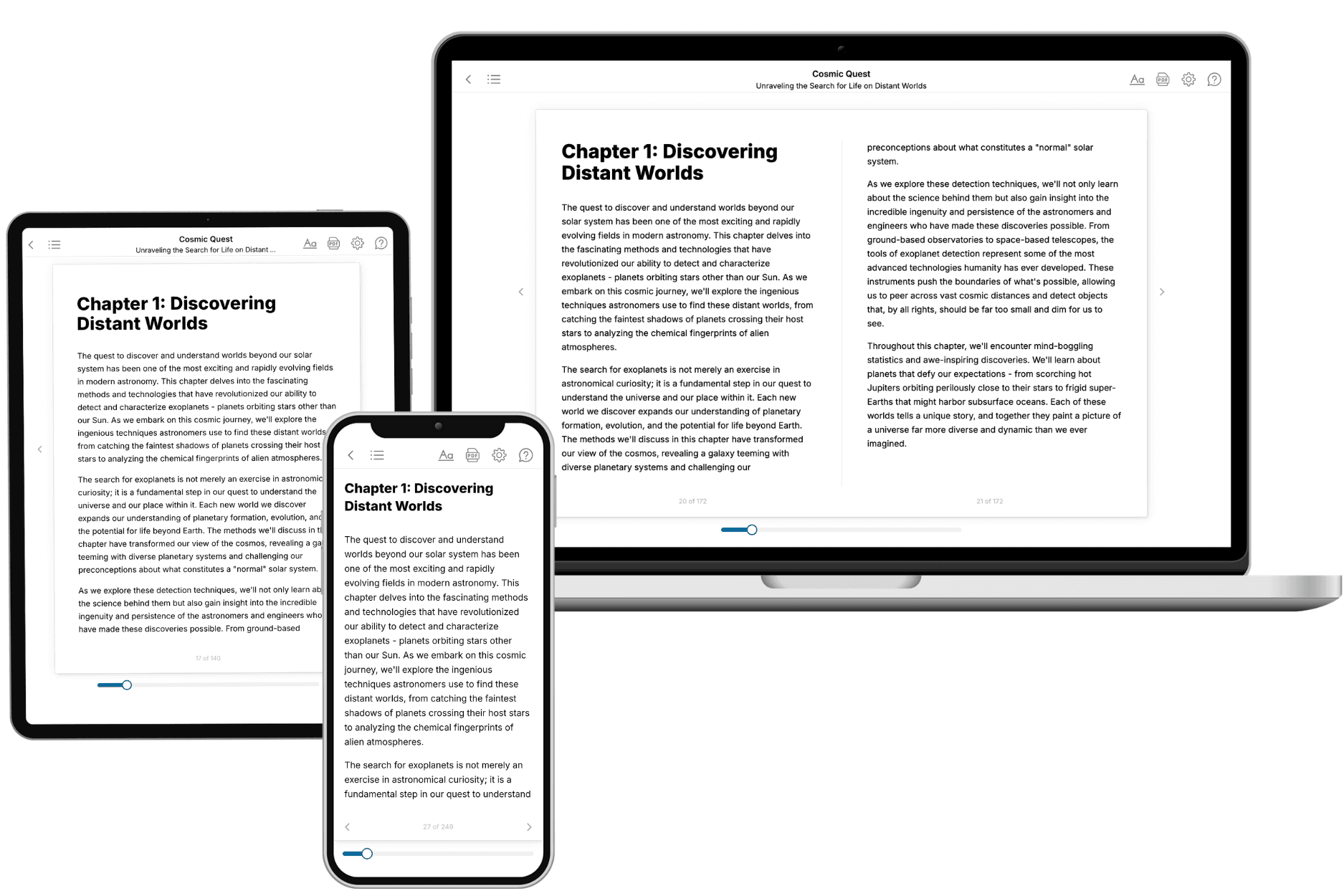
Your book is ready in 10 minutes. Read it online, download as EPUB or PDF, or send to Kindle.
Frequently asked questions
- What is TailoredRead?
TailoredRead creates complete, full-length nonfiction ebooks, written specifically for you. Tell us what you want to learn and why, and TailoredRead writes you a complete ebook on it, with charts, tables, and diagrams throughout. Read it online, on Kindle, or on any e-reader, or download it as a PDF or EPUB. Every book is written fresh the day you order it.
- How is the book tailored to me?
Before anything is written, you answer a few short questions about your goals, your background, and the topics you care about. Your book is then planned around your answers: written at your level, focused on your goals, and covering the topics you chose, instead of the one-size-fits-all book a store sells everyone.
- Will it read like generic AI content?
No. Your book isn't a chat transcript: it's planned chapter by chapter before a single word is written, told in a clear book voice, and explains ideas visually with charts, tables, and diagrams. After writing, every book goes through an editorial pass that polishes chapters so the book reads consistent from start to finish. Judge for yourself: browse thousands of sample books on our Explore Books page.
- How accurate is the content?
Our AI first checks whether your subject needs live research. Niche and fast-moving subjects are researched before writing, and the book plan and chapters are grounded in what it finds. After writing, every book goes through a quality pass that checks its facts and consistency, and researched books list their sources in a Notes section at the back.
- How long is the book?
You choose the length: Comprehensive (250-300 pages), Detailed (150-200 pages), Essential (70-100 pages), or Short (30-50 pages).
- Does the book include visuals?
Yes. Every book includes charts, tables, and diagrams: timelines, checklists, step-by-step guides, decision trees, comparison tables, matrices, and bar charts. A typical book includes dozens of these visual elements.
- Can I read it on Kindle? What formats can I download?
Yes. Every book can be read in our online reader or downloaded as a PDF or EPUB. The EPUB can be opened with Kindle, Apple Books, Kobo, and any e-reader. The Commercial and Author licenses also include an editable Word (DOCX) and Markdown download.
- How much does it cost?
About the price of a regular ebook. The exact price depends on your book's length and complexity, from $2 for the shortest books to $35 for the most comprehensive, and it's shown when you review your book, before you commit to anything. Each book is a one-time purchase, yours to keep, no subscription. Licenses that let you share, teach, or publish your book range from $35.99 to $49.99.
- Can I preview the book before purchasing?
Before you pay, you'll see what your book will cover: the title, a detailed description, the estimated length, and the complete chapter-by-chapter table of contents, so you know what you're getting before you decide. The full text itself is written after you purchase.
- How long does it take to create a book?
About 10 minutes. You can start reading the opening chapters while the rest is still being written.