The Meaning Makers
How Your Mind Constructs Purpose and Why It Matters
Most people believe that meaning is something you find - like a hidden treasure waiting to be discovered.
269 pages14 chaptersOct 13, 2025Psychology
About this book
This misconception leaves countless individuals feeling lost, searching endlessly for their "true purpose" while overlooking the profound truth: meaning isn't found, it's made. Drawing from decades of psychological research, this book reveals how your mind actively constructs meaning from the raw materials of experience. You'll discover why some people thrive in the face of adversity while others crumble, how cultural narratives shape your sense of purpose, and why the stories you tell yourself determine whether you feel fulfilled or empty. Through compelling case studies and practical insights, you'll learn to recognize the meaning-making processes already at work in your life and develop the skills to consciously craft a more purposeful existence. This isn't about finding your predetermined destiny - it's about understanding the psychological mechanisms that create significance and learning to use them intentionally. Whether you're navigating a major life transition, seeking greater fulfillment, or simply curious about what makes life feel worthwhile, this book provides the scientific foundation and practical tools to become a more skillful architect of your own meaningful life.
Table of contents
- IntroductionThe Modern Meaning Crisis, Construction vs. Discovery, Your Roadmap to UnderstandingRead below
- Chapter 1: The Foundations of MeaningDefining Meaning in Psychological Terms, The Evolutionary Origins of Meaning-Making, How the Brain Creates Meaning, The Three Pillars: Coherence, Purpose, and Significance
- Chapter 2: The Narrative MindHumans as the Storytelling Species, How Personal Narratives Shape Identity, The Psychology of Narrative Coherence, Rewriting Your Life Story
- Chapter 3: Cultural Blueprints of MeaningHow Culture Provides Meaning Frameworks, The Power of Collective Narratives, Balancing Tradition and Personal Innovation, Navigating Multiple Cultural Meanings
- Chapter 4: The Development of Meaning Across LifeEarly Foundations of Meaning-Making, The Adolescent Search for Identity and Purpose, Adult Meaning-Making and Life Transitions, Wisdom and Meaning in Later Life
- Chapter 5: Crisis as a Catalyst for MeaningWhen Meaning Systems Break Down, Post-Traumatic Growth and Meaning Reconstruction, Navigating Existential Crisis, Building Resilience Through Meaning
- Chapter 6: The Social Construction of MeaningHow Relationships Shape Our Sense of Purpose, Community and the Need for Belonging, Creating Shared Meaning with Others, The Role of Social Validation in Meaning
- Chapter 7: Values and the Architecture of PurposeIdentifying Your Core Values, The Hierarchy of Values, Translating Values into Action, Resolving Value Conflicts
- Chapter 8: Goals, Achievement, and Meaningful PursuitIntrinsic vs. Extrinsic Goals, Creating a Meaningful Goal Hierarchy, Finding Meaning in Process vs. Outcome, Adaptive Goal Adjustment
- Chapter 9: Work, Calling, and Professional MeaningThe Psychology of Work and Identity, Job, Career, or Calling: Different Orientations, Job Crafting and Creating Meaning at Work, Aligning Work with Personal Purpose
- Chapter 10: Creativity and Self-Expression as MeaningThe Psychology of Creative Fulfillment, Authentic Self-Expression and Meaning, Finding Meaning in the Creative Process, Creating Something That Lasts
- Chapter 11: Making Meaning from SufferingThe Inevitability of Human Suffering, Meaning-Making in the Face of Pain, Finding Growth Through Adversity, Using Your Experience to Help Others
- Chapter 12: Transcendence and Spiritual MeaningMoving Beyond the Self, Spiritual Meaning Without Religion, Feeling Connected to Something Greater, Cultivating Transcendent Experiences
- Chapter 13: Cultivating Daily MeaningFinding Micro-Meanings in Everyday Life, The Role of Mindful Presence, Gratitude and Appreciation Practices, Creating Meaningful Daily Rituals
- Chapter 14: Maintaining and Evolving Your Sense of MeaningThe Ongoing Work of Meaning Maintenance, Adapting Your Meaning System to Change, Periodic Meaning Renewal and Reflection, Supporting Others in Their Meaning-Making
- ConclusionIntegrating the Insights, Your Ongoing Journey as a Meaning Maker
- Further Reading
Introduction
Sarah stared at her computer screen, the cursor blinking mockingly in the empty document. At thirty-five, she had achieved everything she thought she wanted: a successful career, a comfortable home, financial security. Yet something felt fundamentally wrong. What's the point of all this?
she wondered, not for the first time. The question haunted her during her morning commute, lingered through productive workdays, and kept her awake at night. She wasn't depressed, exactly, but she felt hollow, as if she were going through the motions of a life that belonged to someone else.
Sarah's experience reflects a profound shift in how humans encounter meaning in the modern world. Unlike previous generations who inherited clear frameworks for understanding their place and purpose, many people today find themselves adrift in a sea of possibilities without a compass. The traditional sources of meaning—religion, community, clear social roles—have weakened or disappeared entirely for many individuals. This has created what researchers call a meaning crisis, where people struggle not just with what to do with their lives, but with understanding why anything matters at all.
The conventional wisdom tells us that meaning is something we must discover, like archaeologists uncovering ancient treasures. We're encouraged to find our passion,
discover our purpose,
or uncover our true calling.
This discovery metaphor suggests that somewhere out there—or deep within us—lies a predetermined meaning waiting to be found. But what if this entire approach is fundamentally flawed? What if the reason so many people feel lost isn't because they haven't found their meaning, but because they're looking for something that doesn't exist in the way they think it does?
The Modern Meaning Crisis
The statistics paint a troubling picture of our collective struggle with meaning. According to recent surveys, nearly 40% of adults report feeling that their lives lack purpose or direction[1]. Among younger adults, the numbers are even more stark, with over half of millennials reporting that they question whether their lives have meaning. This isn't simply about career dissatisfaction or relationship problems—it's a deeper existential uncertainty about whether anything we do ultimately matters.
This meaning crisis manifests in various ways across different populations. Some people experience it as a persistent sense of emptiness, going through daily routines without feeling connected to their activities. Others describe feeling like actors in someone else's play, performing roles that don't align with their authentic selves. Still others report a kind of existential vertigo—a dizzying sense that life lacks solid ground or clear direction. The symptoms vary, but the underlying issue remains consistent: a fundamental disconnection from sources of meaning and purpose.
The roots of this crisis run deep into the structure of modern life. Traditional meaning-making institutions have lost much of their authority and influence. Religious participation has declined dramatically in many developed countries, leaving millions without the coherent worldview that faith communities once provided. Extended families have scattered, weakening the bonds that once gave people clear roles and responsibilities. Even work, which many hoped would provide purpose, has become increasingly fragmented and disconnected from visible outcomes or community benefit.
Technology and globalization have accelerated these changes in unexpected ways. While we're more connected than ever before, many people report feeling more isolated and insignificant. Social media presents endless streams of other people's highlight reels, making our own lives seem mundane by comparison. The sheer scale of global problems—climate change, poverty, political polarization—can make individual efforts feel pointless. When everything seems urgent and nothing seems to make a lasting difference, it's natural to question whether our actions have any real significance.
The paradox of choice compounds these challenges. Previous generations often had their life paths largely determined by circumstances—family trade, local opportunities, social expectations. While this limited freedom, it also provided clarity. Today's abundance of options can be paralyzing. When you can theoretically become anything or go anywhere, how do you choose? The weight of infinite possibility can make any single choice feel arbitrary or insufficient.
Economic factors play a crucial role as well. The promise that material prosperity would lead to fulfillment has proven hollow for many. Countries with the highest standards of living often report surprisingly high rates of depression, anxiety, and existential dissatisfaction. The hedonic treadmill—our tendency to quickly return to baseline happiness levels despite positive changes—means that achieving external goals rarely provides the lasting sense of meaning people expect.
Cultural narratives about success have become increasingly narrow and materialistic. The stories we tell about making it
focus heavily on wealth, fame, and individual achievement, often at the expense of community connection, personal growth, or contribution to something larger than ourselves. These narratives shape our expectations and goals, but they often lead to a hollow form of success that leaves people wondering Is this all there is?
even after they've achieved what they thought they wanted.
The meaning crisis isn't just an individual problem—it has profound social implications. When people lack a sense of purpose, they're more susceptible to extremist ideologies that promise simple answers to complex questions. They're more likely to engage in destructive behaviors, from substance abuse to compulsive consumption. Communities suffer when their members feel disconnected from shared values and common purposes. The crisis of individual meaning becomes a crisis of social cohesion and collective action.
Yet within this crisis lies an unprecedented opportunity. For the first time in human history, large numbers of people have the freedom to consciously construct their own meaning rather than simply inheriting it from tradition. This freedom comes with responsibility and requires new skills, but it also opens possibilities that previous generations could never have imagined. The key is understanding that meaning isn't something we find—it's something we make.
Construction vs. Discovery
The fundamental shift from seeking meaning to creating meaning represents one of the most important psychological insights of the past century. Traditional approaches to meaning assume that purpose exists independently of our perception of it—that there's some objective truth about what makes life worthwhile that we must uncover. This discovery model suggests that meaning is out there waiting to be found, like a hidden treasure or a predetermined destiny. But decades of psychological research reveal a different picture: meaning emerges from the active process of interpretation, connection, and construction that our minds perform constantly.
Consider how two people can experience the same event and derive completely different meanings from it. A job loss might devastate one person while liberating another. A serious illness might crush one individual's spirit while inspiring another to reprioritize their values and relationships. The external circumstances are identical, but the meaning each person constructs from those circumstances varies dramatically. This variation isn't random—it reflects the different interpretive frameworks, personal histories, and meaning-making skills that each person brings to their experience.
The construction model doesn't suggest that meaning is arbitrary or purely subjective. Rather, it recognizes that meaning emerges from the interaction between our minds and our experiences. Just as a musician doesn't discover melodies hidden in their instrument but creates them through the interaction of their intentions, skills, and the instrument's possibilities, we don't discover predetermined meanings but construct them through the interaction of our values, experiences, and interpretive abilities. The meaning is real and significant, but it's created rather than found.
This shift has profound implications for how we approach the search for purpose. Instead of asking What is my true calling?
we might ask How can I construct a sense of calling from my current circumstances and capabilities?
Instead of waiting to discover our passion, we can explore how to cultivate passion through engagement and skill development. Instead of seeking the one right path, we can learn to create meaning along multiple possible paths.
The construction approach is supported by extensive research in cognitive psychology and neuroscience. Studies show that our brains are constantly engaged in pattern-seeking and narrative-building activities. We don't passively receive meaning from our environment—we actively construct it through processes of attention, interpretation, and integration. The stories we tell ourselves about our experiences literally shape the neural pathways that determine how we feel about those experiences[2].
This doesn't mean that all meanings are equally valid or that we can simply think our way into fulfillment. Effective meaning construction requires skill, practice, and alignment with psychological principles that promote well-being. Some ways of constructing meaning are more sustainable and satisfying than others. The goal isn't to create arbitrary meanings but to develop the capacity to construct meanings that genuinely enhance our lives and contribute to our communities.
The construction model also explains why meaning often emerges gradually rather than appearing in sudden revelations. Like building a house, constructing meaning is typically an iterative process that involves laying foundations, building frameworks, and making countless small decisions that accumulate into something substantial. The aha moments
that people sometimes experience aren't discoveries of pre-existing truths but rather moments when various constructed elements suddenly cohere into a clear pattern.
Understanding meaning as construction rather than discovery also helps explain why it's so dynamic and context-dependent. The meanings we construct in our twenties may not serve us well in our fifties. The purposes that motivate us during times of stability may need reconstruction during periods of crisis or transition. This isn't a failure of our original meaning-making—it's a natural part of the ongoing process of constructing meanings that fit our evolving circumstances and understanding.
Perhaps most importantly, the construction model empowers us to take active responsibility for our sense of meaning rather than waiting passively for it to appear. When we understand that we are the architects of our own purpose, we can develop the skills and practices necessary to build lives that feel genuinely meaningful. This requires effort and intentionality, but it also offers hope to anyone who has ever felt lost or purposeless. Your meaning isn't hiding somewhere waiting to be discovered—it's waiting to be created by you.
Your Roadmap to Understanding
This book is structured as a journey through the landscape of human meaning-making, moving from foundational concepts to practical applications. Each chapter builds upon previous insights while offering standalone value for readers interested in specific aspects of meaning construction. The progression follows the natural development of meaning-making skills, beginning with understanding the basic psychological mechanisms and culminating in advanced practices for maintaining and evolving your sense of purpose throughout life.
The first section establishes the scientific foundations of meaning-making. You'll discover how evolution shaped our brains to seek patterns and create narratives, why humans are uniquely driven to find significance in their experiences, and how the three core components of meaning—coherence, purpose, and significance—work together to create a sense of fulfillment. These chapters provide the theoretical framework necessary to understand why certain approaches to meaning-making are more effective than others.
The middle sections explore the various contexts and influences that shape how we construct meaning. You'll learn how cultural narratives provide templates for meaning-making, how our sense of purpose evolves across different life stages, and why crisis and adversity often catalyze the most profound meaning-making experiences. These chapters help you understand the external forces that influence your meaning construction and how to work with them more skillfully.
The later sections focus on practical applications and specific domains of meaning-making. You'll explore how to identify and align with your core values, create meaningful goals and pursuits, find purpose in work and creativity, and even construct meaning from suffering and adversity. These chapters provide concrete tools and strategies for actively building a more meaningful life.
Throughout the book, you'll encounter three types of content designed to deepen your understanding and enhance practical application:
- Research insights that explain the psychological mechanisms underlying meaning-making
- Case studies that illustrate how real people have successfully constructed meaning in various circumstances
- Practical exercises that help you apply the concepts to your own life and develop meaning-making skills
The book is designed to be both informative and transformative. While you'll gain a comprehensive understanding of the psychology of meaning, the ultimate goal is to enhance your capacity to construct a genuinely fulfilling life. Each chapter includes specific strategies and techniques that you can implement immediately, as well as longer-term practices for developing your meaning-making abilities over time.
You don't need to read the chapters in order, though doing so will provide the most comprehensive understanding. If you're facing a specific challenge—such as a career transition, relationship difficulties, or existential crisis—you might want to start with the chapters most relevant to your current situation. The book includes cross-references to help you navigate between related concepts and find the information most useful for your circumstances.
As you read, pay attention to which concepts resonate most strongly with your experience. Meaning-making is highly individual, and different people will find different approaches more compelling or effective. The goal isn't to adopt every strategy presented but to develop a personalized toolkit of meaning-making skills that work for your unique circumstances, values, and aspirations.
Keep in mind that understanding meaning construction intellectually is different from implementing it practically. Like learning to play a musical instrument or speak a new language, developing meaning-making skills requires practice and patience. Be prepared to experiment with different approaches, make mistakes, and gradually refine your understanding through direct experience. The concepts in this book provide a foundation, but your own experimentation and reflection will determine how effectively you can apply them.
Finally, remember that meaning-making is not a problem to be solved once and for all, but an ongoing process that continues throughout life. The skills and insights you develop through reading this book will serve you not just in your current circumstances but in whatever challenges and opportunities the future may bring. By understanding how meaning works and developing your capacity to construct it skillfully, you're investing in a fundamental life skill that will pay dividends for years to come.
The journey toward a more meaningful life begins with understanding that you have more power over your sense of purpose than you might have realized. You are not a passive recipient of meaning but an active creator of it. This book will show you how to exercise that creative power more skillfully and intentionally. The result won't be a life of perfect clarity or constant fulfillment—such expectations are unrealistic and counterproductive. Instead, you'll develop the capacity to construct meaning that is robust enough to sustain you through difficulties, flexible enough to evolve with changing circumstances, and authentic enough to feel genuinely your own.
This is the end of the free sample. The full book has 14 chapters.
Want this book written for you?
Tell us your goals and background, and get your own version of this book, tailored by AI to you.


Benefits of AI-tailored books
- Read one book, not ten:
- all the Psychology knowledge you need, gathered into a single book.
- Save days of learning:
- tell us your goals, choose your topics, and the whole book is built around them.
- Learn effortlessly:
- Psychology book written for your specific background and expertise.
- Understand at a glance:
- includes charts, tables, timelines, checklists, decision trees, and more.
- Stay current:
- written the day you order it, not years ago.
- Trust what you read:
- every book is checked for accuracy, with real research when your subject needs it.
Create your unique book in 3 steps
- 1. Select your focus
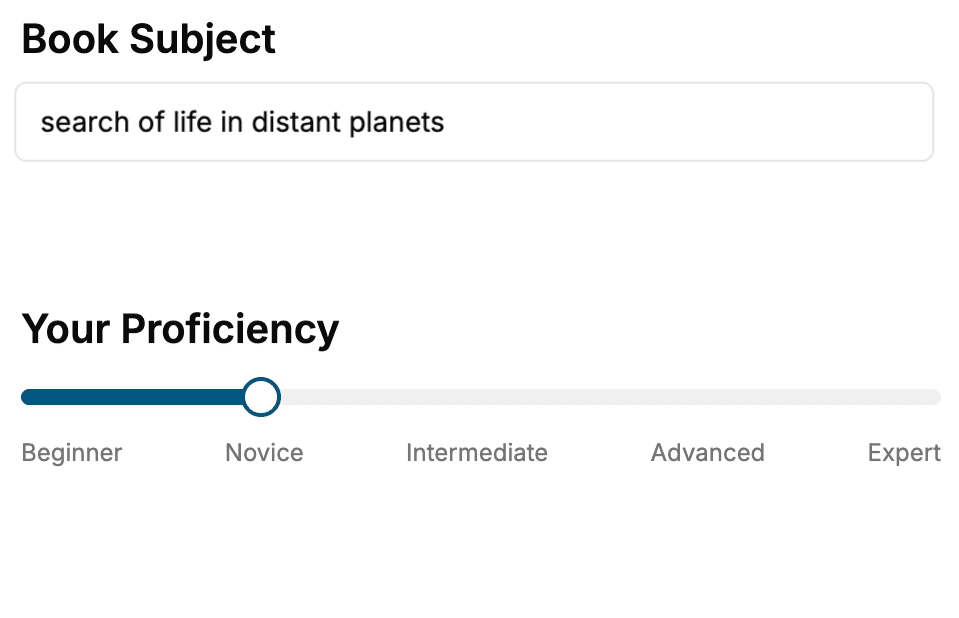
Select the focus of your Psychology book and share your background
- 2. Personalize your book
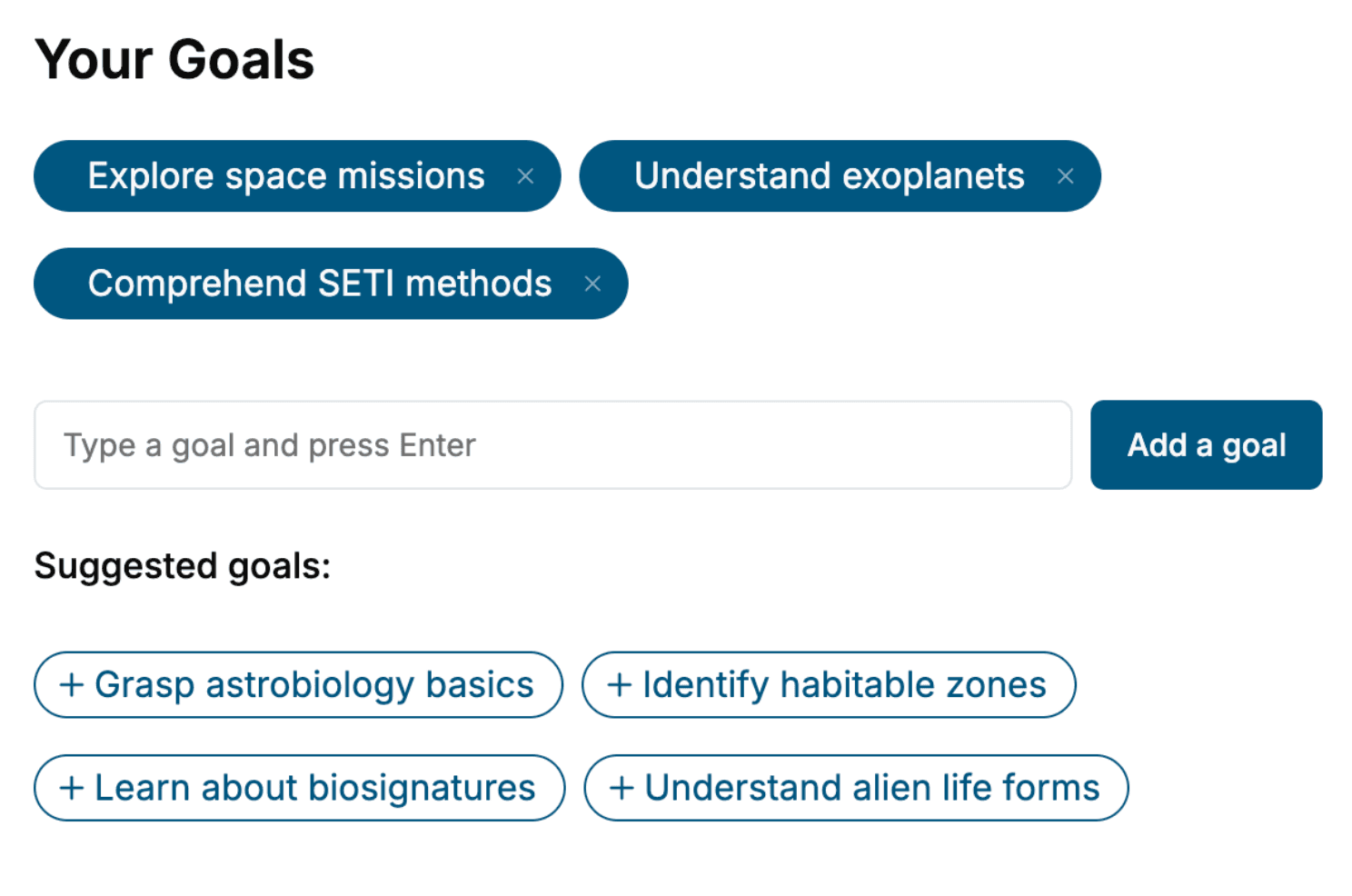
Specify your goals and choose sub-topics to include
- 3. Get your tailored book
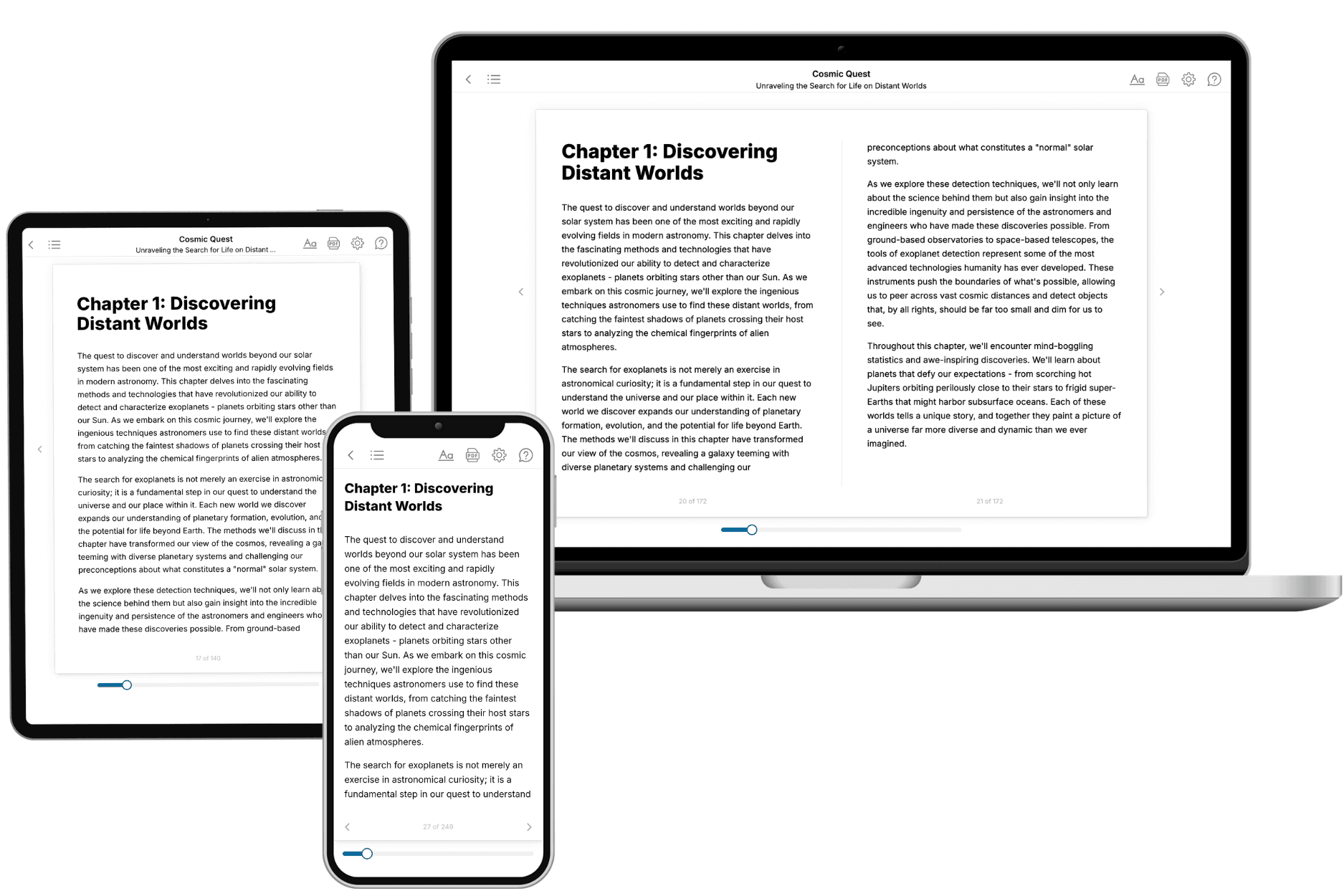
Your book is ready in 10 minutes. Read it online, download as EPUB or PDF, or send to Kindle.
Frequently asked questions
- What is TailoredRead?
TailoredRead creates complete, full-length nonfiction ebooks, written specifically for you. Tell us what you want to learn and why, and TailoredRead writes you a complete ebook on it, with charts, tables, and diagrams throughout. Read it online, on Kindle, or on any e-reader, or download it as a PDF or EPUB. Every book is written fresh the day you order it.
- How is the book tailored to me?
Before anything is written, you answer a few short questions about your goals, your background, and the topics you care about. Your book is then planned around your answers: written at your level, focused on your goals, and covering the topics you chose, instead of the one-size-fits-all book a store sells everyone.
- Will it read like generic AI content?
No. Your book isn't a chat transcript: it's planned chapter by chapter before a single word is written, told in a clear book voice, and explains ideas visually with charts, tables, and diagrams. After writing, every book goes through an editorial pass that polishes chapters so the book reads consistent from start to finish. Judge for yourself: browse thousands of sample books on our Explore Books page.
- How accurate is the content?
Our AI first checks whether your subject needs live research. Niche and fast-moving subjects are researched before writing, and the book plan and chapters are grounded in what it finds. After writing, every book goes through a quality pass that checks its facts and consistency, and researched books list their sources in a Notes section at the back.
- How long is the book?
You choose the length: Comprehensive (250-300 pages), Detailed (150-200 pages), Essential (70-100 pages), or Short (30-50 pages).
- Does the book include visuals?
Yes. Every book includes charts, tables, and diagrams: timelines, checklists, step-by-step guides, decision trees, comparison tables, matrices, and bar charts. A typical book includes dozens of these visual elements.
- Can I read it on Kindle? What formats can I download?
Yes. Every book can be read in our online reader or downloaded as a PDF or EPUB. The EPUB can be opened with Kindle, Apple Books, Kobo, and any e-reader. The Commercial and Author licenses also include an editable Word (DOCX) and Markdown download.
- How much does it cost?
About the price of a regular ebook. The exact price depends on your book's length and complexity, from $2 for the shortest books to $35 for the most comprehensive, and it's shown when you review your book, before you commit to anything. Each book is a one-time purchase, yours to keep, no subscription. Licenses that let you share, teach, or publish your book range from $35.99 to $49.99.
- Can I preview the book before purchasing?
Before you pay, you'll see what your book will cover: the title, a detailed description, the estimated length, and the complete chapter-by-chapter table of contents, so you know what you're getting before you decide. The full text itself is written after you purchase.
- How long does it take to create a book?
About 10 minutes. You can start reading the opening chapters while the rest is still being written.