Measuring What Patients Taste and Value
A practical scorecard for hospital foodservice leaders
Picture a hospital where patients look forward to their meals, nurses spend less time chasing late trays, and foodservice leaders can show exactly where quality is strong and where it is slipping.
191 pages10 chaptersNov 28, 2026Health Care Administration
About this book
This book shows you how to build that picture into a working tool. Written for healthcare professionals who want more than anecdotes about hospital food, it guides you through designing a balanced foodservice scorecard that brings together patient satisfaction, service quality, meal timeliness, menu variety, perceived value, nutrition, and food waste. You will learn how to select meaningful key performance indicators, write clear definitions and targets, and design patient feedback surveys that produce usable data. Drawing on examples from Singapore and England, including the SERVQUAL-HF service-quality approach and national standards for healthcare food, the book shows how to benchmark your results with care. It also explains how to present findings to leaders, integrate clinical dietitian input, and build continuous improvement cycles. Practical and grounded, it gives you a clear route from measurement to better meals and better care.
Table of contents
- IntroductionWhy Hospital Meals Shape Patient Experience, What a Foodservice Scorecard Can Achieve, How to Use This BookRead below
- Chapter 1: Value-Based Thinking in Hospital FoodserviceMoving from Volume to Value, Core Principles of Value-Based Care, Aligning Dietary Services with Quality Goals
- Chapter 2: Foundations of a Balanced ScorecardWhy Balanced Measurement Beats Single Metrics, Lessons from a 2015 Singapore Scorecard, Designing the Structure and Weights
- Chapter 3: Selecting Meaningful Foodservice KPIsPrinciples for Choosing Key Performance Indicators, Writing Clear Definitions, Owners, and Targets, Avoiding Metric Overload
- Chapter 4: Measuring Patient Meal SatisfactionDimensions of Patient Meal Satisfaction, Designing Patient Feedback Surveys, Improving Survey Response and Data Quality
- Chapter 5: Applying SERVQUAL-HF Service QualityWhere SERVQUAL Comes From, Food Quality, Timeliness, Variety, and Convenience, Measuring Perceived Value of Meals
- Chapter 6: Timeliness, Variety, and Menu ChoiceTracking Meal Timeliness Metrics, Evaluating Menu Variety and Patient Choice, Improving Meal Convenience for Staff
- Chapter 7: Nutrition Quality, Food Waste, and OutcomesLinking Nutrition Quality to Patient Outcomes, Reducing Food Waste on Wards, Integrating Clinical Dietitian Input
- Chapter 8: Benchmarking Against Standards and PeersComparing with National Standards in England, Learning from KK Women's and Children's Hospital, Reviewing Outsourced Practice at Sodexo Singapore
- Chapter 9: Turning Data into Dashboards and DecisionsInterpreting Foodservice Data Dashboards, Presenting Scorecard Results to Leaders, Drawing on Toyota Production System Ideas
- Chapter 10: Building Continuous Improvement CyclesApplying Toyota Kata Routines to Foodservice, Training Foodservice Teams for Volume to Value, Sustaining Gains and Renewing the Scorecard
- ConclusionBringing the Scorecard Together, Your Next Steps
Introduction
A tray arrives twenty minutes late to a patient recovering from surgery. The soup has gone cold, the bread is dry, and the patient eats half of what is on the plate before pushing it aside. Down the hall, a nurse manager notes the delay in passing but has no system to record it, no way to connect it to the growing pile of returned trays in the ward kitchen, and no clear path to raise it with foodservice leadership. This scene repeats across hospitals in different forms every day, and it points to a basic problem: hospital food is judged constantly by patients and staff, but rarely measured in a way that leads to action.
That gap between daily experience and structured measurement is the starting point for this book. Hospital foodservice touches nutrition, comfort, dignity, and clinical recovery all at once, yet it is often tracked with a single number, such as a satisfaction percentage on a quarterly survey, if it is tracked at all. A single number cannot tell a dietitian whether the problem is the recipe, the delivery schedule, the portion size, or the choice of menu items offered to a patient with specific dietary needs. Building a fuller picture requires combining several kinds of evidence, drawn from patients, from frontline staff, and from the kitchen's own operational data.
This book argues that a well-built scorecard can close that gap. It treats hospital foodservice as a system with multiple, interacting dimensions: how meals taste and look, whether they arrive on time, whether patients have real choices that fit their needs, whether nutrition targets are met, and whether food is wasted along the way. Each dimension on its own tells a partial story. Brought together with clear definitions and consistent tracking, they let a foodservice leader see patterns that a single satisfaction score would hide, and they give a team the vocabulary to talk about quality in specific, actionable terms.
The chapters ahead build this scorecard piece by piece, moving from the reasoning behind value-based measurement, through the mechanics of choosing indicators and designing surveys, to the practical work of presenting results and sustaining improvement over time. Three ideas introduced here run through all of it: that hospital meals shape far more than appetite, that a scorecard is only useful if it is built with intention rather than assembled from whatever data happens to be easy to collect, and that a book of frameworks is only valuable once it is actually applied on a ward.
Why Hospital Meals Shape Patient Experience
A hospital stay strips away much of the control a person normally has over daily life. Clothing is replaced by a gown, sleep is interrupted by routine checks, and visitors come and go on someone else's schedule. Meals are one of the few remaining moments where a patient still makes a choice and experiences something ordinary and pleasurable. When that moment goes well, even briefly, it can soften the disorientation of being a patient rather than a person managing a normal day. When it goes badly, a cold tray or a missed dietary preference becomes one more small loss of control stacked on top of many others.
Food also carries direct clinical weight that goes beyond comfort. Patients recovering from surgery, undergoing treatment, or managing chronic conditions often have specific nutritional needs that affect healing, strength, and the course of their recovery. A meal that looks appealing but does not meet a patient's nutritional requirements, or one that meets requirements but is left untouched because it tastes poorly prepared, both fail the same underlying goal. This is why nutrition quality and patient satisfaction cannot be treated as separate concerns managed by separate departments. They are two expressions of the same outcome, and later chapters on linking nutrition quality to patient outcomes and integrating clinical dietitian input build directly on this point.
Consider two patients on the same ward with similar diagnoses. One receives a meal on time, is offered a reasonable substitute when a dish does not suit them, and finishes most of the plate. The other waits past the scheduled time, receives a dish that conflicts with a dietary restriction noted in their chart, and eats very little. Clinically, the second patient may be at greater risk of inadequate intake during a critical recovery window, yet without a system for tracking timeliness, menu fit, and consumption together, this difference is invisible to anyone outside the ward. A scorecard exists precisely to make differences like this visible and comparable across time and across wards.
Family members and visitors also form impressions of a hospital's overall quality partly through what they see on a patient's tray. A neglected or unappetizing meal can quietly undermine confidence in the care being delivered, even when the clinical treatment itself is sound. Conversely, a well-presented, appropriately timed meal signals attentiveness that extends trust to other parts of the care experience. Hospital leaders increasingly recognize that meal quality functions as a visible proxy for institutional care, which is one reason foodservice performance has moved from an operational afterthought toward a recognized part of quality and reputation management.
None of this means every hospital food problem is solvable through better scorecards alone. Staffing shortages, aging kitchen infrastructure, and budget constraints all place real limits on what any foodservice team can deliver. What measurement does accomplish is clarity about where the constraints bite hardest and which improvements would matter most to patients, so that limited resources go toward the changes with the greatest effect rather than the loudest complaint. That reframing, from reacting to anecdotes toward acting on patterns, is the thread that connects this introduction to the value-based thinking introduced in the chapter on moving from volume to value.
What a Foodservice Scorecard Can Achieve
A foodservice scorecard, at its simplest, is a structured set of measures that together describe how well meal service is performing across the dimensions that matter to patients, staff, and the organization. It differs from a single satisfaction survey in the same way a dashboard in a car differs from a single fuel gauge. A fuel gauge tells a driver one useful fact, but a dashboard that also shows speed, engine temperature, and tire pressure lets a driver catch a developing problem before it becomes a breakdown. A foodservice scorecard aims for that same early-warning capacity, tracking patient satisfaction alongside timeliness, variety, nutrition quality, and waste so that a decline in one area can be caught and traced to its cause.
One of the clearest achievements of a well-designed scorecard is making trade-offs visible rather than hidden. Foodservice teams constantly face decisions that trade one goal against another: offering more menu variety may increase food waste if portions are misjudged, while tightening delivery schedules to improve timeliness may reduce the time available to accommodate last-minute dietary changes. Without a scorecard, these trade-offs are managed informally and inconsistently, often by whoever is on shift that day. With a scorecard, a team can see the pattern across weeks or months and make a deliberate choice about where to set the balance, informed by data rather than guesswork.
A scorecard also creates a shared language between groups that often talk past each other. Dietitians think in terms of nutritional adequacy, nurses think in terms of ward workflow and patient comfort, foodservice managers think in terms of cost and throughput, and hospital executives think in terms of overall quality scores and benchmarking. A balanced scorecard, built with input from each of these groups, translates each perspective into a measure the others can understand and discuss. The chapter on designing the structure and weights of a balanced scorecard works through exactly how these different domains can be combined without one voice dominating the others.
It helps to be concrete about what a scorecard does not promise. It is not a one-time report that proves a kitchen is doing well, nor is it a certificate hung on a wall. It is closer to a recurring health check that only has value if it is repeated, reviewed, and acted upon. A hospital that builds a thorough scorecard once and never revisits it has built a document, not a management tool. The chapters on turning data into dashboards and on building continuous improvement cycles return to this point directly, showing how a scorecard becomes part of an ongoing rhythm of review rather than a static artifact.
Finally, a scorecard gives foodservice leaders a stronger position when competing for attention and resources within a hospital's broader quality agenda. Departments that can show clear, consistent, well-defined data tend to be taken more seriously in budget and planning conversations than departments relying on impressions and occasional complaints. A foodservice director who can point to a documented trend in meal timeliness, tied to a specific operational cause and a planned remedy, makes a far stronger case for investment than one who can only say that patients "seem happier lately." Measurement, used well, becomes a form of advocacy for better meals.
How to Use This Book
This book is organized to move from reasoning to construction to practice, and it rewards reading roughly in order, though each chapter is written to stand on its own for a reader who needs a specific answer quickly. The early chapters establish why value-based thinking matters and how a balanced scorecard is structured, which gives later, more technical chapters a shared foundation. Readers already comfortable with the underlying logic of balanced measurement may choose to move directly to the chapters on selecting KPIs, patient surveys, and SERVQUAL-HF, which form the practical core of building a working scorecard.
Each chapter follows a consistent pattern: it explains a concept, works through a concrete example drawn from hospital practice, and closes with something actionable, whether a checklist, a set of steps, or a framework for comparing options. This is deliberate. A scorecard built only from theory tends to stall at the planning stage, while one built through small, testable steps tends to survive contact with a real ward and a real budget. Wherever possible, the examples point to how a particular measure, such as meal timeliness or menu variety, would actually be tracked day to day, rather than describing it only in the abstract.
Different readers will enter with different priorities. A nurse manager may care most about the chapters connecting meal convenience to ward workflow and the chapter on reducing food waste, since both directly affect daily shift pressures. A dietitian may be most drawn to the chapters on nutrition quality and clinical dietitian integration, which speak to professional expertise already in place. A quality or operations leader may start with the chapters on benchmarking against national standards and peer institutions, and on presenting scorecard results to leadership, since those chapters speak most directly to organizational accountability. The structure of the book allows for all three entry points without losing coherence.
A recurring theme worth watching for across chapters is the tension between standardization and local context. National standards and instruments such as SERVQUAL-HF offer consistency and comparability, letting one hospital's performance be read against another's. But every hospital has a distinct patient population, kitchen layout, staffing model, and budget, and a scorecard copied wholesale from another institution without adjustment can measure the wrong things for the wrong reasons. The chapters on benchmarking address this tension directly, showing both the value of comparing against established standards and peer examples, and the care needed before assuming another hospital's results translate directly to a different setting.
The book closes by returning to the practical reality that a scorecard is a living tool, not a finished product. The chapters on continuous improvement cycles and on applying structured routines drawn from lean manufacturing thinking are placed last because they depend on everything built earlier. A reader who skips straight to those chapters without first working through what to measure and how to measure it will find the improvement routines have nothing concrete to act on. Used as intended, this book moves a reader from recognizing that hospital food matters, through building the tools to measure it properly, to establishing the habits that keep those tools useful long after the first version of the scorecard is complete.
This is the end of the free sample. The full book has 10 chapters.
Want this book written for you?
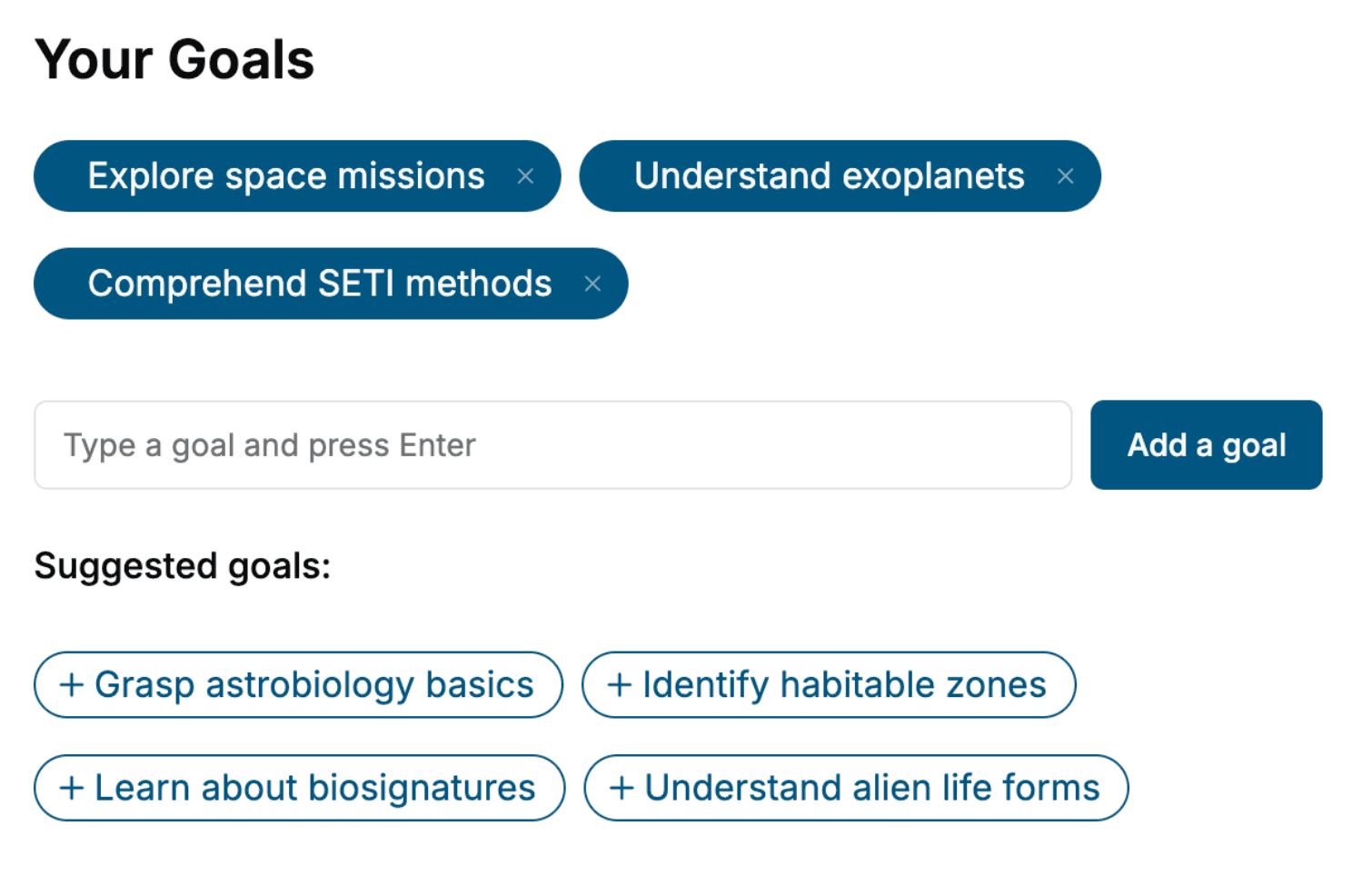
Tell us your goals and background, and get your own version of this book, tailored by AI to you.


Benefits of AI-tailored books
- Read one book, not ten:
- all the Health Care Administration knowledge you need, gathered into a single book.
- Save days of learning:
- tell us your goals, choose your topics, and the whole book is built around them.
- Learn effortlessly:
- Health Care Administration book written for your specific background and expertise.
- Understand at a glance:
- includes charts, tables, timelines, checklists, decision trees, and more.
- Stay current:
- written the day you order it, not years ago.
- Trust what you read:
- every book is checked for accuracy, with real research when your subject needs it.
Create your unique book in 3 steps
- 1. Select your focus
Select the focus of your Health Care Administration book and share your background
- 2. Personalize your book
Specify your goals and choose sub-topics to include
- 3. Get your tailored book
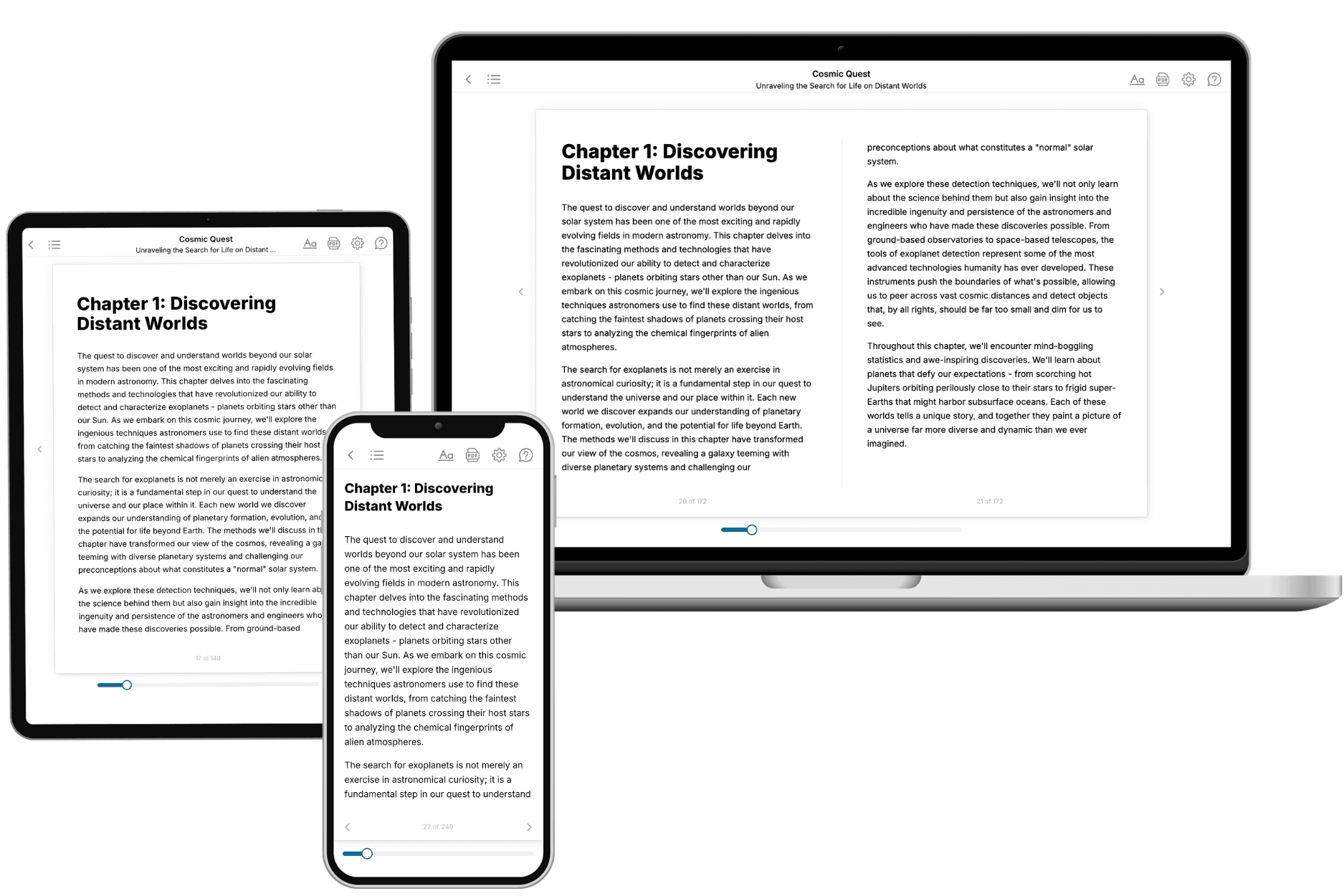
Your book is ready in 10 minutes. Read it online, download as EPUB or PDF, or send to Kindle.

Frequently asked questions
- What is TailoredRead?
TailoredRead creates complete, full-length nonfiction ebooks, written specifically for you. Tell us what you want to learn and why, and TailoredRead writes you a complete ebook on it, with charts, tables, and diagrams throughout. Read it online, on Kindle, or on any e-reader, or download it as a PDF or EPUB. Every book is written fresh the day you order it.
- How is the book tailored to me?
Before anything is written, you answer a few short questions about your goals, your background, and the topics you care about. Your book is then planned around your answers: written at your level, focused on your goals, and covering the topics you chose, instead of the one-size-fits-all book a store sells everyone.
- Will it read like generic AI content?
No. Your book isn't a chat transcript: it's planned chapter by chapter before a single word is written, told in a clear book voice, and explains ideas visually with charts, tables, and diagrams. After writing, every book goes through an editorial pass that polishes chapters so the book reads consistent from start to finish. Judge for yourself: browse thousands of sample books on our Explore Books page.
- How accurate is the content?
Our AI first checks whether your subject needs live research. Niche and fast-moving subjects are researched before writing, and the book plan and chapters are grounded in what it finds. After writing, every book goes through a quality pass that checks its facts and consistency, and researched books list their sources in a Notes section at the back.
- How long is the book?
You choose the length: Comprehensive (250-300 pages), Detailed (150-200 pages), Essential (70-100 pages), or Short (30-50 pages).
- Does the book include visuals?
Yes. Every book includes visual elements such as timelines, checklists, step-by-step guides, decision trees, comparison tables, and matrices, and many include bar charts. A typical book includes dozens of these visual elements.
- Can I read it on Kindle? What formats can I download?
Yes. Every book can be read in our online reader or downloaded as a PDF or EPUB. The EPUB can be opened with Kindle, Apple Books, Kobo, and any e-reader. The Commercial and Author licenses also include an editable Word (DOCX) and Markdown download.
- How much does it cost?
About the price of a regular ebook. The exact price depends on your book's length and complexity, from $5 for the shortest books to $35 for the most comprehensive, and it's shown when you review your book, before you commit to anything. Each book is a one-time purchase, yours to keep, no subscription. Licenses that let you share, teach, or publish your book range from $35.99 to $49.99.
- Can I preview the book before purchasing?
Before you pay, you'll see what your book will cover: the title, a detailed description, the estimated length, and the complete chapter-by-chapter table of contents, so you know what you're getting before you decide. The full text itself is written after you purchase.
- How long does it take to create a book?
10 minutes. You can start reading the opening chapters while the rest is still being written.