Meditate for Focus
Master Your Mind, Amplify Your Potential, and Achieve Your Goals
Struggling to maintain focus in a world of endless distractions?
191 pages9 chaptersJul 25, 2026Meditation
About this book
You're not alone. Most people find their attention fragmented, their minds scattered, and their potential unrealized. The gap between where you are and where you want to be often comes down to one critical factor: the ability to direct your attention with intention and sustain it over time. This book reveals how meditation—a practice often misunderstood as passive or spiritual—is actually a powerful cognitive tool that rewires your brain for laser-sharp focus and sustained achievement. You'll discover practical meditation techniques designed specifically to strengthen attention, overcome mental obstacles, and develop the growth mindset that separates those who achieve their goals from those who don't. Through evidence-based strategies and actionable practices, you'll learn to quiet mental noise, enhance decision-making, and build the mental resilience needed to pursue ambitious goals. Whether you're an entrepreneur, professional, student, or anyone seeking to maximize their potential, this guide provides the roadmap to transform your relationship with focus and unlock your capacity for meaningful success.
Table of contents
- IntroductionWhy Focus Matters More Than Ever, Clearing Meditation Misconceptions, What You'll Learn in This Book, How to Use This GuideRead below
- Chapter 1: The Focus Crisis and Your BrainHow Modern Life Attacks Your Attention, The Brain Science of Focus, The Hidden Cost of Chronic Distraction
- Chapter 2: Meditation as a Focus ToolWhat Meditation Actually Is, The Direct Connection Between Meditation and Focus, How Practice Rewires Your Brain, What Research Reveals About Meditation and Attention
- Chapter 3: Growth Mindset: The Foundation for SuccessFixed Mindset vs. Growth Mindset, How Your Mindset Shapes Your Focus Capacity, Building a Growth Mindset Through Practice
- Chapter 4: Foundational Meditation PracticesBreath Awareness: Your Foundation, Body Scan Meditation for Grounding, Open Monitoring: Observing Without Judgment, Establishing Your Daily Practice Routine
- Chapter 5: Advanced Focus TechniquesFocused Attention Meditation for Deep Concentration, Loving-Kindness Meditation for Mental Clarity, Visualization Techniques for Goal-Directed Focus, Combining Techniques for Maximum Impact
- Chapter 6: Overcoming Mental ObstaclesManaging Restlessness and Racing Thoughts, Overcoming Resistance and Self-Doubt, Handling External and Internal Distractions, Moving Through Plateaus to Breakthroughs
- Chapter 7: Meditation for Goal AchievementGaining Clarity on Your True Goals, Aligning Your Focus Strategy with Your Goals, Using Meditation to Sustain Motivation, Tracking Progress and Celebrating Wins
- Chapter 8: Integrating Meditation Into Your LifeCustomizing Your Practice for Your Lifestyle, Meditation Strategies for Work and Productivity, How Meditation Enhances Relationships and Communication, Building Sustainable Long-Term Practice
- Chapter 9: The Meditation-Success CycleHow Success Reinforces Your Practice, Building Confidence Through Consistent Results, Deepening Your Practice as You Grow
- ConclusionYour Next Steps, Final Thoughts on Focus and Potential
- Appendix: Quick Reference GuideGuided Meditation Scripts, Practice Tracking Templates, Additional Resources and Tools
Introduction
The average person checks their phone 96 times a day, roughly once every ten minutes during waking hours.[1] That number is not just a curiosity about modern habits. It is a signal about something deeper: the widespread erosion of the ability to stay with one thing long enough to do it well. Attention has become fragmented, and most people feel it. The work that used to take an hour now stretches into an afternoon. The book sits unread. The goal stays unstarted. The gap between intention and action widens, and it is rarely about motivation or intelligence. It is almost always about focus.
Meditation has been practiced for thousands of years, but its relevance to the modern focus problem is not historical or spiritual. It is neurological. Decades of research have shown that regular meditation practice physically changes the brain, strengthening the networks responsible for sustained attention, impulse control, and self-regulation. This is not a metaphor. The Prefrontal Cortex, the region most associated with deliberate, goal-directed thinking, shows measurable structural changes in people who meditate consistently.[2] The brain you train is the brain you use.
This book is built for people who already have some experience with meditation and want to go further. You have probably sat with your breath before. You may have tried an app, attended a class, or worked through a beginner's guide. You know the basics work, but you want to understand why they work, how to deepen them, and how to connect them directly to the goals and challenges that matter most in your life. That is exactly what this guide is designed to do. It moves from the science of attention to the mechanics of practice to the real-world application of focus as a professional and personal skill.
The structure of this book follows a deliberate arc. It begins with the problem, moves through the tools, and ends with integration. Each chapter builds on the last, but the guide is also designed so you can navigate to the sections most relevant to where you are right now. Whether you are trying to rebuild a lapsed practice, push through a plateau, or connect your meditation to specific goals, there is a clear entry point for you here.
Why Focus Matters More Than Ever
Focus is not simply the ability to avoid distraction. It is the capacity to direct your attention deliberately, sustain it over time, and return it when it wanders. That last part is the most important. The mind will always wander. The question is how quickly and how reliably you can bring it back. That recovery skill is what separates people who consistently make progress on meaningful work from those who stay perpetually busy but rarely move forward.
The environment most people work and live in today is not neutral on this question. It is actively hostile to sustained attention. Notifications, open-plan offices, social media feeds, and the constant availability of communication tools all create what researchers call Cognitive Overload: a state where the brain is processing more competing inputs than it can handle efficiently. When the brain is overloaded, it defaults to shallow, reactive processing rather than the deep, deliberate thinking that produces real results.[3]
The cost of this overload is not just productivity. Research on Task-Switching Cost shows that every time you shift your attention from one task to another, there is a measurable cognitive penalty. The brain does not switch cleanly. It carries residue from the previous task into the next one, reducing the quality of both. Studies have estimated that it can take more than 20 minutes to fully regain deep focus after a significant interruption.[4] In a workday full of interruptions, genuine deep focus may never happen at all.
This is where the stakes become personal. The goals that matter most, whether building a business, mastering a craft, deepening a relationship, or developing a new skill, all require sustained, high-quality attention over time. They cannot be accomplished in the gaps between notifications. They require the kind of focused engagement that most people have not been trained to sustain. The Attention Crisis is not just a productivity problem. It is a potential problem, because unrealized focus means unrealized capability.
The encouraging reality is that focus is trainable. It is not a fixed trait you either have or lack. The brain's capacity for Neuroplasticity, its ability to reorganize and strengthen neural pathways in response to repeated experience, means that deliberate practice can rebuild attention capacity even after years of fragmentation. Meditation is the most well-researched and consistently effective method for doing exactly that. It is, in the most literal sense, attention training.
Consider what becomes possible when focus is no longer the bottleneck. Decisions become clearer because the mind is not cluttered with competing noise. Creative work deepens because sustained attention allows ideas to develop fully rather than being abandoned mid-thought. Relationships improve because presence is a form of attention. Goals move from aspiration to action because the mental energy required to pursue them is available and directed. Focus is not one skill among many. It is the skill that amplifies every other one.
Focus is the force multiplier. Sharpen it, and everything else you are trying to build gets easier, faster, and more sustainable.
Clearing Meditation Misconceptions
Meditation carries a lot of cultural baggage. Depending on your background, the word might conjure images of monks in robes, incense-filled rooms, or wellness influencers on Instagram. None of those associations are relevant to what this book is about. Meditation, as used here, is a specific set of mental training practices with measurable effects on attention, cognition, and emotional regulation. The spiritual or cultural context in which any given tradition developed is separate from the cognitive mechanics that make the practice work.
The most persistent misconception is that meditation means emptying the mind. This is not what meditation is, and it is not what any serious practitioner or researcher describes. The mind thinks. That is what it does. The goal of meditation is not to stop thoughts from arising but to change your relationship with them. Specifically, to develop the ability to notice when attention has drifted and to redirect it without frustration or self-judgment. That noticing-and-returning cycle is the actual training mechanism. Every time you do it, you are strengthening the neural circuits responsible for attentional control.
A second common misconception is that meditation requires large blocks of time to be effective. Research does not support this. Studies on brief, consistent practice have shown meaningful improvements in attention and stress regulation with sessions as short as 10 to 15 minutes per day, provided the practice is regular.[5] The key variable is consistency, not duration. A 10-minute daily practice maintained for months will produce far greater results than occasional 45-minute sessions. This book includes guidance on Micro-Practice formats specifically designed for busy schedules.
A third misconception is that meditation is passive. This one is particularly worth addressing for anyone motivated by achievement and performance. Meditation is active mental work. During a focused session, the brain is engaged in a demanding cognitive task: monitoring attention, detecting drift, disengaging from distraction, and redirecting focus. Brain imaging studies show significant activation in attention-related regions during meditation, not the quiet, low-activity state many people assume.[6] Sitting still does not mean doing nothing.
There is also a misconception that meditation is only useful for stress reduction. Stress reduction is a real and well-documented benefit, but it is a byproduct of a deeper mechanism. When you train attention, you also improve working memory, reduce the reactivity of the brain's threat-detection systems, and strengthen the capacity for deliberate, goal-directed thinking. These effects extend far beyond stress. They show up in decision quality, creative problem-solving, interpersonal communication, and the ability to pursue long-term goals without being derailed by short-term discomfort.
Finally, some people believe that meditation is only for certain personality types, typically those who are naturally calm, introverted, or spiritually inclined. The research does not support this either. The people who tend to benefit most from attention training are often those who find it hardest at first: high-stimulus seekers, chronic multitaskers, and people with restless, active minds. The difficulty is the point. Training works precisely because it challenges the system. If your mind wanders constantly during meditation, that is not a sign that you are doing it wrong. It is a sign that the training is exactly what you need.
- Myth: Meditation means emptying your mind. Reality: It means training your ability to notice and redirect attention.
- Myth: You need 30-60 minutes a day to see results. Reality: Consistent short sessions of 10-15 minutes produce measurable benefits.
- Myth: Meditation is passive. Reality: It is active cognitive training with measurable brain engagement.
- Myth: It only helps with stress. Reality: It improves attention, decision-making, memory, and goal pursuit.
- Myth: It is only for certain personality types. Reality: Those who struggle most with focus often benefit most from the practice.
What You'll Learn in This Book
This book covers a specific and connected set of ideas, skills, and practices. It is not a survey of meditation traditions or a general wellness guide. Every chapter is oriented toward a single outcome: helping you develop the focused, resilient, goal-directed mind that makes meaningful achievement possible. The content moves from understanding to practice to integration, and each layer builds on the one before it.
The first part of the book examines the problem. The chapter on the focus crisis and the brain explains what Chronic Distraction actually does to cognitive performance, how the Default Mode Network contributes to mind-wandering, and why the modern environment is particularly damaging to sustained attention. Understanding the mechanism matters because it changes how you approach the solution. You are not fighting laziness or lack of willpower. You are working with a brain that has been shaped by its environment, and you are deliberately reshaping it.
The second part establishes meditation as the mechanism for that reshaping. This includes a clear explanation of what meditation is and is not, the direct connection between meditation and focus, and the neuroscience of how consistent practice produces structural and functional changes in the brain. The chapter on Growth Mindset sits here as well, because the psychological framework you bring to practice determines whether the gains you make are temporary or permanent. A Fixed Mindset treats focus as a trait. A Growth Mindset treats it as a skill. That distinction changes everything about how you respond to difficulty, setbacks, and plateaus.
The third part is the practical core of the book. It covers foundational techniques including Breath Awareness, Body Scan Meditation, and Open Monitoring Meditation, then moves into advanced practices including Focused Attention Meditation, Loving-Kindness Meditation, and Visualization Meditation. Each technique is explained with enough detail to practice immediately, along with guidance on common challenges and how to work through them. The chapter on overcoming mental obstacles addresses Self-Doubt in Practice, restlessness, and the experience of hitting a Plateau Breakthrough point.
The fourth part connects practice to outcomes. The chapter on meditation for goal achievement introduces Goal Clarity Meditation and Focus-Goal Alignment as specific tools for identifying what you actually want and directing your attention toward it consistently. The integration chapter covers Workplace Meditation, Relational Mindfulness, and how to build a Daily Practice Routine that fits your actual life rather than an idealized version of it. The final chapter on the Success-Practice Feedback Loop explains how results and practice reinforce each other over time, creating a compounding effect that makes both easier as they develop.
Throughout the book, the emphasis is on application. Every concept is paired with a concrete practice, a specific example, or a framework you can use immediately. The goal is not to give you more information about meditation. It is to give you a working system for using meditation to sharpen your focus, clarify your goals, and build the mental resilience that sustained achievement requires.
By the time you reach the final chapter, you will have a complete picture of how attention works, why it breaks down, how meditation rebuilds it, and how to connect that rebuilt attention to the specific goals and challenges that matter most in your life. More importantly, you will have the tools to keep developing that capacity long after you finish reading.
How to Use This Guide
This guide is designed to be read sequentially on a first pass. The chapters build on each other in a deliberate order, and the concepts introduced early in the book are referenced and applied in later chapters. If you skip directly to the advanced techniques without the foundational context, the practices will still work, but you will miss the understanding of why they work, which is what makes them sustainable over time. Read it through once, then return to the sections most relevant to your current practice.
Each chapter ends with a set of practical takeaways and, where appropriate, a specific practice to try. These are not optional extras. They are the actual mechanism of change. Reading about meditation produces intellectual understanding. Practicing it produces neurological change. The two are not interchangeable. Treat the practices as the primary content and the explanatory text as the context that makes the practices meaningful.
If you already have an established practice and are coming to this book with specific challenges in mind, here is a practical navigation guide:
- If your focus keeps breaking down at work, the chapters on the focus crisis and on Workplace Meditation are your most immediate entry points.
- If you feel stuck or like your practice has stopped producing results, the chapter on overcoming mental obstacles and the section on Plateau Breakthrough will be most useful.
- If you are clear on your practice but unclear on your goals, the chapter on meditation for goal achievement and Goal Clarity Meditation is where to start.
- If you struggle to maintain consistency, the chapters on establishing a Daily Practice Routine and building sustainable long-term practice address this directly.
- If you want to understand the science behind what you are already experiencing, the chapters on Neuroplasticity and the brain science of focus provide that foundation.
One practical suggestion: keep a notebook or a simple notes app dedicated to your work with this book. Not for journaling in a general sense, but for tracking specific observations from your practice sessions. What did you notice? Where did your attention go? What made it easier or harder to return? This kind of metacognitive record-keeping accelerates learning significantly. It turns vague impressions into data you can actually work with, and it builds the self-awareness that is one of the most valuable long-term outcomes of consistent practice.
The practices in this book range from 5 minutes to 30 minutes. Most of the core techniques are designed to be done in 10 to 20 minutes. If your schedule is genuinely constrained, the Micro-Practice formats described in the integration chapter can be done in 3 to 5 minutes and still produce meaningful results when used consistently. The goal is to find a format that you will actually do every day, not the most impressive format you can manage on your best days. Regularity beats intensity at every stage of practice development.
A note on expectations: progress in meditation is real but not always linear. There will be sessions that feel clear and focused, and sessions that feel scattered and frustrating. Both are part of the process. The scattered sessions are not failures. They are the training stimulus. The brain strengthens its attentional circuits precisely by practicing the return from distraction, not by avoiding distraction altogether. When a session feels difficult, that is not a sign to stop. It is a sign that the work is happening.
Finally, approach this material with the same Growth Mindset that the book advocates. You are not trying to become a perfect meditator. You are building a skill that compounds over time. The person who sits down for 12 minutes every morning, even when it feels unremarkable, will develop a fundamentally different relationship with their own attention than the person who waits for the perfect conditions to practice. The conditions are never perfect. The practice is what creates them.
The most important session is the next one. Not the ideal one, not the longest one, not the one where everything clicks. The next one.
Notes
Introduction
- 1. Asurion, "Americans Check Their Phones 96 Times a Day," Asurion, 2019
- 2. Sara Lazar and others, "Meditation Experience Is Associated with Increased Cortical Thickness," NeuroReport, 2005
- 3. Gloria Mark, Attention Span, Hanover Square Press, 2023
- 4. Gloria Mark and others, "The Cost of Interrupted Work," Proceedings of the SIGCHI Conference on Human Factors in Computing Systems, 2008
- 5. Fadel Zeidan and others, "Mindfulness Meditation Improves Cognition," Consciousness and Cognition, 2010
- 6. Antoine Lutz and others, "Attention Regulation and Monitoring in Meditation," Trends in Cognitive Sciences, 2008
This is the end of the free sample. The full book has 9 chapters.
Want this book written for you?
Tell us your goals and background, and get your own version of this book, tailored by AI to you.


Benefits of AI-tailored books
- Read one book, not ten:
- all the Meditation knowledge you need, gathered into a single book.
- Save days of learning:
- tell us your goals, choose your topics, and the whole book is built around them.
- Learn effortlessly:
- Meditation book written for your specific background and expertise.
- Understand at a glance:
- includes charts, tables, timelines, checklists, decision trees, and more.
- Stay current:
- written the day you order it, not years ago.
- Trust what you read:
- every book is checked for accuracy, with real research when your subject needs it.
Create your unique book in 3 steps
- 1. Select your focus
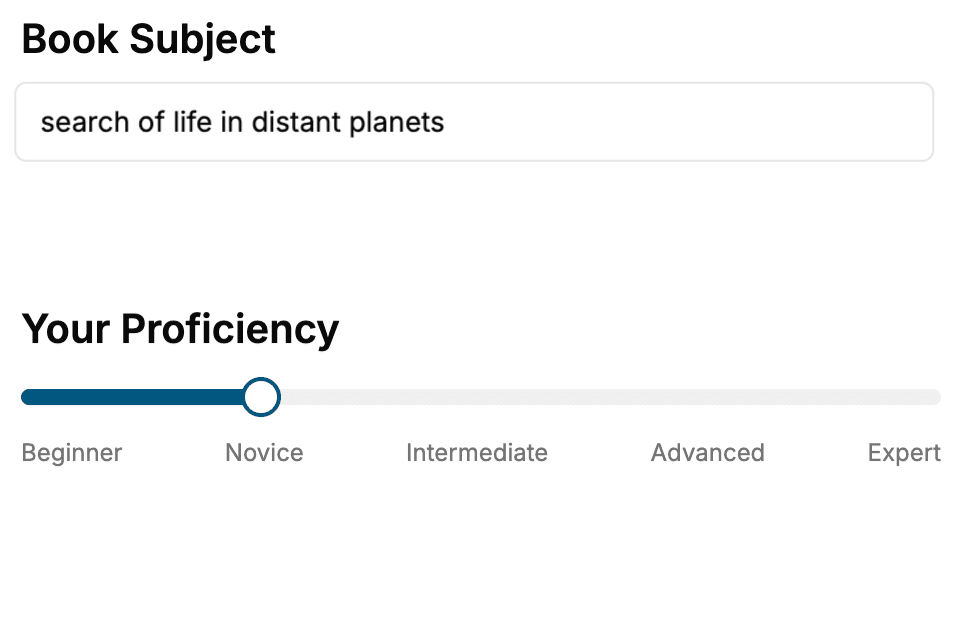
Select the focus of your Meditation book and share your background
- 2. Personalize your book
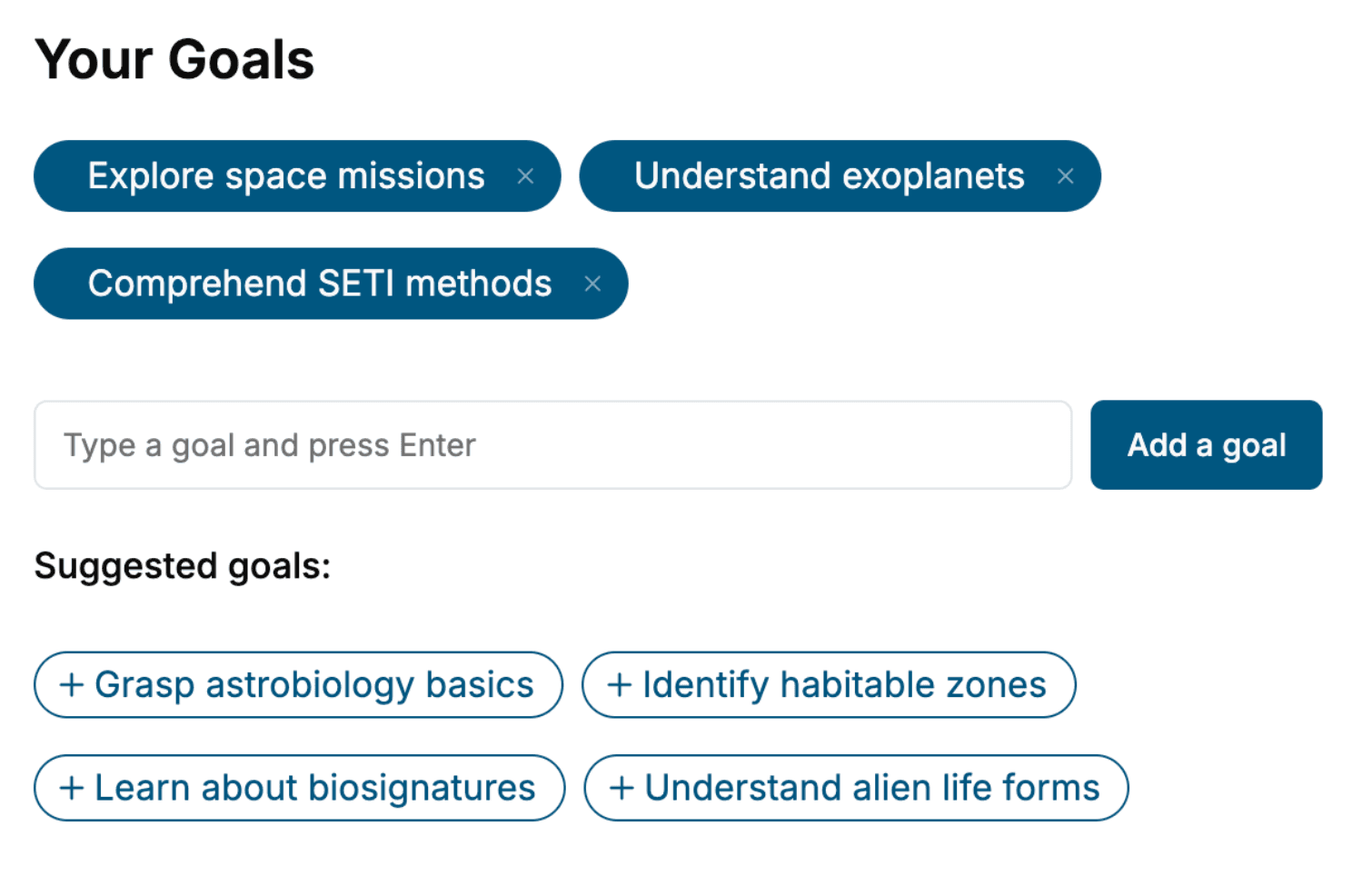
Specify your goals and choose sub-topics to include
- 3. Get your tailored book
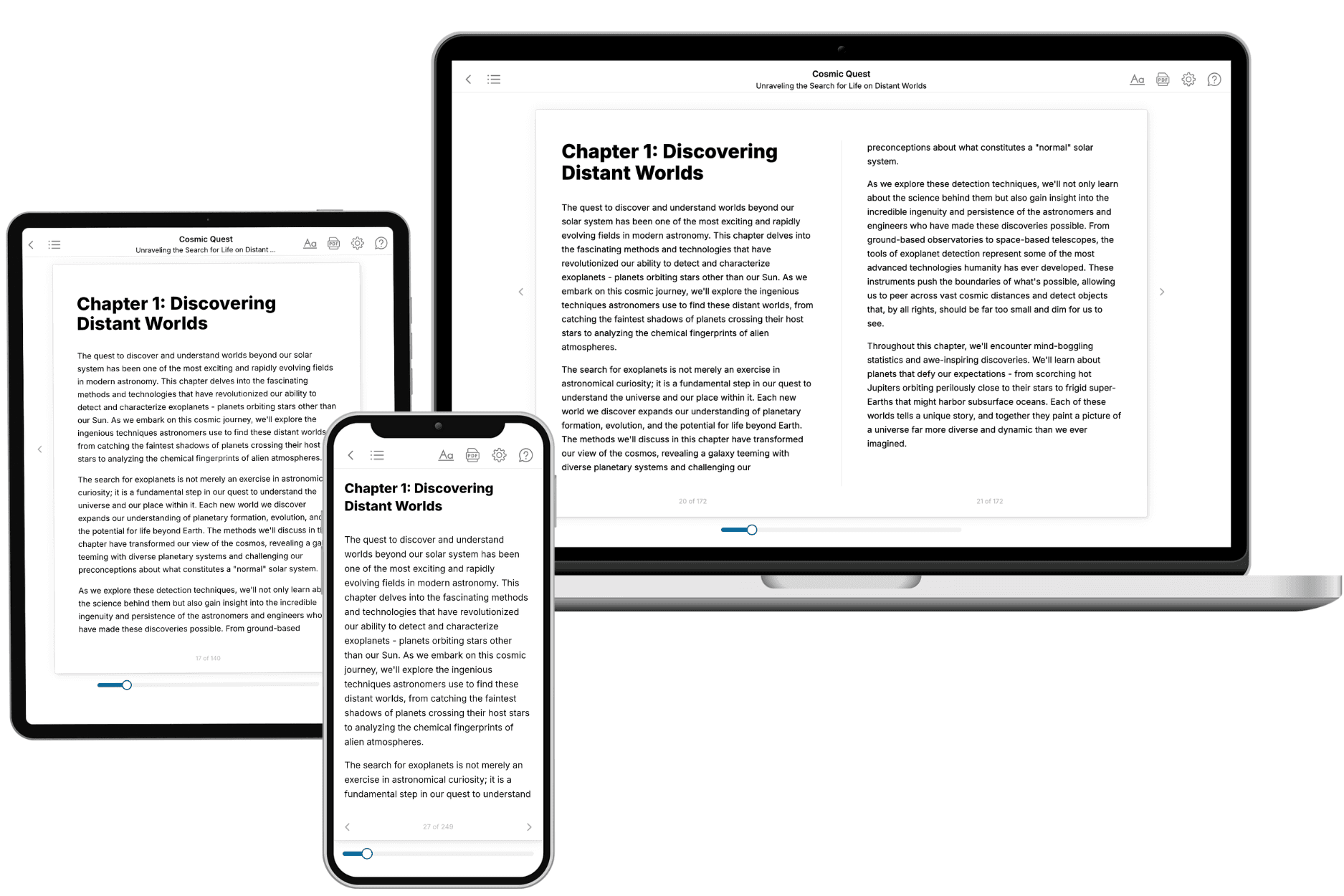
Your book is ready in 10 minutes. Read it online, download as EPUB or PDF, or send to Kindle.
Frequently asked questions
- What is TailoredRead?
TailoredRead creates complete, full-length nonfiction ebooks, written specifically for you. Tell us what you want to learn and why, and TailoredRead writes you a complete ebook on it, with charts, tables, and diagrams throughout. Read it online, on Kindle, or on any e-reader, or download it as a PDF or EPUB. Every book is written fresh the day you order it.
- How is the book tailored to me?
Before anything is written, you answer a few short questions about your goals, your background, and the topics you care about. Your book is then planned around your answers: written at your level, focused on your goals, and covering the topics you chose, instead of the one-size-fits-all book a store sells everyone.
- Will it read like generic AI content?
No. Your book isn't a chat transcript: it's planned chapter by chapter before a single word is written, told in a clear book voice, and explains ideas visually with charts, tables, and diagrams. After writing, every book goes through an editorial pass that polishes chapters so the book reads consistent from start to finish. Judge for yourself: browse thousands of sample books on our Explore Books page.
- How accurate is the content?
Our AI first checks whether your subject needs live research. Niche and fast-moving subjects are researched before writing, and the book plan and chapters are grounded in what it finds. After writing, every book goes through a quality pass that checks its facts and consistency, and researched books list their sources in a Notes section at the back.
- How long is the book?
You choose the length: Comprehensive (250-300 pages), Detailed (150-200 pages), Essential (70-100 pages), or Short (30-50 pages).
- Does the book include visuals?
Yes. Every book includes charts, tables, and diagrams: timelines, checklists, step-by-step guides, decision trees, comparison tables, matrices, and bar charts. A typical book includes dozens of these visual elements.
- Can I read it on Kindle? What formats can I download?
Yes. Every book can be read in our online reader or downloaded as a PDF or EPUB. The EPUB can be opened with Kindle, Apple Books, Kobo, and any e-reader. The Commercial and Author licenses also include an editable Word (DOCX) and Markdown download.
- How much does it cost?
About the price of a regular ebook. The exact price depends on your book's length and complexity, from $2 for the shortest books to $35 for the most comprehensive, and it's shown when you review your book, before you commit to anything. Each book is a one-time purchase, yours to keep, no subscription. Licenses that let you share, teach, or publish your book range from $35.99 to $49.99.
- Can I preview the book before purchasing?
Before you pay, you'll see what your book will cover: the title, a detailed description, the estimated length, and the complete chapter-by-chapter table of contents, so you know what you're getting before you decide. The full text itself is written after you purchase.
- How long does it take to create a book?
About 10 minutes. You can start reading the opening chapters while the rest is still being written.