Microwave Mug Cakes
Quick, Easy, and Delicious Single-Serving Desserts in Minutes
Stop settling for mediocre desserts or spending hours in the kitchen.
191 pages9 chaptersDec 20, 2025Baking and Desserts
About this book
You'll master the art of creating indulgent, single-serving cakes that are ready in minutes, not hours. This guide reveals the science and technique behind perfect microwave mug cakes, moving beyond basic recipes to show you how to build complex flavors, achieve ideal texture, and troubleshoot common mistakes. Whether you're craving chocolate, fruit, or something more adventurous, you'll learn how to customize recipes to match your taste and dietary needs. Discover how to select the right mug, understand your microwave's quirks, and use simple techniques that transform basic ingredients into desserts that taste homemade and intentional. Perfect for busy professionals, students, or anyone who wants restaurant-quality desserts without the fuss, this book gives you the confidence and knowledge to create cakes that impress yourself and others.
Table of contents
- IntroductionWhy Mug Cakes Are a Game-Changer, What You'll Learn in This Book, How to Use This Guide for Best ResultsRead below
- Chapter 1: The Science Behind Microwave Mug CakesHow Microwaves Heat Food Differently, Understanding Moisture and Texture in Microwave Baking, Chemical Reactions That Make Cakes Rise
- Chapter 2: Essential Equipment and IngredientsSelecting the Perfect Mug, Understanding Your Microwave's Power and Settings, Pantry Essentials for Mug Cake Success, Optional Tools That Make Life Easier
- Chapter 3: Mastering the Basic Mug Cake FormulaThe Perfect Ingredient Ratios, Mixing Techniques for Optimal Results, Timing and Microwave Power Settings, Testing for Doneness Without Overbaking
- Chapter 4: Classic Flavor CombinationsChocolate Mug Cakes: Dark, Milk, and White, Vanilla and Butter-Based Cakes, Fruit-Infused Mug Cakes, Spiced and Warm Flavor Profiles
- Chapter 5: Advanced Flavor BuildingUsing Extracts and Essences Effectively, Strategic Mix-Ins: Nuts, Chocolate Chips, and More, Layering Flavors for Complexity
- Chapter 6: Dietary Modifications and SubstitutionsGluten-Free Mug Cake Adaptations, Dairy-Free and Vegan Substitutions, Sugar Alternatives and Lower-Calorie Options, Managing Common Food Allergies
- Chapter 7: Toppings, Frostings, and Finishing TouchesQuick Frostings and Glazes, Fresh Fruit and Whipped Cream Toppings, Presentation Tips for Restaurant-Quality Results
- Chapter 8: Troubleshooting Common ProblemsFixing Dry or Rubbery Cakes, Solving Undercooked or Gooey Centers, Preventing Overflow and Mess, Addressing Flat or Bland Flavors
- Chapter 9: Quick Recipe CollectionChocolate Cake Recipes, Fruit Cake Recipes, Specialty and Seasonal Recipes
- ConclusionYour Mug Cake Journey Starts Now
- Appendix: Quick Reference GuideIngredient Conversion Chart, Microwave Power Level Guide, Flavor Pairing Suggestions
Introduction
Picture this: it's 9 PM on a Tuesday, and you're craving something sweet. The thought of preheating an oven, measuring ingredients for a full batch, and waiting forty-five minutes feels exhausting. You could reach for store-bought cookies or ice cream, but neither quite satisfies that specific desire for warm, freshly baked cake. This is exactly where microwave mug cakes transform your dessert experience. In less time than it takes to watch a sitcom episode, you can create a personalized, restaurant-quality dessert using ingredients already in your pantry and equipment you use every day.
Microwave mug cakes have evolved far beyond the rubbery, disappointing experiments that first circulated on social media. When you understand the science behind microwave heating and apply proper technique, these single-serving desserts deliver moist, flavorful results that rival traditional baking methods. The key difference lies in knowledge—knowing which ingredients work together, how your specific microwave behaves, and what techniques prevent common pitfalls. This isn't about settling for convenience over quality. It's about mastering a legitimate cooking method that happens to be remarkably efficient.
This book exists to give you that mastery. You won't find vague recipes that work sometimes or generic instructions that ignore the variables affecting your results. Instead, you'll discover the principles that make mug cakes succeed, the adjustments that account for different equipment and preferences, and the creative possibilities that transform basic recipes into signature desserts. Whether you're a busy professional seeking quick stress relief, a student working with limited kitchen access, or simply someone who appreciates efficiency without sacrificing quality, these techniques will change how you approach dessert. The goal isn't just to follow recipes—it's to understand the method so thoroughly that you can create, adapt, and troubleshoot with confidence.
Why Mug Cakes Are a Game-Changer
Traditional baking demands commitment. You need to plan ahead, gather ingredients, preheat equipment, and produce quantities that often exceed what one or two people can reasonably consume before staleness sets in. This creates a barrier between craving and satisfaction that discourages spontaneous baking. Mug cakes eliminate these obstacles entirely. The entire process—from gathering ingredients to enjoying warm cake—takes under five minutes. There's no preheating, no batch planning, and no leftover management. You make exactly what you want, when you want it, without the infrastructure that traditional baking requires.
The portion control aspect deserves particular attention. When you bake a full cake or batch of brownies, willpower becomes your only defense against overconsumption. Even with good intentions, having twelve servings available creates pressure to eat more than you planned. Mug cakes solve this elegantly by producing a single, satisfying portion. You get the complete sensory experience of fresh-baked dessert—the aroma, the warmth, the texture—without the temptation or waste that comes with larger quantities. This makes indulgence feel intentional rather than excessive, which fundamentally changes your relationship with dessert.
Customization represents another transformative advantage. Traditional recipes require you to commit to specific flavors and ingredients for an entire batch. If you're baking for multiple people with different preferences or dietary restrictions, you face difficult compromises. With mug cakes, each person creates their ideal version simultaneously. One person makes a gluten-free chocolate cake while another prepares a dairy-free vanilla version. You can experiment with new flavor combinations without risking ingredients on a full batch. This flexibility encourages creativity and ensures everyone gets exactly what they want without negotiation or disappointment.
The accessibility factor matters tremendously for specific living situations. College students in dormitories, professionals in studio apartments, and anyone without full kitchen access can still enjoy homemade desserts. You don't need an oven, stand mixer, or extensive bakeware collection. A microwave and a mug—equipment most people already own—provide everything necessary. This democratizes baking in ways that traditional methods never could. The barrier to entry drops so low that even complete beginners can achieve success on their first attempt, building confidence that might eventually lead to more ambitious baking projects.
Speed creates opportunities that wouldn't otherwise exist. When unexpected guests arrive, you can offer fresh dessert without panic or apology. When a child requests a special treat, you can say yes without derailing your evening schedule. When stress demands comfort food, you can respond immediately rather than talking yourself out of it because the process feels too demanding. This responsiveness transforms dessert from an occasional event requiring planning into an accessible option that fits naturally into daily life. The psychological impact of knowing you can create something delicious in minutes shouldn't be underestimated—it provides a sense of capability and control that extends beyond the kitchen.
Environmental and economic considerations add practical benefits. Traditional baking heats your entire oven to cook a single batch, consuming significant energy regardless of quantity. Microwaves use substantially less power and generate minimal ambient heat—a particular advantage during summer months when oven use makes kitchens uncomfortable. The ingredient quantities required for mug cakes cost pennies per serving, far less than store-bought desserts or coffee shop treats. Over time, these savings accumulate meaningfully. You're not just gaining convenience; you're reducing resource consumption and expenses while maintaining quality that matches or exceeds commercial alternatives.
Perhaps most importantly, mug cakes restore joy to dessert-making. Traditional baking can feel like a chore—the cleanup alone discourages many attempts. Mug cakes minimize both effort and mess, keeping the focus on creativity and enjoyment rather than obligation. You mix ingredients directly in the serving vessel, eliminating multiple bowls and measuring cups. Cleanup involves washing a single mug and maybe a spoon. This simplicity removes friction from the creative process, making experimentation feel playful rather than risky. When failure costs only two minutes and a few tablespoons of ingredients, you're free to try bold combinations and learn from results without significant consequences. This low-stakes environment accelerates skill development and keeps the experience fun rather than stressful.
What You'll Learn in This Book
Understanding the science behind microwave cooking forms the foundation of everything else. You'll discover how microwaves heat food through molecular friction rather than external heat transfer, and why this matters for texture and moisture. The book explains how different ingredients respond to microwave energy, why some combinations create tender cakes while others produce rubbery disasters, and how to predict results based on ingredient choices. This isn't abstract theory—it's practical knowledge that explains why recipes work and empowers you to troubleshoot problems or create your own variations with confidence.
Equipment selection and usage receive detailed attention because your tools dramatically affect outcomes. You'll learn which mug materials and sizes produce optimal results, how to identify your microwave's actual power output (which often differs from the labeled wattage), and why these factors require timing adjustments. The book provides specific guidance for testing your equipment and establishing baseline cooking times that work for your specific setup. This eliminates the frustration of following recipes that assume equipment characteristics different from yours. You'll also discover optional tools that enhance convenience without being necessary, helping you decide which investments make sense for your situation.
The core technique section breaks down the fundamental mug cake formula into its component parts. You'll understand the role each ingredient plays—how flour provides structure, how leavening agents create rise, how fats contribute moisture and tenderness, and how liquids bind everything together. More importantly, you'll learn the ratios that balance these elements for consistent success. The book covers mixing techniques that develop just enough gluten for structure without creating toughness, timing strategies that account for different microwave powers, and testing methods that prevent both undercooking and overbaking. These fundamentals apply across all recipes, giving you transferable skills rather than just memorized instructions.
Flavor development receives extensive coverage because this separates mediocre mug cakes from exceptional ones. You'll explore how to build complexity through layering complementary flavors, when to use extracts versus whole ingredients, and how to balance sweetness with other taste elements. The book provides specific guidance on:
- Selecting and combining chocolate varieties for depth rather than one-dimensional sweetness
- Using spices strategically to enhance rather than overwhelm base flavors
- Incorporating fresh and dried fruits for natural sweetness and textural contrast
- Timing mix-in additions to prevent sinking or uneven distribution
- Adjusting moisture levels when adding ingredients that affect batter consistency
Dietary modifications and substitutions get thorough treatment because restrictions shouldn't mean deprivation. The book explains how to adapt recipes for gluten-free, dairy-free, vegan, and lower-sugar requirements without sacrificing texture or flavor. You'll learn which substitutions work reliably, which require additional adjustments, and how to troubleshoot problems specific to alternative ingredients. This goes beyond simple ingredient swaps—you'll understand why certain substitutions affect texture or rise, and how to compensate for these changes. Whether you're managing allergies, following specific diets, or simply working with available ingredients, you'll have the knowledge to create successful variations.
Troubleshooting common problems receives dedicated attention because understanding failure prevents repetition. The book identifies the most frequent issues—dry or rubbery texture, undercooked centers, overflow, bland flavor, and uneven cooking—and explains their root causes. More importantly, it provides specific solutions for each problem. You'll learn to diagnose what went wrong based on the symptoms you observe, and how to adjust technique or ingredients to prevent recurrence. This diagnostic approach builds genuine competence rather than dependence on perfect recipe execution. When you understand why problems occur, you can fix them regardless of which recipe you're following.
The recipe collection demonstrates principles in action across diverse flavor profiles. Rather than providing hundreds of variations that differ only slightly, the book offers carefully selected recipes that illustrate different techniques and ingredient combinations. Each recipe includes detailed notes explaining the reasoning behind specific choices, what makes that particular combination successful, and how you might modify it to suit your preferences. You'll find classic flavors executed exceptionally well, creative combinations that showcase advanced techniques, and seasonal variations that take advantage of specific ingredients. These recipes serve as templates you can adapt infinitely once you understand the underlying principles.
Presentation and finishing techniques round out your skill set because visual appeal enhances enjoyment. You'll learn quick frosting and glaze methods that add sophistication without complexity, topping strategies that provide textural contrast, and plating approaches that make single-serving desserts feel special rather than utilitarian. The book covers both everyday presentation for personal enjoyment and elevated techniques for serving guests. These finishing touches require minimal additional time but dramatically improve the overall experience, transforming a quick dessert into something that feels crafted and intentional.
How to Use This Guide for Best Results
Start by reading the science and equipment chapters even if you're eager to jump directly to recipes. These foundational sections take perhaps twenty minutes to read but will save you hours of frustration and wasted ingredients. Understanding how microwaves work and how your specific equipment behaves prevents the most common mistakes that discourage beginners. You don't need to memorize every detail—just develop a general understanding of the principles. This knowledge transforms recipe instructions from arbitrary rules into logical steps you can adapt intelligently when circumstances require flexibility.
Test your equipment before attempting complex recipes. The book provides a simple baseline recipe specifically designed to help you establish correct timing for your microwave. Make this test cake first, adjusting cooking time in fifteen-second increments until you achieve proper doneness. Record this timing as your personal baseline—it becomes your reference point for all future recipes. This single test eliminates the guesswork that causes most initial failures. Different microwaves vary by thirty seconds or more for the same recipe, so this calibration step is essential rather than optional. Skipping it means you're essentially guessing, which leads to inconsistent results that undermine your confidence.
Master the basic formula before exploring variations. The book presents a fundamental vanilla mug cake that demonstrates core technique without complicating factors. Make this recipe three or four times, paying attention to how ingredients combine, how the batter should look and feel, and how the cake transforms during cooking. This repetition builds muscle memory and sensory recognition that serves you in all future baking. Once this basic version succeeds consistently, you'll have a reliable foundation for experimentation. Trying to learn technique while simultaneously managing complex flavors or substitutions divides your attention and makes it harder to identify what's working or failing.
Approach recipes as templates rather than rigid instructions. Each recipe in this book includes the standard version plus notes on common modifications. Read these notes carefully—they explain which elements you can change freely and which require compensating adjustments. For example, you can swap chocolate chips for nuts without other changes, but replacing all-purpose flour with almond flour requires moisture adjustments. Understanding these relationships lets you customize recipes to your preferences and available ingredients. The goal is developing judgment about which changes are straightforward and which need additional consideration.
Keep a simple log of your experiments, especially when you modify recipes. Note what you changed, how it affected the result, and what you'd adjust next time. This doesn't need to be elaborate—a few sentences in your phone or a notebook provides enough information to avoid repeating mistakes and to remember successful innovations. Over time, this log becomes a personalized reference that's more valuable than any published recipe collection because it reflects your specific equipment, preferences, and learning process. You'll notice patterns in what works for you, which accelerates improvement and builds confidence in your judgment.
Use the troubleshooting chapter as a diagnostic tool rather than reading it cover-to-cover initially. When something goes wrong, consult the relevant section to understand what happened and how to fix it. This just-in-time learning approach is more effective than trying to memorize all potential problems before you've experienced them. The chapter is organized by symptom—dry texture, undercooked centers, overflow, etc.—so you can quickly find relevant guidance. Each section explains multiple potential causes because the same symptom can result from different problems. This diagnostic approach teaches you to think critically about results rather than just following instructions blindly.
Practice the techniques that challenge you most. If mixing without overstirring feels difficult, make several cakes focusing specifically on that skill. If timing adjustments confuse you, experiment deliberately with different cooking durations to see how they affect results. Targeted practice on specific skills accelerates improvement more effectively than simply making many cakes without focused attention. This deliberate approach might seem less fun initially, but it builds competence faster and prevents the frustration of repeated failures from the same unaddressed weakness. Once you've mastered the challenging elements, the entire process becomes fluid and enjoyable.
Share your results and gather feedback when possible. Making mug cakes for friends or family provides valuable perspective on how others perceive your creations. What seems obvious to you might confuse others, and vice versa. This external feedback helps you calibrate your judgment and identify blind spots in your technique. It also makes the learning process more social and enjoyable. Teaching someone else to make mug cakes reinforces your own understanding—explaining why you do something forces you to articulate knowledge that might otherwise remain intuitive and unexamined. This teaching process often reveals gaps in your understanding that you can then address.
Return to earlier chapters periodically as your skills develop. Concepts that seemed abstract or unnecessary when you first read them often make perfect sense after you've gained practical experience. You'll notice details you missed initially and understand nuances that weren't apparent to beginners. This recursive learning approach—moving between theory and practice repeatedly—builds deeper understanding than linear progression through the material. The book is designed to support this approach, with cross-references connecting related concepts across chapters. Don't hesitate to jump around based on your current needs rather than feeling obligated to read sequentially.
Finally, remember that the ultimate goal is enjoyment, not perfection. Mug cakes should reduce stress and provide pleasure, not create new sources of anxiety. Some experiments will fail—that's part of learning and often leads to valuable insights. Even imperfect cakes are usually edible and can teach you something useful. Maintain perspective about what you're doing: creating quick, simple desserts for personal enjoyment. This isn't professional pastry work requiring flawless execution. It's a practical skill that should enhance your daily life without demanding unreasonable standards. Give yourself permission to learn gradually, make mistakes, and focus on progress rather than perfection. The confidence and capability you develop will serve you far beyond mug cakes, building general cooking competence that transfers to other kitchen projects.
This is the end of the free sample. The full book has 9 chapters.
Want this book written for you?
Tell us your goals and background, and get your own version of this book, tailored by AI to you.


Benefits of AI-tailored books
- Read one book, not ten:
- all the Baking and Desserts knowledge you need, gathered into a single book.
- Save days of learning:
- tell us your goals, choose your topics, and the whole book is built around them.
- Learn effortlessly:
- Baking and Desserts book written for your specific background and expertise.
- Understand at a glance:
- includes charts, tables, timelines, checklists, decision trees, and more.
- Stay current:
- written the day you order it, not years ago.
- Trust what you read:
- every book is checked for accuracy, with real research when your subject needs it.
Create your unique book in 3 steps
- 1. Select your focus
Select the focus of your Baking and Desserts book and share your background
- 2. Personalize your book
Specify your goals and choose sub-topics to include
- 3. Get your tailored book
Your book is ready in 10 minutes. Read it online, download as EPUB or PDF, or send to Kindle.

Frequently asked questions
- What is TailoredRead?
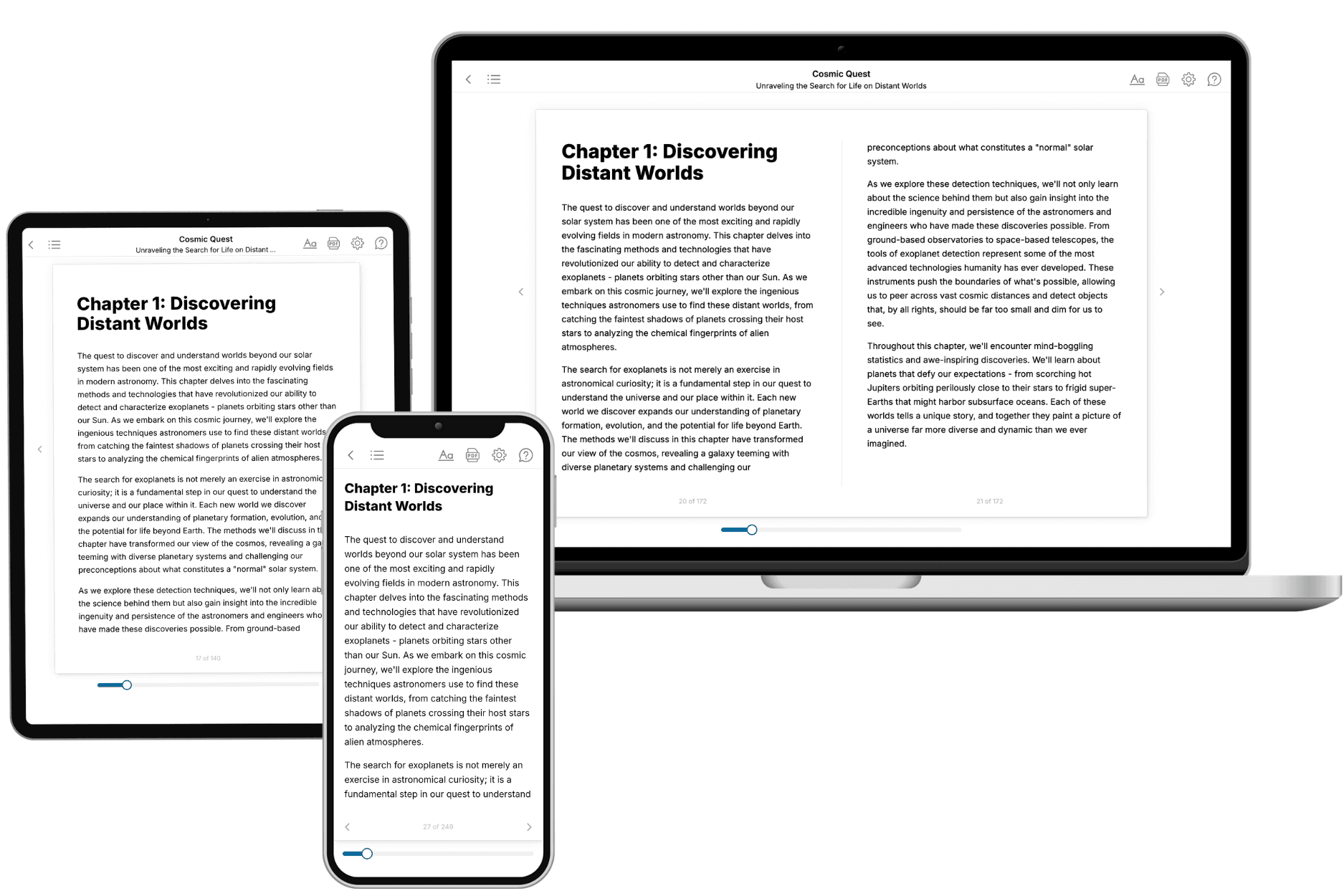
TailoredRead creates complete, full-length nonfiction ebooks, written specifically for you. Tell us what you want to learn and why, and TailoredRead writes you a complete ebook on it, with charts, tables, and diagrams throughout. Read it online, on Kindle, or on any e-reader, or download it as a PDF or EPUB. Every book is written fresh the day you order it.
- How is the book tailored to me?
Before anything is written, you answer a few short questions about your goals, your background, and the topics you care about. Your book is then planned around your answers: written at your level, focused on your goals, and covering the topics you chose, instead of the one-size-fits-all book a store sells everyone.
- Will it read like generic AI content?
No. Your book isn't a chat transcript: it's planned chapter by chapter before a single word is written, told in a clear book voice, and explains ideas visually with charts, tables, and diagrams. After writing, every book goes through an editorial pass that polishes chapters so the book reads consistent from start to finish. Judge for yourself: browse thousands of sample books on our Explore Books page.
- How accurate is the content?
Our AI first checks whether your subject needs live research. Niche and fast-moving subjects are researched before writing, and the book plan and chapters are grounded in what it finds. After writing, every book goes through a quality pass that checks its facts and consistency, and researched books list their sources in a Notes section at the back.
- How long is the book?
You choose the length: Comprehensive (250-300 pages), Detailed (150-200 pages), Essential (70-100 pages), or Short (30-50 pages).
- Does the book include visuals?
Yes. Every book includes charts, tables, and diagrams: timelines, checklists, step-by-step guides, decision trees, comparison tables, matrices, and bar charts. A typical book includes dozens of these visual elements.
- Can I read it on Kindle? What formats can I download?
Yes. Every book can be read in our online reader or downloaded as a PDF or EPUB. The EPUB can be opened with Kindle, Apple Books, Kobo, and any e-reader. The Commercial and Author licenses also include an editable Word (DOCX) and Markdown download.
- How much does it cost?
About the price of a regular ebook. The exact price depends on your book's length and complexity, from $2 for the shortest books to $35 for the most comprehensive, and it's shown when you review your book, before you commit to anything. Each book is a one-time purchase, yours to keep, no subscription. Licenses that let you share, teach, or publish your book range from $35.99 to $49.99.
- Can I preview the book before purchasing?
Before you pay, you'll see what your book will cover: the title, a detailed description, the estimated length, and the complete chapter-by-chapter table of contents, so you know what you're getting before you decide. The full text itself is written after you purchase.
- How long does it take to create a book?
About 10 minutes. You can start reading the opening chapters while the rest is still being written.