The Millwright's Guide to Workplace Safety
Essential Knowledge for a Safer Industrial Environment
Are you confident that you're doing everything possible to ensure your safety and that of your coworkers in the industrial workplace?
269 pages13 chaptersMar 30, 2025ManufacturingCreated by Darrell
About this book
"The Millwright's Guide to Workplace Safety" is your comprehensive companion for navigating the complex world of occupational hazards and preventive measures. This book is tailored specifically for millwrights and other industrial workers who face unique challenges in their daily operations. From fall protection techniques to chemical safety protocols, this guide covers a wide range of crucial topics that will enhance your ability to identify, prevent, and respond to workplace dangers. You'll gain practical insights into fire prevention, noise control, and the proper use of personal protective equipment. Whether you're looking to brush up on your knowledge of lockout/tagout procedures or seeking to understand the intricacies of respiratory protection, this book provides clear, actionable information that you can apply immediately in your work environment. Equip yourself with the knowledge to create a safer workplace, protect your colleagues, and elevate your professional expertise. Your journey to becoming a safety-conscious millwright starts here.
Table of contents
- IntroductionThe Importance of Workplace Safety for Millwrights, Overview of the Book's Contents, How to Use This Guide EffectivelyRead below
- Chapter 1: Building a Culture of SafetyDeveloping a Safety-First Mindset, Roles and Responsibilities in Workplace Safety, Effective Safety Communication, Incident Reporting and Investigation
- Chapter 2: Hazard Identification and Risk AssessmentCommon Hazards in Millwright Work, Conducting a Risk Assessment, Job Safety Analysis (JSA), Recognizing and Reporting Near Misses
- Chapter 3: Personal Protective Equipment (PPE)Types of PPE for Millwrights, PPE Selection Criteria, Proper Use and Maintenance of PPE, Respiratory Protection
- Chapter 4: Fall Protection and Working at HeightsIdentifying Fall Hazards, Fall Protection Systems and Equipment, Ladder Safety and Stability, Scaffold Safety
- Chapter 5: Machine and Tool SafetyMachine Guarding Principles, Safe Use of Hand and Power Tools, Lockout/Tagout Procedures, Electrical Safety and Ground Fault Protection
- Chapter 6: Chemical Safety and Hazard CommunicationUnderstanding Chemical Hazards, Safety Data Sheets (SDS), Proper Chemical Storage and Handling, Benzene Awareness and Safety
- Chapter 7: Fire Safety and PreventionUnderstanding the Fire Triangle, Fire Prevention Strategies, Fire Extinguisher Types and Usage, Emergency Evacuation Procedures
- Chapter 8: Ergonomics and Body MechanicsErgonomic Principles for Millwrights, Proper Lifting and Carrying Techniques, Preventing Repetitive Strain Injuries, Ergonomic Workstation Design
- Chapter 9: Environmental Controls and Industrial HygieneNoise Control and Hearing Protection, Workplace Ventilation, Temperature and Humidity Control, Proper Lighting in Work Areas
- Chapter 10: Material Handling and StorageSafe Manual Material Handling, Using Mechanical Aids and Equipment, Forklift Safety, Safe Storage Practices
- Chapter 11: Emergency Response and First AidEmergency Action Planning, Basic First Aid Techniques, First Aid Kits: Contents and Maintenance, CPR and AED Use
- Chapter 12: Workplace Hygiene and HousekeepingMaintaining Workplace Cleanliness, Organizing Tools and Equipment, Slip and Trip Prevention, Proper Waste Management
- Chapter 13: Safety Programs and TrainingConducting Effective Safety Meetings, Developing Safety Training Programs, New Employee Safety Orientation, Continuous Improvement in Safety
- ConclusionKey Takeaways for a Safer Workplace, The Future of Workplace Safety
- Glossary of Safety Terms
- Additional Resources
Introduction
Welcome to "The Millwright's Guide to Workplace Safety: Essential Knowledge for a Safer Industrial Environment." This comprehensive guide is designed to equip you with the knowledge and skills necessary to navigate the complex landscape of occupational hazards and preventive measures in industrial settings. As a millwright, you play a crucial role in maintaining and repairing industrial machinery, often working in challenging and potentially dangerous environments. This book aims to enhance your understanding of workplace safety, providing you with practical insights and actionable strategies to create a safer work environment for yourself and your colleagues.
In today's rapidly evolving industrial landscape, the importance of workplace safety cannot be overstated. The field of occupational safety has made significant strides in recent years, with advancements in technology, improved regulations, and a growing emphasis on proactive safety measures. However, despite these improvements, workplace accidents and injuries continue to occur, highlighting the need for ongoing education and vigilance. This guide serves as a valuable resource, offering up-to-date information on best practices, regulatory requirements, and innovative approaches to workplace safety specifically tailored to the unique challenges faced by millwrights.
Throughout this book, you will find a wealth of information covering a wide range of safety topics, from personal protective equipment and fall protection to chemical safety and emergency response procedures. Each chapter is designed to provide you with a comprehensive understanding of specific safety aspects, empowering you to make informed decisions and take appropriate actions to mitigate risks in your daily work. By the end of this guide, you will have gained a holistic view of workplace safety, enabling you to contribute effectively to creating and maintaining a culture of safety in your organization.
As we embark on this journey through the various facets of workplace safety, it's important to remember that safety is not just a set of rules and procedures to be followed, but a mindset and a shared responsibility. By actively engaging with the content of this book and applying the knowledge gained to your work environment, you can become a safety champion, inspiring others and making a tangible difference in the well-being of your colleagues and the overall success of your organization.
The Importance of Workplace Safety for Millwrights
As a millwright, you operate in an environment where safety is paramount. The nature of your work, which often involves heavy machinery, complex systems, and potentially hazardous materials, inherently carries risks that must be carefully managed. Understanding the importance of workplace safety is not just about compliance with regulations; it's about protecting your life, the lives of your colleagues, and ensuring the smooth operation of industrial facilities.
One of the primary reasons workplace safety is crucial for millwrights is the high-risk nature of the job. You frequently work with powerful machinery, electrical systems, and mechanical components that can cause severe injuries if not handled properly. According to the Bureau of Labor Statistics, the rate of nonfatal occupational injuries and illnesses in the installation, maintenance, and repair occupations, which includes millwrights, was 2.9 cases per 100 full-time workers in 2020[1]. This statistic underscores the ongoing need for robust safety measures and continuous education in the field.
Moreover, the consequences of workplace accidents extend far beyond immediate physical injuries. They can have long-lasting impacts on your career, personal life, and overall well-being. Serious injuries may lead to extended periods of absence from work, potentially affecting your financial stability and career progression. In some cases, accidents can result in permanent disabilities, fundamentally altering your quality of life. By prioritizing safety, you not only protect yourself from these potential outcomes but also contribute to a more stable and productive work environment.
From an organizational perspective, maintaining a strong safety record is essential for the success and reputation of any industrial facility. Accidents and injuries can lead to significant financial losses due to downtime, equipment damage, and potential legal liabilities. A poor safety record can also damage a company's reputation, making it harder to attract skilled workers and secure contracts. As a millwright, your commitment to safety directly contributes to the overall success and sustainability of your workplace.
Furthermore, the importance of workplace safety for millwrights extends to the broader industrial ecosystem. Your work often involves critical machinery and systems that are essential for various industrial processes. A safety incident could potentially disrupt entire production lines or even shut down facilities, causing ripple effects throughout the supply chain. By maintaining high safety standards, you play a crucial role in ensuring the reliability and efficiency of industrial operations on a larger scale.
It's also worth noting that the field of workplace safety is constantly evolving, with new technologies, methodologies, and regulations emerging regularly. Staying informed and up-to-date with these developments is crucial for maintaining a safe work environment. For instance, the integration of digital technologies and IoT (Internet of Things) devices in industrial settings has introduced new safety considerations and opportunities. As a millwright, embracing these advancements and understanding their implications for safety can significantly enhance your ability to identify and mitigate risks in your work environment.
Lastly, the importance of workplace safety for millwrights goes beyond individual or even organizational benefits. It contributes to the overall advancement of the industry. By consistently prioritizing safety and sharing best practices, you contribute to a collective body of knowledge that benefits all workers in the field. This collaborative approach to safety helps raise standards across the industry, leading to innovations in safety equipment, procedures, and training methods that can save lives and prevent injuries on a broader scale.
In conclusion, the importance of workplace safety for millwrights cannot be overstated. It is a fundamental aspect of your professional responsibility, crucial for your personal well-being, and essential for the success of your organization and the industry as a whole. By fully embracing the principles and practices of workplace safety outlined in this guide, you position yourself not just as a skilled technician, but as a valuable asset who contributes to a safer, more productive industrial environment.
Overview of the Book's Contents
"The Millwright's Guide to Workplace Safety" is structured to provide you with a comprehensive understanding of various aspects of safety relevant to your work. The book is divided into thirteen main chapters, each focusing on a specific area of workplace safety. This organization allows you to either read the book from cover to cover for a complete overview or easily reference specific topics as needed in your daily work.
The journey begins with Chapter 1, "Building a Culture of Safety," which lays the foundation for understanding the importance of a safety-first mindset. This chapter explores how to develop a proactive approach to safety, the roles and responsibilities of different stakeholders in maintaining a safe workplace, effective safety communication strategies, and the importance of incident reporting and investigation. By starting with this chapter, you'll gain insights into how safety culture permeates every aspect of workplace operations and how you can contribute to fostering this culture.
Chapter 2, "Hazard Identification and Risk Assessment," equips you with the skills to recognize and evaluate potential dangers in your work environment. This chapter covers common hazards specific to millwright work, techniques for conducting thorough risk assessments, the process of Job Safety Analysis (JSA), and the importance of recognizing and reporting near-miss incidents. These skills are fundamental to preventing accidents before they occur and will enhance your ability to make informed decisions about safety in various work situations.
Personal Protective Equipment (PPE) is a critical line of defense against workplace hazards, and Chapter 3 is dedicated to this topic. You'll learn about the various types of PPE relevant to millwright work, how to select the right equipment for different tasks, proper use and maintenance of PPE, and specific information on respiratory protection. This knowledge is essential for ensuring that you're adequately protected in different work scenarios and that your protective equipment remains effective over time.
Given the nature of millwright work, which often involves working at heights, Chapter 4 focuses on "Fall Protection and Working at Heights." This chapter covers the identification of fall hazards, different types of fall protection systems and equipment, ladder safety and stability, and scaffold safety. The information in this chapter is crucial for preventing one of the most common and potentially severe types of workplace accidents.
Chapter 5 delves into "Machine and Tool Safety," an area of paramount importance for millwrights. You'll explore machine guarding principles, safe use of hand and power tools, lockout/tagout procedures, and electrical safety. This chapter provides essential knowledge for working safely with the various machines and tools you encounter in your daily tasks.
Chemical safety is another critical aspect of workplace safety, covered in Chapter 6. This chapter provides an understanding of chemical hazards, how to read and interpret Safety Data Sheets (SDS), proper chemical storage and handling techniques, and specific information on benzene awareness and safety. Given the potential for exposure to various chemicals in industrial settings, this knowledge is vital for protecting your health and that of your colleagues.
Chapter 7 focuses on "Fire Safety and Prevention," covering the fundamentals of fire behavior, prevention strategies, types of fire extinguishers and their proper use, and emergency evacuation procedures. This information is crucial not only for preventing fires but also for knowing how to respond effectively if a fire does occur.
Ergonomics and body mechanics, often overlooked aspects of workplace safety, are addressed in Chapter 8. This chapter covers ergonomic principles specific to millwright work, proper lifting and carrying techniques, prevention of repetitive strain injuries, and ergonomic workstation design. By applying these principles, you can reduce the risk of musculoskeletal disorders and improve your overall comfort and efficiency at work.
Chapter 9 explores "Environmental Controls and Industrial Hygiene," covering topics such as noise control and hearing protection, workplace ventilation, temperature and humidity control, and proper lighting in work areas. These factors play a significant role in creating a safe and comfortable work environment and can have long-term impacts on worker health and well-being.
Material handling and storage, crucial aspects of millwright work, are covered in Chapter 10. This chapter provides guidance on safe manual material handling techniques, the use of mechanical aids and equipment, forklift safety, and safe storage practices. Proper material handling is essential for preventing injuries and ensuring efficient operations.
Chapter 11 focuses on "Emergency Response and First Aid," covering emergency action planning, basic first aid techniques, the contents and maintenance of first aid kits, and CPR and AED use. This knowledge can be life-saving in emergency situations and is an essential part of comprehensive workplace safety preparedness.
Workplace hygiene and housekeeping, often underestimated in their importance to safety, are addressed in Chapter 12. This chapter covers maintaining workplace cleanliness, organizing tools and equipment, slip and trip prevention, and proper waste management. Good housekeeping practices contribute significantly to overall workplace safety and efficiency.
The final chapter, Chapter 13, explores "Safety Programs and Training," providing guidance on conducting effective safety meetings, developing safety training programs, new employee safety orientation, and approaches to continuous improvement in safety. This chapter emphasizes the ongoing nature of safety efforts and the importance of regular training and education in maintaining a safe workplace.
By covering this wide range of topics, "The Millwright's Guide to Workplace Safety" provides you with a comprehensive toolkit for enhancing safety in your work environment. Each chapter builds upon the others, creating a holistic understanding of workplace safety that you can apply in your daily activities as a millwright.
How to Use This Guide Effectively
To maximize the benefits of "The Millwright's Guide to Workplace Safety," it's important to approach the book with a strategic mindset. This guide is designed to be more than just a reference manual; it's a comprehensive tool for enhancing your safety knowledge and skills. Here are some effective strategies for using this guide to its fullest potential:
First and foremost, consider reading the book from cover to cover to gain a comprehensive understanding of workplace safety. While it may be tempting to jump directly to chapters that seem most relevant to your current work, a thorough read-through will provide you with a holistic view of safety practices. This approach allows you to see how different aspects of safety interconnect and reinforces the idea that safety is an integrated system rather than a series of isolated practices. As you read, take note of areas where your current knowledge is strong and identify topics where you need to focus more attention.
After your initial read-through, use the table of contents and index to quickly locate specific information as needed in your daily work. The book is structured to serve as a quick reference guide, allowing you to easily find relevant information when faced with specific safety challenges or questions. For instance, if you're about to perform a task involving chemical handling, you can quickly refer to Chapter 6 for guidance on chemical safety and hazard communication.
Engage actively with the content by taking notes, highlighting key points, and jotting down questions or ideas that arise as you read. This active engagement helps reinforce your learning and makes it easier to review important information later. Consider keeping a notebook or digital document where you can compile your notes, creating a personalized summary of key safety points relevant to your specific work environment.
Make use of the practical examples, case studies, and real-world scenarios provided throughout the book. These concrete illustrations of safety principles in action can help you better understand how to apply the concepts in your own work. Try to relate these examples to your own experiences or imagine how you would handle similar situations in your workplace. This mental exercise can help prepare you for real-world safety challenges.
Pay special attention to the actionable advice and step-by-step procedures outlined in each chapter. These practical guidelines are designed to be implemented directly in your work. Consider creating checklists or quick reference cards based on these procedures that you can keep handy in your work area. For example, you might create a pocket-sized card with the steps for proper lockout/tagout procedures or a checklist for conducting a Job Safety Analysis.
Use the book as a tool for ongoing learning and improvement. Set aside regular time to review different sections of the book, especially those covering areas where you feel less confident. This consistent review can help reinforce your knowledge and keep safety practices fresh in your mind. Consider setting a goal to review one chapter or subsection each week or month, depending on your schedule.
Share the knowledge you gain from this guide with your colleagues. Discussing safety topics with your coworkers can help reinforce your own understanding and contribute to a stronger safety culture in your workplace. You might consider initiating informal discussions about specific safety topics during breaks or suggesting relevant chapters for review in team safety meetings.
Use the book as a complement to your workplace's specific safety policies and procedures. While this guide provides comprehensive information on workplace safety for millwrights, it's important to align this knowledge with your organization's specific safety protocols. Look for ways to integrate the book's guidance with your company's safety manuals and training programs.
Take advantage of the additional resources section at the end of the book. This section provides references to further reading, relevant industry standards, and useful websites. Use these resources to deepen your understanding of specific topics or to stay updated on the latest developments in workplace safety.
Finally, remember that this guide is a tool for continuous improvement. As you gain experience and encounter new safety challenges in your work, return to relevant sections of the book to refresh your knowledge or gain new insights. Safety practices and technologies are continually evolving, so consider this guide as a foundation upon which to build your ongoing safety education.
By using "The Millwright's Guide to Workplace Safety" effectively, you can significantly enhance your ability to create and maintain a safe work environment. This guide is designed to be your companion throughout your career, helping you navigate the complex landscape of workplace safety with confidence and expertise. Remember, the ultimate goal is not just to read and understand the content, but to apply it consistently in your daily work, contributing to a safer and more productive industrial environment for yourself and your colleagues.
Notes
Introduction
- 1. Bureau of Labor Statistics, "U.S. Department of Labor," Survey of Occupational Injuries and Illnesses, 2020
This is the end of the free sample. The full book has 13 chapters.
Want this book written for you?
Tell us your goals and background, and get your own version of this book, tailored by AI to you.


Benefits of AI-tailored books
- Read one book, not ten:
- all the Manufacturing knowledge you need, gathered into a single book.
- Save days of learning:
- tell us your goals, choose your topics, and the whole book is built around them.
- Learn effortlessly:
- Manufacturing book written for your specific background and expertise.
- Understand at a glance:
- includes charts, tables, timelines, checklists, decision trees, and more.
- Stay current:
- written the day you order it, not years ago.
- Trust what you read:
- every book is checked for accuracy, with real research when your subject needs it.
Create your unique book in 3 steps
- 1. Select your focus
Select the focus of your Manufacturing book and share your background
- 2. Personalize your book
Specify your goals and choose sub-topics to include
- 3. Get your tailored book
Your book is ready in 10 minutes. Read it online, download as EPUB or PDF, or send to Kindle.


Frequently asked questions
- What is TailoredRead?
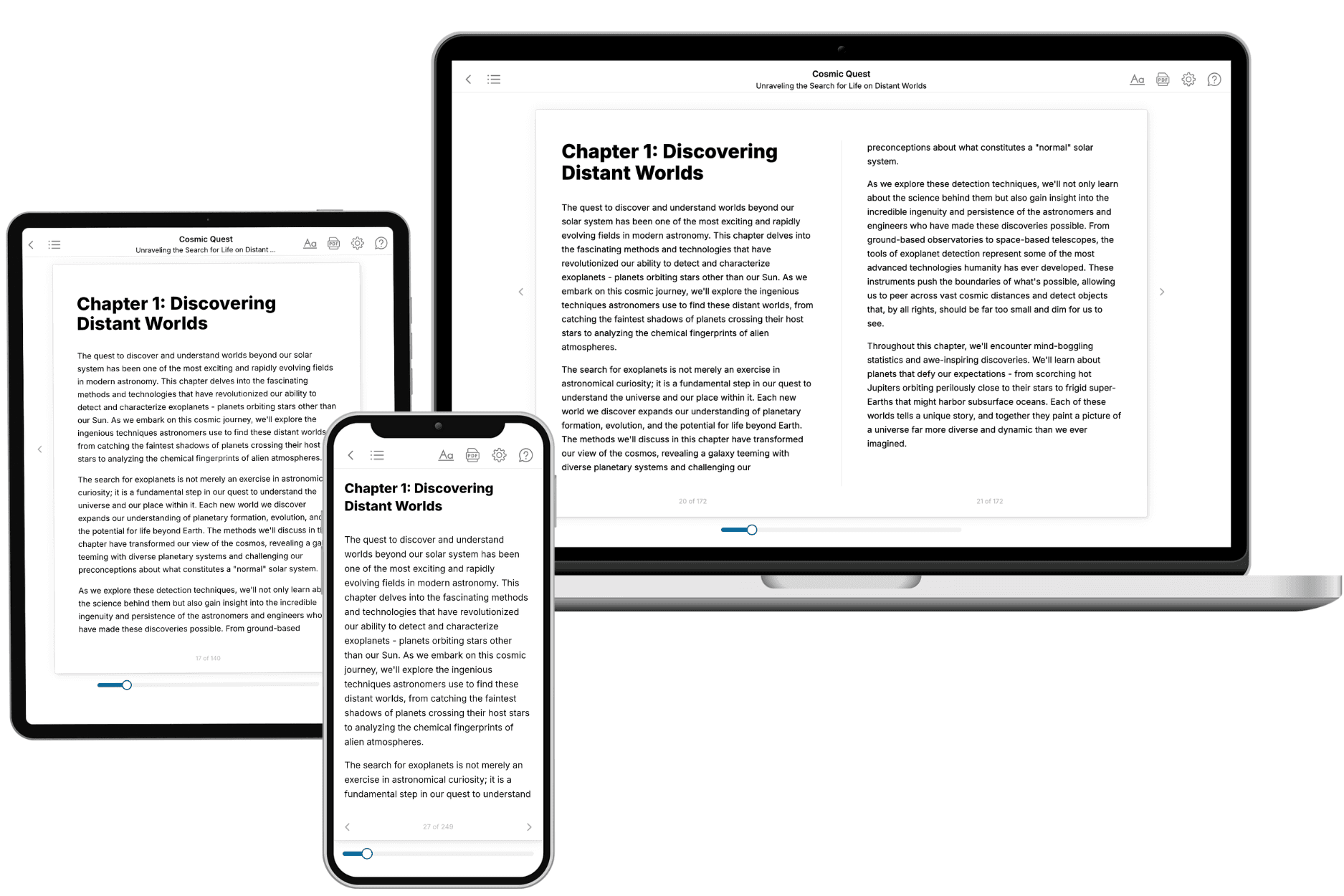
TailoredRead creates complete, full-length nonfiction ebooks, written specifically for you. Tell us what you want to learn and why, and TailoredRead writes you a complete ebook on it, with charts, tables, and diagrams throughout. Read it online, on Kindle, or on any e-reader, or download it as a PDF or EPUB. Every book is written fresh the day you order it.
- How is the book tailored to me?
Before anything is written, you answer a few short questions about your goals, your background, and the topics you care about. Your book is then planned around your answers: written at your level, focused on your goals, and covering the topics you chose, instead of the one-size-fits-all book a store sells everyone.
- Will it read like generic AI content?
No. Your book isn't a chat transcript: it's planned chapter by chapter before a single word is written, told in a clear book voice, and explains ideas visually with charts, tables, and diagrams. After writing, every book goes through an editorial pass that polishes chapters so the book reads consistent from start to finish. Judge for yourself: browse thousands of sample books on our Explore Books page.
- How accurate is the content?
Our AI first checks whether your subject needs live research. Niche and fast-moving subjects are researched before writing, and the book plan and chapters are grounded in what it finds. After writing, every book goes through a quality pass that checks its facts and consistency, and researched books list their sources in a Notes section at the back.
- How long is the book?
You choose the length: Comprehensive (250-300 pages), Detailed (150-200 pages), Essential (70-100 pages), or Short (30-50 pages).
- Does the book include visuals?
Yes. Every book includes charts, tables, and diagrams: timelines, checklists, step-by-step guides, decision trees, comparison tables, matrices, and bar charts. A typical book includes dozens of these visual elements.
- Can I read it on Kindle? What formats can I download?
Yes. Every book can be read in our online reader or downloaded as a PDF or EPUB. The EPUB can be opened with Kindle, Apple Books, Kobo, and any e-reader. The Commercial and Author licenses also include an editable Word (DOCX) and Markdown download.
- How much does it cost?
About the price of a regular ebook. The exact price depends on your book's length and complexity, from $2 for the shortest books to $35 for the most comprehensive, and it's shown when you review your book, before you commit to anything. Each book is a one-time purchase, yours to keep, no subscription. Licenses that let you share, teach, or publish your book range from $35.99 to $49.99.
- Can I preview the book before purchasing?
Before you pay, you'll see what your book will cover: the title, a detailed description, the estimated length, and the complete chapter-by-chapter table of contents, so you know what you're getting before you decide. The full text itself is written after you purchase.
- How long does it take to create a book?
About 10 minutes. You can start reading the opening chapters while the rest is still being written.