MLFlow Mastery
Advanced Techniques for Optimizing ML Pipelines and Infrastructure
Picture yourself at the helm of a cutting-edge machine learning operation, where models are deployed with lightning speed, experiments are tracked with pinpoint accuracy, and your ML infrastructure scales effortlessly to meet any challenge.
331 pages18 chaptersMay 5, 2025MLOpsCreated by Chris
About this book
This isn't a far-off dream—it's the reality that awaits you with MLFlow Mastery. As a seasoned software engineer, you know the power of streamlined workflows and robust infrastructure. Now, it's time to apply that expertise to the world of machine learning. This book is your comprehensive guide to harnessing the full potential of MLFlow, taking you beyond the basics and into the realm of advanced techniques that will set you apart in the field. Dive deep into the intricacies of MLFlow's architecture, uncover the secrets of custom flavors, and master the art of distributed training. You'll learn how to implement CI/CD pipelines for your ML projects, optimize hyperparameters like never before, and create scalable inference systems that can handle anything you throw at them. From automated logging to model drift detection, from feature store setup to multi-model ensembles, this book leaves no stone unturned in your quest for ML excellence. Whether you're looking to enhance model interpretability, implement federated learning, or push the boundaries of what's possible with MLFlow plugins, you'll find the expert guidance you need right here. Get ready to elevate your ML game and become the go-to expert for optimizing machine learning workflows in your organization.
Table of contents
- IntroductionMLFlow Overview and Its Importance in ML Pipelines, Book Structure and How to Use It, Prerequisites and SetupRead below
- Chapter 1: Deep Dive into MLFlow ArchitectureCore Components and Their Interactions, MLFlow's Data Model, Extensibility and Plugin System, Scalability Considerations
- Chapter 2: Advanced Experiment TrackingDefining and Logging Custom Metrics, Efficient Artifact Management, Parallel Execution of Experiments, Metadata Management Best Practices
- Chapter 3: Mastering the Model RegistryAdvanced Versioning Strategies, Tracking Model Lineage, Streamlining Staging to Production Workflow, Implementing Fine-grained Access Control
- Chapter 4: Optimizing MLFlow ProjectsBest Practices for Project Structure, Advanced Dependency Management, Ensuring Reproducibility Across Environments, Git Integration and Version Control
- Chapter 5: Creating and Leveraging Custom FlavorsUnderstanding Flavor Architecture, Implementing a Custom Model Type, Serialization and Deserialization Techniques, Deploying Custom Flavors
- Chapter 6: Leveraging the MLFlow REST APIExploring Advanced API Endpoints, Implementing Robust Authentication, Integrating with External Systems, API Usage Best Practices and Pitfalls
- Chapter 7: Implementing Distributed TrainingDistributed Training Architectures, Data Parallelism Strategies, Model Parallelism Techniques, Optimizing Distributed Training Performance
- Chapter 8: Advanced Model Packaging TechniquesCreating Robust Conda Environments, Docker Integration for Portability, Defining and Using Model Signatures, Versioning Strategies for Packages
- Chapter 9: Mastering Automated LoggingConfiguring Autolog for Different Frameworks, Implementing Custom Autolog Functions, Managing and Analyzing Automated Logs, Optimizing Logging Performance
- Chapter 10: Customizing the MLFlow UIUnderstanding the UI Architecture, Creating Custom Visualizations, Developing UI Plugins, Implementing Custom Theming
- Chapter 11: Containerized Model ServingServing Models with Docker, Deploying to Kubernetes Clusters, Scaling Strategies for Containerized Models, Security Considerations for Containerized Serving
- Chapter 12: Advanced Hyperparameter OptimizationIntegrating Hyperopt with MLFlow, Implementing Bayesian Optimization, Multi-Objective Hyperparameter Optimization, Distributed Hyperparameter Search
- Chapter 13: Detecting and Handling Model DriftUnderstanding Different Types of Model Drift, Implementing Drift Detection Algorithms, Setting Up Automated Model Retraining, Continuous Monitoring and Alerting for Drift
- Chapter 14: Integrating Feature Stores with MLFlowSetting Up a Feature Store, Feature Versioning and Lineage, Online and Offline Feature Serving, Connecting Feature Stores to MLFlow Pipelines
- Chapter 15: Developing Custom MLFlow PluginsUnderstanding the Plugin Architecture, Creating a Custom Tracking Store, Implementing a Custom Model Flavor Plugin, Packaging and Distributing Plugins
- Chapter 16: Advanced Databricks IntegrationSetting Up MLFlow in Databricks Environments, Integrating with Delta Lake for Versioning, Model Serving on Databricks, Orchestrating MLFlow Pipelines with Databricks Workflows
- Chapter 17: Enhancing Model ExplainabilityIntegrating SHAP with MLFlow, Implementing LIME Explanations, Tracking and Visualizing Feature Importance, Storing and Versioning Explanation Artifacts
- Chapter 18: Building Scalable Inference SystemsOptimizing Batch Inference Pipelines, Implementing Real-time Model Serving, Model Optimization Techniques for Inference, Monitoring and Debugging Inference Systems
- ConclusionFuture Trends in MLOps and MLFlow, Recap of Best Practices
- AppendixComprehensive MLFlow CLI Command Reference, Advanced Configuration Options
Introduction
Welcome to the world of MLFlow Mastery, where the boundaries of machine learning workflows are pushed to their limits, and the full potential of your ML infrastructure is realized. As a highly experienced Principal Software Engineer with an MSc in Computer Science, you're about to embark on a journey that will elevate your skills in managing, scaling, and optimizing machine learning pipelines to unprecedented levels. This book is designed to be your comprehensive guide to harnessing the full power of MLFlow, taking you beyond the basics and into the realm of advanced techniques that will set you apart in the field of machine learning operations (MLOps).
In today's rapidly evolving landscape of artificial intelligence and machine learning, the ability to efficiently manage and scale ML workflows has become a critical skill for software engineers and data scientists alike. MLFlow stands at the forefront of this revolution, offering a robust and flexible platform for experiment tracking, model management, and deployment. However, many practitioners barely scratch the surface of what MLFlow can truly offer. This book aims to change that, providing you with the knowledge and tools to leverage MLFlow to its fullest potential, transforming the way you approach machine learning projects from inception to production.
Throughout this book, you'll discover how to tackle complex challenges in ML pipelines, automate tedious processes, and build scalable infrastructures that can handle the most demanding machine learning workloads. Whether you're looking to enhance model interpretability, implement distributed training, or push the boundaries of what's possible with MLFlow plugins, you'll find the expert guidance you need right here. Get ready to elevate your ML game and become the go-to expert for optimizing machine learning workflows in your organization.
MLFlow Overview and Its Importance in ML Pipelines
MLFlow, at its core, is an open-source platform designed to manage the entire machine learning lifecycle. It addresses the key challenges that data scientists and machine learning engineers face when developing, training, and deploying models at scale. The importance of MLFlow in modern ML pipelines cannot be overstated. It provides a unified approach to tracking experiments, packaging code into reproducible runs, and sharing and deploying models. This standardization is crucial in an environment where machine learning projects often involve multiple iterations, various algorithms, and diverse deployment scenarios.
One of the primary strengths of MLFlow lies in its ability to bring order to the often chaotic process of model development. In a typical ML project, data scientists may run hundreds or even thousands of experiments, tweaking hyperparameters, trying different algorithms, or adjusting feature sets. Without a robust system to track these experiments, valuable insights can be lost, and reproducing results becomes a Herculean task. MLFlow's experiment tracking component solves this problem by automatically logging parameters, code versions, metrics, and output files for each run. This meticulous record-keeping ensures that you can always trace back to the exact conditions that produced a particular result, fostering reproducibility and facilitating collaboration among team members.
Another critical aspect of MLFlow is its model packaging and deployment capabilities. In many organizations, the handoff between data scientists who develop models and engineers who deploy them is a significant bottleneck. MLFlow bridges this gap by providing a standardized format for packaging machine learning models that can be used across a variety of downstream tools for deployment, inference, and monitoring. This standardization dramatically simplifies the process of moving models from development to production, reducing the time-to-market for ML-powered features and applications.
MLFlow's architecture is designed with flexibility and extensibility in mind. It supports multiple programming languages and machine learning libraries, allowing you to use the tools that best fit your project's needs. Whether you're working with scikit-learn, TensorFlow, PyTorch, or custom algorithms, MLFlow can seamlessly integrate into your workflow. This flexibility extends to deployment environments as well. MLFlow models can be deployed on various platforms, from simple REST APIs to complex cloud services, ensuring that your models can be utilized wherever they're needed.
The platform's model registry component addresses the critical need for version control in machine learning models. Just as software engineers use version control systems like Git to manage code, data scientists need a way to manage different versions of their models. MLFlow's model registry provides a centralized model store, versioning, stage transitions, and annotations. This feature is invaluable for maintaining a clear lineage of model development, facilitating audits, and enabling easy rollbacks if needed.
In the context of modern ML pipelines, MLFlow serves as a crucial backbone that supports the entire lifecycle of machine learning projects. It enables data scientists to focus on developing and improving models rather than getting bogged down in the intricacies of experiment management and deployment logistics. For engineering teams, MLFlow provides a standardized interface for working with models, simplifying the process of integrating machine learning capabilities into larger software systems.
As we delve deeper into the advanced techniques covered in this book, you'll see how MLFlow can be leveraged to solve complex problems in ML operations. From implementing distributed training to creating custom model flavors, from optimizing hyperparameters to detecting model drift, MLFlow provides the foundation upon which sophisticated ML pipelines can be built. By mastering these advanced techniques, you'll be able to create robust, scalable, and efficient machine learning workflows that can handle the demands of enterprise-scale AI applications.
The importance of MLFlow in modern ML pipelines extends beyond its technical capabilities. It also plays a crucial role in fostering best practices in machine learning development. By encouraging systematic tracking of experiments, reproducible runs, and clear model versioning, MLFlow helps teams adopt a more rigorous and scientific approach to machine learning. This, in turn, leads to more reliable models, faster iteration cycles, and ultimately, better business outcomes.
As we progress through this book, you'll gain a deep understanding of how to harness the full power of MLFlow to transform your ML pipelines. You'll learn how to go beyond basic usage and tap into advanced features that can significantly enhance your productivity and the quality of your machine learning projects. By the end of this journey, you'll be equipped with the knowledge and skills to leverage MLFlow as a strategic asset in your ML operations, setting new standards for efficiency, scalability, and innovation in your organization.
Book Structure and How to Use It
This book is structured to provide a comprehensive and in-depth exploration of MLFlow's advanced capabilities, designed to take your machine learning operations to the next level. Each chapter builds upon the knowledge from previous sections, gradually introducing more complex concepts and techniques. However, the book is also designed to allow you to dive into specific topics of interest, making it a valuable reference guide for addressing particular challenges in your ML workflows.
We begin with a deep dive into MLFlow's architecture, providing you with a solid foundation for understanding the platform's inner workings. This knowledge is crucial for leveraging MLFlow's full potential and for troubleshooting complex issues that may arise in large-scale deployments. From there, we explore advanced experiment tracking techniques, teaching you how to capture and analyze complex metrics, manage artifacts efficiently, and execute experiments in parallel for maximum productivity.
The subsequent chapters delve into mastering the model registry, optimizing MLFlow projects, and creating custom flavors. These sections will equip you with the skills to manage model versions effectively, ensure reproducibility across different environments, and extend MLFlow's capabilities to support custom model types and workflows. We then explore the MLFlow REST API, showing you how to integrate MLFlow seamlessly with external systems and automate various aspects of your ML pipeline.
As we progress, we tackle more advanced topics such as distributed training, advanced model packaging techniques, and automated logging. These chapters will teach you how to scale your training processes, create robust and portable model packages, and implement sophisticated logging strategies that capture all relevant information without manual intervention. We also cover customizing the MLFlow UI, allowing you to tailor the interface to your specific needs and create custom visualizations for better insight into your experiments and models.
The latter part of the book focuses on cutting-edge techniques in MLOps, including containerized model serving, advanced hyperparameter optimization, model drift detection, and integration with feature stores. These chapters will provide you with the knowledge to build scalable, production-ready ML systems that can adapt to changing data distributions and maintain peak performance over time. We also explore the development of custom MLFlow plugins, enabling you to extend the platform's functionality to meet your organization's unique requirements.
To make the most of this book, it's recommended to have a solid understanding of machine learning concepts and experience with Python programming. Familiarity with basic MLFlow usage is helpful but not strictly necessary, as we'll cover fundamental concepts before diving into advanced techniques. Each chapter includes practical examples and code snippets that you can run and experiment with. It's highly encouraged to follow along with these examples in your own MLFlow environment to gain hands-on experience with the concepts being discussed.
The book is designed to be both a learning tool and a reference guide. As you progress through the chapters, you'll build a comprehensive understanding of MLFlow's advanced features. However, you can also use the book as a reference, jumping to specific sections when you need guidance on particular topics. The detailed table of contents and index will help you quickly locate the information you need.
Throughout the book, you'll find "Deep Dive" sections that explore complex topics in greater detail, "Best Practice" callouts that highlight recommended approaches, and "Common Pitfalls" warnings that help you avoid typical mistakes. These features are designed to provide you with a well-rounded understanding of each topic, combining theoretical knowledge with practical insights.
At the end of each chapter, you'll find a summary of key points and a set of exercises or challenges. These are designed to reinforce your learning and encourage you to apply the concepts to real-world scenarios. It's highly recommended to attempt these exercises, as they will help solidify your understanding and reveal areas where you might need additional practice or study.
Remember, mastering MLFlow is an iterative process. As you work through the book, don't hesitate to revisit earlier chapters or experiment with combining different techniques. The true power of MLFlow often lies in how different features can be combined to create sophisticated ML workflows tailored to your specific needs.
By the end of this book, you'll have a deep understanding of MLFlow's advanced capabilities and how to apply them to solve complex challenges in machine learning operations. Whether you're looking to optimize existing ML pipelines, scale your operations to handle larger datasets and more complex models, or implement cutting-edge MLOps practices, this book will provide you with the knowledge and tools you need to succeed. Let's embark on this journey to MLFlow mastery together, and unlock the full potential of your machine learning workflows.
Prerequisites and Setup
Before diving into the advanced techniques covered in this book, it's essential to ensure that you have the necessary prerequisites in place and that your environment is properly set up. This section will guide you through the requirements and setup process, ensuring that you're fully prepared to tackle the complex topics ahead.
First and foremost, this book assumes a strong foundation in software engineering principles and machine learning concepts. As a Principal Software Engineer with an MSc in Computer Science, you likely already possess this knowledge. However, it's worth reviewing the following areas if you feel rusty in any of them:
- Python programming (version 3.6 or later)
- Basic machine learning algorithms and workflows
- Version control with Git
- Basic understanding of containerization (Docker)
- Familiarity with cloud computing concepts
In terms of software requirements, you'll need to have the following installed on your system:
- Python 3.6 or later (3.8+ recommended)
- pip (Python package manager)
- virtualenv or conda for managing virtual environments
- Git
- Docker (for containerization chapters)
To set up your environment, follow these steps:
- Create a new virtual environment for this book:
python -m venv mlflow-mastery source mlflow-mastery/bin/activate # On Windows, use `mlflow-mastery\Scripts\activate` - Install MLFlow and its dependencies:
pip install mlflow scikit-learn pandas numpy matplotlib - Verify the installation:
mlflow --version
For chapters dealing with specific ML frameworks or tools, additional installation instructions will be provided at the beginning of those sections. It's recommended to use a consistent virtual environment throughout your journey with this book to avoid dependency conflicts.
In addition to the software requirements, you'll need access to a development machine with sufficient computational resources to run the examples and exercises in this book. While many concepts can be explored on a standard laptop, some of the more advanced topics (like distributed training) may benefit from access to more powerful hardware or cloud resources. If you have access to cloud platforms like AWS, Google Cloud, or Azure, you may want to set up an account and familiarize yourself with their ML-related services, as we'll discuss cloud integrations in later chapters.
To get the most out of this book, it's highly recommended to set up a dedicated project directory where you can store code samples, experiment results, and notes. You might structure it like this:
mlflow-mastery/
├── experiments/
├── models/
├── notebooks/
├── scripts/
└── data/
This structure will help you organize your work as you progress through the book. Consider initializing this directory as a Git repository to track your changes and experiments over time.
Throughout the book, we'll be using various datasets for examples and exercises. While many of these will be available through public repositories or generated programmatically, it's a good idea to have some real-world datasets on hand for practice. Consider downloading a few datasets from repositories like UCI Machine Learning Repository or Kaggle, and storing them in your project's data directory.
Lastly, familiarize yourself with the MLFlow documentation (https://www.mlflow.org/docs/latest/index.html). While this book will cover advanced topics in depth, the official documentation will remain a valuable reference for specific details and updates to the MLFlow platform.
With your environment set up and these prerequisites in place, you're now ready to embark on your journey to MLFlow mastery. Remember, the key to success with complex topics is consistent practice and experimentation. Don't hesitate to run and modify the provided code examples, and challenge yourself to apply the concepts to your own projects. As we progress through the book, you'll build a comprehensive toolkit of advanced MLFlow techniques that will transform your approach to machine learning operations.
This is the end of the free sample. The full book has 18 chapters.
Want this book written for you?
Tell us your goals and background, and get your own version of this book, tailored by AI to you.


Benefits of AI-tailored books
- Read one book, not ten:
- all the MLOps knowledge you need, gathered into a single book.
- Save days of learning:
- tell us your goals, choose your topics, and the whole book is built around them.
- Learn effortlessly:
- MLOps book written for your specific background and expertise.
- Understand at a glance:
- includes charts, tables, timelines, checklists, decision trees, and more.
- Stay current:
- written the day you order it, not years ago.
- Trust what you read:
- every book is checked for accuracy, with real research when your subject needs it.
Create your unique book in 3 steps
- 1. Select your focus
Select the focus of your MLOps book and share your background
- 2. Personalize your book
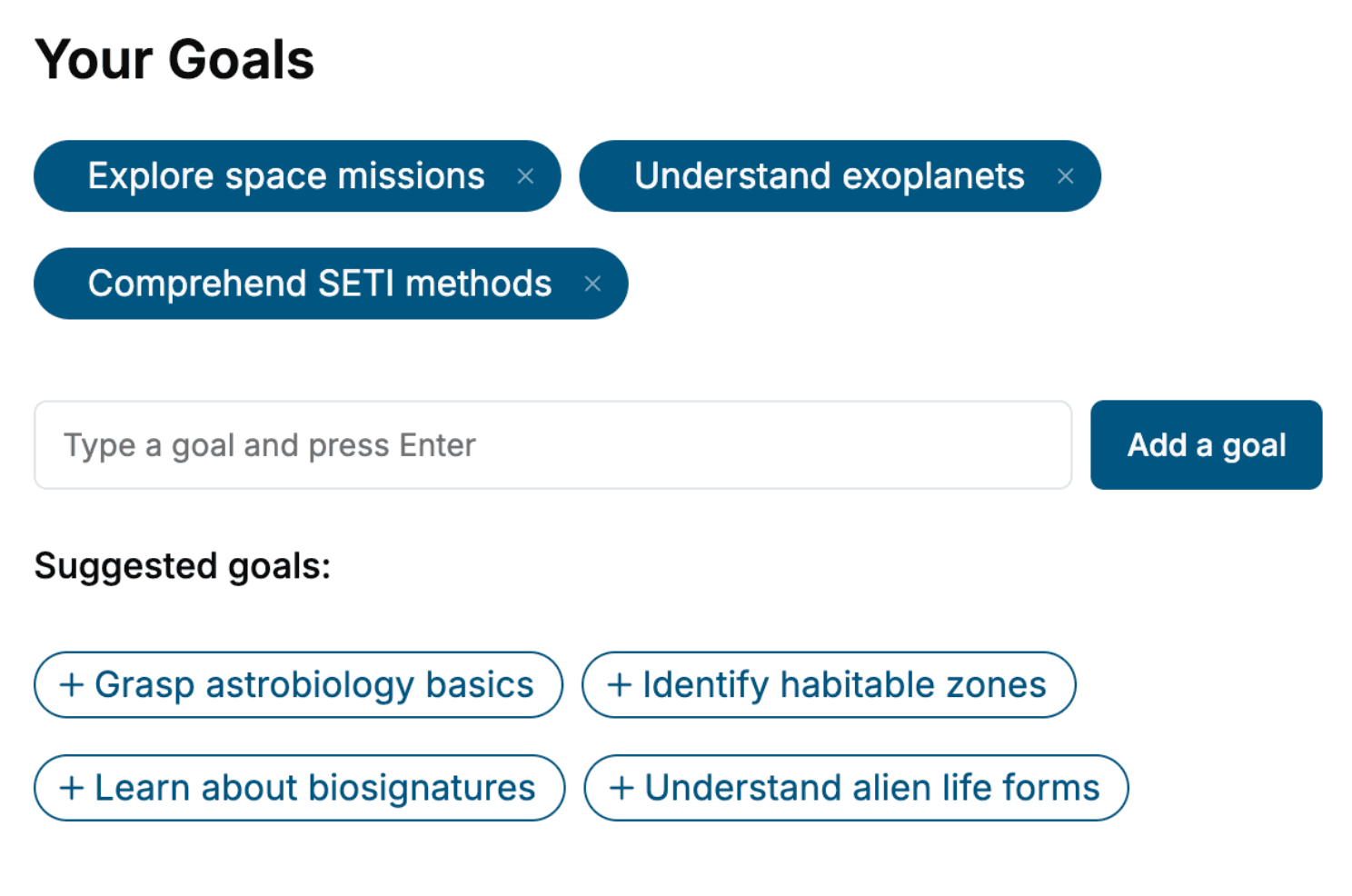
Specify your goals and choose sub-topics to include
- 3. Get your tailored book
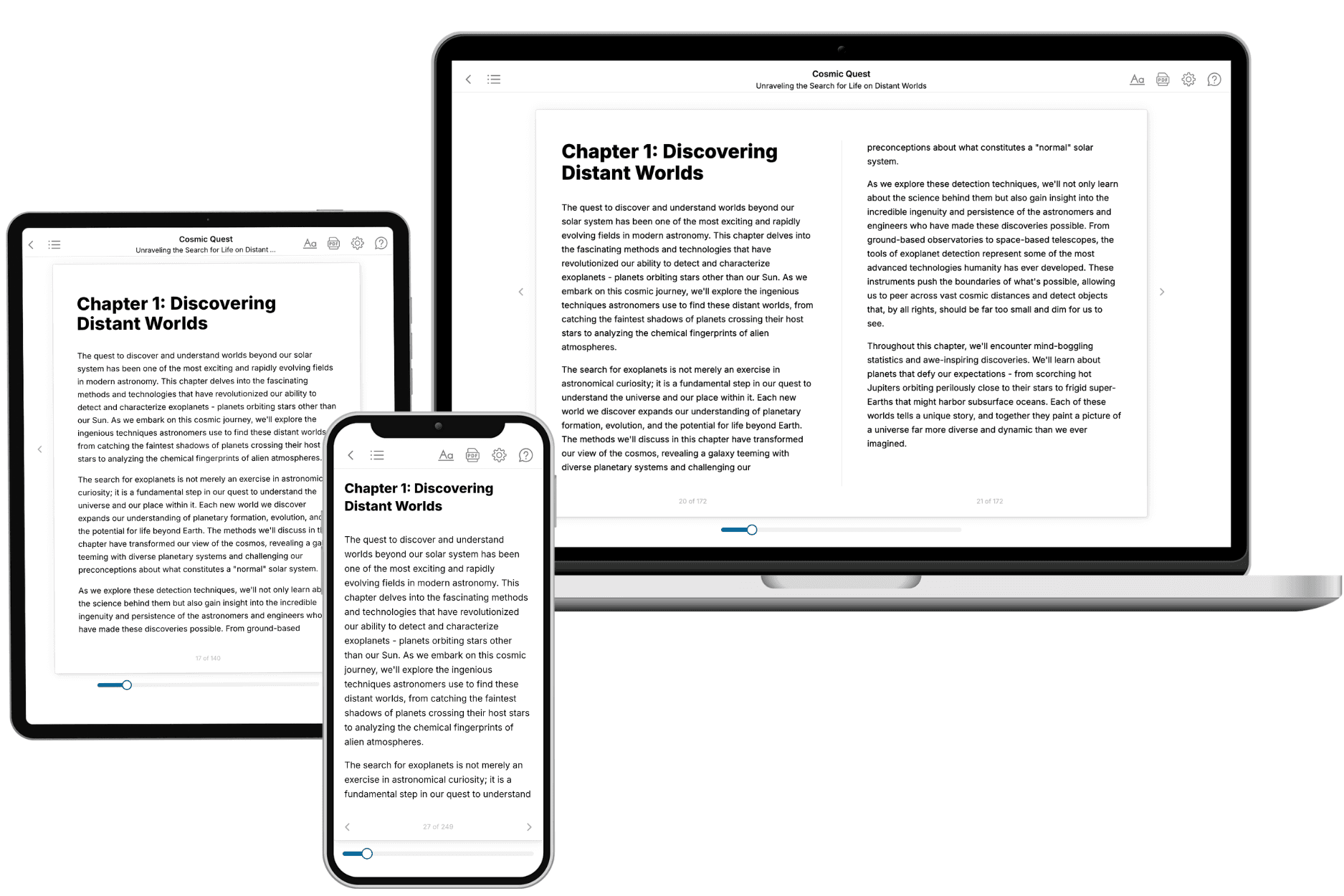
Your book is ready in 10 minutes. Read it online, download as EPUB or PDF, or send to Kindle.

Frequently asked questions
- What is TailoredRead?
TailoredRead creates complete, full-length nonfiction ebooks, written specifically for you. Tell us what you want to learn and why, and TailoredRead writes you a complete ebook on it, with charts, tables, and diagrams throughout. Read it online, on Kindle, or on any e-reader, or download it as a PDF or EPUB. Every book is written fresh the day you order it.
- How is the book tailored to me?
Before anything is written, you answer a few short questions about your goals, your background, and the topics you care about. Your book is then planned around your answers: written at your level, focused on your goals, and covering the topics you chose, instead of the one-size-fits-all book a store sells everyone.
- Will it read like generic AI content?
No. Your book isn't a chat transcript: it's planned chapter by chapter before a single word is written, told in a clear book voice, and explains ideas visually with charts, tables, and diagrams. After writing, every book goes through an editorial pass that polishes chapters so the book reads consistent from start to finish. Judge for yourself: browse thousands of sample books on our Explore Books page.
- How accurate is the content?
Our AI first checks whether your subject needs live research. Niche and fast-moving subjects are researched before writing, and the book plan and chapters are grounded in what it finds. After writing, every book goes through a quality pass that checks its facts and consistency, and researched books list their sources in a Notes section at the back.
- How long is the book?
You choose the length: Comprehensive (250-300 pages), Detailed (150-200 pages), Essential (70-100 pages), or Short (30-50 pages).
- Does the book include visuals?
Yes. Every book includes charts, tables, and diagrams: timelines, checklists, step-by-step guides, decision trees, comparison tables, matrices, and bar charts. A typical book includes dozens of these visual elements.
- Can I read it on Kindle? What formats can I download?
Yes. Every book can be read in our online reader or downloaded as a PDF or EPUB. The EPUB can be opened with Kindle, Apple Books, Kobo, and any e-reader. The Commercial and Author licenses also include an editable Word (DOCX) and Markdown download.
- How much does it cost?
About the price of a regular ebook. The exact price depends on your book's length and complexity, from $2 for the shortest books to $35 for the most comprehensive, and it's shown when you review your book, before you commit to anything. Each book is a one-time purchase, yours to keep, no subscription. Licenses that let you share, teach, or publish your book range from $35.99 to $49.99.
- Can I preview the book before purchasing?
Before you pay, you'll see what your book will cover: the title, a detailed description, the estimated length, and the complete chapter-by-chapter table of contents, so you know what you're getting before you decide. The full text itself is written after you purchase.
- How long does it take to create a book?
About 10 minutes. You can start reading the opening chapters while the rest is still being written.