The Moroccan Kitchen
Mastering the Art of North African Flavors and Traditional Cooking Techniques
Have you ever wondered why Moroccan dishes possess such an intoxicating blend of sweet and savory flavors that seem impossible to recreate at home?
331 pages18 chaptersSep 23, 2025Moroccan Cooking
About this book
The secret lies not just in exotic spices, but in understanding the centuries-old techniques and cultural wisdom that transform ordinary ingredients into extraordinary culinary experiences. This comprehensive guide takes you deep into the heart of Moroccan cuisine, revealing the authentic methods behind beloved dishes like tagines, couscous, and pastillas. You'll discover how to create your own spice blends, master the art of slow-cooking in a tagine, and understand the cultural significance behind each dish you prepare. From the bustling souks of Marrakech to the coastal kitchens of Casablanca, you'll explore regional variations that will expand your cooking repertoire far beyond basic recipes. Through detailed techniques, ingredient guides, and step-by-step instructions, you'll develop the confidence to host authentic Moroccan dinner parties and incorporate these rich flavors into your everyday cooking. You'll learn to balance the complex interplay of cinnamon and cumin, master the preparation of preserved lemons and harissa, and understand how patience and proper technique create the depth of flavor that makes Moroccan cuisine so captivating. Whether you're looking to expand your international cooking skills or dive deep into one of the world's most celebrated culinary traditions, this book provides the knowledge and techniques needed to bring the authentic tastes of Morocco into your own kitchen with confidence and cultural appreciation.
Table of contents
- IntroductionThe Rich Heritage of Moroccan Culinary Traditions, Understanding the Moroccan Kitchen Philosophy, Adapting Traditional Techniques for Modern Kitchens, Cooking with Cultural Appreciation and RespectRead below
- Chapter 1: Foundations of Moroccan CuisineHistorical and Cultural Influences on Moroccan Food, Regional Variations Across Morocco, Core Flavor Principles and Combinations, The Philosophy of Slow, Layered Cooking
- Chapter 2: Essential Spices and SeasoningsBuilding Your Moroccan Spice Pantry, Creating and Using Ras el Hanout, Harissa: From Mild to Fiery Variations, Proper Storage and Freshness Techniques
- Chapter 3: Preserved Ingredients and CondimentsMaking and Using Preserved Lemons, Traditional Pickled Vegetables and Olives, Understanding and Using Argan Oil, Combining Condiments for Maximum Flavor
- Chapter 4: Essential Equipment and ToolsChoosing and Seasoning Your Tagine, The Couscous Pot and Steaming Techniques, Mortar and Pestle for Spice Grinding, Modern Kitchen Alternatives and Adaptations
- Chapter 5: Bread and Basic PreparationsTraditional Khubz and Daily Bread, Msemen: Layered Flatbread Techniques, Traditional Bread Accompaniments, Understanding Moroccan Dough Fundamentals
- Chapter 6: Salads and AppetizersZaalouk: The Art of Cooked Eggplant Salad, Taktouka: Roasted Pepper and Tomato Salad, Carrot and Orange Salad Variations, Creating Beautiful Mezze Presentations
- Chapter 7: Soups and BrothsHarira: The National Soup of Morocco, Building Flavorful Vegetable Broths, Lentil and Legume Soup Variations, Seasonal Soup Adaptations
- Chapter 8: Mastering the TagineUnderstanding Tagine Cooking Principles, Heat Management and Timing, Layering Flavors and Ingredients, Troubleshooting Common Tagine Issues
- Chapter 9: Chicken TaginesChicken with Preserved Lemons and Olives, Sweet and Savory Chicken with Apricots, Seasonal Vegetable and Chicken Combinations, Proper Chicken Preparation and Marinating
- Chapter 10: Lamb and Beef TaginesClassic Lamb with Prunes and Almonds, Beef with Sweet Potatoes and Cinnamon, Selecting and Preparing Cuts for Tagines, Advanced Slow-Cooking Techniques
- Chapter 11: Seafood TaginesFish with Chermoula Marinade, Mixed Seafood with Seasonal Vegetables, Coastal Moroccan Seafood Traditions, Proper Seafood Selection and Preparation
- Chapter 12: Vegetarian TaginesThe Famous Seven-Vegetable Tagine, Root Vegetable and Dried Fruit Combinations, Legume-Based Tagine Variations, Building Protein and Flavor in Vegetarian Dishes
- Chapter 13: The Art of CouscousTraditional Steaming Techniques, Proper Grain Preparation and Fluffing, Sweet and Savory Couscous Variations, Traditional Serving and Presentation Methods
- Chapter 14: Rice and Grain DishesMoroccan-Style Rice Pilaf with Almonds, Traditional Barley and Ancient Grain Dishes, Seasoning and Flavoring Grain Dishes, Pairing Grains with Main Dishes
- Chapter 15: Savory Pastries and PiesTraditional Chicken Bastilla, Savory Briouats with Various Fillings, Working with Phyllo and Warqa Dough, Professional Pastry Shaping and Presentation
- Chapter 16: Traditional Sweets and DessertsChebakia: Sesame and Honey Pastries, Almond-Based Cookies and Pastries, Traditional Milk Puddings and Custards, Holiday and Celebration Sweet Preparations
- Chapter 17: Beverages and Tea CultureThe Art of Moroccan Mint Tea, Proper Tea Service and Hospitality, Traditional Herbal Teas and Infusions, Refreshing Cold Drinks and Fruit Waters
- Chapter 18: Menu Planning and Meal CompositionUnderstanding Traditional Meal Structure, Creating Seasonal Menu Combinations, Planning Menus for Entertaining, Adapting Menus for Dietary Preferences
- Conclusion
- Glossary of Moroccan Culinary Terms
Introduction
The moment you step into a Moroccan kitchen, your senses are immediately awakened by an intoxicating symphony of aromas. The warm, earthy scent of cumin mingles with the sweet perfume of cinnamon, while the bright citrus notes of preserved lemons dance alongside the deep, complex fragrance of slow-simmering tagines. This sensory experience represents far more than just cooking—it embodies centuries of culinary wisdom, cultural exchange, and the profound art of transforming simple ingredients into extraordinary meals. Moroccan cuisine stands as one of the world's most sophisticated culinary traditions, where every dish tells a story of ancient trade routes, diverse cultural influences, and the enduring power of hospitality.
Your journey into authentic Moroccan cooking begins with understanding that this cuisine is fundamentally different from many Western cooking approaches. Rather than relying on quick, high-heat methods or single dominant flavors, Moroccan cooking embraces patience, complexity, and the gradual building of taste layers. Each spice serves a specific purpose, every cooking technique has been refined over generations, and the timing of ingredient additions follows principles that have been passed down through families for centuries. This methodical approach might seem daunting at first, but it's precisely what creates the depth and sophistication that makes Moroccan food so captivating and memorable.
As an intermediate home cook, you already possess the fundamental skills needed to master these techniques. Your understanding of flavor balance, cooking times, and ingredient preparation provides the perfect foundation for exploring this rich culinary tradition. What you'll discover throughout this book is how to apply your existing knowledge in new ways, learning to think like a Moroccan cook who views each dish as an opportunity to create harmony between sweet and savory, hot and cooling, tender and textured. The techniques you'll master here will not only expand your international cooking repertoire but will also deepen your overall understanding of how flavors develop and interact in ways that can enhance all your cooking endeavors.
This comprehensive guide will take you beyond simple recipe following to develop true culinary understanding. You'll learn why certain spice combinations work so beautifully together, how the shape and material of a tagine affects the final dish, and why the seemingly simple act of steaming couscous requires specific techniques to achieve the perfect texture. More importantly, you'll gain the confidence to adapt these methods to your own kitchen, your own ingredients, and your own creative interpretations while maintaining the authentic spirit that makes Moroccan cuisine so special.
The Rich Heritage of Moroccan Culinary Traditions
Moroccan cuisine represents one of history's most successful culinary fusions, born from the intersection of three continents and shaped by thousands of years of cultural exchange. The foundation of this cuisine lies in the indigenous Berber traditions of North Africa, which emphasized the use of local grains, preserved foods, and slow-cooking methods perfectly suited to the region's climate and lifestyle. These ancient techniques, including the use of clay tagines and the preservation of lemons in salt, formed the bedrock upon which all subsequent influences would build. The Berber approach to cooking emphasized sustainability and resourcefulness, creating methods that maximized flavor while conserving fuel and water—principles that remain central to Moroccan cooking today.
The Arab conquest of Morocco in the 7th century brought transformative new elements to the culinary landscape. Arab traders and settlers introduced sophisticated spice blends, the concept of combining sweet and savory flavors in single dishes, and advanced preservation techniques that allowed for more complex flavor development. They brought with them knowledge of spices from across the Islamic world, including cinnamon from Ceylon, black pepper from India, and ginger from Southeast Asia. The Arab influence also introduced the practice of elaborate hospitality meals, where multiple courses and abundant variety demonstrated both wealth and generosity. This tradition of generous, multi-course dining became deeply embedded in Moroccan culture and continues to influence how meals are planned and presented today.
The Moorish period, particularly following the Reconquista in Spain, brought another layer of sophistication to Moroccan cuisine. Andalusian refugees fleeing Christian Spain carried with them advanced cooking techniques, refined pastry-making skills, and a deep appreciation for the interplay between architecture and food presentation. These influences can be seen most clearly in dishes like bastilla, the elaborate layered pastry that showcases the Moorish mastery of phyllo-like dough, and in the development of complex spice blends that balance dozens of different flavors. The Andalusian influence also emphasized the importance of visual presentation, leading to the ornate serving styles and careful attention to color and texture that characterize formal Moroccan dining.
French colonial influence, while more recent and sometimes controversial, also left its mark on Moroccan cuisine, particularly in urban areas and among the educated classes. French techniques influenced bread-making, introduced new vegetables and cooking methods, and created fusion dishes that combined Moroccan flavors with European presentations. However, this influence remained largely superficial compared to the deeper Arab and Berber foundations. The colonial period also led to increased documentation of traditional recipes, as French ethnographers and food writers began recording Moroccan cooking methods that had previously been passed down only through oral tradition. This documentation, while sometimes incomplete or filtered through colonial perspectives, helped preserve many traditional techniques that might otherwise have been lost.
Sub-Saharan African influences entered Moroccan cuisine through the trans-Saharan trade routes, bringing ingredients like certain varieties of hot peppers, specific grain preparations, and cooking techniques adapted to desert conditions. These influences are particularly evident in southern Moroccan cuisine, where dishes often feature more intense heat levels and different spice combinations than those found in northern regions. The African influence also contributed to the Moroccan tradition of communal eating, where large groups share from common dishes, and the emphasis on foods that could sustain people through long journeys or periods of scarcity.
Jewish communities, particularly Sephardic Jews who fled Spain, contributed significantly to Moroccan culinary traditions, especially in the areas of preservation techniques, pastry-making, and holiday foods. Jewish cooks developed many of the elaborate preserved vegetable preparations that became staples of Moroccan cuisine, and their Sabbath cooking restrictions led to innovative slow-cooking methods that influenced broader Moroccan techniques. The Jewish influence is particularly evident in the development of complex spice blends and in certain pastry techniques that require precise timing and temperature control. Many dishes that are now considered quintessentially Moroccan actually originated in Jewish kitchens and were later adopted by the broader population.
Understanding this rich heritage helps explain why Moroccan cuisine is so complex and why certain combinations of flavors work so well together. Each historical influence didn't simply overlay the previous ones but instead integrated with existing traditions to create something entirely new. This process of culinary evolution continues today, as modern Moroccan cooks adapt traditional techniques to contemporary ingredients and lifestyles while maintaining the essential character that makes their cuisine unique. When you cook Moroccan food, you're participating in this ongoing tradition of cultural exchange and culinary innovation.
The preservation of these traditions through oral transmission means that many Moroccan cooking techniques carry with them not just practical knowledge but also cultural wisdom about hospitality, family relationships, and community bonds. Traditional Moroccan cooks don't just follow recipes—they embody a way of thinking about food that emphasizes generosity, patience, and the belief that cooking is an act of love and care for others. This philosophical approach to cooking is just as important to master as any specific technique, and it's what transforms simple ingredient combinations into meals that nourish both body and soul.
Understanding the Moroccan Kitchen Philosophy
The Moroccan approach to cooking operates on fundamentally different principles than most Western culinary traditions, and understanding these philosophical differences is crucial for mastering authentic techniques. At its core, Moroccan cooking philosophy emphasizes patience over speed, layered complexity over simple flavors, and communal sharing over individual portions. This isn't simply a matter of different recipes or ingredients—it represents a completely different way of thinking about what cooking means and how food functions in daily life. Moroccan cooks view each dish as an opportunity to create harmony between opposing elements: sweet and savory, hot and cooling, tender and textured, familiar and exotic.
The concept of baraka, often translated as blessing or divine grace, permeates Moroccan cooking philosophy and influences every aspect of food preparation. Traditional Moroccan cooks believe that food prepared with intention, care, and positive energy carries this baraka and nourishes people on multiple levels beyond mere physical sustenance. This belief manifests in practical ways: ingredients are treated with respect, nothing is wasted, and the cooking process itself becomes a form of meditation or prayer. You'll notice this philosophy in action when you observe how Moroccan cooks handle spices—grinding them fresh for each use, toasting them to release their essential oils, and combining them with careful attention to balance and harmony.
Time operates differently in the Moroccan kitchen, where rushing is considered antithetical to good cooking. Traditional tagine cooking, for example, can take several hours from start to finish, but this extended cooking time isn't seen as inconvenient—it's understood as necessary for proper flavor development. The slow, gentle heat allows tough cuts of meat to become tender, enables spices to fully bloom and integrate, and creates the complex sauce reductions that characterize the best Moroccan dishes. This philosophy extends beyond cooking times to include preparation rituals: spices are ground fresh, vegetables are carefully cleaned and trimmed, and ingredients are arranged with attention to visual harmony before cooking begins.
The Moroccan kitchen philosophy also emphasizes seasonal awareness and ingredient respect in ways that modern convenience cooking often overlooks. Traditional Moroccan cooks plan their menus around what's available locally and seasonally, understanding that ingredients taste best when they're naturally at their peak. This approach requires flexibility and creativity—the ability to adapt recipes based on what's available rather than rigidly following predetermined plans. For example, a spring tagine might feature fresh peas and artichokes, while the same basic technique in winter would incorporate preserved lemons and dried fruits to provide brightness and complexity during the colder months.
Spice philosophy in Moroccan cooking operates on principles of balance and therapeutic benefit that go far beyond simple flavor enhancement. Each spice is understood to have specific properties—warming or cooling, digestive or stimulating, calming or energizing—and spice combinations are designed to create not just delicious flavors but also balanced effects on the body and mind. This is why Moroccan spice blends like ras el hanout can contain dozens of different spices: each one serves a specific purpose in the overall harmony of the blend. Understanding this philosophy helps explain why simply substituting one spice for another rarely produces authentic results—each component plays a specific role in the complex symphony of flavors.
The communal aspect of Moroccan dining philosophy profoundly influences how dishes are conceived and prepared. Unlike Western cooking, which often focuses on individual portions and personal preferences, Moroccan cooking assumes that food will be shared among multiple people with different tastes and needs. This communal approach affects everything from portion sizes to flavor intensity to the variety of dishes served at a single meal. A traditional Moroccan meal might include several different tagines, multiple salads, various breads, and different condiments, allowing each person to create their own combination of flavors while still participating in the shared experience of the meal.
Hospitality philosophy in Moroccan culture elevates cooking from mere sustenance to an art form of welcome and care. The famous Moroccan saying A guest is a blessing from God
translates into cooking practices that emphasize abundance, variety, and the finest ingredients the household can afford. This doesn't necessarily mean expensive ingredients, but rather the best quality available and the most careful preparation possible. Even simple dishes are prepared with attention to detail and presentation that honors both the food and the people who will eat it. This hospitality philosophy explains why Moroccan recipes often seem to serve more people than expected—generosity is built into the very conception of the dishes.
The integration of cooking with daily rhythm represents another crucial aspect of Moroccan kitchen philosophy. Rather than viewing cooking as a separate task to be completed as quickly as possible, traditional Moroccan households integrate food preparation into the natural flow of daily life. Morning might begin with grinding spices and preparing preserved ingredients, afternoon brings the slow assembly of tagines that will simmer until evening, and the day concludes with the communal preparation of bread or sweets for the following day. This integration means that cooking becomes a meditative practice that structures time and creates opportunities for family interaction and cultural transmission.
Understanding and embracing this philosophy doesn't mean you need to completely restructure your life around cooking, but it does mean approaching Moroccan dishes with appropriate respect for their complexity and cultural significance. When you allow yourself to slow down, pay attention to the sensory aspects of cooking, and view the process as an opportunity for creativity and care rather than just a means to an end, you'll find that your Moroccan dishes not only taste more authentic but also provide a more satisfying and enriching cooking experience.
Adapting Traditional Techniques for Modern Kitchens
Successfully bringing authentic Moroccan flavors into your modern kitchen requires understanding which traditional techniques are essential to preserve and which can be adapted without compromising the integrity of the final dish. The key lies in identifying the core principles behind each traditional method and finding ways to achieve the same results using contemporary equipment and ingredients. For example, while traditional Moroccan cooks might spend hours hand-grinding spices in a large stone mortar, you can achieve similar results using a high-quality spice grinder or coffee mill dedicated solely to spices, provided you understand the importance of grinding spices fresh and in small batches to preserve their essential oils and aromatic compounds.
Temperature control represents one of the most crucial adaptations for modern kitchens, as traditional Moroccan cooking relies heavily on very low, steady heat that can be challenging to achieve on modern stovetops. Traditional tagine cooking uses charcoal or wood fires that provide gentle, even heat over long periods, while most home gas and electric ranges tend to create hot spots and temperature fluctuations. To adapt these techniques, you'll need to learn to use heat diffusers, low oven temperatures, and careful burner management to create the steady, gentle heat that allows flavors to develop properly. A simple flame tamer or heat diffuser placed between your burner and tagine can make the difference between authentic, slowly developed flavors and burnt, unevenly cooked dishes.
Ingredient sourcing in modern kitchens often requires creative substitutions and advance planning, but understanding the role each ingredient plays helps you make appropriate choices. While you might not have access to the specific varieties of preserved lemons used in Morocco, you can create authentic-tasting preserved lemons using Meyer lemons or even regular lemons with slight technique modifications. The key is understanding that preserved lemons provide both intense citrus flavor and a unique fermented complexity that can't be replicated with fresh lemon juice alone. Similarly, while finding authentic smen (aged clarified butter) might be challenging, you can create a reasonable substitute by aging your own clarified butter with herbs, or by understanding when regular butter or high-quality olive oil can provide similar richness without compromising the dish's character.
Equipment adaptation requires balancing authenticity with practicality, and fortunately, many traditional Moroccan cooking vessels have modern equivalents that work quite well. If you don't own a traditional clay tagine, a heavy-bottomed Dutch oven with a tight-fitting lid can produce similar results when used with proper heat management and timing adjustments. The key is understanding that the tagine's conical shape and clay material create specific steam circulation patterns that keep ingredients moist while concentrating flavors—effects you can approximate by using appropriate pot sizes, maintaining proper liquid levels, and adjusting cooking times. For couscous preparation, while a traditional couscoussier produces the best results, you can achieve excellent couscous using a fine-mesh steamer insert and a large pot, provided you understand the importance of multiple steaming cycles and proper grain handling.
Time management in modern kitchens often requires rethinking traditional Moroccan cooking schedules to fit contemporary lifestyles without sacrificing quality. Many Moroccan dishes actually benefit from advance preparation—spice blends can be made in larger quantities and stored properly, preserved ingredients can be prepared weeks ahead, and many tagine components can be partially prepared the day before final cooking. Understanding which steps can be done in advance and which must be completed just before serving allows you to enjoy the meditative aspects of Moroccan cooking without feeling overwhelmed by time constraints. For example, you can toast and grind spices on weekends, prepare your preserved lemons months in advance, and even partially cook tagine bases that can be finished quickly on busy weeknights.
Scaling recipes for modern households presents unique challenges, as traditional Moroccan recipes often assume large family groups or extended cooking sessions that produce multiple meals. Learning to scale these recipes down while maintaining proper flavor balance requires understanding the mathematical relationships between spices, liquids, and cooking times. Simply halving all ingredients doesn't always work—some spices need to be reduced less proportionally, liquid ratios may need adjustment, and cooking times might not scale linearly. The key is understanding the role each ingredient plays in the final dish and adjusting accordingly rather than following rigid mathematical formulas.
Storage and preservation techniques need adaptation for modern refrigeration and pantry systems, but the principles remain the same. Traditional Moroccan preservation methods were designed for hot climates without refrigeration, which means they often work even better in modern kitchens with proper temperature control. Your refrigerator can extend the life of preserved lemons indefinitely, your freezer can store pre-made spice pastes and harissa for months, and your pantry can house properly stored whole spices that maintain their potency far longer than pre-ground alternatives. Understanding these storage principles allows you to prepare authentic ingredients in advance and always have the building blocks for Moroccan dishes readily available.
Quality control in modern ingredient sourcing requires developing relationships with specialty food suppliers and learning to evaluate ingredients for freshness and authenticity. While you might not be able to source every ingredient from Morocco itself, understanding what to look for in terms of color, aroma, and texture helps you select the best available alternatives. For example, high-quality saffron should have deep red threads with a distinctive aroma, good harissa should have a complex heat that builds gradually rather than hitting immediately, and authentic preserved lemons should have a soft, almost jam-like texture with no bitter aftertaste. Developing these evaluation skills ensures that your modern adaptations maintain the quality standards that make Moroccan cuisine so exceptional.
Integration with modern meal planning requires understanding how Moroccan dishes fit into contemporary dining patterns while respecting their cultural context. Rather than trying to force Moroccan dishes into Western meal structures, consider adopting modified versions of traditional Moroccan dining patterns that work with your lifestyle. This might mean serving several smaller dishes family-style rather than individual plates, planning meals that can simmer while you work, or creating Moroccan-inspired lunch preparations that bring these flavors into different parts of your day. The goal is finding ways to enjoy authentic Moroccan flavors regularly rather than reserving them only for special occasions or elaborate dinner parties.
Cooking with Cultural Appreciation and Respect
Approaching Moroccan cuisine with genuine cultural appreciation requires understanding that you're engaging with more than just recipes and techniques—you're participating in a living cultural tradition that carries deep meaning for millions of people. This responsibility goes beyond simply avoiding cultural appropriation; it involves actively seeking to understand the historical, social, and spiritual contexts that give Moroccan dishes their significance. When you prepare a traditional tagine, you're not just combining ingredients according to a formula—you're participating in a cooking tradition that has sustained families, marked celebrations, and provided comfort during difficult times for countless generations. This understanding should inform every aspect of your approach, from ingredient selection to presentation to the way you share these dishes with others.
Respectful learning begins with acknowledging the sources of your knowledge and understanding the limitations of any single perspective on such a rich and diverse culinary tradition. Morocco itself contains multiple distinct regional cuisines, each with its own specialties, techniques, and cultural significance. What's considered authentic in Fez might be quite different from traditional preparations in Marrakech or Tangier, and rural cooking traditions often differ significantly from urban approaches. Rather than seeking one "correct" way to prepare Moroccan dishes, embrace the diversity within the tradition and acknowledge that your own interpretations represent just one point on a vast spectrum of possibilities. This humility allows for continued learning and prevents the kind of rigid thinking that can lead to cultural insensitivity.
Language and terminology deserve careful attention, as the names of dishes, ingredients, and techniques carry cultural significance that goes beyond mere identification. Learning to pronounce dish names correctly—tagine rather than "ta-jeen," harira with proper emphasis, ras el hanout with understanding of its poetic meaning as "head of the shop"—shows respect for the culture and helps preserve the linguistic heritage associated with the cuisine. Understanding the cultural context of these names also enriches your cooking experience: knowing that bastilla was traditionally served at elaborate celebrations helps you appreciate the dish's complexity and the skill required to prepare it properly.
Ingredient sourcing presents opportunities to support authentic producers and learn about the economic and social contexts of Moroccan cuisine. When possible, seek out ingredients that are produced by Moroccan cooperatives or companies, particularly items like argan oil, preserved lemons, and spice blends that represent significant sources of income for traditional producers. Understanding the labor-intensive processes behind ingredients like hand-harvested saffron or traditionally aged preserved lemons helps you appreciate their true value and use them with appropriate care. This economic awareness also helps you understand why certain ingredients are expensive and why substitutions, while sometimes necessary, should be made thoughtfully rather than casually.
Presentation and serving traditions carry cultural significance that extends far beyond aesthetics, reflecting deep-seated values about hospitality, community, and respect for food. Traditional Moroccan serving styles—using communal dishes, providing multiple options, ensuring abundance even when resources are limited—embody cultural values that you can honor even when adapting to modern dining situations. This might mean serving tagines family-style rather than in individual portions, providing small dishes of various condiments and accompaniments, or ensuring that bread is always available and treated with respect. Understanding these traditions helps you create dining experiences that honor the cultural context of the food rather than simply extracting flavors from their cultural meaning.
Teaching and sharing Moroccan cooking techniques with others provides opportunities to act as a cultural bridge, but this responsibility requires ongoing education and sensitivity. When you share Moroccan dishes or techniques with friends and family, take the opportunity to share cultural context as well—explain the significance of communal eating, discuss the historical influences that shaped particular dishes, or describe the role of hospitality in Moroccan culture. This educational approach helps prevent the reduction of rich cultural traditions to mere exotic flavors and encourages others to approach the cuisine with appropriate respect and understanding.
Avoiding stereotypes and oversimplification requires recognizing that Moroccan cuisine, like all living cultural traditions, continues to evolve and adapt to contemporary circumstances. Modern Moroccan cooks are not museum pieces preserving ancient traditions unchanged—they're creative individuals who adapt traditional techniques to modern ingredients, dietary needs, and lifestyle requirements while maintaining cultural continuity. Your own adaptations and interpretations can be part of this ongoing evolution, provided they're undertaken with respect for the tradition and acknowledgment of your position as an outside participant rather than an authority on authentic practice.
Supporting cultural preservation efforts can extend your engagement with Moroccan cuisine beyond your own kitchen to include broader efforts to maintain and celebrate this culinary heritage. This might involve supporting organizations that work to preserve traditional cooking techniques, purchasing cookbooks and other materials created by Moroccan authors and chefs, or participating in cultural events that celebrate Moroccan heritage in your community. Understanding that cultural preservation requires active effort helps you see your own cooking practice as part of a larger project of maintaining cultural diversity in an increasingly globalized world.
Personal reflection on your own cultural background and cooking traditions can deepen your appreciation for Moroccan cuisine by helping you understand how all culinary traditions develop through cultural exchange and adaptation. Consider how your own family's cooking traditions have been influenced by various cultural contacts, economic circumstances, and historical events. This reflection can help you approach Moroccan cuisine with empathy and understanding rather than treating it as exotic or fundamentally different from your own experience. Recognizing the universal human experiences reflected in all cooking traditions—the desire to nourish loved ones, the importance of celebration and comfort, the creativity involved in making the most of available ingredients—creates a foundation for genuine cultural appreciation that goes beyond surface-level fascination with unfamiliar flavors.
This is the end of the free sample. The full book has 18 chapters.
Want this book written for you?
Tell us your goals and background, and get your own version of this book, tailored by AI to you.


Benefits of AI-tailored books
- Read one book, not ten:
- all the Moroccan Cooking knowledge you need, gathered into a single book.
- Save days of learning:
- tell us your goals, choose your topics, and the whole book is built around them.
- Learn effortlessly:
- Moroccan Cooking book written for your specific background and expertise.
- Understand at a glance:
- includes charts, tables, timelines, checklists, decision trees, and more.
- Stay current:
- written the day you order it, not years ago.
- Trust what you read:
- every book is checked for accuracy, with real research when your subject needs it.
Create your unique book in 3 steps
- 1. Select your focus
Select the focus of your Moroccan Cooking book and share your background
- 2. Personalize your book
Specify your goals and choose sub-topics to include
- 3. Get your tailored book
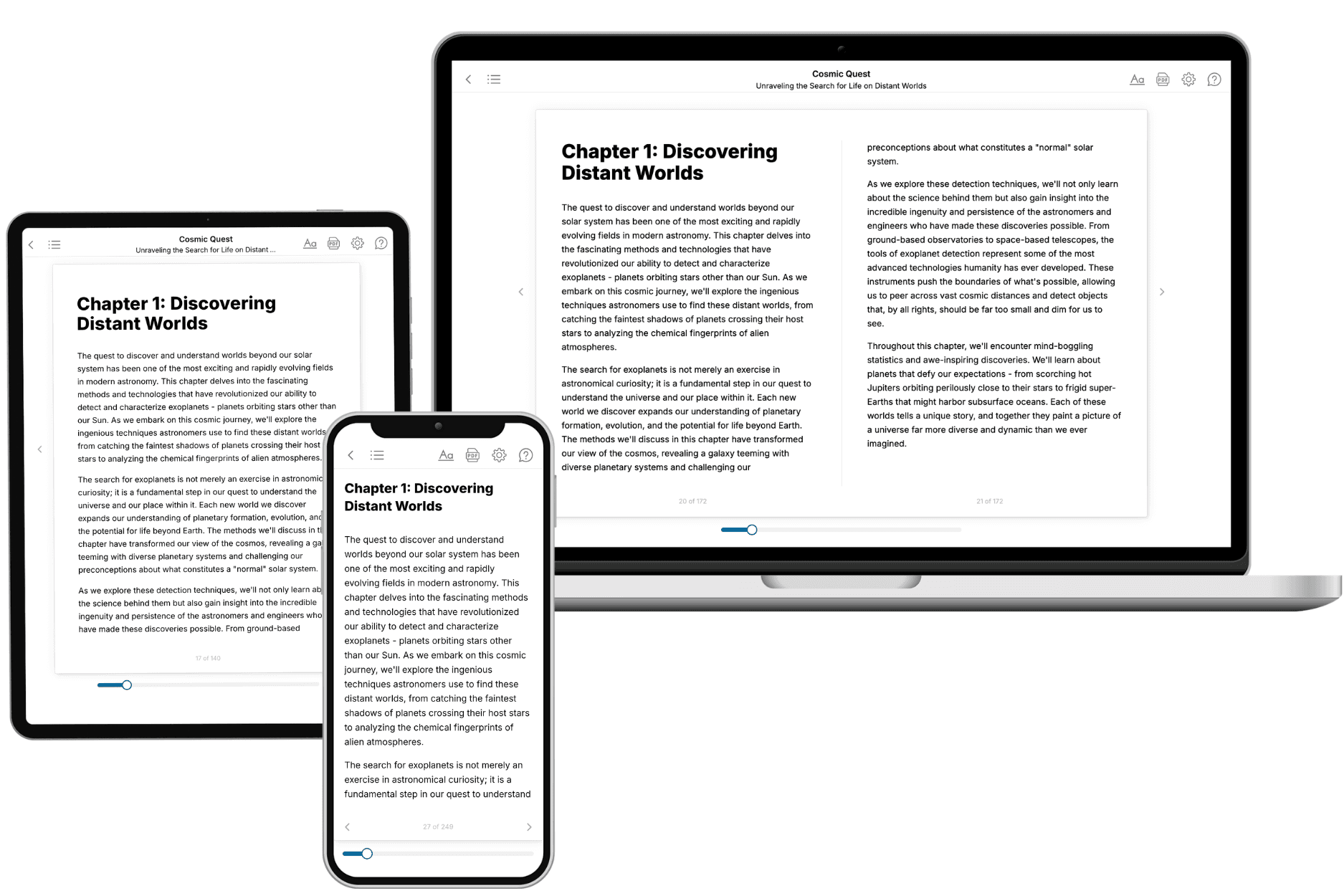
Your book is ready in 10 minutes. Read it online, download as EPUB or PDF, or send to Kindle.

Frequently asked questions
- What is TailoredRead?
TailoredRead creates complete, full-length nonfiction ebooks, written specifically for you. Tell us what you want to learn and why, and TailoredRead writes you a complete ebook on it, with charts, tables, and diagrams throughout. Read it online, on Kindle, or on any e-reader, or download it as a PDF or EPUB. Every book is written fresh the day you order it.
- How is the book tailored to me?
Before anything is written, you answer a few short questions about your goals, your background, and the topics you care about. Your book is then planned around your answers: written at your level, focused on your goals, and covering the topics you chose, instead of the one-size-fits-all book a store sells everyone.
- Will it read like generic AI content?
No. Your book isn't a chat transcript: it's planned chapter by chapter before a single word is written, told in a clear book voice, and explains ideas visually with charts, tables, and diagrams. After writing, every book goes through an editorial pass that polishes chapters so the book reads consistent from start to finish. Judge for yourself: browse thousands of sample books on our Explore Books page.
- How accurate is the content?
Our AI first checks whether your subject needs live research. Niche and fast-moving subjects are researched before writing, and the book plan and chapters are grounded in what it finds. After writing, every book goes through a quality pass that checks its facts and consistency, and researched books list their sources in a Notes section at the back.
- How long is the book?
You choose the length: Comprehensive (250-300 pages), Detailed (150-200 pages), Essential (70-100 pages), or Short (30-50 pages).
- Does the book include visuals?
Yes. Every book includes charts, tables, and diagrams: timelines, checklists, step-by-step guides, decision trees, comparison tables, matrices, and bar charts. A typical book includes dozens of these visual elements.
- Can I read it on Kindle? What formats can I download?
Yes. Every book can be read in our online reader or downloaded as a PDF or EPUB. The EPUB can be opened with Kindle, Apple Books, Kobo, and any e-reader. The Commercial and Author licenses also include an editable Word (DOCX) and Markdown download.
- How much does it cost?
About the price of a regular ebook. The exact price depends on your book's length and complexity, from $2 for the shortest books to $35 for the most comprehensive, and it's shown when you review your book, before you commit to anything. Each book is a one-time purchase, yours to keep, no subscription. Licenses that let you share, teach, or publish your book range from $35.99 to $49.99.
- Can I preview the book before purchasing?
Before you pay, you'll see what your book will cover: the title, a detailed description, the estimated length, and the complete chapter-by-chapter table of contents, so you know what you're getting before you decide. The full text itself is written after you purchase.
- How long does it take to create a book?
About 10 minutes. You can start reading the opening chapters while the rest is still being written.