The Mosque of Ibn Tulun
A Traveler's Guide to Cairo's Architectural Marvel
Standing before the Mosque of Ibn Tulun, you're overwhelmed by its sheer size and intricate details.
269 pages13 chaptersEnglishJan 7, 2025Islamic History
About this book
How can you fully appreciate this architectural wonder without getting lost in its vastness? This guide unlocks the secrets of Cairo's oldest intact mosque, revealing stories hidden within its ancient walls. You'll discover the innovative architectural techniques that have kept it standing for over a millennium, explore the symbolism in its decorative elements, and understand its significance in Islamic history. From the unique spiral minaret to the spacious courtyard, every corner of Ibn Tulun comes alive with rich historical context and fascinating anecdotes. Whether you're planning your first visit or seeking a deeper understanding of a place you've already seen, this book equips you with the knowledge to experience the mosque like never before. Prepare to step back in time and immerse yourself in the grandeur of medieval Islamic architecture, right in the heart of modern Cairo.
Table of contents
- IntroductionThe Importance of Ibn Tulun in Cairo's Landscape, What This Book Offers, How to Use This GuideRead below
- Chapter 1: Historical ContextThe Tulunid Dynasty in Egypt, Ahmad ibn Tulun: The Visionary Ruler, Cairo in the 9th Century, The Construction of the Mosque
- Chapter 2: Architectural OverviewLayout and Design Principles, Samarran Influence on the Mosque, Coptic and Byzantine Elements, Unique Architectural Features
- Chapter 3: The ExteriorThe Outer Walls and Entrances, The Iconic Spiral Minaret, The Ziyadas: Outer Enclosures, The Ablution Fountain
- Chapter 4: The CourtyardDesign and Proportions, The Surrounding Arcades, The Central Fountain and Dome, Function and Use Throughout History
- Chapter 5: The Prayer HallThe Qibla Wall and Mihrab, The Minbar: Pulpit of the Mosque, Columns and Arches, The Wooden Ceiling
- Chapter 6: Decorative ElementsStucco Work and Friezes, Geometric Patterns and Their Meanings, Calligraphy in the Mosque, Wooden Decorative Elements
- Chapter 7: Restoration and PreservationHistorical Restorations, Modern Conservation Efforts, Challenges in Preserving Ancient Architecture, Future Plans for the Mosque
- Chapter 8: Cultural SignificanceReligious Importance Through the Ages, The Mosque's Social Role in Cairo, Artistic and Architectural Influence, The Mosque in Modern Egyptian Culture
- Chapter 9: The Visitor ExperiencePlanning Your Visit, Guided Tours and What to Expect, Photography Tips and Etiquette, Nearby Attractions and Facilities
- Chapter 10: Ibn Tulun in the Context of Islamic ArchitectureComparison with Other Early Mosques, The Evolution of Mosque Architecture, Ibn Tulun's Legacy in Later Designs, Global Significance in Islamic Art History
- Chapter 11: Legends and StoriesMyths Surrounding the Mosque's Founding, Significant Historical Events at Ibn Tulun, Famous Visitors and Their Accounts, Local Folklore and Traditions
- Chapter 12: Practical Guide for VisitorsBest Times to Visit, Dress Code and Etiquette, Accessibility Information, Local Transportation Options
- Chapter 13: A Photographic JourneyExterior Views and Perspectives, Interior Architectural Highlights, Detail Shots of Decorative Elements, The Mosque Through Different Seasons
- ConclusionThe Lasting Impact of Ibn Tulun, The Future of Preservation
- Glossary
- Further Reading
Introduction
As you stand before the Mosque of Ibn Tulun, you're immediately struck by its grandeur and timeless beauty. This architectural marvel, nestled in the heart of Cairo, has stood as a testament to Islamic art and culture for over a millennium. Its weathered walls and intricate designs tell a story of artistic innovation, religious devotion, and the rich tapestry of Egyptian history. The Mosque of Ibn Tulun is not just a building; it's a living monument that continues to inspire and educate visitors from around the world.
In this introduction, we'll explore the significance of the Mosque of Ibn Tulun in Cairo's landscape, provide an overview of what this book offers, and guide you on how to make the most of this comprehensive exploration. Whether you're planning your first visit to Cairo or seeking to deepen your understanding of Islamic architecture, this guide will serve as your key to unlocking the secrets and stories hidden within the ancient walls of Ibn Tulun.
The Importance of Ibn Tulun in Cairo's Landscape
The Mosque of Ibn Tulun holds a unique place in Cairo's architectural and cultural landscape. As the oldest intact mosque in the city and one of the largest in the world, it stands as a bridge between the past and present, offering invaluable insights into the evolution of Islamic architecture and the history of Cairo itself. Built between 876 and 879 AD, during the Tulunid dynasty, this mosque predates many of Cairo's other famous landmarks and has witnessed the city's transformation over centuries[1].
The significance of Ibn Tulun extends far beyond its age. Its architectural style, blending Samarran, Coptic, and Byzantine influences, represents a crucial moment in the development of Islamic art. The mosque's design, with its emphasis on functionality and simplicity, reflects early Islamic architectural principles while also showcasing innovative features that would influence subsequent buildings throughout Egypt and the wider Islamic world. The iconic spiral minaret, inspired by the Great Mosque of Samarra in Iraq, has become a symbol of Cairo's skyline and a testament to the cultural exchanges that shaped Islamic civilization[2].
For over a thousand years, the Mosque of Ibn Tulun has played a central role in Cairo's religious and social life. Its vast courtyard and spacious prayer hall have hosted countless worshippers, scholars, and seekers of knowledge. The mosque's ziyadas, or outer enclosures, once served as spaces for education, commerce, and community gatherings, illustrating the multifaceted role of mosques in Islamic society. Even today, as Cairo has grown and changed around it, Ibn Tulun remains a vital center of spiritual and cultural activity, drawing both devout Muslims and curious visitors from around the globe.
The mosque's historical importance is matched by its architectural significance. Its innovative use of brick and stucco, the elegant pointed arches, and the intricate geometric patterns adorning its surfaces all contribute to its status as a masterpiece of Islamic art. The stucco decorations, in particular, showcase the development of Arabic calligraphy and geometric designs that would become hallmarks of Islamic artistic expression. These elements not only beautify the mosque but also serve as a visual language, conveying spiritual and philosophical concepts central to Islamic thought[3].
In the context of Cairo's urban development, the Mosque of Ibn Tulun serves as a crucial reference point. Its location in the district of Sayyida Zeinab marks the southern extent of the medieval city, providing insights into Cairo's historical growth patterns. The mosque's survival through centuries of political upheaval, natural disasters, and urban expansion is a testament to both its sturdy construction and its enduring cultural value. As such, it offers a unique window into the layers of history that make up modern Cairo, allowing visitors to connect with the city's past in a tangible and meaningful way.
The Mosque of Ibn Tulun also plays a vital role in contemporary efforts to preserve and celebrate Egypt's cultural heritage. As one of the best-preserved examples of early Islamic architecture, it has been the subject of numerous restoration and conservation projects. These efforts not only maintain the physical structure but also contribute to our understanding of historical construction techniques and materials. The ongoing work to preserve Ibn Tulun serves as a model for heritage conservation in Egypt and beyond, demonstrating the challenges and rewards of maintaining ancient structures in a modern urban environment.
For visitors to Cairo, the Mosque of Ibn Tulun offers an unparalleled opportunity to engage with Islamic history, art, and culture. Its vast, open spaces provide a respite from the bustling city streets, inviting contemplation and reflection. The mosque's architectural features, from the soaring minaret to the intricate mihrab (prayer niche), tell the story of Islamic artistic development and spiritual expression. By exploring Ibn Tulun, you gain insights not just into a single building, but into the broader currents of Islamic civilization that have shaped Cairo and the wider Muslim world.
Moreover, the Mosque of Ibn Tulun serves as a powerful symbol of cultural continuity and resilience. Despite the many changes Cairo has undergone over the centuries, Ibn Tulun remains a living, functioning mosque, continuing to serve its original purpose while also embracing its role as a historical monument. This dual identity – as both a place of worship and a site of cultural heritage – makes Ibn Tulun a unique bridge between past and present, sacred and secular, local community and global visitors.
In the broader context of Islamic architecture, the Mosque of Ibn Tulun stands out for its innovative features and historical significance. Its design influenced subsequent mosque construction throughout Egypt and beyond, making it a crucial link in the evolution of Islamic architectural styles. By studying Ibn Tulun, you gain a deeper appreciation not just for this specific mosque, but for the rich tradition of Islamic architecture as a whole. The mosque serves as a physical embodiment of the cultural, artistic, and spiritual achievements of Islamic civilization, offering lessons that remain relevant to architects, historians, and cultural enthusiasts today.
As you prepare to explore the Mosque of Ibn Tulun, whether in person or through the pages of this book, remember that you are engaging with a site of immense historical, cultural, and spiritual significance. This ancient structure, with its weathered stones and timeless beauty, has much to teach us about art, faith, and the enduring power of human creativity. By understanding the importance of Ibn Tulun in Cairo's landscape, you'll be better equipped to appreciate the depth and richness of this extraordinary monument.
What This Book Offers
This comprehensive guide to the Mosque of Ibn Tulun is designed to enhance your understanding and appreciation of this remarkable monument, whether you're planning a visit or simply seeking to expand your knowledge of Islamic architecture and history. Through its pages, you'll embark on a journey that spans over a thousand years, exploring the mosque's origins, its architectural marvels, and its enduring significance in the cultural landscape of Cairo and the wider Islamic world.
At its core, this book aims to provide you with a deep, multifaceted understanding of the Mosque of Ibn Tulun. It goes beyond mere description, offering insights into the historical context, architectural innovations, artistic achievements, and cultural importance of this ancient structure. By delving into these various aspects, you'll gain a richer appreciation of the mosque not just as a building, but as a living testament to the artistic, spiritual, and intellectual achievements of Islamic civilization.
One of the key features of this book is its comprehensive historical overview. You'll be transported back to 9th-century Egypt, learning about the Tulunid dynasty and its visionary ruler, Ahmad ibn Tulun, who commissioned the mosque. This historical context is crucial for understanding the political, social, and cultural forces that shaped the mosque's creation. By exploring the Cairo of a millennium ago, you'll gain insights into the urban development of one of the world's great cities and the role that monumental architecture played in shaping its identity[4].
The architectural analysis provided in this book is both detailed and accessible. You'll learn about the unique features that set Ibn Tulun apart, such as its innovative use of brick, its spacious courtyard, and its iconic spiral minaret. The book breaks down complex architectural concepts into understandable elements, explaining how different influences – Samarran, Coptic, and Byzantine – came together to create a distinctly Egyptian style of Islamic architecture. Through clear descriptions and illustrative examples, you'll develop the tools to "read" the mosque's architecture, understanding how each element contributes to the overall design and spiritual purpose of the building.
Art enthusiasts will find a wealth of information on the decorative elements that adorn the Mosque of Ibn Tulun. The book offers in-depth explorations of the stucco work, geometric patterns, calligraphy, and wooden elements that make the mosque a masterpiece of Islamic art. You'll learn about the symbolism behind these decorations, the techniques used to create them, and their place in the broader context of Islamic artistic tradition. This analysis will enhance your appreciation of the mosque's aesthetic beauty and help you understand the deep connections between art, spirituality, and culture in Islamic civilization.
For those interested in conservation and heritage preservation, this book provides valuable insights into the challenges and triumphs of maintaining an ancient structure in a modern urban environment. You'll learn about historical restorations, modern conservation efforts, and the ongoing work to preserve Ibn Tulun for future generations. This section not only highlights the technical aspects of preservation but also raises important questions about how we value and maintain our cultural heritage in the face of urban development and changing societal needs.
The cultural significance of the Mosque of Ibn Tulun is a central theme throughout the book. You'll explore how the mosque has functioned as a center of religious and social life for over a millennium, its role in education and scholarship, and its place in the collective memory and identity of Cairo's residents. By understanding the mosque's cultural importance, you'll gain a deeper appreciation for its role not just as a historical monument, but as a living, breathing part of contemporary Cairo.
Practical information is also a key component of this guide. If you're planning a visit to the Mosque of Ibn Tulun, you'll find detailed advice on how to make the most of your experience. This includes tips on the best times to visit, what to wear, how to navigate the site, and how to engage respectfully with a functioning place of worship. The book also provides information on guided tours, photography guidelines, and nearby attractions, helping you to plan a comprehensive and enriching visit.
One of the unique features of this book is its exploration of the legends and stories associated with the Mosque of Ibn Tulun. These tales, passed down through generations, add color and depth to your understanding of the mosque's place in local culture. While separating fact from fiction, the book presents these stories as an important part of the mosque's intangible heritage, illustrating how historical sites accrue layers of meaning over time.
Throughout the book, you'll find connections drawn between Ibn Tulun and other important examples of Islamic architecture around the world. This comparative approach helps to place the mosque in its broader architectural and cultural context, highlighting its innovations and influences. Whether you're a seasoned student of Islamic art or a newcomer to the field, these connections will enrich your understanding and inspire further exploration.
Visual learners will appreciate the book's photographic journey through the Mosque of Ibn Tulun. High-quality images capture the mosque from various perspectives, showcasing its grand exterior, intricate interior details, and the play of light and shadow across its surfaces. These photographs not only illustrate the text but also stand alone as a visual record of the mosque's beauty and complexity.
By the time you finish this book, you'll have gained a comprehensive understanding of the Mosque of Ibn Tulun – its history, architecture, art, and cultural significance. Whether you're preparing for a visit, conducting research, or simply satisfying your curiosity about one of Cairo's most important monuments, this guide provides the knowledge and insights you need to fully appreciate this architectural marvel. The Mosque of Ibn Tulun is more than just a building; it's a gateway to understanding Islamic art, Egyptian history, and the enduring power of human creativity. This book is your key to unlocking that gateway.
How to Use This Guide
This guide to the Mosque of Ibn Tulun has been carefully structured to provide you with a comprehensive and engaging exploration of this remarkable monument. To make the most of the information and insights offered, it's helpful to understand how the book is organized and how you can best navigate its contents. Whether you're planning a visit to Cairo, conducting academic research, or simply indulging your curiosity about Islamic architecture, this guide is designed to meet your needs and enhance your understanding.
The book is divided into thematic chapters, each focusing on a specific aspect of the Mosque of Ibn Tulun. While you can certainly read the book from cover to cover for a complete overview, the chapter structure also allows you to focus on areas of particular interest. The historical context chapter, for example, provides a foundation for understanding the mosque's origins and significance, while the architectural overview delves into the technical and aesthetic aspects of its design. By familiarizing yourself with the table of contents, you can easily locate information on specific topics that intrigue you.
For those planning a visit to the Mosque of Ibn Tulun, the practical guide chapter is an essential resource. This section provides detailed information on visiting hours, dress codes, etiquette, and tips for navigating the site. It's recommended to review this chapter before your visit to ensure you're well-prepared and can make the most of your time at the mosque. Additionally, the photographic journey chapter can help you identify key features to look out for during your visit, enhancing your appreciation of the mosque's architectural details.
If you're approaching this guide from an academic or research perspective, you'll find the footnotes and further reading sections particularly valuable. These resources provide citations for key information and offer pathways for deeper exploration of specific topics. The glossary is also a useful tool for understanding specialized terminology related to Islamic architecture and art. By engaging with these supplementary materials, you can use this guide as a springboard for more extensive research.
For those with a particular interest in Islamic art and architecture, the chapters on decorative elements and the mosque's place in the context of Islamic architecture offer in-depth analyses. These sections not only describe the artistic features of Ibn Tulun but also explain their significance and connections to broader artistic traditions. By studying these chapters, you'll develop a keener eye for the details that make Islamic architecture unique and be better equipped to appreciate other monuments you may encounter.
The book includes numerous illustrations, diagrams, and photographs to complement the text. Take time to study these visual aids, as they often convey information that's difficult to express in words alone. The architectural drawings, for example, can help you understand the mosque's layout and proportions, while close-up photographs reveal intricate details of decorative elements. By engaging with both the text and visuals, you'll develop a more complete understanding of the mosque's design and artistry.
As you read, you'll notice that certain themes recur throughout the book, such as the blending of different cultural influences in the mosque's design or the relationship between form and function in Islamic architecture. By paying attention to these recurring themes, you can develop a nuanced understanding of the mosque that goes beyond individual facts to grasp larger concepts and patterns.
The legends and stories chapter offers a different perspective on the mosque, exploring its place in local folklore and cultural memory. While these tales may not always align with historical facts, they provide valuable insights into how the mosque has been perceived and interpreted over time. Consider how these stories relate to the historical and architectural information presented elsewhere in the book, and what they reveal about the mosque's cultural significance.
For those interested in conservation and heritage preservation, the restoration and preservation chapter provides insights into the challenges of maintaining an ancient structure. This section can be particularly enlightening when considered alongside the historical context and architectural overview chapters, as it illustrates how the mosque has evolved over time and the efforts required to maintain its original features.
The conclusion chapter synthesizes the key points from throughout the book, offering a holistic view of the Mosque of Ibn Tulun's significance. After reading the individual chapters, revisiting the conclusion can help solidify your understanding and provide a framework for reflecting on what you've learned.
Remember that this guide is designed to be a companion to your exploration of the Mosque of Ibn Tulun, whether that exploration is physical or intellectual. Feel free to revisit sections as needed, use the index to locate specific information, and allow your curiosity to guide you through the book's contents. The more actively you engage with the material, the richer your understanding of this remarkable monument will become.
Finally, consider using this guide in conjunction with other resources, such as online videos, virtual tours, or additional readings suggested in the further reading section. By combining the in-depth information provided here with other forms of engagement, you can develop a truly comprehensive understanding of the Mosque of Ibn Tulun and its place in the rich tapestry of Islamic art and architecture.
Whether you're preparing for a visit, conducting research, or simply expanding your knowledge, this guide is designed to deepen your appreciation of the Mosque of Ibn Tulun. By understanding its history, marveling at its architecture, and reflecting on its cultural significance, you'll gain insights not just into a single building, but into the broader story of Islamic civilization and its enduring legacy. Let this book be your gateway to discovering the wonders of Ibn Tulun and the world of Islamic art and architecture it represents.
Notes
Introduction
- 1. D. Behrens-Abouseif, Islamic Architecture in Cairo, Brill Academic Publishers, 1989
- 2. J. M. Bloom, The Introduction of the Muqarnas into Egypt, Muqarnas, 1988
- 3. R. Ettinghausen and others, Islamic Art and Architecture 650-1250, Yale University Press, 2001
- 4. A. Raymond, Cairo: City of History, American University in Cairo Press, 2000
This is the end of the free sample. The full book has 13 chapters.
Want this book written for you?
Tell us your goals and background, and get your own version of this book, tailored by AI to you.


Benefits of AI-tailored books
- Read one book, not ten:
- all the Islamic History knowledge you need, gathered into a single book.
- Save days of learning:
- tell us your goals, choose your topics, and the whole book is built around them.
- Learn effortlessly:
- Islamic History book written for your specific background and expertise.
- Understand at a glance:
- includes charts, tables, timelines, checklists, decision trees, and more.
- Stay current:
- written the day you order it, not years ago.
- Trust what you read:
- every book is checked for accuracy, with real research when your subject needs it.
Create your unique book in 3 steps
- 1. Select your focus
Select the focus of your Islamic History book and share your background
- 2. Personalize your book
Specify your goals and choose sub-topics to include
- 3. Get your tailored book
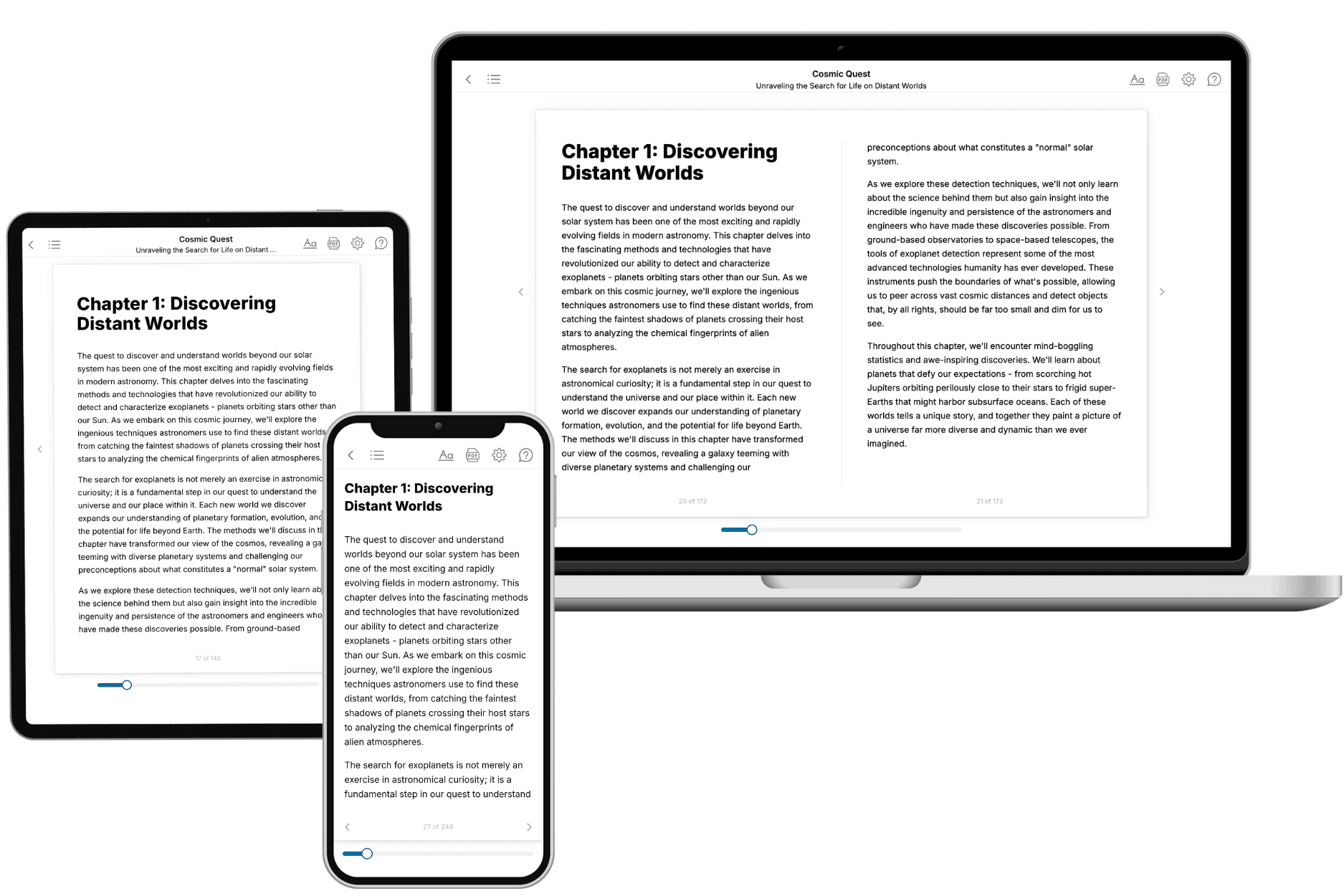
Your book is ready in 10 minutes. Read it online, download as EPUB or PDF, or send to Kindle.
Frequently asked questions
- What is TailoredRead?
TailoredRead creates complete, full-length nonfiction ebooks, written specifically for you. Tell us what you want to learn and why, and TailoredRead writes you a complete ebook on it, with charts, tables, and diagrams throughout. Read it online, on Kindle, or on any e-reader, or download it as a PDF or EPUB. Every book is written fresh the day you order it.
- How is the book tailored to me?
Before anything is written, you answer a few short questions about your goals, your background, and the topics you care about. Your book is then planned around your answers: written at your level, focused on your goals, and covering the topics you chose, instead of the one-size-fits-all book a store sells everyone.
- Will it read like generic AI content?
No. Your book isn't a chat transcript: it's planned chapter by chapter before a single word is written, told in a clear book voice, and explains ideas visually with charts, tables, and diagrams. After writing, every book goes through an editorial pass that polishes chapters so the book reads consistent from start to finish. Judge for yourself: browse thousands of sample books on our Explore Books page.
- How accurate is the content?
Our AI first checks whether your subject needs live research. Niche and fast-moving subjects are researched before writing, and the book plan and chapters are grounded in what it finds. After writing, every book goes through a quality pass that checks its facts and consistency, and researched books list their sources in a Notes section at the back.
- How long is the book?
You choose the length: Comprehensive (250-300 pages), Detailed (150-200 pages), Essential (70-100 pages), or Short (30-50 pages).
- Does the book include visuals?
Yes. Every book includes charts, tables, and diagrams: timelines, checklists, step-by-step guides, decision trees, comparison tables, matrices, and bar charts. A typical book includes dozens of these visual elements.
- Can I read it on Kindle? What formats can I download?
Yes. Every book can be read in our online reader or downloaded as a PDF or EPUB. The EPUB can be opened with Kindle, Apple Books, Kobo, and any e-reader. The Commercial and Author licenses also include an editable Word (DOCX) and Markdown download.
- How much does it cost?
About the price of a regular ebook. The exact price depends on your book's length and complexity, from $2 for the shortest books to $35 for the most comprehensive, and it's shown when you review your book, before you commit to anything. Each book is a one-time purchase, yours to keep, no subscription. Licenses that let you share, teach, or publish your book range from $35.99 to $49.99.
- Can I preview the book before purchasing?
Before you pay, you'll see what your book will cover: the title, a detailed description, the estimated length, and the complete chapter-by-chapter table of contents, so you know what you're getting before you decide. The full text itself is written after you purchase.
- How long does it take to create a book?
About 10 minutes. You can start reading the opening chapters while the rest is still being written.