Multi-Head Attention Mastery
Understanding the Mechanism That Powers Modern AI and Deep Learning
Imagine understanding the exact mechanism that powers ChatGPT, BERT, and the latest vision transformers—the technology that's reshaping artificial intelligence.
207 pages9 chaptersJul 27, 2026Attention Mechanisms
About this book
Multi-head attention is the breakthrough that made this possible, yet many practitioners use it without truly understanding how it works. This book demystifies multi-head attention by building your understanding from first principles. You'll discover why attention mechanisms solve critical problems in deep learning, how the query-key-value framework enables intelligent focus, and why splitting attention across multiple heads creates more powerful representations. Through clear explanations, intuitive examples, and practical insights, you'll move from confusion to confidence. Whether you're building language models, working with transformers, or simply wanting to understand the AI systems reshaping the world, this book equips you with the knowledge to grasp, implement, and innovate with multi-head attention.
Table of contents
- IntroductionWhy Attention Matters in Modern AI, What You'll Learn in This Book, How to Use This Book, Prerequisites and Background KnowledgeRead below
- Chapter 1: The Problem Attention SolvesLimitations of Recurrent Neural Networks, The Long-Range Dependency Problem, The Sequential Processing Bottleneck
- Chapter 2: Foundations of Attention MechanismsThe Core Concept of Attention, Computing Attention Weights, Generating Attention Output
- Chapter 3: The Query-Key-Value FrameworkUnderstanding Queries, Keys, and Values, Computing Similarity Between Queries and Keys, Weighted Aggregation of Values
- Chapter 4: Scaled Dot-Product AttentionThe Dot-Product Attention Mechanism, Why Scaling Matters: The Scaling Factor, Softmax Normalization and Probability Distribution
- Chapter 5: Multi-Head Attention ExplainedFrom Single-Head to Multi-Head Attention, Parallel Representation Subspaces, Concatenating and Projecting Multiple Heads
- Chapter 6: The Transformer ArchitectureOverview of the Transformer Model, Encoder-Decoder Structure and Self-Attention, Positional Encoding and Sequence Information
- Chapter 7: Representation Learning with AttentionHow Attention Learns Rich Representations, Capturing Semantic and Syntactic Relationships, Contextual Embeddings and Dynamic Representations
- Chapter 8: Practical Applications and VariantsApplications in Natural Language Processing, Vision Transformers and Image Understanding, Variants: Sparse, Linear, and Cross-Attention
- Chapter 9: Implementation and OptimizationImplementing Multi-Head Attention from Scratch, Computational Efficiency and Memory Considerations, Training Best Practices and Hyperparameter Tuning
- ConclusionKey Takeaways and Core Insights, Future Directions in Attention Research
- Glossary
- Further Reading and Resources
Introduction
A single sentence can completely change meaning depending on which word you focus on. She told him the answer
means something different when you emphasize she versus him versus answer. Human readers do this naturally, shifting focus across a sentence to extract the right meaning in context. For decades, neural networks could not do this well. They processed language word by word, carrying meaning forward in a compressed memory that degraded over long sequences. The result was a fundamental ceiling on what these models could understand and generate.
The Attention Mechanism changed that. Rather than forcing a model to compress everything into a single fixed vector, attention lets the model look back across an entire input and decide, dynamically, which parts matter most for each step of its output. This sounds simple, but the consequences have been enormous. Models that use attention can handle longer sequences, capture subtler relationships, and generalize to tasks that were previously out of reach. The landmark 2017 paper Attention Is All You Need
took this idea further by building an architecture entirely around attention, discarding recurrence altogether.[1] That architecture, the Transformer Architecture, became the foundation for nearly every major AI system built since.
Multi-Head Attention is the specific mechanism at the heart of the Transformer Architecture. Instead of computing a single attention signal, it runs multiple attention computations in parallel, each one looking at the input from a different angle. One head might focus on grammatical structure. Another might track which nouns a pronoun refers to. A third might capture long-range topic relationships. Together, they give the model a richer, more complete picture of the input than any single attention computation could provide. Understanding how this works, not just at a surface level but mechanically and mathematically, is what this book is about.
This introduction sets the stage for everything that follows. It explains why attention matters in the broader landscape of modern AI, outlines what the book covers and how the chapters connect, and describes the background knowledge that will help you get the most out of the material. Whether you are building your first Transformer-based model or trying to deepen an existing understanding, the goal here is the same: to give you a clear, grounded foundation before the technical details begin.
Why Attention Matters in Modern AI
The scale of what attention-based models can do today is genuinely striking. Large language models answer complex questions, write code, summarize documents, and translate between dozens of languages. Vision models classify images, detect objects, and generate photorealistic pictures from text descriptions. Multimodal systems combine language and vision to reason about the world in ways that were science fiction a decade ago. All of these systems share a common architectural ingredient: the Attention Mechanism, and specifically Multi-Head Attention.
To appreciate why attention matters, it helps to understand what came before it. Recurrent Neural Networks processed sequences step by step, updating a hidden state at each position. This worked reasonably well for short sequences, but it struggled with Long-Range Dependencies. If a model needed to connect a pronoun on word 50 to the noun it referred to on word 3, the relevant information had to survive 47 update steps without being overwritten. In practice, it often did not. The Vanishing Gradient problem made it hard to train these connections reliably, and the sequential nature of the computation made it slow to scale.
Attention solves the distance problem directly. Instead of passing information through a chain of hidden states, an attention-based model computes relationships between every pair of positions in a sequence simultaneously. Word 50 can attend directly to word 3 without any intermediate steps. The strength of that connection is learned from data, so the model figures out which relationships matter for which tasks. This is a fundamentally different way of handling sequence information, and it turns out to be far more effective for most language and vision tasks.
The practical impact has been rapid and wide-ranging. BERT, released in 2018, used the Transformer Architecture's encoder to set new records on a wide range of natural language understanding benchmarks.[2] GPT-2 and its successors used the decoder side to generate coherent long-form text. Vision Transformers demonstrated that the same attention-based approach could match or exceed convolutional networks on image classification tasks.[3] Each of these milestones was built on Multi-Head Attention as its core computational unit.
For practitioners working in machine learning today, understanding attention is not optional background knowledge. It is the mechanism that underlies the tools you are most likely to use, fine-tune, or build on. When something goes wrong in a Transformer-based model, understanding how attention works helps you diagnose the problem. When you want to adapt a model to a new domain, understanding what attention learns helps you make better design choices. When you read a research paper proposing a new architecture, the changes almost always involve modifying how attention is computed or structured.
Beyond the practical benefits, there is something intellectually satisfying about understanding attention at a deep level. The Query Vector, Key Vector, and Value Vector abstraction is elegant. The way Softmax Normalization turns raw similarity scores into a probability distribution over positions is clean and interpretable. The way Multi-Head Attention splits the representation space into parallel subspaces, each learning different relationships, is a genuinely clever design. These ideas reward careful study, and once you understand them, you will see their fingerprints everywhere in modern AI.
Attention is not just a technique. It is a new way of thinking about how neural networks should relate pieces of information to each other. That shift in thinking is what made the current generation of AI systems possible.
The chapters ahead build this understanding systematically. The goal is not just to describe what attention does, but to explain why it is designed the way it is, what problems each design choice solves, and how all the pieces fit together into a coherent whole. By the end, the mechanism that powers the most capable AI systems in the world should feel not mysterious, but logical.
What You'll Learn in This Book
This book builds understanding of Multi-Head Attention from the ground up, moving through the problem it solves, the mechanism itself, the architecture it enables, and the applications it powers. Each chapter focuses on one layer of that progression, so the concepts accumulate naturally rather than arriving all at once. Here is a map of the journey.
The first stop is the problem. Before attention existed, Recurrent Neural Networks were the dominant approach for sequence modeling. Chapter 1 examines why they struggled, focusing on the Vanishing Gradient problem, the Long-Range Dependency challenge, and the Sequential Processing Bottleneck that made them slow to train at scale. Understanding these limitations makes the design choices in attention feel motivated rather than arbitrary.
Chapters 2 through 4 cover the mechanics of attention itself. Chapter 2 introduces the core concept: attention as a way of computing a weighted combination of values, where the weights reflect how relevant each position is to the current computation. Chapter 3 introduces the QKV Framework, explaining what Query Vectors, Key Vectors, and Value Vectors represent and how they interact. Chapter 4 covers Scaled Dot-Product Attention in detail, including the exact mathematical operation, the role of the Scaling Factor, and how Softmax Normalization converts raw scores into a proper probability distribution.
Chapter 5 is the centerpiece of the book. It explains Multi-Head Attention: why running multiple attention computations in parallel is better than running one, how the model learns different relationships in different Attention Heads, and how the results are combined through concatenation and Output Projection. This chapter is where the mechanism's full power becomes clear.
Chapters 6 and 7 zoom out to the larger system. Chapter 6 covers the Transformer Architecture as a complete design, including the encoder-decoder structure, Self-Attention, Cross-Attention, Positional Encoding, Residual Connections, and Layer Normalization. Chapter 7 examines what attention actually learns, covering Contextual Embeddings, Representation Learning, and how different heads capture different linguistic and semantic relationships.
The final two chapters turn toward application and practice. Chapter 8 surveys real-world uses of attention across natural language processing, Vision Transformers, and architectural variants like Sparse Attention and Linear Attention. Chapter 9 covers implementation, including how to code Multi-Head Attention from scratch, how to manage Quadratic Complexity and memory constraints, and how training choices like Learning Rate Warm-Up and Gradient Checkpointing affect results.
Across all of these chapters, the emphasis is on building genuine understanding rather than surface familiarity. The goal is that after reading this book, you can look at a Multi-Head Attention implementation and understand every line of it, not because you memorized the code, but because you understand the reasoning behind each design decision. That kind of understanding is what lets you adapt, debug, and innovate rather than just copy and paste.
A few specific things you will be able to do after working through this material:
- Explain why the QKV Framework is structured the way it is, and what each component contributes to the computation
- Describe what the Scaling Factor does and why omitting it causes problems during training
- Explain why Multi-Head Attention produces richer representations than single-head attention
- Read a Transformer Architecture diagram and understand what is happening at each stage
- Identify which attention variant (Sparse Attention, Linear Attention, Cross-Attention) is appropriate for a given use case
- Implement Multi-Head Attention from scratch and understand the computational trade-offs involved
These are not abstract goals. Each chapter is designed to move you concretely toward them, with explanations, examples, and practical context at every step.
How to Use This Book
The chapters in this book are designed to be read in order. Each one builds on the concepts introduced before it, so skipping ahead can leave gaps that make later material harder to follow. That said, if you already have solid experience with a particular topic, the chapter summaries and section headings will help you quickly assess whether you can move through a section faster or skip it entirely.
The most effective way to engage with technical material like this is actively, not passively. When a mathematical operation is introduced, try working through it with a small example before moving on. When a concept is explained with an analogy, ask yourself whether the analogy holds up and where it breaks down. When a design choice is described, ask yourself what would happen if the choice were made differently. This kind of active questioning is what turns reading into understanding.
Several chapters include worked examples and concrete scenarios. These are not decorative. They are the clearest path to understanding the abstract concepts they illustrate. When you encounter an example, slow down and follow it step by step. If something does not make sense, re-read the surrounding explanation before moving forward. Confusion at an example usually signals a gap in the preceding concept, not a problem with the example itself.
For readers who want to go deeper on the implementation side, Chapter 9 is the most hands-on chapter in the book. It includes code-level discussion of Multi-Head Attention and covers practical concerns like memory management and training stability. If your primary goal is conceptual understanding rather than implementation, you can read Chapter 9 at a higher level and still get significant value from it. The computational trade-offs it discusses are relevant even if you are not writing the code yourself.
The glossary at the back of the book defines every canonical term used throughout the text. If you encounter a term and want a quick definition without re-reading the full section where it was introduced, the glossary is the right place to look. The Further Reading section points toward primary sources and extended treatments for readers who want to go beyond what this book covers.
One practical suggestion: keep a notebook or document open as you read. Jot down the key ideas from each section in your own words. Sketch the diagrams from memory after reading a chapter. Write down questions that occur to you and look for their answers in later chapters. This kind of active note-taking dramatically improves retention and helps you identify the specific points where your understanding is still fuzzy. The goal is not to finish the book quickly. The goal is to finish it with a clear, durable understanding of how Multi-Head Attention works.
If you are using this book as part of a course or study group, the chapter structure maps naturally onto a session-by-session curriculum. Chapters 1 through 4 cover the foundations and work well as a first unit. Chapters 5 and 6 cover the core mechanism and architecture and form a natural second unit. Chapters 7 through 9 cover representation learning, applications, and implementation and make a strong third unit. The introduction and conclusion frame the whole arc and are worth revisiting at the beginning and end of the course.
Finally, do not be discouraged if some concepts require multiple passes. The QKV Framework, the Scaling Factor, and the mechanics of Multi-Head Attention are genuinely subtle ideas. Most people do not fully grasp them on a first reading. The book is designed so that later chapters reinforce earlier ones, and many concepts that feel abstract in Chapter 3 will feel concrete and obvious by Chapter 7. Trust the progression and keep going.
Prerequisites and Background Knowledge
This book is written for intermediate learners. It assumes you have some background in machine learning and neural networks, but it does not assume you are already an expert in deep learning or natural language processing. The goal is to meet you where you are and build from there, filling in context where needed without spending too much time on material you already know well.
The most important prerequisite is a working understanding of how neural networks learn. You should be comfortable with the idea of a network as a function with learnable parameters, trained by minimizing a loss function through gradient descent. You should understand what a layer is, what an activation function does, and roughly how backpropagation computes gradients. You do not need to be able to derive backpropagation from scratch, but you should understand what it is doing at a conceptual level.
Linear algebra is the mathematical language of attention. The core operations in Multi-Head Attention are matrix multiplications, dot products, and vector transformations. You should be comfortable with these operations at a basic level. Specifically, you should understand:
- What a vector is and how to compute the dot product of two vectors
- What a matrix is and how matrix multiplication works
- What it means to project a vector into a different space using a weight matrix
- What a softmax function does and why it produces values that sum to one
If any of these feel shaky, a quick review of linear algebra basics before starting Chapter 3 will pay dividends. There are many free resources available online that cover these topics clearly and concisely. You do not need advanced linear algebra, just the fundamentals listed above.
Some familiarity with sequence modeling is helpful but not strictly required. If you have worked with text data, time series, or any kind of sequential input in a machine learning context, you will find the motivation in Chapter 1 immediately relatable. If you have not, the chapter provides enough context to make the problems clear. Prior experience with Recurrent Neural Networks is useful for Chapter 1 but is not assumed elsewhere in the book.
Python familiarity is useful for Chapter 9, which discusses implementation in practical terms. The code examples in that chapter use conventions common in deep learning frameworks, so experience with libraries like PyTorch or TensorFlow will help you follow along. However, the conceptual content of Chapter 9 is accessible even without hands-on coding experience. The trade-offs around Quadratic Complexity, memory management, and training stability are worth understanding regardless of whether you are writing the code yourself.
No prior knowledge of the Transformer Architecture or attention mechanisms is assumed. That is precisely what this book is here to build. If you have heard terms like self-attention, BERT, or transformer without fully understanding what they mean, you are exactly the reader this book is written for. By the time you finish, those terms will not just be familiar words. They will be concepts you can explain, reason about, and apply.
One final note on mathematical notation: the book introduces formulas where they are necessary to be precise, but always explains them in plain language first. The math is there to sharpen your understanding, not to gatekeep it. If a formula feels intimidating, read the surrounding explanation carefully. In most cases, the formula is just a compact way of writing something the text has already described in words. The two reinforce each other, and working through both is the fastest path to genuine clarity.
With that foundation in place, the real work begins. The next chapter starts with the problem that made attention necessary: the fundamental limitations of sequential models and why they could not scale to the demands of modern AI. Understanding that problem is the first step toward understanding why the solution looks the way it does.
Notes
Introduction
- 1. Ashish Vaswani and others, "Attention Is All You Need," Advances in Neural Information Processing Systems, 2017
- 2. Jacob Devlin and others, "BERT: Pre-training of Deep Bidirectional Transformers for Language Understanding," Proceedings of NAACL-HLT, 2019
- 3. Alexey Dosovitskiy and others, "An Image Is Worth 16x16 Words: Transformers for Image Recognition at Scale," International Conference on Learning Representations, 2021
This is the end of the free sample. The full book has 9 chapters.
Want this book written for you?
Tell us your goals and background, and get your own version of this book, tailored by AI to you.


Benefits of AI-tailored books
- Read one book, not ten:
- all the Attention Mechanisms knowledge you need, gathered into a single book.
- Save days of learning:
- tell us your goals, choose your topics, and the whole book is built around them.
- Learn effortlessly:
- Attention Mechanisms book written for your specific background and expertise.
- Understand at a glance:
- includes charts, tables, timelines, checklists, decision trees, and more.
- Stay current:
- written the day you order it, not years ago.
- Trust what you read:
- every book is checked for accuracy, with real research when your subject needs it.
Create your unique book in 3 steps
- 1. Select your focus
Select the focus of your Attention Mechanisms book and share your background
- 2. Personalize your book
Specify your goals and choose sub-topics to include
- 3. Get your tailored book
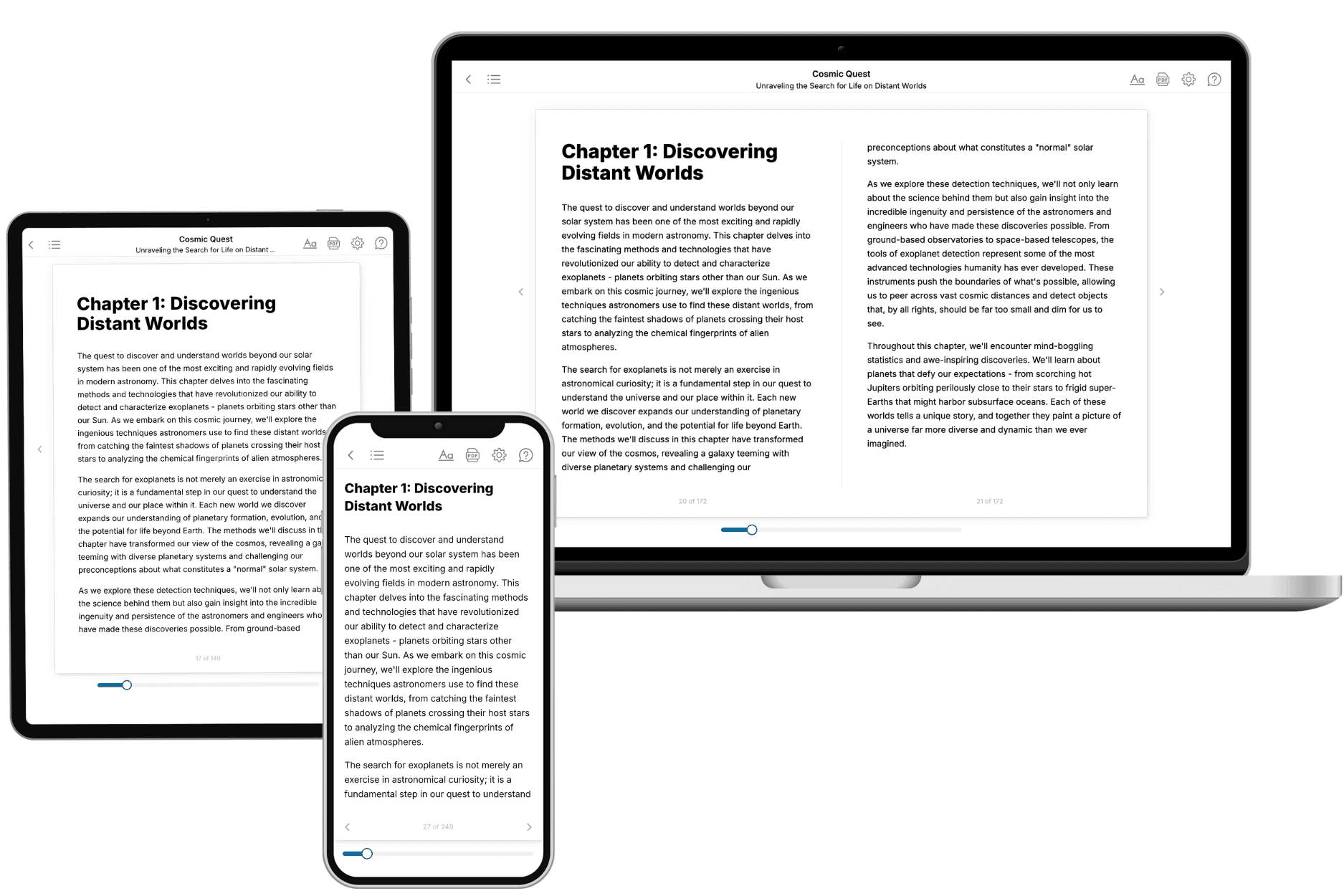
Your book is ready in 10 minutes. Read it online, download as EPUB or PDF, or send to Kindle.

Frequently asked questions
- What is TailoredRead?
TailoredRead creates complete, full-length nonfiction ebooks, written specifically for you. Tell us what you want to learn and why, and TailoredRead writes you a complete ebook on it, with charts, tables, and diagrams throughout. Read it online, on Kindle, or on any e-reader, or download it as a PDF or EPUB. Every book is written fresh the day you order it.
- How is the book tailored to me?
Before anything is written, you answer a few short questions about your goals, your background, and the topics you care about. Your book is then planned around your answers: written at your level, focused on your goals, and covering the topics you chose, instead of the one-size-fits-all book a store sells everyone.
- Will it read like generic AI content?
No. Your book isn't a chat transcript: it's planned chapter by chapter before a single word is written, told in a clear book voice, and explains ideas visually with charts, tables, and diagrams. After writing, every book goes through an editorial pass that polishes chapters so the book reads consistent from start to finish. Judge for yourself: browse thousands of sample books on our Explore Books page.
- How accurate is the content?
Our AI first checks whether your subject needs live research. Niche and fast-moving subjects are researched before writing, and the book plan and chapters are grounded in what it finds. After writing, every book goes through a quality pass that checks its facts and consistency, and researched books list their sources in a Notes section at the back.
- How long is the book?
You choose the length: Comprehensive (250-300 pages), Detailed (150-200 pages), Essential (70-100 pages), or Short (30-50 pages).
- Does the book include visuals?
Yes. Every book includes charts, tables, and diagrams: timelines, checklists, step-by-step guides, decision trees, comparison tables, matrices, and bar charts. A typical book includes dozens of these visual elements.
- Can I read it on Kindle? What formats can I download?
Yes. Every book can be read in our online reader or downloaded as a PDF or EPUB. The EPUB can be opened with Kindle, Apple Books, Kobo, and any e-reader. The Commercial and Author licenses also include an editable Word (DOCX) and Markdown download.
- How much does it cost?
About the price of a regular ebook. The exact price depends on your book's length and complexity, from $2 for the shortest books to $35 for the most comprehensive, and it's shown when you review your book, before you commit to anything. Each book is a one-time purchase, yours to keep, no subscription. Licenses that let you share, teach, or publish your book range from $35.99 to $49.99.
- Can I preview the book before purchasing?
Before you pay, you'll see what your book will cover: the title, a detailed description, the estimated length, and the complete chapter-by-chapter table of contents, so you know what you're getting before you decide. The full text itself is written after you purchase.
- How long does it take to create a book?
About 10 minutes. You can start reading the opening chapters while the rest is still being written.