Nano Dimensions
Unveiling the Extraordinary Properties of Nanomaterials
Dive into the fascinating world of the infinitesimally small, where materials exhibit extraordinary behaviors and properties.
269 pages13 chaptersFeb 4, 2025Materials Science
About this book
"Nano Dimensions: Unveiling the Extraordinary Properties of Nanomaterials" takes you on an exploration of the unique characteristics that emerge when matter is manipulated at the nanoscale. As you delve into this book, you'll discover how size-dependent phenomena give rise to remarkable optical, electrical, and mechanical properties. You'll gain insights into the quantum effects that dominate at this scale and learn how these properties can be harnessed for groundbreaking applications across various fields. From understanding the fundamental principles that govern nanomaterial behavior to exploring cutting-edge characterization techniques, this book equips you with the knowledge to navigate the nano-realm confidently. Whether you're a researcher, engineer, or curious professional, "Nano Dimensions" will expand your understanding and inspire you to think big about the smallest of materials.
Table of contents
- IntroductionThe Nanomaterial Revolution, The Importance of Understanding Nanomaterial Properties, Book Overview and How to Use ItRead below
- Chapter 1: Fundamentals of NanomaterialsDefining the Nanoscale, Size-Dependent Effects, Surface Area to Volume Ratio, Introduction to Quantum Effects
- Chapter 2: Types of NanomaterialsZero-Dimensional Nanomaterials, One-Dimensional Nanomaterials, Two-Dimensional Nanomaterials, Three-Dimensional Nanostructures
- Chapter 3: Optical Properties of NanomaterialsLight Absorption and Emission, Plasmonics in Metallic Nanoparticles, Quantum Dots and Color Tuning, Photonic Crystals and Structural Color
- Chapter 4: Electrical Properties of NanomaterialsQuantum Confinement Effects, Conductivity at the Nanoscale, Electron Tunneling Phenomena, Nanoelectronics and Device Applications
- Chapter 5: Magnetic Properties of NanomaterialsSuperparamagnetism in Nanoparticles, Domain Walls and Magnetic Anisotropy, Spintronics and Magnetic Data Storage, Magnetic Hyperthermia Applications
- Chapter 6: Mechanical Properties of NanomaterialsEnhanced Strength and Stiffness, Ductility and Toughness at the Nanoscale, Surface Tension and Capillary Effects, Nanocomposites and Reinforcement
- Chapter 7: Thermal Properties of NanomaterialsThermal Conductivity at the Nanoscale, Melting Point Depression, Thermoelectric Effects in Nanostructures, Phase Change Nanomaterials
- Chapter 8: Surface Properties of NanomaterialsSurface Energy and Wettability, Catalysis and Surface Reactivity, Adsorption and Sensing Applications, Surface Functionalization Strategies
- Chapter 9: Synthesis Methods and Their Impact on PropertiesTop-Down Approaches, Bottom-Up Synthesis, Template-Directed Synthesis, Self-Assembly Techniques
- Chapter 10: Characterization Techniques for NanomaterialsElectron Microscopy Techniques, Spectroscopic Methods, X-ray and Neutron Scattering, Surface Analysis Techniques
- Chapter 11: Tuning Nanomaterial PropertiesSize Control and Its Effects, Shape Engineering Strategies, Compositional Tuning, Defect Engineering in Nanomaterials
- Chapter 12: Applications Leveraging Nanomaterial PropertiesEnergy Conversion and Storage, Environmental Remediation, Nanoelectronics and Computing, Nanophotonics and Optical Devices, Nanomedicine and Drug Delivery
- Chapter 13: Future Directions in Nanomaterial PropertiesEmerging Nanomaterials, Multi-functional Nanomaterials, AI-Driven Nanomaterial Design, Sustainable Nanotechnology
- Conclusion
- Glossary
- Further Reading
Introduction
Welcome to the captivating world of nanomaterials, where the ordinary rules of physics bend and new possibilities emerge. As you embark on this journey through "Nano Dimensions: Unveiling the Extraordinary Properties of Nanomaterials," you are about to discover how materials at the nanoscale exhibit remarkable behaviors that can revolutionize technology, medicine, energy, and countless other fields. This introduction will set the stage for your exploration, providing you with a foundation to understand the nanomaterial revolution, the critical importance of grasping nanomaterial properties, and how to navigate this book to maximize your learning experience.
Nanomaterials, by definition, have at least one dimension measuring between 1 and 100 nanometers. To put this in perspective, a nanometer is one-billionth of a meter, or roughly the width of three to five atoms. At this scale, materials begin to exhibit properties that are vastly different from their bulk counterparts. These unique characteristics arise from two primary factors: the increased ratio of surface area to volume and the dominance of quantum effects. As you delve deeper into this book, you will uncover how these factors lead to enhanced reactivity, altered electrical and optical properties, and improved mechanical strength, among other fascinating phenomena.
The field of nanomaterials is not just a scientific curiosity; it represents a paradigm shift in how we approach material design and engineering. By understanding and manipulating matter at the nanoscale, scientists and engineers are developing solutions to some of the world's most pressing challenges. From more efficient solar cells and water purification systems to targeted drug delivery and ultrafast computing, nanomaterials are at the forefront of technological innovation. As you progress through this book, you will gain insights into how these extraordinary properties are being harnessed to create groundbreaking applications across various industries.
The Nanomaterial Revolution
The nanomaterial revolution represents a fundamental shift in our approach to materials science and engineering. This paradigm change is rooted in the realization that by manipulating matter at the atomic and molecular scale, we can create materials with properties that were once thought impossible. The revolution began in earnest in the 1980s with the invention of scanning tunneling microscopy, which allowed scientists to visualize and manipulate individual atoms for the first time. Since then, the field has exploded with discoveries and innovations that are reshaping our technological landscape.
At the heart of this revolution is the concept of "bottom-up" engineering. Unlike traditional "top-down" approaches that involve carving or etching larger materials into smaller components, nanomaterial synthesis often involves building structures atom by atom or molecule by molecule. This level of control allows for unprecedented precision in material design, enabling the creation of materials with tailored properties for specific applications. For instance, carbon nanotubes, which are cylindrical molecules of carbon atoms, exhibit extraordinary strength and electrical conductivity, making them ideal for applications ranging from lightweight aerospace materials to next-generation electronics.
The impact of the nanomaterial revolution extends far beyond the laboratory. In the field of medicine, nanoparticles are being used to deliver drugs with pinpoint accuracy, potentially revolutionizing cancer treatment and reducing side effects. In environmental science, nanomaterials are being developed to purify water more efficiently and to capture and convert carbon dioxide, addressing critical global challenges. The energy sector is also being transformed, with nanomaterials enhancing the efficiency of solar cells and improving energy storage in batteries.
One of the most exciting aspects of the nanomaterial revolution is its interdisciplinary nature. It brings together physicists, chemists, biologists, materials scientists, and engineers in collaborative efforts to push the boundaries of what's possible. This convergence of disciplines is leading to innovations that were unimaginable just a few decades ago. For example, the field of bionanotechnology combines principles from biology and nanotechnology to create new diagnostic tools, drug delivery systems, and even artificial tissues.
The economic impact of the nanomaterial revolution is equally profound. According to a report by Grand View Research, the global nanotechnology market size was valued at USD 1.76 billion in 2020 and is expected to grow at a compound annual growth rate (CAGR) of 10.5% from 2021 to 2028[1]. This growth is driven by increasing investments in research and development, as well as the expanding applications of nanomaterials across various industries. As the field matures, we can expect to see even more dramatic economic impacts, with nanomaterials becoming integral to many aspects of our daily lives.
However, the nanomaterial revolution also brings challenges and responsibilities. As with any emerging technology, there are concerns about potential risks to human health and the environment. Understanding the properties of nanomaterials is crucial not only for harnessing their benefits but also for assessing and mitigating any potential hazards. This underscores the importance of continued research and the development of robust regulatory frameworks to ensure the safe and responsible development of nanotechnology.
The nanomaterial revolution is also driving changes in education and workforce development. As the field grows, there is an increasing demand for professionals with expertise in nanotechnology. Universities around the world are developing interdisciplinary programs to train the next generation of nanoscientists and nanoengineers. This shift in education reflects the broader impact of the nanomaterial revolution on society, as it reshapes not only our technology but also our economy and our approach to solving global challenges.
As you delve deeper into this book, you will gain a comprehensive understanding of the principles underlying the nanomaterial revolution. You will explore how the unique properties of nanomaterials arise from their size and structure, and how these properties can be tailored for specific applications. This knowledge will equip you to participate in and contribute to this exciting field, whether your interest lies in research, engineering, or the application of nanotechnology in industry.
The nanomaterial revolution is not just about creating smaller devices or more efficient materials. It represents a fundamental shift in how we interact with and manipulate the physical world. By working at the nanoscale, we are unlocking new possibilities in material design, energy conversion, information processing, and medical treatment. As you progress through this book, keep in mind that you are exploring the frontiers of a field that has the potential to address some of humanity's greatest challenges and to create technologies that will shape the future of our planet.
The Importance of Understanding Nanomaterial Properties
Understanding the properties of nanomaterials is not just an academic exercise; it is a crucial foundation for harnessing the full potential of nanotechnology. The unique characteristics that emerge at the nanoscale are the key to unlocking revolutionary applications across a wide range of fields. As you delve into this section, you will discover why a deep comprehension of nanomaterial properties is essential for anyone working in or aspiring to enter the field of nanotechnology.
At the nanoscale, materials often exhibit properties that are dramatically different from their bulk counterparts. These differences arise from two primary factors: the increased surface area to volume ratio and the dominance of quantum effects. The high surface area to volume ratio means that a significant proportion of atoms in a nanomaterial are surface atoms, which can lead to enhanced reactivity and catalytic properties. For instance, gold nanoparticles exhibit catalytic activity that is not observed in bulk gold, making them valuable in applications ranging from pollution control to chemical synthesis[2]. Understanding these surface effects is crucial for designing nanomaterials for specific applications and predicting how they will interact with their environment.
Quantum effects, which become prominent at the nanoscale, lead to size-dependent optical, electrical, and magnetic properties. For example, quantum dots, which are semiconductor nanocrystals, exhibit size-dependent fluorescence. By adjusting the size of quantum dots, researchers can tune their emission color across the visible spectrum, a property that is being exploited in next-generation display technologies and biomedical imaging[3]. Without a thorough understanding of quantum confinement effects, it would be impossible to design and optimize these nanomaterials for such applications.
The mechanical properties of nanomaterials also differ significantly from bulk materials. Nanomaterials often exhibit enhanced strength and hardness due to the limited space for defects and the unique deformation mechanisms that operate at the nanoscale. For instance, carbon nanotubes have a tensile strength over 100 times that of steel while being six times lighter[4]. Understanding these mechanical properties is crucial for developing advanced composite materials for aerospace, automotive, and construction applications.
In the field of energy, nanomaterials are playing a pivotal role in improving the efficiency of energy conversion and storage devices. For example, nanostructured materials are being used to enhance the performance of solar cells by increasing light absorption and charge collection efficiency. In lithium-ion batteries, nanostructured electrodes can significantly improve charge/discharge rates and cycle life. A deep understanding of how nanoscale structure affects electron and ion transport is essential for optimizing these energy technologies.
The biomedical applications of nanomaterials are particularly promising and underscore the importance of understanding their properties. Nanoparticles are being developed for targeted drug delivery, where their size and surface properties determine their ability to navigate biological barriers and interact with specific cells or tissues. In diagnostic applications, the optical and magnetic properties of nanomaterials are being harnessed to create highly sensitive biosensors and imaging agents. However, the same properties that make nanomaterials useful in medicine also raise questions about their potential toxicity and environmental impact. A thorough understanding of nanomaterial properties is therefore crucial not only for developing effective therapies but also for ensuring their safety.
In the realm of electronics and computing, nanomaterials are pushing the boundaries of what's possible in device miniaturization and performance. The electrical properties of nanomaterials, such as carbon nanotubes and graphene, offer the potential for creating faster, more energy-efficient electronic devices. However, realizing this potential requires a deep understanding of how charge transport and quantum effects operate at the nanoscale. As we approach the limits of traditional silicon-based electronics, this knowledge will be crucial for developing the next generation of computing technologies.
Environmental applications of nanomaterials further highlight the importance of understanding their properties. Nanomaterials are being developed for water purification, air filtration, and environmental remediation. Their high surface area and unique surface chemistry make them excellent candidates for adsorbing pollutants and catalyzing chemical reactions. However, to design effective and safe environmental technologies, it's essential to understand how the properties of nanomaterials change in complex environmental systems and how they interact with various pollutants and biological entities.
The importance of understanding nanomaterial properties extends beyond specific applications to the broader field of materials design. As we gain a deeper understanding of how properties emerge at the nanoscale, we are developing new strategies for designing materials with tailored properties. This "materials by design" approach has the potential to revolutionize how we create new materials, moving from trial-and-error methods to rational design based on fundamental principles. Machine learning and artificial intelligence are increasingly being applied to predict nanomaterial properties and guide synthesis, further emphasizing the need for a comprehensive understanding of structure-property relationships at the nanoscale.
Moreover, understanding nanomaterial properties is crucial for addressing the challenges associated with their production and integration into existing technologies. Issues such as scalability, reproducibility, and long-term stability are all intimately linked to the fundamental properties of nanomaterials. By understanding these properties, researchers and engineers can develop robust manufacturing processes and ensure the reliable performance of nanomaterial-based products.
As you progress through this book, you will gain a comprehensive understanding of the properties of various types of nanomaterials and how these properties arise from their nanoscale structure. This knowledge will equip you to contribute to the ongoing nanomaterial revolution, whether your interests lie in fundamental research, materials engineering, or the application of nanotechnology in industry. Remember that understanding nanomaterial properties is not just about accumulating facts; it's about developing a new way of thinking about materials and their potential. With this understanding, you will be well-positioned to innovate and solve complex problems across a wide range of disciplines.
Book Overview and How to Use It
"Nano Dimensions: Unveiling the Extraordinary Properties of Nanomaterials" is designed to provide you with a comprehensive understanding of nanomaterial properties and their implications. This book is structured to take you on a journey from the fundamental concepts of nanoscience to the cutting-edge applications of nanotechnology. Whether you are a researcher, an engineer, or a curious professional looking to expand your knowledge in this field, this book will serve as an invaluable resource. Here's an overview of what you can expect and how to make the most of your reading experience.
The book is organized into thirteen chapters, each focusing on a specific aspect of nanomaterial properties. We begin with the fundamentals, introducing you to the defining characteristics of nanomaterials and the physical principles that govern their behavior. From there, we explore the various types of nanomaterials, categorized by their dimensionality. This classification provides a framework for understanding how structure influences properties at the nanoscale.
Subsequent chapters delve into specific properties of nanomaterials, including optical, electrical, magnetic, mechanical, thermal, and surface properties. Each of these chapters is designed to provide you with a deep understanding of how these properties emerge at the nanoscale and how they differ from bulk materials. You'll find detailed explanations of phenomena such as quantum confinement, plasmonics, superparamagnetism, and enhanced mechanical strength, among others.
To help you connect theory with practice, the book includes a chapter on synthesis methods and their impact on properties. This chapter will give you insights into how different fabrication techniques can be used to control and tailor nanomaterial properties. Following this, we explore characterization techniques, providing you with an understanding of the tools and methods used to study nanomaterials. This knowledge is crucial for anyone involved in nanomaterial research or development.
The book then moves on to discuss how nanomaterial properties can be tuned through size control, shape engineering, compositional changes, and defect engineering. This chapter will equip you with strategies for designing nanomaterials with specific properties for targeted applications. We then explore a wide range of applications that leverage nanomaterial properties, from energy conversion and storage to environmental remediation and nanomedicine.
To give you a glimpse of what the future holds, the final chapter discusses emerging directions in nanomaterial research and development. This includes topics such as multi-functional nanomaterials, AI-driven nanomaterial design, and sustainable nanotechnology. This forward-looking perspective will help you anticipate future trends and opportunities in the field.
To make the most of this book, it's recommended that you read the chapters in order, as each builds upon the concepts introduced in previous sections. However, if you have a specific interest or need, each chapter is also designed to stand alone as a comprehensive treatment of its topic. Throughout the book, you'll find numerous examples, case studies, and references to current research that illustrate the concepts being discussed. These real-world connections will help you understand the practical implications of nanomaterial properties.
Key terms and concepts are highlighted throughout the text, and a comprehensive glossary is provided at the end of the book for quick reference. Each chapter concludes with a summary of key points and a set of thought-provoking questions that will help you reinforce your understanding and encourage critical thinking about the material.
The book also includes numerous diagrams, illustrations, and micrographs to help visualize nanoscale phenomena and structures. These visual aids are integral to understanding the concepts presented, so take the time to study them carefully. Additionally, you'll find sidebars throughout the text that provide deeper dives into specific topics, historical context, or cutting-edge research findings.
To further enhance your learning experience, the book includes a "Further Reading" section at the end, which provides curated lists of additional resources for each chapter. These include seminal papers, review articles, and advanced texts that will allow you to explore topics of interest in greater depth.
As you progress through the book, try to make connections between different properties and phenomena. Nanomaterial science is highly interdisciplinary, and many of the most exciting developments occur at the intersections of different fields. By thinking critically about how different properties interact and influence each other, you'll develop a more holistic understanding of nanomaterials.
Remember that the field of nanomaterials is rapidly evolving, with new discoveries and applications emerging regularly. While this book provides a solid foundation, it's important to stay updated with the latest developments. Consider following key journals in the field and attending conferences or webinars to keep your knowledge current.
Finally, don't hesitate to apply the concepts you learn to your own work or research. Whether you're developing new materials, optimizing processes, or exploring applications, the principles outlined in this book can guide your thinking and problem-solving. The true value of understanding nanomaterial properties lies in your ability to apply this knowledge to real-world challenges and innovations.
By the time you complete this book, you will have gained a comprehensive understanding of nanomaterial properties, their origins, and their implications for various applications. You'll be equipped with the knowledge to critically evaluate nanomaterial research, contribute to nanomaterial development, and envision new possibilities for nanotechnology in your field. Embrace the journey into the nano-realm, and let this book be your guide to unveiling the extraordinary properties of nanomaterials.
Notes
Introduction
- 1. Grand View Research, Nanotechnology Market Size, Share & Trends Analysis Report By Application (Electronics, Energy, Healthcare), By Product (Nano Materials, Nano Tools), By Region, And Segment Forecasts, 2021
- 2. M. Haruta, "When Gold Is Not Noble," The Chemical Record, 2003
- 3. A. P. Alivisatos, "Semiconductor Clusters, Nanocrystals, and Quantum Dots," Science, 1996
- 4. M. F. Yu and others, "Strength and Breaking Mechanism of Multiwalled Carbon Nanotubes Under Tensile Load," Science, 2000
This is the end of the free sample. The full book has 13 chapters.
Want this book written for you?
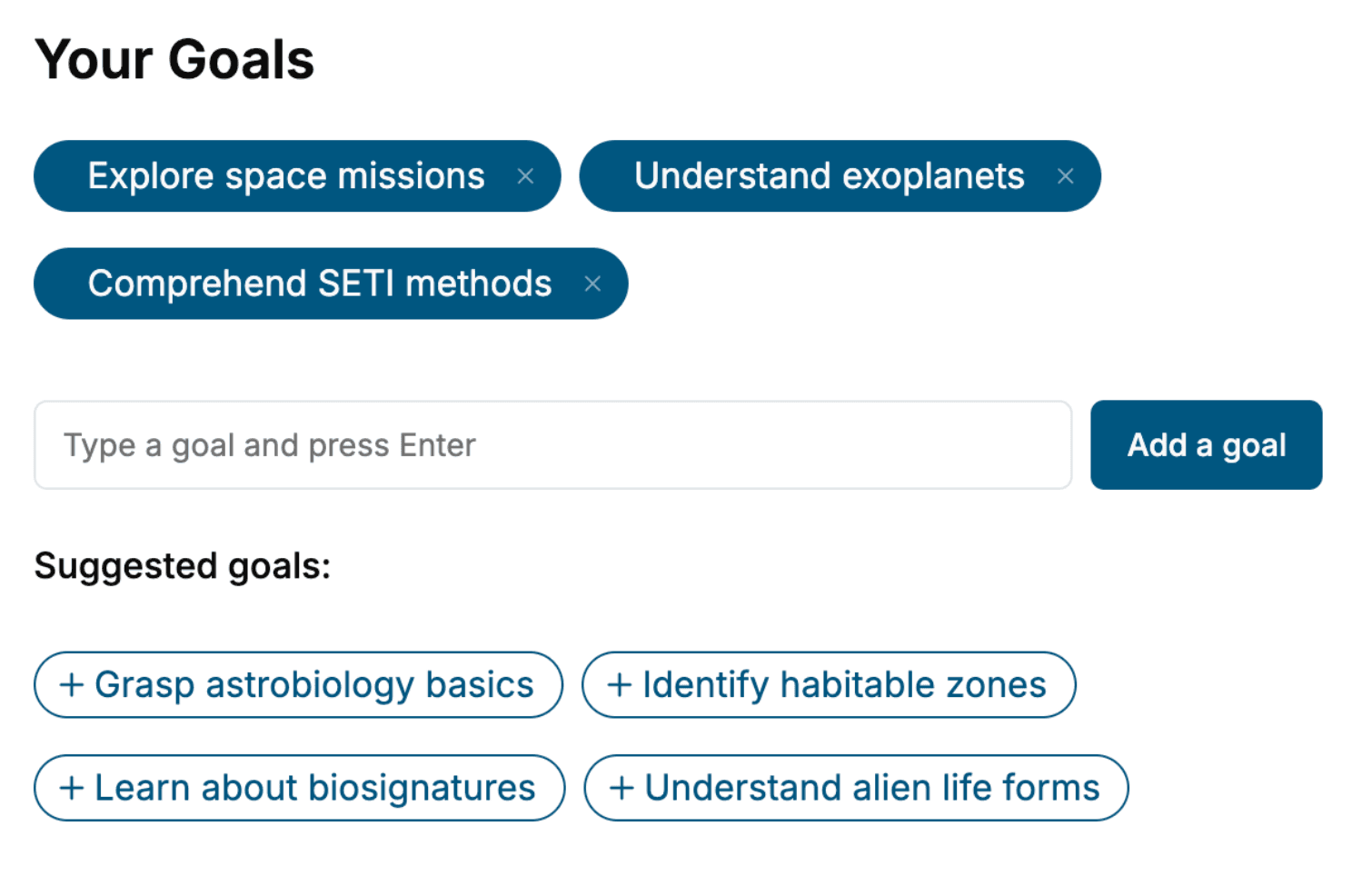
Tell us your goals and background, and get your own version of this book, tailored by AI to you.


Benefits of AI-tailored books
- Read one book, not ten:
- all the Materials Science knowledge you need, gathered into a single book.
- Save days of learning:
- tell us your goals, choose your topics, and the whole book is built around them.
- Learn effortlessly:
- Materials Science book written for your specific background and expertise.
- Understand at a glance:
- includes charts, tables, timelines, checklists, decision trees, and more.
- Stay current:
- written the day you order it, not years ago.
- Trust what you read:
- every book is checked for accuracy, with real research when your subject needs it.
Create your unique book in 3 steps
- 1. Select your focus
Select the focus of your Materials Science book and share your background
- 2. Personalize your book
Specify your goals and choose sub-topics to include
- 3. Get your tailored book
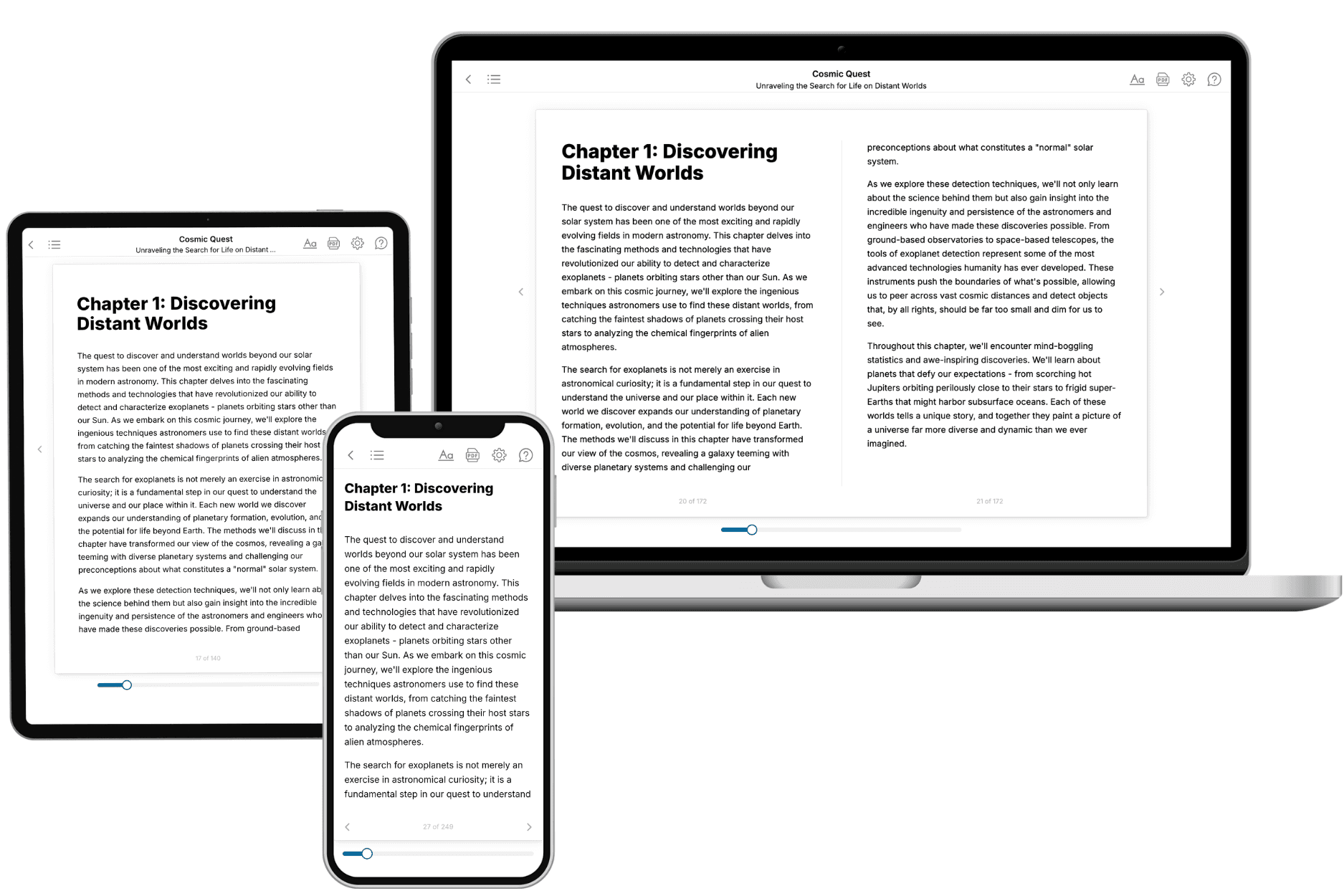
Your book is ready in 10 minutes. Read it online, download as EPUB or PDF, or send to Kindle.

Frequently asked questions
- What is TailoredRead?
TailoredRead creates complete, full-length nonfiction ebooks, written specifically for you. Tell us what you want to learn and why, and TailoredRead writes you a complete ebook on it, with charts, tables, and diagrams throughout. Read it online, on Kindle, or on any e-reader, or download it as a PDF or EPUB. Every book is written fresh the day you order it.
- How is the book tailored to me?
Before anything is written, you answer a few short questions about your goals, your background, and the topics you care about. Your book is then planned around your answers: written at your level, focused on your goals, and covering the topics you chose, instead of the one-size-fits-all book a store sells everyone.
- Will it read like generic AI content?
No. Your book isn't a chat transcript: it's planned chapter by chapter before a single word is written, told in a clear book voice, and explains ideas visually with charts, tables, and diagrams. After writing, every book goes through an editorial pass that polishes chapters so the book reads consistent from start to finish. Judge for yourself: browse thousands of sample books on our Explore Books page.
- How accurate is the content?
Our AI first checks whether your subject needs live research. Niche and fast-moving subjects are researched before writing, and the book plan and chapters are grounded in what it finds. After writing, every book goes through a quality pass that checks its facts and consistency, and researched books list their sources in a Notes section at the back.
- How long is the book?
You choose the length: Comprehensive (250-300 pages), Detailed (150-200 pages), Essential (70-100 pages), or Short (30-50 pages).
- Does the book include visuals?
Yes. Every book includes visual elements such as timelines, checklists, step-by-step guides, decision trees, comparison tables, and matrices, and many include bar charts. A typical book includes dozens of these visual elements.
- Can I read it on Kindle? What formats can I download?
Yes. Every book can be read in our online reader or downloaded as a PDF or EPUB. The EPUB can be opened with Kindle, Apple Books, Kobo, and any e-reader. The Commercial and Author licenses also include an editable Word (DOCX) and Markdown download.
- How much does it cost?
About the price of a regular ebook. The exact price depends on your book's length and complexity, from $2 for the shortest books to $35 for the most comprehensive, and it's shown when you review your book, before you commit to anything. Each book is a one-time purchase, yours to keep, no subscription. Licenses that let you share, teach, or publish your book range from $35.99 to $49.99.
- Can I preview the book before purchasing?
Before you pay, you'll see what your book will cover: the title, a detailed description, the estimated length, and the complete chapter-by-chapter table of contents, so you know what you're getting before you decide. The full text itself is written after you purchase.
- How long does it take to create a book?
About 10 minutes. You can start reading the opening chapters while the rest is still being written.