Natural Bridge State Park
Your Complete Guide to Kentucky's Most Iconic Natural Wonder
Discover everything you need to know to make the most of your visit to Natural Bridge State Park, Kentucky's crown jewel of natural attractions.
191 pages9 chaptersMar 16, 2026Parks
About this book
This comprehensive guide takes you beyond the famous bridge to reveal the park's full potential—from scenic hiking trails and rock climbing opportunities to hidden waterfalls and geological wonders. Learn how to plan your visit strategically to avoid crowds, choose activities suited to your fitness level, and prepare properly for Kentucky's variable weather. Explore the fascinating geology that shaped these dramatic sandstone formations, understand the best times to visit for different experiences, and discover nearby attractions that extend your adventure. Whether you're a first-time visitor or a returning explorer, this guide provides practical logistics, insider tips, safety guidance, and detailed trail information to ensure your experience is memorable, safe, and perfectly suited to your interests and abilities.
Table of contents
- IntroductionWhy Natural Bridge State Park Matters, What to Expect from This Guide, How to Use This Guide for Your VisitRead below
- Chapter 1: Planning Your VisitBest Times to Visit by Season, Avoiding Crowds and Planning Around Peak Times, How Long to Spend at the Park, Accessibility and Fitness Level Considerations
- Chapter 2: Getting There and LogisticsLocation and Directions from Major Cities, Parking, Fees, and Entry Information, Where to Stay: Hotels, Cabins, and Camping, Dining, Gas, and Essential Services
- Chapter 3: Geology and Natural HistoryHow the Natural Bridge Was Formed, Understanding the Sandstone and Rock Formations, Flora, Fauna, and Ecological Importance
- Chapter 4: Main Attractions and LandmarksThe Natural Bridge: The Park's Centerpiece, Sky Bridge and Observation Tower, Other Notable Rock Formations and Viewpoints, Waterfalls, Streams, and Water Features
- Chapter 5: Hiking Trails and Walking PathsEasy Walks for All Fitness Levels, Moderate Hikes with Rewarding Views, Challenging Hikes for Experienced Hikers, Trail Safety, Navigation, and Best Practices
- Chapter 6: Adventure Activities and RecreationRock Climbing and Bouldering Opportunities, Photography Spots and Tips, Picnicking, Relaxation, and Family Activities
- Chapter 7: Preparation and What to PackPhysical Conditioning and Training, Essential Gear and Equipment, Weather-Appropriate Clothing and Footwear, Safety Supplies and Emergency Preparedness
- Chapter 8: Nearby Attractions and Extended ExplorationDaniel Boone National Forest and Surrounding Areas, Other Regional Attractions and Scenic Drives, Multi-Day Itineraries and Trip Planning
- Chapter 9: Practical Tips and Insider KnowledgeMoney-Saving Tips and Budget Planning, Hidden Gems and Lesser-Known Spots, Park Etiquette and Leave-No-Trace Principles, Photography Permits and Commercial Use
- ConclusionMaking the Most of Your Natural Bridge Experience
- Frequently Asked QuestionsCommon Questions About Visiting the Park
Introduction
There are places in the natural world that stop you in your tracks. Not because someone told you they were impressive, but because standing in front of them, you feel something shift. Natural Bridge State Park in Powell County, Kentucky is one of those places. A massive sandstone arch stretches 78 feet across and rises 65 feet above the gorge floor, carved by millions of years of wind, water, and time. It is not a human creation. It is not a replica. It is the real thing, and it has been drawing visitors to the Red River Gorge region for well over a century.
Kentucky's state park system is one of the most celebrated in the country, and Natural Bridge consistently ranks among its most visited destinations.[1] But the park is far more than a single famous arch. It sits within a landscape of dramatic cliffs, forested ridges, hidden waterfalls, and winding creek hollows that reward exploration at every level. Whether you arrive for a two-hour afternoon visit or spend several days hiking every trail, the park has a way of revealing something new each time you look.
This guide exists because a great visit to Natural Bridge does not happen by accident. The park can be crowded on summer weekends. Trails vary widely in difficulty, and some require real physical preparation. Weather in eastern Kentucky changes quickly, and the difference between a magical experience and a miserable one often comes down to timing, footwear, and knowing where to go. The chapters ahead cover all of that in practical, specific detail so you can spend less time guessing and more time actually enjoying one of Kentucky's most extraordinary natural landscapes.
Whether this is your first visit or your tenth, there is always more to discover here. The geology alone tells a story that spans hundreds of millions of years. The trails connect you to ecosystems that shelter rare plants and wildlife. The surrounding Daniel Boone National Forest opens up an entire region worth exploring. This guide is designed to be your companion through all of it, from the moment you start planning to the moment you drive home with muddy boots and a full memory card.
Why Natural Bridge State Park Matters
Natural Bridge State Park holds a unique position in Kentucky's cultural and natural heritage. The arch itself is one of the largest natural sandstone bridges in the eastern United States, and its setting within the Red River Gorge geological area gives it a context that few natural landmarks can match.[2] The gorge region is recognized by geologists and naturalists as one of the most significant geological landscapes east of the Mississippi River, featuring an extraordinary concentration of natural arches, rock shelters, and cliff formations within a relatively compact area.
The park's history as a destination stretches back to the late 1800s, when the Lexington and Eastern Railway brought tourists directly to the site. A resort hotel called Hemlock Lodge (the name lives on in the park's modern lodge) once welcomed guests who arrived by train to marvel at the arch. That long tradition of visitation speaks to something enduring about this place. Generations of Kentucky families have made the hike to the top of the bridge a rite of passage, and that sense of shared experience gives the park a cultural weight that goes beyond its geological significance.
From a conservation standpoint, the park and the surrounding national forest protect a remarkably biodiverse landscape. The Red River Gorge area contains more than 100 species of trees, hundreds of wildflower species, and habitat for rare and threatened wildlife.[3] The combination of sandstone cliffs, sheltered hollows, and mixed hardwood forest creates microclimates that support plant communities found nowhere else in the region. Visiting the park is, in a real sense, an encounter with ecological rarity.
For outdoor recreation, the park punches well above its weight. The trail system connects to a broader network within the national forest, giving hikers access to dozens of miles of routes ranging from gentle creek-side walks to strenuous ridge climbs. Rock climbers from across the country travel to the Red River Gorge area specifically for its world-class sandstone routes, and the park sits at the heart of that climbing destination. Photographers, birders, wildflower enthusiasts, and families with young children all find something here that fits their interests.
There is also a practical argument for why this park matters to visitors from across the region. It is within a half-day's drive of Louisville, Lexington, Cincinnati, and Knoxville, making it one of the most accessible major natural attractions in the entire mid-South. You do not need to travel to the American West to experience dramatic rock formations and serious hiking terrain. Kentucky has it, and Natural Bridge is the most iconic entry point into that landscape.
Understanding why the park matters helps set the right mindset for your visit. This is not a theme park or a manicured garden. It is a living, dynamic natural system that deserves respect, preparation, and genuine curiosity. The more you bring to it, the more it gives back. That exchange is at the heart of what makes Natural Bridge State Park worth the trip.
What to Expect from This Guide
This guide is built around one central goal: helping you have the best possible experience at Natural Bridge State Park. That means covering the practical logistics that make or break a visit, the trail and activity information that helps you choose what to do, and the deeper context about geology and natural history that makes the landscape more meaningful. Every chapter is written to be useful whether you are reading it months before your trip or sitting in the parking lot trying to decide where to start.
Here is a quick overview of what each major section covers:
- Planning Your Visit covers the best seasons to go, how to avoid peak crowds, how long to budget for different types of trips, and how to match the park's offerings to your fitness level and interests.
- Getting There and Logistics handles directions from major cities, parking details, entry fees, accommodation options ranging from camping to lodge stays, and where to find food and fuel nearby.
- Geology and Natural History explains how the natural bridge and surrounding formations were created, what the rock types tell us about the region's ancient past, and why the ecology of the area is so remarkable.
- Main Attractions and Landmarks gives you a detailed look at the natural bridge itself, the Sky Bridge, other notable formations, and the water features scattered throughout the park.
- Hiking Trails and Walking Paths breaks down every major trail by difficulty, distance, and highlights, with specific advice for each route and safety tips that apply across the trail system.
- Adventure Activities and Recreation covers rock climbing, photography, picnicking, and family-friendly options beyond hiking.
- Preparation and What to Pack gives you gear lists, clothing guidance, physical conditioning advice, and emergency preparedness information tailored to this specific park.
- Nearby Attractions and Extended Exploration opens up the broader region, including Daniel Boone National Forest, scenic drives, and multi-day itinerary suggestions.
- Practical Tips and Insider Knowledge shares money-saving strategies, hidden gems that most visitors miss, park etiquette guidelines, and information about photography permits.
The guide is written to be honest about the park's limitations as well as its strengths. Some trails are genuinely difficult and not appropriate for everyone. Certain times of year bring conditions that require extra preparation. Crowds on peak weekends can significantly affect the experience. Knowing these realities in advance lets you plan around them rather than be surprised by them.
Throughout the guide, you will find specific examples, real distances and elevation numbers, and concrete recommendations rather than vague suggestions. When a trail is described as challenging, there is a specific reason why. When a viewpoint is called exceptional, there is a description of what makes it worth the effort. The goal is to give you information you can actually use, not just general encouragement to go outside and enjoy nature.
The guide also acknowledges that different visitors want different things. A family with young children has different priorities than a solo hiker training for a long-distance trail. A photographer chasing fall foliage needs different information than a rock climber planning a weekend trip. Where possible, the chapters flag which sections are most relevant to different visitor types so you can focus on what matters most for your specific trip.
Think of this guide as a knowledgeable friend who has spent a lot of time at Natural Bridge and wants to make sure your visit goes well. The advice here is practical, specific, and based on the realities of the park rather than promotional language. Use it to plan, use it on the trail, and use it to get more out of every hour you spend in one of Kentucky's most remarkable places.
One important note: park conditions, fees, and facilities do change over time. Trail closures happen for maintenance or storm damage. Fee structures get updated. Hours shift by season. Always verify current conditions directly with the park before your visit by checking the Kentucky State Parks website or calling the park office. This guide provides the foundational knowledge and context that does not change quickly, but real-time details are always worth confirming.
How to Use This Guide for Your Visit
The most effective way to use this guide depends on where you are in the planning process. If your trip is still weeks or months away, reading from front to back gives you the full picture and helps you make informed decisions about timing, accommodations, and activities. If your trip is coming up soon, or if you are already at the park, the guide is organized so you can jump directly to the sections most relevant to your immediate needs.
For first-time visitors, a recommended reading sequence looks like this:
- Start with Planning Your Visit (Chapter 1) to nail down your timing and understand what kind of experience to expect.
- Move to Getting There and Logistics (Chapter 2) to sort out the practical details of travel, parking, and where to stay.
- Read Geology and Natural History (Chapter 3) before you arrive so the landscape makes sense when you see it in person.
- Study Hiking Trails and Walking Paths (Chapter 5) carefully and choose your routes based on your fitness level and available time.
- Review Preparation and What to Pack (Chapter 7) to make sure your gear and physical readiness match your chosen activities.
- Skim Practical Tips and Insider Knowledge (Chapter 9) for the hidden gems and etiquette reminders that will improve your experience.
For returning visitors who already know the basics, the most valuable sections are likely the trail details in Chapter 5, the adventure activities in Chapter 6, the nearby attractions in Chapter 8, and the insider tips in Chapter 9. These chapters are where you will find information that goes beyond the standard visitor experience and helps you discover parts of the park and region that many people miss entirely.
If you are visiting with children, pay particular attention to the accessibility and fitness level section in Chapter 1, the easy trails section in Chapter 5, and the family activities section in Chapter 6. These sections are written with mixed-ability groups in mind and give specific guidance on which parts of the park work best for younger visitors or those with limited mobility.
For photographers, the photography section in Chapter 6 is an obvious starting point, but the geology chapter (Chapter 3) and the main attractions chapter (Chapter 4) also contain information about light, composition, and timing that will help you plan your shots. The seasonal information in Chapter 1 is particularly relevant for photographers chasing specific conditions like fall color or morning mist.
Rock climbers should read Chapter 6 carefully and also review the trail safety section in Chapter 5, since many approach routes to climbing areas follow hiking trails. The geology chapter provides useful context about the rock types and formation characteristics that affect climbing conditions in the area.
Throughout the guide, key terms and important concepts are highlighted in bold when they first appear. Specific trail names, formation names, and place names are also bolded for easy scanning when you are looking for a particular piece of information. Footnotes appear where claims are backed by specific sources, and these are worth checking if you want to dig deeper into any topic.
Finally, a practical suggestion: download or print the relevant sections before you go. Cell service in the Red River Gorge area is unreliable, and having the trail information and safety tips available offline can make a real difference when you are deep in the park and need to check a detail. The park also provides trail maps at the visitor center, and combining those with the information in this guide gives you a complete picture of the terrain you are navigating.
Natural Bridge State Park rewards preparation. The visitors who get the most out of it are the ones who arrive knowing what they want to see, understanding what the terrain demands, and carrying the right gear for the conditions. This guide is designed to get you to that point before you ever set foot on the trail. Everything after that is up to you and the landscape itself, and that combination has been producing memorable experiences for visitors to this corner of Kentucky for well over a hundred years.
Notes
Introduction
- 1. Kentucky State Parks, Annual Visitation Reports, Kentucky Department of Parks, Frankfort, KY.
- 2. Hatcher and R.D. Jr, Structural Geology, Merrill Publishing, Columbus, OH, 1989
- 3. M. E. Medley, "An Annotated Catalog of Known or Suspected Rare Plants and Animals of Kentucky," Kentucky State Nature Preserves Commission, Frankfort, KY, 1993
This is the end of the free sample. The full book has 9 chapters.
Want this book written for you?
Tell us your goals and background, and get your own version of this book, tailored by AI to you.


Benefits of AI-tailored books
- Read one book, not ten:
- all the Parks knowledge you need, gathered into a single book.
- Save days of learning:
- tell us your goals, choose your topics, and the whole book is built around them.
- Learn effortlessly:
- Parks book written for your specific background and expertise.
- Understand at a glance:
- includes charts, tables, timelines, checklists, decision trees, and more.
- Stay current:
- written the day you order it, not years ago.
- Trust what you read:
- every book is checked for accuracy, with real research when your subject needs it.
Create your unique book in 3 steps
- 1. Select your focus
Select the focus of your Parks book and share your background
- 2. Personalize your book
Specify your goals and choose sub-topics to include
- 3. Get your tailored book
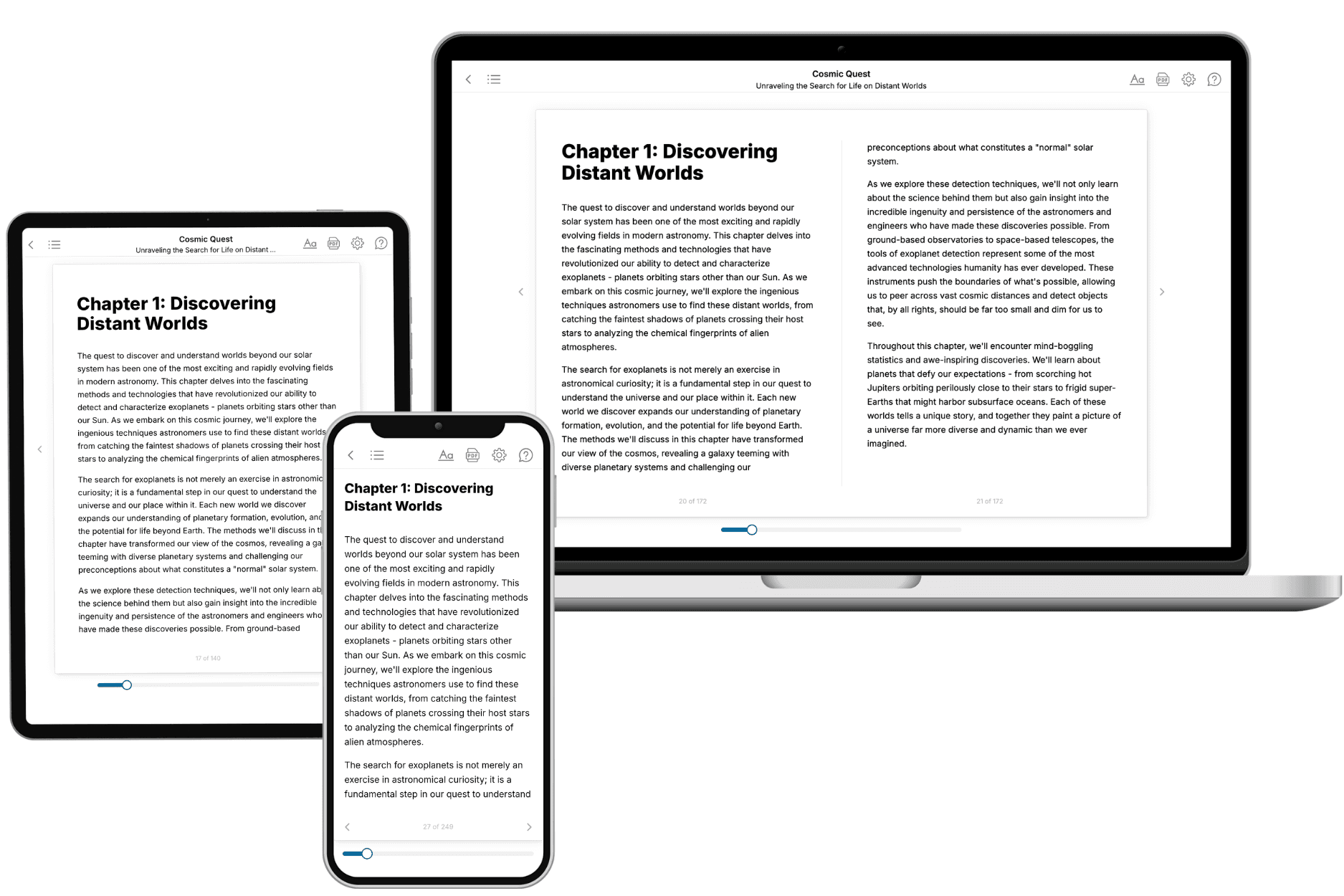
Your book is ready in 10 minutes. Read it online, download as EPUB or PDF, or send to Kindle.

Frequently asked questions
- What is TailoredRead?
TailoredRead creates complete, full-length nonfiction ebooks, written specifically for you. Tell us what you want to learn and why, and TailoredRead writes you a complete ebook on it, with charts, tables, and diagrams throughout. Read it online, on Kindle, or on any e-reader, or download it as a PDF or EPUB. Every book is written fresh the day you order it.
- How is the book tailored to me?
Before anything is written, you answer a few short questions about your goals, your background, and the topics you care about. Your book is then planned around your answers: written at your level, focused on your goals, and covering the topics you chose, instead of the one-size-fits-all book a store sells everyone.
- Will it read like generic AI content?
No. Your book isn't a chat transcript: it's planned chapter by chapter before a single word is written, told in a clear book voice, and explains ideas visually with charts, tables, and diagrams. After writing, every book goes through an editorial pass that polishes chapters so the book reads consistent from start to finish. Judge for yourself: browse thousands of sample books on our Explore Books page.
- How accurate is the content?
Our AI first checks whether your subject needs live research. Niche and fast-moving subjects are researched before writing, and the book plan and chapters are grounded in what it finds. After writing, every book goes through a quality pass that checks its facts and consistency, and researched books list their sources in a Notes section at the back.
- How long is the book?
You choose the length: Comprehensive (250-300 pages), Detailed (150-200 pages), Essential (70-100 pages), or Short (30-50 pages).
- Does the book include visuals?
Yes. Every book includes visual elements such as timelines, checklists, step-by-step guides, decision trees, comparison tables, and matrices, and many include bar charts. A typical book includes dozens of these visual elements.
- Can I read it on Kindle? What formats can I download?
Yes. Every book can be read in our online reader or downloaded as a PDF or EPUB. The EPUB can be opened with Kindle, Apple Books, Kobo, and any e-reader. The Commercial and Author licenses also include an editable Word (DOCX) and Markdown download.
- How much does it cost?
About the price of a regular ebook. The exact price depends on your book's length and complexity, from $2 for the shortest books to $35 for the most comprehensive, and it's shown when you review your book, before you commit to anything. Each book is a one-time purchase, yours to keep, no subscription. Licenses that let you share, teach, or publish your book range from $35.99 to $49.99.
- Can I preview the book before purchasing?
Before you pay, you'll see what your book will cover: the title, a detailed description, the estimated length, and the complete chapter-by-chapter table of contents, so you know what you're getting before you decide. The full text itself is written after you purchase.
- How long does it take to create a book?
About 10 minutes. You can start reading the opening chapters while the rest is still being written.