Navigating the Middle East
A Traveler's Guide to Understanding Regional Conflicts and Exploring Safely
Traveling to the Middle East doesn't require choosing between adventure and awareness.
191 pages8 chaptersJun 25, 2026Middle East Travel
About this book
This guide walks you through the essential knowledge you need to explore one of the world's most historically significant and culturally rich regions with confidence and respect. You'll learn how historical conflicts shape today's geopolitical landscape, discover which destinations are genuinely safe for travelers, and master the practical skills that transform potential anxiety into informed decision-making. From understanding the nuances of regional politics to navigating security considerations, from connecting authentically with local communities to planning contingencies, you'll gain both the context and the tools to travel responsibly. Whether you're drawn to ancient ruins, vibrant markets, stunning landscapes, or cultural immersion, this book shows you how to pursue those experiences while respecting the complexity of the region and the people who call it home.
Table of contents
- IntroductionWhy This Book Matters for Modern Travelers, What You'll Learn and How to Use This Guide, Looking Beyond the HeadlinesRead below
- Chapter 1: The Historical Foundations of Middle Eastern ConflictsEmpires, Borders, and Colonial Legacies, Religious and Sectarian Dimensions, The Modern State System and Its Tensions
- Chapter 2: Contemporary Conflicts: A Regional OverviewThe Israeli-Palestinian Conflict, Syria, Iraq, and the Rise of Extremist Groups, Yemen and Regional Power Struggles, Iran's Regional Influence and Rivalries
- Chapter 3: Assessing Safety: Separating Fact from FearHow Media Coverage Shapes Perception, Understanding Actual Travel Risks by Country, Safe and Welcoming Destinations in the Middle East
- Chapter 4: Pre-Travel Research and PlanningUsing Government Travel Advisories and Resources, Gathering Current Local Intelligence, Selecting Appropriate Travel Insurance and Coverage
- Chapter 5: Cultural Literacy and Respectful EngagementUnderstanding Cultural Norms and Social Expectations, Religious Sensitivity and Sacred Spaces, Language, Communication, and Building Connections
- Chapter 6: Practical Security Strategies for TravelersSituational Awareness and Risk Assessment, Daily Safety Practices and Precautions, Emergency Protocols and Crisis Response
- Chapter 7: Navigating Specific DestinationsUnited Arab Emirates and Qatar: Modern Hubs, Jordan and Lebanon: Ancient Wonders and Challenges, Turkey and Iran: Cultural Crossroads, Oman and Saudi Arabia: Emerging Opportunities
- Chapter 8: Connecting with Local CommunitiesFinding and Vetting Local Guides, Creating Authentic and Respectful Experiences, Responsible Tourism and Economic Impact
- ConclusionBecoming an Informed and Respectful Explorer, Final Thoughts and Your Next Steps
- AppendixEmergency Contacts and Resources by Country, Essential Packing Checklist for Middle East Travel, Useful Phrases in Arabic and Local Languages
- Further Reading and ResourcesRecommended Books and Documentaries, Websites and Organizations for Ongoing Learning
Introduction
The Middle East occupies a unique place in the global imagination. For many people in the West, it exists primarily as a backdrop for news coverage: conflict zones, political crises, and humanitarian emergencies. Yet for the hundreds of millions of people who live there, and for the growing number of travelers who visit each year, the region is something far richer and more layered. It is a place of extraordinary ancient history, breathtaking landscapes, world-class cuisine, and some of the most generous hospitality cultures on earth. The gap between how the Middle East is perceived and what it actually offers to curious, prepared travelers is enormous.
That gap is exactly what this book is designed to close. Traveling to the Middle East is not a reckless act reserved for journalists and aid workers. Millions of tourists visit Jordan, the United Arab Emirates, Oman, Turkey, and other destinations in the region every single year without incident. They explore Petra's rose-red canyons, wander through Istanbul's grand bazaars, float in the Dead Sea, and share meals with families who insist on refilling their plates. These experiences are real, accessible, and available to you. What they require is not bravery so much as preparation, context, and a willingness to engage with the region on its own terms rather than through the lens of fear.
This guide was built for travelers who already have some curiosity about the Middle East but want more than a standard tourist handbook. You may have read about the Israeli-Palestinian conflict, heard about tensions between Iran and Saudi Arabia, or followed news from Syria and Yemen. You understand that the region is complex. What you need now is a framework for turning that awareness into practical, confident travel decisions. This book provides that framework, combining historical context, geopolitical analysis, cultural guidance, and on-the-ground safety strategies into a single, usable resource.
Throughout these pages, you will find that understanding and adventure are not opposites. In fact, the more you understand about the forces that have shaped the Middle East, the more meaningful your travel experiences become. A visit to Jerusalem carries different weight when you understand the layers of history embedded in its stones. A conversation with a Jordanian shopkeeper becomes richer when you appreciate the regional pressures that have shaped his country's identity. Knowledge does not diminish wonder. It deepens it. That is the core promise of this book, and it runs through every chapter that follows.
Why This Book Matters for Modern Travelers
Travel to the Middle East has never been more relevant, and in some ways, never more misunderstood. Global tourism to the region has grown significantly over the past decade, with countries like Saudi Arabia, Oman, and Qatar actively investing in tourism infrastructure and opening their doors to international visitors in ways that were unimaginable just fifteen years ago.[1] At the same time, media coverage of the region continues to focus heavily on conflict, which creates a distorted picture that discourages many potential travelers from ever booking a flight.
The result is a significant information gap. Most travel guides either ignore the geopolitical context entirely, treating the Middle East like any other tourist destination, or they focus so heavily on risk that they make the region seem uniformly dangerous. Neither approach serves you well. Ignoring context leaves you unprepared for the realities on the ground. Overemphasizing danger keeps you from experiencing places that are genuinely safe and profoundly rewarding. This book takes a third path: honest, balanced, and practical.
Consider what happened to international tourism in Jordan during the height of the Syrian civil war. Despite being geographically close to an active conflict zone, Jordan remained stable and continued to welcome tourists throughout that period. Petra, Wadi Rum, and the Dead Sea never closed. Visitor numbers dipped due to regional anxiety, but travelers who did go consistently reported safe, positive experiences.[2] This is a pattern that repeats across the region: proximity to conflict does not automatically equal danger for travelers, but you need reliable information to make that distinction.
Modern travelers also face a new challenge that previous generations did not: the speed and volume of information available online. Social media, 24-hour news cycles, and travel forums can all provide useful data, but they can also amplify fear and spread outdated or inaccurate information. A single incident in one city can generate coverage that makes an entire country seem off-limits, even when the vast majority of that country is completely safe. Learning to filter and evaluate information critically is now a core travel skill, and this book helps you develop it.
There is also a deeper reason why this book matters. Travel to the Middle East is, in a very real sense, an act of cross-cultural bridge-building. When you visit a country, spend money in local businesses, engage respectfully with communities, and return home with a more nuanced understanding of the region, you contribute to something larger than your own experience. You become part of a growing community of travelers who refuse to let fear or stereotypes define their relationship with one of the world's most historically significant regions.
Finally, this book matters because the stakes of getting it wrong are real. Traveling without adequate preparation to genuinely unstable areas, misreading cultural norms in ways that create conflict, or failing to have emergency plans in place can all lead to serious problems. The goal here is not to scare you away from the Middle East. It is to make sure that when you go, you go smart. Confidence built on solid knowledge is the best travel companion you can have.
A note on scope: The term "Middle East" covers a vast and diverse region. This book focuses primarily on countries that are either currently accessible to tourists or likely to become so in the near future, including Jordan, Israel, the UAE, Qatar, Oman, Saudi Arabia, Turkey, Iran, Lebanon, and Egypt. Countries with active, widespread conflict that make tourism genuinely inadvisable, such as Yemen and Syria, are discussed for context but not as travel destinations.
The travelers who get the most out of the Middle East are not the ones who are fearless. They are the ones who are informed. They have done their research, they understand the landscape they are entering, and they have made thoughtful decisions about where to go and how to engage. This book is designed to help you become exactly that kind of traveler.
What You'll Learn and How to Use This Guide
This book is organized to take you from broad historical context down to specific, practical travel decisions. Each layer builds on the one before it. Understanding why conflicts exist helps you assess current conditions more accurately. Assessing conditions accurately helps you plan more effectively. Planning effectively gives you the confidence to engage authentically once you arrive. The structure is intentional, and reading the chapters in order will give you the fullest picture.
The first two chapters cover historical and contemporary conflicts. This is not background reading you can skip. The historical roots of Middle Eastern tensions directly shape which borders are contested, which communities are in conflict, and which areas carry ongoing instability. Chapter 1 traces the major historical forces, from Ottoman imperial collapse to colonial border-drawing to the emergence of modern nation-states. Chapter 2 brings that history forward into the present, examining specific contemporary conflicts and what they mean for travelers today.
Chapters 3 and 4 shift from context to assessment and planning. You will learn how to evaluate travel advisories critically, identify reliable sources of current information, understand what actual risk looks like versus perceived risk, and build a pre-travel research process that keeps you genuinely informed. These chapters also cover travel insurance in practical detail, including what to look for in a policy and what questions to ask before you buy.
Chapters 5 and 6 focus on the human and practical dimensions of travel in the region. Chapter 5 covers cultural literacy: the norms, expectations, and social dynamics that shape daily life across different Middle Eastern societies. Chapter 6 addresses security strategies, not in a way that turns you into a paranoid traveler, but in a way that builds the kind of calm, situational awareness that experienced travelers develop over time. Together, these chapters give you the interpersonal and practical tools to navigate confidently.
Chapter 7 provides destination-specific guidance for the most accessible countries in the region. Rather than trying to cover every possible location, it focuses on the destinations most relevant to travelers at your level of experience, with specific notes on what to expect, what to watch for, and what makes each place worth visiting. Chapter 8 then addresses one of the most rewarding aspects of Middle East travel: connecting with local communities, finding trustworthy guides, and practicing responsible tourism that benefits the people who live there.
Here is a quick overview of how to use this guide most effectively:
- First-time visitors to the region: Read all chapters in order before your trip. The historical context in Chapters 1 and 2 will pay dividends throughout your journey.
- Experienced travelers returning to the region: Focus on Chapters 3, 4, and 7 for updated frameworks and destination-specific guidance, then revisit Chapter 5 for cultural nuances specific to your destination.
- Travelers planning a specific trip: Use Chapter 7 as your primary destination reference, then work backward through Chapters 4 and 6 for planning and safety preparation.
- Travelers interested in the geopolitical context: Chapters 1 and 2 provide the deepest coverage, and the Further Reading section at the back of the book points you toward additional resources.
The appendix at the back of the book contains practical reference material you will want to have accessible during your trip: emergency contacts by country, a packing checklist tailored to Middle East travel conditions, and useful phrases in Arabic and other regional languages. These are not afterthoughts. They are tools designed to be used in the field, and you should familiarize yourself with them before you leave home.
One important note about how to read the safety and conflict information in this book: conditions in the Middle East change. Political situations shift, security environments evolve, and what is accurate today may need updating in six months. This book provides frameworks for understanding and evaluating conditions, not static assessments that will remain true indefinitely. Always cross-reference the guidance here with current government travel advisories and recent traveler reports before finalizing your plans. The goal is to give you the tools to assess conditions yourself, not to make those assessments for you permanently.
Throughout the book, you will find practical examples, specific scenarios, and concrete recommendations. These are not hypothetical. They are drawn from the real experiences of travelers, researchers, journalists, and regional experts who have navigated these environments. Where data and research support specific claims, footnotes point you to the sources. Where recommendations are based on established best practices in travel safety and cultural engagement, that context is provided. The aim throughout is to be genuinely useful, not just reassuring.
Looking Beyond the Headlines
If your primary source of information about the Middle East is mainstream news coverage, you have a partial picture at best. This is not a criticism of journalism. News organizations cover what is newsworthy, and conflict, crisis, and political tension are inherently more newsworthy than a peaceful afternoon in a Jordanian souk or a family sharing coffee with a foreign visitor in Muscat. The problem is not that the news is wrong. It is that it is systematically incomplete, and that incompleteness shapes perception in powerful ways.
Research on media framing consistently shows that regions associated with conflict in news coverage are perceived as more uniformly dangerous than they actually are.[3] When every story about the Middle East involves violence or political instability, the brain begins to associate the entire region with those conditions, even when the stories are geographically specific and the vast majority of the region is unaffected. This is a well-documented cognitive pattern, and it affects even well-informed, thoughtful people.
Consider a concrete example. During a single week in 2019, international news coverage of the Middle East included stories about Houthi attacks in Yemen, protests in Lebanon, and tensions in the Strait of Hormuz. That same week, over 100,000 tourists were visiting Jordan without incident, thousands of business travelers were moving through Dubai's airports, and Oman was hosting an international sailing competition.[4] Both realities were true simultaneously. The news covered one of them.
Looking beyond the headlines requires developing a more granular, geographically specific understanding of the region. The Middle East is not a single place with a single security environment. It is a collection of distinct countries, each with its own political system, social dynamics, and relationship to regional conflicts. Treating the region as monolithic is like treating all of Europe as equally dangerous because there is a conflict in one corner of it. The scale is different, but the logical error is the same.
Developing this more nuanced view starts with a few practical habits:
- Identify the specific geography of news stories. When you read about a conflict or incident, locate it precisely on a map. Understand how far it is from the destinations you are considering.
- Seek out traveler accounts from the past six to twelve months. Recent firsthand reports from people who have actually visited your destination are among the most reliable sources of ground-level information available.
- Follow regional journalists and analysts on social media. Reporters who are based in the region and cover it full-time provide context that international news desks often cannot.
- Read local English-language news sources. Publications like the Jordan Times, Arab News, and the Daily Star Lebanon offer perspectives that differ meaningfully from Western coverage of the same events.
- Consult government travel advisories, but read them critically. These advisories are useful tools, but they are often conservative by design and may not distinguish between different risk levels within a single country.
There is also a cultural dimension to looking beyond the headlines. Western media coverage of the Middle East often reflects particular assumptions about the region's people, values, and social structures. These assumptions are not always accurate, and they can create expectations that interfere with genuine connection when you travel. One of the most consistent reports from first-time visitors to countries like Jordan, Oman, and Iran is surprise at the warmth and hospitality they encounter. That surprise is itself a product of media framing. The hospitality was always there. The coverage just did not show it.
This does not mean approaching the Middle East naively or dismissing legitimate security concerns. Some areas genuinely are dangerous, and some situations genuinely do require caution or avoidance. The goal is not to replace one distortion with another, swapping unfounded fear for unfounded optimism. The goal is accuracy. Accurate information, honestly assessed, is what allows you to make good decisions about where to go, when to go, and how to engage when you get there.
The chapters that follow are built on that commitment to accuracy. They do not minimize real risks, and they do not exaggerate them. They present the Middle East as it actually is: a region of genuine complexity, real challenges, and extraordinary rewards for travelers who approach it with knowledge, respect, and an open mind. That is the traveler this book is written for. That is the traveler you are becoming by picking it up.
A practical starting point: Before you read further, take five minutes to write down your current assumptions about the Middle East as a travel destination. What countries feel accessible? What feels off-limits? What are you most uncertain about? Keep that list. By the time you finish this book, you will have a much clearer, more grounded answer to each of those questions, and some of your assumptions may surprise you.
The Middle East has been a crossroads of human civilization for thousands of years. It has absorbed and generated empires, religions, trade routes, and ideas that shaped the entire world. The people who live there today are the inheritors of that history, navigating its complexities with resilience and pride. When you travel there with genuine curiosity and solid preparation, you are not just a tourist passing through. You are a participant in a long tradition of cross-cultural exchange that the region has always been at the center of. That is a remarkable thing to be part of, and this book is your starting point for doing it well.
Notes
Introduction
- 1. World Tourism Organization (UNWTO), 'Tourism in the Middle East: Trends and Prospects,' 2023 Annual Report.
- 2. Jordan Tourism Board, 'Annual Tourism Statistics Report,' 2016-2019.
- 3. Moeller, Susan D. 'Compassion Fatigue, War and Death.' Routledge, 1999
- 4. Jordan Tourism Board, 'Monthly Visitor Statistics,' October 2019; Dubai Airports, 'Traffic Report,' Q4 2019.
This is the end of the free sample. The full book has 8 chapters.
Want this book written for you?
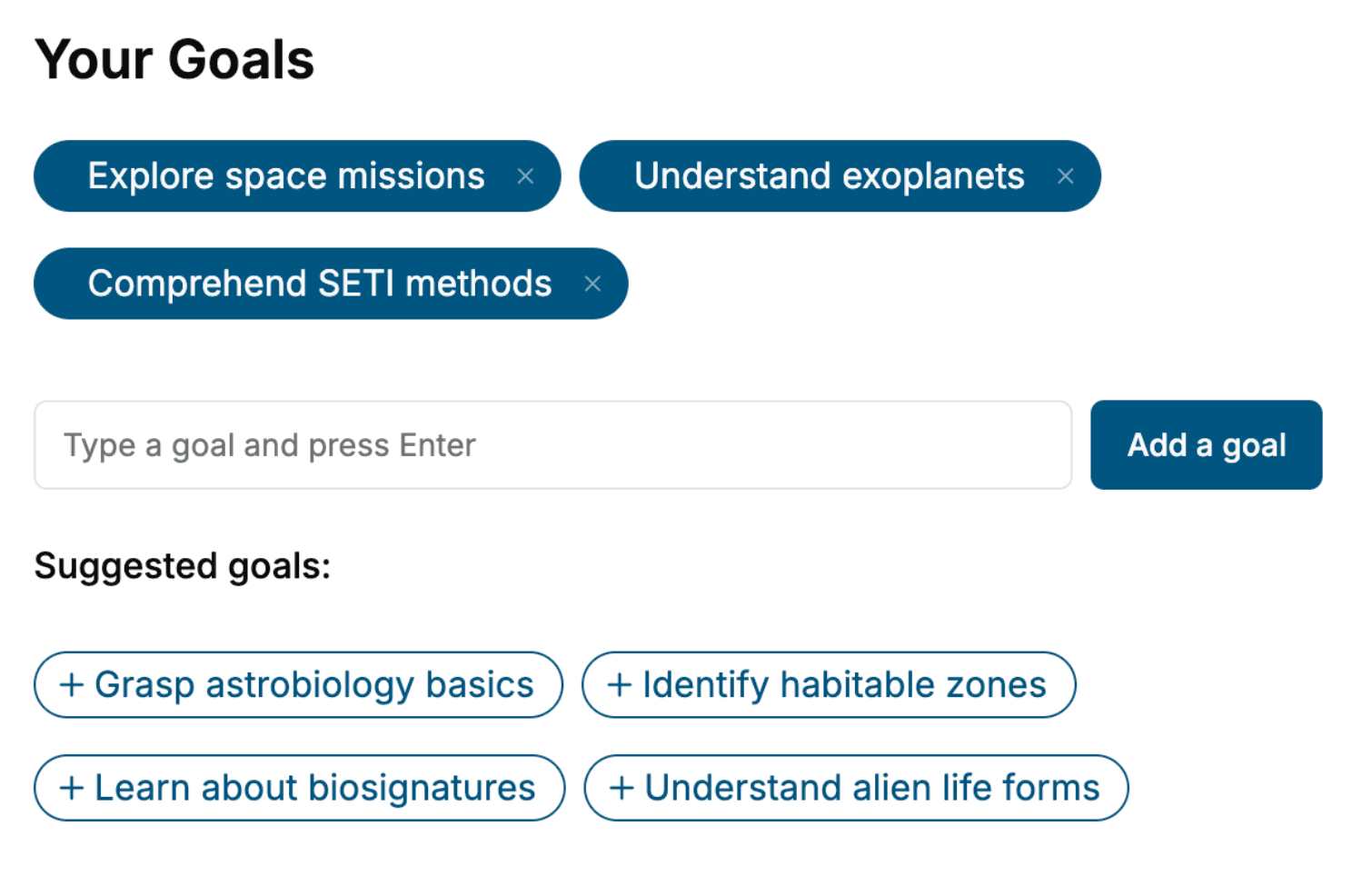
Tell us your goals and background, and get your own version of this book, tailored by AI to you.


Benefits of AI-tailored books
- Read one book, not ten:
- all the Middle East Travel knowledge you need, gathered into a single book.
- Save days of learning:
- tell us your goals, choose your topics, and the whole book is built around them.
- Learn effortlessly:
- Middle East Travel book written for your specific background and expertise.
- Understand at a glance:
- includes charts, tables, timelines, checklists, decision trees, and more.
- Stay current:
- written the day you order it, not years ago.
- Trust what you read:
- every book is checked for accuracy, with real research when your subject needs it.
Create your unique book in 3 steps
- 1. Select your focus
Select the focus of your Middle East Travel book and share your background
- 2. Personalize your book
Specify your goals and choose sub-topics to include
- 3. Get your tailored book
Your book is ready in 10 minutes. Read it online, download as EPUB or PDF, or send to Kindle.

Frequently asked questions
- What is TailoredRead?
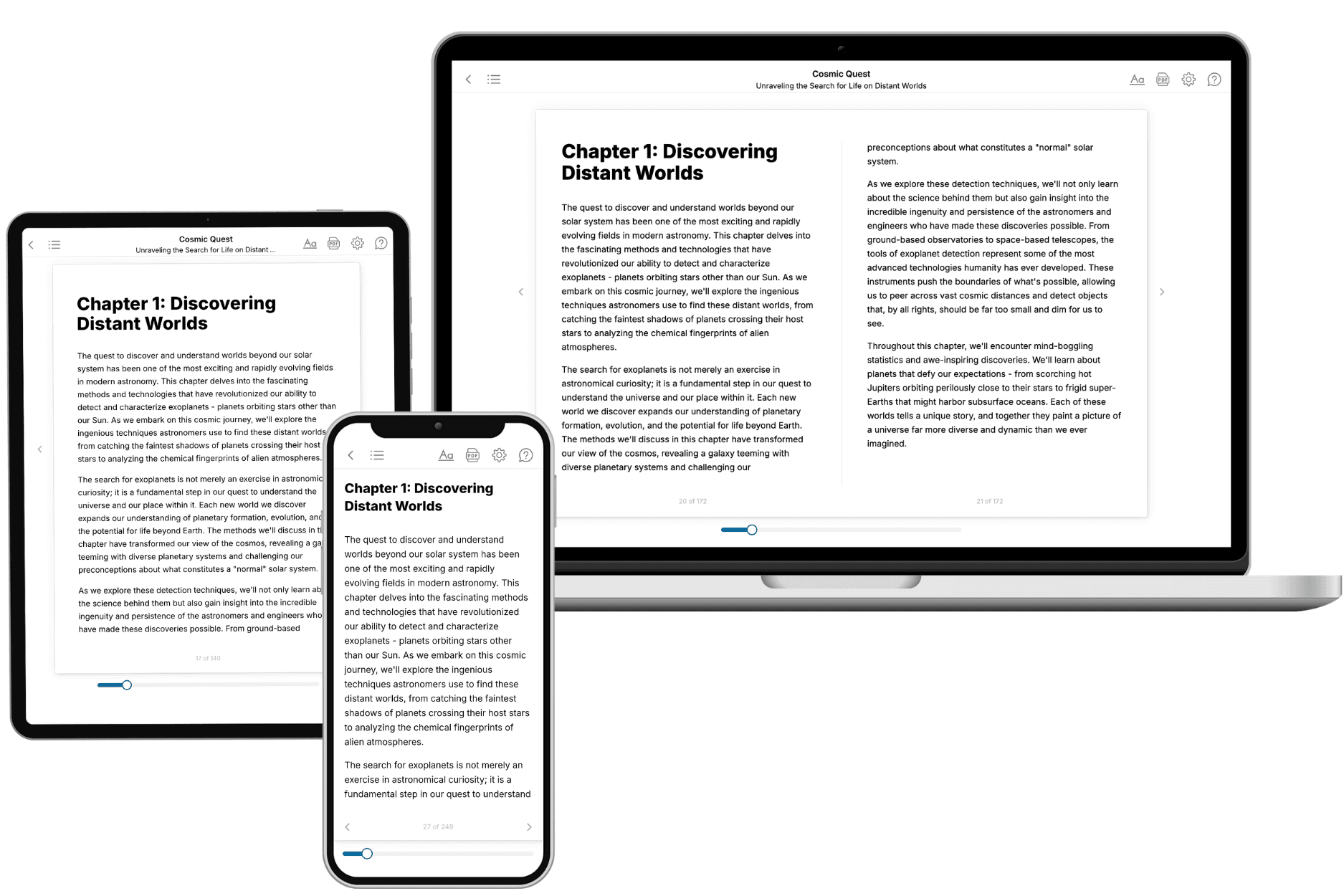
TailoredRead creates complete, full-length nonfiction ebooks, written specifically for you. Tell us what you want to learn and why, and TailoredRead writes you a complete ebook on it, with charts, tables, and diagrams throughout. Read it online, on Kindle, or on any e-reader, or download it as a PDF or EPUB. Every book is written fresh the day you order it.
- How is the book tailored to me?
Before anything is written, you answer a few short questions about your goals, your background, and the topics you care about. Your book is then planned around your answers: written at your level, focused on your goals, and covering the topics you chose, instead of the one-size-fits-all book a store sells everyone.
- Will it read like generic AI content?
No. Your book isn't a chat transcript: it's planned chapter by chapter before a single word is written, told in a clear book voice, and explains ideas visually with charts, tables, and diagrams. After writing, every book goes through an editorial pass that polishes chapters so the book reads consistent from start to finish. Judge for yourself: browse thousands of sample books on our Explore Books page.
- How accurate is the content?
Our AI first checks whether your subject needs live research. Niche and fast-moving subjects are researched before writing, and the book plan and chapters are grounded in what it finds. After writing, every book goes through a quality pass that checks its facts and consistency, and researched books list their sources in a Notes section at the back.
- How long is the book?
You choose the length: Comprehensive (250-300 pages), Detailed (150-200 pages), Essential (70-100 pages), or Short (30-50 pages).
- Does the book include visuals?
Yes. Every book includes charts, tables, and diagrams: timelines, checklists, step-by-step guides, decision trees, comparison tables, matrices, and bar charts. A typical book includes dozens of these visual elements.
- Can I read it on Kindle? What formats can I download?
Yes. Every book can be read in our online reader or downloaded as a PDF or EPUB. The EPUB can be opened with Kindle, Apple Books, Kobo, and any e-reader. The Commercial and Author licenses also include an editable Word (DOCX) and Markdown download.
- How much does it cost?
About the price of a regular ebook. The exact price depends on your book's length and complexity, from $2 for the shortest books to $35 for the most comprehensive, and it's shown when you review your book, before you commit to anything. Each book is a one-time purchase, yours to keep, no subscription. Licenses that let you share, teach, or publish your book range from $35.99 to $49.99.
- Can I preview the book before purchasing?
Before you pay, you'll see what your book will cover: the title, a detailed description, the estimated length, and the complete chapter-by-chapter table of contents, so you know what you're getting before you decide. The full text itself is written after you purchase.
- How long does it take to create a book?
About 10 minutes. You can start reading the opening chapters while the rest is still being written.