Nelson Mandela: The Man Behind the Legend
From Prisoner to Peacemaker—The Life That Changed a Nation
What makes a person willing to sacrifice 27 years of freedom for a cause they may never see realized?
176 pages8 chaptersJan 15, 2026Biography
About this book
Nelson Mandela's life offers a profound answer to this question, revealing a man far more complex and human than the icon we remember. This biography traces Mandela's journey from a rural Xhosa village to the presidency of South Africa, exploring the personal struggles, moral dilemmas, and strategic choices that defined his path. You'll discover how his early years shaped his values, how imprisonment tested and refined his character, and how he navigated the treacherous politics of ending apartheid without descending into revenge. Through intimate details of his relationships, his evolving political thinking, and his quiet moments of doubt, this book reveals the man behind the legend—someone whose greatest strength was not invincibility, but the courage to remain human in the face of dehumanization. Mandela's story is ultimately about the transformative power of principle, patience, and the belief that reconciliation is possible even after centuries of injustice.
Table of contents
- IntroductionWhy Mandela's Story Still Matters Today, Beyond the Icon: The Real Person, What You'll Discover in This BookRead below
- Chapter 1: The Making of a ManRoots in Xhosa Country, Education and Political Awakening, The First Steps into Activism
- Chapter 2: The Struggle BeginsUnderstanding the Apartheid System, The ANC and Organized Resistance, The Personal Cost of Defiance
- Chapter 3: From Protest to Armed StruggleSharpeville: A Turning Point, Umkhonto we Sizwe: The Armed Wing, The Evolution of Strategy
- Chapter 4: Robben Island: The CrucibleArrest and the Rivonia Trial, 27 Years Behind Bars, Transformation in Captivity
- Chapter 5: The Path to NegotiationA Changing World, Secret Talks and Shifting Positions, Release and the Road to Freedom
- Chapter 6: Building a New NationThe First Democratic Elections, The Presidency: Challenges and Choices, Truth and Reconciliation Commission
- Chapter 7: The Power of ForgivenessChoosing Reconciliation Over Revenge, Meeting with Former Oppressors, Healing a Divided Nation
- Chapter 8: Global Influence and LegacyMandela as International Statesman, Humanitarian Work and Activism, The Lasting Impact on Global Movements
- ConclusionLessons from Mandela's Life, Continuing the Work He Started
- Further Reading and Resources
Introduction
Nelson Mandela's name has become synonymous with freedom, justice, and reconciliation. His face adorns murals in cities across the globe. His words are quoted by leaders and activists alike. Yet behind the icon lies a story far more complex, human, and instructive than the simplified narratives often presented. This is not a tale of a flawless hero who always knew the right path forward. Instead, it's the story of a man who struggled, doubted, evolved, and ultimately chose principles over vengeance at moments when either path seemed justified. Understanding Mandela's real journey—with its contradictions, compromises, and profound moral choices—offers insights that remain urgently relevant in our fractured world.
The transformation of Nelson Mandela from a young activist willing to take up arms into a statesman who prioritized healing over retribution represents one of history's most remarkable personal evolutions. This change didn't happen overnight, nor was it inevitable. It emerged from decades of reflection, suffering, strategic thinking, and an unwavering commitment to a vision larger than personal freedom or revenge. His 27 years in prison could have hardened him into bitterness. Instead, those years became a crucible that refined his understanding of power, justice, and what it truly means to be free. The question that drives this biography is not simply what Mandela did, but how he became the person capable of doing it.
This book invites you to move beyond the statue and discover the man. You'll encounter Mandela's early years in rural Transkei, where traditional Xhosa values shaped his character. You'll follow his political awakening in Johannesburg, his decision to embrace armed resistance, and the long imprisonment that tested every aspect of his being. You'll witness the delicate negotiations that ended apartheid and the extraordinary effort to build a nation from the ruins of institutionalized racism. Most importantly, you'll see how Mandela's personal relationships, moral convictions, and strategic pragmatism combined to create a leader whose influence extended far beyond South Africa's borders. His story offers lessons not just in political leadership, but in the fundamental human capacity for growth, forgiveness, and transformation.
Why Mandela's Story Still Matters Today
In an era marked by deepening polarization, rising authoritarianism, and seemingly intractable conflicts, Mandela's life offers a counternarrative of hope grounded in practical action. His story matters because it demonstrates that even the most entrenched systems of oppression can be dismantled without descending into cycles of revenge that perpetuate violence across generations. South Africa in the early 1990s faced a choice between catastrophic civil war and an uncertain path toward reconciliation. That the country chose the latter—imperfectly, incompletely, but genuinely—owes much to Mandela's moral authority and strategic vision. His approach wasn't naive optimism but hard-won wisdom about what actually works when building a society from the ashes of injustice.
The challenges Mandela confronted resonate across contemporary struggles for justice and equality worldwide. How do you fight oppression without becoming oppressive yourself? How do you negotiate with adversaries without betraying your principles? How do you balance the demands for justice from those who suffered with the practical requirements of building a functioning society? These questions aren't abstract philosophical puzzles—they're urgent dilemmas facing activists, leaders, and citizens in contexts ranging from post-conflict societies to movements for racial justice in established democracies. Mandela's answers weren't perfect, but they were tested in the most demanding circumstances imaginable, making them worthy of serious study.
Beyond political strategy, Mandela's story speaks to fundamental questions about human nature and potential. His life challenges the assumption that people are fixed in their beliefs and behaviors. The young Mandela who advocated for armed struggle and the elder statesman who invited his former jailer to his presidential inauguration were the same person, yet profoundly different. This transformation wasn't a betrayal of earlier convictions but an evolution informed by experience, reflection, and a willingness to prioritize outcomes over ego. In a world that often rewards rigid consistency and punishes those who change their minds, Mandela's intellectual and moral flexibility offers an alternative model of principled leadership.
The global response to Mandela's death in 2013 revealed how deeply his story resonates across cultures, generations, and political divides. World leaders from across the ideological spectrum praised his legacy. Ordinary people who had never visited South Africa mourned his passing. This universal appeal stems partly from the clarity of his cause—few defend apartheid in retrospect—but more fundamentally from the way he embodied values that transcend particular contexts. His commitment to human dignity, his capacity for forgiveness without forgetting, and his understanding that true freedom requires transforming both oppressor and oppressed speak to aspirations that cross borders and eras.
Mandela's relevance extends to contemporary debates about leadership itself. In an age of celebrity politicians and performative activism, his example offers a different template. He understood that leadership isn't about personal glory or maintaining ideological purity. It's about creating conditions for others to flourish and building institutions that outlast individual leaders. His willingness to serve only one presidential term, despite enormous popularity, demonstrated a commitment to democratic principles over personal power. His focus on empowering the next generation of leaders, even when they disagreed with him, showed an understanding that sustainable change requires distributed leadership rather than dependence on charismatic individuals.
The story also matters because it complicates simplistic narratives about good and evil, heroes and villains. Mandela made mistakes. He was absent from his children's lives during critical years. His first marriage collapsed under the pressure of his political commitments. His armed resistance campaign, while strategically targeted, still involved violence. His presidency didn't solve all of South Africa's problems, and some critics argue he was too conciliatory toward white economic interests. Acknowledging these complexities doesn't diminish his achievements—it makes them more instructive. Real leadership happens in the messy realm of difficult tradeoffs, not in the clean world of abstract principles. Understanding how Mandela navigated these dilemmas offers more practical guidance than treating him as a saint who never struggled with hard choices.
Finally, Mandela's story matters because it demonstrates the power of strategic patience combined with moral clarity. He spent 27 years in prison without knowing whether he would ever be released, yet he never abandoned his vision of a democratic, non-racial South Africa. This combination of long-term commitment and tactical flexibility offers lessons for anyone working toward goals that won't be achieved quickly. In a culture that increasingly demands immediate results and instant gratification, Mandela's example reminds us that the most important transformations often require decades of sustained effort. His life proves that patience isn't passivity—it's the discipline to keep working toward a vision even when progress seems impossibly slow.
Beyond the Icon: The Real Person
The process of turning Nelson Mandela into an icon began even before his release from prison and accelerated dramatically after he became president. This iconography served important purposes—it provided a unifying symbol for a divided nation and offered hope to oppressed people worldwide. However, the icon often obscures the person, reducing a complex human being to a collection of inspirational quotes and sanitized images. The real Mandela was more interesting, more flawed, and ultimately more instructive than the legend. He experienced doubt, anger, loneliness, and frustration. He made strategic miscalculations and personal mistakes. Understanding these dimensions doesn't diminish his achievements—it makes them more remarkable because they were accomplished by a real person facing real constraints, not a mythical figure immune to human weakness.
Mandela's personality combined seemingly contradictory traits that shaped his leadership approach. He possessed both aristocratic bearing—a product of his royal Xhosa lineage and mission school education—and genuine warmth toward people of all backgrounds. He could be charming and diplomatic in negotiations, yet stubbornly inflexible on core principles. He valued loyalty intensely but was willing to break with longtime allies when he believed they were wrong. These contradictions weren't weaknesses to be resolved but tensions he learned to navigate. His ability to be both pragmatic and principled, both patient and decisive, both forgiving and firm, made him effective in contexts where simpler personalities might have failed.
His relationships reveal dimensions of his character often missing from official narratives. His first marriage to Evelyn Mase ended in divorce, partly because she couldn't accept his total commitment to political struggle. His second marriage to Winnie Madikizela became one of the great love stories of the anti-apartheid movement, but it too eventually collapsed under the weight of separation, diverging political approaches, and personal betrayals. These failures weren't incidental to his political life—they were direct consequences of the choices he made about priorities and sacrifice. Mandela himself acknowledged the pain he caused his family, writing in his autobiography about the guilt he felt over his absence from his children's lives. This honesty about personal costs makes his commitment more comprehensible and more human.
The prison years shaped Mandela in ways that go beyond the standard narrative of suffering leading to wisdom. On Robben Island, he engaged in a complex psychological chess game with his captors, gradually earning respect through dignity and strategic resistance. He studied Afrikaans to understand his oppressors better. He read widely, from Shakespeare to Afrikaner poetry. He exercised rigorously to maintain physical and mental discipline. He mediated disputes among fellow prisoners and organized education programs. These weren't the actions of someone merely enduring imprisonment—they were the deliberate efforts of someone using confinement as an opportunity for preparation. The man who emerged from prison in 1990 had been shaped by these decades of forced reflection and strategic patience in ways that made him uniquely suited for the negotiations ahead.
Mandela's evolution on the question of violence reveals the complexity of his moral reasoning. As a young activist, he initially embraced the ANC's commitment to non-violent resistance. After the Sharpeville massacre in 1960, when police killed 69 unarmed protesters, he concluded that non-violence alone couldn't defeat apartheid. He helped found Umkhonto we Sizwe, the ANC's armed wing, and planned sabotage campaigns targeting infrastructure rather than people. This wasn't a casual decision—it represented a fundamental shift in strategy that he knew would have serious consequences. Yet even as he embraced armed struggle, he maintained limits, insisting on avoiding civilian casualties. Later, in prison, he gradually moved back toward negotiation, not because he'd been wrong about the need for pressure, but because circumstances had changed and new strategies became possible.
His leadership style combined consultation with decisiveness in ways that sometimes frustrated both allies and opponents. He listened extensively, seeking input from diverse perspectives before making major decisions. This consultative approach built consensus and helped him understand the full complexity of situations. However, once he decided on a course of action, he pursued it with determination, sometimes overruling close advisors. During the negotiations to end apartheid, he made controversial decisions—like meeting secretly with government officials without informing the ANC leadership in exile—that angered some comrades but proved strategically necessary. This balance between collective decision-making and individual leadership reflected his understanding that different situations require different approaches.
The real Mandela also had a keen sense of symbolism and performance that shaped his public persona. He understood that leadership involves theater—the careful management of image and message to achieve political goals. His decision to wear traditional Xhosa clothing at certain events, his embrace of rugby (traditionally an Afrikaner sport) during the 1995 World Cup, and his invitation to former jailers to his inauguration were all calculated gestures designed to send specific messages about reconciliation and national unity. This doesn't make them insincere—it makes them strategic. Mandela grasped that in politics, symbols and substance are intertwined, and that effective leaders must attend to both. His ability to craft powerful symbolic moments while pursuing concrete policy goals distinguished him from leaders who excel at only one or the other.
Understanding Mandela as a real person rather than an icon also means acknowledging the limits of what he accomplished. South Africa today still struggles with massive inequality, high unemployment, corruption, and racial tensions. Some of these problems stem from compromises Mandela made during negotiations, particularly around economic policy. Critics argue he was too willing to accommodate white economic interests and too reluctant to pursue radical redistribution of wealth. These criticisms deserve serious consideration. Mandela himself expressed frustration in his later years about the persistence of poverty and inequality. Recognizing these limitations doesn't negate his achievements—it contextualizes them within the realm of what was politically possible and highlights the ongoing work required to fulfill the promise of his vision.
What You'll Discover in This Book
This biography traces Mandela's journey chronologically, but with attention to the themes and questions that make his life relevant beyond historical interest. You'll begin with his childhood in rural Transkei, where traditional Xhosa culture and British colonial education created the foundation for his later worldview. These early chapters explore how his royal lineage, his father's defiance of colonial authority, and his experiences at mission schools shaped his sense of dignity, justice, and possibility. Understanding these formative years is essential because they established values and patterns that persisted throughout his life, even as his political strategies evolved dramatically. The young Mandela who arrived in Johannesburg in 1941 carried with him a complex inheritance that would influence his approach to leadership decades later.
The middle chapters examine Mandela's political awakening and radicalization during the 1940s and 1950s. You'll discover how his involvement in the ANC Youth League transformed him from a cautious observer into an activist willing to challenge both the apartheid government and the older, more conservative ANC leadership. This section explores key campaigns like the Defiance Campaign of 1952 and the Congress of the People in 1955, which produced the Freedom Charter. You'll see how Mandela's thinking evolved from a focus on African nationalism toward a more inclusive vision of non-racial democracy. These years also reveal the personal costs of activism—the constant surveillance, the banning orders that restricted his movements, the strain on his family, and the growing realization that peaceful protest alone might not be sufficient to dismantle apartheid.
The transition to armed struggle receives careful attention because it represents a crucial turning point in Mandela's life and in the anti-apartheid movement. You'll learn about the specific events that led him to conclude that violence had become necessary, the formation of Umkhonto we Sizwe, and the strategic thinking behind the sabotage campaign. This section doesn't shy away from difficult questions about the ethics and effectiveness of political violence. It examines Mandela's own justifications, the debates within the ANC, and the consequences of this decision. Understanding this period is essential for grasping the full complexity of Mandela's moral journey—from someone who initially embraced non-violence, to someone who authorized armed resistance, to someone who ultimately prioritized negotiation and reconciliation.
The prison years form the heart of the biography because they represent the longest and most transformative period of Mandela's life. You'll experience the harsh conditions of Robben Island, where political prisoners broke rocks in a limestone quarry and lived in tiny cells. But you'll also discover how Mandela and his fellow prisoners created a community of learning and resistance within the prison walls. This section explores his relationships with warders, some of whom he gradually won over through patient engagement. It examines his secret negotiations with government officials that began in the mid-1980s, conducted without the knowledge of most of his comrades. You'll see how these 27 years of forced reflection, reading, and strategic thinking prepared him for the negotiations that would end apartheid and the leadership that would follow.
The negotiation process that led to Mandela's release and the transition to democracy receives detailed treatment because it demonstrates his political skills at their peak. You'll learn about the delicate balance he maintained between pressuring the government and building trust with negotiating partners. This section explores key moments like his first meeting with President F.W. de Klerk, the violence that threatened to derail negotiations, and the compromises that made agreement possible. You'll discover how Mandela managed competing pressures from hardliners within the ANC who wanted more radical change, from the international community that supported sanctions, and from white South Africans who feared majority rule. The negotiations weren't a simple triumph of good over evil—they were a complex political process requiring strategic thinking, tactical flexibility, and moral courage.
The presidency and the establishment of the Truth and Reconciliation Commission represent Mandela's attempt to translate principles into policy. You'll examine his approach to building a new nation from the ruins of apartheid, including his efforts to reassure white South Africans while addressing the expectations of black citizens who had suffered under oppression. This section explores both successes and failures—the symbolic power of his reconciliation efforts, the economic policies that failed to address inequality adequately, and the challenges of transforming a liberation movement into a governing party. You'll see how Mandela used his moral authority to promote national unity while navigating the practical constraints of governing a deeply divided society with limited resources and enormous expectations.
The final chapters examine Mandela's post-presidency years and his lasting legacy. You'll discover how he used his global stature to advocate for causes ranging from HIV/AIDS awareness to peace in various conflicts. This section explores his reflections on his own life and legacy, including his acknowledgment of mistakes and unfinished work. You'll learn about the ongoing debates over his legacy in South Africa and globally—the ways different groups claim his authority for their own purposes, and the gap between the ideals he represented and the reality of contemporary South Africa. The book concludes by drawing out lessons from his life that remain relevant for anyone interested in leadership, social change, and the possibility of reconciliation after profound injustice.
Throughout the biography, you'll encounter specific examples, documented incidents, and Mandela's own words that bring his story to life. Rather than presenting a hagiography that treats him as a saint, this book aims to show how an ordinary person—talented and privileged in some ways, but still fundamentally human—became capable of extraordinary leadership through experience, reflection, and unwavering commitment to principles larger than himself. You'll find practical insights about leadership, negotiation, and moral decision-making that emerge from examining how Mandela actually navigated specific challenges. The goal isn't to provide a simple template for emulation—Mandela's context was unique—but to offer a rich case study in how someone can grow, evolve, and ultimately help transform a society through strategic action grounded in moral clarity. His story proves that change is possible, but it also reveals the patience, sacrifice, and wisdom required to achieve it.
This is the end of the free sample. The full book has 8 chapters.
Want this book written for you?
Tell us your goals and background, and get your own version of this book, tailored by AI to you.


Benefits of AI-tailored books
- Read one book, not ten:
- all the Biography knowledge you need, gathered into a single book.
- Save days of learning:
- tell us your goals, choose your topics, and the whole book is built around them.
- Learn effortlessly:
- Biography book written for your specific background and expertise.
- Understand at a glance:
- includes charts, tables, timelines, checklists, decision trees, and more.
- Stay current:
- written the day you order it, not years ago.
- Trust what you read:
- every book is checked for accuracy, with real research when your subject needs it.
Create your unique book in 3 steps
- 1. Select your focus
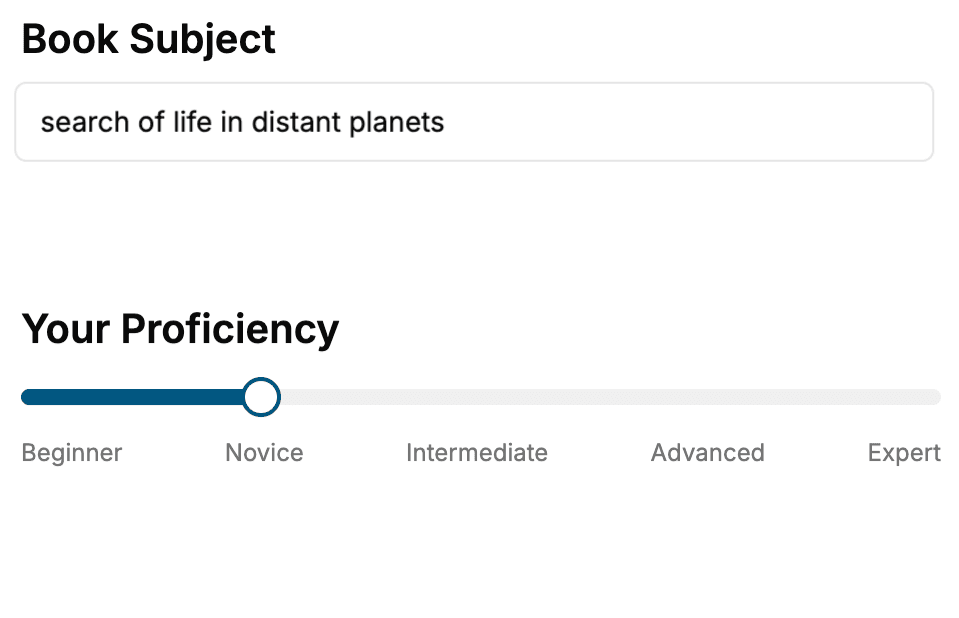
Select the focus of your Biography book and share your background
- 2. Personalize your book
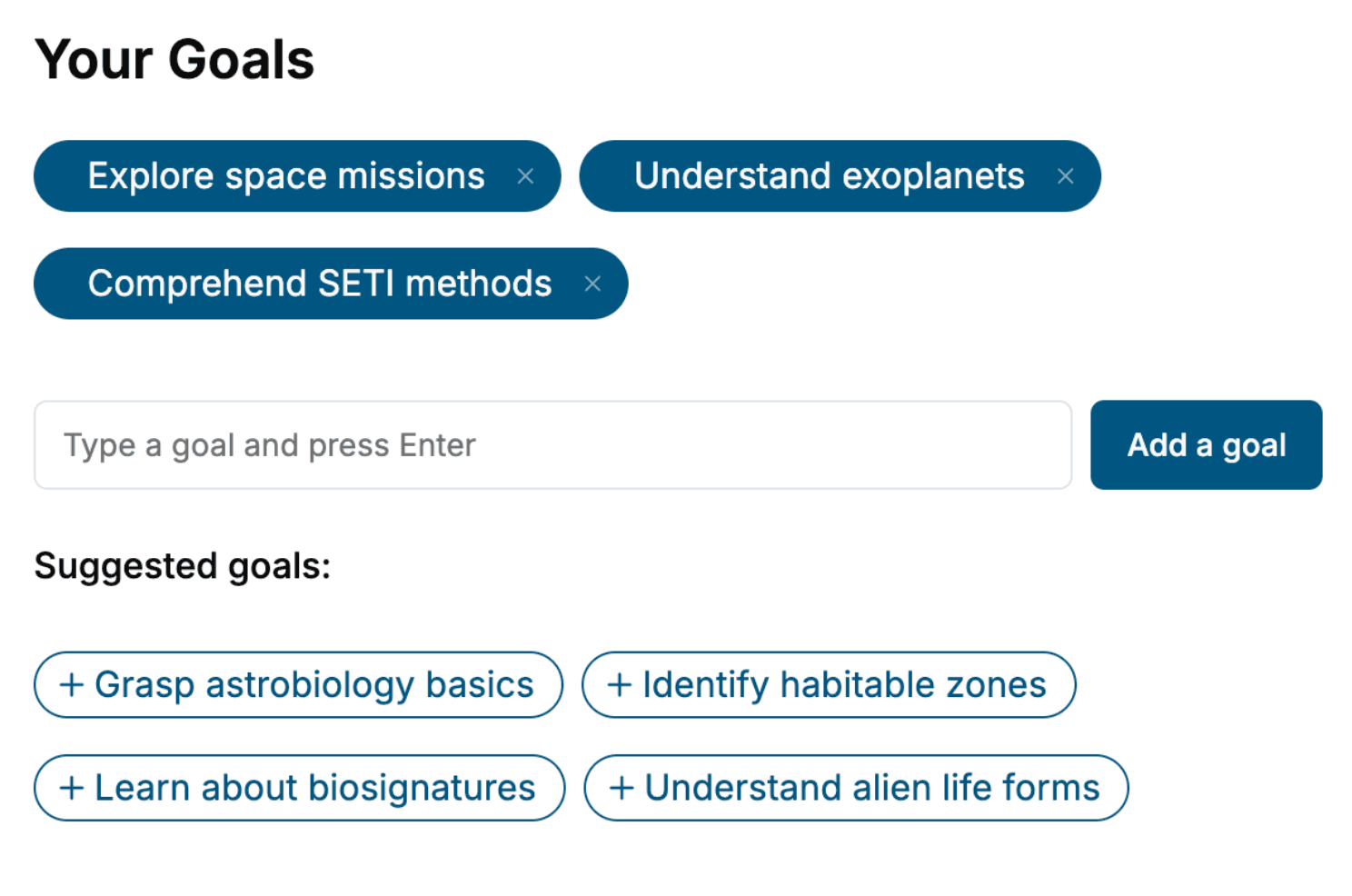
Specify your goals and choose sub-topics to include
- 3. Get your tailored book
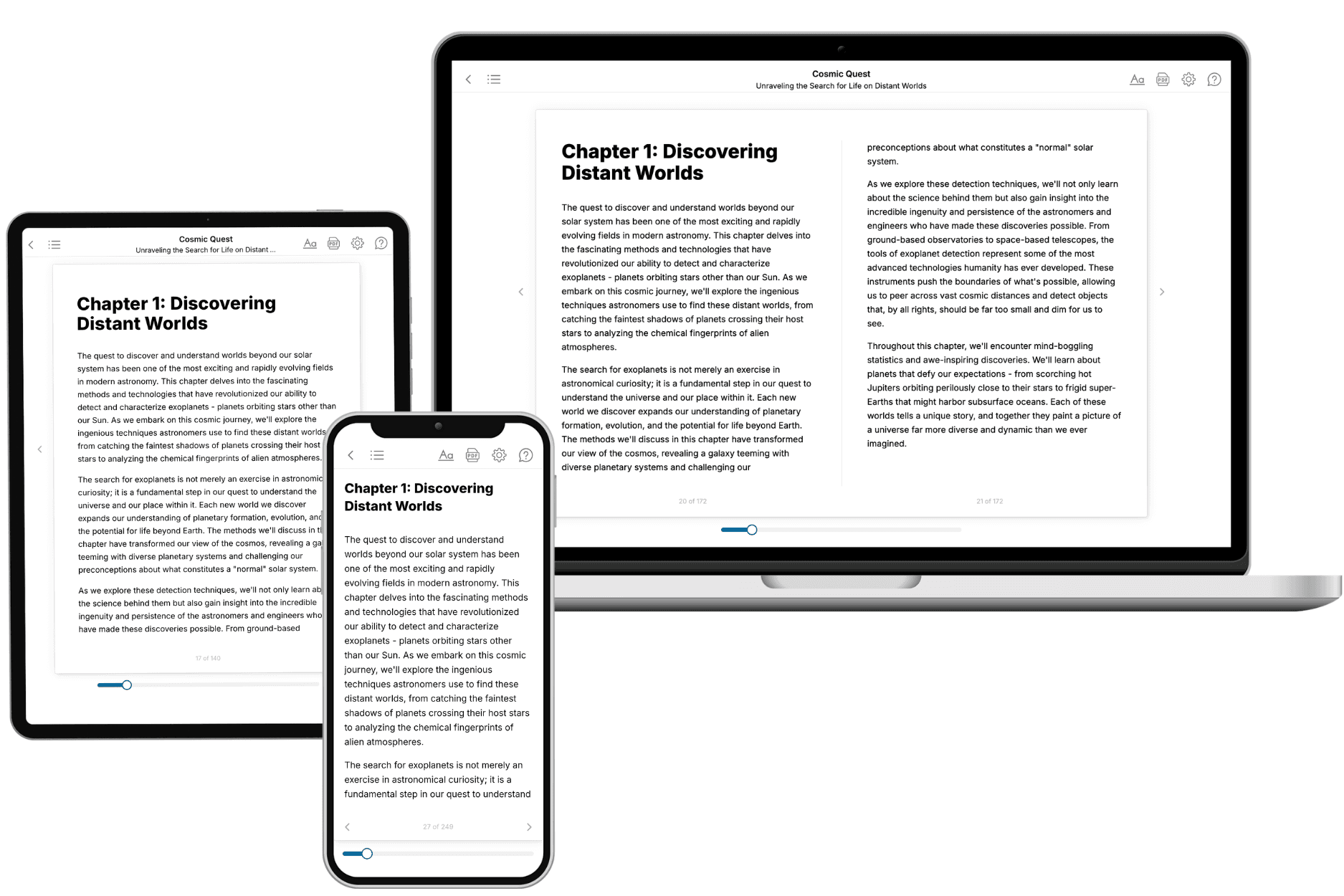
Your book is ready in 10 minutes. Read it online, download as EPUB or PDF, or send to Kindle.
Frequently asked questions
- What is TailoredRead?
TailoredRead creates complete, full-length nonfiction ebooks, written specifically for you. Tell us what you want to learn and why, and TailoredRead writes you a complete ebook on it, with charts, tables, and diagrams throughout. Read it online, on Kindle, or on any e-reader, or download it as a PDF or EPUB. Every book is written fresh the day you order it.
- How is the book tailored to me?
Before anything is written, you answer a few short questions about your goals, your background, and the topics you care about. Your book is then planned around your answers: written at your level, focused on your goals, and covering the topics you chose, instead of the one-size-fits-all book a store sells everyone.
- Will it read like generic AI content?
No. Your book isn't a chat transcript: it's planned chapter by chapter before a single word is written, told in a clear book voice, and explains ideas visually with charts, tables, and diagrams. After writing, every book goes through an editorial pass that polishes chapters so the book reads consistent from start to finish. Judge for yourself: browse thousands of sample books on our Explore Books page.
- How accurate is the content?
Our AI first checks whether your subject needs live research. Niche and fast-moving subjects are researched before writing, and the book plan and chapters are grounded in what it finds. After writing, every book goes through a quality pass that checks its facts and consistency, and researched books list their sources in a Notes section at the back.
- How long is the book?
You choose the length: Comprehensive (250-300 pages), Detailed (150-200 pages), Essential (70-100 pages), or Short (30-50 pages).
- Does the book include visuals?
Yes. Every book includes visual elements such as timelines, checklists, step-by-step guides, decision trees, comparison tables, and matrices, and many include bar charts. A typical book includes dozens of these visual elements.
- Can I read it on Kindle? What formats can I download?
Yes. Every book can be read in our online reader or downloaded as a PDF or EPUB. The EPUB can be opened with Kindle, Apple Books, Kobo, and any e-reader. The Commercial and Author licenses also include an editable Word (DOCX) and Markdown download.
- How much does it cost?
About the price of a regular ebook. The exact price depends on your book's length and complexity, from $2 for the shortest books to $35 for the most comprehensive, and it's shown when you review your book, before you commit to anything. Each book is a one-time purchase, yours to keep, no subscription. Licenses that let you share, teach, or publish your book range from $35.99 to $49.99.
- Can I preview the book before purchasing?
Before you pay, you'll see what your book will cover: the title, a detailed description, the estimated length, and the complete chapter-by-chapter table of contents, so you know what you're getting before you decide. The full text itself is written after you purchase.
- How long does it take to create a book?
About 10 minutes. You can start reading the opening chapters while the rest is still being written.