Nelson Mandela: The Man Behind the Legend
From Struggle to Reconciliation—A Life That Changed a Nation
Discover the complete story of Nelson Mandela—a man whose life redefined what it means to lead with integrity and purpose.
176 pages8 chaptersMay 20, 2026Biography
About this book
This biography takes you beyond the iconic image to reveal the personal struggles, strategic decisions, and moral convictions that shaped one of history's greatest leaders. You'll understand how a young lawyer became a revolutionary, how 27 years in prison strengthened rather than broke his spirit, and how he transformed a nation torn by racial division into a beacon of hope. Through detailed accounts of his family life, his relationships with key figures in the anti-apartheid movement, and his groundbreaking approach to reconciliation, you'll gain insight into the man behind the legend. This book explores the complexities of his presidency, his controversial decisions, and his enduring influence on global movements for justice. Whether you're studying African history, seeking inspiration from transformational leadership, or simply curious about one of the twentieth century's most remarkable figures, this biography provides the context, nuance, and human detail that bring Mandela's extraordinary life into focus.
Table of contents
- IntroductionWhy Mandela's Story Matters Today, What This Book Covers, Understanding South Africa's Historical ContextRead below
- Chapter 1: The Making of a LeaderBirth, Family, and Childhood in the Transkei, Education and Formative Influences, Arrival in Johannesburg and Early Legal Career
- Chapter 2: The Path to ActivismJoining the African National Congress, Understanding Apartheid and Its Impact, Early Campaigns and the Defiance Campaign
- Chapter 3: From Peaceful Protest to Armed ResistanceFormation of Umkhonto we Sizwe, Sabotage Strategy and Moral Justification, The Rivonia Trial and Arrest
- Chapter 4: 27 Years Behind BarsLife on Robben Island, Developing Philosophy and Inner Strength, Secret Negotiations and Path to Release
- Chapter 5: From Prison to PowerRelease and Immediate Challenges, Negotiating the Transition to Democracy, The 1994 Elections and Victory
- Chapter 6: Building a New NationInaugural Vision and Constitutional Framework, The Truth and Reconciliation Commission, Economic and Social Transformation Efforts
- Chapter 7: The Man Behind the IconMarriages, Relationships, and Family Dynamics, Personal Struggles and Sacrifices, Character Qualities and Personal Philosophy
- Chapter 8: Legacy and Later YearsStepping Down and Mentoring Successors, Global Advocacy and Humanitarian Work, Final Years and Enduring Influence
- ConclusionLessons in Leadership and Moral Courage, Mandela's Relevance in Today's World
- Further Reading and Resources
Introduction
There are very few figures in modern history who managed to hold an entire world's attention the way Nelson Rolihlahla Mandela did. He was a man who spent 27 years in prison, emerged without bitterness, and then led his country through one of the most peaceful and remarkable political transitions of the twentieth century. His story is not simply a biography of one man. It is the story of a nation's suffering, its resilience, and its extraordinary capacity for renewal. Understanding Mandela means understanding South Africa, and understanding South Africa means grappling with some of the most urgent questions about justice, power, and human dignity that the modern world has ever faced.
What makes Mandela's life so compelling is not just the scale of what he achieved, but the depth of what he endured to get there. He gave up his freedom, his family life, and decades of his most productive years to a cause he believed in completely. Yet the man who walked out of Victor Verster Prison on February 11, 1990, did not walk out broken or consumed by rage. He walked out with a clarity of purpose and a generosity of spirit that stunned even his closest allies. That transformation, from prisoner to president, from symbol to statesman, is one of the most powerful human stories ever told.
This book is designed to take you beyond the iconic images and the well-worn quotes. It is easy to reduce Mandela to a few famous moments: the raised fist, the colorful shirts, the Nobel Peace Prize. But the real Mandela was far more complex, more contradictory, and ultimately more interesting than any single image can capture. He was a strategist and a romantic, a disciplined lawyer and a passionate fighter, a man of deep personal warmth who could also be remote and difficult to know. This book explores all of those dimensions, drawing on historical records, his own writings, and the accounts of those who knew him best.
Before diving into the chapters that follow, it is worth pausing to understand the three foundational questions that shape this entire book. Why does Mandela's story still matter today? What exactly does this book cover, and how does it approach its subject? And what was the historical context of South Africa that made his life and choices so consequential? The three sections of this introduction address each of those questions in turn, giving you the framework you need to engage fully with everything that follows.
Why Mandela's Story Matters Today
It would be tempting to treat Mandela as a figure who belongs entirely to the past, a hero of a specific struggle in a specific country at a specific moment in history. But that would be a serious mistake. The questions his life raised, about how societies heal after deep injustice, about whether moral conviction can survive political power, about what it takes to lead without becoming corrupted by leadership, are as urgent now as they were in 1994. In fact, in a world increasingly defined by polarization and distrust, his example may be more relevant than ever.
Consider the challenge of reconciliation. When Mandela became president, South Africa was a country where the wounds of apartheid were raw and recent. Millions of Black South Africans had been systematically dispossessed, humiliated, and brutalized for decades. The temptation to pursue retributive justice was enormous and entirely understandable. Instead, Mandela championed a process of truth-telling and restorative justice through the Truth and Reconciliation Commission. That model has since been studied and adapted by societies emerging from conflict in Rwanda, Colombia, Northern Ireland, and beyond.[1] His approach was not naive. It was a carefully considered political and moral strategy, and its influence continues to shape how the world thinks about post-conflict healing.
Mandela also matters because of what his imprisonment demonstrated about the power of ideas. Governments that imprison dissidents often believe they are silencing them. In Mandela's case, the opposite happened. His 27 years on Robben Island turned him into a global symbol of resistance, and the campaign to free him became one of the most successful international solidarity movements in history. The lesson is not lost on activists and movements today: physical confinement cannot contain moral authority. His story is a reminder that ideas, when they are rooted in genuine justice, have a durability that no prison wall can contain.
There is also the question of leadership itself. Mandela's presidency was not without its failures and controversies. His government's early response to the HIV/AIDS crisis was widely criticized as inadequate, and the economic inequalities of apartheid proved far more resistant to change than many had hoped.[2] Studying those shortcomings honestly is just as important as celebrating his achievements. A sanitized version of Mandela does no one any favors. The full picture, including the compromises, the mistakes, and the limitations, is what makes his story genuinely instructive for anyone thinking seriously about leadership and governance.
Beyond politics, Mandela's personal story speaks to something deeply human. He was a man who loved deeply, who suffered profound personal losses, and who had to make agonizing choices between his family and his convictions. His marriages, his relationships with his children, and the personal cost of his long imprisonment are all part of a story that resonates far beyond the political sphere. These are universal themes: sacrifice, loyalty, love, and the price of living according to your principles. They are the reasons why people who have never set foot in South Africa feel a personal connection to his life.
Finally, Mandela matters because he demonstrated that change is possible. In the early 1980s, the apartheid regime seemed immovable. The South African government had the military, the economy, and the international support of powerful Western nations on its side. The idea that a peaceful transition to majority rule could happen within a decade seemed, to many observers, like wishful thinking. That it did happen, and that Mandela was at the center of making it happen, is a fact that should give anyone working for justice in difficult circumstances genuine reason for hope. His life is proof that the arc of history can bend, and that individuals can help bend it.
It always seems impossible until it's done.This quote, widely attributed to Mandela, captures something essential about his worldview: a refusal to accept that the present moment defines the limits of what is possible.
That spirit of determined optimism, grounded not in fantasy but in decades of hard strategic work, is perhaps the most transferable lesson his life offers. It applies to movements for racial justice, to campaigns for democratic reform, to anyone fighting an entrenched system that seems designed to resist change. Mandela's story does not promise easy victories. It promises that sustained, principled effort can produce outcomes that once seemed unimaginable.
What This Book Covers
This book is a comprehensive biography, but it is also something more than a simple chronological account of events. The goal is to give you not just the facts of Mandela's life, but the context, the analysis, and the human texture that make those facts meaningful. Each chapter is designed to illuminate a different dimension of his story, from his earliest years in the rural Transkei to his final years as a global elder statesman. Together, they build a portrait that is both historically grounded and personally revealing.
The book begins where Mandela's story begins: in the rolling hills of the Eastern Cape, in a small village called Mvezo, where he was born in 1918. Chapter 1 explores his childhood, his family background, and the traditional Xhosa culture that shaped his earliest understanding of leadership and community. It follows him through his education, his arrival in Johannesburg, and his early career as a lawyer. These formative years are often glossed over in shorter accounts of his life, but they are essential. The values and instincts he developed in those years stayed with him throughout everything that followed.
Chapters 2 and 3 cover his political awakening and his evolution from peaceful activist to advocate of armed resistance. This is one of the most morally complex periods of his life, and the book treats it with the seriousness it deserves. The decision to form Umkhonto we Sizwe (MK), the armed wing of the African National Congress (ANC), was not taken lightly. Understanding the reasoning behind it, and the specific historical circumstances that made it seem necessary, is crucial to understanding Mandela as a whole person rather than a simplified icon.
Chapter 4 is devoted entirely to his 27 years of imprisonment, because those years deserve that kind of sustained attention. Prison was not simply a gap in his life. It was a crucible in which his philosophy deepened, his patience was tested and refined, and his capacity for strategic thinking was honed. The chapter examines life on Robben Island in concrete detail, explores how he maintained his intellectual and moral life under brutal conditions, and traces the secret negotiations that eventually led to his release.
Chapters 5 and 6 cover the transition to democracy and his presidency from 1994 to 1999. These chapters examine both the extraordinary achievements of that period and its genuine limitations. The book does not shy away from difficult questions about economic policy, the HIV/AIDS crisis, or the compromises that were made during the negotiated transition. A balanced assessment of his presidency is more useful, and ultimately more respectful, than an uncritical celebration.
Chapter 7 steps back from the political narrative to focus on Mandela as a private person. His three marriages, his relationships with his children, and the personal sacrifices demanded by his public life are all examined here. This chapter draws on personal accounts, letters, and memoirs to reveal the man behind the public figure. It is, in many ways, the most intimate chapter in the book, and it is essential reading for anyone who wants to understand Mandela fully.
Chapter 8 covers his post-presidential years, his global advocacy work, and his enduring influence on world affairs. The conclusion then draws together the key lessons of his life, examining what his story means for leadership, for justice movements, and for the ongoing project of building more equitable societies. Throughout all of this, the book maintains a consistent commitment to accuracy, nuance, and respect for the complexity of the historical record.
A note on sources: this book draws on a wide range of primary and secondary materials, including Mandela's own autobiography Long Walk to Freedom, the extensive scholarship on South African history, and the accounts of key figures who worked alongside him.[3] Where historians disagree, those disagreements are acknowledged. Where the historical record is incomplete, that is noted too. The goal is not to produce a hagiography, but to offer a rigorous, honest, and deeply human account of one of the most significant lives of the twentieth century.
Understanding South Africa's Historical Context
To understand Nelson Mandela, you need to understand the world he was born into. South Africa in 1918 was already a deeply unequal society, shaped by centuries of colonial conquest, land dispossession, and racial stratification. The country had been formally unified as the Union of South Africa in 1910, but that union was built on a foundation of white minority rule. The vast majority of the population, Black, Coloured, and Indian South Africans, were systematically excluded from political power, economic opportunity, and basic civil rights.
The roots of this system go back to the arrival of Dutch settlers, known as the Voortrekkers and later as Afrikaners, in the seventeenth century, and to the subsequent waves of British colonialism that followed. The discovery of diamonds in 1867 and gold in 1886 transformed South Africa into one of the most economically valuable territories on earth, and intensified the competition for control over its land and labor.[4] The Anglo-Boer Wars of 1880 to 1881 and 1899 to 1902 were fought between British imperial forces and Afrikaner republics, but the interests of Black South Africans were almost entirely ignored in the eventual settlement. The 1913 Natives Land Act, passed just three years after unification, restricted Black South Africans to owning land in only 7 percent of the country's territory, a figure that was later expanded to 13 percent. This single piece of legislation dispossessed millions of people and created the conditions for the migrant labor system that would define South African society for generations.
The formal system of apartheid, which means "separateness" in Afrikaans, was introduced in 1948 when the National Party came to power under D.F. Malan. But it is important to understand that apartheid was not a sudden invention. It was the codification and intensification of racial segregation practices that had been building for decades. What the National Party did was systematize those practices into a comprehensive legal framework designed to maintain white minority control over every aspect of South African life. The key legislation included:
- The Population Registration Act (1950): Classified every South African by race, creating the legal categories of White, Coloured, Indian, and Native (later called Bantu).
- The Group Areas Act (1950): Designated separate residential areas for different racial groups, forcing millions of people from their homes.
- The Suppression of Communism Act (1950): Gave the government sweeping powers to ban organizations and individuals deemed to be communist, a definition broad enough to include virtually any form of political opposition.
- The Bantu Education Act (1953): Created a deliberately inferior education system for Black South Africans, designed, in the words of its architect Hendrik Verwoerd, to prepare them for a life of manual labor rather than intellectual or professional achievement.
- The Pass Laws: Required Black South Africans to carry identity documents at all times and restricted their movement within the country.
The human cost of these laws was staggering. Families were separated by the migrant labor system. Communities were bulldozed and relocated to distant townships. Children received an education designed to limit rather than expand their horizons. Political opposition was met with banning orders, imprisonment, torture, and assassination. The apartheid state was not simply unjust in an abstract sense. It was a machinery of daily humiliation and violence that touched every aspect of Black South African life from birth to death.
It is also important to understand the international dimension of apartheid. For much of the Cold War era, South Africa's white minority government enjoyed significant support from Western powers, including the United States and the United Kingdom, who valued it as a bulwark against Soviet influence in Africa.[5] This support was not unconditional, and it eroded significantly over time, particularly after the Soweto Uprising of 1976 and the international sanctions campaigns of the 1980s. But for decades, the apartheid government was able to count on a degree of international legitimacy that made the task of the liberation movement far more difficult. Understanding this context helps explain why the ANC's strategy evolved over time, and why the decision to pursue armed resistance was seen by many within the movement as a necessary response to a situation where peaceful protest had been met with violent suppression.
The African National Congress itself was founded in 1912, making it one of the oldest liberation movements in Africa. Its early decades were characterized by a relatively moderate, petition-based approach to political change, rooted in the belief that the injustices of racial discrimination could be addressed through legal and constitutional means. That belief was tested repeatedly and ultimately shattered by events like the Sharpeville Massacre of March 21, 1960, when South African police opened fire on a peaceful crowd protesting the pass laws, killing 69 people and wounding 180 more.[6] The massacre was a turning point. The government banned the ANC shortly afterward, forcing it underground and into exile, and setting the stage for the shift toward armed resistance that Mandela would help lead.
The demographic reality of South Africa also shaped the nature of the struggle in important ways. Black South Africans constituted roughly 75 percent of the population, yet they were denied virtually all political rights. The Coloured and Indian communities, who together made up another 10 to 12 percent of the population, faced their own forms of discrimination and played significant roles in the anti-apartheid movement. The ANC's commitment to a non-racial vision of South Africa, one in which all citizens regardless of race would have equal rights, was both a moral position and a strategic one. It distinguished the movement from narrower forms of African nationalism and helped build the broad coalitions that ultimately made the transition to democracy possible.
Understanding this history is not just background information. It is the essential context without which Mandela's choices, his strategies, and his achievements cannot be properly understood or fairly evaluated. He did not operate in a vacuum. He was a product of his time and place, shaped by the specific injustices of the society he grew up in, and responding to the specific political realities of the world he navigated. The chapters that follow will return to this historical context repeatedly, because it is the soil in which every aspect of his story is rooted.
One final point is worth making here. South Africa's history is not simply a story of oppression and resistance. It is also a story of extraordinary human creativity, cultural richness, and communal solidarity. The Xhosa culture that shaped Mandela's early life, the vibrant intellectual and artistic communities of Sophiatown in the 1950s, the grassroots organizing of the women's anti-pass campaigns, the student movements of the 1970s: all of these are part of the same story. Mandela himself was deeply aware of this richness, and his vision for South Africa was always about more than ending apartheid. It was about creating the conditions in which all of that human potential could finally flourish freely. That vision, and the long, painful, ultimately triumphant journey toward it, is what this book is about.
Notes
Introduction
- 1. Priscilla B. Hayner, Unspeakable Truths, Routledge, 2011
- 2. William Mervin Gumede, Thabo Mbeki and the Battle for the Soul of the ANC, Zebra Press, 2005
- 3. Nelson Mandela, Long Walk to Freedom: The Autobiography of Nelson Mandela, Little, Brown and Company, 1994
- 4. Leonard Thompson, A History of South Africa, Yale University Press, 2001
- 5. Robert Kinloch Massie, Loosing the Bonds, Doubleday, 1997
- 6. Tom Lodge, Black Politics in South Africa Since 1945, Longman, 1983
This is the end of the free sample. The full book has 8 chapters.
Want this book written for you?
Tell us your goals and background, and get your own version of this book, tailored by AI to you.


Benefits of AI-tailored books
- Read one book, not ten:
- all the Biography knowledge you need, gathered into a single book.
- Save days of learning:
- tell us your goals, choose your topics, and the whole book is built around them.
- Learn effortlessly:
- Biography book written for your specific background and expertise.
- Understand at a glance:
- includes charts, tables, timelines, checklists, decision trees, and more.
- Stay current:
- written the day you order it, not years ago.
- Trust what you read:
- every book is checked for accuracy, with real research when your subject needs it.
Create your unique book in 3 steps
- 1. Select your focus
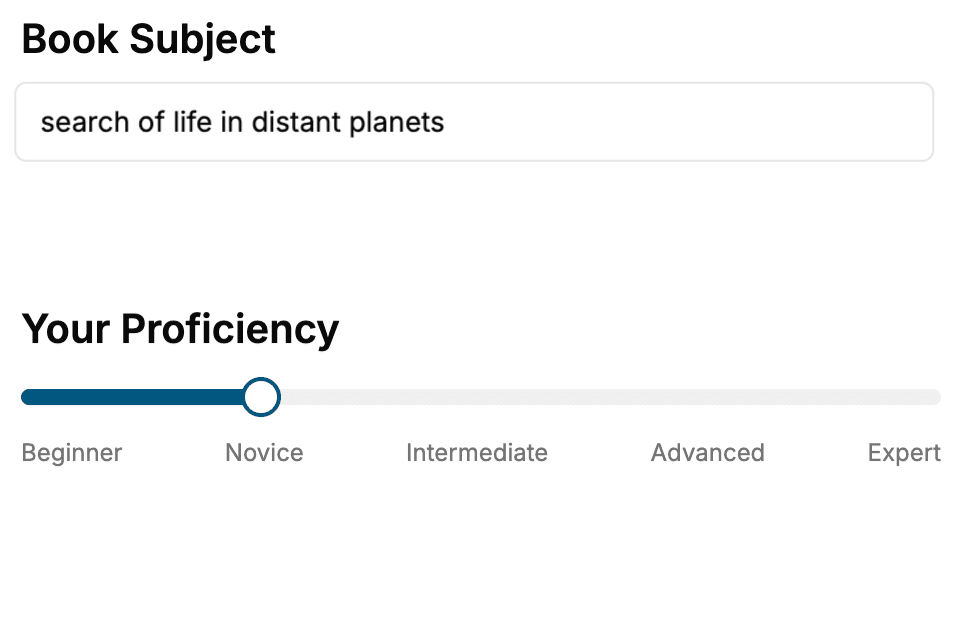
Select the focus of your Biography book and share your background
- 2. Personalize your book
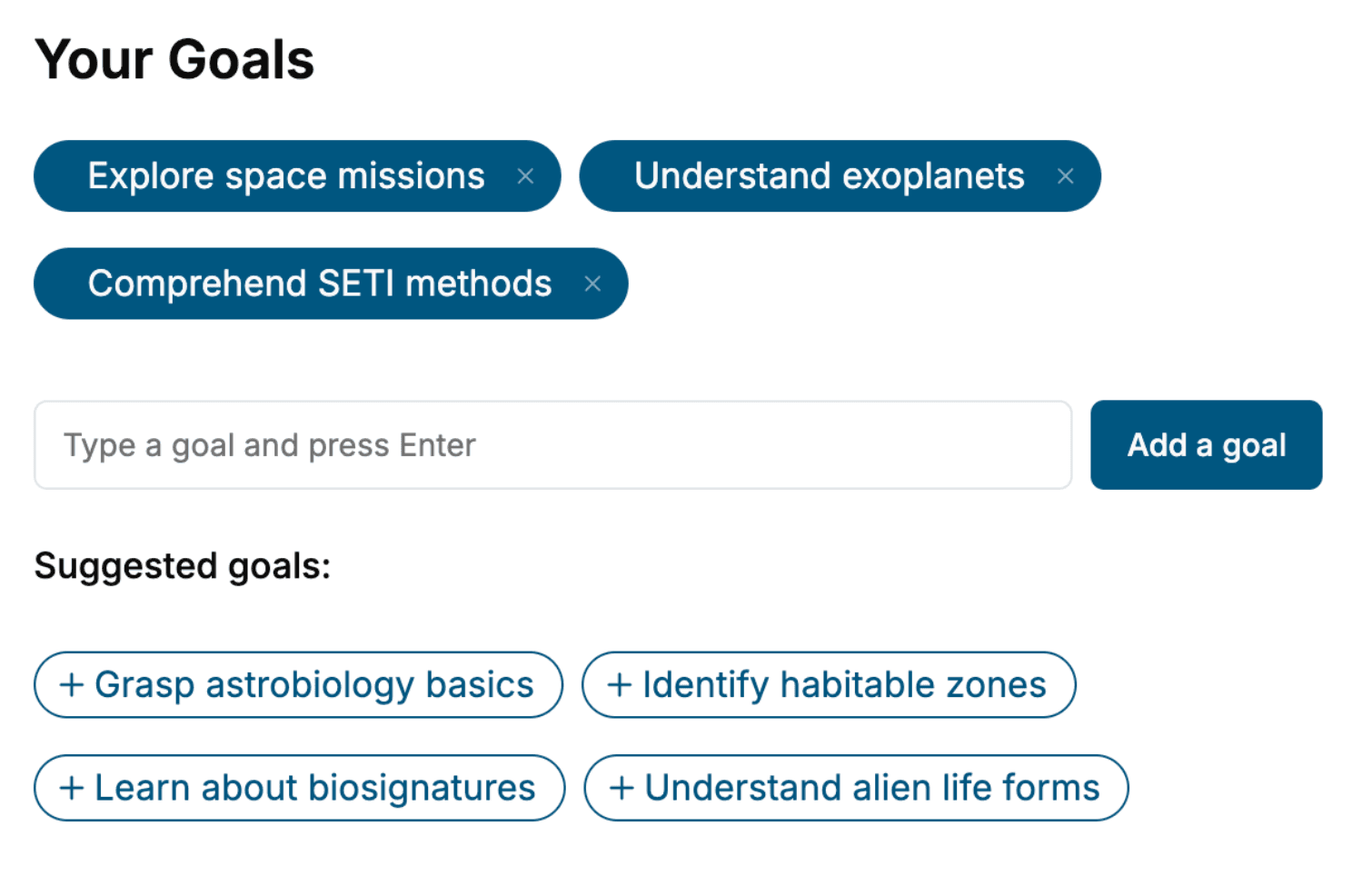
Specify your goals and choose sub-topics to include
- 3. Get your tailored book
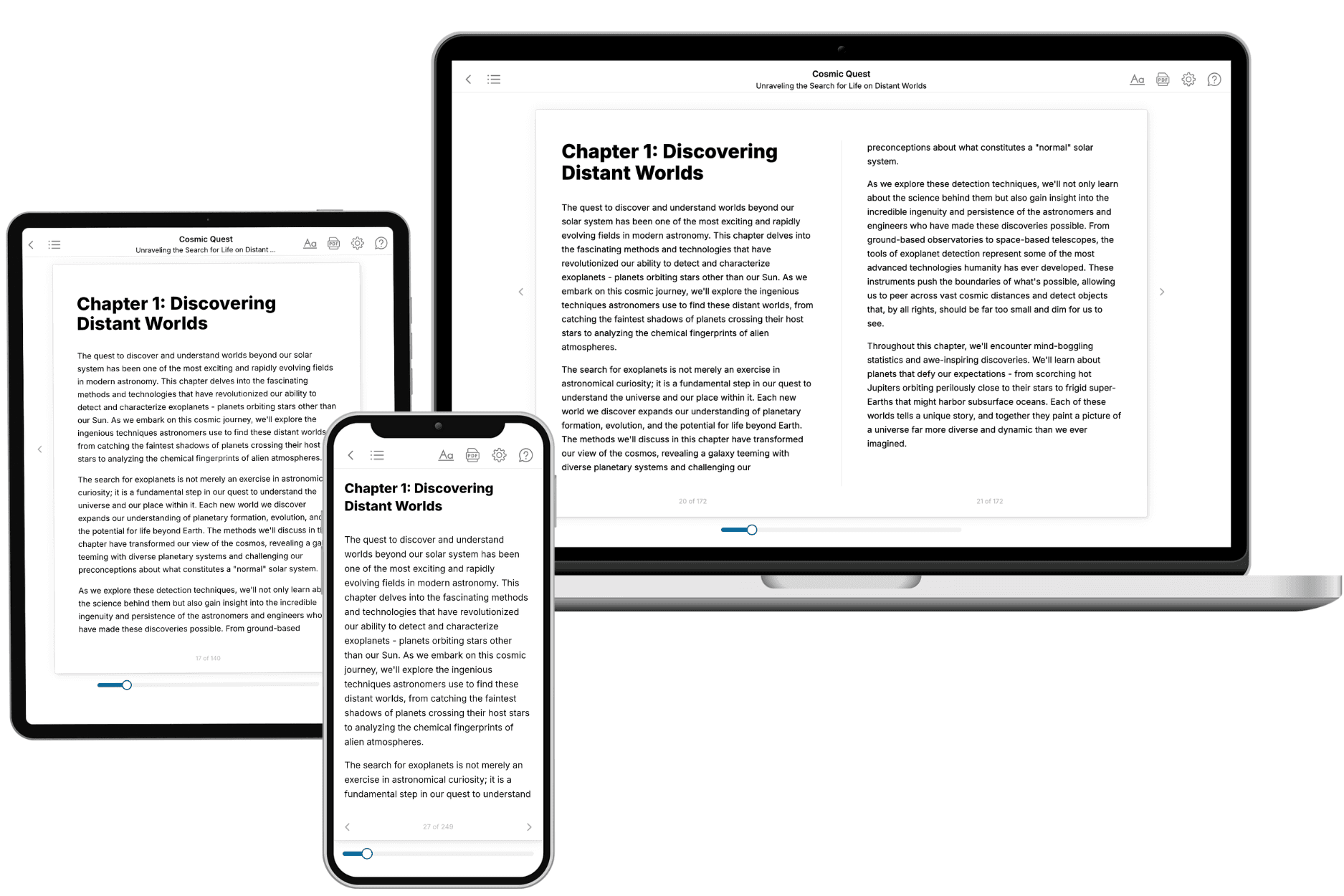
Your book is ready in 10 minutes. Read it online, download as EPUB or PDF, or send to Kindle.
Frequently asked questions
- What is TailoredRead?
TailoredRead creates complete, full-length nonfiction ebooks, written specifically for you. Tell us what you want to learn and why, and TailoredRead writes you a complete ebook on it, with charts, tables, and diagrams throughout. Read it online, on Kindle, or on any e-reader, or download it as a PDF or EPUB. Every book is written fresh the day you order it.
- How is the book tailored to me?
Before anything is written, you answer a few short questions about your goals, your background, and the topics you care about. Your book is then planned around your answers: written at your level, focused on your goals, and covering the topics you chose, instead of the one-size-fits-all book a store sells everyone.
- Will it read like generic AI content?
No. Your book isn't a chat transcript: it's planned chapter by chapter before a single word is written, told in a clear book voice, and explains ideas visually with charts, tables, and diagrams. After writing, every book goes through an editorial pass that polishes chapters so the book reads consistent from start to finish. Judge for yourself: browse thousands of sample books on our Explore Books page.
- How accurate is the content?
Our AI first checks whether your subject needs live research. Niche and fast-moving subjects are researched before writing, and the book plan and chapters are grounded in what it finds. After writing, every book goes through a quality pass that checks its facts and consistency, and researched books list their sources in a Notes section at the back.
- How long is the book?
You choose the length: Comprehensive (250-300 pages), Detailed (150-200 pages), Essential (70-100 pages), or Short (30-50 pages).
- Does the book include visuals?
Yes. Every book includes charts, tables, and diagrams: timelines, checklists, step-by-step guides, decision trees, comparison tables, matrices, and bar charts. A typical book includes dozens of these visual elements.
- Can I read it on Kindle? What formats can I download?
Yes. Every book can be read in our online reader or downloaded as a PDF or EPUB. The EPUB can be opened with Kindle, Apple Books, Kobo, and any e-reader. The Commercial and Author licenses also include an editable Word (DOCX) and Markdown download.
- How much does it cost?
About the price of a regular ebook. The exact price depends on your book's length and complexity, from $2 for the shortest books to $35 for the most comprehensive, and it's shown when you review your book, before you commit to anything. Each book is a one-time purchase, yours to keep, no subscription. Licenses that let you share, teach, or publish your book range from $35.99 to $49.99.
- Can I preview the book before purchasing?
Before you pay, you'll see what your book will cover: the title, a detailed description, the estimated length, and the complete chapter-by-chapter table of contents, so you know what you're getting before you decide. The full text itself is written after you purchase.
- How long does it take to create a book?
About 10 minutes. You can start reading the opening chapters while the rest is still being written.