Neural Machine Translation in Practice
Building Production-Ready Multilingual Systems from Architecture to Deployment
Master the complete lifecycle of neural machine translation systems—from understanding transformer architectures to deploying production pipelines that handle real-world complexity.
253 pages12 chaptersNov 5, 2025Machine Translation
About this book
This comprehensive guide bridges the gap between academic NMT research and practical implementation, drawing on both linguistic expertise and machine learning principles. You'll learn how attention mechanisms enable accurate translations, how to optimize multilingual models for diverse language pairs, and how to build evaluation frameworks that go beyond standard metrics. Discover techniques for handling low-resource languages, implementing domain adaptation, and managing terminology at scale. Understand the economic trade-offs between model sophistication and computational costs, and learn how to integrate human expertise into automated workflows. Whether you're building systems for specific domains or creating general-purpose translators, this book provides the architectural knowledge, technical strategies, and practical workflows needed to create translation systems that perform reliably in production environments.
Table of contents
- IntroductionWhy Neural Machine Translation Matters Today, What You'll Learn in This Book, How to Use This Guide Effectively, Prerequisites and Background KnowledgeRead below
- Chapter 1: Foundations of Neural Machine TranslationEvolution from Rule-Based to Neural Approaches, Sequence-to-Sequence Models Explained, Understanding Encoder-Decoder Architecture, Advantages of Neural Over Traditional Methods
- Chapter 2: Transformer Architecture and Attention MechanismsThe Attention Mechanism: Core Concepts, Self-Attention and Multi-Head Attention, Transformer Encoder Architecture, Transformer Decoder and Cross-Attention, Positional Encoding and Sequence Representation
- Chapter 3: Data Preparation and PreprocessingMultilingual Corpus Alignment Techniques, Tokenization Strategies: Byte-Pair Encoding and Beyond, Morphological Analysis for Complex Languages, Cleaning and Normalizing Parallel Corpora
- Chapter 4: Training Neural Machine Translation ModelsContextual Word Embeddings and Representations, Building and Optimizing Training Pipelines, Loss Functions and Optimization Strategies, Convergence, Hyperparameter Tuning, and Regularization
- Chapter 5: Multilingual and Cross-Lingual ModelsMultilingual BERT Fine-Tuning for Translation, Cross-Lingual Transfer Learning Principles, Optimizing Multilingual Model Performance, Handling Language Pair Asymmetry Challenges
- Chapter 6: Advanced Training TechniquesBack-Translation for Data Augmentation, Zero-Shot Translation Techniques, Pivot-Based Translation for Low-Resource Pairs, Handling Rare Word Translation and OOV Issues
- Chapter 7: Evaluation and Quality MetricsBLEU Score Computation and Limitations, Beyond BLEU: Alternative Translation Quality Metrics, Designing Custom Evaluation Metrics, Building Comprehensive Evaluation Frameworks
- Chapter 8: Domain Adaptation and SpecializationUnderstanding Domain-Specific Translation Challenges, Terminology Management Systems and Glossaries, Domain Adaptation Techniques and Fine-Tuning, Addressing Linguistic Divergence in Specialized Domains
- Chapter 9: Low-Resource Language TranslationUnique Challenges of Low-Resource Language Pairs, Transfer Learning Strategies for Scarce Data, Data Augmentation Beyond Back-Translation, Leveraging Multilingual Models for Low-Resource Languages
- Chapter 10: Production Deployment and InferenceNeural Machine Translation Inference Optimization, Production MT Pipeline Design and Architecture, Real-Time Translation Deployment Strategies, Scalability, Monitoring, and Performance Tracking
- Chapter 11: Human-in-the-Loop and Continuous ImprovementHuman-in-the-Loop Translation Workflows, Integrating Interpreter Expertise in NMT Systems, Building Feedback Loops for Model Improvement, Continuous Learning and Model Updates
- Chapter 12: Machine Translation Economics and Business StrategyCost Analysis: Computation, Data, and Infrastructure, ROI Calculation and Business Value Assessment, Trade-offs Between Model Complexity and Performance, Strategic Decisions: Build vs. Buy vs. Hybrid Approaches
- ConclusionKey Takeaways and Next Steps, Future Directions in Neural Machine Translation
- Glossary
- Further Reading and Resources
Introduction
Machine translation has evolved from a distant dream to an everyday reality that touches billions of lives. When you translate a restaurant menu abroad, communicate with international colleagues, or access content in languages you don't speak, neural machine translation systems work invisibly behind the scenes. These systems represent one of the most successful applications of deep learning, transforming how humans communicate across linguistic boundaries. Yet building production-ready translation systems requires far more than understanding algorithms—it demands a synthesis of linguistic knowledge, machine learning expertise, and practical engineering skills.
Your background as an interpreter gives you a unique advantage in this field. You understand the nuances that make translation challenging: idiomatic expressions that resist literal conversion, cultural context that shapes meaning, and the subtle differences between adequate and excellent translations. This linguistic intuition, combined with your economics training, positions you to make informed decisions about the trade-offs inherent in building translation systems. You can evaluate not just whether a model works, but whether it delivers sufficient value given its computational costs and data requirements.
This book bridges the gap between academic research and practical implementation. While neural machine translation papers often focus on incremental improvements to benchmark scores, production systems must handle messy real-world data, operate within budget constraints, and integrate with existing workflows. You'll learn how to navigate these challenges by understanding both the theoretical foundations and the practical techniques that make translation systems work reliably at scale. The goal isn't just to train models that achieve high BLEU scores, but to build systems that solve real translation problems effectively and economically.
Why Neural Machine Translation Matters Today
Neural machine translation has fundamentally changed the economics of language services. Traditional human translation costs between $0.10 and $0.30 per word, making it prohibitively expensive for many applications[1]. Neural systems can translate millions of words per hour at a fraction of this cost, enabling use cases that were previously impossible. E-commerce platforms now offer product descriptions in dozens of languages. Customer support teams handle inquiries across linguistic boundaries. Content creators reach global audiences without manual translation bottlenecks. This shift hasn't eliminated human translators—instead, it has changed their role from translating everything to post-editing machine output and handling specialized content where quality is paramount.
The technical breakthrough that enabled this transformation came from attention mechanisms and transformer architectures. Before 2017, machine translation relied on recurrent neural networks that processed sentences sequentially, struggling with long-range dependencies and computational efficiency. The transformer architecture introduced in the landmark paper "Attention Is All You Need" replaced sequential processing with parallel attention mechanisms[2]. This architectural innovation made it possible to train larger models on more data, leading to dramatic quality improvements. Modern systems like Google Translate, DeepL, and Microsoft Translator all build on these transformer foundations, though they differ significantly in their training data, optimization strategies, and deployment architectures.
Understanding neural machine translation matters because language barriers remain one of the most significant obstacles to global communication and commerce. Consider these scenarios where translation quality directly impacts outcomes:
- Healthcare: Medical records, patient instructions, and clinical trial documentation require accurate translation where errors can have life-threatening consequences
- Legal services: Contracts, patents, and regulatory filings demand precision and consistency across languages
- E-commerce: Product descriptions, reviews, and customer communications need translation that maintains persuasive intent and cultural appropriateness
- Technical documentation: Software interfaces, user manuals, and API documentation require terminology consistency and technical accuracy
- Content localization: Marketing materials, educational content, and entertainment media need adaptation that preserves tone and cultural relevance
The multilingual nature of modern translation systems creates both opportunities and challenges. A single model can now handle translation between dozens or even hundreds of language pairs, sharing knowledge across languages through transfer learning. This multilingual capability is particularly valuable for low-resource languages that lack large parallel corpora. A model trained on high-resource pairs like English-French can transfer some of its knowledge to improve translation quality for low-resource pairs like English-Swahili. However, this sharing comes with trade-offs—multilingual models must balance capacity across languages, and high-resource pairs sometimes see reduced performance compared to dedicated bilingual models.
From an economic perspective, neural machine translation represents a classic build-versus-buy decision with significant strategic implications. Cloud translation APIs from major providers offer immediate access to high-quality translation at predictable per-character pricing. Building custom systems requires substantial upfront investment in data collection, model training, and infrastructure, but offers greater control over quality, terminology, and data privacy. The optimal choice depends on your specific requirements:
- Translation volume and cost sensitivity
- Domain specialization needs and terminology requirements
- Data privacy and security constraints
- Language pair coverage and quality expectations
- Integration requirements with existing systems
- Need for continuous improvement and customization
The field continues to evolve rapidly, with new architectures, training techniques, and deployment strategies emerging regularly. Large language models like GPT-4 and PaLM have demonstrated impressive translation capabilities as a byproduct of their general language understanding, raising questions about the future of specialized translation models. Techniques like prompt engineering and few-shot learning offer new approaches to domain adaptation without extensive fine-tuning. Meanwhile, efficiency improvements in model compression, quantization, and distillation make it increasingly feasible to deploy sophisticated translation systems on resource-constrained devices. Staying current with these developments while maintaining focus on production reliability requires a solid foundation in core principles.
Your interpreter background provides crucial context for evaluating translation quality beyond automated metrics. You know that BLEU scores, while useful for benchmarking, don't capture many aspects of translation quality that matter in practice. Fluency, adequacy, terminology consistency, cultural appropriateness, and preservation of tone all contribute to whether a translation serves its intended purpose. Building systems that optimize for real-world quality rather than just benchmark performance requires incorporating human judgment into evaluation frameworks and maintaining feedback loops that capture quality issues automated metrics miss. This human-centered approach to machine translation distinguishes production systems from research prototypes.
What You'll Learn in This Book
This book takes you through the complete lifecycle of building neural machine translation systems, from understanding foundational architectures to deploying production pipelines. You'll start with the theoretical foundations that make modern translation possible, then progress through practical techniques for training, evaluating, and deploying systems that handle real-world complexity. Each chapter builds on previous concepts while remaining focused on actionable knowledge you can apply immediately. The progression moves from understanding how translation models work to building systems that work reliably in production environments.
The early chapters establish the architectural foundations you need to understand modern translation systems. You'll learn how sequence-to-sequence models with attention mechanisms enable neural translation, why transformer architectures replaced recurrent approaches, and how encoder-decoder structures process source sentences to generate target translations. These aren't just theoretical concepts—understanding attention mechanisms helps you diagnose why models struggle with certain sentence structures, while knowledge of positional encoding explains how transformers handle word order without recurrence. You'll see concrete examples of how these components work together, with visualizations that make abstract concepts tangible.
Data preparation receives extensive coverage because it's where many production systems succeed or fail. You'll learn practical techniques for:
- Aligning parallel corpora and handling noisy web-scraped data
- Implementing tokenization strategies including byte-pair encoding and SentencePiece
- Performing morphological analysis for morphologically rich languages
- Cleaning and normalizing text while preserving important linguistic features
- Handling special cases like numbers, dates, named entities, and formatting
- Building preprocessing pipelines that scale to millions of sentence pairs
The training chapters cover both standard approaches and advanced techniques for challenging scenarios. You'll learn how to build efficient training pipelines, select appropriate loss functions and optimization strategies, and tune hyperparameters for convergence. Beyond basic training, you'll explore techniques specifically designed for difficult translation scenarios: back-translation for data augmentation when parallel data is scarce, zero-shot translation for language pairs without direct training data, and pivot-based approaches that route translation through intermediate languages. Each technique includes guidance on when to apply it and what trade-offs it involves.
Multilingual and cross-lingual models receive dedicated attention because they're increasingly important in production systems. You'll understand how to fine-tune multilingual BERT for translation tasks, leverage cross-lingual transfer learning to improve low-resource language pairs, and optimize multilingual models to balance performance across diverse languages. The chapter addresses practical challenges like language pair asymmetry, where translation quality varies significantly depending on direction, and capacity allocation, where high-resource languages can dominate model parameters at the expense of low-resource pairs. You'll learn strategies for mitigating these issues through careful training design and evaluation.
Evaluation goes far beyond computing BLEU scores. You'll learn how to design comprehensive evaluation frameworks that capture the aspects of quality that matter for your specific use case. This includes understanding the strengths and limitations of automated metrics like BLEU, METEOR, and chrF, implementing human evaluation protocols that provide reliable quality assessments, and designing custom metrics that align with your quality requirements. You'll see examples of evaluation frameworks for different domains, from technical documentation where terminology consistency matters most to marketing content where tone preservation is critical. The goal is to build evaluation systems that guide model development toward real-world quality improvements.
Domain adaptation and specialization address the reality that generic translation models often underperform in specialized contexts. You'll learn how to build terminology management systems that ensure consistent translation of domain-specific terms, implement fine-tuning strategies that adapt general models to specialized domains, and handle linguistic divergence where source and target languages structure information differently. The chapter includes case studies showing how domain adaptation improves translation quality for technical documentation, legal contracts, and medical records. You'll understand when domain adaptation is worth the investment and how to implement it efficiently.
The production deployment chapters focus on the engineering challenges of running translation systems reliably at scale. You'll learn techniques for optimizing inference speed through model quantization, distillation, and efficient serving architectures. The coverage includes designing production pipelines that handle preprocessing, translation, and post-processing efficiently, implementing real-time translation with acceptable latency, and building monitoring systems that detect quality degradation before it impacts users. You'll see examples of production architectures from companies running translation at scale, with specific guidance on infrastructure choices, scaling strategies, and cost optimization.
Human-in-the-loop workflows recognize that fully automated translation isn't always appropriate or sufficient. You'll learn how to design systems that integrate human expertise effectively, whether through post-editing workflows, quality assurance processes, or active learning systems that identify uncertain translations for human review. Your interpreter background makes this chapter particularly relevant—you'll see how to structure workflows that leverage machine translation for efficiency while maintaining human oversight for quality. The chapter includes frameworks for deciding when human involvement is necessary and how to structure it for maximum efficiency.
The economics chapter addresses the business decisions that determine whether translation systems deliver value. You'll learn how to calculate the total cost of ownership for different approaches, including data acquisition, computational resources, development effort, and ongoing maintenance. The chapter provides frameworks for ROI calculation that account for both direct cost savings and indirect benefits like faster time-to-market or expanded market reach. You'll understand the trade-offs between model complexity and performance, helping you make informed decisions about when sophisticated approaches justify their additional costs. This economic perspective, grounded in your economics background, helps you build systems that deliver business value, not just technical sophistication.
How to Use This Guide Effectively
This book is designed for progressive learning, with each chapter building on concepts introduced earlier. However, your existing knowledge and specific goals may make some chapters more immediately relevant than others. If you're already familiar with basic neural network concepts and want to focus on translation-specific techniques, you might skim the foundational chapters and dive deeper into domain adaptation or low-resource translation. If you're primarily interested in deployment and production concerns, you might read the architecture chapters for context but focus your detailed study on the later chapters covering inference optimization and production pipelines.
Each chapter follows a consistent structure designed to support different learning styles and use cases:
- Conceptual explanations establish the theoretical foundation and explain why techniques work
- Concrete examples demonstrate concepts with specific scenarios and realistic data
- Implementation guidance provides actionable steps for applying techniques in practice
- Trade-off discussions help you understand when to use different approaches
- Common pitfalls highlight mistakes to avoid based on real-world experience
- Further exploration points to resources for deeper investigation of specific topics
The code examples and technical details assume you're comfortable with Python and have basic familiarity with machine learning frameworks like PyTorch or TensorFlow. You don't need to be an expert programmer, but you should be able to read and understand code that implements the concepts discussed. When specific implementation details matter for understanding, the text includes code snippets with explanations. For complete implementations, references point to open-source projects and repositories where you can see production-quality code. The focus remains on understanding concepts and making informed decisions rather than memorizing API details that change with framework versions.
Practical exercises appear throughout the book, designed to reinforce concepts through hands-on application. These exercises range from analyzing existing translation outputs to identify quality issues, to implementing specific components like tokenizers or evaluation metrics, to designing complete systems for hypothetical scenarios. You'll get the most value by actually working through these exercises rather than just reading them. Many exercises build on each other, creating a progression where you gradually build more sophisticated capabilities. Consider maintaining a project repository where you implement these exercises, creating a portfolio of translation system components you can reference and build upon.
The book includes numerous references to research papers, open-source projects, and production systems. These references serve multiple purposes: they provide evidence for claims about what works in practice, they point you to implementations you can study and adapt, and they help you stay current as the field evolves. When a reference is marked as particularly important, it's worth taking the time to read the original source. Many breakthrough papers in neural machine translation are surprisingly readable, and understanding them deeply provides insights that summaries can't capture. Building a habit of reading primary sources will serve you well as you continue developing expertise.
Consider creating a learning project that you work on throughout the book. This could be building a translation system for a specific language pair you're interested in, adapting a general model to a domain you know well, or implementing a complete production pipeline for a realistic use case. Having a concrete project provides context for the concepts you're learning and helps you understand which techniques matter most for your specific goals. Your project doesn't need to be novel or groundbreaking—the goal is to apply concepts in a realistic context where you encounter the practical challenges that make theoretical knowledge concrete.
The glossary at the end of the book defines technical terms and acronyms used throughout. Neural machine translation draws terminology from multiple fields—linguistics, machine learning, natural language processing, and software engineering—and it's easy to get lost in jargon. When you encounter an unfamiliar term, check the glossary for a concise definition and references to where the concept is explained in detail. The glossary also serves as a quick reference when you return to the book later to look up specific techniques or concepts.
Discussion of trade-offs appears throughout the book because there are rarely universal best practices in machine translation. The optimal approach depends on your specific constraints: available data, computational budget, quality requirements, latency tolerance, and domain characteristics. Rather than prescribing single solutions, the book helps you understand the implications of different choices so you can make informed decisions for your context. When you see trade-off discussions, consider how they apply to your specific situation. What constraints matter most? Which trade-offs are you willing to make? This analytical approach, drawing on your economics background, helps you build systems that optimize for your actual goals rather than abstract ideals.
Finally, remember that building production translation systems is an iterative process. Your first system won't be perfect, and that's expected. The goal is to build something that works, measure its performance, identify the most significant problems, and improve systematically. This book provides the knowledge you need to make each iteration more effective, but experience comes from actually building systems and learning from what works and what doesn't. Embrace the iterative nature of the work, and focus on making steady progress rather than achieving perfection immediately.
Prerequisites and Background Knowledge
This book assumes you have intermediate knowledge of machine learning concepts and basic familiarity with neural networks. You should understand what training and inference mean, how gradient descent optimizes model parameters, and what concepts like overfitting and regularization address. You don't need deep expertise in neural network architectures, but you should be comfortable with the idea that models learn patterns from data through optimization. If terms like "loss function," "learning rate," and "backpropagation" are completely unfamiliar, consider reviewing introductory machine learning materials before diving into translation-specific content.
Your linguistics background from interpretation work provides valuable intuition about language structure and translation challenges. You understand concepts like syntax, morphology, and semantics even if you don't use these technical terms regularly. You know that languages differ in fundamental ways—word order, grammatical gender, verb conjugation patterns, and how they express concepts like time and causation. This linguistic knowledge helps you understand why certain translation problems are difficult and why naive approaches fail. The book builds on this intuition, connecting your practical translation experience to the technical mechanisms that neural models use to handle linguistic complexity.
Programming proficiency in Python is essential for working with modern machine learning frameworks. You should be comfortable reading and writing Python code, understanding concepts like functions, classes, and data structures. Experience with NumPy for numerical computing is helpful, as many machine learning operations involve array manipulations. You don't need to be a software engineer, but you should be able to implement algorithms, debug code, and work with libraries. Most neural machine translation work uses PyTorch or TensorFlow, and while the book doesn't assume expertise in either framework, familiarity with at least one will help you understand implementation examples.
Mathematical foundations matter for understanding how translation models work, though you don't need advanced mathematics to build practical systems. You should be comfortable with:
- Linear algebra: Matrix multiplication, vector operations, and basic concepts like dimensionality
- Probability: Basic probability distributions, conditional probability, and expectation
- Calculus: Understanding derivatives and gradients conceptually, even if you don't compute them by hand
- Statistics: Mean, variance, and basic statistical testing for evaluation
Experience with data processing and manipulation helps when working with the large parallel corpora that translation models require. You should understand how to work with text files, process data in batches, and handle character encodings. Familiarity with tools like pandas for data manipulation or regular expressions for text processing is valuable. Much of machine translation work involves data preparation—cleaning corpora, aligning sentences, handling special cases—and comfort with data wrangling makes this work more efficient. If you've worked with datasets in your economics studies, many of those skills transfer directly to handling translation data.
Understanding of basic natural language processing concepts provides helpful context, though the book explains NLP techniques as they become relevant. If you're familiar with concepts like tokenization, part-of-speech tagging, or named entity recognition, you'll recognize how these techniques apply in translation contexts. However, the book doesn't assume NLP expertise and introduces concepts from first principles when necessary. Your interpretation experience gives you intuitive understanding of many NLP challenges even if you haven't studied them formally.
Cloud computing and infrastructure knowledge becomes important when deploying production systems, though it's less critical for understanding core translation concepts. If you've worked with cloud platforms like AWS, Google Cloud, or Azure, you'll find the deployment chapters more immediately actionable. If not, the book provides enough context to understand the infrastructure considerations without assuming deep DevOps expertise. The focus remains on translation-specific concerns rather than general infrastructure management.
Your economics training provides a valuable analytical framework for evaluating translation systems. Understanding concepts like cost-benefit analysis, marginal returns, and optimization under constraints helps you make informed decisions about where to invest effort in improving translation quality. The book explicitly connects economic thinking to technical decisions, helping you evaluate trade-offs between model complexity, data requirements, computational costs, and translation quality. This economic perspective distinguishes production-focused approaches from purely academic ones.
If you find gaps in your background knowledge as you read, the book provides references to resources for filling those gaps. Don't feel you need to master every prerequisite before starting—you can learn concepts as they become relevant. The goal is to build practical translation systems, and you'll develop expertise through application rather than exhaustive study of prerequisites. Your combination of linguistic intuition, analytical thinking, and willingness to engage with technical concepts positions you well to master neural machine translation, even if some prerequisites require additional study.
This is the end of the free sample. The full book has 12 chapters.
Want this book written for you?
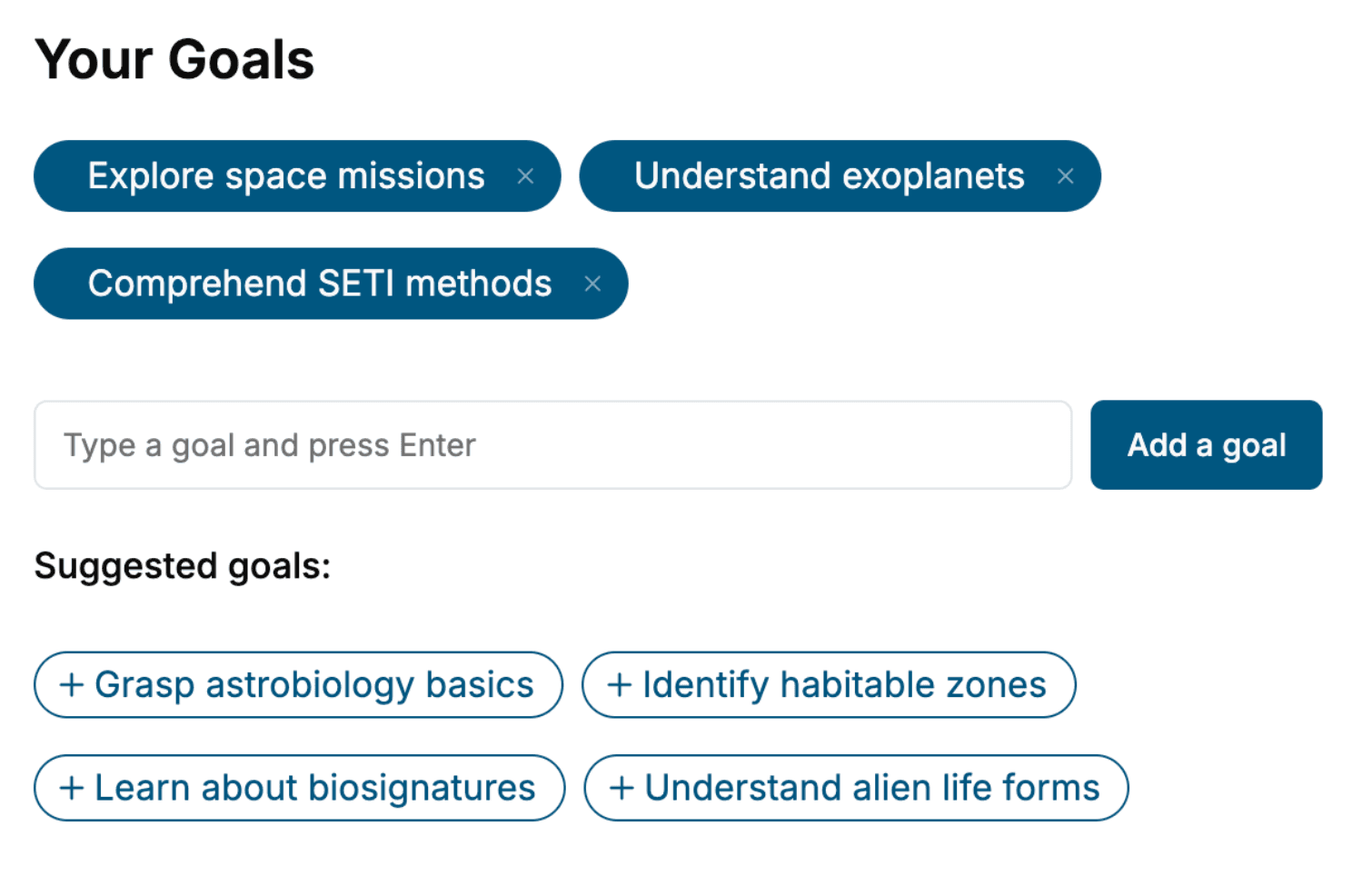
Tell us your goals and background, and get your own version of this book, tailored by AI to you.


Benefits of AI-tailored books
- Read one book, not ten:
- all the Machine Translation knowledge you need, gathered into a single book.
- Save days of learning:
- tell us your goals, choose your topics, and the whole book is built around them.
- Learn effortlessly:
- Machine Translation book written for your specific background and expertise.
- Understand at a glance:
- includes charts, tables, timelines, checklists, decision trees, and more.
- Stay current:
- written the day you order it, not years ago.
- Trust what you read:
- every book is checked for accuracy, with real research when your subject needs it.
Create your unique book in 3 steps
- 1. Select your focus
Select the focus of your Machine Translation book and share your background
- 2. Personalize your book
Specify your goals and choose sub-topics to include
- 3. Get your tailored book
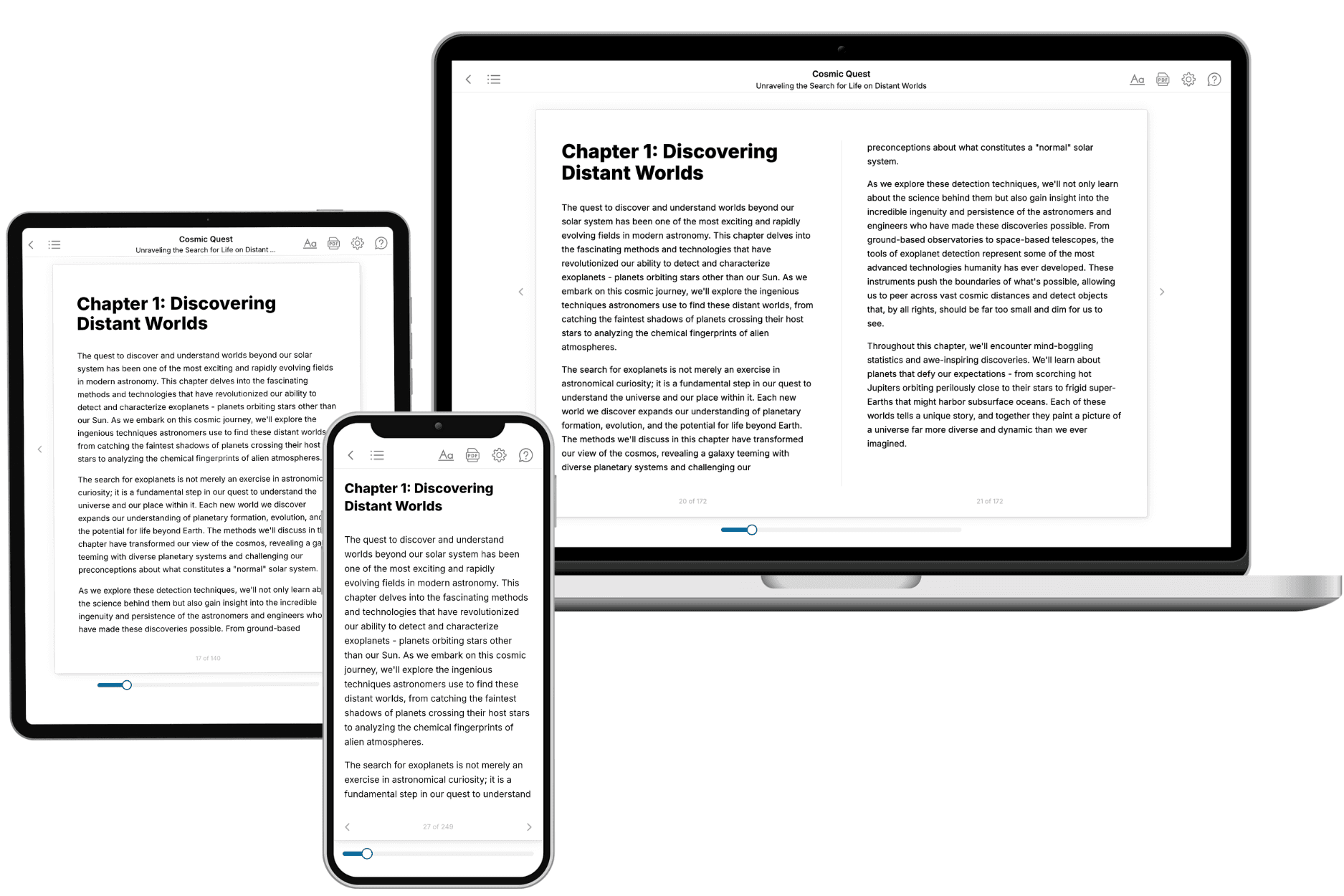
Your book is ready in 10 minutes. Read it online, download as EPUB or PDF, or send to Kindle.

Frequently asked questions
- What is TailoredRead?
TailoredRead creates complete, full-length nonfiction ebooks, written specifically for you. Tell us what you want to learn and why, and TailoredRead writes you a complete ebook on it, with charts, tables, and diagrams throughout. Read it online, on Kindle, or on any e-reader, or download it as a PDF or EPUB. Every book is written fresh the day you order it.
- How is the book tailored to me?
Before anything is written, you answer a few short questions about your goals, your background, and the topics you care about. Your book is then planned around your answers: written at your level, focused on your goals, and covering the topics you chose, instead of the one-size-fits-all book a store sells everyone.
- Will it read like generic AI content?
No. Your book isn't a chat transcript: it's planned chapter by chapter before a single word is written, told in a clear book voice, and explains ideas visually with charts, tables, and diagrams. After writing, every book goes through an editorial pass that polishes chapters so the book reads consistent from start to finish. Judge for yourself: browse thousands of sample books on our Explore Books page.
- How accurate is the content?
Our AI first checks whether your subject needs live research. Niche and fast-moving subjects are researched before writing, and the book plan and chapters are grounded in what it finds. After writing, every book goes through a quality pass that checks its facts and consistency, and researched books list their sources in a Notes section at the back.
- How long is the book?
You choose the length: Comprehensive (250-300 pages), Detailed (150-200 pages), Essential (70-100 pages), or Short (30-50 pages).
- Does the book include visuals?
Yes. Every book includes charts, tables, and diagrams: timelines, checklists, step-by-step guides, decision trees, comparison tables, matrices, and bar charts. A typical book includes dozens of these visual elements.
- Can I read it on Kindle? What formats can I download?
Yes. Every book can be read in our online reader or downloaded as a PDF or EPUB. The EPUB can be opened with Kindle, Apple Books, Kobo, and any e-reader. The Commercial and Author licenses also include an editable Word (DOCX) and Markdown download.
- How much does it cost?
About the price of a regular ebook. The exact price depends on your book's length and complexity, from $2 for the shortest books to $35 for the most comprehensive, and it's shown when you review your book, before you commit to anything. Each book is a one-time purchase, yours to keep, no subscription. Licenses that let you share, teach, or publish your book range from $35.99 to $49.99.
- Can I preview the book before purchasing?
Before you pay, you'll see what your book will cover: the title, a detailed description, the estimated length, and the complete chapter-by-chapter table of contents, so you know what you're getting before you decide. The full text itself is written after you purchase.
- How long does it take to create a book?
About 10 minutes. You can start reading the opening chapters while the rest is still being written.