Newport Lighthouses
A Complete Guide to History, Architecture, and Visiting Rhode Island's Iconic Beacons
Discover the stories behind Newport's most captivating maritime landmarks.
207 pages9 chaptersMay 12, 2026Newport Travel Guide
About this book
This guide takes you beyond the postcard views to reveal the engineering brilliance, historical significance, and human drama that define Rhode Island's iconic lighthouses. You'll explore the architectural innovations that made each beacon unique, understand the critical roles these structures played in shaping Newport's maritime heritage, and learn what daily life was like for the keepers who maintained them. Whether you're planning your first visit or returning to deepen your knowledge, this book provides detailed information about each lighthouse's history, visiting logistics, and the broader context of Newport's naval and commercial importance. Gain insider perspectives on restoration efforts, discover lesser-known details about lighthouse technology, and find practical tips for experiencing these monuments in meaningful ways. From the towering Rose Island Light to the distinctive Cliff Walk views, you'll understand not just what you're seeing, but why these structures matter to Newport's identity and America's maritime legacy.
Table of contents
- IntroductionWhy Newport's Lighthouses Matter, What You'll Discover in This Guide, How to Use This BookRead below
- Chapter 1: Newport's Maritime Heritage and Lighthouse HistoryColonial Era Navigation and Early Beacon Fires, Newport's Rise as a Major Port and Naval Center, Development of Newport's Lighthouse Network
- Chapter 2: Lighthouse Architecture and EngineeringTower Design Principles and Construction Methods, Evolution of Light Mechanisms: From Flames to Fresnel Lenses, Keeper's Quarters and Daily Operations
- Chapter 3: Rose Island Light: Newport's SentinelHistory and Construction of Rose Island Light, Architectural Features and Technical Specifications, Visiting Rose Island Light: Access and Logistics
- Chapter 4: Cliff Walk Light and Coastal LandmarksOrigins and Purpose of Cliff Walk Light, Integration with the Famous Cliff Walk Trail, Visiting Tips and Scenic Opportunities
- Chapter 5: Goat Island Light and Harbor NavigationStrategic Role in Newport Harbor Navigation, Construction History and Architectural Evolution, Access Points and Best Viewing Locations
- Chapter 6: Lighthouse Keepers: Lives and LegaciesDaily Responsibilities and Challenges of Lighthouse Keepers, Keeper Families and Life in Lighthouse Communities, Notable Keepers and Their Stories
- Chapter 7: Lighthouse Technology Through the AgesThe Open Flame Era and Early Innovations, The Fresnel Lens Revolution, Modern Automation and Contemporary Systems
- Chapter 8: Preservation and Restoration EffortsChallenges in Preserving Historic Lighthouses, Major Restoration Projects in Newport, Community Involvement and Support Organizations
- Chapter 9: Planning Your Lighthouse VisitsVisiting Logistics and Practical Information, Seasonal Considerations and Best Times to Visit, Suggested Itineraries and Related Attractions
- ConclusionThe Enduring Significance of Newport's Lighthouses
- Glossary of Lighthouse Terms
- Further Reading and Resources
Introduction
Stand at the edge of Newport Harbor on a clear morning, and you'll understand immediately why lighthouses were built here. The water stretches out in every direction, broken by islands, shoals, and channels that have challenged sailors for centuries. The coastline is beautiful, but it is also unforgiving. Rocks sit just below the surface. Currents shift with the tides. Fog rolls in without warning. For the ships that once carried everything from rum and molasses to naval supplies and immigrant families, finding safe passage through these waters was a matter of life and death.
Newport's lighthouses were the answer to that challenge. Built over more than three centuries, these structures represent some of the most important engineering and navigational achievements in American maritime history. They guided merchant vessels into port, warned naval ships away from dangerous shoals, and kept commerce flowing through one of the busiest harbors on the Eastern Seaboard. Today, they stand as monuments to that history, each one carrying stories of the people who built them, maintained them, and depended on them for survival.
This guide exists because lighthouses deserve more than a passing glance from a tour boat. When you understand what went into building a lighthouse on a wave-battered island, or what it meant for a keeper's family to spend a winter isolated on a rocky outcrop, or how a single lens innovation changed navigation across the entire world, the structures you're looking at become something far more compelling. They stop being scenic backdrops and start being windows into a world that shaped this region, this country, and the history of seafaring itself.
Whether you're visiting Newport for the first time or returning after years of admiring these beacons from a distance, this book is designed to give you the context, the details, and the practical information you need to make your experience genuinely meaningful. The chapters ahead cover everything from colonial-era navigation to modern preservation efforts, from the physics of Fresnel lenses to the best spots for photographing each lighthouse at golden hour. By the time you finish, you'll see Newport's coastline with entirely new eyes.
Why Newport's Lighthouses Matter
Newport is famous for many things: the Gilded Age mansions along Bellevue Avenue, the America's Cup sailing races, the folk and jazz festivals that draw crowds every summer. But underneath all of that glamour lies a much older identity. Newport was, for much of its early history, one of the most strategically important ports in North America. Its natural harbor offered shelter, its position along the Atlantic coast made it a hub for trade routes, and its waters connected the American colonies to the wider world. The lighthouses that dot its coastline were not decorative additions to that story. They were essential infrastructure.
Consider the sheer volume of maritime traffic that once moved through Narragansett Bay. In the colonial period, Newport ranked alongside Boston and New York as a center of Atlantic trade.[1] Ships carrying sugar, tobacco, textiles, and enslaved people moved through these waters constantly. Without reliable navigation aids, the losses to shipwreck would have been catastrophic. The early beacon fires and, later, the formal lighthouse structures that replaced them were direct responses to that commercial pressure. They were investments in safety that paid dividends in trade.
Newport's lighthouses also matter because of their architectural and technological diversity. Unlike some regions where a single design was repeated across dozens of structures, Newport's beacons reflect a wide range of building approaches, engineering solutions, and historical periods. You'll find a lighthouse built on a low-lying island that required an entirely different structural approach than one perched on a rocky headland. You'll see how construction materials shifted from rubblestone to brick to cast iron as technology evolved. Each structure is, in its own way, a case study in how engineers and builders adapted to specific challenges.
The human dimension of these lighthouses is equally significant. The keepers who lived and worked in these structures were not simply caretakers. They were skilled professionals responsible for maintaining complex equipment, recording weather observations, assisting shipwreck survivors, and keeping detailed logs that contributed to the broader understanding of coastal conditions. Many of them served for decades. Some raised entire families in lighthouse quarters. Their lives were shaped by isolation, duty, and an intimate relationship with the sea that few people today can fully imagine.
There is also a preservation argument for why these lighthouses matter. Many historic lighthouse structures across the United States have been lost to neglect, storm damage, or demolition. Newport has been fortunate in that community organizations, government agencies, and dedicated volunteers have worked hard to protect and restore its beacons. But that work is ongoing, and it depends on public awareness and support. Understanding why these structures are worth preserving is the first step toward ensuring they survive for future generations.
Finally, Newport's lighthouses matter because they are genuinely beautiful. There is something about a lighthouse that speaks to something deep in the human imagination: the idea of a steady light in the darkness, a fixed point of reference in a world of constant motion. That symbolic power is part of why these structures have captured the attention of artists, writers, and photographers for generations. Experiencing them in person, with a full understanding of their history and significance, is one of the most rewarding things you can do along this coastline.
Newport's lighthouses are not relics of a forgotten past. They are active participants in the story of a place that has always defined itself by its relationship with the sea.
Understanding that relationship is what this guide is all about. The chapters ahead will take you through the full arc of Newport's lighthouse history, from the earliest colonial navigation aids to the automated systems that operate today, and give you the tools to experience each structure with genuine depth and appreciation.
What You'll Discover in This Guide
This book covers Newport's lighthouse heritage from multiple angles, because these structures reward that kind of layered attention. A lighthouse is simultaneously a piece of engineering, a historical artifact, an architectural achievement, and a human story. Treating it as only one of those things means missing most of what makes it interesting. The chapters ahead are organized to build your understanding progressively, starting with the broad historical context and moving toward the specific details of individual structures and practical visiting information.
The opening chapters establish the foundation. You'll learn how Newport developed as a maritime center and why its geographic position made lighthouse construction both necessary and challenging. You'll explore the evolution of lighthouse architecture and engineering, including the principles that governed tower design, the mechanics of early light sources, and the revolutionary impact of the Fresnel lens. This background isn't just academic context. It's the lens through which every individual lighthouse becomes more interesting and more legible.
The middle chapters focus on specific lighthouses, each treated as its own complete story. For each major structure, you'll find:
- A detailed history of its construction and the navigational challenges it was built to address
- An examination of its architectural features and what makes its design distinctive
- Practical visiting information, including access routes, hours, and what to expect on-site
- Contextual details about the surrounding landscape and related historical sites
The lighthouses covered in depth include Rose Island Light, one of the most visited and historically rich structures in the region; the coastal landmarks visible from the famous Cliff Walk; and Goat Island Light, whose position in Newport Harbor made it central to the city's naval and commercial history. Each of these structures has a distinct character, and the chapters dedicated to them reflect that individuality rather than treating them as interchangeable examples of a single type.
Later chapters zoom out again to explore themes that cut across all of Newport's lighthouses. The chapter on lighthouse keepers brings the human dimension of this history to life, drawing on historical records, keeper logs, and documented accounts to paint a picture of what daily life in a lighthouse actually looked like. The chapter on technology traces the full arc of innovation, from open flame beacons to electric lights to the GPS-integrated systems of today. And the chapter on preservation examines the ongoing work of keeping these structures intact and accessible.
The final chapter is dedicated entirely to planning your visits. It includes practical logistics for each lighthouse, seasonal recommendations, suggested itineraries for different lengths of stay, and tips for getting the most out of your time on the water and along the coast. Whether you have a single afternoon or a full week to explore, you'll find guidance tailored to your situation.
Throughout the book, you'll also find specific details that go beyond what most general travel guides provide. These include technical specifications for lighthouse lenses and tower heights, biographical sketches of notable keepers, descriptions of specific architectural features to look for when you visit, and recommendations for related museums, archives, and historical sites that deepen the experience. The goal is to give you not just information, but genuine insight.
One thing this guide does not do is treat Newport's lighthouses as isolated curiosities. They are connected to each other, to the broader history of American maritime navigation, and to the ongoing life of a coastal city that still defines itself by its relationship with the water. Keeping those connections visible throughout the book is a deliberate choice, because understanding context is what transforms a sightseeing trip into a genuinely educational and memorable experience.
How to Use This Book
This guide is designed to work in multiple ways, depending on how you prefer to explore. You can read it straight through from beginning to end, which will give you the most complete picture of Newport's lighthouse heritage and the historical context that makes each structure meaningful. Alternatively, you can use it as a reference, jumping directly to the chapter on a specific lighthouse before you visit, or consulting the practical planning chapter when you're ready to organize your itinerary. Both approaches work, and the book is structured to support either one.
If you're reading this before your trip, the recommended approach is to start with the first two chapters on maritime history and lighthouse architecture. These chapters provide the conceptual vocabulary and historical background that will make everything else more meaningful. When you then read about a specific lighthouse and its construction methods or light mechanism, you'll already have the framework to understand why those details matter. Think of those early chapters as the foundation that makes the rest of the building stand up.
If you're already in Newport and want immediate practical guidance, go directly to the chapter on planning your visits. That chapter is written to be useful on the ground, with specific information about:
- How to reach each lighthouse by foot, car, or boat
- What to bring and what to expect at each location
- The best times of day and year for visiting
- Nearby attractions worth combining into a single outing
You can then circle back to the historical and architectural chapters in the evenings, using them to process and deepen what you experienced during the day. Many visitors find that this back-and-forth between on-site experience and background reading produces the richest understanding. Seeing a lighthouse in person raises questions that the book can answer, and reading the book in advance creates a framework that makes the in-person experience more vivid.
The glossary at the back of the book is worth bookmarking early. Lighthouse terminology has its own vocabulary, and some of the terms that appear throughout the text, words like lantern room, watch room, characteristic, and focal plane, have specific technical meanings that are worth understanding. The glossary defines all of these terms clearly and concisely. Referring to it as you read will help you get more out of the technical sections without slowing down your reading unnecessarily.
Footnotes appear throughout the text to credit sources and point toward additional reading. These are not just academic formalities. Many of them reference books, articles, and archives that are genuinely fascinating in their own right, and the further reading section at the back of the book expands on these recommendations. If a particular lighthouse or historical period captures your interest, those resources will help you go deeper than any single guide can take you.
A note on what this book covers and what it doesn't: Newport's coastline and the broader Narragansett Bay region contain more lighthouse structures and related maritime landmarks than any single volume could cover exhaustively. This guide focuses on the lighthouses most accessible to visitors and most significant in terms of historical and architectural importance. Structures that are entirely inaccessible, heavily restricted, or of limited historical distinction are mentioned in passing but not covered in depth. The goal is to give you a rich, complete experience of the lighthouses you can actually visit and appreciate, rather than an encyclopedic catalog that sacrifices depth for breadth.
Maps, photographs, and diagrams referenced in the text are intended to complement the written descriptions rather than replace them. When a chapter describes the layout of a lighthouse complex or the design of a particular lens, the accompanying visuals will help you picture what's being described. But the written descriptions are complete on their own, so if you're reading in a format where images aren't available, you won't lose the essential information.
Above all, use this book as an invitation to slow down and pay attention. Newport's lighthouses reward careful observation. The details that distinguish one structure from another, the way a tower's brickwork changes near the lantern room, the angle at which a lighthouse sits relative to the channel it marks, the relationship between a keeper's quarters and the working spaces of the lighthouse, these are the kinds of things that become visible only when you know what to look for. This guide is designed to give you exactly that knowledge, so that every lighthouse you visit becomes a richer, more layered experience than it would be without it.
The best way to use this book is the way that makes Newport's lighthouses come alive for you. There is no wrong approach, only the one that fits how you learn and explore.
With that in mind, the journey begins. The chapters ahead will take you from the earliest days of colonial navigation through three centuries of maritime history, engineering innovation, and human dedication. By the end, you'll have a relationship with Newport's lighthouses that goes far beyond what any postcard or tour boat can offer. You'll understand what you're seeing, why it matters, and why these structures have earned their place at the center of one of America's most compelling coastal stories.
Notes
Introduction
- 1. James B. Hedges, The Browns of Providence Plantations, Harvard University Press, 1952
This is the end of the free sample. The full book has 9 chapters.
Want this book written for you?
Tell us your goals and background, and get your own version of this book, tailored by AI to you.


Benefits of AI-tailored books
- Read one book, not ten:
- all the Newport Travel Guide knowledge you need, gathered into a single book.
- Save days of learning:
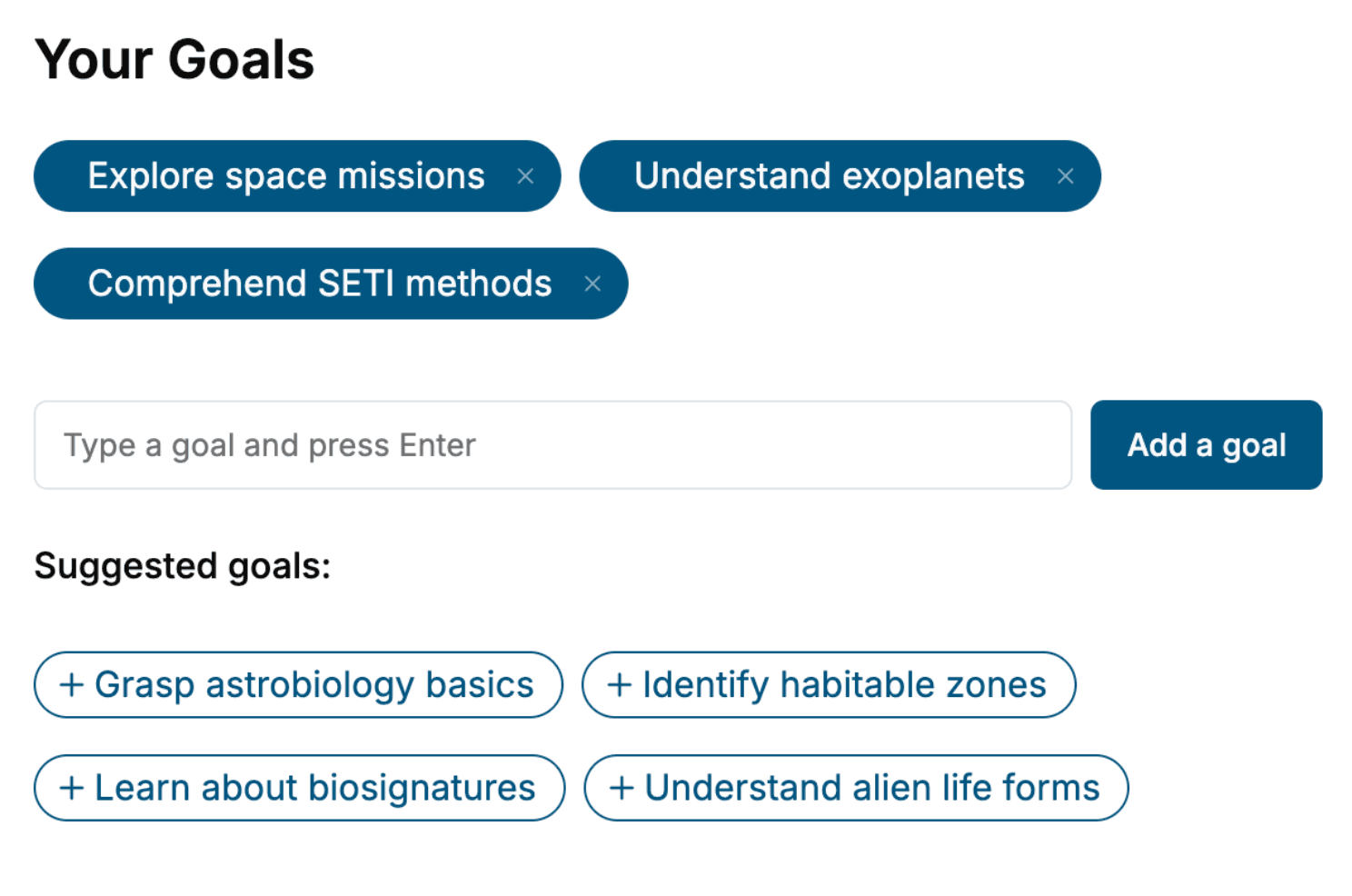
- tell us your goals, choose your topics, and the whole book is built around them.
- Learn effortlessly:
- Newport Travel Guide book written for your specific background and expertise.
- Understand at a glance:
- includes charts, tables, timelines, checklists, decision trees, and more.
- Stay current:
- written the day you order it, not years ago.
- Trust what you read:
- every book is checked for accuracy, with real research when your subject needs it.
Create your unique book in 3 steps
- 1. Select your focus
Select the focus of your Newport Travel Guide book and share your background
- 2. Personalize your book
Specify your goals and choose sub-topics to include
- 3. Get your tailored book
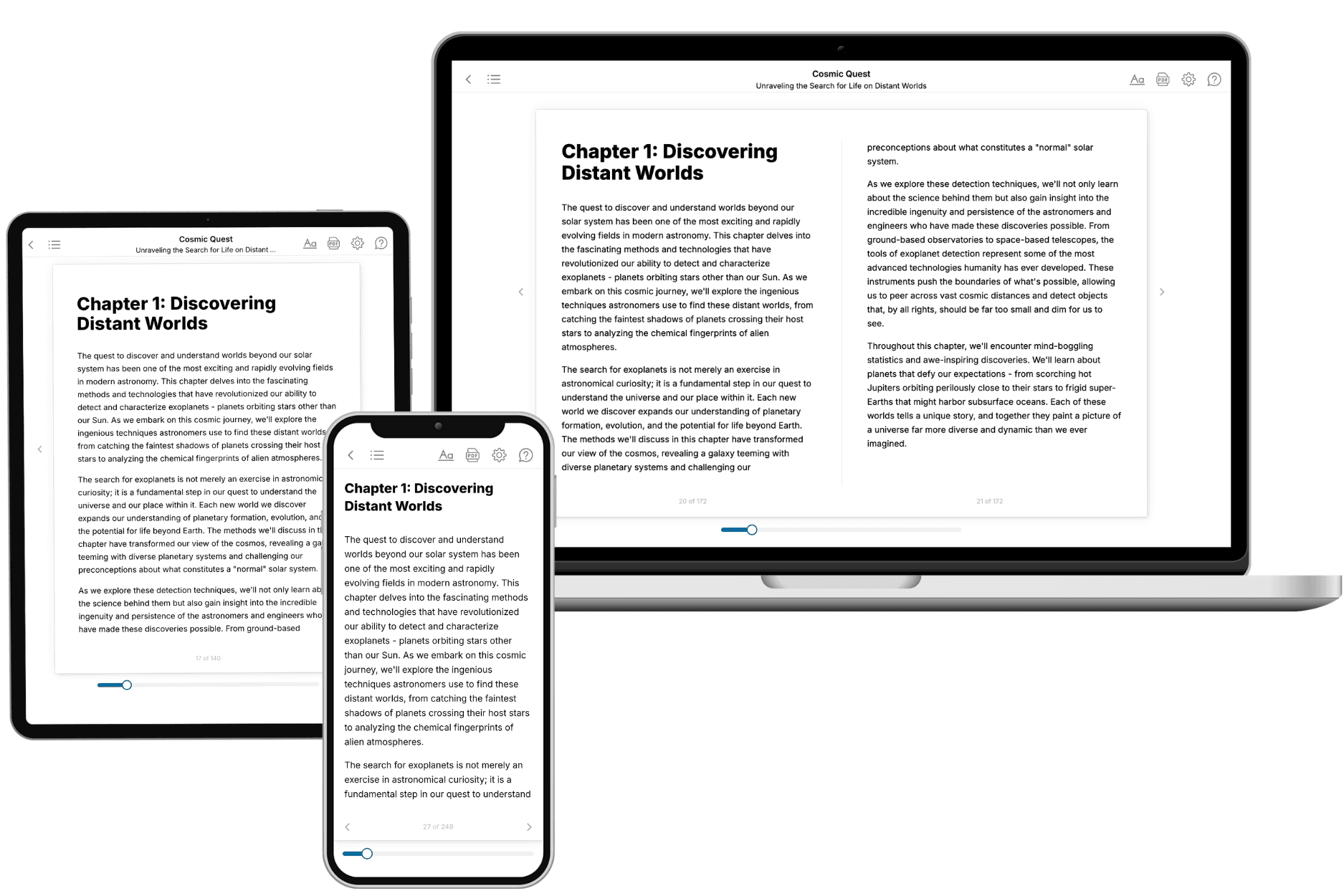
Your book is ready in 10 minutes. Read it online, download as EPUB or PDF, or send to Kindle.

Frequently asked questions
- What is TailoredRead?
TailoredRead creates complete, full-length nonfiction ebooks, written specifically for you. Tell us what you want to learn and why, and TailoredRead writes you a complete ebook on it, with charts, tables, and diagrams throughout. Read it online, on Kindle, or on any e-reader, or download it as a PDF or EPUB. Every book is written fresh the day you order it.
- How is the book tailored to me?
Before anything is written, you answer a few short questions about your goals, your background, and the topics you care about. Your book is then planned around your answers: written at your level, focused on your goals, and covering the topics you chose, instead of the one-size-fits-all book a store sells everyone.
- Will it read like generic AI content?
No. Your book isn't a chat transcript: it's planned chapter by chapter before a single word is written, told in a clear book voice, and explains ideas visually with charts, tables, and diagrams. After writing, every book goes through an editorial pass that polishes chapters so the book reads consistent from start to finish. Judge for yourself: browse thousands of sample books on our Explore Books page.
- How accurate is the content?
Our AI first checks whether your subject needs live research. Niche and fast-moving subjects are researched before writing, and the book plan and chapters are grounded in what it finds. After writing, every book goes through a quality pass that checks its facts and consistency, and researched books list their sources in a Notes section at the back.
- How long is the book?
You choose the length: Comprehensive (250-300 pages), Detailed (150-200 pages), Essential (70-100 pages), or Short (30-50 pages).
- Does the book include visuals?
Yes. Every book includes visual elements such as timelines, checklists, step-by-step guides, decision trees, comparison tables, and matrices, and many include bar charts. A typical book includes dozens of these visual elements.
- Can I read it on Kindle? What formats can I download?
Yes. Every book can be read in our online reader or downloaded as a PDF or EPUB. The EPUB can be opened with Kindle, Apple Books, Kobo, and any e-reader. The Commercial and Author licenses also include an editable Word (DOCX) and Markdown download.
- How much does it cost?
About the price of a regular ebook. The exact price depends on your book's length and complexity, from $2 for the shortest books to $35 for the most comprehensive, and it's shown when you review your book, before you commit to anything. Each book is a one-time purchase, yours to keep, no subscription. Licenses that let you share, teach, or publish your book range from $35.99 to $49.99.
- Can I preview the book before purchasing?
Before you pay, you'll see what your book will cover: the title, a detailed description, the estimated length, and the complete chapter-by-chapter table of contents, so you know what you're getting before you decide. The full text itself is written after you purchase.
- How long does it take to create a book?
About 10 minutes. You can start reading the opening chapters while the rest is still being written.