The Oligarchy Paradox
Understanding Power Concentration in Modern Democratic Societies
You'll gain a sophisticated understanding of how power actually operates in contemporary society, moving beyond simplistic notions of democracy versus authoritarianism to grasp the nuanced reality of oligarchic influence.
284 pages14 chaptersEnglishSep 11, 2025Politics
About this book
This comprehensive exploration reveals the hidden mechanisms through which small groups accumulate and maintain disproportionate control over political, economic, and social systems. Through rigorous analysis of historical patterns and modern case studies, you'll develop the analytical tools to recognize oligarchic structures in action. You'll discover how elite networks form, how they perpetuate themselves across generations, and how they adapt to changing circumstances while maintaining their essential character. The book examines both the overt and subtle ways oligarchies shape public policy, influence cultural narratives, and manage social expectations. You'll explore the complex relationship between democratic institutions and oligarchic tendencies, understanding how these seemingly contradictory forces can coexist and even reinforce each other. The analysis extends to the role of technology, media, and information systems in either challenging or strengthening oligarchic control, providing you with insights into the evolving nature of power in the digital age. By the end, you'll possess a framework for critically evaluating power structures in your own society, recognizing the signs of oligarchic influence, and understanding the conditions that either promote or resist the concentration of power among elite groups.
Table of contents
- IntroductionDefining Oligarchy in the Modern Context, Why Understanding Oligarchy Matters Today, A Framework for Analysis, Navigating the Complexity of PowerRead below
- Chapter 1: Historical Foundations of Oligarchic TheoryAncient Origins and Classical Thought, The Aristotelian Framework, Medieval and Renaissance Adaptations, Enlightenment Critiques and Reforms
- Chapter 2: Modern Theoretical Approaches to OligarchyElite Theory and Its Pioneers, The Iron Law of Oligarchy, Pluralist Responses and Critiques, Contemporary Theoretical Synthesis
- Chapter 3: Mechanisms of Power ConcentrationResource Accumulation Strategies, Elite Network Formation, Institutional Capture and Control, Creating Barriers to Entry
- Chapter 4: Economic Dimensions of OligarchyPatterns of Wealth Concentration, Market Dominance and Competition, Regulatory Influence and Capture, Economic Policy and Elite Interests
- Chapter 5: Political Manifestations of Oligarchic PowerElectoral Influence and Campaign Systems, Policy Networks and Agenda Setting, Bureaucratic Penetration, Revolving Door Phenomena
- Chapter 6: Social and Cultural Aspects of OligarchyElite Socialization and Education, Cultural Reproduction Mechanisms, Social Capital and Exclusive Networks, Status Symbols and Legitimacy
- Chapter 7: Information Control and Narrative ManagementMedia Ownership and Influence, Narrative Construction and Framing, Think Tanks and Intellectual Infrastructure, Public Opinion Management
- Chapter 8: The Democratic-Oligarchy TensionUnderstanding Hybrid Systems, Democratic Facades and Legitimacy, Competitive Oligarchy Models, Institutional Safeguards and Their Limits
- Chapter 9: Technology and Oligarchy in the Digital AgeDigital Platform Monopolies, Data Control and Surveillance, Algorithmic Influence on Society, Digital Tools for Resistance and Organization
- Chapter 10: Global Perspectives on OligarchyComparative Oligarchic Systems, Transnational Elite Networks, International Institutions and Governance, Cultural Variations in Oligarchic Forms
- Chapter 11: Case Studies in Contemporary OligarchyCorporate Oligarchy Examples, Political Dynasties and Family Rule, Technocratic Elite Governance, Regional Variations and Patterns
- Chapter 12: Resistance and Challenges to OligarchyGrassroots Movements and Popular Mobilization, Institutional Reform Strategies, Transparency and Accountability Initiatives, Counter-Elite Formation and Competition
- Chapter 13: Future Trajectories and Emerging PatternsTechnological Disruption of Traditional Power, Generational Changes in Elite Composition, Climate Change and New Forms of Oligarchy, Post-Democratic Scenarios and Alternatives
- Chapter 14: Building Your Analytical FrameworkTools for Identifying Oligarchic Structures, Power Mapping Techniques, Critical Evaluation Methods, Maintaining Ongoing Analysis
- ConclusionSynthesizing Key Insights, Implications for Society and Governance
- Glossary
- Further Reading
Introduction
Power rarely distributes itself evenly across society, and this fundamental reality shapes every aspect of human civilization. Throughout history, small groups of individuals have consistently accumulated disproportionate influence over political, economic, and social systems, creating what scholars term oligarchy. This concentration of power among the few represents one of the most persistent and consequential patterns in human organization, yet it remains poorly understood by most people living within oligarchic systems. The complexity of modern society often obscures these power dynamics, making them appear natural or inevitable rather than constructed and maintained through specific mechanisms and strategies.
Contemporary democratic societies present a particularly fascinating paradox in this regard. While democratic institutions promise equal representation and shared governance, oligarchic tendencies continue to emerge and flourish within these very systems. This creates hybrid forms of governance that combine democratic legitimacy with concentrated elite control, challenging traditional assumptions about how power operates in modern societies. Understanding this paradox requires moving beyond simplistic categories of democracy versus authoritarianism to examine the nuanced ways that oligarchic structures adapt to and coexist with democratic institutions. The result is often a system that maintains democratic appearances while enabling small groups to exercise outsized influence over policy decisions and social outcomes.
The stakes of understanding oligarchy have never been higher. As economic inequality reaches historic levels in many developed nations, as technology creates new forms of concentrated power, and as global challenges require coordinated responses, the question of who actually makes decisions becomes increasingly critical. Citizens who lack a sophisticated understanding of oligarchic dynamics find themselves unable to effectively participate in or influence the systems that govern their lives. This book provides the analytical tools necessary to recognize, understand, and critically evaluate oligarchic structures in contemporary society, enabling more informed civic participation and more effective responses to concentrated power.
Defining Oligarchy in the Modern Context
The term oligarchy derives from the Greek words oligos (few) and archein (to rule), literally meaning rule by the few.
However, this simple definition barely captures the complexity of oligarchic systems as they manifest in contemporary society. Modern oligarchy is not merely about the number of people in positions of formal authority, but rather about the concentration of effective decision-making power among a relatively small group of individuals or institutions. These oligarchic elites may operate through official government positions, corporate leadership roles, or informal networks that span multiple sectors of society. The key characteristic is their ability to shape outcomes across multiple domains of social life, often in ways that serve their particular interests while maintaining broader social stability.
Contemporary oligarchies differ significantly from their historical predecessors in several important ways. Unlike the hereditary aristocracies of feudal societies or the military juntas of authoritarian regimes, modern oligarchies often emerge through ostensibly meritocratic processes and maintain their legitimacy through democratic institutions. This creates what scholars call competitive oligarchy, where multiple elite groups may compete for influence while collectively maintaining their privileged position relative to the broader population. The competition between different oligarchic factions can create the appearance of genuine democratic choice, even when the fundamental structure of power concentration remains unchanged. This dynamic helps explain why many citizens in democratic societies feel that their electoral choices matter little in terms of actual policy outcomes.
The mechanisms through which modern oligarchies operate are often subtle and indirect, relying more on structural advantages than overt coercion. These advantages include:
- Resource concentration - Control over financial, technological, and informational resources that enable sustained political influence
- Network effects - Dense social and professional connections that facilitate coordination and mutual support among elite groups
- Institutional access - Privileged access to key decision-making institutions through formal and informal channels
- Cultural capital - Educational credentials, social status, and cultural knowledge that provide legitimacy and influence
- Agenda-setting power - The ability to determine which issues receive attention and how they are framed in public discourse
Understanding oligarchy in the modern context also requires recognizing its adaptive capacity. Oligarchic systems demonstrate remarkable resilience in the face of challenges, evolving their strategies and structures to maintain power even as social, economic, and technological conditions change. For example, the rise of digital technology initially appeared to democratize information and communication, potentially challenging traditional oligarchic control. However, oligarchic groups have successfully adapted to this new environment, using technology to enhance their surveillance capabilities, manipulate public opinion through sophisticated data analytics, and create new forms of economic concentration through platform monopolies. This adaptability helps explain why oligarchic tendencies persist across different historical periods and political systems.
The geographic scope of modern oligarchy has also expanded significantly. While historical oligarchies were typically confined to specific territories or city-states, contemporary oligarchic networks often operate across national boundaries. Transnational elites coordinate their activities through international organizations, multinational corporations, and global financial institutions, creating oligarchic structures that transcend traditional democratic accountability mechanisms. This globalization of oligarchy presents new challenges for democratic governance, as national governments find their policy options constrained by the preferences of global elite networks. Citizens may vote for change at the national level, only to discover that key decisions are made by international actors who are not subject to democratic control.
Perhaps most importantly, modern oligarchy is characterized by its legitimacy deficit and the strategies used to address this challenge. Unlike traditional monarchies or aristocracies that claimed divine right or natural superiority, contemporary oligarchies must maintain their power within systems that formally embrace equality and democratic participation. This creates a constant tension between oligarchic reality and democratic ideology, forcing oligarchic groups to develop sophisticated methods for managing public perception and maintaining social consent. These methods include controlling media narratives, funding think tanks and academic institutions, and promoting ideologies that justify inequality and concentrated power as natural or beneficial outcomes of market processes and meritocratic selection.
The definitional challenge of modern oligarchy extends to the question of intentionality versus emergence. While some oligarchic outcomes result from deliberate coordination among elite groups, others emerge from structural features of complex societies that naturally concentrate power and resources. For instance, the advantages that accrue to those with superior education, social connections, and financial resources may create oligarchic outcomes even without explicit conspiracy or coordination. This distinction between intentional and emergent oligarchy has important implications for how we understand and respond to concentrated power. Intentional oligarchy may be addressed through transparency, accountability measures, and anti-corruption efforts, while emergent oligarchy may require more fundamental structural reforms to address the underlying conditions that enable power concentration.
Finally, defining modern oligarchy requires acknowledging its sectoral variations. Oligarchic structures may be more pronounced in some areas of society than others, creating a complex landscape of concentrated and distributed power. For example, certain industries may be dominated by a small number of firms that coordinate their activities and influence government policy, while other sectors remain more competitive and democratic. Similarly, some policy domains may be effectively controlled by narrow expert communities or interest groups, while others remain subject to broader democratic input. Understanding these variations is crucial for developing targeted responses to oligarchic power and for identifying opportunities to strengthen democratic participation in specific areas of social life.
Why Understanding Oligarchy Matters Today
The urgency of understanding oligarchy in contemporary society stems from the profound disconnect between democratic ideals and political reality that characterizes many modern nations. Citizens across the developed world report declining trust in democratic institutions, growing skepticism about the responsiveness of government to public preferences, and increasing awareness that economic and political power are concentrated among small elite groups[1]. This disconnect creates a crisis of legitimacy that threatens the stability of democratic systems and undermines the social cohesion necessary for addressing collective challenges. Without a clear understanding of how oligarchic structures operate within democratic frameworks, citizens cannot effectively advocate for their interests or hold power holders accountable for their decisions.
The economic dimensions of contemporary oligarchy present particularly pressing concerns for social stability and individual opportunity. Wealth concentration has reached levels not seen since the early twentieth century in many developed nations, with the top one percent of households controlling unprecedented shares of total wealth and income. This concentration is not merely a statistical curiosity but reflects underlying power structures that enable small groups to shape economic policy, regulatory frameworks, and market conditions to their advantage. The result is a self-reinforcing cycle where economic concentration enables political influence, which in turn protects and enhances economic advantages. Understanding these dynamics is essential for anyone seeking to comprehend why economic inequality persists despite widespread public concern and why policy responses often prove inadequate to address the problem.
The technological revolution of the past several decades has created new forms of oligarchic power that operate at unprecedented scale and speed. A small number of technology companies now control the digital infrastructure through which billions of people communicate, access information, and conduct economic transactions. These platform oligarchies possess capabilities that exceed those of many national governments, including:
- The ability to monitor and analyze the behavior of billions of users in real-time
- Control over the algorithms that determine what information people see and how they interact with each other
- The capacity to influence electoral outcomes through targeted advertising and information manipulation
- Economic power that enables them to acquire potential competitors and shape regulatory responses
Climate change and environmental degradation present another domain where oligarchic dynamics have profound implications for collective welfare. The fossil fuel industry has demonstrated remarkable success in delaying policy responses to climate change through sophisticated influence campaigns, regulatory capture, and the funding of climate denial organizations. This represents a clear case where oligarchic interests conflict with broader social needs, as a relatively small number of companies and wealthy individuals have used their concentrated resources to prevent the policy changes necessary to address an existential threat to human civilization. Understanding how this influence operates is crucial for developing effective strategies to overcome oligarchic resistance to environmental protection and climate action.
The global nature of contemporary challenges makes understanding transnational oligarchy particularly important. Issues such as tax avoidance, financial instability, pandemic response, and international trade require coordinated action across national boundaries. However, the institutions designed to facilitate such coordination are often dominated by elite networks that may prioritize their own interests over broader public welfare. For example, international trade agreements are typically negotiated by small groups of government officials, corporate representatives, and technical experts, with limited input from affected communities or democratic institutions. The resulting agreements often reflect oligarchic preferences for reduced regulation and enhanced capital mobility, even when these outcomes conflict with democratic preferences for environmental protection, labor rights, and economic security.
The information environment in which democratic deliberation occurs has been fundamentally transformed by oligarchic control over media and communication systems. A small number of media conglomerates control much of the news and entertainment content that shapes public understanding of political and social issues. These companies are often owned by wealthy individuals or controlled by corporate interests that have clear stakes in policy outcomes. The result is an information environment that may systematically bias public discourse in favor of oligarchic interests, making it difficult for citizens to develop accurate understandings of policy alternatives or to organize effective responses to concentrated power. Social media platforms, while initially promising to democratize communication, have instead created new opportunities for oligarchic manipulation through targeted advertising, algorithmic curation, and the spread of disinformation.
Understanding oligarchy is also crucial for recognizing the limitations of conventional political participation and developing more effective strategies for democratic engagement. Traditional approaches to civic participation, such as voting, contacting elected officials, and participating in public hearings, may have limited effectiveness when power is concentrated among elite networks that operate through informal channels and long-term strategic planning. Citizens who understand oligarchic dynamics can develop more sophisticated approaches to political engagement, such as:
This knowledge enables more strategic and effective civic participation that can actually influence policy outcomes rather than merely providing the appearance of democratic input.Targeting the actual decision-makers rather than their public representatives, building coalitions that can match oligarchic resources and coordination, and developing alternative institutions that can compete with oligarchic power structures.
Finally, understanding oligarchy matters because it provides the foundation for imagining and creating more democratic alternatives. Citizens who recognize how power actually operates in their society can work to design institutions and practices that distribute power more broadly and ensure that democratic ideals are reflected in political reality. This might involve constitutional reforms that limit the influence of concentrated wealth, new forms of participatory democracy that engage citizens more directly in policy-making, or alternative economic arrangements that prevent excessive concentration of resources. Without a clear understanding of oligarchic structures and their limitations, efforts at democratic reform may inadvertently strengthen rather than challenge concentrated power, making sophisticated analysis essential for anyone committed to genuine democratic governance.
A Framework for Analysis
Developing a systematic approach to analyzing oligarchic structures requires a multi-dimensional framework that can capture the complexity of power relationships in modern society. This analytical framework must be sophisticated enough to distinguish between different types of power concentration while remaining practical enough for citizens to apply in their own contexts. The framework presented here organizes oligarchic analysis around four core dimensions: structural foundations, operational mechanisms, legitimacy strategies, and adaptive responses. Each dimension provides a different lens through which to examine how oligarchic systems emerge, maintain themselves, and evolve over time. By systematically analyzing each dimension, you can develop a comprehensive understanding of how oligarchy operates in any given context and identify potential points of intervention or resistance.
The structural foundations dimension examines the underlying conditions that enable oligarchy to emerge and persist. These foundations include economic structures that concentrate wealth and resources, political institutions that provide privileged access to decision-making processes, social systems that reproduce elite advantages across generations, and cultural frameworks that legitimize inequality and concentrated power. Analyzing structural foundations requires looking beyond individual actors to examine the systems and institutions that shape opportunities and constraints for different groups in society. For example, educational systems that provide superior opportunities for wealthy families create structural advantages that persist across generations, while campaign finance systems that allow unlimited spending by wealthy donors create structural biases in political representation. Understanding these foundations is crucial because they determine the context within which oligarchic actors operate and the resources available to them.
The operational mechanisms dimension focuses on the specific strategies and tactics that oligarchic groups use to accumulate and maintain power. These mechanisms can be organized into several categories:
- Resource mobilization - How oligarchic groups accumulate and deploy financial, technological, and human resources to achieve their objectives
- Network coordination - How elite individuals and organizations coordinate their activities through formal and informal networks
- Institutional influence - How oligarchic groups gain access to and influence over key decision-making institutions
- Agenda control - How oligarchic groups shape public discourse and policy agendas to favor their interests
- Opposition management - How oligarchic groups respond to challenges and maintain their position in the face of resistance
The legitimacy strategies dimension examines how oligarchic groups maintain public acceptance and social stability despite their concentration of power. Modern oligarchies cannot rely solely on coercion or tradition to maintain their position; they must actively cultivate legitimacy through various strategies. These strategies include promoting ideologies that justify inequality and concentrated power, creating institutions that provide the appearance of democratic participation while preserving elite control, and managing public narratives to minimize awareness of oligarchic influence. Legitimacy strategies also involve what scholars call elite circulation - the process by which new individuals are recruited into oligarchic groups, creating the appearance of meritocracy and social mobility while preserving the overall structure of power concentration. Understanding legitimacy strategies is crucial because they reveal the vulnerabilities of oligarchic systems and the points where democratic challenges might be most effective.
The adaptive responses dimension examines how oligarchic systems evolve in response to changing conditions and challenges. Oligarchies demonstrate remarkable resilience partly because they can adapt their structures and strategies to new circumstances while preserving their essential characteristics. This adaptation occurs through several processes:
Analyzing adaptive responses helps explain why oligarchic systems persist across different historical periods and why simple reforms often fail to achieve lasting democratic change.Strategic innovation involves developing new methods for accumulating and exercising power as technological, economic, and social conditions change. Structural flexibility allows oligarchic systems to modify their organizational forms while maintaining power concentration. Co-optation strategies enable oligarchic groups to neutralize potential challenges by incorporating opposition leaders or movements into existing power structures.
Applying this analytical framework requires systematic data collection and analysis across all four dimensions. This involves identifying the key actors and institutions within oligarchic networks, mapping the relationships and resource flows between them, analyzing the formal and informal rules that govern their interactions, and tracking changes in these patterns over time. The framework also requires attention to counterfactual analysis - examining what outcomes might have occurred under different power arrangements and identifying the specific ways that oligarchic influence shapes policy decisions and social outcomes. This type of analysis can be challenging because oligarchic groups often prefer to operate behind the scenes, but it is essential for developing accurate understandings of how power actually works in complex societies.
The framework must also account for the multi-level nature of oligarchic systems. Oligarchy can operate simultaneously at local, national, and international levels, with complex interactions between these different scales of organization. Local oligarchies may be embedded within national oligarchic structures, which in turn may be connected to transnational elite networks. Understanding these multi-level dynamics requires analyzing how power flows between different scales of organization and how oligarchic groups coordinate their activities across jurisdictional boundaries. This is particularly important in an era of globalization, where many key decisions are made by international actors who may not be subject to democratic accountability at any level.
Finally, the analytical framework must be dynamic rather than static, recognizing that oligarchic systems are constantly evolving in response to internal contradictions and external pressures. This requires ongoing monitoring and analysis rather than one-time assessments, as well as attention to emerging trends and potential tipping points where oligarchic systems might be vulnerable to democratic challenges. The framework should also be participatory, enabling citizens and civil society organizations to contribute to the analysis and to use the insights generated for their own democratic organizing efforts. By providing tools for systematic analysis of oligarchic power, this framework can help bridge the gap between academic understanding and practical democratic action, enabling more informed and effective responses to concentrated power in contemporary society.
Notes
Introduction
- 1. Gilens, Martin, and Benjamin I. Page. 'Testing theories of American politics: Elites, interest groups, and average citizens.' Perspectives on politics 12.3 (2014): 564-581.
This is the end of the free sample. The full book has 14 chapters.
Want this book written for you?
Tell us your goals and background, and get your own version of this book, tailored by AI to you.


Benefits of AI-tailored books
- Read one book, not ten:
- all the Politics knowledge you need, gathered into a single book.
- Save days of learning:
- tell us your goals, choose your topics, and the whole book is built around them.
- Learn effortlessly:
- Politics book written for your specific background and expertise.
- Understand at a glance:
- includes charts, tables, timelines, checklists, decision trees, and more.
- Stay current:
- written the day you order it, not years ago.
- Trust what you read:
- every book is checked for accuracy, with real research when your subject needs it.
Create your unique book in 3 steps
- 1. Select your focus
Select the focus of your Politics book and share your background
- 2. Personalize your book
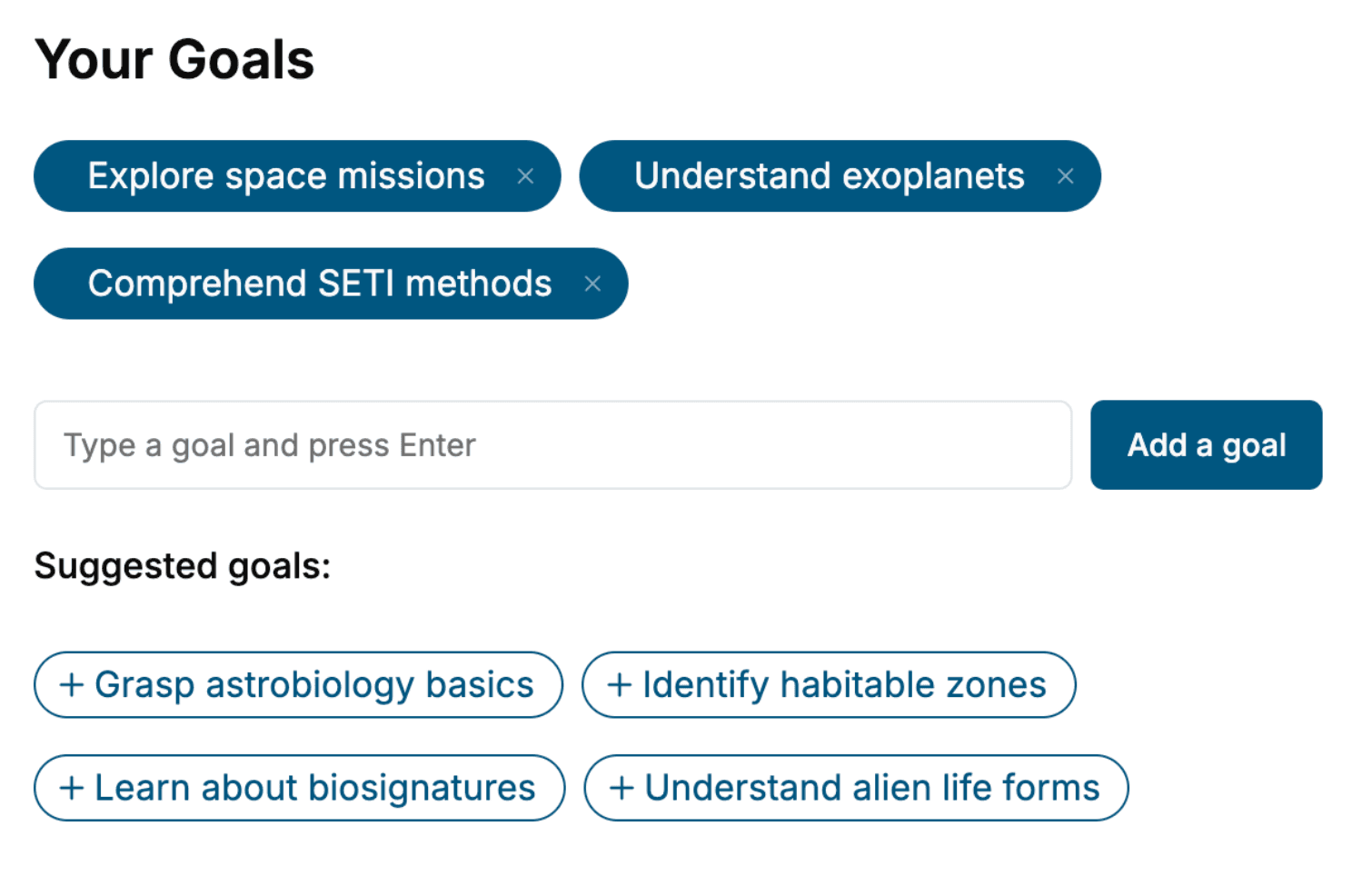
Specify your goals and choose sub-topics to include
- 3. Get your tailored book
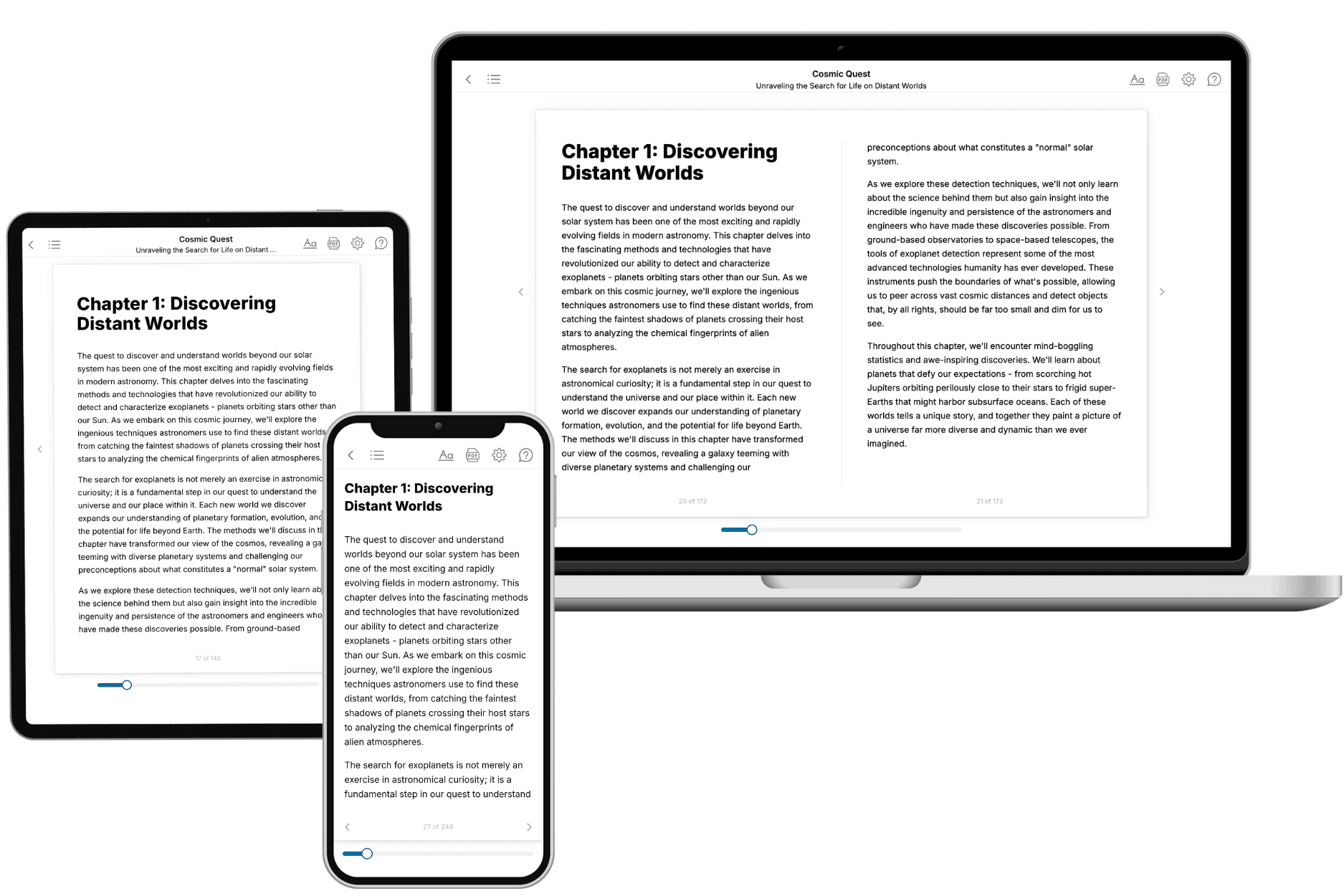
Your book is ready in 10 minutes. Read it online, download as EPUB or PDF, or send to Kindle.

Frequently asked questions
- What is TailoredRead?
TailoredRead creates complete, full-length nonfiction ebooks, written specifically for you. Tell us what you want to learn and why, and TailoredRead writes you a complete ebook on it, with charts, tables, and diagrams throughout. Read it online, on Kindle, or on any e-reader, or download it as a PDF or EPUB. Every book is written fresh the day you order it.
- How is the book tailored to me?
Before anything is written, you answer a few short questions about your goals, your background, and the topics you care about. Your book is then planned around your answers: written at your level, focused on your goals, and covering the topics you chose, instead of the one-size-fits-all book a store sells everyone.
- Will it read like generic AI content?
No. Your book isn't a chat transcript: it's planned chapter by chapter before a single word is written, told in a clear book voice, and explains ideas visually with charts, tables, and diagrams. After writing, every book goes through an editorial pass that polishes chapters so the book reads consistent from start to finish. Judge for yourself: browse thousands of sample books on our Explore Books page.
- How accurate is the content?
Our AI first checks whether your subject needs live research. Niche and fast-moving subjects are researched before writing, and the book plan and chapters are grounded in what it finds. After writing, every book goes through a quality pass that checks its facts and consistency, and researched books list their sources in a Notes section at the back.
- How long is the book?
You choose the length: Comprehensive (250-300 pages), Detailed (150-200 pages), Essential (70-100 pages), or Short (30-50 pages).
- Does the book include visuals?
Yes. Every book includes charts, tables, and diagrams: timelines, checklists, step-by-step guides, decision trees, comparison tables, matrices, and bar charts. A typical book includes dozens of these visual elements.
- Can I read it on Kindle? What formats can I download?
Yes. Every book can be read in our online reader or downloaded as a PDF or EPUB. The EPUB can be opened with Kindle, Apple Books, Kobo, and any e-reader. The Commercial and Author licenses also include an editable Word (DOCX) and Markdown download.
- How much does it cost?
About the price of a regular ebook. The exact price depends on your book's length and complexity, from $2 for the shortest books to $35 for the most comprehensive, and it's shown when you review your book, before you commit to anything. Each book is a one-time purchase, yours to keep, no subscription. Licenses that let you share, teach, or publish your book range from $35.99 to $49.99.
- Can I preview the book before purchasing?
Before you pay, you'll see what your book will cover: the title, a detailed description, the estimated length, and the complete chapter-by-chapter table of contents, so you know what you're getting before you decide. The full text itself is written after you purchase.
- How long does it take to create a book?
About 10 minutes. You can start reading the opening chapters while the rest is still being written.