One-Hot Mastery
Unlocking the Power of Categorical Data in AI and Machine Learning
Dive into the world of One-Hot Encoding and discover how this powerful technique can revolutionize your approach to handling categorical data in AI and Machine Learning.
269 pages13 chaptersDec 14, 2024Machine Learning
About this book
As you progress through the pages, you'll unravel the intricacies of this essential feature engineering method, gaining insights that will elevate your data preprocessing skills to new heights. Your journey begins with a solid foundation in the basics of One-Hot Encoding, gradually building up to advanced concepts and real-world applications. You'll explore the nuances of implementing this technique across various scenarios, learning how to overcome common challenges and optimize your models for peak performance. By the time you reach the final chapter, you'll have acquired a deep understanding of One-Hot Encoding's role in the broader context of feature scaling and its impact on model accuracy. Armed with practical examples, best practices, and expert tips, you'll be equipped to confidently apply One-Hot Encoding in your own projects, unlocking the full potential of your categorical data and taking your machine learning models to the next level.
Table of contents
- IntroductionThe Importance of Categorical Data in Machine Learning, The Challenge of Encoding Categorical Variables, One-Hot Encoding: An Overview, Book Structure and Learning PathRead below
- Chapter 1: Fundamentals of One-Hot EncodingWhat is One-Hot Encoding?, Why Use One-Hot Encoding?, One-Hot Encoding vs. Label Encoding, Handling Binary Variables
- Chapter 2: One-Hot Encoding in the Context of Feature EngineeringOverview of Feature Engineering, Types of Categorical Data, Preprocessing Steps for Categorical Data, One-Hot Encoding as a Feature Engineering Technique
- Chapter 3: Implementing One-Hot EncodingManual Implementation of One-Hot Encoding, Using Scikit-learn for One-Hot Encoding, One-Hot Encoding with Pandas, One-Hot Encoding in TensorFlow and Keras
- Chapter 4: Advanced One-Hot Encoding TechniquesMulti-Column Encoding, Feature Hashing for Large-Scale Datasets, Using Embedding Layers as an Alternative, Target Encoding: When and How to Use It
- Chapter 5: Handling Challenges in One-Hot EncodingDealing with High Cardinality Features, Handling Rare Categories, Addressing Missing Values, Managing New Categories in Test Data
- Chapter 6: One-Hot Encoding and the Curse of DimensionalityUnderstanding the Curse of Dimensionality, Impact on Model Performance and Complexity, Strategies to Mitigate Dimensionality Issues, Combining One-Hot Encoding with Feature Selection
- Chapter 7: One-Hot Encoding in Relation to Feature Scaling and NormalizationOverview of Feature Scaling Techniques, Does One-Hot Encoded Data Need Scaling?, Normalization Techniques for Categorical Data, Scaling Mixed Numerical and Categorical Data
- Chapter 8: One-Hot Encoding and Machine Learning AlgorithmsImpact on Linear Models, One-Hot Encoding in Tree-Based Models, Using One-Hot Encoding in Neural Networks, One-Hot Encoding for Distance-Based Algorithms
- Chapter 9: Performance Optimization with One-Hot EncodingManaging Memory Usage, Improving Computational Efficiency, Working with Sparse Matrices, Parallel Processing for Large-Scale Encoding
- Chapter 10: Comparing One-Hot Encoding to Other Encoding TechniquesOne-Hot vs. Ordinal Encoding, Binary Encoding: An Alternative Approach, Effect Encoding and Dummy Encoding, Choosing the Right Encoding Technique
- Chapter 11: Real-World Applications of One-Hot EncodingApplications in Natural Language Processing, One-Hot Encoding in Recommender Systems, Use Cases in Computer Vision, One-Hot Encoding for Time Series Data
- Chapter 12: Best Practices and Common PitfallsWhen to Use (and Not Use) One-Hot Encoding, Integrating One-Hot Encoding in Your Preprocessing Pipeline, Common Mistakes and How to Avoid Them, Evaluating Model Performance with One-Hot Encoded Features
- Chapter 13: Future Trends and Advanced ConceptsOne-Hot Encoding in Deep Learning Architectures, Automated Feature Engineering and Encoding, Interpretability of Models with One-Hot Encoded Features, Emerging Research Directions
- ConclusionKey Takeaways, The Future of Categorical Data Encoding
- Glossary
- Further Reading
Introduction
In the rapidly evolving field of artificial intelligence and machine learning, the ability to effectively process and utilize data is paramount. As you embark on your journey to master One-Hot Encoding, you're taking a crucial step towards enhancing your data preprocessing skills and unlocking the full potential of categorical data in your machine learning models. This introduction will set the stage for your exploration of One-Hot Encoding, providing context for its importance, addressing the challenges it solves, and outlining the path ahead in this comprehensive guide.
The Importance of Categorical Data in Machine Learning
Categorical data plays a pivotal role in machine learning, often serving as the backbone of many real-world datasets. From customer demographics to product categories, categorical variables are ubiquitous across various domains. These variables represent discrete groups or qualitative attributes that can't be directly measured on a numerical scale. Examples include colors (red, blue, green), product types (electronics, clothing, books), or customer segments (high-value, medium-value, low-value).
The significance of categorical data in machine learning cannot be overstated. It provides crucial context and meaning to your datasets, allowing models to capture important patterns and relationships that numerical data alone might miss. For instance, in a customer churn prediction model, categorical variables like customer service ratings or product categories can be just as important as numerical features like account balance or usage frequency.
Moreover, categorical data often encapsulates domain-specific knowledge that can significantly enhance model performance. In healthcare, for example, variables like blood type, gender, or medical conditions are categorical in nature but carry immense predictive power. Similarly, in natural language processing tasks, words and phrases are essentially categorical data that form the foundation of text analysis and understanding.
The versatility of categorical data extends across various machine learning algorithms. Decision trees and random forests, for instance, naturally handle categorical data and can capture complex interactions between different categories. Even in algorithms that primarily work with numerical inputs, properly encoded categorical data can provide valuable information and improve model accuracy.
However, the power of categorical data comes with its own set of challenges. Unlike numerical data, which can be directly fed into most machine learning algorithms, categorical data requires special handling. This is where encoding techniques, particularly One-Hot Encoding, come into play. By transforming categorical variables into a format that algorithms can process, encoding bridges the gap between the qualitative nature of categories and the quantitative requirements of machine learning models.
As you delve deeper into the world of One-Hot Encoding, you'll discover how this technique not only makes categorical data usable for algorithms but also preserves the inherent structure and relationships within the data. This preservation is crucial for maintaining the integrity of your dataset and ensuring that your models can extract meaningful insights from categorical variables.
Understanding the importance of categorical data sets the stage for appreciating the role of One-Hot Encoding in the broader context of data preprocessing and feature engineering. As you progress through this book, you'll gain a deeper appreciation for how categorical data, when properly encoded, can significantly enhance the predictive power and interpretability of your machine learning models.
The Challenge of Encoding Categorical Variables
While categorical data is invaluable in machine learning, it presents a unique challenge: most machine learning algorithms are designed to work with numerical inputs. This fundamental mismatch between the qualitative nature of categorical data and the quantitative requirements of algorithms creates a significant hurdle in data preprocessing. The process of transforming categorical data into a numerical format that algorithms can understand and process effectively is known as encoding.
The challenge of encoding categorical variables stems from several factors. Firstly, categorical data lacks inherent order or magnitude. Unlike numerical data where values have a clear mathematical relationship (e.g., 10 is greater than 5), categories like "red," "blue," and "green" don't have an intrinsic order or scale. This absence of natural ordering makes it difficult to assign meaningful numerical values to categories without introducing unintended biases or relationships.
Secondly, categorical variables can have varying numbers of unique categories, ranging from binary (yes/no) to high-cardinality features with hundreds or thousands of distinct values. Each of these scenarios requires careful consideration in the encoding process to ensure that the resulting numerical representation accurately captures the information contained in the original categories without introducing unnecessary complexity or dimensionality.
Another challenge lies in preserving the relationships and structure within categorical data during the encoding process. For instance, some categories might be more similar to each other than others, or there might be hierarchical relationships between categories. Encoding methods need to be chosen and implemented carefully to maintain these important characteristics of the data.
The encoding challenge extends to handling missing values and dealing with new categories that may appear in future data. A robust encoding strategy needs to account for these scenarios to ensure that models can generalize well to unseen data and remain stable over time.
Furthermore, the choice of encoding method can significantly impact model performance and interpretability. Different encoding techniques can lead to varying model behaviors, affecting everything from prediction accuracy to the ability to extract meaningful insights from the model. This makes the selection of an appropriate encoding method a critical decision in the data preprocessing pipeline.
One-Hot Encoding emerges as a powerful solution to many of these challenges. By creating binary columns for each category, it effectively represents categorical data in a format that algorithms can process without imposing arbitrary ordinal relationships. However, even One-Hot Encoding comes with its own set of considerations, such as the potential for high dimensionality with large category sets.
As you progress through this book, you'll explore these challenges in depth and learn how to navigate them effectively using One-Hot Encoding and related techniques. You'll discover strategies for handling high-cardinality features, dealing with missing values, and managing the trade-offs between different encoding approaches. This knowledge will empower you to make informed decisions about how to best represent categorical data in your machine learning projects, ultimately leading to more robust and accurate models.
Understanding the challenges of encoding categorical variables is crucial for appreciating the nuances of One-Hot Encoding and its alternatives. It sets the foundation for a deeper exploration of encoding techniques and their applications in various machine learning scenarios. As you tackle these challenges head-on, you'll develop a more sophisticated approach to data preprocessing, enhancing your ability to extract valuable insights from categorical data in your machine learning endeavors.
One-Hot Encoding: An Overview
One-Hot Encoding is a fundamental technique in the data scientist's toolkit, serving as a bridge between categorical data and the numerical inputs required by most machine learning algorithms. At its core, One-Hot Encoding is a method of representing categorical variables as binary vectors. This approach creates new binary columns for each unique category in a feature, where each column represents the presence (1) or absence (0) of a specific category.
The name "One-Hot" comes from digital circuit design, where it refers to a group of bits among which only one is "hot" (1) while all others are "cold" (0). In the context of data encoding, this translates to each category being represented by a vector where only one element is 1 (the "hot" bit) and all others are 0.
To illustrate this concept, consider a simple categorical variable "Color" with three categories: Red, Blue, and Green. One-Hot Encoding would transform this single variable into three binary columns:
- Color_Red: 1 if the color is Red, 0 otherwise
- Color_Blue: 1 if the color is Blue, 0 otherwise
- Color_Green: 1 if the color is Green, 0 otherwise
This transformation allows machine learning algorithms to work with categorical data without imposing an arbitrary ordinal relationship between categories. Each category becomes its own feature, treated independently by the algorithm. This is particularly important for algorithms that assume relationships between numerical values, such as linear regression or neural networks.
One-Hot Encoding offers several advantages in machine learning applications. Firstly, it preserves the categorical nature of the data without introducing misleading ordinal relationships. This is crucial for maintaining the integrity of the information contained in categorical variables. Secondly, it allows algorithms to learn separate weights or importance for each category, potentially capturing more nuanced patterns in the data.
However, One-Hot Encoding also comes with considerations that need to be carefully managed. The most significant of these is the potential increase in dimensionality, especially for variables with many unique categories. This can lead to the "curse of dimensionality," where the number of features grows so large that it becomes challenging for models to generalize effectively. Additionally, One-Hot Encoding can create sparse datasets, where most of the values in the encoded columns are zero. While some algorithms handle sparse data efficiently, others may struggle with such representations.
As you delve deeper into One-Hot Encoding throughout this book, you'll explore advanced techniques for mitigating these challenges. You'll learn about strategies for handling high-cardinality features, methods for combining One-Hot Encoding with dimensionality reduction techniques, and approaches for optimizing memory usage and computational efficiency when working with large datasets.
Understanding the fundamentals of One-Hot Encoding sets the stage for more advanced applications and optimizations. You'll discover how this technique interacts with various machine learning algorithms, its role in feature engineering pipelines, and its relationship to other encoding methods. This knowledge will empower you to make informed decisions about when and how to apply One-Hot Encoding in your projects, balancing its benefits against potential drawbacks.
Moreover, you'll explore the implementation of One-Hot Encoding across different programming languages and machine learning libraries. From manual implementations to using built-in functions in popular libraries like scikit-learn and pandas, you'll gain practical skills that you can immediately apply to your own datasets.
As you progress through this book, the concept of One-Hot Encoding will serve as a foundation for understanding more complex encoding techniques and their applications in various machine learning scenarios. By mastering One-Hot Encoding, you'll be well-equipped to handle categorical data effectively, opening up new possibilities for extracting insights and building powerful predictive models.
Book Structure and Learning Path
This book is designed to take you on a comprehensive journey through the world of One-Hot Encoding, from foundational concepts to advanced applications and future trends. The structure is carefully crafted to build your knowledge progressively, ensuring that you gain a deep understanding of One-Hot Encoding and its role in the broader context of machine learning and data preprocessing.
We begin with the fundamentals, laying a solid foundation for your understanding of One-Hot Encoding. Chapter 1 delves into the core concepts, explaining what One-Hot Encoding is, why it's used, and how it compares to other encoding methods like Label Encoding. This chapter sets the stage for the more advanced topics that follow, ensuring that you have a clear grasp of the basics before moving on to more complex applications.
As you progress, Chapter 2 places One-Hot Encoding in the broader context of feature engineering. You'll explore how this technique fits into the overall data preprocessing pipeline and how it interacts with other feature engineering methods. This chapter broadens your perspective, helping you understand when and why to choose One-Hot Encoding as part of your data preparation strategy.
With a solid theoretical foundation in place, Chapter 3 focuses on practical implementation. You'll learn how to apply One-Hot Encoding using various tools and libraries, including manual implementation, scikit-learn, pandas, and TensorFlow/Keras. This hands-on approach ensures that you can immediately apply what you've learned to real-world datasets.
As you become more comfortable with the basics, the book delves into advanced techniques in Chapter 4. Here, you'll explore multi-column encoding, feature hashing for large-scale datasets, and alternatives like embedding layers. This chapter expands your toolkit, equipping you with sophisticated methods for handling complex encoding scenarios.
Chapters 5 and 6 address common challenges and pitfalls associated with One-Hot Encoding. You'll learn strategies for dealing with high cardinality features, rare categories, missing values, and the curse of dimensionality. These chapters provide practical solutions to real-world problems, enhancing your ability to apply One-Hot Encoding effectively in diverse situations.
The book then explores the relationship between One-Hot Encoding and other crucial aspects of data preprocessing. Chapter 7 examines how One-Hot Encoding interacts with feature scaling and normalization, while Chapter 8 delves into its impact on various machine learning algorithms. These chapters provide a holistic view of One-Hot Encoding's role in the machine learning pipeline.
As you near the end of the book, the focus shifts to optimization and real-world applications. Chapter 9 covers performance optimization techniques, crucial for working with large-scale datasets. Chapter 10 provides a comprehensive comparison of One-Hot Encoding with other encoding techniques, helping you make informed decisions about which method to use in different scenarios.
Chapter 11 brings theory into practice with real-world applications across various domains, including natural language processing, recommender systems, computer vision, and time series analysis. This chapter demonstrates the versatility of One-Hot Encoding and its practical impact on diverse machine learning tasks.
The book concludes with a look towards the future. Chapter 12 outlines best practices and common pitfalls to avoid, while Chapter 13 explores emerging trends and advanced concepts in categorical data encoding. These final chapters ensure that you're not only well-versed in current techniques but also prepared for future developments in the field.
Throughout the book, you'll find practical examples, code snippets, and case studies that illustrate key concepts and techniques. These hands-on elements are designed to reinforce your learning and provide immediate opportunities to apply your knowledge.
By following this carefully structured learning path, you'll develop a comprehensive understanding of One-Hot Encoding, from its basic principles to its most advanced applications. Whether you're a beginner looking to grasp the fundamentals or an experienced practitioner aiming to deepen your expertise, this book provides a clear and thorough guide to mastering One-Hot Encoding and leveraging its power in your machine learning projects.
This is the end of the free sample. The full book has 13 chapters.
Want this book written for you?
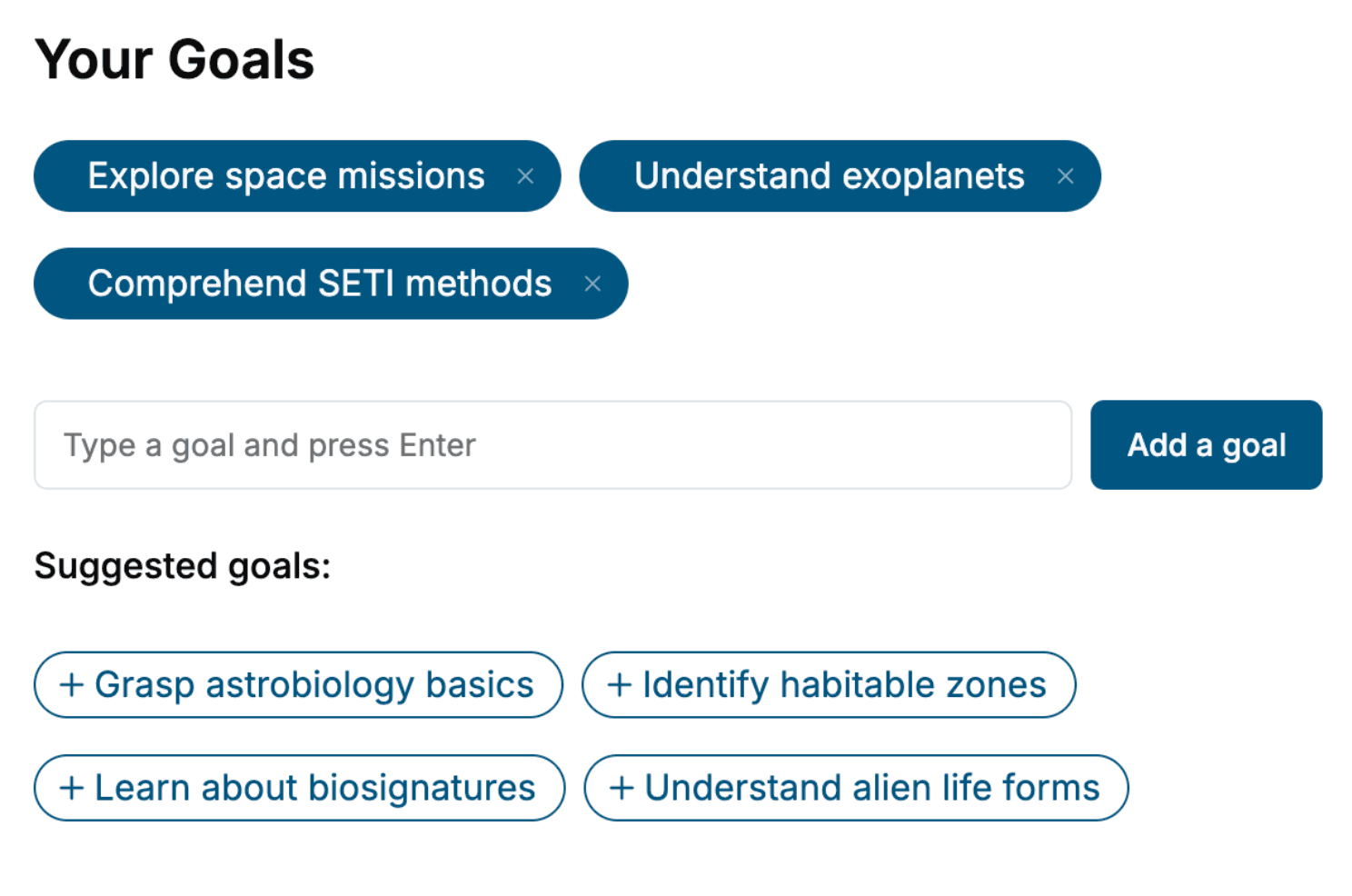
Tell us your goals and background, and get your own version of this book, tailored by AI to you.


Benefits of AI-tailored books
- Read one book, not ten:
- all the Machine Learning knowledge you need, gathered into a single book.
- Save days of learning:
- tell us your goals, choose your topics, and the whole book is built around them.
- Learn effortlessly:
- Machine Learning book written for your specific background and expertise.
- Understand at a glance:
- includes charts, tables, timelines, checklists, decision trees, and more.
- Stay current:
- written the day you order it, not years ago.
- Trust what you read:
- every book is checked for accuracy, with real research when your subject needs it.
Create your unique book in 3 steps
- 1. Select your focus
Select the focus of your Machine Learning book and share your background
- 2. Personalize your book
Specify your goals and choose sub-topics to include
- 3. Get your tailored book
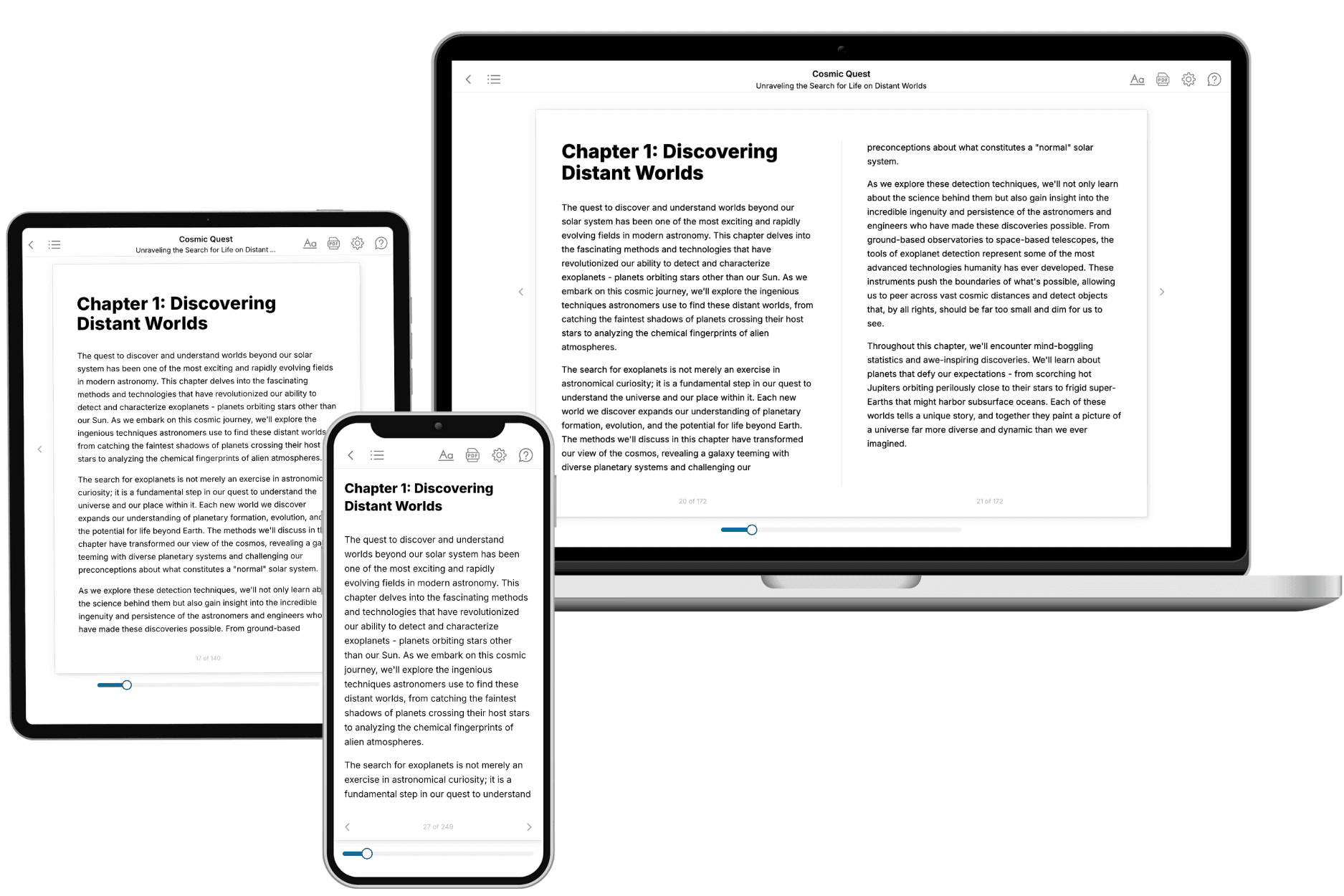
Your book is ready in 10 minutes. Read it online, download as EPUB or PDF, or send to Kindle.

Frequently asked questions
- What is TailoredRead?
TailoredRead creates complete, full-length nonfiction ebooks, written specifically for you. Tell us what you want to learn and why, and TailoredRead writes you a complete ebook on it, with charts, tables, and diagrams throughout. Read it online, on Kindle, or on any e-reader, or download it as a PDF or EPUB. Every book is written fresh the day you order it.
- How is the book tailored to me?
Before anything is written, you answer a few short questions about your goals, your background, and the topics you care about. Your book is then planned around your answers: written at your level, focused on your goals, and covering the topics you chose, instead of the one-size-fits-all book a store sells everyone.
- Will it read like generic AI content?
No. Your book isn't a chat transcript: it's planned chapter by chapter before a single word is written, told in a clear book voice, and explains ideas visually with charts, tables, and diagrams. After writing, every book goes through an editorial pass that polishes chapters so the book reads consistent from start to finish. Judge for yourself: browse thousands of sample books on our Explore Books page.
- How accurate is the content?
Our AI first checks whether your subject needs live research. Niche and fast-moving subjects are researched before writing, and the book plan and chapters are grounded in what it finds. After writing, every book goes through a quality pass that checks its facts and consistency, and researched books list their sources in a Notes section at the back.
- How long is the book?
You choose the length: Comprehensive (250-300 pages), Detailed (150-200 pages), Essential (70-100 pages), or Short (30-50 pages).
- Does the book include visuals?
Yes. Every book includes charts, tables, and diagrams: timelines, checklists, step-by-step guides, decision trees, comparison tables, matrices, and bar charts. A typical book includes dozens of these visual elements.
- Can I read it on Kindle? What formats can I download?
Yes. Every book can be read in our online reader or downloaded as a PDF or EPUB. The EPUB can be opened with Kindle, Apple Books, Kobo, and any e-reader. The Commercial and Author licenses also include an editable Word (DOCX) and Markdown download.
- How much does it cost?
About the price of a regular ebook. The exact price depends on your book's length and complexity, from $2 for the shortest books to $35 for the most comprehensive, and it's shown when you review your book, before you commit to anything. Each book is a one-time purchase, yours to keep, no subscription. Licenses that let you share, teach, or publish your book range from $35.99 to $49.99.
- Can I preview the book before purchasing?
Before you pay, you'll see what your book will cover: the title, a detailed description, the estimated length, and the complete chapter-by-chapter table of contents, so you know what you're getting before you decide. The full text itself is written after you purchase.
- How long does it take to create a book?
About 10 minutes. You can start reading the opening chapters while the rest is still being written.