One Small Step
The Extraordinary Life and Legacy of Neil Armstrong
Think you know everything about the first man on the Moon?
253 pages13 chaptersFeb 12, 2025Astronaut Biography
About this book
Think again. Neil Armstrong's life was far more than just that historic lunar landing. From his early days as a naval aviator to his groundbreaking spacewalk, Armstrong's journey was filled with challenges, triumphs, and moments that shaped not only his life but the course of human history. In "One Small Step: The Extraordinary Life and Legacy of Neil Armstrong," you'll discover the lesser-known aspects of this American hero's life. Explore the rigorous training, the near-disasters, and the personal sacrifices that paved the way for that iconic first step on lunar soil. Through meticulously researched accounts and personal anecdotes, this book paints a vivid picture of a man whose quiet determination and unwavering focus helped push the boundaries of human achievement. This isn't just another space race narrative. It's an intimate look at the person behind the spacesuit - a humble Midwesterner whose passion for flight and exploration led him to the pinnacle of human accomplishment. Whether you're a space enthusiast or simply curious about one of the 20th century's most influential figures, this book offers a fresh perspective on Armstrong's life and the enduring impact of his historic achievement.
Table of contents
- IntroductionThe Enduring Legacy of Neil Armstrong, A Journey Through the Life of an American Hero, Beyond the Moonwalk: Discovering the Man Behind the LegendRead below
- Chapter 1: The Early YearsChildhood in Ohio, First Flight and Growing Passion for Aviation, Education and Engineering Studies, Naval Service and Korean War
- Chapter 2: The Test Pilot YearsEdwards Air Force Base, The X-15 Program, Pushing the Limits of Flight, Developing Critical Skills for Space
- Chapter 3: Joining NASAThe Astronaut Selection Process, Becoming One of the 'New Nine', Rigorous Training Begins, Personal and Family Sacrifices
- Chapter 4: The Gemini ProgramOverview of the Gemini Program, The Gemini 8 Mission, Averting Disaster: Armstrong's Cool Under Pressure, Lessons Learned for Future Missions
- Chapter 5: The Apollo ProgramOverview of the Apollo Program, Selection for Apollo 11, Preparing for the Historic Mission, The Apollo 1 Tragedy and Its Impact
- Chapter 6: Apollo 11: The LaunchThe Countdown and Final Preparations, Liftoff and Earth Orbit, Trans-Lunar Injection, The Journey to the Moon
- Chapter 7: The Lunar LandingDescent to the Lunar Surface, Overcoming Landing Challenges, 'The Eagle Has Landed', Preparing for the Moonwalk
- Chapter 8: One Small StepExiting the Lunar Module, The Famous First Words, Exploring the Lunar Surface, Planting the American Flag
- Chapter 9: The Return JourneyLunar Ascent and Rendezvous, The Journey Back to Earth, Reentry and Splashdown, The Quarantine Period
- Chapter 10: Life After ApolloDealing with Instant Global Fame, The Global Goodwill Tour, Departure from NASA, Teaching Career and Further Education
- Chapter 11: The Later YearsBusiness Ventures and Board Positions, Involvement in Space Accident Investigations, Rare Public Appearances and Statements, Personal Life and Family
- Chapter 12: Armstrong's LegacyImpact on Space Exploration, Scientific and Technological Advancements, Armstrong as a Cultural Icon, Inspiring Future Generations
- Chapter 13: Reflections on a Remarkable LifeThe Qualities That Defined Armstrong, Armstrong's Place in Historical Context, The Future of Space Exploration, Final Thoughts on an American Hero
- AppendixTimeline of Neil Armstrong's Life, Awards and Honors, Key Speeches and Quotes
- GlossarySpace and Aviation Terms, NASA Acronyms and Abbreviations
Introduction
On July 20, 1969, the world held its collective breath as Neil Armstrong descended the ladder of the Lunar Module Eagle and took his first step onto the surface of the Moon. His words, "That's one small step for man, one giant leap for mankind," echoed across the globe, marking a pivotal moment in human history. This extraordinary achievement was the culmination of years of dedication, rigorous training, and unwavering determination. Yet, Neil Armstrong's life story encompasses far more than just those few historic moments on the lunar surface. It is a tale of passion, perseverance, and the relentless pursuit of knowledge that shaped not only his own destiny but also the course of space exploration and human achievement.
In the pages that follow, you will embark on a journey through the life of Neil Armstrong, from his humble beginnings in Ohio to his ascent as one of the most recognized figures in history. This introduction serves as your gateway to understanding the man behind the legend, the challenges he faced, and the lasting impact of his contributions to science and humanity. As we delve into Armstrong's story, we'll explore the key events, decisions, and personal qualities that propelled him from a curious young boy with a love for flying to the first human to set foot on another celestial body.
The story of Neil Armstrong is not just a recounting of historical events; it is a testament to the power of human potential and the remarkable heights we can reach when we dare to dream big and work tirelessly to turn those dreams into reality. Through his life, we gain insights into the nature of courage, the importance of teamwork, and the impact that one individual can have on the world. As you read about Armstrong's journey, you'll discover that his legacy extends far beyond that iconic first step on the Moon, influencing generations of scientists, explorers, and dreamers who continue to push the boundaries of what's possible.
The Enduring Legacy of Neil Armstrong
Neil Armstrong's legacy is a multifaceted tapestry woven from his extraordinary achievements, his unwavering dedication to exploration and science, and the profound impact he had on the collective imagination of humanity. At its core, Armstrong's legacy is one of inspiration, demonstrating the heights that human beings can reach when they combine skill, courage, and determination. His famous first step onto the lunar surface was not just a personal triumph or even a national achievement for the United States; it was a moment that united the entire world in awe and wonder, showcasing the potential of human ingenuity and cooperation.
One of the most significant aspects of Armstrong's legacy is his role in advancing space exploration. The success of the Apollo 11 mission, with Armstrong at its helm, paved the way for further lunar missions and sparked a renewed interest in space exploration that continues to this day. His achievement didn't just prove that landing on the Moon was possible; it opened up a new frontier for scientific discovery and technological innovation. The technologies and techniques developed for the Apollo program have found applications in numerous fields, from medicine to communications, benefiting society in ways that extend far beyond space exploration[1].
Armstrong's legacy also encompasses his approach to fame and his conduct after the Moon landing. Despite becoming one of the most famous people on Earth overnight, he remained humble and focused on the collective achievement rather than personal glory. This humility and dedication to the larger goals of science and exploration set a powerful example for future generations of astronauts and scientists. Armstrong's insistence on crediting the thousands of individuals who made the Moon landing possible highlighted the collaborative nature of scientific achievement and the importance of teamwork in tackling grand challenges.
In education and public engagement, Armstrong's impact continued long after he left NASA. His work as a professor of aerospace engineering inspired countless students to pursue careers in science and technology. Moreover, his rare public appearances and carefully chosen words carried significant weight, whether he was testifying before Congress on space policy or sharing his views on the future of exploration. Armstrong's thoughtful and measured approach to public life ensured that when he did speak, people listened, amplifying the impact of his message.
The ripple effects of Armstrong's achievements can be seen in the ongoing efforts to explore Mars and other celestial bodies. His success proved that seemingly impossible goals could be achieved with sufficient determination, resources, and ingenuity. This has inspired subsequent generations of scientists, engineers, and policymakers to set ambitious targets for space exploration, from establishing permanent bases on the Moon to sending humans to Mars. The spirit of exploration and the belief in pushing beyond known boundaries that Armstrong embodied continue to drive space agencies and private companies in their quest to extend human presence in the solar system.
Furthermore, Armstrong's legacy extends into the realm of international cooperation and diplomacy. The Apollo-Soyuz Test Project, which followed the Apollo program, marked the beginning of international cooperation in space between the United States and the Soviet Union. This spirit of collaboration, born in part from the universal admiration for the achievements of Armstrong and his fellow Apollo astronauts, has flourished over the decades, culminating in projects like the International Space Station. Armstrong's step on the Moon showed that achievements in space could transcend national boundaries and ideological differences, fostering a sense of shared human endeavor.
In popular culture and public consciousness, Neil Armstrong remains an iconic figure, symbolizing the best of human courage, skill, and exploration. His image and words have been immortalized in countless books, films, and artworks, ensuring that future generations will continue to be inspired by his story. The enduring fascination with Armstrong and the Apollo missions demonstrates the deep-seated human desire to explore and understand our place in the universe, a desire that Armstrong's achievements both satisfied and further kindled.
As we continue to face global challenges and seek to push the boundaries of human knowledge and capability, the legacy of Neil Armstrong serves as a beacon of what can be accomplished when we set our sights on lofty goals and work tirelessly to achieve them. His life story reminds us that the journey is often as important as the destination, and that the pursuit of knowledge and exploration can unite humanity in common purpose. Armstrong's legacy challenges us to dream big, to nurture our curiosity about the world and universe around us, and to approach even the most daunting tasks with determination and humility.
In essence, the enduring legacy of Neil Armstrong is not just about remembering a historic moment or celebrating a single individual's achievements. It's about recognizing the potential within each of us to contribute to the advancement of human knowledge and achievement. It's about understanding that every small step we take in pursuit of our goals and in service of a larger purpose has the potential to become a giant leap for all of humanity. As we continue to write the next chapters in the story of human exploration and scientific discovery, we do so standing on the shoulders of giants like Neil Armstrong, inspired by their achievements and challenged to reach even greater heights.
A Journey Through the Life of an American Hero
This book offers a comprehensive exploration of Neil Armstrong's life, from his early years in Ohio to his final days as a revered American hero. It is structured to provide you with a chronological journey through Armstrong's life, highlighting the key events, challenges, and triumphs that shaped his extraordinary career and lasting legacy. Each chapter is designed to offer deep insights into different phases of Armstrong's life, allowing you to gain a nuanced understanding of the man behind the historic first step on the Moon.
The narrative begins with Armstrong's childhood in Ohio, where his fascination with flight first took root. You'll learn about his early experiences with aviation, including his first airplane ride at the age of six, which sparked a lifelong passion. The book delves into Armstrong's formative years, exploring how his upbringing in a middle-class family in the Midwest instilled in him the values of hard work, perseverance, and humility that would define his character throughout his life. This section also covers Armstrong's education, including his time at Purdue University, where he studied aeronautical engineering on a U.S. Navy scholarship, setting the foundation for his future career in aviation and space exploration.
Moving forward, the book examines Armstrong's naval service and his experiences as a fighter pilot during the Korean War. This period was crucial in shaping Armstrong's skills as a pilot and his ability to remain calm under extreme pressure – qualities that would prove invaluable in his later career as an astronaut. You'll gain insights into the challenges and dangers Armstrong faced during his 78 combat missions, and how these experiences contributed to his development as a skilled aviator and leader.
A significant portion of the book is dedicated to Armstrong's career as a test pilot at Edwards Air Force Base. This chapter explores the cutting-edge aircraft Armstrong flew, including the X-15 rocket plane, which took him to the edge of space. You'll learn about the risks and rewards of test flying, the technological advancements Armstrong contributed to, and how this period honed the skills that would later make him an ideal candidate for the astronaut program. The narrative provides a detailed look at the X-15 program, highlighting Armstrong's record-setting flight to an altitude of 207,500 feet, which offered him his first glimpse of the Earth's curvature and the blackness of space.
The book then transitions to Armstrong's selection for NASA's astronaut program and his experiences during the Gemini program. This section offers an in-depth look at the rigorous selection process Armstrong underwent to become one of the "New Nine" – NASA's second group of astronauts. You'll learn about the intense training regimen, the technological challenges of the space race, and the personal sacrifices made by Armstrong and his family. The chapter on the Gemini program focuses particularly on the Gemini 8 mission, during which Armstrong and fellow astronaut David Scott faced a potentially catastrophic situation when their spacecraft began to spin out of control. This incident showcases Armstrong's exceptional skill and composure under extreme pressure, qualities that would later prove crucial during the Apollo 11 mission.
A substantial portion of the book is devoted to the Apollo program and the historic Apollo 11 mission. These chapters provide a detailed account of the preparation for the lunar landing, including the selection of Armstrong as commander of Apollo 11. You'll gain insights into the intensive training, the technological challenges overcome by NASA engineers, and the geopolitical context of the space race with the Soviet Union. The narrative builds tension as it describes the launch of Apollo 11, the journey to the Moon, and the heart-stopping moments of the lunar descent and landing. Armstrong's famous first words upon stepping onto the lunar surface are examined in detail, including the preparation behind them and their global impact.
The book doesn't end with the Moon landing but continues to explore Armstrong's life after his return to Earth. You'll learn about how he handled instant global fame, his decision to leave NASA, and his subsequent career in teaching and business. This section provides a nuanced look at Armstrong's character, his desire for privacy, and his ongoing commitment to advancing aerospace technology and education. The book also addresses Armstrong's involvement in various NASA review boards and his rare but impactful public statements on space policy and exploration.
In the final chapters, the book reflects on Armstrong's legacy and his place in history. It examines how his achievements have inspired subsequent generations of scientists, engineers, and explorers. The narrative also looks at the broader impact of the Apollo program on technology, international relations, and our understanding of Earth and its place in the cosmos. These chapters provide a thoughtful analysis of Armstrong's enduring influence on space exploration, scientific advancement, and the human spirit of discovery.
Throughout the book, you'll find not just a recounting of events, but a deep dive into the personal qualities that made Armstrong uniquely suited for his historic role. The narrative is enriched with anecdotes from colleagues, friends, and family members, offering a multifaceted portrait of Armstrong as not just an American hero, but as a human being with his own strengths, quirks, and complexities. By the end of this journey through Armstrong's life, you'll have gained a comprehensive understanding of the man, his mission, and the monumental impact he had on human history.
Beyond the Moonwalk: Discovering the Man Behind the Legend
While Neil Armstrong's moonwalk is undoubtedly the most famous moment of his life, it is merely one facet of a rich and complex individual whose contributions to aviation, space exploration, and science extend far beyond those few historic hours on the lunar surface. This book aims to peel back the layers of mythology surrounding Armstrong to reveal the man behind the legend – a task that is both challenging and essential for truly understanding his impact on history and his enduring legacy.
One of the key aspects of Armstrong's character that this book explores is his lifelong passion for flight and engineering. Long before he became an astronaut, Armstrong was fascinated by the mechanics of flight and the challenge of pushing the boundaries of what was possible in the air. This passion drove him from his early days as a naval aviator through his career as a test pilot and ultimately to space. By delving into Armstrong's technical expertise and his approach to problem-solving, you'll gain insights into the mind of an engineer who was constantly seeking to understand and improve the machines he operated. This aspect of Armstrong's personality was crucial not only in his selection for the Apollo program but also in his ability to handle the unforeseen challenges that arose during the lunar landing.
The book also sheds light on Armstrong's leadership style and his ability to work effectively as part of a team. While often portrayed as a lone hero, Armstrong was, in fact, a consummate team player who understood the value of collaboration in achieving complex goals. His experiences in the Korean War, as a test pilot, and throughout the NASA program honed his ability to communicate clearly, make decisive decisions under pressure, and inspire confidence in those around him. Through interviews with colleagues and analysis of mission transcripts, you'll see how Armstrong's calm demeanor and focus on the task at hand were instrumental in the success of Apollo 11 and his other missions.
Another important aspect of Armstrong's character that the book explores is his humility and his complex relationship with fame. Despite becoming one of the most famous people on Earth overnight, Armstrong remained grounded and often uncomfortable with the attention his achievements garnered. This section of the book examines how Armstrong navigated the challenges of sudden celebrity, his efforts to deflect personal glory to the broader NASA team, and his decision to step back from public life in later years. By understanding Armstrong's perspective on fame and his role in history, you'll gain a more nuanced view of the man and the values that guided his life choices.
The book also delves into Armstrong's intellectual curiosity and his lifelong commitment to education and scientific advancement. After leaving NASA, Armstrong pursued a career in teaching, sharing his knowledge and experience with a new generation of engineers. His involvement in various scientific and technological ventures, as well as his participation in space policy discussions, demonstrates a mind that was constantly engaged with the future of exploration and innovation. This section of the book highlights how Armstrong's contributions to science and technology continued long after his astronaut career, shaping fields ranging from aviation safety to digital fly-by-wire technology.
An often-overlooked aspect of Armstrong's life that this book explores is his role as a family man and his personal relationships. While respecting the privacy that Armstrong valued so highly, the narrative provides glimpses into his home life, his marriages, and his role as a father. These personal details help to humanize the legendary figure, showing how he balanced the extraordinary demands of his career with the ordinary challenges of family life. The book also touches on the personal costs of fame and the sacrifices made by Armstrong and his loved ones in pursuit of his historic achievements.
The book also examines Armstrong's philosophical outlook and his perspective on humanity's place in the universe. His experiences in space, particularly the view of Earth from the Moon, had a profound impact on his worldview. Through Armstrong's own words and the observations of those close to him, you'll gain insights into how the lunar mission affected his understanding of our planet's fragility and the importance of global cooperation. This section explores how Armstrong's unique vantage point influenced his thoughts on environmental conservation, international collaboration, and the future of space exploration.
Another important theme the book addresses is Armstrong's role in shaping public perception of space exploration and science. Despite his reluctance to seek the spotlight, Armstrong understood the importance of public support for scientific endeavors. The book analyzes his carefully chosen public appearances and statements, showing how he used his platform to advocate for continued space exploration and scientific education. You'll see how Armstrong's measured and thoughtful approach to public engagement allowed him to maintain his credibility and influence long after he left NASA.
The book also explores Armstrong's lesser-known contributions to aviation safety and accident investigation. His experiences as a test pilot and astronaut gave him unique insights into the complexities of flight systems and human-machine interaction. After leaving NASA, Armstrong served on investigation boards for several high-profile aviation and space accidents, including the Apollo 13 review board and the commission investigating the Space Shuttle Challenger disaster. This section highlights how Armstrong's expertise and analytical skills continued to benefit the aerospace industry and contribute to safer air and space travel.
By exploring these various facets of Neil Armstrong's life and character, this book aims to provide you with a comprehensive and nuanced understanding of the man behind the moonwalk. It seeks to move beyond the iconic images and famous quotes to reveal a complex individual whose contributions to science, technology, and human achievement extend far beyond his famous first step. Through this exploration, you'll come to appreciate not just what Armstrong did, but who he was – a man of extraordinary skill, unwavering dedication, and profound humility whose life continues to inspire and inform our ongoing journey of exploration and discovery.
Notes
Introduction
- 1. W. D. Compton, Where No Man Has Gone Before: A History of Apollo Lunar Exploration Missions, NASA Special Publication-4214, 1989
This is the end of the free sample. The full book has 13 chapters.
Want this book written for you?
Tell us your goals and background, and get your own version of this book, tailored by AI to you.


Benefits of AI-tailored books
- Read one book, not ten:
- all the Astronaut Biography knowledge you need, gathered into a single book.
- Save days of learning:
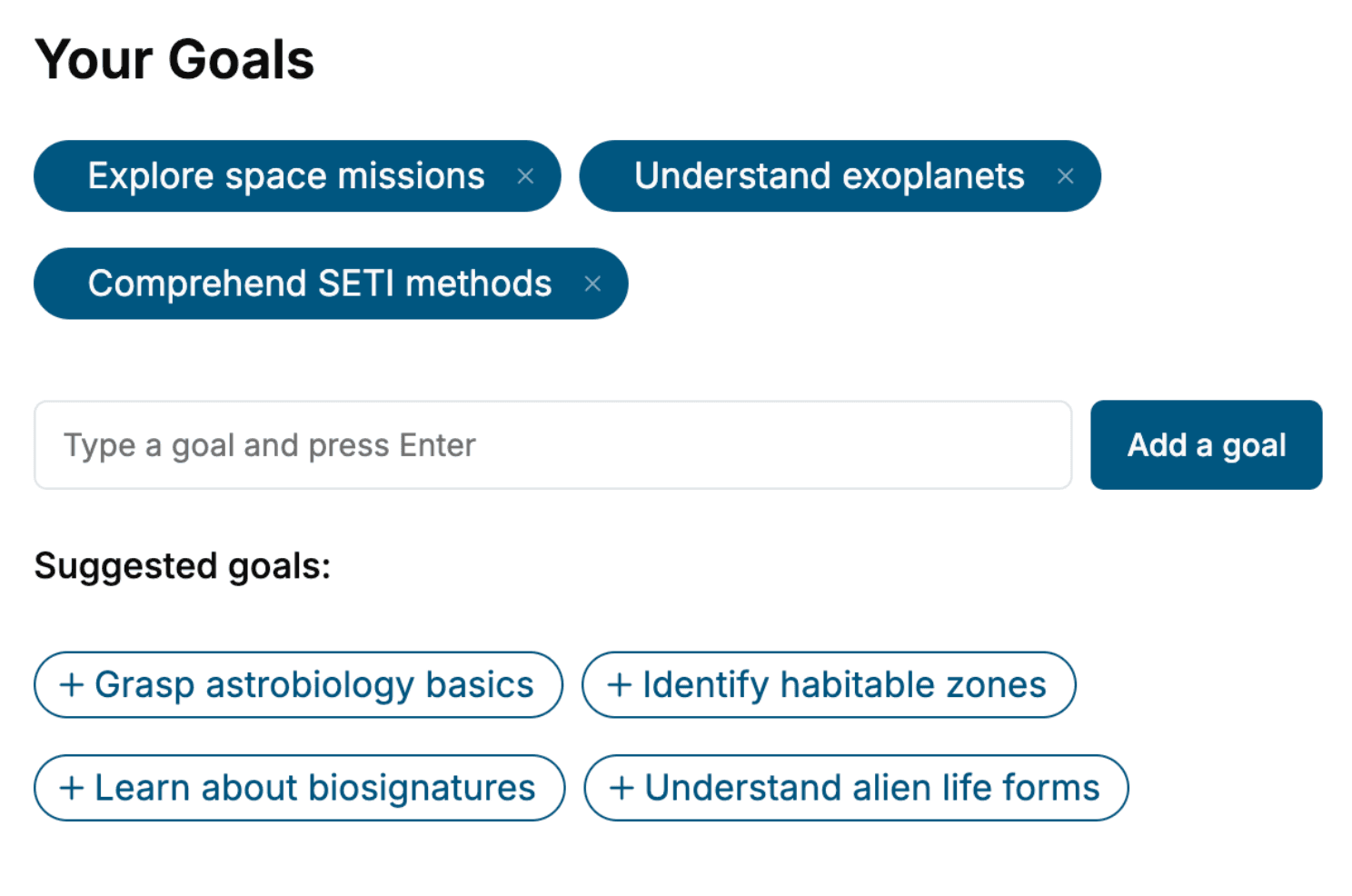
- tell us your goals, choose your topics, and the whole book is built around them.
- Learn effortlessly:
- Astronaut Biography book written for your specific background and expertise.
- Understand at a glance:
- includes charts, tables, timelines, checklists, decision trees, and more.
- Stay current:
- written the day you order it, not years ago.
- Trust what you read:
- every book is checked for accuracy, with real research when your subject needs it.
Create your unique book in 3 steps
- 1. Select your focus
Select the focus of your Astronaut Biography book and share your background
- 2. Personalize your book
Specify your goals and choose sub-topics to include
- 3. Get your tailored book
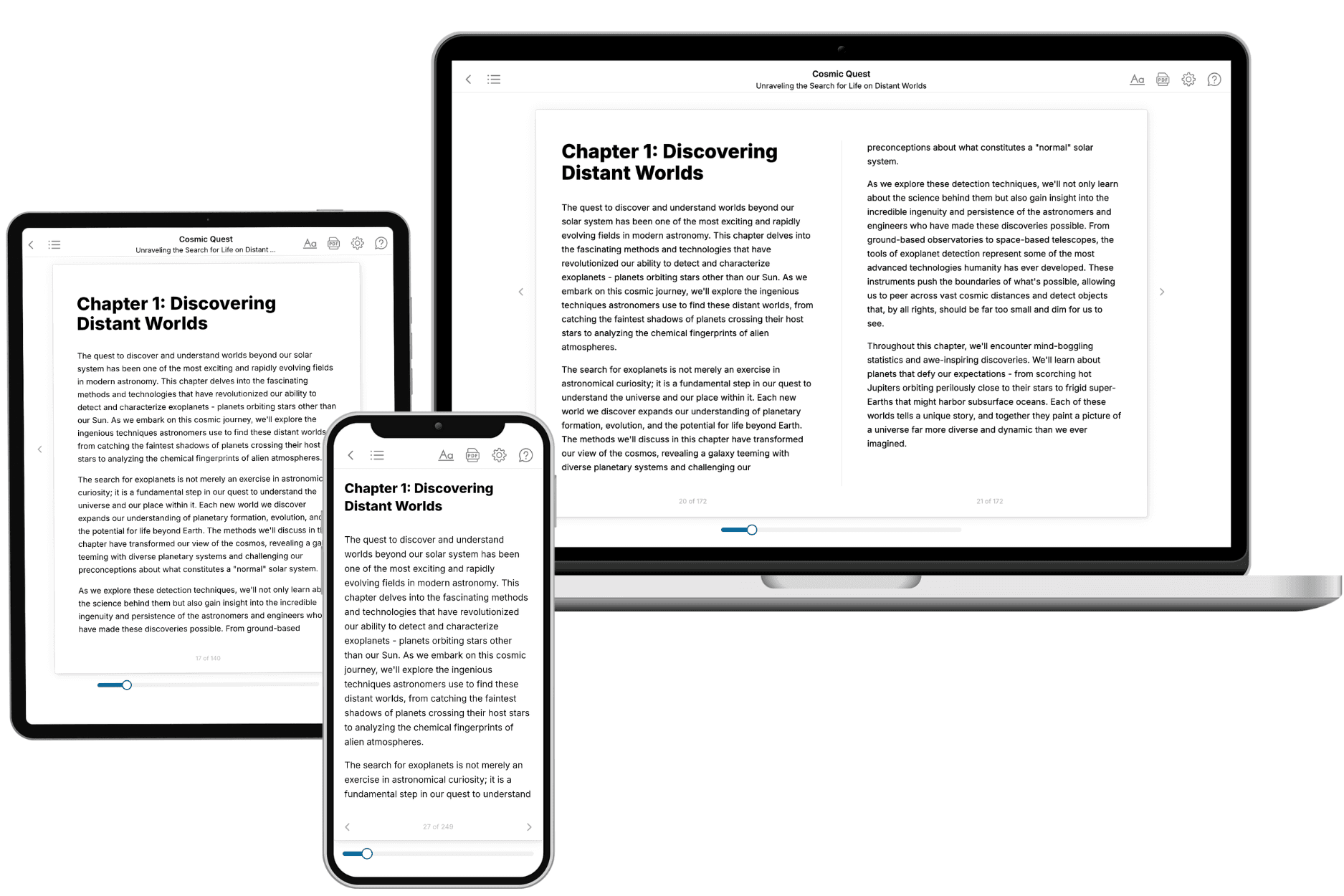
Your book is ready in 10 minutes. Read it online, download as EPUB or PDF, or send to Kindle.

Frequently asked questions
- What is TailoredRead?
TailoredRead creates complete, full-length nonfiction ebooks, written specifically for you. Tell us what you want to learn and why, and TailoredRead writes you a complete ebook on it, with charts, tables, and diagrams throughout. Read it online, on Kindle, or on any e-reader, or download it as a PDF or EPUB. Every book is written fresh the day you order it.
- How is the book tailored to me?
Before anything is written, you answer a few short questions about your goals, your background, and the topics you care about. Your book is then planned around your answers: written at your level, focused on your goals, and covering the topics you chose, instead of the one-size-fits-all book a store sells everyone.
- Will it read like generic AI content?
No. Your book isn't a chat transcript: it's planned chapter by chapter before a single word is written, told in a clear book voice, and explains ideas visually with charts, tables, and diagrams. After writing, every book goes through an editorial pass that polishes chapters so the book reads consistent from start to finish. Judge for yourself: browse thousands of sample books on our Explore Books page.
- How accurate is the content?
Our AI first checks whether your subject needs live research. Niche and fast-moving subjects are researched before writing, and the book plan and chapters are grounded in what it finds. After writing, every book goes through a quality pass that checks its facts and consistency, and researched books list their sources in a Notes section at the back.
- How long is the book?
You choose the length: Comprehensive (250-300 pages), Detailed (150-200 pages), Essential (70-100 pages), or Short (30-50 pages).
- Does the book include visuals?
Yes. Every book includes charts, tables, and diagrams: timelines, checklists, step-by-step guides, decision trees, comparison tables, matrices, and bar charts. A typical book includes dozens of these visual elements.
- Can I read it on Kindle? What formats can I download?
Yes. Every book can be read in our online reader or downloaded as a PDF or EPUB. The EPUB can be opened with Kindle, Apple Books, Kobo, and any e-reader. The Commercial and Author licenses also include an editable Word (DOCX) and Markdown download.
- How much does it cost?
About the price of a regular ebook. The exact price depends on your book's length and complexity, from $2 for the shortest books to $35 for the most comprehensive, and it's shown when you review your book, before you commit to anything. Each book is a one-time purchase, yours to keep, no subscription. Licenses that let you share, teach, or publish your book range from $35.99 to $49.99.
- Can I preview the book before purchasing?
Before you pay, you'll see what your book will cover: the title, a detailed description, the estimated length, and the complete chapter-by-chapter table of contents, so you know what you're getting before you decide. The full text itself is written after you purchase.
- How long does it take to create a book?
About 10 minutes. You can start reading the opening chapters while the rest is still being written.