Optimization Algorithms Demystified
Master the Mathematical Techniques That Power Modern Problem-Solving
Finding the best solution to a complex problem often feels impossible—there are too many variables, too many possibilities, and no clear path forward.
222 pages10 chaptersJan 9, 2026Optimization Algorithms
About this book
Optimization algorithms are the mathematical tools that cut through this complexity, systematically searching for the best answer even when the problem space is enormous. This book bridges the gap between abstract mathematical theory and practical application, showing you how optimization algorithms actually work and when to use each one. You'll explore gradient-based methods that power machine learning, evolutionary algorithms inspired by nature, and specialized techniques for different problem types. Rather than drowning you in equations, this guide uses clear explanations, intuitive examples, and real-world applications to build your understanding from the ground up. Whether you're working with machine learning models, engineering design problems, or financial optimization, you'll gain the knowledge to select, configure, and implement the right algorithm for your challenge.
Table of contents
- IntroductionWhy Optimization Matters in Today's World, What You'll Learn in This Book, How to Use This Guide, Mathematical Foundations You'll NeedRead below
- Chapter 1: The Fundamentals of OptimizationWhat Is Optimization?, Objective Functions and Constraints, Minimization vs. Maximization, The Optimization Landscape: Peaks and Valleys
- Chapter 2: Mathematical FoundationsDerivatives and Gradients, Convexity and Non-Convexity, Convergence and Optimality Conditions, Hessians and Second-Order Information
- Chapter 3: Gradient Descent and Its VariantsGradient Descent: The Foundation, Learning Rates and Step Sizes, Stochastic Gradient Descent (SGD), Momentum and Acceleration Methods
- Chapter 4: Advanced Gradient-Based MethodsAdaptive Learning Rates: Adam and RMSprop, Second-Order Methods: Newton and Quasi-Newton, Conjugate Gradient Methods, Choosing the Right Gradient-Based Method
- Chapter 5: Evolutionary and Population-Based AlgorithmsGenetic Algorithms: Evolution in Action, Particle Swarm Optimization, Differential Evolution, When to Use Population-Based Methods
- Chapter 6: Escaping Local OptimaLocal vs. Global Optima: The Core Challenge, Simulated Annealing, Tabu Search, Multi-Start and Restart Strategies
- Chapter 7: Constrained OptimizationHandling Constraints in Optimization, Lagrange Multipliers and Duality, Penalty and Barrier Methods, Interior-Point Methods
- Chapter 8: Practical Implementation and TuningHyperparameter Tuning and Configuration, Monitoring Convergence and Debugging, Computational Efficiency and Scalability, Implementation Best Practices
- Chapter 9: Real-World Applications and Case StudiesOptimization in Machine Learning, Engineering Design and Resource Allocation, Financial Portfolio Optimization, Case Study: Solving a Complex Real-World Problem
- Chapter 10: Hybrid and Advanced ApproachesCombining Algorithms: Hybrid Approaches, Ensemble Optimization Methods, Meta-Learning and AutoML
- ConclusionKey Takeaways, Your Next Steps in Optimization
- Glossary of Key Terms
- Further Reading and Resources
Introduction
Every day, you encounter problems that require finding the best solution among countless possibilities. A delivery company needs to determine the most efficient route for its trucks. A machine learning model must adjust millions of parameters to make accurate predictions. An engineer designs a bridge that must be both strong and cost-effective. These challenges share a common thread: they're all optimization problems. At their core, optimization problems ask a deceptively simple question: given a set of constraints and objectives, what's the best choice you can make? The answer, however, is rarely simple. The number of possible solutions often grows exponentially with problem size, making exhaustive search impossible. This is where optimization algorithms come in—systematic mathematical techniques that intelligently navigate vast solution spaces to find the best answer.
Optimization algorithms are the invisible engines powering much of modern technology and decision-making. When you use GPS navigation, an optimization algorithm calculates your route. When Netflix recommends a show, optimization algorithms have tuned the recommendation system. When a pharmaceutical company designs a new drug, optimization algorithms help identify promising molecular structures. Despite their ubiquity, these algorithms often remain mysterious, hidden behind layers of technical jargon and mathematical notation. Many practitioners treat them as black boxes, applying them without understanding their inner workings or limitations. This approach works until it doesn't—when an algorithm fails to converge, gets stuck in a poor solution, or takes too long to run. Understanding how optimization algorithms actually work transforms them from mysterious tools into powerful techniques you can wield with confidence and precision.
This book demystifies optimization algorithms by building your understanding from fundamental principles to practical implementation. You won't find pages of dense mathematical proofs or abstract theorems disconnected from reality. Instead, you'll discover how these algorithms think, why they work, and when to use each one. You'll learn to recognize the characteristics of different optimization problems and match them with appropriate solution techniques. You'll understand the trade-offs between accuracy, speed, and computational resources. Most importantly, you'll gain the practical knowledge needed to implement these algorithms effectively in real-world scenarios. Whether you're working in machine learning, engineering, finance, or any field that involves complex decision-making, this guide will equip you with the optimization toolkit you need to tackle challenging problems with confidence.
Why Optimization Matters in Today's World
The importance of optimization has grown exponentially with the scale and complexity of modern problems. Consider the logistics industry: a company like UPS delivers over 20 million packages daily across a network spanning the globe. Determining efficient delivery routes isn't just about saving time—each mile saved translates to reduced fuel costs, lower emissions, and faster deliveries. UPS famously implemented route optimization that minimized left turns, saving the company millions of gallons of fuel annually[1]. This single optimization initiative demonstrates how mathematical algorithms directly impact operational efficiency, environmental sustainability, and profitability. The same principles apply across industries: airlines optimize flight schedules, manufacturers optimize production lines, and energy companies optimize power grid operations. In each case, even small improvements compound into massive benefits at scale.
Machine learning and artificial intelligence have elevated optimization from a specialized tool to a fundamental necessity. Training a neural network is essentially an optimization problem: adjust millions or billions of parameters to minimize prediction error. The breakthrough success of deep learning in the past decade stems largely from advances in optimization algorithms. Techniques like Adam and RMSprop enable training of networks that would have been impossible with earlier methods. When you interact with voice assistants, use facial recognition, or benefit from medical image analysis, you're experiencing the results of sophisticated optimization algorithms working behind the scenes. The quality of these AI systems depends directly on the effectiveness of the optimization techniques used to train them. As models grow larger and more complex, the efficiency and reliability of optimization algorithms become increasingly critical.
Beyond technology and industry, optimization algorithms address some of society's most pressing challenges. In healthcare, optimization helps allocate scarce medical resources, schedule surgeries to maximize operating room utilization, and design treatment plans tailored to individual patients. During the COVID-19 pandemic, optimization algorithms helped determine vaccine distribution strategies, balancing factors like population density, vulnerability, and logistical constraints. In climate science, optimization techniques help design renewable energy systems, optimize carbon capture technologies, and model strategies for reducing emissions. Financial institutions use optimization to construct investment portfolios that balance risk and return, while governments apply it to tax policy, infrastructure planning, and resource allocation. The ability to find optimal or near-optimal solutions to complex problems with multiple competing objectives has become essential for addressing the multifaceted challenges of the 21st century.
The democratization of computational power has made optimization accessible to a broader audience than ever before. What once required supercomputers can now run on a laptop or even a smartphone. Open-source libraries and frameworks provide implementations of sophisticated optimization algorithms that you can use with just a few lines of code. However, this accessibility comes with a caveat: having access to powerful tools doesn't automatically mean using them effectively. Understanding which algorithm to choose, how to configure it properly, and how to interpret its results requires knowledge that goes beyond simply calling a function. The gap between having optimization tools available and using them skillfully is precisely what this book aims to bridge. By understanding the principles underlying these algorithms, you'll be able to make informed decisions rather than relying on trial and error or blindly following defaults.
Optimization thinking extends beyond formal algorithms to become a valuable problem-solving framework. When you understand optimization principles, you begin to see problems differently. You learn to identify objective functions—what exactly are you trying to maximize or minimize? You recognize constraints—what limitations must your solution respect? You consider the structure of the solution space—is it smooth or rugged, convex or non-convex? This analytical framework helps you break down complex problems into manageable components and reason about solution strategies. Even when you're not explicitly running an optimization algorithm, the mental models and concepts from optimization theory provide valuable tools for structured thinking. This cognitive benefit of understanding optimization extends far beyond the technical applications, influencing how you approach decision-making and problem-solving in general.
The future promises even greater reliance on optimization as problems continue to grow in scale and complexity. Autonomous vehicles must optimize routes in real-time while considering traffic, weather, and passenger preferences. Smart cities will optimize energy distribution, traffic flow, and resource allocation across interconnected systems. Personalized medicine will optimize treatment plans based on individual genetic profiles and real-time health monitoring. Quantum computing may revolutionize optimization by solving certain problem classes exponentially faster than classical computers. As these technologies mature, the demand for people who understand optimization—not just how to use existing tools, but how to adapt and innovate—will only increase. Building a strong foundation in optimization algorithms now positions you to participate in and contribute to these emerging fields.
Perhaps most importantly, optimization matters because resources are finite and decisions have consequences. Whether you're allocating a budget, designing a system, or training a model, you're working within constraints. Time is limited. Computational power costs money. Materials have environmental impacts. Every choice involves trade-offs. Optimization algorithms provide systematic methods for navigating these trade-offs and making the best possible decisions given your constraints and objectives. They transform vague goals like "make it better" into concrete, measurable improvements. They replace guesswork with principled search strategies. They turn intractable problems into solvable ones. In a world of increasing complexity and competing demands, the ability to find optimal or near-optimal solutions isn't just useful—it's essential.
What You'll Learn in This Book
This book provides a comprehensive journey through the landscape of optimization algorithms, starting with fundamental concepts and progressing to advanced techniques and practical applications. You'll begin by understanding what optimization actually means: the formal definition of objective functions, constraints, and solution spaces. You'll learn to distinguish between different types of optimization problems—continuous versus discrete, constrained versus unconstrained, convex versus non-convex—and understand why these distinctions matter. The early chapters establish the mathematical foundations you need, including gradients, derivatives, and convergence criteria, but always with an emphasis on intuition and practical understanding rather than abstract theory. By the end of the foundational section, you'll have a clear mental model of what optimization algorithms are trying to accomplish and the mathematical tools they use to do it.
The core of the book explores the major families of optimization algorithms in depth. You'll master gradient-based methods, starting with basic gradient descent and progressing through modern variants like Adam, RMSprop, and momentum-based approaches. You'll understand not just how these algorithms work, but why they work—what mathematical principles underlie their behavior and what assumptions they make about the problems they solve. You'll discover second-order methods that use curvature information to converge faster, and learn when the additional computational cost is worthwhile. Each algorithm is presented with clear explanations of its mechanics, illustrated with examples, and accompanied by guidance on when to use it. You'll see the same problem solved with different algorithms, allowing you to compare their behavior and understand their relative strengths and weaknesses.
Beyond gradient-based methods, you'll explore alternative approaches that excel in different scenarios. Evolutionary algorithms like genetic algorithms and particle swarm optimization mimic natural processes to solve problems where gradients are unavailable or unreliable. You'll learn how these population-based methods maintain diversity in their search and balance exploration of new regions with exploitation of promising areas. Simulated annealing and tabu search provide strategies for escaping local optima—a critical capability for non-convex problems where many algorithms get stuck in suboptimal solutions. You'll understand the probabilistic principles that allow simulated annealing to occasionally accept worse solutions in pursuit of better ones, and how tabu search uses memory to avoid revisiting previously explored regions. These techniques expand your toolkit beyond gradient-based methods, enabling you to tackle a wider range of problem types.
Constrained optimization receives dedicated attention because real-world problems rarely come without restrictions. You'll learn multiple approaches to handling constraints, from penalty methods that incorporate constraint violations into the objective function, to Lagrange multipliers that transform constrained problems into unconstrained ones. Interior-point methods and barrier functions provide sophisticated techniques for navigating feasible regions while respecting boundaries. You'll understand the trade-offs between different constraint-handling approaches and learn to recognize which method suits your problem structure. The treatment of constraints bridges theory and practice, showing you both the mathematical elegance of duality theory and the practical considerations of implementing constraint-handling in real algorithms.
Practical implementation and tuning form a crucial component of the book. Knowing how an algorithm works in theory is only half the battle—you also need to know how to configure it effectively for your specific problem. You'll learn systematic approaches to hyperparameter tuning, including learning rates, population sizes, mutation rates, and convergence thresholds. You'll discover how to monitor convergence, diagnose problems when algorithms fail to perform as expected, and debug common issues. The book provides concrete guidance on computational efficiency: how to vectorize operations, when to use approximations, and how to scale algorithms to large problems. You'll learn best practices for initialization, stopping criteria, and result validation. This practical knowledge transforms you from someone who can run an algorithm to someone who can make it work effectively.
Real-world applications and case studies demonstrate how optimization algorithms solve actual problems across diverse domains. You'll see detailed examples from machine learning, where optimization trains models and tunes hyperparameters. Engineering applications show how optimization designs structures, allocates resources, and improves system performance. Financial examples illustrate portfolio optimization, balancing risk and return under various constraints. Each case study walks through the complete problem-solving process: formulating the problem as an optimization task, selecting an appropriate algorithm, implementing and tuning it, and interpreting the results. These examples provide templates you can adapt to your own problems, showing not just what worked but why it worked and what alternatives were considered.
The book concludes with advanced topics that represent the cutting edge of optimization practice. Hybrid approaches combine multiple algorithms to leverage their complementary strengths—for example, using a genetic algorithm for global exploration followed by gradient descent for local refinement. Ensemble methods run multiple optimization algorithms in parallel and combine their results, improving robustness and solution quality. You'll explore meta-learning and AutoML, where optimization algorithms automatically select and configure other optimization algorithms. These advanced techniques represent the direction the field is moving, and understanding them prepares you for the future of optimization. Throughout the book, you'll build not just knowledge of specific algorithms, but a deeper understanding of optimization as a discipline—the principles, patterns, and problem-solving strategies that transcend any individual technique.
How to Use This Guide
This book is designed to be read sequentially, with each chapter building on concepts introduced in previous ones. The early chapters establish foundational knowledge that later chapters assume you understand. If you're new to optimization, start at the beginning and work through the material in order. The progression is deliberate: you'll encounter concepts in an order that builds intuition before adding complexity. However, if you already have some background in optimization, you can use the detailed table of contents to jump to specific topics of interest. Each chapter is relatively self-contained, with references back to earlier material when necessary. The subsection structure allows you to quickly locate specific algorithms or concepts you want to review or explore in depth.
As you read, engage actively with the material rather than passively consuming it. When you encounter an algorithm description, try to visualize how it would behave on a simple problem. Sketch the optimization landscape and trace how the algorithm would move through it. When you see an example, pause and consider how you might approach the problem before reading the solution. Ask yourself questions: Why does this algorithm work? What would happen if we changed this parameter? When might this approach fail? This active engagement transforms reading from information absorption into genuine understanding. The book includes numerous examples and case studies specifically to support this active learning approach—use them as opportunities to test and deepen your comprehension.
Practical implementation is essential for truly mastering optimization algorithms. Reading about an algorithm provides conceptual understanding, but implementing it yourself reveals subtleties and challenges that aren't apparent from description alone. As you progress through the book, implement the algorithms in your programming language of choice. Start with simple test functions where you know the optimal solution, allowing you to verify your implementation works correctly. Then apply the algorithms to progressively more complex problems. You don't need to implement everything from scratch—using existing libraries is perfectly appropriate for practical work—but implementing at least a few algorithms yourself provides invaluable insight into how they actually operate. The book's explanations are designed to support implementation, providing enough detail to code the algorithms while focusing on understanding rather than getting lost in minutiae.
The mathematical content is presented with accessibility in mind, but some sections do require engagement with equations and formal notation. Don't let the mathematics intimidate you. Each mathematical concept is introduced with intuitive explanation before formal notation. When you encounter an equation, take time to understand what each symbol represents and what the equation is expressing. Often, complex-looking mathematics expresses relatively simple ideas—the notation is just a precise way of stating them. If you find a section particularly challenging, consider these strategies:
- Read the surrounding text carefully—it often explains the equation in plain language
- Work through the equation with simple numbers to see what it does
- Sketch a diagram or graph to visualize what the equation represents
- Move forward and return later—sometimes later material clarifies earlier concepts
- Consult the glossary for definitions of unfamiliar terms
Use the book's structure to support different learning goals and time constraints. If you need to solve a specific problem quickly, the chapter on practical implementation and the case studies provide actionable guidance you can apply immediately. If you're preparing for a course or exam, the systematic coverage of algorithms and their mathematical foundations provides comprehensive reference material. If you're building long-term expertise, work through the entire book methodically, implementing algorithms and experimenting with variations. The book supports all these use cases through its layered structure: high-level explanations provide quick understanding, while detailed sections offer depth for those who want it. Subsection headers and the table of contents make it easy to navigate to exactly the information you need at any given moment.
Consider creating a personal reference as you read. Maintain notes summarizing key algorithms, their strengths and weaknesses, and when to use them. Create a decision tree or flowchart to help you select appropriate algorithms for different problem types. Collect code snippets and implementation patterns you find useful. Build a library of test functions and benchmark problems you can use to evaluate new algorithms. This personal reference becomes increasingly valuable over time, serving as a quick-reference guide tailored to your specific needs and interests. The act of creating these materials also reinforces your learning, transforming passive reading into active knowledge construction. Your notes and implementations become artifacts of your learning journey and practical tools for future work.
Finally, remember that mastering optimization is a journey, not a destination. The field continues to evolve, with new algorithms and techniques emerging regularly. This book provides a solid foundation, but your learning shouldn't stop here. The "Further Reading and Resources" section points you toward additional materials for deepening your knowledge. Stay curious about new developments in the field. When you encounter optimization problems in your work, treat them as learning opportunities. Experiment with different algorithms, compare their performance, and build intuition about what works in different situations. Join communities of practitioners, share your experiences, and learn from others. The combination of the foundational knowledge this book provides and ongoing practical experience will develop you into a skilled optimization practitioner capable of tackling increasingly complex and challenging problems.
Mathematical Foundations You'll Need
This book assumes you have foundational mathematical knowledge at roughly the level of first-year university mathematics. Specifically, you should be comfortable with basic calculus, including derivatives and the concept of a function's rate of change. You don't need to be a calculus expert—the book reviews key concepts as they arise—but familiarity with taking derivatives and understanding what they represent is essential. You should understand that a derivative tells you how a function changes as its input changes, and that finding where a derivative equals zero helps locate function extrema. If you've taken a calculus course at some point, even if the details are fuzzy, you have sufficient background. The book builds on this foundation gradually, introducing more advanced concepts like gradients, Hessians, and partial derivatives with clear explanations and visual intuition.
Linear algebra forms another important foundation, particularly for understanding optimization in multiple dimensions. You should be familiar with vectors and matrices, including basic operations like vector addition, scalar multiplication, and matrix-vector multiplication. Understanding what a vector represents geometrically—as a point in space or a direction and magnitude—helps tremendously when visualizing optimization algorithms. You should know that a matrix can represent a linear transformation and that matrix-vector multiplication transforms one vector into another. More advanced linear algebra concepts like eigenvalues and eigenvectors appear in some sections, but the book explains them when needed. If you can multiply matrices, understand what a vector is, and visualize points in two or three-dimensional space, you have adequate linear algebra background for most of the material.
Basic probability and statistics knowledge helps with understanding certain algorithms, particularly evolutionary and stochastic methods. You should understand fundamental concepts like probability distributions, expected values, and random sampling. When an algorithm makes random choices—as genetic algorithms and simulated annealing do—understanding the role of randomness and probability helps you grasp why the algorithm works. You don't need advanced statistical knowledge; understanding that a probability distribution describes the likelihood of different outcomes and that expected value represents an average over many trials suffices for most purposes. The book explains probabilistic concepts in context when they arise, so even limited statistics background won't prevent you from understanding the material.
Programming ability, while not strictly mathematical, is practically essential for working with optimization algorithms. You should be comfortable writing code in at least one programming language and understand basic programming concepts like loops, conditionals, and functions. The book doesn't include extensive code listings—it focuses on algorithms and concepts rather than implementation details—but you'll benefit most if you can implement the algorithms yourself. Python is particularly well-suited for optimization work due to its extensive scientific computing libraries, but any language with numerical computing capabilities works fine. The ability to translate algorithmic descriptions into working code is a valuable skill that deepens your understanding of how algorithms actually operate. If you can write a function that takes inputs and produces outputs, you have sufficient programming background.
Mathematical notation can be intimidating, but it's simply a precise language for expressing ideas. This book uses standard mathematical notation but always explains what symbols mean when they're introduced. Some common notation you'll encounter includes:
f(x)represents a function that takes inputxand produces an output∇f(x)represents the gradient of functionfat pointxx*typically denotes an optimal solution- Greek letters like
α(alpha),β(beta), andη(eta) often represent parameters or constants - Subscripts like
x_toften indicate time steps or iterations - Superscripts like
x^(k)typically indicate iteration numbers
Conceptual understanding matters more than computational facility. You don't need to be able to quickly compute derivatives by hand or multiply large matrices without a calculator. What matters is understanding what these operations mean and what they tell you about the problem you're solving. When you see a gradient, you should understand it points in the direction of steepest increase. When you see a Hessian matrix, you should know it describes the curvature of a function. The book emphasizes this conceptual understanding throughout, using visualizations and intuitive explanations to build your mental models. Computers handle the actual calculations; your job is to understand what those calculations mean and how to use them effectively.
If you find your mathematical background is weaker than expected in certain areas, don't let that stop you from engaging with the material. The book is designed to be accessible to readers with varying mathematical backgrounds. When you encounter a concept that's unfamiliar or challenging, several resources can help. The glossary defines key terms and concepts. Online resources like Khan Academy, 3Blue1Brown's video series, and MIT OpenCourseWare provide excellent explanations of mathematical concepts. Many optimization concepts can be understood at multiple levels—you can grasp the basic idea and practical application without fully understanding every mathematical detail. Start with the intuitive understanding and deepen your mathematical knowledge over time as needed. The goal is to become an effective practitioner of optimization, not necessarily a mathematician. The mathematical foundations serve that practical goal, providing the tools and language needed to understand, implement, and apply optimization algorithms effectively.
Notes
Introduction
- 1. UPS Compass Magazine, The Algorithm That Launched a Thousand Routes, 2007
This is the end of the free sample. The full book has 10 chapters.
Want this book written for you?
Tell us your goals and background, and get your own version of this book, tailored by AI to you.


Benefits of AI-tailored books
- Read one book, not ten:
- all the Optimization Algorithms knowledge you need, gathered into a single book.
- Save days of learning:
- tell us your goals, choose your topics, and the whole book is built around them.
- Learn effortlessly:
- Optimization Algorithms book written for your specific background and expertise.
- Understand at a glance:
- includes charts, tables, timelines, checklists, decision trees, and more.
- Stay current:
- written the day you order it, not years ago.
- Trust what you read:
- every book is checked for accuracy, with real research when your subject needs it.
Create your unique book in 3 steps
- 1. Select your focus
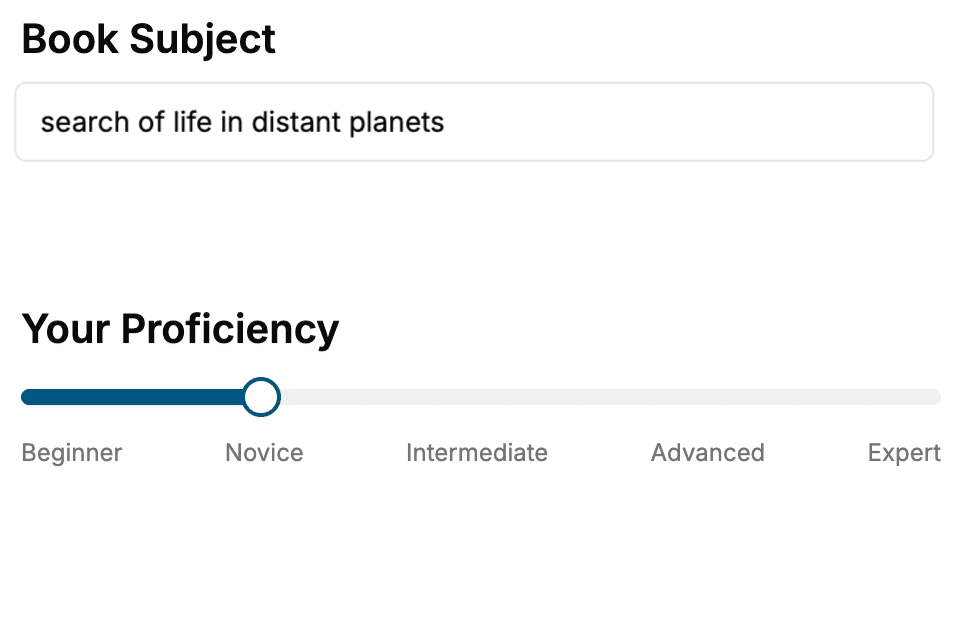
Select the focus of your Optimization Algorithms book and share your background
- 2. Personalize your book
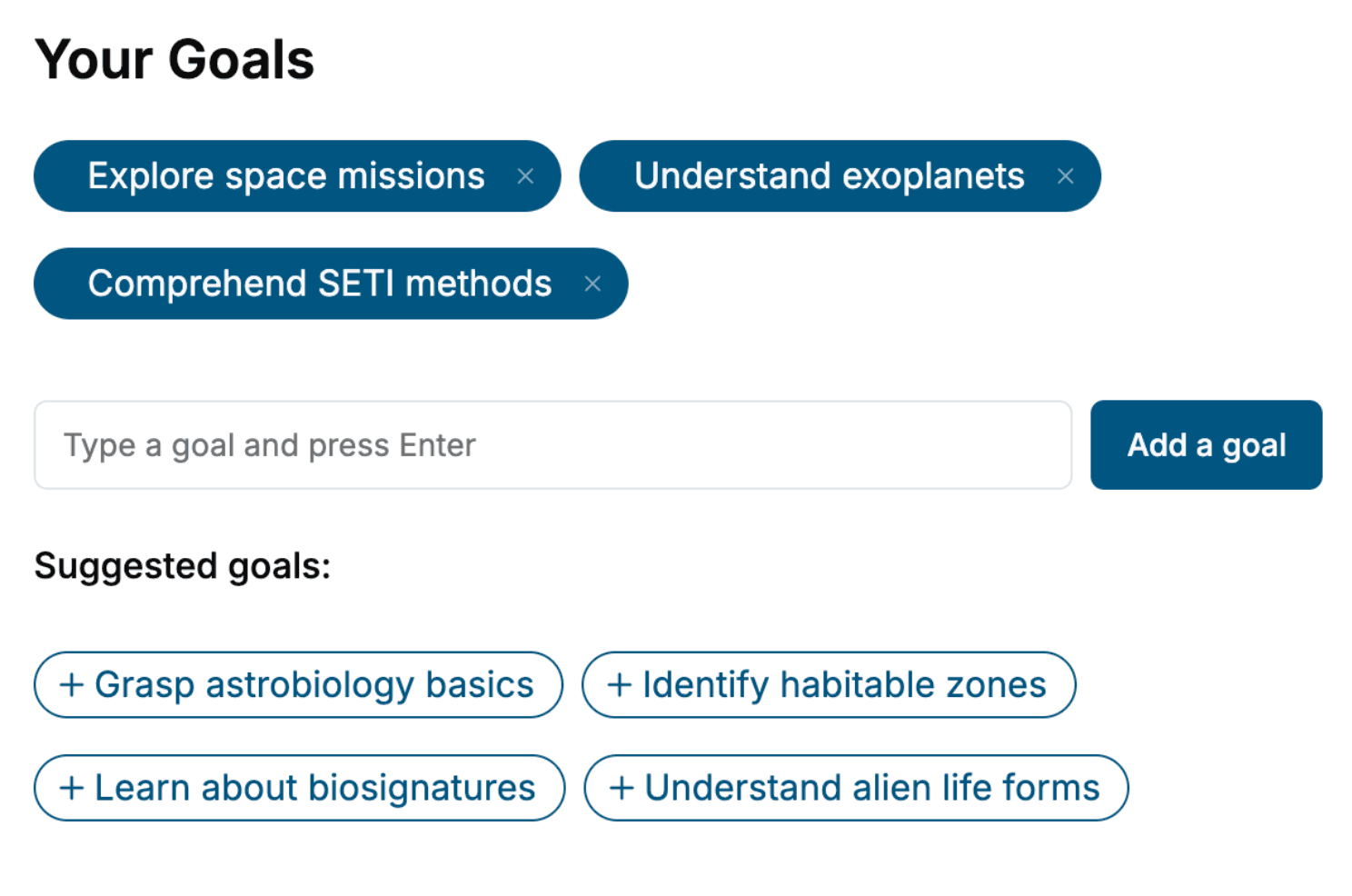
Specify your goals and choose sub-topics to include
- 3. Get your tailored book
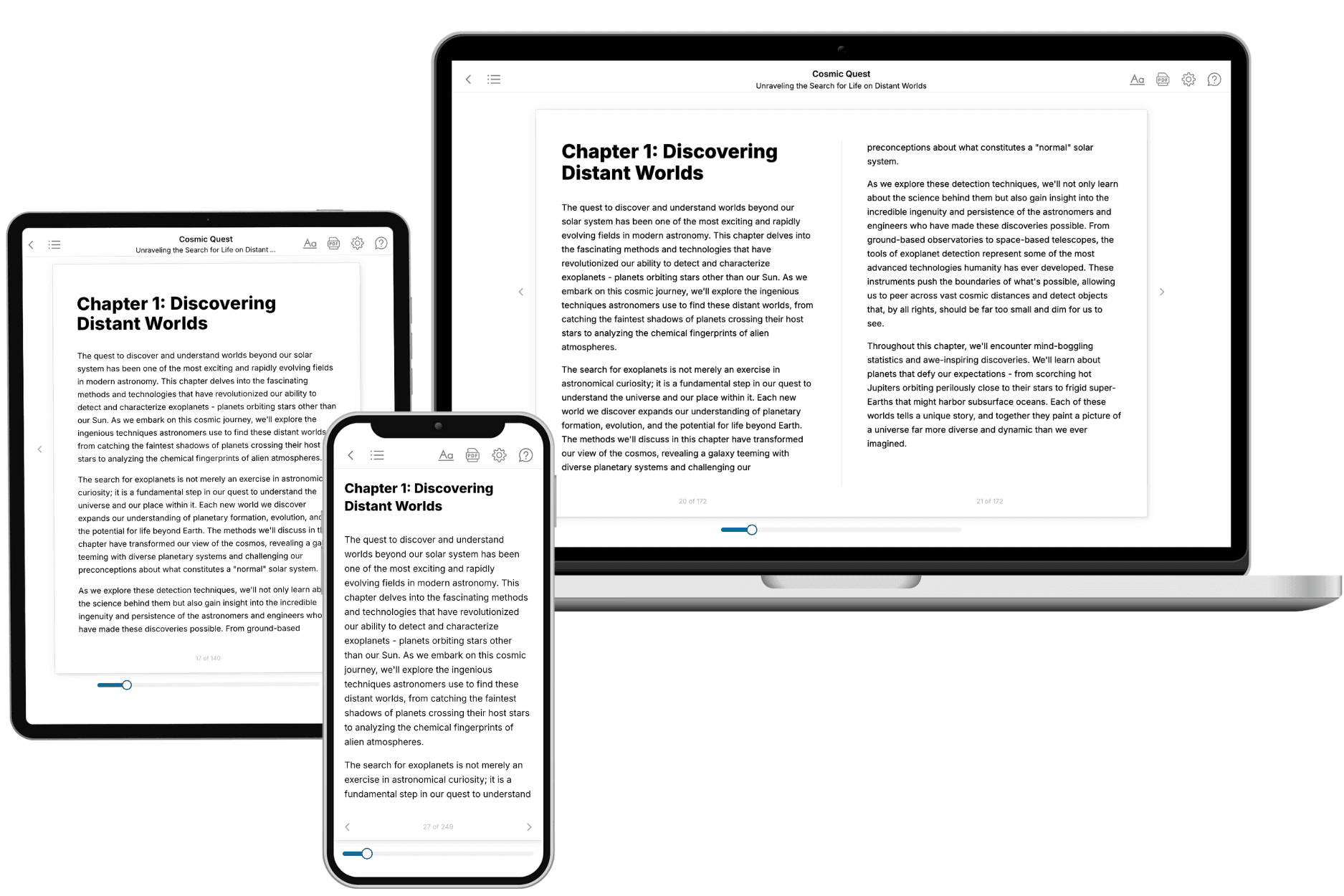
Your book is ready in 10 minutes. Read it online, download as EPUB or PDF, or send to Kindle.
Frequently asked questions
- What is TailoredRead?
TailoredRead creates complete, full-length nonfiction ebooks, written specifically for you. Tell us what you want to learn and why, and TailoredRead writes you a complete ebook on it, with charts, tables, and diagrams throughout. Read it online, on Kindle, or on any e-reader, or download it as a PDF or EPUB. Every book is written fresh the day you order it.
- How is the book tailored to me?
Before anything is written, you answer a few short questions about your goals, your background, and the topics you care about. Your book is then planned around your answers: written at your level, focused on your goals, and covering the topics you chose, instead of the one-size-fits-all book a store sells everyone.
- Will it read like generic AI content?
No. Your book isn't a chat transcript: it's planned chapter by chapter before a single word is written, told in a clear book voice, and explains ideas visually with charts, tables, and diagrams. After writing, every book goes through an editorial pass that polishes chapters so the book reads consistent from start to finish. Judge for yourself: browse thousands of sample books on our Explore Books page.
- How accurate is the content?
Our AI first checks whether your subject needs live research. Niche and fast-moving subjects are researched before writing, and the book plan and chapters are grounded in what it finds. After writing, every book goes through a quality pass that checks its facts and consistency, and researched books list their sources in a Notes section at the back.
- How long is the book?
You choose the length: Comprehensive (250-300 pages), Detailed (150-200 pages), Essential (70-100 pages), or Short (30-50 pages).
- Does the book include visuals?
Yes. Every book includes charts, tables, and diagrams: timelines, checklists, step-by-step guides, decision trees, comparison tables, matrices, and bar charts. A typical book includes dozens of these visual elements.
- Can I read it on Kindle? What formats can I download?
Yes. Every book can be read in our online reader or downloaded as a PDF or EPUB. The EPUB can be opened with Kindle, Apple Books, Kobo, and any e-reader. The Commercial and Author licenses also include an editable Word (DOCX) and Markdown download.
- How much does it cost?
About the price of a regular ebook. The exact price depends on your book's length and complexity, from $2 for the shortest books to $35 for the most comprehensive, and it's shown when you review your book, before you commit to anything. Each book is a one-time purchase, yours to keep, no subscription. Licenses that let you share, teach, or publish your book range from $35.99 to $49.99.
- Can I preview the book before purchasing?
Before you pay, you'll see what your book will cover: the title, a detailed description, the estimated length, and the complete chapter-by-chapter table of contents, so you know what you're getting before you decide. The full text itself is written after you purchase.
- How long does it take to create a book?
About 10 minutes. You can start reading the opening chapters while the rest is still being written.