The Other Diamond
A Fan's Guide to the Game Beyond the Big Leagues
Many baseball fans assume the minor leagues are just a waiting room for the majors, a place where anyone with a good arm can earn a shot.
222 pages10 chaptersOct 24, 2026Baseball
About this book
The reality is more layered. Minor League Baseball is a network of affiliated clubs tied to specific Major League organizations, and it has its own history, structure, labor story, and local identity. This book is written for you if you already love the game but want a clearer map of what is happening beneath the major league level. Inside, you will follow the system from its early professional roots through the creation of the National Association and the rise of the farm-system model, then into the reorganizations, community debates, and labor changes that shape it today. Along the way you will learn how the four full-season classifications fit together, where rookie leagues fit in, and why affiliation matters to the teams and towns involved. Each chapter builds on the last, so the terminology and the timeline work together rather than piling up as separate facts. Whether you are planning to visit a ballpark, follow a prospect, or simply want to understand why the sport is organized the way it is, this book gives you a grounded, balanced guide. It offers context, clear explanations, and an honest look at the questions still being debated.
Table of contents
- IntroductionWhy the Minor Leagues Matter to Fans, Common Misconceptions About Minor League Baseball, How to Use This BookRead below
- Chapter 1: Early Professional Baseball Before the Farm SystemProfessional Leagues That Existed Before 1901, How Early Clubs Earned Money and Survived, Regional Circuits and the Spread of the Game
- Chapter 2: Founding the National Association in 1901Forming the National Association and Its Purpose, The 1902 Season: 14 Leagues and 96 Clubs, From National Association to Minor League Baseball
- Chapter 3: The Rise of the Farm SystemBranch Rickey and the St. Louis Cardinals Model, Why Clubs Began Developing Their Own Players, How Affiliate Agreements Took Shape
- Chapter 4: Reading the Classification LadderTriple-A, Double-A, High-A, and Single-A Explained, What a Promotion Looks Like for a Player, Why League Names Changed and Returned
- Chapter 5: Rookie Leagues, Complexes, and International PlayThe Role of Rookie-Level Leagues, Complex-Based Leagues and Player Evaluation, Competition in the Dominican Republic
- Chapter 6: Affiliated Clubs as Community InstitutionsBallparks as Local Entertainment Venues, Teams and the Identity of Their Towns, What a Night at a Minor League Game Offers
- Chapter 7: The 2020 to 2021 ReorganizationFrom 160 Full-Season Teams to 120, Affected Communities and Lost Affiliations, Facility Standards, Travel, and Salary Changes
- Chapter 8: Player Pay, Housing, and Working ConditionsLong-Standing Concerns About Minor League Pay, MLB's Housing Policy Beginning in 2022, Daily Life for a Developing Player
- Chapter 9: Unionization and the First Collective Bargaining AgreementHow Minor League Players Organized in 2022, Negotiating the First Agreement in 2023, The Role of the Major League Baseball Players Association
- Chapter 10: Following Minor League Baseball TodayReading Team Listings and Affiliate Information, Tracking Prospects Through the Classification Levels, Planning a Visit to a Minor League Ballpark
- ConclusionWhat the Future May Hold for Affiliated Baseball, Why the Minors Deserve Your Attention
- Further Reading and Resources
- Glossary
Introduction
A box score from a Double-A game rarely makes national news, yet somewhere in that lineup might be a future All-Star working through a slump, or a journeyman catcher mentoring a nineteen-year-old pitcher through his first full season away from home. That gap between obscurity and consequence is what makes the system below Major League Baseball worth understanding on its own terms. It is not a sideshow to the major leagues. It is a working mechanism with its own rules, its own geography, and its own history, and knowing how it fits together changes how you watch the sport.
Most fans encounter this world sideways. A favorite team drafts a player, and a name starts appearing in articles with a level attached to it, something like Double-A or High-A, with little explanation of what that means or how it connects to the next level up. Other fans discover it by accident, catching a game in a small city while traveling and finding a ballpark experience that feels nothing like the one they know from television. Both paths leave gaps. This book exists to close them by laying out, in order, how the affiliated system was built, how it operates today, and why it matters beyond the players passing through it.
The approach here is chronological and structural at once. Early chapters trace how professional baseball organized itself before any governing body existed, then follow the creation of the National Association of Professional Baseball Leagues and the rise of the farm system under figures like Branch Rickey. Later chapters turn to the system as it stands now: the four full-season classification levels, the separate rookie and complex tiers, the communities built around affiliated clubs, and the recent reorganization that reshaped the entire landscape. The final stretch covers labor, pay, and the players' own fight for better conditions, closing with practical guidance for following the game yourself.
None of this requires expertise going in. The assumption is that you already know baseball, understand innings and lineups and what a prospect is in general terms, but have not had a reason to map out how the layers below the majors relate to one another. That gap is common even among dedicated fans, because the major leagues dominate coverage and the system beneath it is often described in passing rather than explained in full. This introduction sets the terms for everything that follows, starting with why this part of the sport deserves attention in the first place.
Why the Minor Leagues Matter to Fans
Following a major league roster tells you about twenty-six players at a time, all of them already proven enough to be on a big league field. Following the system beneath it tells you something different: where those players came from, how they were shaped, and which ones are coming next. A fan who only watches the majors sees finished products. A fan who also watches the levels below sees the process, which is a different kind of pleasure entirely, closer to watching a building go up than admiring the one already standing.
There is a competitive-intelligence angle here that matters to anyone who cares about their favorite club's future. A team's record this season is largely fixed by the roster it already has, but a team's outlook three years from now depends heavily on the players working through Double-A and Triple-A right now. Fans who track that pipeline can form opinions about a franchise's direction long before casual followers catch on. This is the same instinct that makes draft coverage popular, extended forward into the years where a prospect actually has to prove the scouting reports right or wrong on the field.
Consider a hypothetical shortstop drafted in the first round. For two or three years, almost nothing is known about whether he can hit professional pitching, handle a new position, or stay healthy over a long season. The only way to find out is to watch, or at least track, his performance as he moves through classification levels. A fan who follows that climb gets a multi-year story with real stakes, far richer than a single highlight clip. That story only makes sense once you understand what each level demands and what a promotion actually signals about a player's readiness, topics covered in detail in the chapter on the classification ladder.
Beyond player development, there is a simpler reason to pay attention: the games themselves are often more accessible and more enjoyable to attend in person than their major league counterparts. Tickets cost less, parks are smaller, and the distance between a fan and the field is often a matter of a few rows rather than entire sections. A family can attend a game on a weekday evening without the planning or expense a major league trip usually demands. That accessibility is not incidental, it is a defining feature of the experience, and the chapter on affiliated clubs as community institutions explores what that looks like in practice.
The system also carries its own debates and stakes that run parallel to anything happening in the major leagues, from questions about fair pay to the civic fallout when a town loses its affiliated club. These are not minor footnotes to the sport's story, they are live issues that have changed how the system runs and who gets to participate in it. A fan who understands this layer understands baseball's full economic and civic footprint, not just the part that shows up on national broadcasts. That fuller picture is the payoff of treating this part of the game as worth real attention rather than a waiting room to glance past.
Common Misconceptions About Minor League Baseball
The most persistent misunderstanding is that the system functions like an open tryout, where any sufficiently talented player can simply show up and work their way onto a roster through merit alone. In reality, every full-season affiliated team is tied by formal agreement to a specific major league organization, and nearly every player on that roster was placed there by that organization, whether through the draft, international signing, or a trade. There is no walk-on path into an affiliated roster in the way there might be for a college team. Understanding this distinction reframes almost everything else in the book, because it means the entire system exists to serve the developmental goals of thirty parent clubs, not as an independent competitive league in its own right.
A second misconception treats all levels below the majors as roughly interchangeable, as if a Single-A game and a Triple-A game represent the same quality of play with only minor cosmetic differences. The gap between those levels is substantial. A player repeating Single-A after several seasons faces a very different competitive and developmental reality than one making his Triple-A debut on the edge of a major league call-up. The classification ladder exists precisely to sort players by readiness, and collapsing that distinction erases most of what makes tracking a prospect's progress meaningful. The chapter dedicated to that ladder breaks down what separates each rung.
Fans also frequently confuse rookie-level and complex-based competition with the full-season affiliated tiers, assuming they are simply a smaller version of the same thing. They serve a different purpose entirely, functioning as an entry point for players, often very young or newly signed internationally, before they are ready for the travel and workload of a full season. Treating a complex league roster the same way you would treat a Double-A roster leads to misplaced expectations about both the competition level and what a strong performance there actually indicates. The chapter on rookie leagues and international operations, including academies in the Dominican Republic, lays out exactly where that tier fits.
There is also a common assumption that this part of the sport has always looked roughly as it does today, structured around the same four full-season classifications feeding a fixed number of clubs. The system has changed considerably over time, from its earliest professional leagues before any national association existed, through the growth of the farm-system model in the twentieth century, to a significant contraction in the number of full-season teams only a few years ago. None of the current structure should be treated as permanent or inevitable. The chapters on early professional baseball, the farm system's rise, and the recent reorganization each show a system that has been reshaped repeatedly by economics, labor pressure, and changing priorities among major league clubs.
Finally, there is a tendency to view affiliated minor league clubs purely through the lens of player development, as if their only function is to produce talent for a parent organization and nothing more. That view misses how deeply these clubs are embedded in the towns and cities that host them, often serving as a primary source of local entertainment, civic pride, and even regional identity, independent of whatever happens to the prospects on the roster. When a club loses its affiliation or a community loses its team entirely, the impact is felt well beyond anyone tracking a player's path to the majors. That civic dimension, along with the pay and housing conditions players have faced and organized around, gets full treatment in later chapters rather than being treated as background detail.
How to Use This Book
The chapters are arranged to build on each other rather than stand alone, so reading in order gives the clearest payoff, particularly for anyone new to how the affiliated system fits together. Early chapters establish the historical foundation, including the professional leagues that existed before any national association, the formation of that association, and the farm-system model that reshaped how clubs develop talent. Later chapters assume familiarity with that foundation, so terms like affiliate agreement or classification level will already carry meaning by the time they reappear in discussions of the modern system and its recent reorganization.
That said, the structure also supports selective reading for anyone with a narrower goal in mind. A fan mainly interested in a specific question, such as how a prospect moves up the ladder or how player pay has changed in recent years, can jump directly to the relevant chapter without losing the thread entirely. Each chapter introduces its key terms clearly enough to stand reasonably on its own, even though the fullest understanding comes from the complete sequence. Use the table of contents as a map rather than a strict requirement, especially on a second pass through the material.
Throughout the book, recurring terms are used consistently rather than swapped for synonyms, which matters more in this subject than it might elsewhere. Terms like farm system, affiliate agreement, and classification level each have a precise meaning that gets established early and then relied upon later without re-explanation. If a term feels unfamiliar partway through, it is worth checking the glossary at the end of the book, which collects these definitions in one place for quick reference rather than requiring a search back through earlier chapters.
Several chapters include tools meant for practical use rather than just reading, including frameworks for tracking a prospect across levels, checklists for planning a ballpark visit, and explanations of how to read team and affiliate listings. These are designed to be used after finishing the book, not just understood while reading it. Treat them as reference material to return to the next time a signing, trade, or promotion sends you looking for context on a name or a club you do not immediately recognize.
The goal throughout is clarity rather than completeness for its own sake. Some debates in this space remain unsettled, including how future reorganizations might unfold or how labor relations will continue to develop following the players' first collective bargaining agreement, and the book treats those as open questions rather than pretending to resolve them. What it offers instead is a grounded account of how the system reached its current form and the vocabulary and context needed to follow whatever comes next with real understanding, whether that means tracking a favorite club's prospects, planning a trip to a nearby ballpark, or simply making sense of the next labor dispute that makes headlines.
This is the end of the free sample. The full book has 10 chapters.
Want this book written for you?
Tell us your goals and background, and get your own version of this book, tailored by AI to you.


Benefits of AI-tailored books
- Read one book, not ten:
- all the Baseball knowledge you need, gathered into a single book.
- Save days of learning:
- tell us your goals, choose your topics, and the whole book is built around them.
- Learn effortlessly:
- Baseball book written for your specific background and expertise.
- Understand at a glance:
- includes charts, tables, timelines, checklists, decision trees, and more.
- Stay current:
- written the day you order it, not years ago.
- Trust what you read:
- every book is checked for accuracy, with real research when your subject needs it.
Create your unique book in 3 steps
- 1. Select your focus
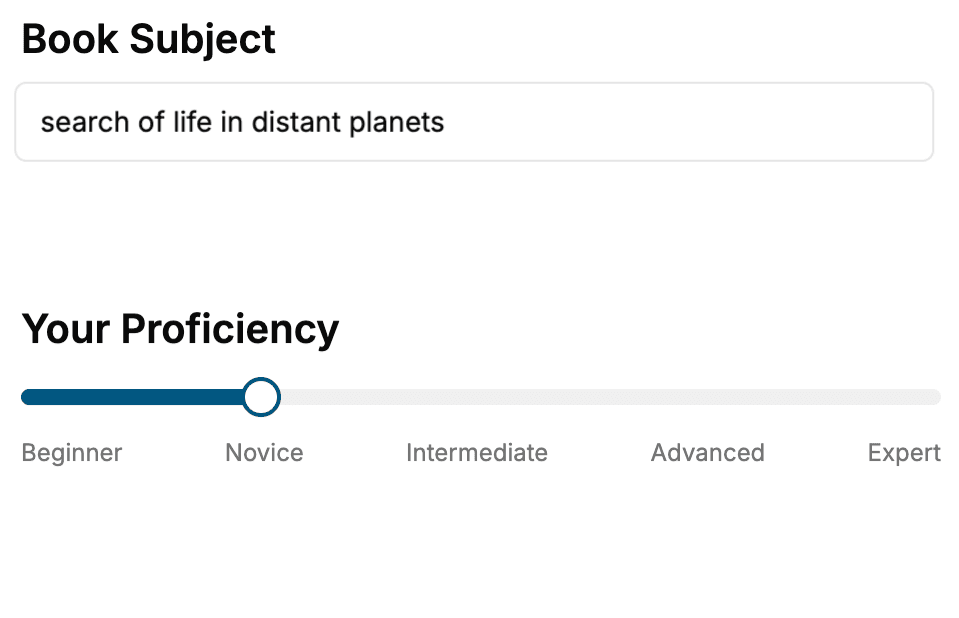
Select the focus of your Baseball book and share your background
- 2. Personalize your book
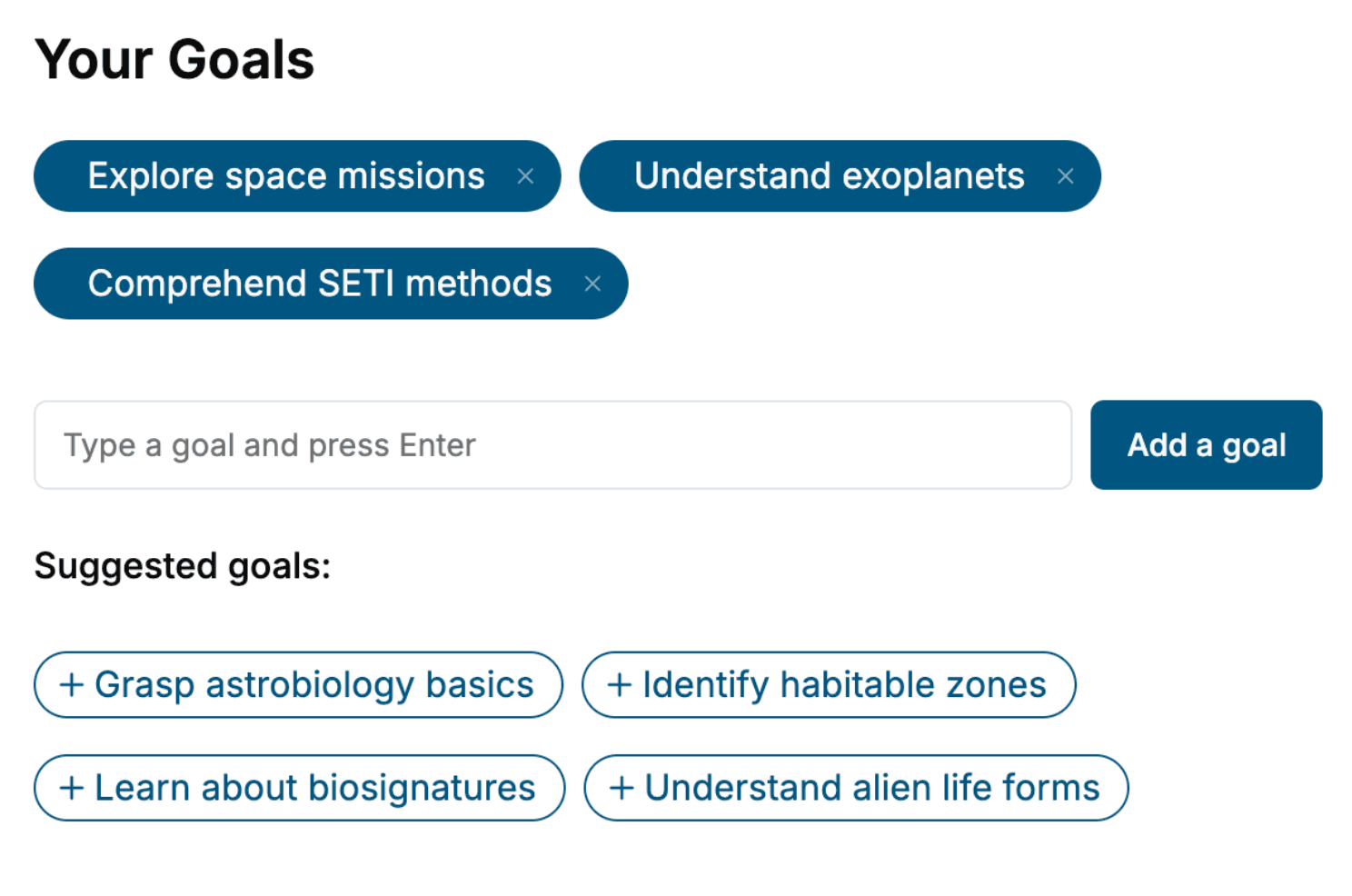
Specify your goals and choose sub-topics to include
- 3. Get your tailored book
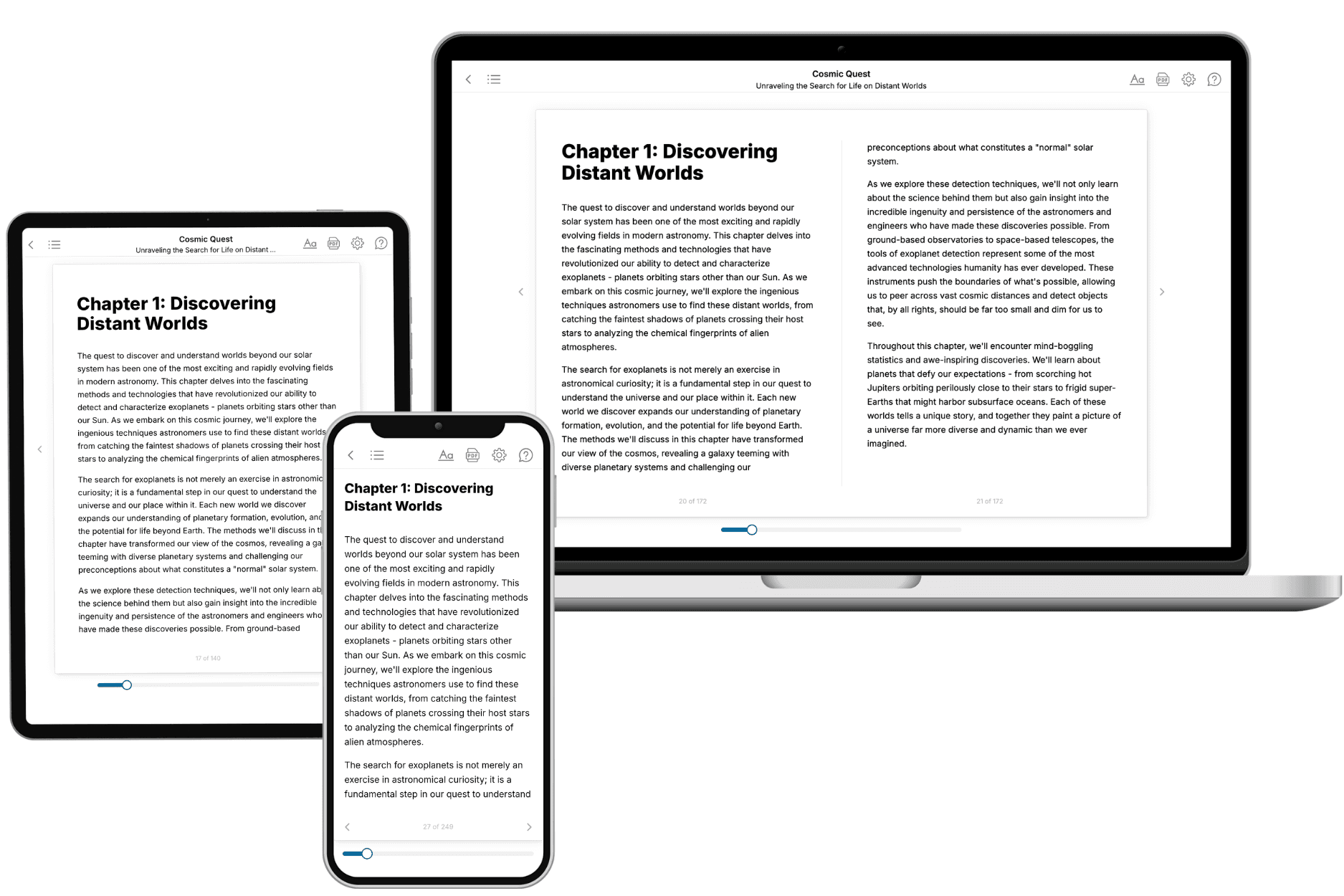
Your book is ready in 10 minutes. Read it online, download as EPUB or PDF, or send to Kindle.
Frequently asked questions
- What is TailoredRead?
TailoredRead creates complete, full-length nonfiction ebooks, written specifically for you. Tell us what you want to learn and why, and TailoredRead writes you a complete ebook on it, with charts, tables, and diagrams throughout. Read it online, on Kindle, or on any e-reader, or download it as a PDF or EPUB. Every book is written fresh the day you order it.
- How is the book tailored to me?
Before anything is written, you answer a few short questions about your goals, your background, and the topics you care about. Your book is then planned around your answers: written at your level, focused on your goals, and covering the topics you chose, instead of the one-size-fits-all book a store sells everyone.
- Will it read like generic AI content?
No. Your book isn't a chat transcript: it's planned chapter by chapter before a single word is written, told in a clear book voice, and explains ideas visually with charts, tables, and diagrams. After writing, every book goes through an editorial pass that polishes chapters so the book reads consistent from start to finish. Judge for yourself: browse thousands of sample books on our Explore Books page.
- How accurate is the content?
Our AI first checks whether your subject needs live research. Niche and fast-moving subjects are researched before writing, and the book plan and chapters are grounded in what it finds. After writing, every book goes through a quality pass that checks its facts and consistency, and researched books list their sources in a Notes section at the back.
- How long is the book?
You choose the length: Comprehensive (250-300 pages), Detailed (150-200 pages), Essential (70-100 pages), or Short (30-50 pages).
- Does the book include visuals?
Yes. Every book includes visual elements such as timelines, checklists, step-by-step guides, decision trees, comparison tables, and matrices, and many include bar charts. A typical book includes dozens of these visual elements.
- Can I read it on Kindle? What formats can I download?
Yes. Every book can be read in our online reader or downloaded as a PDF or EPUB. The EPUB can be opened with Kindle, Apple Books, Kobo, and any e-reader. The Commercial and Author licenses also include an editable Word (DOCX) and Markdown download.
- How much does it cost?
About the price of a regular ebook. The exact price depends on your book's length and complexity, from $2 for the shortest books to $35 for the most comprehensive, and it's shown when you review your book, before you commit to anything. Each book is a one-time purchase, yours to keep, no subscription. Licenses that let you share, teach, or publish your book range from $35.99 to $49.99.
- Can I preview the book before purchasing?
Before you pay, you'll see what your book will cover: the title, a detailed description, the estimated length, and the complete chapter-by-chapter table of contents, so you know what you're getting before you decide. The full text itself is written after you purchase.
- How long does it take to create a book?
About 10 minutes. You can start reading the opening chapters while the rest is still being written.