The Peer Review Playbook
Master the Art of Getting Your Academic Work Published
Imagine your research finally reaching the right audience—published in a respected journal, cited by peers, and contributing meaningfully to your field.
207 pages9 chaptersAug 20, 2026Academic Writing
About this book
This book shows you exactly how to make that happen by mastering the peer review process. You'll discover what reviewers actually look for, how to prepare a manuscript that stands out, and how to respond to feedback in ways that strengthen your work rather than derail it. Whether you're submitting to your first journal or your tenth, you'll learn the insider strategies that experienced researchers use to navigate rejections, revisions, and ultimately, acceptance. This isn't about gaming the system—it's about understanding how academic publishing works and positioning your research for success. You'll gain clarity on journal selection, manuscript preparation, the review timeline, and proven techniques for handling criticism constructively. By the end, you'll approach peer review with confidence, knowing exactly what to expect and how to respond at every stage.
Table of contents
- IntroductionWhy Peer Review Matters to Your Career, What You'll Learn in This Book, How to Use This GuideRead below
- Chapter 1: Understanding the Peer Review SystemThe History and Purpose of Peer Review, Types of Peer Review Models, Who Are the Reviewers and What Motivates Them, The Typical Review Timeline and What to Expect
- Chapter 2: Choosing the Right Journal for Your WorkJournal Types: Traditional, Open Access, and Hybrid, Assessing Journal Fit and Scope, Understanding Impact Factors and Other Metrics, Avoiding Predatory Journals and Scams
- Chapter 3: Preparing a Manuscript That Stands OutOptimal Structure and Organization, Writing for Clarity and Impact, Formatting and Following Journal Guidelines, Crafting a Compelling Abstract and Keywords
- Chapter 4: Mastering the Submission ProcessThe Pre-Submission Checklist, Writing an Effective Cover Letter, Suggesting Reviewers (When Allowed), Navigating Submission Management Systems
- Chapter 5: Anticipating and Addressing Reviewer ConcernsCommon Reviewer Critiques and How to Prevent Them, Demonstrating Methodological Rigor, Positioning Your Work Within the Literature, Addressing Limitations Proactively
- Chapter 6: Decoding Reviewer Feedback and DecisionsUnderstanding Decision Types and What They Mean, Reading Between the Lines of Reviewer Comments, Managing the Emotional Response to Criticism, Identifying Patterns in Feedback
- Chapter 7: Revising and Resubmitting Your ManuscriptCreating a Strategic Revision Plan, Writing a Point-by-Point Response Letter, Using Track Changes Effectively, Crafting Your Resubmission Letter
- Chapter 8: Handling Rejection and Moving ForwardTypes of Rejection and What They Mean, Extracting Valuable Lessons from Rejection, When and How to Appeal an Editorial Decision, Deciding Your Next Steps: Revise or Resubmit Elsewhere
- Chapter 9: Building Long-Term Success in Academic PublishingBecoming a Peer Reviewer Yourself, Networking and Building Relationships with Editors, Maintaining Publishing Momentum
- ConclusionKey Takeaways for Your Publishing Journey, Final Thoughts and Your Path Forward
- Glossary of Peer Review Terms
- Further Reading and Resources
Introduction
A manuscript sits in a submission queue for eleven weeks before an editor even assigns it to reviewers. The author checks the status page daily, watching the phrase under review
sit motionless. When the decision finally arrives, it is a rejection with three reviewer reports attached, each running two pages long, each raising concerns the author never anticipated. This scenario plays out thousands of times a week across academic publishing, and for most researchers it feels less like a system and more like a lottery. The goal of this book is to replace that feeling of randomness with a working map of how the process actually functions.
Peer review is often described in vague terms, as if it were a single gate that a manuscript either passes or fails. In practice it is a sequence of distinct decisions made by distinct people: an editor deciding whether a paper matches the journal's scope, two or three reviewers deciding whether the methodology holds up, and often a second editor deciding how to weigh conflicting opinions. Each of these decision points has its own logic and its own common failure modes. Learning to prepare for each one separately, rather than treating peer review as one undifferentiated hurdle, is what separates researchers who publish consistently from those who submit and hope.
This book draws a line between two very different skills that are usually taught together and rarely taught well: producing sound research and communicating that research in a way a reviewer can quickly recognize as sound. A methodologically excellent study can still collect a rejection if its abstract buries the main finding, if its literature review skips the three papers a reviewer expects to see cited, or if its cover letter fails to state why the journal's readers should care. None of that reflects the quality of the underlying work. It reflects a gap in translation between researcher and reviewer, and that gap is closable with specific, learnable techniques.
Every chapter that follows targets one stage of the publishing journey, from selecting a journal before a single paragraph is drafted, through the mechanics of writing and submitting, through interpreting reviewer comments, revising, and handling rejection when it comes. The chapters build on each other but are also written to stand alone, so a researcher facing a specific decision, say, whether to appeal a rejection, can go directly to that section without rereading everything before it. The introduction that follows explains why this systematic approach matters for a career, previews what each part of the book delivers, and offers a few concrete suggestions for getting the most value out of the chapters ahead.
Why Peer Review Matters to Your Career
Publication counts function as a kind of currency in academic careers, and peer review is the mechanism that mints that currency. Hiring committees, tenure boards, and grant panels rarely have time to read every submitted paper in full, so they rely heavily on the fact that a paper survived review at a recognized journal as a proxy for quality. This means the practical skill of navigating peer review has consequences that extend well beyond any single manuscript. Two researchers with comparable findings can have very different career trajectories depending on how effectively each one manages the publication process around that research.
Consider two early-career researchers studying a similar question in social psychology. One submits to a journal that turns out to be a poor fit for the study's methodology, receives a desk rejection after three weeks, resubmits elsewhere without adjusting the framing, and repeats this cycle for over a year. The other spends a few hours before submission checking journal scope and recent issues, tailors the introduction to match the concerns that journal's readers typically raise, and reaches a first decision, a request for major revision, within four months. The underlying research quality may be similar, but the second researcher reaches publication roughly a year sooner and with far less accumulated frustration.
The stakes are highest for researchers early in their careers, when publication records directly shape access to postdoctoral positions, faculty jobs, and grant funding. A single well-placed publication in a respected journal can open doors that ten scattered submissions to mismatched outlets cannot. This is not a claim that only prestigious journals matter. It is a claim that understanding which journal fits a given piece of work, and how to present that work to reviewers at that journal, has measurable career consequences that compound over years.
Peer review also shapes the research itself, not just its reception. A reviewer who flags an unaddressed confound, or points out a missing control condition, is often catching something that will matter if the work is cited or built upon later. Researchers who treat review comments as adversarial noise tend to make superficial revisions that satisfy the letter of a request without engaging its substance, and this frequently produces papers that draw criticism again after publication. Researchers who treat the same comments as free expert consultation, offered by people who read the manuscript closely enough to find its weak points, tend to produce stronger final papers and build reputations for responsiveness that editors remember.
There is also a network effect that becomes visible only after several publication cycles. Editors and reviewers are often the same small group of people within a subfield, and a track record of professional, well-prepared submissions gets noticed. A researcher who submits clean manuscripts, responds to reviewers with clear point-by-point letters, and meets deadlines becomes someone an editor is inclined to send review invitations to, and eventually to view favorably as a submitting author. This reputation effect is explored further in the discussion of building long-term publishing momentum later in the book, but it starts accumulating from the very first submission a researcher makes.
None of this is intended to suggest that peer review is primarily a career-management exercise divorced from scientific merit. The system exists, imperfect as it can be, to catch errors before they enter the permanent record and to improve papers through outside scrutiny[1]. But acknowledging that peer review also functions as a career gatekeeper, whether or not that was its original design, is the honest starting point for treating the process strategically rather than passively.
Researchers who skip this strategic layer often attribute repeated rejections entirely to bad luck or biased reviewers, and sometimes that is a fair diagnosis. Far more often, though, a pattern emerges across their rejections: submissions to journals with a poor scope match, cover letters that do not state the paper's contribution clearly, or methods sections that omit details reviewers routinely expect. These are fixable problems, and fixing them is what the rest of this book is built to help with.
What You'll Learn in This Book
The chapters ahead are organized to follow the actual sequence a manuscript travels, starting before a word is written and ending after a paper is either accepted or sent back for another attempt elsewhere. The opening chapters explain how the peer review system works as an institution, covering its history, its different models such as single-blind review, double-blind review, and open peer review, and the human motivations that lead researchers to volunteer as reviewers in the first place. Understanding these mechanics removes much of the mystery from a process that can otherwise feel arbitrary, because it reveals the incentives and constraints shaping every decision an editor or reviewer makes.
From there the book moves into journal selection, since choosing where to submit is arguably the single highest-leverage decision in the entire process. A brilliant paper sent to a mismatched journal will likely be desk rejected regardless of quality, while a solid paper sent to a well-matched journal has a realistic path to acceptance. This section covers how to evaluate journal scope, how to read metrics like impact factor and CiteScore without over-relying on them, how open access journals and hybrid journals differ from traditional subscription models, and how to spot a predatory journal before wasting months or money on it.
The manuscript preparation chapters focus on structure and clarity, specifically the IMRaD format that most empirical journals expect, and on the smaller details, like abstracts and keywords, that determine whether a reviewer even reads the full paper with an open mind. These chapters treat writing quality as a craft with concrete techniques rather than an innate talent, offering specific guidance on sentence structure, section ordering, and formatting choices that make a manuscript easier for a busy reviewer to evaluate fairly.
A dedicated chapter walks through the submission process itself, covering the pre-submission checklist worth running before uploading anything, how to write a cover letter that gives an editor a reason to send the paper out for review, whether and how to suggest reviewers, and how to navigate the submission management systems that most journals now require authors to use. Another chapter, positioned deliberately before submission strategy is finalized, focuses on anticipating the objections reviewers commonly raise, so that methodological rigor, literature positioning, and a proactive limitations disclosure are built into the manuscript rather than added defensively after a rejection.
The middle of the book addresses what happens once feedback arrives. One chapter teaches how to decode editorial decisions and reviewer comments, distinguishing a minor revision from a major revision from a reject and resubmit, and how to manage the emotional reaction that even experienced researchers feel when reading critical feedback. The following chapter turns that feedback into action, covering how to build a revision plan, how to write a point-by-point response letter that treats the response itself as a persuasive document, and how to use track changes so an editor can see exactly what changed and why.
Rejection gets its own chapter because it happens to nearly every researcher, repeatedly, throughout a career, and how it is handled matters as much as how revisions are handled. This chapter covers the different flavors of rejection, from an early desk rejection to a rejection after multiple rounds of review, how to extract concrete lessons from reviewer comments even when the outcome is disappointing, when an editorial appeal is worth pursuing, and how to decide on a re-targeting strategy for sending the work to a different journal.
The final substantive chapter looks past any single manuscript toward sustaining a publishing career over time, including the value of becoming a peer reviewer, cultivating relationships with editors through consistent professionalism, and maintaining publishing momentum so that one success or setback does not define an entire research trajectory. Together these chapters form a complete cycle, and the intention is that a researcher could enter this book at any stage of a project and find a chapter addressed directly to that stage.
What ties every chapter together is a shift in framing: peer review as a collaborative process aimed at strengthening research, rather than an adversarial test designed to find reasons for rejection. That framing does not make criticism painless, and it does not guarantee acceptance. It does make the entire process more navigable, because it turns reviewers and editors into participants with predictable goals rather than obstacles with unpredictable moods.
How to Use This Guide
This book is built to work both as a sequential read and as a reference consulted at specific decision points. A researcher preparing a first submission might read straight through from the chapter on understanding the peer review system to the chapter on submission strategy, absorbing the full arc before writing a single line of the manuscript. A researcher who already has a paper under review, and has just received a request for major revision, might instead skip directly to the chapters on decoding reviewer feedback and building a revision plan, treating the earlier material as background to return to later.
Each chapter is written with the assumption that specific, concrete steps matter more than general encouragement. Rather than offering broad reassurance that revision is a normal part of publishing,
the chapters on revision walk through how to categorize each reviewer comment, how to draft a response for a comment that requires disagreement rather than compliance, and how to sequence changes so that a manuscript's argument stays coherent after edits. The intention throughout is that a researcher finishes each chapter with something usable: a checklist, a framework, a short template, or a specific question to ask before taking the next step.
One useful habit while working through this book is to keep a specific manuscript in mind, ideally one that is currently in progress or under review, and to apply each chapter's guidance directly to that manuscript rather than reading in the abstract. When the chapter on journal fit discusses checking a journal's recent issues for methodological alignment, pause and actually check three recent issues of a target journal. When the chapter on cover letters discusses stating a paper's contribution in two sentences, draft those two sentences for the actual paper at hand. This kind of applied reading takes longer than passive reading but produces results that show up in an actual submission rather than staying theoretical.
It also helps to treat the glossary near the end of the book as a working reference rather than a one-time read. Terms like desk rejection, reject and resubmit, or proactive limitations disclosure carry specific meanings within academic publishing that differ subtly from how they might be used in casual conversation, and returning to precise definitions when a real editorial letter uses one of these terms can prevent misreading the seriousness or the intent of a decision.
For researchers who supervise students or mentor junior colleagues, several chapters double as material that can be shared directly, particularly the sections on decoding reviewer feedback and managing the emotional response to criticism. Many researchers receive their first rejection or their first harsh review report without any preparation for how normal that experience is within the field, and walking a junior colleague through those specific chapters can shortcut months of unnecessary discouragement.
The examples used throughout the book draw on situations recognizable across many empirical and social science fields, since the mechanics of submission, review, and revision are broadly similar across disciplines even though specific conventions vary. A researcher in a highly quantitative field may find that certain expectations around methodological rigor look different in the details, but the underlying process, an editor screening for scope, reviewers checking for soundness, and an author responding to feedback, holds across nearly all peer-reviewed venues.
Finally, this book works best when treated as a companion across an entire submission cycle rather than a single sitting. A chapter read once before submitting a paper may feel clear and complete, but rereading that same chapter after receiving actual reviewer comments often reveals guidance that only becomes fully useful once there is a real report to apply it to. Returning to specific sections at each new stage, rather than assuming a first read covers everything needed, is the approach most likely to turn these chapters into published papers rather than good intentions.
With that approach in mind, the next step is to build a clear picture of what peer review actually is, who performs it, and why it takes the shape it does, which is exactly where the following chapter begins.
Notes
Introduction
- 1. Ray Spier, "The History of the Peer-Review Process," Trends in Biotechnology, 2002
This is the end of the free sample. The full book has 9 chapters.
Want this book written for you?
Tell us your goals and background, and get your own version of this book, tailored by AI to you.


Benefits of AI-tailored books
- Read one book, not ten:
- all the Academic Writing knowledge you need, gathered into a single book.
- Save days of learning:
- tell us your goals, choose your topics, and the whole book is built around them.
- Learn effortlessly:
- Academic Writing book written for your specific background and expertise.
- Understand at a glance:
- includes charts, tables, timelines, checklists, decision trees, and more.
- Stay current:
- written the day you order it, not years ago.
- Trust what you read:
- every book is checked for accuracy, with real research when your subject needs it.
Create your unique book in 3 steps
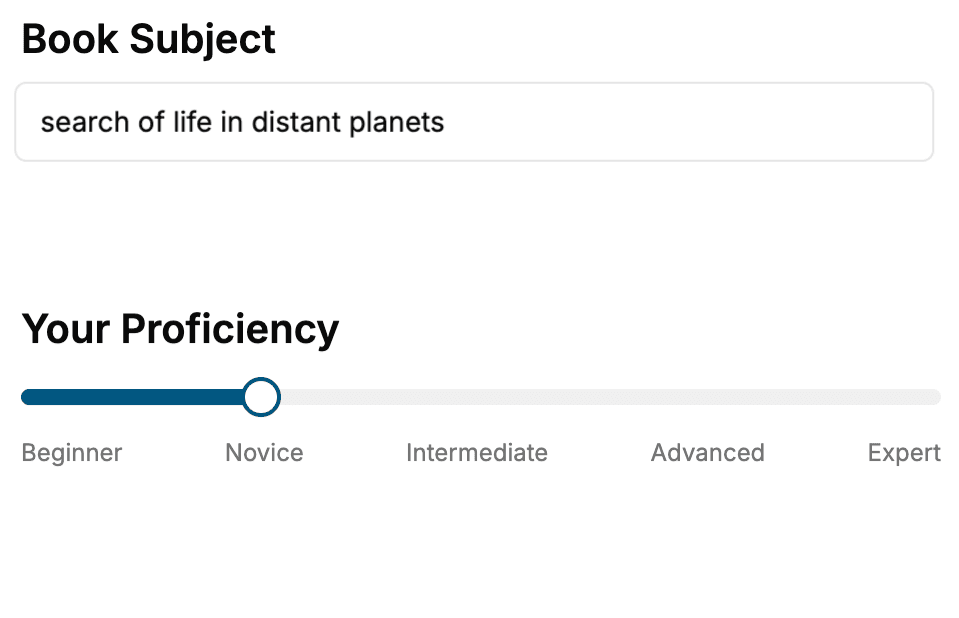
- 1. Select your focus
Select the focus of your Academic Writing book and share your background
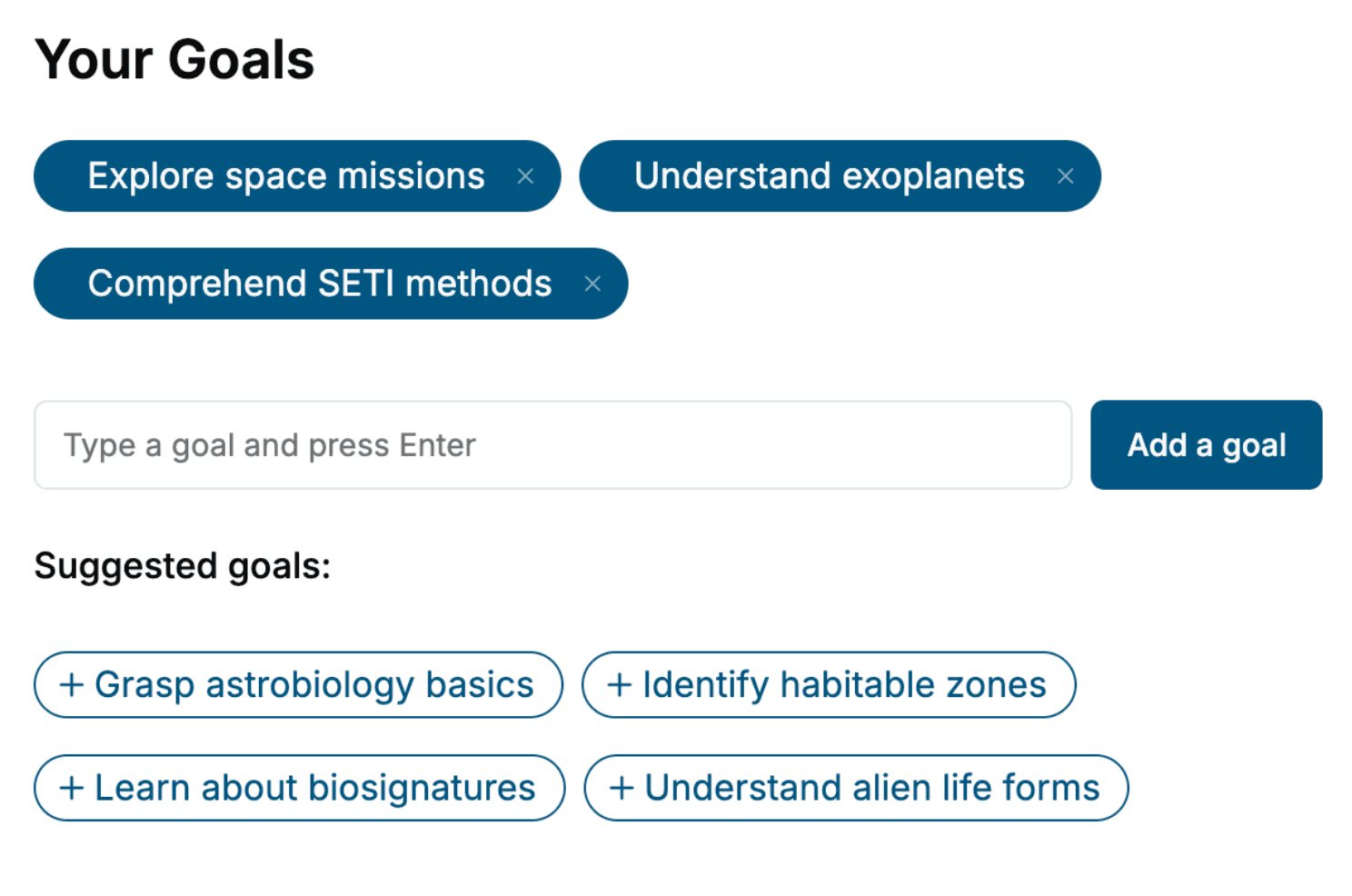
- 2. Personalize your book
Specify your goals and choose sub-topics to include
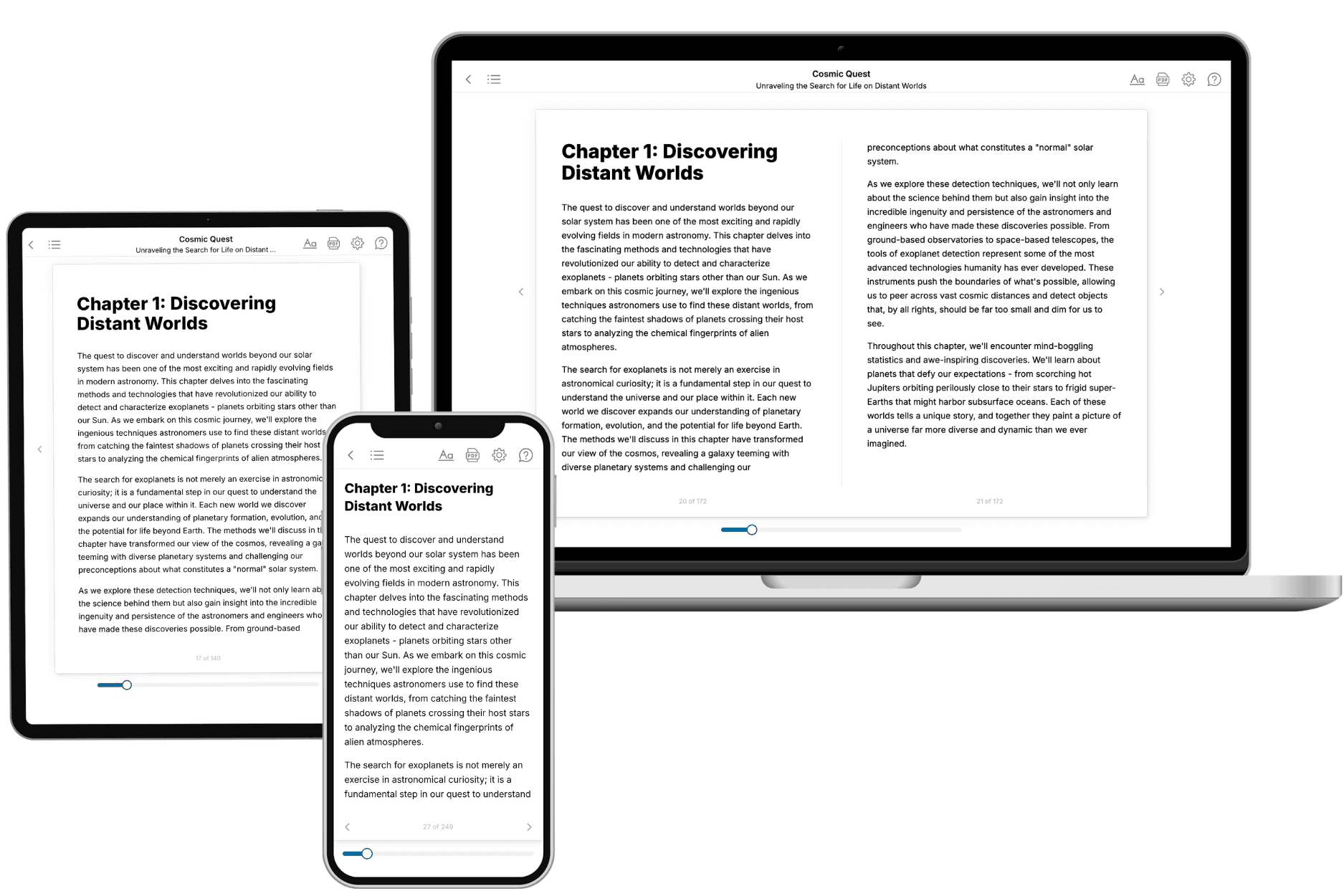
- 3. Get your tailored book
Your book is ready in 10 minutes. Read it online, download as EPUB or PDF, or send to Kindle.
Frequently asked questions
- What is TailoredRead?
TailoredRead creates complete, full-length nonfiction ebooks, written specifically for you. Tell us what you want to learn and why, and TailoredRead writes you a complete ebook on it, with charts, tables, and diagrams throughout. Read it online, on Kindle, or on any e-reader, or download it as a PDF or EPUB. Every book is written fresh the day you order it.
- How is the book tailored to me?
Before anything is written, you answer a few short questions about your goals, your background, and the topics you care about. Your book is then planned around your answers: written at your level, focused on your goals, and covering the topics you chose, instead of the one-size-fits-all book a store sells everyone.
- Will it read like generic AI content?
No. Your book isn't a chat transcript: it's planned chapter by chapter before a single word is written, told in a clear book voice, and explains ideas visually with charts, tables, and diagrams. After writing, every book goes through an editorial pass that polishes chapters so the book reads consistent from start to finish. Judge for yourself: browse thousands of sample books on our Explore Books page.
- How accurate is the content?
Our AI first checks whether your subject needs live research. Niche and fast-moving subjects are researched before writing, and the book plan and chapters are grounded in what it finds. After writing, every book goes through a quality pass that checks its facts and consistency, and researched books list their sources in a Notes section at the back.
- How long is the book?
You choose the length: Comprehensive (250-300 pages), Detailed (150-200 pages), Essential (70-100 pages), or Short (30-50 pages).
- Does the book include visuals?
Yes. Every book includes charts, tables, and diagrams: timelines, checklists, step-by-step guides, decision trees, comparison tables, matrices, and bar charts. A typical book includes dozens of these visual elements.
- Can I read it on Kindle? What formats can I download?
Yes. Every book can be read in our online reader or downloaded as a PDF or EPUB. The EPUB can be opened with Kindle, Apple Books, Kobo, and any e-reader. The Commercial and Author licenses also include an editable Word (DOCX) and Markdown download.
- How much does it cost?
About the price of a regular ebook. The exact price depends on your book's length and complexity, from $2 for the shortest books to $35 for the most comprehensive, and it's shown when you review your book, before you commit to anything. Each book is a one-time purchase, yours to keep, no subscription. Licenses that let you share, teach, or publish your book range from $35.99 to $49.99.
- Can I preview the book before purchasing?
Before you pay, you'll see what your book will cover: the title, a detailed description, the estimated length, and the complete chapter-by-chapter table of contents, so you know what you're getting before you decide. The full text itself is written after you purchase.
- How long does it take to create a book?
About 10 minutes. You can start reading the opening chapters while the rest is still being written.