Peer-to-Peer Federated Learning
Building Decentralized AI Systems Without Central Servers
Master the fundamentals and advanced techniques of peer-to-peer federated learning, the next frontier in decentralized artificial intelligence.
222 pages10 chaptersJul 28, 2026Federated Learning
About this book
You'll gain a comprehensive understanding of how to build machine learning systems that operate without central servers, keeping data private while enabling powerful collaborative learning across distributed networks. This book bridges the gap between theoretical concepts and practical implementation, walking you through the core principles of P2P FL, the unique challenges of non-IID data, and proven strategies for efficient peer communication. You'll explore real-world applications in mobile robotics, edge computing, and 5G networks, while learning how to navigate the critical trade-offs between privacy, performance, and communication efficiency. Whether you're designing distributed systems, researching decentralized AI, or building privacy-preserving applications, this guide provides the knowledge and frameworks you need to implement P2P federated learning effectively in your projects.
Table of contents
- IntroductionWhy Decentralized Learning Matters, The Evolution from Centralized to Peer-to-Peer, Your Roadmap Through This BookRead below
- Chapter 1: Foundations of Federated LearningCentralized vs. Federated Machine Learning, Google's Pioneering Work and the Birth of Federated Learning, Core Principles of Federated Learning
- Chapter 2: Understanding Peer-to-Peer ArchitectureP2P Fundamentals: Moving Beyond Central Servers, Direct Peer Communication and Topology Design, Benefits and Trade-offs of Full Decentralization
- Chapter 3: The Non-IID Data ChallengeWhat is Non-IID Data and Why It Matters, How Non-IID Data Affects Model Quality, Strategies for Handling Non-IID Data Distribution
- Chapter 4: Model Aggregation and Gossip AlgorithmsModel Aggregation: Combining Distributed Models, Gossip Algorithms and Neighbor-Based Averaging, Convergence Properties and Theoretical Guarantees
- Chapter 5: Asynchronous Learning in Heterogeneous SystemsLimitations of Synchronous Updates, Asynchronous Update Mechanisms and Protocols, Managing Device and Network Heterogeneity
- Chapter 6: Privacy and Security in Decentralized SystemsPrivacy Preservation Through Local Data Retention, Trust and Verification in Peer Networks, Security Threats and Mitigation Strategies
- Chapter 7: Communication Efficiency and OptimizationCommunication as the Primary Bottleneck, Model Compression and Quantization Techniques, Selective Sharing and Intelligent Neighbor Selection
- Chapter 8: Real-World Applications and Use CasesMobile Robotics and Collaborative Learning, Edge Computing and IoT Deployments, 5G Networks and Distributed Intelligence
- Chapter 9: Implementing P2P Federated Learning SystemsSystem Design and Architecture Patterns, Available Frameworks and Development Tools, Deployment Considerations and Best Practices
- Chapter 10: Evaluation, Metrics, and BenchmarkingChallenges in Evaluating P2P FL Systems, Key Performance Metrics and Trade-offs, Benchmarking Approaches and Comparison Frameworks
- ConclusionFuture Directions in P2P Federated Learning, Your Next Steps in the Field
- Glossary
- Further Reading and Resources
Introduction
Machine learning has a data problem that most textbooks quietly skip over. To train a useful model, you typically need to move data to a central server, aggregate it, and run your training pipeline on the combined dataset. That works fine in a lab. It works less well when the data belongs to hospitals that cannot share patient records, smartphones that hold private conversations, or autonomous robots operating in disconnected environments. The assumption that data can simply be collected and centralized is increasingly at odds with how the world actually works.
Federated Learning was designed to address exactly that tension. Instead of moving data to the model, you move the model to the data. Each participant trains locally and shares only model updates, keeping raw data on-device. That shift was significant, but the original architecture still relied on a central server to coordinate training rounds, aggregate updates, and distribute the improved model back to participants. The server became a new kind of bottleneck: a single point of failure, a potential privacy leak, and a scaling constraint that limits how far the system can grow.
Peer-to-Peer Federated Learning removes that server entirely. Participants communicate directly with one another, share model updates through distributed protocols, and collectively converge on a shared model without any node holding a privileged position. The result is a system that is more resilient, more private by design, and better suited to environments where central infrastructure is unavailable, untrusted, or simply impractical. That architectural shift, however, introduces a new set of challenges that are the subject of this book.
The field has grown rapidly. Research output on decentralized and peer-to-peer learning has accelerated significantly over the past several years, driven by demand from edge computing, mobile robotics, 5G networks, and privacy regulation. Comprehensive surveys of the landscape have begun to appear, signaling that the field is maturing from scattered experiments into a coherent discipline. This book is written for practitioners and researchers who want to understand that discipline deeply enough to build real systems with it.
Why Decentralized Learning Matters
The case for decentralization is not primarily philosophical. It is practical. Consider a fleet of delivery robots operating across a city. Each robot accumulates sensor data about its environment: road conditions, obstacle patterns, pedestrian behavior. That data is valuable for improving navigation models. But transmitting raw sensor streams to a central server is expensive, slow, and raises questions about who owns the data and how it is stored. A peer-to-peer approach lets robots share learned representations directly with nearby peers, improving collectively without any data leaving the device.
Privacy regulation has added urgency to this conversation. Legislation in many jurisdictions now restricts how personal data can be transferred across organizational or geographic boundaries. Healthcare providers, financial institutions, and telecommunications companies face real legal constraints on data sharing. Decentralized learning offers a path to collaborative model improvement that does not require moving the underlying data, which means it can operate within those constraints rather than around them.
There is also a resilience argument. A centralized server is a single point of failure. If it goes offline, training stops. If it is compromised, every participant's model updates are exposed. In a peer-to-peer network, no single node is critical. The system can continue operating even when some participants drop out, and an attacker who compromises one node gains access only to that node's local information, not the entire training process.
Scalability is another dimension where decentralization offers genuine advantages. A central server must handle communication with every participant in the network. As the number of participants grows, that communication load grows with it. In a peer-to-peer topology, each node communicates only with a small set of neighbors. The total communication load is distributed across the network, which means the system can scale to far larger numbers of participants without any single node becoming a bottleneck.
None of this comes for free. Removing the central server means losing the coordination guarantees it provided. Ensuring that all nodes converge to a consistent model, handling participants who behave maliciously or simply go offline at inconvenient times, and managing the heterogeneity of real-world devices are all harder problems in a fully decentralized setting. Understanding those trade-offs is what separates a system that works in a paper from one that works in production.
The practical relevance of these trade-offs is visible in domains that have already begun adopting peer-to-peer approaches. Edge computing deployments, where inference and training happen on devices at the network edge rather than in the cloud, are a natural fit. So are Internet of Things networks, where thousands of low-power sensors need to learn from each other without the overhead of routing everything through a central hub. The chapters ahead examine these domains in detail, grounding the theory in concrete deployment scenarios.
The Evolution from Centralized to Peer-to-Peer
Understanding where Peer-to-Peer Federated Learning sits in the broader landscape requires a brief look at the trajectory that led here. Traditional machine learning assumed that all training data could be collected in one place. That assumption enabled powerful optimization techniques and clean theoretical guarantees, but it also meant that data had to travel, often across organizational and jurisdictional boundaries, before any learning could happen.
Federated Learning, as introduced and developed by researchers at Google, broke that assumption by keeping data local and sharing only model updates.[1] The canonical setup involves a central server that sends a global model to a selected subset of participants, each of whom trains locally on their own data and sends back gradient updates or model weights. The server aggregates those updates, typically by averaging them, and the cycle repeats. This approach, often called Centralized Federated Learning, was a significant step forward for privacy-preserving machine learning.
The central server in that architecture, however, still occupies a privileged and potentially problematic position. It sees all model updates, which can leak information about local training data through techniques like gradient inversion. It controls which participants are selected for each round, introducing potential bias. And it represents a single point of organizational trust: every participant must trust the entity operating the server to behave honestly and to keep their updates confidential.
Peer-to-Peer Federated Learning addresses these concerns by eliminating the server role entirely. In a P2P system, each node communicates directly with a subset of other nodes, its neighbors in the network topology. Model updates propagate through the network via protocols like Gossip Algorithms, where each node periodically exchanges information with randomly or strategically selected neighbors. Over time, information diffuses across the entire network, and all nodes converge toward a shared model without any central coordinator.
This architectural shift has deep implications for how every other aspect of the system works. Aggregation is no longer a single operation performed by one server; it becomes a distributed process that happens continuously across the network. Privacy guarantees change because there is no longer a single entity that sees all updates. Security threats shift from attacks on a central server to attacks on individual nodes or on the communication protocol itself. And the challenge of handling Non-IID Data, where different participants hold very different data distributions, becomes more complex because there is no global view of what data exists across the network.
The evolution did not happen in a single step. Researchers explored semi-decentralized architectures, hierarchical topologies, and hybrid approaches before arriving at fully peer-to-peer designs. Each intermediate step revealed new challenges and informed the solutions that fully decentralized systems now employ. The chapter covering the foundations of Federated Learning traces this progression in detail, providing the conceptual grounding needed to appreciate why the peer-to-peer architecture makes the specific design choices it does.
One important distinction worth establishing early is between peer-to-peer topology and peer-to-peer trust. A system can route communications through a peer-to-peer network while still relying on a trusted coordinator for certain operations, such as participant selection or model versioning. Truly decentralized systems eliminate that coordinator entirely, which requires solving harder problems around consensus, Byzantine fault tolerance, and convergence guarantees. This book focuses on the fully decentralized case, while acknowledging where hybrid approaches offer practical advantages.
The maturation of the field is also reflected in the growing sophistication of the problems researchers are tackling. Early work focused on demonstrating that decentralized learning was feasible at all. More recent work addresses Asynchronous Federated Learning, where nodes update at different rates; Intelligent Neighbor Selection, where nodes choose communication partners strategically to improve convergence; and domain-specific challenges in mobile robotics, healthcare, and telecommunications. The field has moved from proof-of-concept to engineering discipline, and this book is written to reflect that shift.
Your Roadmap Through This Book
This book is organized to build understanding progressively, starting from foundational concepts and moving toward implementation and evaluation. Each chapter addresses a distinct set of challenges, and the chapters are designed to be read in order on a first pass. After that, each chapter stands well enough on its own to serve as a reference when you are working on a specific problem.
The first two chapters establish the conceptual foundation. The chapter on the foundations of Federated Learning covers the distinction between Centralized Federated Learning and its decentralized counterpart, the principles that make federated approaches work, and the historical context that shaped the field. The chapter on peer-to-peer architecture then examines what changes when the central server is removed: how Network Topology choices affect system behavior, what direct peer communication looks like in practice, and what trade-offs full decentralization introduces.
The next two chapters address the two most fundamental technical challenges in Peer-to-Peer Federated Learning. Non-IID Data is the subject of the third chapter. When participants hold data drawn from very different distributions, naive averaging of model updates produces poor results. That chapter explains why the problem is particularly acute in peer-to-peer settings and surveys the strategies that have proven effective, including trusted peer data sharing and domain-specific adaptation techniques. The fourth chapter covers Model Aggregation and Gossip Algorithms, explaining how distributed models are mathematically combined and how information propagates across a network without central coordination.
Chapters five through seven address three cross-cutting concerns that affect every P2P FL deployment:
- Asynchronous Federated Learning (chapter five): how to handle the reality that different devices update at different speeds, and why synchronous protocols break down in heterogeneous environments.
- Privacy and security (chapter six): how Differential Privacy and related techniques protect local data, and how Byzantine Attacks and other threats are detected and mitigated in a setting where there is no trusted central authority.
- Communication efficiency (chapter seven): how the Communication Bottleneck is measured and reduced through Model Compression, Quantization, Selective Model Sharing, and Intelligent Neighbor Selection.
Chapter eight shifts from theory to practice, examining real-world deployments of Peer-to-Peer Federated Learning across three domains. Mobile robotics presents unique challenges around intermittent connectivity and rapidly changing environments. Edge computing and IoT deployments highlight the constraints of low-power devices and large-scale networks. 5G networks introduce new opportunities for distributed intelligence at the network edge. Each domain section identifies the specific constraints that shape system design and the solutions that have emerged in response.
Chapter nine is the implementation chapter. It covers architecture patterns for building P2P FL systems, the frameworks and tools currently available, and the practical considerations that separate a working prototype from a production deployment. If you are building a system rather than studying the theory, this chapter is where the abstract concepts become concrete engineering decisions.
Chapter ten addresses evaluation and benchmarking, which is a harder problem than it might appear. Because P2P FL systems operate without central coordination, measuring their behavior requires distributed instrumentation. Because the field lacks standardized benchmarks, comparing results across papers and systems requires careful attention to the assumptions each evaluation makes. The Benchmarking Framework concepts covered in that chapter will help you design evaluations that produce meaningful, comparable results.
A few conventions are worth noting before you proceed. Technical terms are introduced in bold when they first appear and are defined in the glossary at the back of the book. Cross-references point to the concept a chapter owns rather than to a chapter number, so they remain accurate regardless of how the material is reorganized. The further reading section at the end of the book points to primary sources, survey papers, and open-source implementations for each major topic.
The goal throughout is to give you not just an understanding of how P2P FL works, but a clear sense of why each design choice exists and what problem it solves. Decentralized learning is not a single algorithm or a single architecture. It is a design space with many valid points, each representing a different set of trade-offs between privacy, performance, communication cost, and resilience. By the time you finish this book, you should be able to navigate that design space with confidence, identify the right trade-offs for your specific context, and build systems that work reliably in the real world.
The most important skill in this field is not knowing which algorithm to use. It is knowing which questions to ask before choosing one: Who are the participants? What does their data look like? How reliable is the network? What are the privacy requirements? What counts as success? The chapters ahead are organized around those questions.
One final note on scope. Peer-to-Peer Federated Learning is a fast-moving field. New algorithms, new applications, and new theoretical results appear regularly. This book focuses on the principles and patterns that have proven durable across the field's evolution, rather than on the latest results from any single paper. The goal is to give you a foundation that remains useful as the field continues to develop, not a snapshot that will be outdated before the ink is dry.
Notes
Introduction
- 1. Brendan McMahan and others, "Communication-Efficient Learning of Deep Networks from Decentralized Data," arXiv, 2017
This is the end of the free sample. The full book has 10 chapters.
Want this book written for you?
Tell us your goals and background, and get your own version of this book, tailored by AI to you.


Benefits of AI-tailored books
- Read one book, not ten:
- all the Federated Learning knowledge you need, gathered into a single book.
- Save days of learning:
- tell us your goals, choose your topics, and the whole book is built around them.
- Learn effortlessly:
- Federated Learning book written for your specific background and expertise.
- Understand at a glance:
- includes charts, tables, timelines, checklists, decision trees, and more.
- Stay current:
- written the day you order it, not years ago.
- Trust what you read:
- every book is checked for accuracy, with real research when your subject needs it.
Create your unique book in 3 steps
- 1. Select your focus
Select the focus of your Federated Learning book and share your background
- 2. Personalize your book
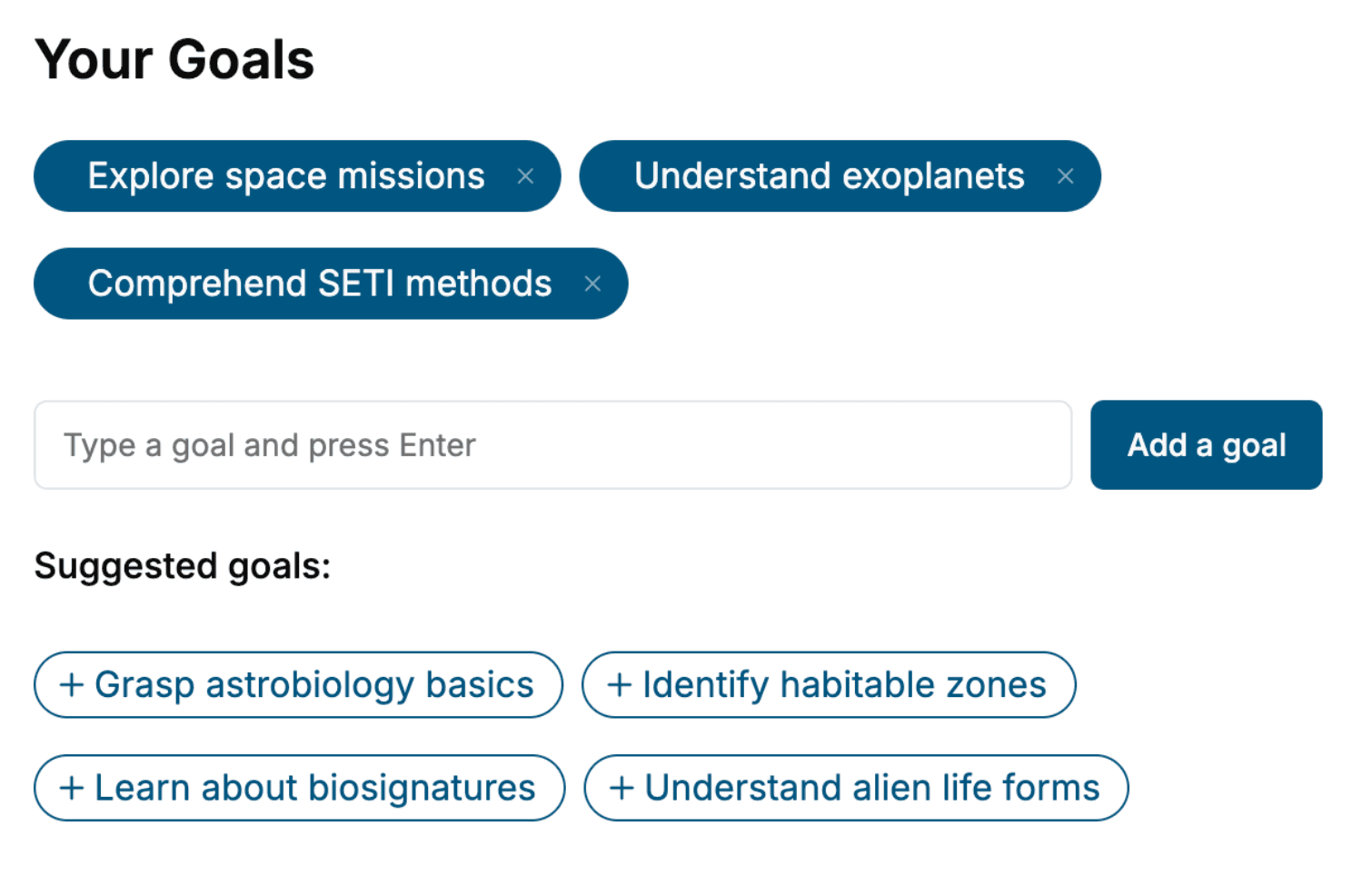
Specify your goals and choose sub-topics to include
- 3. Get your tailored book
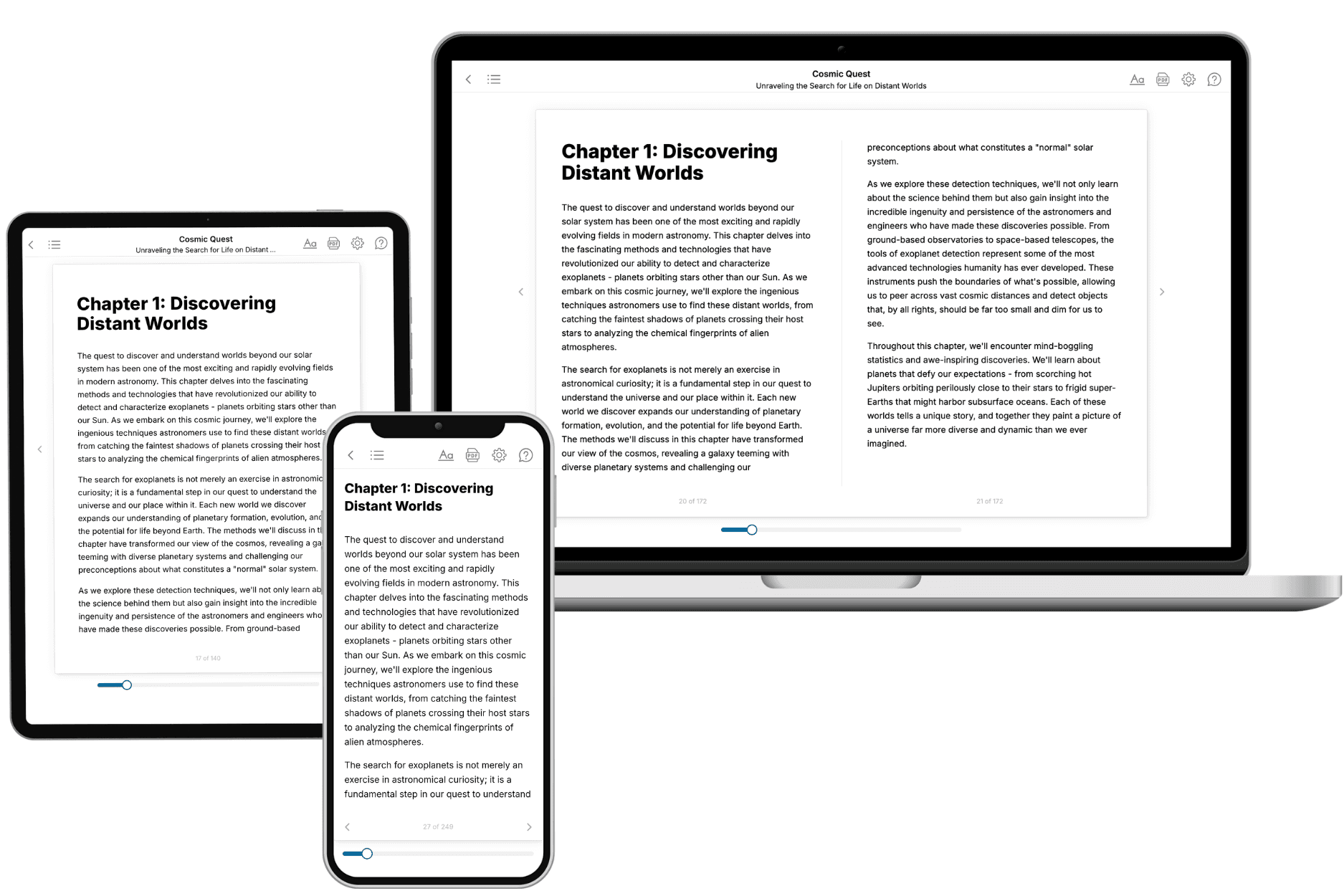
Your book is ready in 10 minutes. Read it online, download as EPUB or PDF, or send to Kindle.

Frequently asked questions
- What is TailoredRead?
TailoredRead creates complete, full-length nonfiction ebooks, written specifically for you. Tell us what you want to learn and why, and TailoredRead writes you a complete ebook on it, with charts, tables, and diagrams throughout. Read it online, on Kindle, or on any e-reader, or download it as a PDF or EPUB. Every book is written fresh the day you order it.
- How is the book tailored to me?
Before anything is written, you answer a few short questions about your goals, your background, and the topics you care about. Your book is then planned around your answers: written at your level, focused on your goals, and covering the topics you chose, instead of the one-size-fits-all book a store sells everyone.
- Will it read like generic AI content?
No. Your book isn't a chat transcript: it's planned chapter by chapter before a single word is written, told in a clear book voice, and explains ideas visually with charts, tables, and diagrams. After writing, every book goes through an editorial pass that polishes chapters so the book reads consistent from start to finish. Judge for yourself: browse thousands of sample books on our Explore Books page.
- How accurate is the content?
Our AI first checks whether your subject needs live research. Niche and fast-moving subjects are researched before writing, and the book plan and chapters are grounded in what it finds. After writing, every book goes through a quality pass that checks its facts and consistency, and researched books list their sources in a Notes section at the back.
- How long is the book?
You choose the length: Comprehensive (250-300 pages), Detailed (150-200 pages), Essential (70-100 pages), or Short (30-50 pages).
- Does the book include visuals?
Yes. Every book includes charts, tables, and diagrams: timelines, checklists, step-by-step guides, decision trees, comparison tables, matrices, and bar charts. A typical book includes dozens of these visual elements.
- Can I read it on Kindle? What formats can I download?
Yes. Every book can be read in our online reader or downloaded as a PDF or EPUB. The EPUB can be opened with Kindle, Apple Books, Kobo, and any e-reader. The Commercial and Author licenses also include an editable Word (DOCX) and Markdown download.
- How much does it cost?
About the price of a regular ebook. The exact price depends on your book's length and complexity, from $2 for the shortest books to $35 for the most comprehensive, and it's shown when you review your book, before you commit to anything. Each book is a one-time purchase, yours to keep, no subscription. Licenses that let you share, teach, or publish your book range from $35.99 to $49.99.
- Can I preview the book before purchasing?
Before you pay, you'll see what your book will cover: the title, a detailed description, the estimated length, and the complete chapter-by-chapter table of contents, so you know what you're getting before you decide. The full text itself is written after you purchase.
- How long does it take to create a book?
About 10 minutes. You can start reading the opening chapters while the rest is still being written.