The Pension Crisis Playbook
Understanding Global Pension Reform, Governance, and Your Financial Future
Pension systems are breaking.
238 pages11 chaptersAug 13, 2026Retirement Planning
About this book
Across the developed world, aging populations, longer lifespans, and unsustainable funding models are forcing governments and policymakers to confront hard truths about retirement security. This book cuts through the complexity to show you what's actually happening in pension reform—and why it matters to your financial future. You'll discover how governance failures and political pressures are reshaping retirement systems in the UK, US, and OECD countries. Learn the critical difference between Defined Benefit and Defined Contribution pensions, understand why fiduciary duty matters, and explore the real-world consequences of shifting retirement risk from employers to workers. This book examines the equity challenges facing women and older workers, the dangers of politicizing pension funds, and the regulatory innovations driving change. Whether you're planning retirement, managing pension assets, or simply trying to understand the headlines, this guide provides the clarity and context you need to make informed decisions in an era of unprecedented pension system transformation.
Table of contents
- IntroductionWhy Pensions Matter Now More Than Ever, The Global Pension Crisis: What's Happening and Why, How to Use This BookRead below
- Chapter 1: The Pension System BreakdownThe Demographic Time Bomb: Aging Populations and Longer Lifespans, Why Traditional Funding Models Are Failing, The Solvency Crisis: Numbers That Don't Add Up
- Chapter 2: Defined Benefit vs. Defined ContributionDefined Benefit Pensions: Guaranteed Income and Employer Risk, Defined Contribution Pensions: Portable Accounts and Individual Risk, The Great Shift: Why Employers Are Moving Away from DB, What This Means for Workers and Retirees
- Chapter 3: Fiduciary Duty and GovernanceFiduciary Duty: The Legal Obligation to Protect Beneficiaries, Governance Frameworks Across OECD Countries, Accountability Standards and Regulatory Oversight
- Chapter 4: Political Instrumentalization and Pension FundsWhen Politics Meets Pensions: The Risks of Instrumentalization, Case Study: Fossil Fuel Divestment and Fiduciary Conflict, Protecting Beneficiary Interests in a Politicized Environment
- Chapter 5: Retirement Age and Life ExpectancyLinking Retirement Age to Life Expectancy: The New Standard, Equity Concerns: Who Bears the Burden?, The Disproportionate Impact on Workers in Physically Demanding Jobs
- Chapter 6: Gender Pension Gaps and EquityUnderstanding the Gender Pension Gap, Career Interruptions, Wage Disparities, and Longevity, Reform Solutions and Equity Initiatives
- Chapter 7: UK Pension Reform in ActionThe Pension Schemes Act 2026: What Changed, LGPS Fit for the Future: Local Government Pension Reform, Pension Dashboards: Digital Consolidation and Member Engagement, Scale Requirements and DC Master Trust Consolidation
- Chapter 8: US Social Security and Pension ChallengesThe Social Security Trust Fund Crisis: 2032 and Beyond, The PROMISE Act: Bipartisan Reform Efforts, The Public Pension Governance Gap: ERISA Exemptions
- Chapter 9: Private Pension Regulation and Asset PoolingThe Evolving Regulatory Landscape for Private Pensions, Asset Pooling Strategies and Consolidation Trends, Value for Money Frameworks and Performance Assessment
- Chapter 10: International Pension Reform ModelsNetherlands and Spain: Hybrid System Innovations, Chile and Mexico: Strengthening Earnings-Related Pensions, Slovenia and Emerging Reform Patterns
- Chapter 11: Planning Your Retirement in a Changing SystemDeveloping Your Personal Retirement Strategy, Navigating Defined Contribution Plans and Individual Responsibility, Staying Informed About Reform Changes
- ConclusionKey Takeaways: What You Need to Know, The Future of Pensions: What Comes Next
- Glossary
- Further Reading and Resources
Introduction
Somewhere between the promise made to a worker on their first day and the check deposited on their last, something has gone badly wrong with pensions. Across the developed world, retirement systems that were designed for a different era are straining under the weight of longer lives, shrinking workforces, and funding gaps that compound with every passing year. Governments are scrambling to reform systems they can no longer afford to leave unchanged. Employers are quietly offloading risk onto workers who may not fully realize what they've taken on. And millions of people are approaching retirement with far less certainty than their parents had.
This is not a crisis that arrived without warning. Demographers, actuaries, and economists have been raising alarms for decades. What's different now is that the reckoning has arrived. Reform legislation is moving through parliaments. Trust funds are approaching depletion thresholds. Workers in multiple countries are protesting changes to retirement ages. The abstract warnings of the past have become concrete policy battles in the present, and the outcomes of those battles will shape retirement security for generations.
Understanding what's happening requires more than reading headlines. Pension systems are complex, layered structures built on legal obligations, investment strategies, demographic assumptions, and political compromises. When any one of those foundations shifts, the whole structure shifts with it. This book is designed to give you the analytical tools to understand those shifts clearly, to see through the political noise, and to make sense of reforms that are often presented in technical language that obscures their real-world consequences.
The chapters ahead cover the full landscape of pension reform as it stands today, from the structural forces driving system failure to the governance frameworks meant to prevent it, from the international experiments producing new models to the practical steps you can take to protect your own retirement. Each chapter builds on the last, but each also stands on its own if you need to focus on a specific area. The goal throughout is clarity, not simplicity. These are genuinely hard problems, and they deserve honest treatment.
Why Pensions Matter Now More Than Ever
Pensions are not just a financial product. They are a social contract, a promise made across time between workers, employers, and governments. That contract has always rested on a set of assumptions: that enough workers would be paying in to support those drawing out, that investment returns would be sufficient to cover obligations, and that people would live roughly as long as actuaries predicted. All three of those assumptions are now under serious pressure simultaneously, which is what makes the current moment so consequential.
The stakes are personal in a way that few other policy areas can match. A pension shortfall is not an abstract fiscal problem. It translates directly into whether someone can afford to heat their home in retirement, whether they can cover medical costs, or whether they must keep working years past the point their body allows. For the hundreds of millions of people across OECD countries who depend on pension income as their primary source of retirement security, the quality of pension governance and the soundness of pension reform are not background issues. They are central to the quality of life in old age.
At the same time, pensions have become a major arena for political conflict. Decisions about who bears the cost of reform, which workers get protected and which get exposed, and how pension assets are invested have all become intensely contested. In the United States, state-level battles over fossil fuel divestment mandates have put pension fund managers in the middle of culture war disputes that have nothing to do with retirement security. In France, proposed changes to the retirement age triggered some of the largest street protests in decades. In the UK, a sweeping legislative programme is reshaping how tens of millions of workers save for retirement. Pensions are political now in a way they rarely were before.
For professionals working in or around pension systems, this environment demands a higher level of literacy than ever before. Trustees, HR managers, financial advisors, policy analysts, and engaged citizens all need to understand not just how pensions work in theory, but how they are being reshaped in practice. The gap between what pension systems were designed to deliver and what they can actually deliver is widening, and navigating that gap requires real knowledge.
The shift from Defined Benefit Pension to Defined Contribution Pension arrangements is perhaps the most consequential structural change in retirement systems over the past four decades. Under a Defined Benefit Pension, the employer bears the investment risk and guarantees a specific income in retirement. Under a Defined Contribution Pension, the worker bears the risk and the outcome depends entirely on how much was saved and how well it was invested. This DB-to-DC Shift has transferred an enormous amount of financial risk from institutions that can manage it collectively to individuals who often lack the tools, knowledge, or time to manage it well.
Understanding this shift, and its consequences, is one of the most important things this book can offer. The chapters covering pension design, governance, and personal strategy are all built around the reality that most workers today are navigating a DC world, often without adequate support or information. That reality makes financial literacy about pensions not just useful but genuinely urgent.
Pensions also matter because of what they reveal about how societies handle long-term obligations. A pension system is a multi-decade commitment. The decisions made today about contribution rates, investment strategies, and retirement ages will play out over thirty or forty years. That kind of long-term thinking is rare in political systems that operate on electoral cycles of four or five years. When pension systems fail, it is often because short-term political pressures overrode long-term financial discipline. Understanding that dynamic is essential to understanding why reform is so difficult and why it so often arrives late.
A pension system is only as strong as the governance structures that protect it from short-term pressures. When those structures weaken, the costs fall on the people least able to absorb them: retirees who can no longer return to work.
The Global Pension Crisis: What's Happening and Why
The Pension Solvency Crisis is not a single event. It is a slow-moving collision between demographic reality and financial architecture. The core problem is structural: most pension systems were designed when populations were younger, workforces were growing, and people lived shorter lives after retirement. None of those conditions hold today, and the gap between the old design and the new reality is growing wider every year.
The Demographic Time Bomb is the most frequently cited driver of pension stress, and for good reason. As birth rates have fallen and life expectancy has risen across OECD countries, the ratio of workers supporting each retiree has declined sharply. Pay-as-you-go systems, which fund current retirees from current workers' contributions, are particularly exposed to this shift. When the ratio of contributors to beneficiaries deteriorates, either contributions must rise, benefits must fall, or the system must borrow to cover the gap. Most systems have been doing some combination of all three, and the arithmetic is becoming increasingly difficult to manage.
Longevity Risk (Systemic) compounds the demographic problem. People are not just living longer on average; they are living longer in ways that were not anticipated when benefit formulas were set. A pension system that assumed an average retirement of fifteen years now faces retirements of twenty-five or thirty years for a significant portion of its beneficiaries. That additional decade or more of payments represents an enormous unfunded liability, and it accumulates silently until it becomes impossible to ignore.
The funding model failures that flow from these demographic shifts are covered in depth in the chapter on pension system breakdown. What matters here is the scale of the challenge. Across OECD countries, pension systems are grappling with funding gaps that range from manageable to severe. Some countries have built substantial reserve funds and implemented pre-emptive reforms. Others have deferred hard decisions and now face more painful adjustments. The variation in outcomes across countries is not random. It reflects differences in governance quality, political will, and the design choices made decades ago.
The governance dimension of the crisis is just as important as the financial one. Fiduciary Duty is the legal and ethical obligation of pension fund managers to act in the best interests of beneficiaries. When that duty is upheld rigorously, pension funds tend to be managed with discipline and transparency. When it is weakened by political pressure, poor oversight, or conflicts of interest, the consequences can be severe. The chapter on fiduciary duty and governance examines how different countries have structured their Pension Governance Framework and what the evidence shows about which approaches work best.
Political pressure on pension funds has intensified in recent years, creating a new category of governance risk. The Political Instrumentalization of Pensions refers to the use of pension fund assets or pension policy to advance political agendas that may not align with beneficiary interests. The most visible current example is the conflict over ESG Divestment Conflict, where some governments have mandated that pension funds divest from fossil fuels while others have passed laws prohibiting such divestment. Both types of mandate can compromise Fiduciary Duty by subordinating investment decisions to political goals. The chapter on political instrumentalization examines this conflict in detail, including a case study of how it has played out in the United States.
Reform responses to the crisis have taken several forms across different countries. Retirement Age Indexation to Life Expectancy has become a standard tool, linking the Normal Retirement Age to rising life expectancy so that the ratio of working years to retirement years remains roughly constant over time. This approach has been adopted in various forms across multiple OECD countries, but it raises serious equity concerns, particularly for workers in physically demanding occupations who may not be able to work into their late sixties. The chapter on retirement age and life expectancy explores both the policy logic and the equity consequences of this approach.
The Gender Pension Gap is another dimension of the crisis that deserves serious attention. Women retire with significantly lower pension income than men in virtually every OECD country, driven by a combination of the Career Interruption Penalty, wage disparities, and longer life expectancy. The chapter on gender pension gaps examines the structural causes of this gap and the reform initiatives that are attempting to address it, with varying degrees of success.
On the regulatory side, the UK's current reform programme represents one of the most ambitious attempts to restructure a national pension system in recent years. The Pension Schemes Act 2026, the LGPS Fit for the Future consolidation programme, the Pension Dashboards Programme, and the DC Master Trust Consolidation agenda are all moving simultaneously, reshaping how tens of millions of British workers save for retirement. The chapter on UK pension reform examines each of these initiatives in detail, including what they are designed to achieve and where implementation challenges remain.
In the United States, the Social Security Trust Fund Depletion timeline has focused political attention on a system that provides the foundation of retirement income for most American workers. The PROMISE Act represents a bipartisan attempt to create a procedural framework for Social Security reform, though the substantive policy questions remain deeply contested. Meanwhile, the ERISA Exemption for Public Pensions leaves state and local government pension funds operating under a patchwork of state laws rather than the federal standards that apply to private sector plans, creating significant governance gaps. The chapter on US pension challenges examines all of these issues in their current legislative and political context.
International reform models offer valuable lessons for countries still working through their options. The Netherlands DC Hybrid Reform, the Spain Pension Indexation Reform, the Chile Earnings-Related Pension Reform, and the Mexico Earnings-Related Top-Up Guarantee all represent different approaches to the same fundamental challenge: how to make pension systems financially sustainable while protecting the retirement security of workers, particularly those with lower incomes. The chapter on international models examines what each of these experiments has achieved and what lessons they offer for other countries.
How to Use This Book
This book is organized to serve two kinds of reading. You can read it straight through, from the structural causes of pension system failure to the personal strategies for navigating a changing system, and each chapter will build on the analytical foundation laid by the previous ones. Alternatively, you can use it as a reference, moving directly to the chapters most relevant to your current needs. Both approaches work, and the structure is designed to support both.
The opening chapters establish the foundation. The chapter on pension system breakdown examines the Demographic Time Bomb, the failure of traditional funding models, and the scale of the Pension Solvency Crisis across different types of systems. If you want to understand why reform is happening at all, start there. The chapter on Defined Benefit and Defined Contribution pensions then explains the architecture of the two main pension designs, the forces driving the DB-to-DC Shift, and what that shift means for workers and retirees in practical terms.
The governance chapters form the analytical core of the book. The chapter on Fiduciary Duty and governance explains the legal and ethical framework that is supposed to protect pension beneficiaries, how different countries have structured their Pension Governance Framework, and what accountability standards look like in practice. The chapter on political instrumentalization then examines what happens when those governance structures come under political pressure, using the ESG Divestment Conflict as a detailed case study. These two chapters together provide the framework for understanding almost every governance controversy you will encounter in pension news.
The equity chapters address two of the most important distributional questions in pension reform. The chapter on retirement age and life expectancy examines the policy logic of Retirement Age Indexation to Life Expectancy and the equity concerns it raises, particularly for workers in physically demanding jobs. The chapter on the Gender Pension Gap examines the structural causes of lower retirement income for women and the reform initiatives attempting to close that gap. Both chapters are grounded in specific country examples and policy mechanisms, not just general principles.
The country-specific chapters provide detailed coverage of the major reform programmes currently underway. The UK chapter covers the full scope of the current reform agenda, including the Pension Schemes Act 2026, LGPS Fit for the Future, the Pension Dashboards Programme, and the DC Master Trust Consolidation and UK Superfund Regime developments. The US chapter covers the Social Security Trust Fund Depletion timeline, the PROMISE Act, and the governance gaps created by the ERISA Exemption for Public Pensions. The international chapter examines reform models from the Netherlands, Spain, Chile, Mexico, and Slovenia as laboratories for Hybrid Pension System innovation.
The regulatory chapter on private pensions and Asset Pooling covers the evolving landscape of pension regulation, consolidation strategies, and the Value for Money Framework (UK) and broader Value for Money Assessment approaches being developed to hold pension providers accountable for outcomes. This chapter is particularly relevant for anyone working in pension fund management, financial services, or HR, where regulatory changes are directly affecting how plans are structured and assessed.
The final chapter on personal retirement strategy is designed to translate everything that came before into actionable guidance. It covers how to develop a Personal Retirement Strategy in a DC-dominated environment, how to navigate the specific challenges of Longevity Risk (Individual), and how to stay informed as reform continues to evolve. This chapter is deliberately practical, offering frameworks and approaches rather than generic advice.
A few notes on how the book handles evidence and uncertainty. Pension reform is an active, fast-moving area of policy. Legislation is being debated, implemented, and sometimes reversed. Where the evidence is clear, the book states it clearly. Where outcomes are genuinely uncertain, such as whether specific reform proposals will pass or what their long-term effects will be, the book says so rather than projecting false confidence. The goal is to give you an accurate picture of what is known, what is contested, and what remains to be seen.
The glossary at the back of the book defines all the key technical terms used throughout. If you encounter a term that is unfamiliar, the glossary is the fastest route to a clear definition. The further reading section points to primary sources, academic research, and policy documents for readers who want to go deeper on specific topics. Both sections are designed to support ongoing learning beyond the book itself.
One thing this book will not do is tell you what political conclusions to draw from the evidence. Pension reform involves genuine trade-offs between competing values: sustainability versus generosity, individual responsibility versus collective protection, present costs versus future obligations. Reasonable people disagree about how to balance those trade-offs, and those disagreements often reflect deeper differences in values rather than differences in factual understanding. The book presents the evidence and the arguments on multiple sides. The conclusions are yours to draw.
What the book will do is give you the knowledge to engage with those debates seriously. Whether you are a pension trustee trying to understand your governance obligations, a financial advisor helping clients navigate a changing system, a policy professional tracking reform developments, or simply someone trying to understand what is happening to your own retirement prospects, the chapters ahead are designed to give you the analytical foundation you need. The pension crisis is real, the reforms are consequential, and the decisions being made right now will shape retirement security for decades. Understanding them is not optional for anyone with a stake in the outcome, and that includes almost everyone.
The most dangerous position in pension reform is confident ignorance: believing the system will sort itself out, or that someone else is managing the risk on your behalf, when neither assumption is safe anymore.
The chapters that follow are organized to move you from that position to one of informed engagement. The pension crisis is complex, but it is not incomprehensible. With the right framework, the pieces fit together, the trade-offs become visible, and the path forward, both for systems and for individuals, becomes considerably clearer. That clarity is what this book is built to provide.
This is the end of the free sample. The full book has 11 chapters.
Want this book written for you?
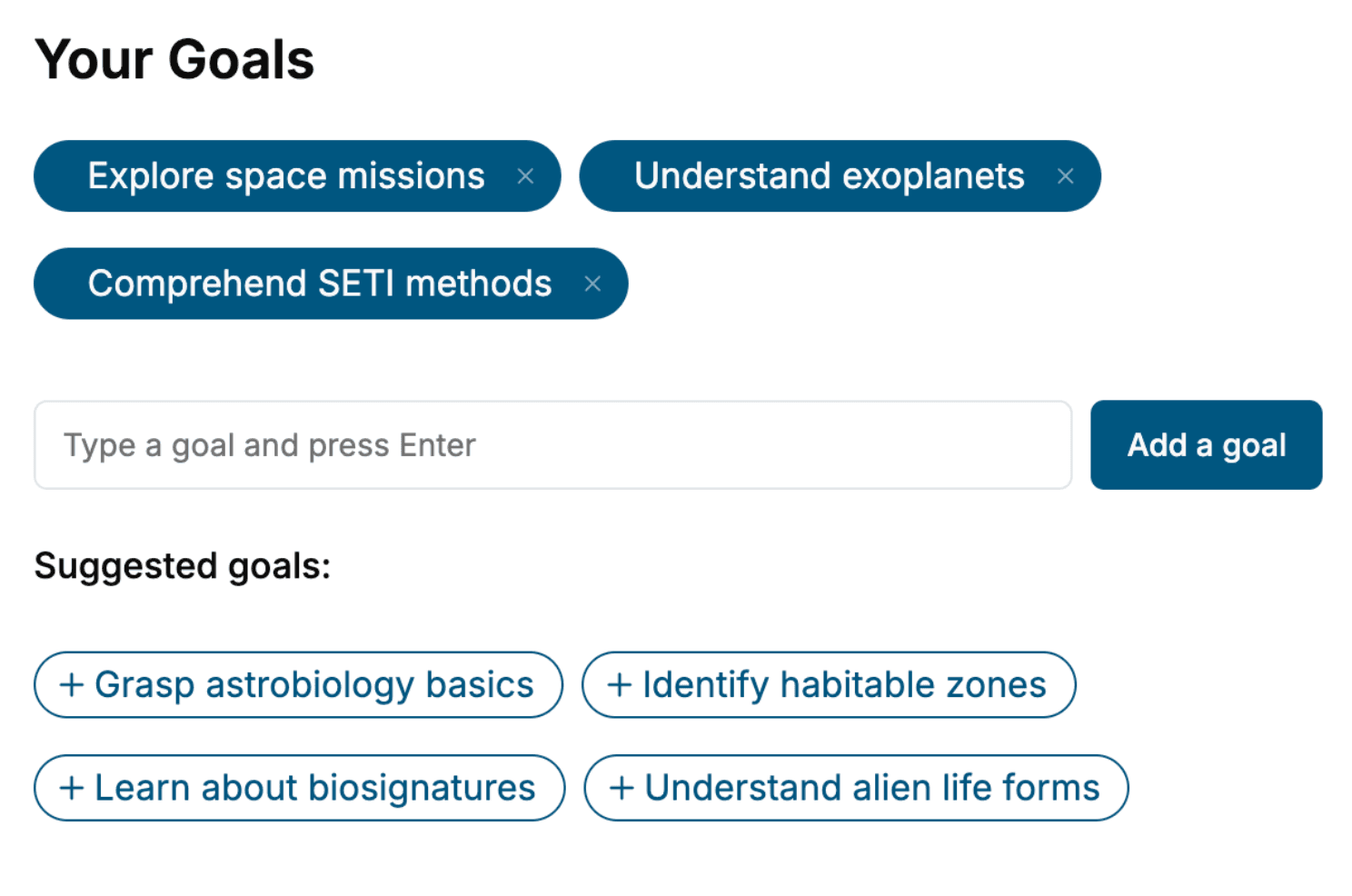
Tell us your goals and background, and get your own version of this book, tailored by AI to you.


Benefits of AI-tailored books
- Read one book, not ten:
- all the Retirement Planning knowledge you need, gathered into a single book.
- Save days of learning:
- tell us your goals, choose your topics, and the whole book is built around them.
- Learn effortlessly:
- Retirement Planning book written for your specific background and expertise.
- Understand at a glance:
- includes charts, tables, timelines, checklists, decision trees, and more.
- Stay current:
- written the day you order it, not years ago.
- Trust what you read:
- every book is checked for accuracy, with real research when your subject needs it.
Create your unique book in 3 steps
- 1. Select your focus
Select the focus of your Retirement Planning book and share your background
- 2. Personalize your book
Specify your goals and choose sub-topics to include
- 3. Get your tailored book
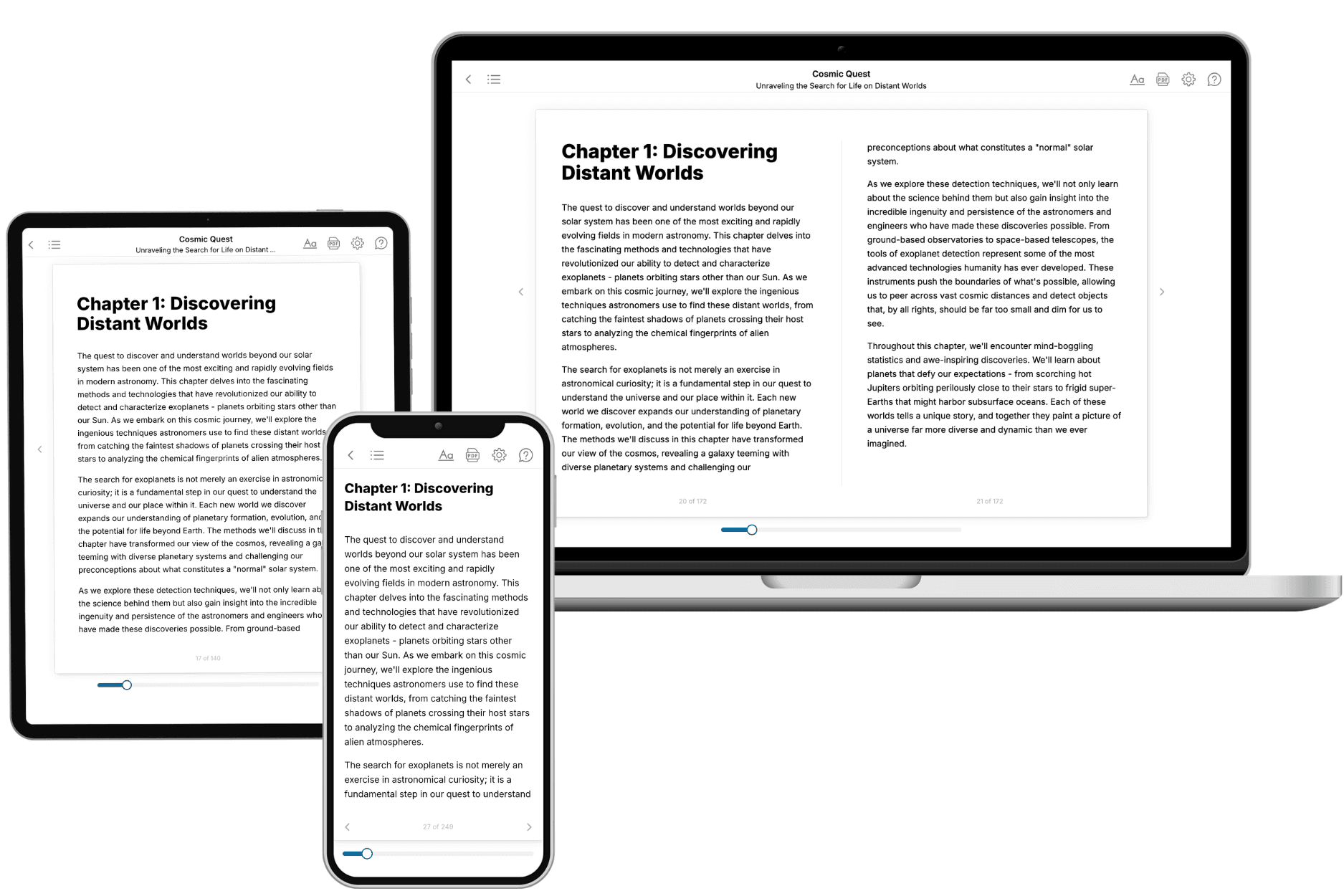
Your book is ready in 10 minutes. Read it online, download as EPUB or PDF, or send to Kindle.

Frequently asked questions
- What is TailoredRead?
TailoredRead creates complete, full-length nonfiction ebooks, written specifically for you. Tell us what you want to learn and why, and TailoredRead writes you a complete ebook on it, with charts, tables, and diagrams throughout. Read it online, on Kindle, or on any e-reader, or download it as a PDF or EPUB. Every book is written fresh the day you order it.
- How is the book tailored to me?
Before anything is written, you answer a few short questions about your goals, your background, and the topics you care about. Your book is then planned around your answers: written at your level, focused on your goals, and covering the topics you chose, instead of the one-size-fits-all book a store sells everyone.
- Will it read like generic AI content?
No. Your book isn't a chat transcript: it's planned chapter by chapter before a single word is written, told in a clear book voice, and explains ideas visually with charts, tables, and diagrams. After writing, every book goes through an editorial pass that polishes chapters so the book reads consistent from start to finish. Judge for yourself: browse thousands of sample books on our Explore Books page.
- How accurate is the content?
Our AI first checks whether your subject needs live research. Niche and fast-moving subjects are researched before writing, and the book plan and chapters are grounded in what it finds. After writing, every book goes through a quality pass that checks its facts and consistency, and researched books list their sources in a Notes section at the back.
- How long is the book?
You choose the length: Comprehensive (250-300 pages), Detailed (150-200 pages), Essential (70-100 pages), or Short (30-50 pages).
- Does the book include visuals?
Yes. Every book includes charts, tables, and diagrams: timelines, checklists, step-by-step guides, decision trees, comparison tables, matrices, and bar charts. A typical book includes dozens of these visual elements.
- Can I read it on Kindle? What formats can I download?
Yes. Every book can be read in our online reader or downloaded as a PDF or EPUB. The EPUB can be opened with Kindle, Apple Books, Kobo, and any e-reader. The Commercial and Author licenses also include an editable Word (DOCX) and Markdown download.
- How much does it cost?
About the price of a regular ebook. The exact price depends on your book's length and complexity, from $2 for the shortest books to $35 for the most comprehensive, and it's shown when you review your book, before you commit to anything. Each book is a one-time purchase, yours to keep, no subscription. Licenses that let you share, teach, or publish your book range from $35.99 to $49.99.
- Can I preview the book before purchasing?
Before you pay, you'll see what your book will cover: the title, a detailed description, the estimated length, and the complete chapter-by-chapter table of contents, so you know what you're getting before you decide. The full text itself is written after you purchase.
- How long does it take to create a book?
About 10 minutes. You can start reading the opening chapters while the rest is still being written.