The Personality of Animals
Understanding Individual Differences in Behavior Across Species
Have you ever wondered why some animals are bold risk-takers while others are cautious and reserved?
222 pages11 chaptersApr 4, 2026Animal Behavior
About this book
What makes one individual fundamentally different from another of the same species? This book reveals that animal personality is far more than anecdotal observation—it's a scientifically measurable phenomenon with profound implications for how animals survive, reproduce, and interact with their environments. You'll discover how researchers identify and measure personality traits across species, from fish to primates, and learn why these individual differences matter for evolution and ecology. Through real-world examples and clear explanations, you'll explore how personality shapes everything from predator-prey dynamics to social hierarchies, and how understanding these differences can improve conservation strategies and animal welfare. Whether you're a student of biology, a wildlife enthusiast, or simply curious about animal behavior, this book provides the knowledge to see animals as complex individuals with distinct behavioral profiles.
Table of contents
- IntroductionWhy Animal Personality Matters, Beyond Instinct: The Science of Individual Differences, What You'll Learn in This BookRead below
- Chapter 1: Defining Animal PersonalityPersonality Versus Behavior: Understanding the Distinction, Consistency Across Contexts and Time, Historical Perspectives on Animal Personality
- Chapter 2: Measuring Personality in AnimalsBehavioral Testing Methods and Protocols, Observational Approaches in Natural Settings, Rating Scales and Personality Assessment Tools
- Chapter 3: Major Personality DimensionsBoldness and Shyness: Risk-Taking Tendencies, Sociability and Aggression: Social Dimensions, Exploration and Neophobia: Novelty Responses, Activity Levels and Docility
- Chapter 4: Personality Across SpeciesPersonality in Fish and Aquatic Animals, Personality in Birds: Variation and Adaptation, Personality in Mammals: From Rodents to Primates
- Chapter 5: The Evolution of PersonalityNatural Selection and Personality Variation, Evolutionary Trade-Offs and Constraints, The Adaptive Value of Personality Diversity
- Chapter 6: Personality and SurvivalPredator-Prey Dynamics and Personality, Foraging Strategies and Food Acquisition, Risk Assessment and Mortality Rates
- Chapter 7: Personality and ReproductionMating Success and Personality Traits, Parental Care Styles and Offspring Outcomes, Sexual Selection and Personality Evolution
- Chapter 8: Social Personality and Group DynamicsDominance Hierarchies and Personality, Cooperation, Conflict, and Social Roles, How Personality Composition Affects Group Stability
- Chapter 9: Environmental Influences on PersonalityEarly Life Experiences and Personality Development, Environmental Stress and Personality Expression, Behavioral Plasticity and Personality Flexibility
- Chapter 10: Personality in Conservation and ManagementPersonality and Wildlife Reintroduction Success, Personality Considerations in Captive Breeding, Personality and Human-Wildlife Conflict Management
- Chapter 11: Personality and Animal WelfareMatching Personalities to Environments, Stress Responses and Individual Coping Strategies, Environmental Enrichment and Personality Expression
- ConclusionIntegrating Personality Science into Practice, Future Directions in Animal Personality Research
- Glossary
Introduction
Picture two wolves from the same pack, born in the same season, raised in the same territory. One approaches unfamiliar objects with curiosity, investigates new scents without hesitation, and pushes to the front when the pack encounters a rival group. The other hangs back, watches carefully before committing to any action, and avoids confrontation whenever possible. Both wolves are healthy, well-fed, and socially integrated. Yet their behavioral profiles are strikingly different. These differences are not random noise or temporary moods. They are stable, repeatable patterns that define how each individual navigates its world. In short, they are personality.
For a long time, the idea that animals have personalities was treated with suspicion in scientific circles. Attributing consistent individual traits to non-human animals felt too close to anthropomorphism, the tendency to project human qualities onto other species in ways that distort rather than illuminate. Serious researchers were cautious about using a word like "personality" outside the context of human psychology. But that caution has given way to a growing body of rigorous evidence. Across hundreds of species, from octopuses to chimpanzees, from zebrafish to ravens, researchers have documented consistent, measurable individual differences in behavior that persist across time and across different situations. The science of animal personality is now a well-established field, and its findings are reshaping how we understand behavior, ecology, and evolution.
This book is built around a simple but powerful idea: animals are not interchangeable units of their species. Each individual carries a behavioral profile that influences how it finds food, avoids predators, chooses mates, raises offspring, and fits into social groups. These profiles matter. They affect survival rates, reproductive success, and even the ecological roles that individuals play within their communities. Understanding animal personality is not just an academic exercise. It has real consequences for wildlife conservation, captive animal management, and our broader understanding of how life on Earth is organized. Whether you are a biology student, a wildlife professional, or someone who has always suspected that the animals around you have distinct characters, this book will give you the tools to see those differences clearly and understand why they exist.
The chapters ahead move from foundational concepts to applied insights. You will start by learning what animal personality actually means in scientific terms, how it differs from simple behavior, and how researchers measure it reliably. From there, you will explore the major personality dimensions that appear across species, examine how personality shapes survival and reproduction, and consider how evolutionary pressures maintain diversity in behavioral types within populations. The later chapters connect personality science to practical challenges in conservation and animal welfare. Throughout, the focus is on concrete examples, real research, and actionable understanding. By the end, you will have a framework for interpreting animal behavior that goes well beyond the species level, down to the individual.
Why Animal Personality Matters
The question of why animal personality matters is best answered with a concrete example. In the 1990s, researchers studying great tits (Parus major) in the Netherlands began noticing something unexpected. Birds from the same population, living in the same woodland, were consistently solving problems at different speeds and exploring new environments at different rates. These differences were not explained by age, sex, or body condition alone. They were stable individual traits that predicted behavior across multiple situations and across years.[1] This discovery opened a door. If personality traits are stable and heritable, they can be acted on by natural selection. That means personality is not just a curiosity. It is a fundamental part of how evolution shapes populations.
Personality matters at the individual level too. A bold individual and a shy individual of the same species face the world very differently. The bold one may find food faster, claim better territories, and attract more mates. But it also takes more risks, encounters more predators, and may die younger. The shy individual may live longer on average but reproduce less in any given season. Neither strategy is universally better. The outcome depends on the environment, the population density, the availability of resources, and dozens of other factors. This is precisely why personality variation persists within populations rather than being eliminated by selection over time.
At the population level, personality diversity has consequences that go beyond individual fitness. Groups composed of individuals with different behavioral types tend to be more resilient to environmental change than groups dominated by a single type. When conditions shift, having a mix of bold explorers and cautious conservers means the group is more likely to contain individuals suited to the new situation. This is sometimes called the portfolio effect, borrowing a concept from economics where diversified investments reduce overall risk. In ecology, personality diversity functions as a kind of behavioral insurance policy for populations facing unpredictable environments.
Personality also matters for the relationships between species. Predator-prey dynamics, for instance, are not just about species-level traits. A bold prey animal behaves very differently from a shy one, and predators may selectively target one type over the other. This selective predation can drive evolutionary change in personality distributions within prey populations over generations. Similarly, in mutualistic relationships, the personality of individual partners can affect the stability and productivity of the interaction. A more exploratory pollinator may visit a wider range of flowers, affecting plant reproduction in ways that a less exploratory individual would not.
In human-managed settings, personality matters in ways that are immediately practical. Wildlife managers attempting to reintroduce captive-bred animals into the wild have learned, sometimes through costly failures, that not all individuals of a species are equally suited to the challenge. Animals that are too bold may approach humans or roads without appropriate caution. Animals that are too shy may fail to explore their new habitat and find sufficient food. Matching individual personality profiles to release conditions has become an important tool in improving reintroduction success rates.[2] This is just one example of how personality science translates into better outcomes for real animals in real situations.
Finally, personality matters for animal welfare. Animals in captivity, whether in zoos, research facilities, or domestic settings, experience their environments through the filter of their individual personalities. A highly exploratory animal confined to a small, unchanging enclosure will experience that environment very differently from a less curious individual. Recognizing these differences allows caretakers to design environments and management practices that better meet the needs of individual animals rather than treating all members of a species as identical. This shift from species-level to individual-level thinking is one of the most important contributions that personality science makes to animal welfare practice.
Beyond Instinct: The Science of Individual Differences
For much of the twentieth century, animal behavior research was dominated by two broad frameworks. The first was the ethological tradition, which focused on species-typical behaviors, the fixed action patterns and instinctive responses that define how a species as a whole responds to specific stimuli. The second was the behaviorist tradition, which treated animals largely as stimulus-response machines shaped by reinforcement histories. Both frameworks were enormously productive, but they shared a common blind spot: they treated individual variation as noise to be averaged out rather than as a signal worth studying in its own right.
The shift toward taking individual differences seriously began gradually, driven by researchers who noticed that the variation they were trying to eliminate from their analyses was actually telling them something important. When the same individual consistently behaved differently from its peers across multiple tests and multiple contexts, that consistency demanded an explanation. It could not simply be measurement error. Something about the individual itself was producing a stable behavioral signature. This realization led researchers to borrow concepts and methods from human personality psychology and adapt them for use with non-human animals.
The core scientific requirement for calling something a personality trait is repeatability: the behavior must be consistent within an individual across time and across different situations. This is what distinguishes a personality trait from a temporary state. An animal that is frightened will behave cautiously in that moment, but that does not make it a shy individual. A shy individual is one that consistently behaves cautiously across many different situations, even when the immediate context does not obviously call for caution. Measuring repeatability requires testing the same individuals multiple times under varied conditions, which is more demanding than a single behavioral snapshot but far more informative.[3]
A landmark meta-analysis published in 2009 examined repeatability across 759 estimates from 113 studies covering a wide range of species and behavioral traits. The average repeatability coefficient was around 0.37, meaning that a meaningful and consistent portion of behavioral variation was attributable to stable individual differences rather than random fluctuation.[3] This was not a trivial finding. It demonstrated that individual consistency in behavior is a widespread phenomenon across the animal kingdom, not a quirk of a few well-studied species. The science of animal personality had moved from anecdote to evidence.
It is important to be clear about what animal personality science does and does not claim. It does not claim that animals have rich inner lives identical to human experience, or that a bold fish is bold in the same way a bold person is bold. What it claims is more specific and more testable: that consistent individual differences in behavior exist, that they can be measured reliably, that they have genetic and developmental underpinnings, and that they have fitness consequences. These are empirical claims that can be evaluated with data. The field is careful to stay grounded in observable behavior rather than speculating about subjective experience, which keeps the science rigorous even as it acknowledges the complexity of individual animals.
The methods used to study animal personality have become increasingly sophisticated. Researchers use standardized behavioral tests, long-term observational records, automated tracking systems, and even genetic analyses to build detailed pictures of individual behavioral profiles. Some studies follow the same individuals for years or even decades, tracking how their personalities interact with changing environments and life stages. Others use experimental manipulations to test how personality traits influence responses to specific challenges. Together, these approaches have produced a rich and growing literature that spans species from insects to elephants.
One particularly illuminating example comes from research on Eurasian perch (Perca fluviatilis). Individual fish were tested repeatedly for their tendency to explore a novel environment and their boldness in the presence of a predator model. The same individuals that explored more actively also tended to be bolder in the predator test, and these tendencies remained consistent across weeks of repeated testing.[4] This kind of correlation between different behavioral traits, where bold individuals also tend to be more exploratory, is called a behavioral syndrome. It suggests that personality traits are not independent but are linked together in ways that may reflect underlying physiological or developmental mechanisms. Understanding these syndromes is one of the central puzzles of animal personality research.
The science of individual differences also connects to broader questions in evolutionary biology. If personality traits are heritable and have fitness consequences, they should respond to natural selection. But if selection consistently favored one personality type over others, variation should eventually be eliminated from populations. The fact that variation persists suggests that different personality types have different advantages in different conditions, a concept known as frequency-dependent selection or fluctuating selection. Understanding how selection maintains personality diversity is one of the most active areas of current research, and it connects individual behavior to population genetics in ways that were not previously appreciated.
What You'll Learn in This Book
This book is organized to take you from foundational concepts to applied understanding in a logical sequence. Each chapter builds on the ones before it, so by the time you reach the later chapters on conservation and welfare, you will have the conceptual tools to understand why the practical recommendations make sense. Here is a brief map of the journey ahead.
Chapter 1: Defining Animal Personality lays the groundwork by clarifying what personality means in a scientific context. It distinguishes personality from moment-to-moment behavior, explains the concept of consistency across contexts and time, and traces the historical development of the field. You will come away with a precise understanding of what researchers mean when they use the word "personality" and why that precision matters.
Chapter 2: Measuring Personality in Animals addresses the practical challenge of how to actually study personality in non-human animals. It covers the main methods researchers use, including standardized behavioral tests, long-term observational approaches, and rating scales completed by experienced observers. You will learn what makes a good personality measure, what the common pitfalls are, and how researchers validate their methods across different species and settings.
Chapter 3: Major Personality Dimensions introduces the core personality traits that appear repeatedly across species. These include boldness and shyness, sociability and aggression, exploration and neophobia, and activity levels. For each dimension, you will see how it is defined, how it is measured, and what it looks like in practice across different species. This chapter gives you a vocabulary for describing and comparing personality profiles across the animal kingdom.
The next several chapters examine how personality connects to the major challenges of animal life:
- Chapter 4 surveys personality across major taxonomic groups, from fish and birds to mammals and primates, showing both the diversity and the commonalities in how personality is expressed across the tree of life.
- Chapter 5 explores the evolutionary origins of personality, asking why variation persists and what selection pressures shape the distribution of personality types within populations.
- Chapter 6 examines how personality influences survival, covering predator-prey dynamics, foraging strategies, and the relationship between risk-taking and mortality.
- Chapter 7 looks at personality and reproduction, including how personality traits affect mating success, parental care, and the outcomes for offspring.
- Chapter 8 addresses social behavior, exploring how personality shapes dominance hierarchies, cooperation, conflict, and the overall stability of social groups.
- Chapter 9 considers how environments shape personality, covering early life experiences, stress responses, and the degree to which personality traits are flexible versus fixed.
The final chapters turn to application. Chapter 10 examines how personality science is being used in conservation and wildlife management, with a focus on reintroduction programs, captive breeding, and human-wildlife conflict. Chapter 11 addresses animal welfare, exploring how personality influences stress responses, how environments can be designed to suit individual needs, and how enrichment programs can be tailored to different personality types. The conclusion pulls these threads together and looks ahead to where the field is going.
Throughout the book, you will encounter specific research examples drawn from real studies. These are not just illustrations. They are the evidence base that supports the concepts being discussed. Where possible, the examples are chosen to show the range of species and methods involved in personality research, so you get a sense of how broad and diverse this field has become. You will also find practical frameworks for applying what you learn, whether you are designing a behavioral study, evaluating an animal's suitability for a management program, or simply trying to understand the individual animals in your care or observation.
A few things are worth keeping in mind as you read. First, animal personality research is a young field, and some questions remain genuinely open. Where the evidence is strong, this book says so clearly. Where it is preliminary or contested, that is noted too. Science is a process, not a finished product, and part of understanding any scientific field is knowing where the boundaries of current knowledge lie. Second, the field draws on multiple disciplines, including behavioral ecology, evolutionary biology, comparative psychology, and neuroscience. This book tries to integrate these perspectives without getting lost in disciplinary jargon. The goal is always clarity and usefulness, not technical completeness.
Finally, it is worth saying something about why this subject is genuinely exciting. The idea that animals are individuals, not just representatives of their species, changes how you see the natural world. Once you start looking for personality differences, you notice them everywhere. The squirrel that always approaches the feeder first, the dog that hangs back at the park while others rush in, the fish in the tank that explores every corner while its companions cluster in one spot. These are not random behaviors. They are expressions of stable individual characters that have been shaped by millions of years of evolution and by the specific experiences of each animal's life. Understanding that is not just scientifically valuable. It is a richer, more accurate, and ultimately more respectful way of seeing the animals that share our world.
The goal of this book is not to make animals seem more human. It is to make them seem more fully themselves: complex individuals with distinct behavioral profiles that matter for their survival, their relationships, and their place in the ecosystems they inhabit.
With that in mind, the journey begins. Chapter 1 starts with the most fundamental question: what exactly do we mean when we say an animal has a personality, and how is that different from simply saying it behaves in a certain way? The answer turns out to be more interesting, and more consequential, than it might first appear.
Notes
Introduction
- 1. N. J. Dingemanse and others, "Repeatability and heritability of exploratory behaviour in great tits from the wild," Animal Behaviour, 2002
- 2. S. Bremner-Harrison and others, "Behavioural trait assessment as a release criterion," Animal Conservation, 2004
- 3. A. M. Bell and others, "The repeatability of behaviour," Animal Behaviour, 2009
- 3. A. M. Bell and others, "The repeatability of behaviour," Animal Behaviour, 2009
- 4. C. Magnhagen and F. Staffan, "Is boldness affected by group composition in young-of-the-year perch, Perca fluviatilis?," Behavioral Ecology and Sociobiology, 2005
This is the end of the free sample. The full book has 11 chapters.
Want this book written for you?
Tell us your goals and background, and get your own version of this book, tailored by AI to you.


Benefits of AI-tailored books
- Read one book, not ten:
- all the Animal Behavior knowledge you need, gathered into a single book.
- Save days of learning:
- tell us your goals, choose your topics, and the whole book is built around them.
- Learn effortlessly:
- Animal Behavior book written for your specific background and expertise.
- Understand at a glance:
- includes charts, tables, timelines, checklists, decision trees, and more.
- Stay current:
- written the day you order it, not years ago.
- Trust what you read:
- every book is checked for accuracy, with real research when your subject needs it.
Create your unique book in 3 steps
- 1. Select your focus
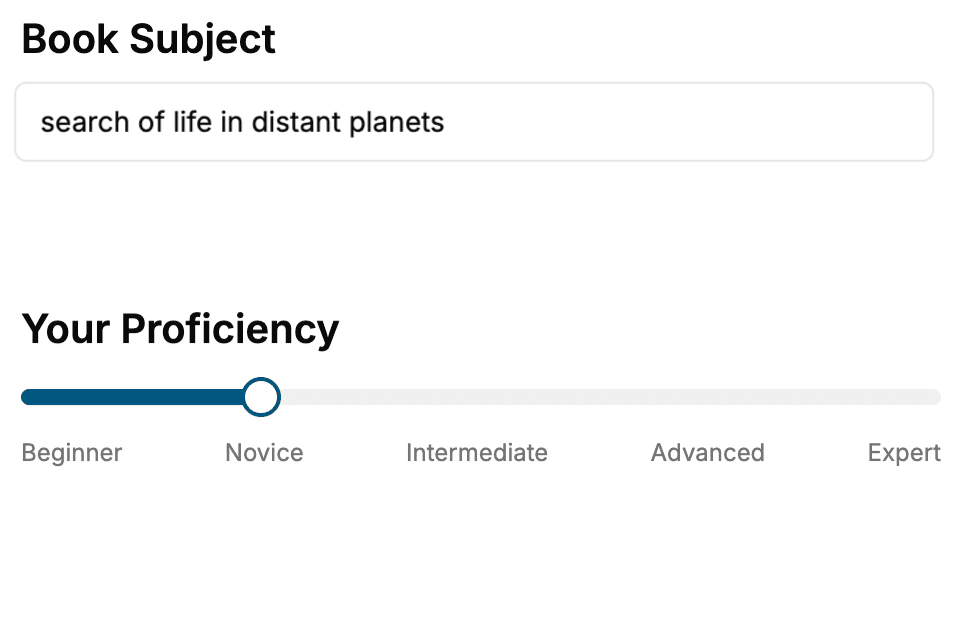
Select the focus of your Animal Behavior book and share your background
- 2. Personalize your book
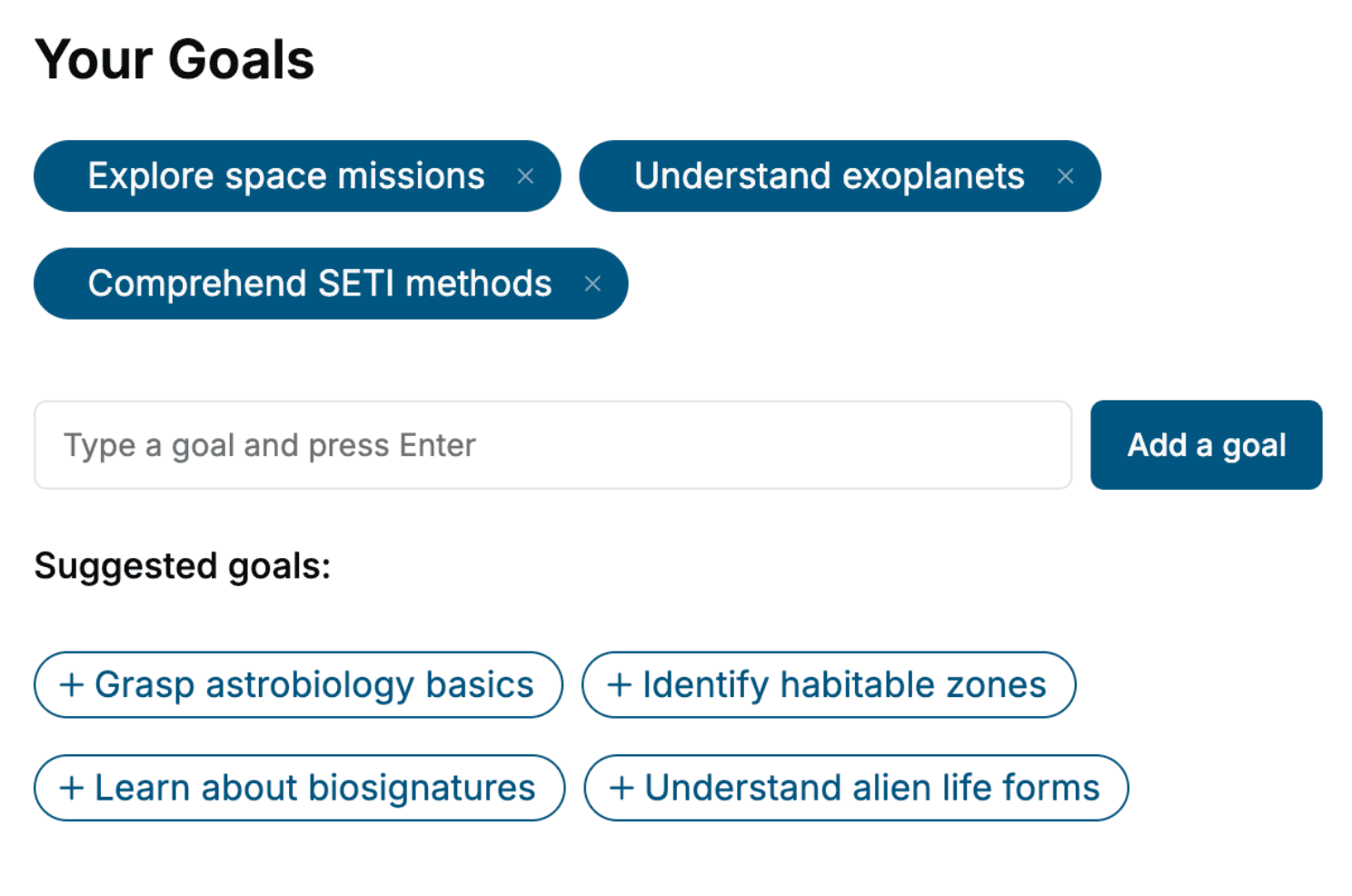
Specify your goals and choose sub-topics to include
- 3. Get your tailored book
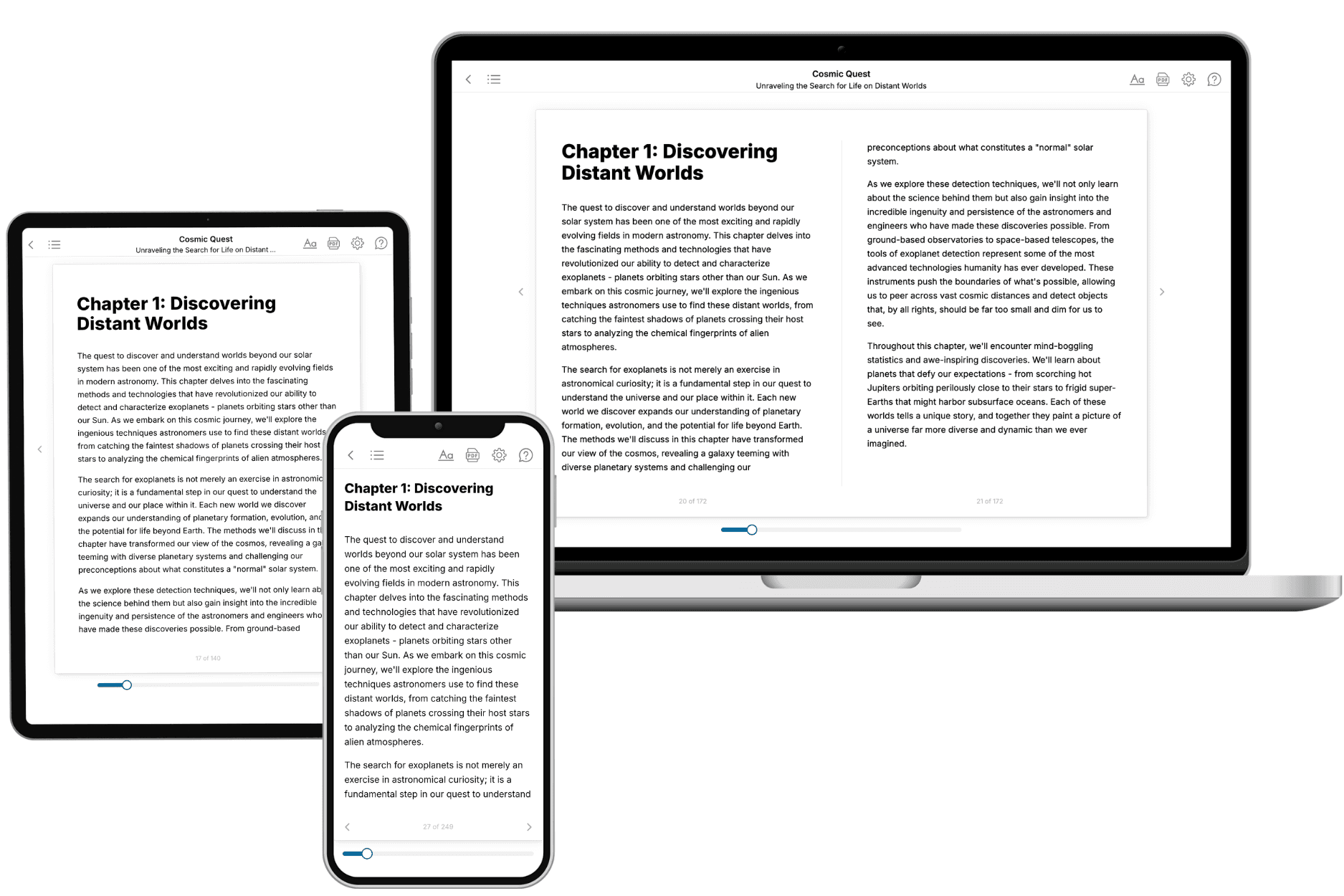
Your book is ready in 10 minutes. Read it online, download as EPUB or PDF, or send to Kindle.
Frequently asked questions
- What is TailoredRead?
TailoredRead creates complete, full-length nonfiction ebooks, written specifically for you. Tell us what you want to learn and why, and TailoredRead writes you a complete ebook on it, with charts, tables, and diagrams throughout. Read it online, on Kindle, or on any e-reader, or download it as a PDF or EPUB. Every book is written fresh the day you order it.
- How is the book tailored to me?
Before anything is written, you answer a few short questions about your goals, your background, and the topics you care about. Your book is then planned around your answers: written at your level, focused on your goals, and covering the topics you chose, instead of the one-size-fits-all book a store sells everyone.
- Will it read like generic AI content?
No. Your book isn't a chat transcript: it's planned chapter by chapter before a single word is written, told in a clear book voice, and explains ideas visually with charts, tables, and diagrams. After writing, every book goes through an editorial pass that polishes chapters so the book reads consistent from start to finish. Judge for yourself: browse thousands of sample books on our Explore Books page.
- How accurate is the content?
Our AI first checks whether your subject needs live research. Niche and fast-moving subjects are researched before writing, and the book plan and chapters are grounded in what it finds. After writing, every book goes through a quality pass that checks its facts and consistency, and researched books list their sources in a Notes section at the back.
- How long is the book?
You choose the length: Comprehensive (250-300 pages), Detailed (150-200 pages), Essential (70-100 pages), or Short (30-50 pages).
- Does the book include visuals?
Yes. Every book includes charts, tables, and diagrams: timelines, checklists, step-by-step guides, decision trees, comparison tables, matrices, and bar charts. A typical book includes dozens of these visual elements.
- Can I read it on Kindle? What formats can I download?
Yes. Every book can be read in our online reader or downloaded as a PDF or EPUB. The EPUB can be opened with Kindle, Apple Books, Kobo, and any e-reader. The Commercial and Author licenses also include an editable Word (DOCX) and Markdown download.
- How much does it cost?
About the price of a regular ebook. The exact price depends on your book's length and complexity, from $2 for the shortest books to $35 for the most comprehensive, and it's shown when you review your book, before you commit to anything. Each book is a one-time purchase, yours to keep, no subscription. Licenses that let you share, teach, or publish your book range from $35.99 to $49.99.
- Can I preview the book before purchasing?
Before you pay, you'll see what your book will cover: the title, a detailed description, the estimated length, and the complete chapter-by-chapter table of contents, so you know what you're getting before you decide. The full text itself is written after you purchase.
- How long does it take to create a book?
About 10 minutes. You can start reading the opening chapters while the rest is still being written.