The Philosophers Who Shaped the West
Understanding Socrates, Plato, and Aristotle in Ancient Greece and Their Enduring Impact on European Thought
The ancient Greek philosophers seem distant and abstract, their ideas buried under centuries of interpretation and academic jargon.
253 pages13 chaptersOct 21, 2025Philosophy
About this book
Yet Socrates, Plato, and Aristotle created the intellectual foundation upon which Western civilization was built—and their insights remain surprisingly relevant to how you think, govern, and understand the world today. This book brings these three towering figures to life within the vibrant, tumultuous world of ancient Athens. You'll discover how Socrates challenged his fellow citizens in the marketplace, why Plato envisioned his ideal Republic, and how Aristotle systematically organized human knowledge. More importantly, you'll trace how their ideas traveled through time—preserved by Islamic scholars, debated in medieval universities, and woven into the fabric of European thought. Through clear explanations and historical context, you'll understand not just what these philosophers taught, but why their questions about truth, justice, knowledge, and the good life continue to matter. By the end, you'll possess a framework for understanding Western intellectual history and the tools to apply ancient wisdom to modern challenges.
Table of contents
- IntroductionThree Minds That Shaped Civilization, Why These Philosophers Still Matter Today, How to Read This BookRead below
- Chapter 1: The Athens That Forged PhilosophyThe Golden Age of Pericles, Democracy, Drama, and Public Discourse, War and the Decline of Athenian Power, The Intellectual Climate of Fifth-Century Greece
- Chapter 2: Socrates: The Gadfly of AthensThe Stonemason Who Became a Philosopher, The Art of Questioning: The Socratic Method, Know Thyself and the Examined Life, Trial, Conviction, and the Hemlock
- Chapter 3: Socratic Wisdom and EthicsVirtue as Knowledge, The Paradox of Socratic Ignorance, The Foundation of Western Moral Philosophy
- Chapter 4: Plato: The Architect of IdealismFrom Aristocrat to Philosopher, Founding the Academy: The First University, The Dialogues as Philosophical Literature, The Failed Experiment in Syracuse
- Chapter 5: Plato's Theory of Forms and RealityThe Theory of Forms: A World Beyond Appearances, The Allegory of the Cave, Knowledge and the Divided Line, The Soul and Immortality
- Chapter 6: The Republic and Plato's Vision of JusticeWhat Is Justice?, The Ideal State and the Philosopher-King, Education and the Guardian Class
- Chapter 7: Aristotle: The Systematic ThinkerFrom Stagira to the Academy, Tutor to Alexander the Great, The Lyceum and Peripatetic Philosophy, The Scope of Aristotle's Works
- Chapter 8: Aristotle's Metaphysics and LogicRejecting the Forms: Aristotle's Critique of Plato, The Four Causes and Understanding Change, Logic and the Syllogism
- Chapter 9: Aristotle's Ethics and the Good LifeEudaimonia: Flourishing and Happiness, The Golden Mean and Virtue Ethics, Friendship and Community, The Contemplative Life as the Highest Good
- Chapter 10: Aristotle's Politics and Natural ScienceMan as a Political Animal, Analyzing Constitutions and Forms of Government, Empirical Observation and Natural Science
- Chapter 11: Comparing the Three PhilosophersThe Teacher-Student Lineage, Differences in Method and Approach, Competing Views on Reality and Knowledge
- Chapter 12: The Transmission of Greek PhilosophyThe Hellenistic Period and Roman Adoption, Islamic Scholars and the Preservation of Texts, Rediscovery in Medieval Europe, The Renaissance Revival of Classical Learning
- Chapter 13: The Enduring Legacy in Modern ThoughtInfluence on Political Theory and Governance, Foundations of the Scientific Method, Education and Pedagogical Methods, Contemporary Philosophy and Ethics
- ConclusionTimeless Questions for Every Generation, Applying Ancient Wisdom Today
- Further Reading
Introduction
Walk through any university campus, courtroom, or legislative chamber in the Western world, and you encounter ideas born in ancient Athens more than two thousand years ago. The questions debated in those spaces—What is justice? How should we live? What can we truly know?—were first systematically explored by three men who lived within a single century in a city-state smaller than modern Rhode Island. Socrates, Plato, and Aristotle created the intellectual architecture that still supports Western civilization, yet their ideas often seem distant, abstract, or buried under layers of academic interpretation. This book strips away that distance and brings you face-to-face with three remarkable thinkers whose insights remain startlingly relevant to your daily life.
The story of these philosophers is also the story of a unique moment in human history. Fifth and fourth-century Athens experienced a convergence of democracy, wealth, military power, and cultural achievement that created conditions unlike anything the world had seen before. In this environment, philosophy emerged not as abstract speculation but as a practical response to urgent questions about how to live together, how to govern justly, and how to distinguish truth from persuasive rhetoric. The philosophers you'll meet in these pages weren't isolated academics—they were engaged citizens wrestling with the same challenges that face democratic societies today: political polarization, the tension between individual freedom and collective good, and the search for meaning in uncertain times.
What makes Socrates, Plato, and Aristotle particularly fascinating is their interconnection. Socrates taught Plato, who taught Aristotle, creating a teacher-student lineage that represents one of the most productive intellectual relationships in history. Yet each philosopher disagreed profoundly with his predecessor, building upon and challenging the ideas he inherited. This dynamic relationship produced a philosophical conversation that continues to this day. When you understand how these three minds built upon and contested each other's work, you gain insight into how ideas evolve, how intellectual traditions develop, and how disagreement can be productive rather than destructive. Their example offers a model for how to engage with ideas you find challenging while maintaining respect for those who hold them.
This introduction prepares you for the journey ahead by establishing why these particular philosophers matter, how their ideas traveled across centuries to shape European thought, and how to approach their work with both critical engagement and openness. You'll discover that philosophy isn't about memorizing abstract theories but about learning to think more clearly, question more effectively, and live more deliberately. The tools these ancient thinkers developed—the Socratic method, Platonic idealism, Aristotelian logic—remain powerful instruments for navigating contemporary challenges. By the end of this book, you'll possess not just historical knowledge but practical frameworks for examining your own beliefs, evaluating arguments, and pursuing the examined life that Socrates championed.
Three Minds That Shaped Civilization
Socrates never wrote a single word, yet he transformed philosophy forever by shifting its focus from the natural world to human concerns. Before Socrates, Greek thinkers called pre-Socratics primarily investigated questions about the physical universe: What is the fundamental substance of reality? How did the cosmos come into being? Socrates redirected philosophical inquiry toward ethical questions: How should we live? What is virtue? What does it mean to be a good person? This pivot from cosmology to ethics established philosophy as a discipline concerned with human flourishing and moral development. His method of questioning—relentlessly probing assumptions through dialogue—created a template for critical thinking that remains central to education and intellectual discourse today.
The Socratic method, as it came to be known, wasn't simply a teaching technique but a way of life. Socrates spent his days in the Athenian marketplace engaging anyone willing to talk with him in conversations about justice, courage, piety, and knowledge. He claimed to know nothing himself, positioning himself as a fellow seeker of truth rather than a teacher dispensing wisdom. Through careful questioning, he exposed contradictions in his conversation partners' beliefs, demonstrating that what people thought they knew with certainty often collapsed under scrutiny. This approach made him beloved by some and despised by others. His insistence that the unexamined life is not worth living
challenged Athenians to think critically about their values and actions, a challenge that ultimately cost him his life when he was executed for corrupting the youth and impiety.
Plato, Socrates' most famous student, preserved his teacher's legacy by writing dialogues that featured Socrates as the main character. But Plato went far beyond simply recording conversations. He developed a comprehensive philosophical system that addressed questions about reality, knowledge, politics, and the soul. At the heart of Plato's philosophy lies the Theory of Forms—the idea that the physical world we perceive through our senses is merely a shadow of a higher realm of perfect, eternal Forms or Ideas. According to Plato, when you see a beautiful painting or a just action, you're recognizing an imperfect reflection of the Form of Beauty or the Form of Justice. True knowledge consists of grasping these eternal Forms through reason rather than relying on the deceptive evidence of the senses.
This metaphysical framework had profound implications for how Plato understood everything from education to politics. If true reality exists beyond the physical world, then the philosopher who has glimpsed the Forms possesses knowledge that ordinary people lack. This insight led Plato to argue in his most famous work, The Republic, that the ideal state should be governed by philosopher-kings—rulers who have ascended from the cave of ignorance to behold truth itself. Plato's vision of an ideal society, his theory of the tripartite soul, and his emphasis on education as the cultivation of reason influenced political theory, psychology, and pedagogy for two millennia. His Academy, founded in Athens around 387 BCE, became the model for universities and remained in operation for over nine hundred years, making it one of the longest-lasting educational institutions in history.
Aristotle entered Plato's Academy as a seventeen-year-old student and remained for twenty years until Plato's death. Despite this long apprenticeship, Aristotle developed a philosophical approach that fundamentally challenged his teacher's idealism. Where Plato looked beyond the physical world to eternal Forms, Aristotle insisted that reality exists in the particular things we can observe and study. He rejected the separation between the world of Forms and the physical world, arguing instead that form and matter are inseparable aspects of individual substances. An oak tree, for Aristotle, isn't an imperfect copy of the Form of Tree but a complete reality in itself, possessing both matter (wood, leaves, roots) and form (the organizing principle that makes it an oak rather than a pine).
This empirical orientation led Aristotle to become perhaps the most systematic thinker in Western history. He didn't just philosophize about nature—he collected and classified hundreds of plant and animal species. He didn't just theorize about politics—he studied the constitutions of 158 different city-states. His works covered logic, metaphysics, ethics, politics, rhetoric, poetics, biology, physics, and psychology. Aristotle created the first formal system of logic, developed virtue ethics as a framework for moral philosophy, and established empirical observation as the foundation for scientific inquiry. His influence on medieval European thought was so profound that he was known simply as The Philosopher,
as if no other thinker deserved the title. The structure of university curricula, the organization of knowledge into disciplines, and the scientific method itself all bear Aristotle's imprint.
Together, these three philosophers created complementary and competing frameworks for understanding reality, knowledge, and human flourishing. Socrates established the examined life and dialectical inquiry as philosophical ideals. Plato developed a comprehensive system that elevated reason and abstract thought while questioning the reliability of sensory experience. Aristotle grounded philosophy in empirical observation and systematic categorization while emphasizing practical wisdom and the cultivation of virtue through habit. Their disagreements weren't failures of communication but productive tensions that generated new insights. The debate between Platonic idealism and Aristotelian realism continues to structure philosophical discussions about the nature of reality, while Socratic questioning remains the gold standard for critical thinking.
Understanding these three thinkers as individuals and as participants in an ongoing conversation provides you with more than historical knowledge. It offers a framework for understanding how Western civilization thinks about fundamental questions. When contemporary debates arise about the relationship between theory and practice, the role of experts in democracy, or the nature of moral education, they echo arguments first articulated by Socrates, Plato, and Aristotle. Recognizing these echoes helps you see beneath the surface of current controversies to the deeper philosophical commitments that shape different positions. This historical perspective doesn't resolve debates, but it clarifies what's actually at stake and reveals options that might otherwise remain invisible.
Why These Philosophers Still Matter Today
The relevance of ancient Greek philosophy extends far beyond academic interest or historical curiosity. The questions Socrates, Plato, and Aristotle asked remain our questions. How do we distinguish knowledge from opinion in an age of information overload and competing claims to truth? What obligations do we have to our communities, and how do we balance individual freedom with collective responsibility? What constitutes a good life, and how do we cultivate the character traits that enable human flourishing? These aren't abstract philosophical puzzles but practical challenges you face in your personal relationships, professional decisions, and civic participation. The frameworks these ancient thinkers developed provide tools for navigating these challenges with greater clarity and wisdom.
Consider the Socratic method's application to contemporary discourse. In an era characterized by echo chambers and confirmation bias, Socrates' approach offers an antidote. His technique of asking clarifying questions, identifying hidden assumptions, and following arguments wherever they lead models intellectual humility and genuine curiosity. When you encounter a claim that seems obviously true or false, the Socratic approach encourages you to pause and ask: What exactly does this claim mean? What evidence supports it? What would count as evidence against it? What assumptions underlie it? This disciplined questioning doesn't guarantee you'll reach the truth, but it significantly improves the quality of your thinking and reduces the likelihood of accepting falsehoods or oversimplifications. Educational institutions from law schools to medical schools employ Socratic questioning precisely because it develops critical thinking skills that transfer across domains.
Plato's Theory of Forms might seem like ancient metaphysics with little practical application, yet it addresses a problem you encounter constantly: the relationship between ideals and reality. When you say a particular action is unjust or a specific policy is unfair, you're implicitly appealing to a standard of justice or fairness that transcends the particular case. Where does this standard come from? How do you know what justice really is? Plato's answer—that you're recognizing an imperfect reflection of the Form of Justice—may not satisfy you, but his question remains urgent. Contemporary debates about human rights, for instance, often assume universal moral standards that apply across cultures and historical periods. This assumption reflects a Platonic intuition that some truths transcend particular circumstances. Understanding Plato helps you recognize when you're making such appeals and encourages you to examine whether they're justified.
The tension between Platonic idealism and Aristotelian realism manifests in countless contemporary contexts. Should education focus on abstract principles and theoretical knowledge (a Platonic approach) or on practical skills and empirical observation (an Aristotelian approach)? Should political leaders be experts with specialized knowledge (philosopher-kings) or representatives who share the experiences of ordinary citizens? Should moral philosophy seek universal principles applicable to all situations or develop practical wisdom attuned to particular contexts? These aren't questions with simple answers, but recognizing them as variations of the Plato-Aristotle debate helps you understand what's at stake. You can draw on both traditions: using Platonic idealism to articulate aspirational goals and universal principles while employing Aristotelian realism to develop practical strategies grounded in empirical observation.
Aristotle's virtue ethics has experienced a remarkable revival in recent decades, offering an alternative to the dominant ethical frameworks of utilitarianism and deontology. Rather than asking What action produces the best consequences?
or What universal rules should I follow?
virtue ethics asks What kind of person should I become?
This shift in focus from actions to character resonates with contemporary concerns about moral education, professional ethics, and personal development. Aristotle's concept of the golden mean—the idea that virtue lies between extremes of excess and deficiency—provides practical guidance for cultivating traits like courage (between cowardice and recklessness) or generosity (between stinginess and wastefulness). His emphasis on habit formation acknowledges that becoming virtuous requires practice, not just intellectual understanding. You don't become courageous by reading about courage but by repeatedly acting courageously until it becomes second nature.
The political philosophy developed by these three thinkers continues to shape debates about governance and citizenship. Socrates' trial and execution raised questions about the limits of free speech and the tension between individual conscience and democratic authority that remain contentious today. Plato's critique of democracy in The Republic—that it can devolve into mob rule and that not all opinions deserve equal weight—challenges contemporary assumptions about political equality while raising uncomfortable questions about expertise and authority. Aristotle's analysis of different constitutional forms and his concept of the politikon zoon (political animal) established politics as a natural and necessary dimension of human life rather than a necessary evil. His insight that humans are fundamentally social creatures who can only flourish within communities contradicts both radical individualism and totalitarian collectivism, suggesting a middle path that honors both individual dignity and social interdependence.
Beyond specific doctrines or arguments, these philosophers model intellectual virtues worth cultivating. Socrates demonstrates intellectual humility and the courage to follow arguments wherever they lead, even when the conclusions challenge cherished beliefs. Plato shows how to construct systematic theories that integrate insights across different domains while using literary artistry to make philosophy accessible and engaging. Aristotle exemplifies the patient work of empirical observation, careful categorization, and systematic analysis. Together, they illustrate that philosophy isn't about winning arguments or displaying cleverness but about pursuing truth, understanding reality, and living well. This orientation toward truth-seeking rather than point-scoring offers a model for intellectual discourse that contemporary culture desperately needs.
The transmission of Greek philosophy through Islamic scholars and medieval European monasteries demonstrates the power of ideas to transcend cultural and temporal boundaries. When you study these philosophers, you're participating in a conversation that has continued for over two millennia, connecting you to countless thinkers who have grappled with the same texts and questions. This historical continuity provides perspective on contemporary debates, revealing that many supposedly new problems have ancient precedents. It also reminds you that intellectual traditions are fragile, dependent on individuals and institutions committed to preserving and transmitting knowledge across generations. The near-loss and eventual recovery of Aristotle's works during the Middle Ages illustrates how easily intellectual heritage can be lost and how much effort is required to maintain it.
Perhaps most importantly, engaging with Socrates, Plato, and Aristotle cultivates what might be called philosophical literacy—the ability to recognize fundamental questions, identify different approaches to answering them, and understand the implications of different philosophical commitments. This literacy enables you to see beneath surface disagreements to the deeper assumptions that generate them. When you understand that debates about education, politics, or ethics often reflect competing views about human nature, the relationship between theory and practice, or the sources of knowledge, you can engage more productively with those debates. You move from simply having opinions to understanding why you hold those opinions and what alternatives exist. This self-awareness is precisely what Socrates meant by the examined life, and it remains as valuable today as it was in ancient Athens.
How to Read This Book
This book is structured to provide both historical context and philosophical content, recognizing that you cannot fully understand these thinkers without grasping the world they inhabited. The opening chapter immerses you in fifth-century Athens, exploring the political, cultural, and intellectual environment that made philosophy possible. You'll discover how Athenian democracy, the Peloponnesian War, and the sophistic movement shaped the questions these philosophers asked and the answers they proposed. This contextual foundation prevents the common mistake of treating ancient philosophy as timeless abstraction disconnected from concrete historical circumstances. Socrates, Plato, and Aristotle were responding to specific challenges in their society, and understanding those challenges illuminates their philosophical innovations.
The subsequent chapters follow a chronological and thematic organization, examining each philosopher in turn before comparing their approaches and tracing their influence. For each thinker, you'll encounter chapters covering both biography and philosophy. The biographical chapters aren't mere background—they reveal how each philosopher's life experiences shaped his intellectual development. Socrates' service as a soldier, Plato's disillusionment with Athenian politics after his teacher's execution, and Aristotle's role as tutor to Alexander the Great all influenced their philosophical perspectives. The philosophical chapters then explore their major ideas, using concrete examples and contemporary applications to make abstract concepts accessible. You don't need prior philosophical training to understand these chapters, but you should expect to think carefully and critically about the arguments presented.
As you read, resist the temptation to simply accept or reject each philosopher's views wholesale. Instead, approach them as conversation partners who offer perspectives worth considering even when you disagree. Ask yourself questions like:
- What problem is this philosopher trying to solve?
- What assumptions underlie this argument?
- What evidence or reasoning supports this position?
- What objections might someone raise against this view?
- How might this idea apply to contemporary situations?
- What would change in my thinking or behavior if I accepted this position?
Pay particular attention to the relationships and disagreements among the three philosophers. The chapter comparing their approaches highlights how Plato built upon and departed from Socrates, and how Aristotle both honored and challenged Plato's legacy. These disagreements aren't signs of confusion or error but productive tensions that generated new insights. When Aristotle criticizes Plato's Theory of Forms, he's not simply being contrary—he's identifying genuine problems that require alternative solutions. Understanding these internal debates within the Greek philosophical tradition helps you appreciate that philosophy progresses through criticism and revision rather than accumulating settled truths. It also models how to disagree respectfully and productively, maintaining intellectual relationships while challenging ideas.
The later chapters tracing the transmission and influence of Greek philosophy demonstrate that ideas have histories. The Socrates, Plato, and Aristotle you encounter in this book aren't exactly the same figures that medieval scholars studied or that Renaissance humanists celebrated. Each generation interprets these philosophers through its own concerns and categories, finding different aspects relevant and emphasizing different texts. This doesn't mean that all interpretations are equally valid or that we can never understand what these thinkers actually meant. It does mean that you should approach them with awareness that your understanding is shaped by your own historical moment and cultural context. Recognizing this limitation is itself a form of Socratic wisdom—knowing what you don't know.
Throughout the book, you'll encounter technical philosophical terms and concepts. Don't let unfamiliar vocabulary intimidate you. Each term is explained when first introduced, and the book prioritizes clear explanation over technical precision. Philosophy has developed specialized language because ordinary language sometimes lacks the precision needed to express subtle distinctions. However, the goal is always to illuminate rather than obscure. When you encounter a difficult passage, try these strategies:
- Read it slowly, breaking complex sentences into smaller units
- Look for concrete examples that illustrate abstract concepts
- Relate new ideas to concepts you already understand
- Summarize the main point in your own words
- Consider what question the philosopher is trying to answer
Consider keeping a notebook or journal as you read, recording questions, objections, and connections you notice. Writing forces you to articulate your thoughts clearly and creates a record of your intellectual journey through the material. You might note passages that resonate with your experience, arguments you find unconvincing, or applications to contemporary situations. This practice of written reflection extends the Socratic examination from the philosophers' ideas to your own thinking. You might also benefit from discussing the material with others—philosophy has always been a communal activity, and conversation often reveals dimensions of arguments that solitary reading misses. The Socratic dialogues themselves model this collaborative approach to truth-seeking.
The book concludes by examining how ancient Greek philosophy continues to influence contemporary thought across multiple domains: political theory, scientific method, education, and ethics. These chapters aren't merely historical epilogues but demonstrations of ongoing relevance. You'll see how the questions these ancient thinkers asked and the frameworks they developed remain embedded in Western institutions and intellectual traditions. This recognition should inspire both appreciation for the depth of your cultural inheritance and critical awareness of its limitations. Greek philosophy, for all its brilliance, reflected the biases and blind spots of its time, including assumptions about slavery, women, and non-Greeks that you should reject. Engaging critically with this tradition means both learning from its insights and recognizing its failures.
Finally, approach this book with realistic expectations about what philosophy can and cannot provide. Philosophy won't give you simple answers to complex questions or resolve all uncertainty about how to live. What it offers is more valuable: tools for thinking more clearly, frameworks for organizing your understanding, and questions that help you examine your assumptions. Socrates, Plato, and Aristotle don't agree with each other on fundamental issues, and you won't agree with all of them either. That's not a problem—it's the point. Philosophy is an ongoing conversation, not a settled body of doctrine. By engaging with these foundational thinkers, you're joining that conversation and developing the intellectual resources to participate more thoughtfully in the debates that shape your world. The examined life that Socrates championed isn't a destination you reach but a practice you cultivate, and this book provides guidance for that lifelong practice.
This is the end of the free sample. The full book has 13 chapters.
Want this book written for you?
Tell us your goals and background, and get your own version of this book, tailored by AI to you.


Benefits of AI-tailored books
- Read one book, not ten:
- all the Philosophy knowledge you need, gathered into a single book.
- Save days of learning:
- tell us your goals, choose your topics, and the whole book is built around them.
- Learn effortlessly:
- Philosophy book written for your specific background and expertise.
- Understand at a glance:
- includes charts, tables, timelines, checklists, decision trees, and more.
- Stay current:
- written the day you order it, not years ago.
- Trust what you read:
- every book is checked for accuracy, with real research when your subject needs it.
Create your unique book in 3 steps
- 1. Select your focus
Select the focus of your Philosophy book and share your background
- 2. Personalize your book
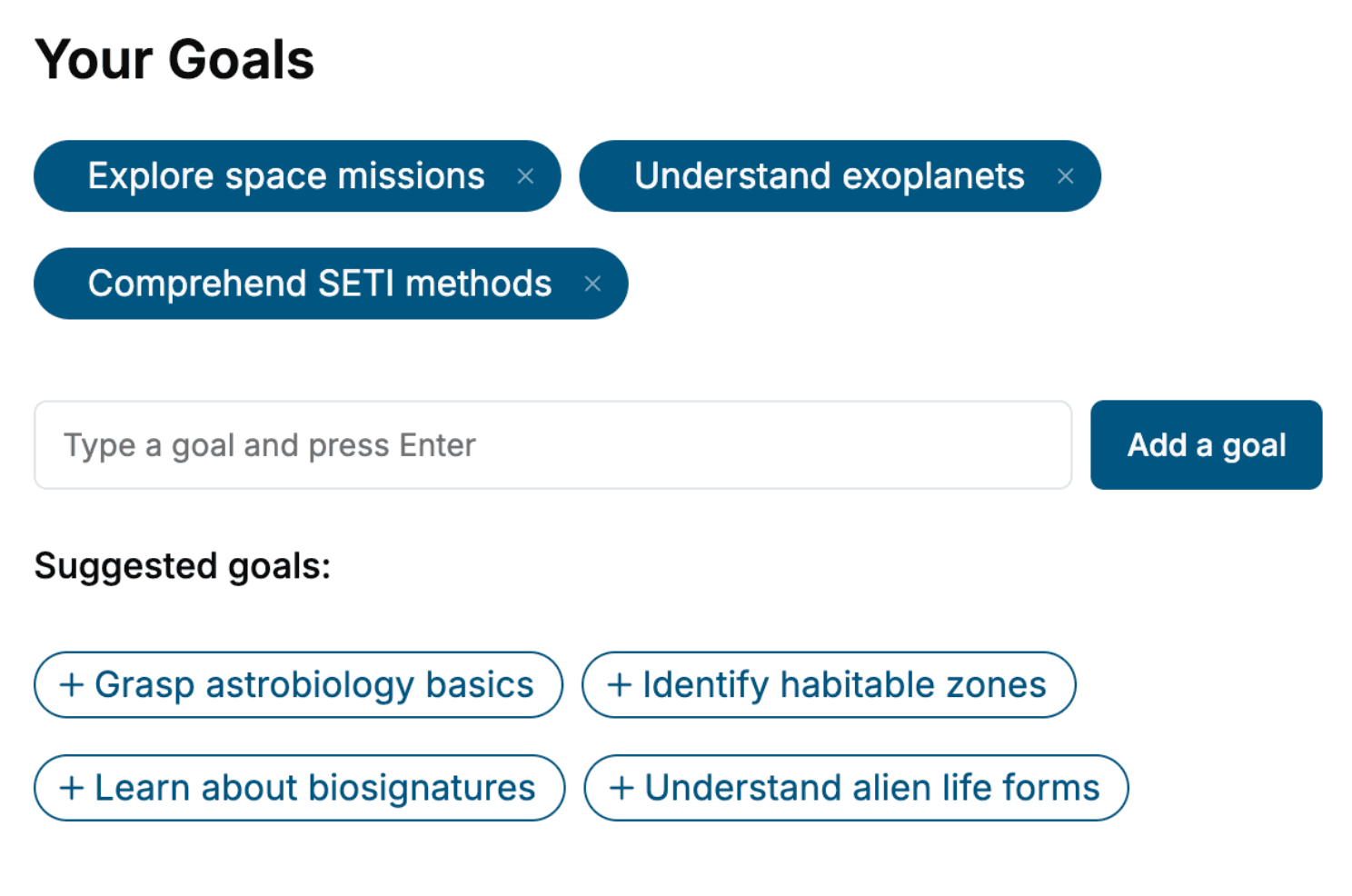
Specify your goals and choose sub-topics to include
- 3. Get your tailored book
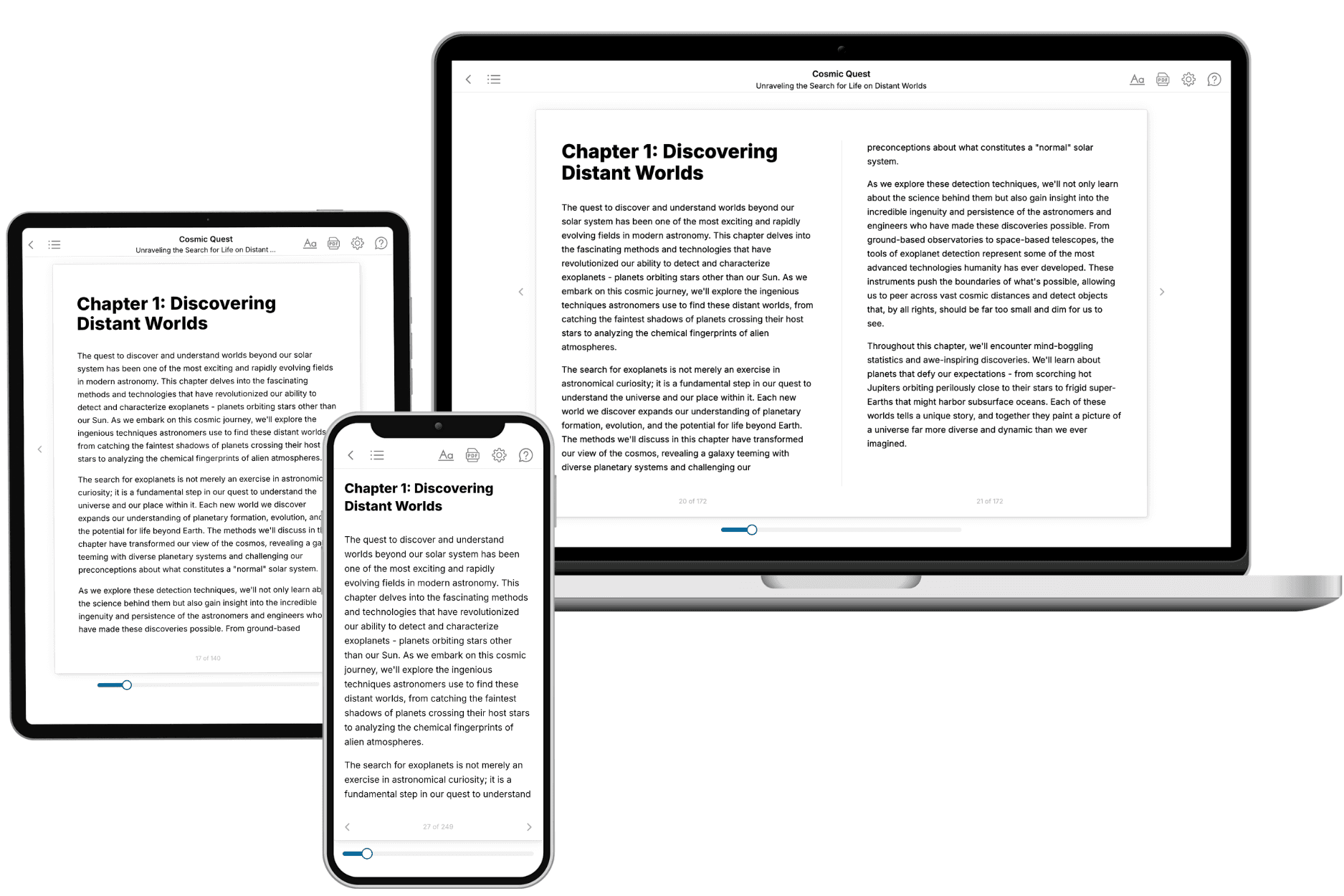
Your book is ready in 10 minutes. Read it online, download as EPUB or PDF, or send to Kindle.

Frequently asked questions
- What is TailoredRead?
TailoredRead creates complete, full-length nonfiction ebooks, written specifically for you. Tell us what you want to learn and why, and TailoredRead writes you a complete ebook on it, with charts, tables, and diagrams throughout. Read it online, on Kindle, or on any e-reader, or download it as a PDF or EPUB. Every book is written fresh the day you order it.
- How is the book tailored to me?
Before anything is written, you answer a few short questions about your goals, your background, and the topics you care about. Your book is then planned around your answers: written at your level, focused on your goals, and covering the topics you chose, instead of the one-size-fits-all book a store sells everyone.
- Will it read like generic AI content?
No. Your book isn't a chat transcript: it's planned chapter by chapter before a single word is written, told in a clear book voice, and explains ideas visually with charts, tables, and diagrams. After writing, every book goes through an editorial pass that polishes chapters so the book reads consistent from start to finish. Judge for yourself: browse thousands of sample books on our Explore Books page.
- How accurate is the content?
Our AI first checks whether your subject needs live research. Niche and fast-moving subjects are researched before writing, and the book plan and chapters are grounded in what it finds. After writing, every book goes through a quality pass that checks its facts and consistency, and researched books list their sources in a Notes section at the back.
- How long is the book?
You choose the length: Comprehensive (250-300 pages), Detailed (150-200 pages), Essential (70-100 pages), or Short (30-50 pages).
- Does the book include visuals?
Yes. Every book includes charts, tables, and diagrams: timelines, checklists, step-by-step guides, decision trees, comparison tables, matrices, and bar charts. A typical book includes dozens of these visual elements.
- Can I read it on Kindle? What formats can I download?
Yes. Every book can be read in our online reader or downloaded as a PDF or EPUB. The EPUB can be opened with Kindle, Apple Books, Kobo, and any e-reader. The Commercial and Author licenses also include an editable Word (DOCX) and Markdown download.
- How much does it cost?
About the price of a regular ebook. The exact price depends on your book's length and complexity, from $2 for the shortest books to $35 for the most comprehensive, and it's shown when you review your book, before you commit to anything. Each book is a one-time purchase, yours to keep, no subscription. Licenses that let you share, teach, or publish your book range from $35.99 to $49.99.
- Can I preview the book before purchasing?
Before you pay, you'll see what your book will cover: the title, a detailed description, the estimated length, and the complete chapter-by-chapter table of contents, so you know what you're getting before you decide. The full text itself is written after you purchase.
- How long does it take to create a book?
About 10 minutes. You can start reading the opening chapters while the rest is still being written.