Photoacoustic Imaging Fundamentals
Mastering Signal Processing and Electronics for Advanced Biomedical Imaging
Imagine being able to visualize deep tissue structures with unprecedented clarity, combining the penetration depth of ultrasound with the contrast sensitivity of optical imaging.
191 pages9 chaptersJun 23, 2026Medical Imaging
About this book
Photoacoustic imaging makes this possible, and this book equips you with the practical knowledge to harness this powerful technology. Whether you're developing next-generation biomedical devices, optimizing existing systems, or exploring research applications, you'll discover how to integrate signal processing and electronics expertise into functional photoacoustic imaging solutions. This guide walks you through the complete system architecture—from light-tissue interactions and acoustic wave generation to sophisticated signal processing pipelines and real-time image reconstruction. You'll learn the critical design decisions that separate high-performing systems from mediocre ones: how to select appropriate transducers, implement effective noise reduction, design robust electronic circuits, and validate your results. Each chapter builds on practical principles with actionable insights, enabling you to troubleshoot problems, optimize performance, and make informed engineering decisions. By the end, you'll understand not just how photoacoustic imaging works, but how to build systems that deliver reliable, clinically relevant results.
Table of contents
- IntroductionWhy Photoacoustic Imaging Matters, How to Use This Book, What You Need to KnowRead below
- Chapter 1: Photoacoustic Imaging PrinciplesLight-Tissue Interactions and Optical Absorption, Acoustic Wave Generation from Thermal Expansion, Contrast Mechanisms and Chromophores
- Chapter 2: System Architecture and ComponentsOptical Subsystem Design and Laser Selection, Acoustic Detection and Transducer Technology, Integrating Optical and Acoustic Components
- Chapter 3: Signal Acquisition and ConditioningSampling Theory and Nyquist Considerations, Signal Amplification and Impedance Matching, Analog Filtering and Anti-Aliasing
- Chapter 4: Digital Signal Processing FundamentalsDSP Fundamentals for Acoustic Signals, Frequency Domain Analysis and FFT, Digital Filtering Techniques
- Chapter 5: Noise Reduction and Artifact SuppressionIdentifying Noise Sources in Photoacoustic Systems, Denoising Algorithms and Wavelet Analysis, Artifact Removal and Signal Enhancement
- Chapter 6: Image Reconstruction AlgorithmsReconstruction Algorithm Fundamentals, Time-Reversal and Backprojection Methods, Iterative Reconstruction and Advanced Techniques
- Chapter 7: Electronic Circuit DesignReceiver Electronics and Preamplifier Design, Data Acquisition Systems and ADC Selection, Timing Synchronization and Trigger Circuits
- Chapter 8: Real-Time Processing and ImplementationComputational Requirements and Hardware Selection, FPGA and GPU Implementation Strategies, Latency Optimization for Clinical Applications
- Chapter 9: System Calibration and ValidationCalibration Procedures and Standards, Performance Metrics and Image Quality Assessment, Validation Testing and Phantom Studies
- ConclusionKey Takeaways and Best Practices, Future Directions in Photoacoustic Imaging
- Appendix: Technical ReferenceMathematical Foundations and Equations, Common Component Specifications and Datasheets, Troubleshooting Guide for Common Issues
Introduction
There is a persistent challenge at the heart of biomedical imaging: the deeper you look into tissue, the harder it becomes to see clearly. Optical techniques offer extraordinary contrast and sensitivity, but light scatters aggressively in biological tissue, limiting useful imaging depth to roughly one or two millimeters. Ultrasound penetrates much deeper, reaching several centimeters with ease, but it relies on mechanical contrast that often fails to distinguish between tissue types with similar acoustic properties. For decades, researchers and engineers searched for a way to combine the best of both worlds. Photoacoustic imaging is that solution.
Photoacoustic imaging works by delivering short pulses of laser light into tissue. Chromophores, molecules that absorb light at specific wavelengths, convert that absorbed energy into heat. The rapid thermal expansion generates pressure waves that propagate outward as ultrasound. A transducer array detects those waves, and signal processing algorithms reconstruct them into a detailed image. The result is an imaging modality that achieves optical contrast at ultrasonic depths, a combination that no other single technology currently matches. This is not a theoretical curiosity. Photoacoustic systems are already being used to image blood vessel networks, monitor tumor oxygenation, guide surgical procedures, and study brain activity in small animal models.[1]
What makes this technology genuinely exciting for engineers and signal processing professionals is the depth of the technical challenge it presents. Building a photoacoustic imaging system is not simply a matter of pointing a laser at tissue and recording whatever comes back. Every stage of the signal chain, from optical delivery and acoustic detection to analog conditioning, digital processing, and image reconstruction, demands careful engineering decisions. A poorly designed preamplifier introduces noise that no reconstruction algorithm can fully recover. An incorrect sampling rate aliases high-frequency content and destroys spatial resolution. A miscalibrated timing circuit desynchronizes the optical and acoustic subsystems, producing artifacts that look like real anatomy. Getting these details right is what separates a system that produces publishable images from one that produces confusing noise.
This book was written for engineers and technical professionals who already understand the fundamentals of signal processing and electronics and want to apply that knowledge to photoacoustic imaging. The goal is not to survey the field from a distance. The goal is to give you the practical, specific understanding you need to design, build, troubleshoot, and optimize real photoacoustic systems. Every chapter connects physical principles to engineering decisions, and every engineering decision is grounded in the practical realities of building hardware and writing software that actually works.
Why Photoacoustic Imaging Matters
To appreciate why photoacoustic imaging has attracted so much research and commercial investment, it helps to understand the limitations it overcomes. Conventional ultrasound imaging is widely used and clinically mature, but its contrast depends on differences in acoustic impedance between tissues. Many soft tissue structures, particularly early-stage tumors and small blood vessels, have acoustic properties similar enough to surrounding tissue that they are nearly invisible on a standard ultrasound scan. Optical imaging techniques like fluorescence microscopy and optical coherence tomography offer far better contrast for these structures, but they cannot reach them at clinically relevant depths because of optical scattering.
Photoacoustic imaging sidesteps this fundamental conflict by using light for excitation and sound for detection. Light delivers the optical contrast sensitivity, and sound carries the signal out of deep tissue without the scattering penalty that limits purely optical methods. The practical result is that photoacoustic systems can image blood vessels, hemoglobin oxygen saturation, lipid deposits, and melanin at depths of several centimeters with spatial resolution measured in hundreds of micrometers.[2] No other non-ionizing imaging modality currently achieves this combination.
The clinical and research applications that follow from this capability are substantial. In oncology, photoacoustic imaging can visualize the dense microvasculature that surrounds tumors, a phenomenon called angiogenesis, which is one of the earliest detectable signs of malignancy. In cardiovascular research, it can map lipid-rich plaques in arterial walls that are associated with rupture risk. In neuroscience, functional photoacoustic imaging tracks hemodynamic responses in the brain with spatial resolution that functional MRI cannot match at comparable cost. In dermatology, it can assess the depth and vascular supply of skin lesions without biopsy.
From a commercial perspective, the photoacoustic imaging market is growing rapidly. Several companies have received regulatory clearance for photoacoustic devices in specific clinical applications, and the broader market is projected to expand significantly over the next decade as the technology matures and system costs decrease.[3] This growth creates real demand for engineers who understand how these systems work at a deep technical level, not just how to operate them.
It is also worth noting what photoacoustic imaging does not do, because understanding the limitations is just as important as understanding the capabilities. The technique requires optical access to the tissue being imaged, which limits its applicability in regions surrounded by bone or air. Signal strength depends on the optical absorption of the target, which means structures with low optical contrast relative to background tissue are difficult to detect. Processing and reconstruction are computationally intensive, which creates real-time performance challenges that require careful hardware and software design. These are engineering problems with engineering solutions, and this book addresses them directly.
Perhaps most importantly for the engineers reading this, photoacoustic imaging is a field where signal processing expertise translates directly into image quality. The physics of acoustic wave propagation is well understood. The limiting factors in most practical systems are not the physics but the engineering: the noise floor of the receiver electronics, the fidelity of the analog-to-digital conversion, the accuracy of the reconstruction algorithm, and the efficiency of the computational implementation. If you have a strong background in signal processing and electronics, you already have most of the tools you need to make meaningful contributions to this field.
The technology is also at an interesting inflection point. Early photoacoustic systems were large, expensive, and slow, suitable only for research laboratories with significant resources. Advances in pulsed laser technology, MEMS transducer fabrication, high-speed analog-to-digital converters, and GPU computing have made compact, affordable, real-time systems increasingly feasible. The engineering challenges have shifted from "can we build this at all" to "how do we build it well," which is exactly the kind of problem this book is designed to help you solve.
Key insight: Photoacoustic imaging is fundamentally an engineering discipline. The physics sets the boundaries, but the engineering determines how close to those boundaries a real system can operate. Understanding both is essential for building systems that perform at their theoretical limits.
How to Use This Book
This book is organized as a complete technical journey through photoacoustic imaging system design, starting from physical principles and ending with calibration and validation of finished systems. The chapters are sequenced to build knowledge progressively, but they are also written to be useful as standalone references for engineers who need to focus on a specific subsystem or problem. Here is a brief map of what each chapter covers and how they connect.
Chapter 1: Photoacoustic Imaging Principles establishes the physical foundation. It covers how light interacts with biological tissue, how absorbed optical energy converts to acoustic waves through thermoelastic expansion, and which molecular targets, called chromophores, provide the contrast that makes photoacoustic imaging clinically useful. If you are new to the field, read this chapter carefully before moving on. If you already have a solid grasp of the photoacoustic effect, you can use it as a reference for specific equations and physical constants.
Chapter 2: System Architecture and Components moves from physics to hardware. It describes the major subsystems of a photoacoustic imaging system, including the optical delivery system, the laser source, the transducer array, and the mechanical scanning or electronic beamforming architecture. It also addresses the practical challenges of integrating optical and acoustic components into a coherent system, including geometric constraints, coupling media, and synchronization requirements.
Chapters 3 and 4 form the core of the signal processing content. Chapter 3 covers signal acquisition and conditioning, including sampling theory, amplifier design, impedance matching, and analog filtering. Chapter 4 covers digital signal processing fundamentals, including frequency domain analysis, the fast Fourier transform, and digital filter design. These two chapters together give you the complete signal chain from transducer output to digitized data ready for reconstruction.
Chapter 5: Noise Reduction and Artifact Suppression addresses one of the most practically important challenges in photoacoustic system design. It identifies the major noise sources in these systems, from laser intensity fluctuations and thermal noise in receiver electronics to electromagnetic interference and acoustic reverberations, and provides specific techniques for suppressing each. Wavelet-based denoising, coherent averaging, and artifact removal algorithms are covered with enough detail to implement them.
Chapter 6: Image Reconstruction Algorithms covers the mathematical and computational methods that transform raw acoustic time-series data into spatial images. It begins with the conceptual foundations of reconstruction, moves through delay-and-sum beamforming and filtered backprojection, and then addresses more advanced iterative methods that offer better image quality at higher computational cost. Trade-offs between speed and fidelity are discussed explicitly, with guidance on choosing the right approach for different applications.
Chapter 7: Electronic Circuit Design provides detailed guidance on the hardware that sits between the transducer and the analog-to-digital converter. Preamplifier design, time-gain compensation circuits, ADC selection criteria, and trigger circuit design are all covered. This chapter is particularly useful for engineers who are building custom hardware rather than integrating commercial components.
Chapter 8: Real-Time Processing and Implementation addresses the computational challenge of running reconstruction and display pipelines fast enough for clinical use. It covers hardware selection, FPGA and GPU implementation strategies, and specific optimization techniques for reducing latency without sacrificing image quality. Concrete performance benchmarks and implementation examples are included.
Chapter 9: System Calibration and Validation closes the engineering loop by describing how to verify that a completed system performs as designed. Calibration procedures, performance metrics, and phantom-based validation studies are covered in enough detail to establish a rigorous quality assurance process for both research and clinical systems.
The Appendix provides a technical reference section with key equations, component specifications, and a troubleshooting guide organized by symptom. When something goes wrong with a system you are building, the troubleshooting guide is designed to help you diagnose the problem systematically rather than guessing.
If you are building a complete system from scratch, reading the chapters in order is the most efficient path. If you are troubleshooting a specific problem in an existing system, use the chapter structure and the appendix to navigate directly to the relevant content. The book is written so that each chapter is self-contained enough to be useful on its own, with cross-references to related material elsewhere in the text.
What You Need to Know
This book assumes a specific level of technical background. It is written for intermediate-level engineers and technical professionals, not for complete beginners and not exclusively for specialists with PhDs in acoustics or optics. Understanding what background knowledge is assumed, and what will be taught from scratch, will help you get the most out of the material and identify any gaps you might want to fill before diving into specific chapters.
In terms of signal processing, you should be comfortable with the following concepts before starting:
- Sampling theory and the Nyquist-Shannon sampling theorem
- Fourier transforms, both continuous and discrete (DFT/FFT)
- Basic filter design concepts, including low-pass, high-pass, and bandpass filters
- Time-domain and frequency-domain representations of signals
- Signal-to-noise ratio and basic noise characterization
- Convolution and its role in linear systems
If any of these concepts feel unfamiliar, a solid undergraduate-level digital signal processing textbook will bring you up to speed. Proakis and Manolakis's Digital Signal Processing is a reliable reference that covers all of these topics thoroughly.[4]
In terms of electronics, the book assumes familiarity with:
- Operational amplifier circuits, including inverting and non-inverting configurations
- Impedance and impedance matching concepts
- Basic analog filter topologies (Sallen-Key, multiple feedback)
- Analog-to-digital conversion principles, including resolution, dynamic range, and sampling jitter
- PCB layout considerations for low-noise analog circuits
- Basic FPGA or microcontroller programming concepts (for Chapter 8)
You do not need to be an expert in all of these areas. The book provides enough context and explanation to make the material accessible even if some of these topics are at the edge of your current knowledge. However, readers who have designed analog front-end circuits before will find Chapters 3 and 7 particularly straightforward, while those coming primarily from a software or algorithm background may want to spend extra time on those chapters.
In terms of physics and mathematics, the book uses calculus and linear algebra in several places, particularly in the chapters on acoustic wave generation and image reconstruction. You should be comfortable with:
- Partial differential equations at a conceptual level (the wave equation is central to Chapter 1)
- Vector calculus notation
- Basic linear algebra, including matrix operations and eigenvalue concepts
- Probability and statistics at the level needed to understand noise distributions and SNR calculations
The mathematical derivations in this book are presented with enough explanation that you can follow the logic even if you would not derive them independently. The goal is always to connect the mathematics to physical intuition and engineering decisions, not to present derivations for their own sake.
What you do not need is prior experience with photoacoustic imaging specifically. The book builds that knowledge from the ground up, starting with the physical principles in Chapter 1. You also do not need deep expertise in optics or laser physics, though a basic understanding of what a pulsed laser does and how optical fibers work will be helpful context for Chapter 2. Similarly, you do not need a background in medical imaging or clinical applications. The clinical context is provided where it motivates engineering decisions, but the focus throughout is on the engineering, not the medicine.
One practical note about software tools: several chapters reference specific computational implementations, including MATLAB pseudocode for signal processing algorithms and Python-style descriptions of reconstruction pipelines. These examples are written to be readable and translatable to whatever programming environment you use, whether that is MATLAB, Python with NumPy and SciPy, C++ for embedded systems, or CUDA for GPU acceleration. The goal is to communicate the algorithm clearly, not to provide copy-paste code for a specific platform.
If you find yourself uncertain about a specific prerequisite concept as you work through the book, the Appendix includes a mathematical foundations section that covers the key equations and relationships used throughout the text. The troubleshooting guide in the Appendix is also a useful resource when you encounter unexpected behavior in a system you are building, since it is organized around observable symptoms rather than assumed causes. Use these resources actively. They are designed to make the main chapters more accessible, not to serve as optional extras.
Finally, a word about the approach this book takes to practical examples. Every major concept is illustrated with a concrete scenario, a specific design choice, a numerical example, or a description of a real system behavior. Abstract principles are useful, but engineering decisions happen in specific contexts with specific constraints. The examples throughout this book are drawn from realistic photoacoustic system designs, and they are chosen to highlight the kinds of trade-offs and failure modes that actually matter in practice. Pay attention to the examples even when the underlying concept feels familiar. The details often contain the most useful engineering insight.
A practical starting point: Before reading Chapter 1, consider sketching out what you already know about how sound is generated from heat, and what you know about how ultrasound transducers work. Connecting your existing knowledge to the new material is the fastest way to build a solid mental model of photoacoustic imaging as a complete system.
Notes
Introduction
- 1. L. V. Wang and S. Hu, "Photoacoustic Tomography," Science, 2012
- 2. P. Beard, "Biomedical photoacoustic imaging," Interface Focus, 2011
- 3. MarketsandMarkets Research, Photoacoustic Imaging Market - Global Forecast to 2028, 2023
- 4. J. G. Proakis and D. G. Manolakis, Digital Signal Processing: Principles, Algorithms, and Applications (4th ed.), Prentice Hall, 2006
This is the end of the free sample. The full book has 9 chapters.
Want this book written for you?
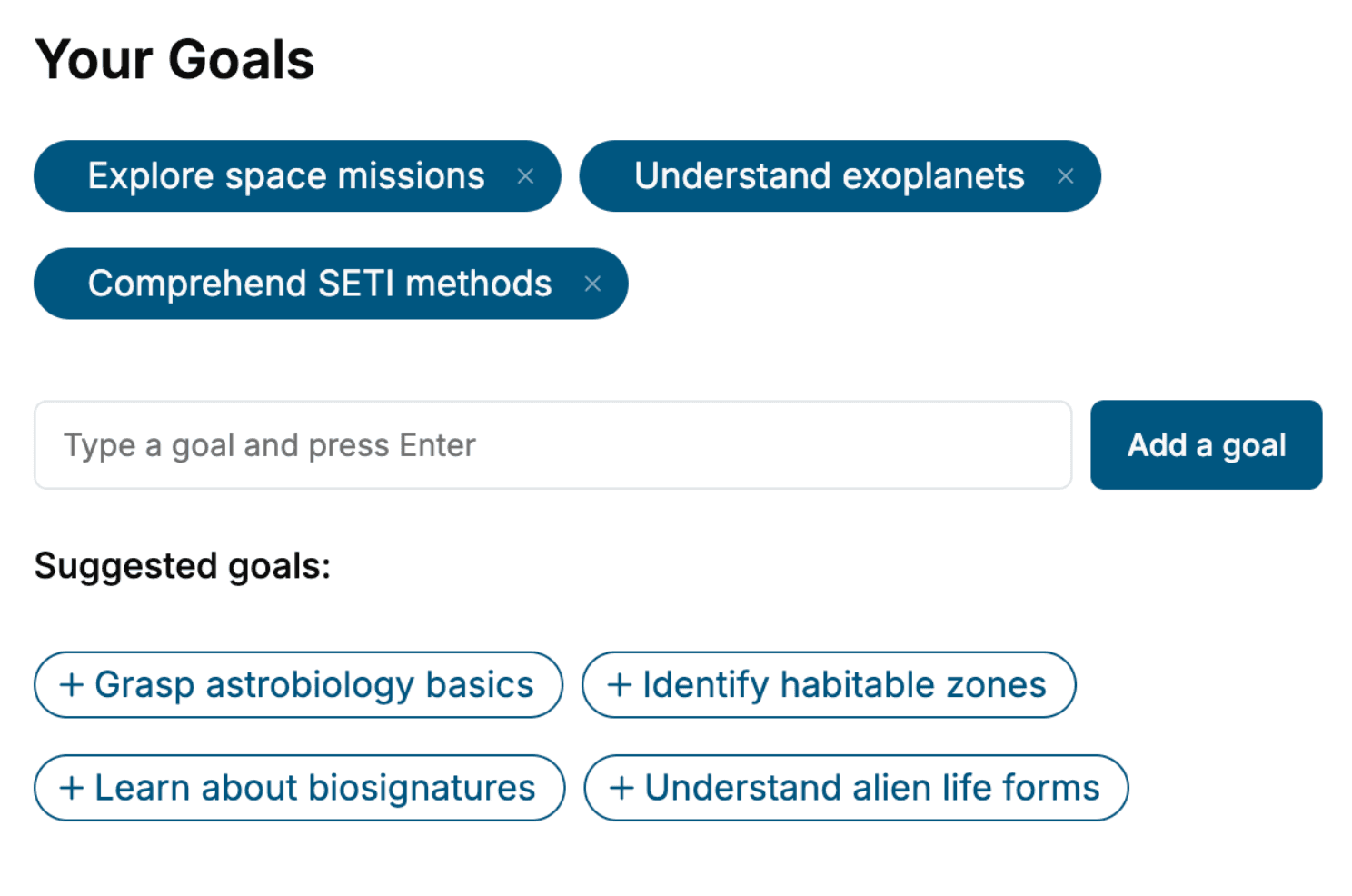
Tell us your goals and background, and get your own version of this book, tailored by AI to you.


Benefits of AI-tailored books
- Read one book, not ten:
- all the Medical Imaging knowledge you need, gathered into a single book.
- Save days of learning:
- tell us your goals, choose your topics, and the whole book is built around them.
- Learn effortlessly:
- Medical Imaging book written for your specific background and expertise.
- Understand at a glance:
- includes charts, tables, timelines, checklists, decision trees, and more.
- Stay current:
- written the day you order it, not years ago.
- Trust what you read:
- every book is checked for accuracy, with real research when your subject needs it.
Create your unique book in 3 steps
- 1. Select your focus
Select the focus of your Medical Imaging book and share your background
- 2. Personalize your book
Specify your goals and choose sub-topics to include
- 3. Get your tailored book
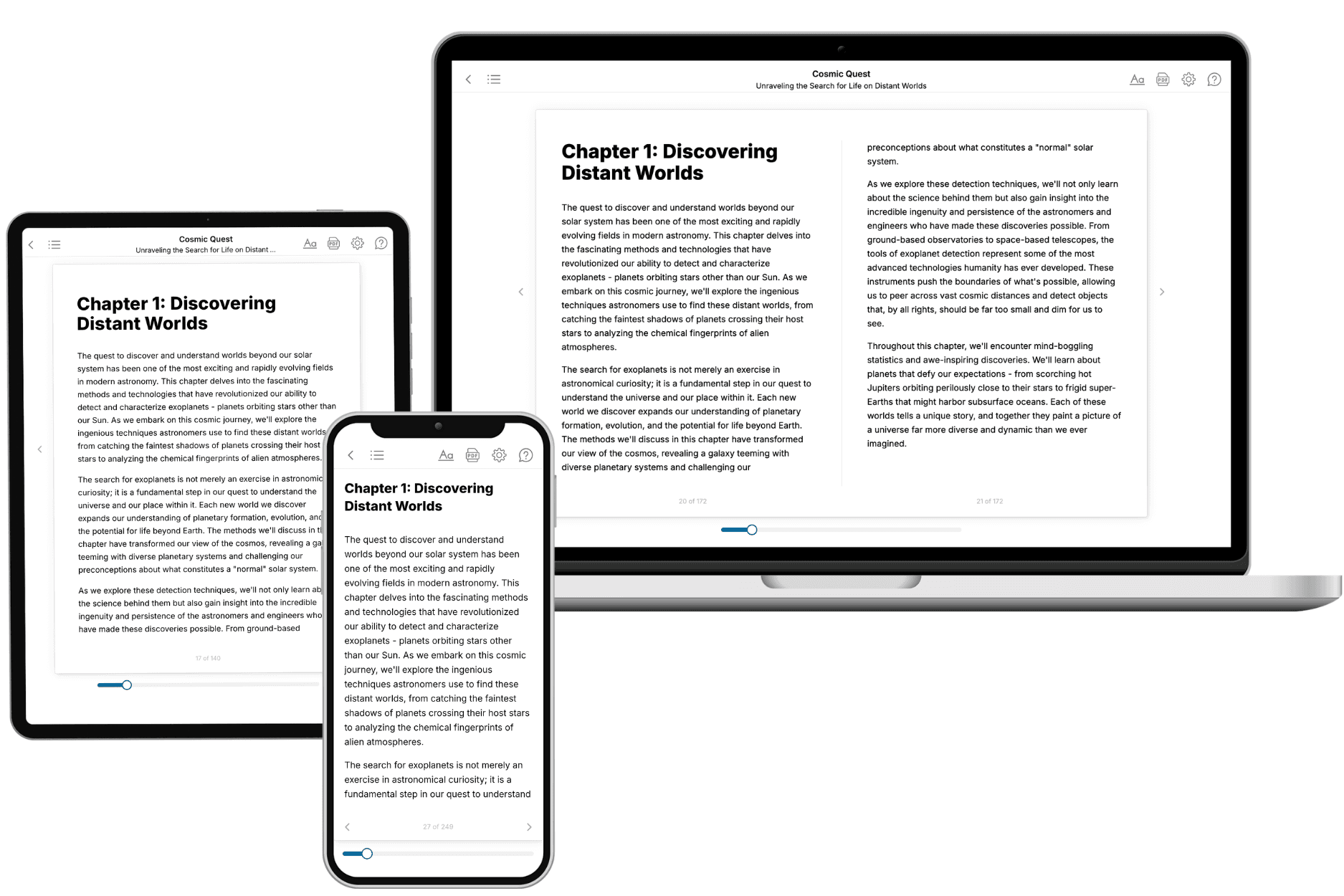
Your book is ready in 10 minutes. Read it online, download as EPUB or PDF, or send to Kindle.

Frequently asked questions
- What is TailoredRead?
TailoredRead creates complete, full-length nonfiction ebooks, written specifically for you. Tell us what you want to learn and why, and TailoredRead writes you a complete ebook on it, with charts, tables, and diagrams throughout. Read it online, on Kindle, or on any e-reader, or download it as a PDF or EPUB. Every book is written fresh the day you order it.
- How is the book tailored to me?
Before anything is written, you answer a few short questions about your goals, your background, and the topics you care about. Your book is then planned around your answers: written at your level, focused on your goals, and covering the topics you chose, instead of the one-size-fits-all book a store sells everyone.
- Will it read like generic AI content?
No. Your book isn't a chat transcript: it's planned chapter by chapter before a single word is written, told in a clear book voice, and explains ideas visually with charts, tables, and diagrams. After writing, every book goes through an editorial pass that polishes chapters so the book reads consistent from start to finish. Judge for yourself: browse thousands of sample books on our Explore Books page.
- How accurate is the content?
Our AI first checks whether your subject needs live research. Niche and fast-moving subjects are researched before writing, and the book plan and chapters are grounded in what it finds. After writing, every book goes through a quality pass that checks its facts and consistency, and researched books list their sources in a Notes section at the back.
- How long is the book?
You choose the length: Comprehensive (250-300 pages), Detailed (150-200 pages), Essential (70-100 pages), or Short (30-50 pages).
- Does the book include visuals?
Yes. Every book includes charts, tables, and diagrams: timelines, checklists, step-by-step guides, decision trees, comparison tables, matrices, and bar charts. A typical book includes dozens of these visual elements.
- Can I read it on Kindle? What formats can I download?
Yes. Every book can be read in our online reader or downloaded as a PDF or EPUB. The EPUB can be opened with Kindle, Apple Books, Kobo, and any e-reader. The Commercial and Author licenses also include an editable Word (DOCX) and Markdown download.
- How much does it cost?
About the price of a regular ebook. The exact price depends on your book's length and complexity, from $2 for the shortest books to $35 for the most comprehensive, and it's shown when you review your book, before you commit to anything. Each book is a one-time purchase, yours to keep, no subscription. Licenses that let you share, teach, or publish your book range from $35.99 to $49.99.
- Can I preview the book before purchasing?
Before you pay, you'll see what your book will cover: the title, a detailed description, the estimated length, and the complete chapter-by-chapter table of contents, so you know what you're getting before you decide. The full text itself is written after you purchase.
- How long does it take to create a book?
About 10 minutes. You can start reading the opening chapters while the rest is still being written.