The Plant Engineer's Guide to Genetic Modification
Understanding How We Design Better Crops for a Changing World
What if the crops we grow could be designed to thrive in drought, resist pests without pesticides, and provide better nutrition—all through precise genetic modifications?
191 pages8 chaptersJun 24, 2026Genetic Engineering
About this book
Plant genetic engineering is reshaping agriculture, yet many people misunderstand what it actually is and how it works. This book cuts through the confusion and explains the science behind genetic crop modification in clear, practical terms. You'll discover how scientists use tools like CRISPR to edit plant genes, why these techniques matter for food security, and how genetically engineered plants are tested and regulated. Whether you're curious about the science, concerned about safety, or interested in agriculture's future, this guide provides the knowledge you need to understand one of the most important biotechnologies of our time. Learn what genetic engineering can and cannot do, explore real-world applications transforming farming, and understand the genuine science behind the headlines.
Table of contents
- IntroductionWhy Plant Genetic Engineering Matters Now, Separating Fact from Fiction, What You'll Discover in This BookRead below
- Chapter 1: The Foundations of Plant GeneticsHow Plants Inherit Traits, DNA, Genes, and Plant Characteristics, Traditional Breeding vs. Genetic Engineering
- Chapter 2: Genetic Engineering Techniques ExplainedThe Agrobacterium-Mediated Approach, The Gene Gun and Direct DNA Methods, CRISPR: The Gene-Editing Revolution, Other Emerging Techniques and Tools
- Chapter 3: Designing Plants for Real-World ChallengesEngineering Pest and Disease Resistance, Drought, Heat, and Environmental Tolerance, Improving Nutritional Content and Quality
- Chapter 4: From Lab to Field: Development and TestingCreating and Characterizing Engineered Plants, Comprehensive Safety Testing Protocols, Field Testing and Performance Evaluation, Navigating Regulatory Approval Processes
- Chapter 5: Safety, Regulation, and Public TrustHow Governments Regulate Genetically Modified Crops, Environmental Safety and Ecological Considerations, Food Safety and Human Health Evaluation
- Chapter 6: Real-World Applications and Success StoriesMajor Genetically Engineered Crops Today, Impact in Developing Countries and Food Security, Emerging Applications and Future Crops
- Chapter 7: Addressing Concerns and ControversiesEvaluating Health and Safety Claims, Environmental and Biodiversity Concerns, Corporate Control and Farmer Independence, Labeling, Transparency, and Consumer Choice
- Chapter 8: The Future of Plant Genetic EngineeringClimate-Resilient Crops for a Changing Planet, Integration with Precision Agriculture and Technology, Next-Generation Genetic Engineering Tools
- ConclusionKey Takeaways and Moving Forward
- Glossary of Key Terms
- Further Reading and Resources
Introduction
Something remarkable is happening in agricultural laboratories around the world. Scientists are redesigning crops at the molecular level, giving plants the ability to survive drought, resist devastating diseases, and deliver better nutrition to the people who eat them. These are not science fiction scenarios. They are real, tested, and increasingly common developments that are already reshaping how food is grown on every inhabited continent. Yet despite this progress, public understanding of plant genetic engineering remains surprisingly thin, often shaped more by headlines and social media debates than by the actual science.
The gap between what genetic engineering actually is and what many people believe it to be is striking. Some people imagine scientists splicing animal genes into vegetables in reckless combinations. Others assume that any modification to a plant's DNA is inherently dangerous or unnatural. Still others have the opposite problem: they assume genetic engineering is a simple, risk-free solution to every agricultural challenge. None of these pictures is accurate. The reality is more nuanced, more interesting, and ultimately more useful to understand than any of these extremes suggest.
This book exists to close that gap. Whether you work in agriculture, horticulture, or a related field, or whether you are simply a curious and informed person who wants to understand what is actually happening in crop science, this guide is written for you. The goal is not to advocate for or against genetic engineering as a technology. The goal is to explain it clearly, honestly, and in enough practical detail that you can form your own well-grounded views. By the time you finish, you will have a solid working understanding of how plant genetic engineering works, why it matters, and what its genuine limitations and possibilities are.
The chapters ahead move from foundational science through specific techniques, real-world applications, safety and regulation, public controversies, and finally the future of the field. Each section builds on the last, so even if you come in with only a basic biology background, you will find the progression manageable and rewarding. Technical terms are introduced carefully and explained in plain language, with a full glossary at the back for reference. The aim throughout is clarity without oversimplification, and honesty without sensationalism.
Why Plant Genetic Engineering Matters Now
The timing of this conversation could not be more important. The world's population is projected to reach approximately 9.7 billion people by 2050, and feeding that many people will require producing roughly 50 percent more food than we produce today.[1] At the same time, climate change is making traditional growing conditions less predictable. Droughts are becoming more frequent and severe in regions that have historically been productive farmland. Flooding, heat waves, and shifting seasons are disrupting planting and harvest cycles that farmers have relied on for generations. The agricultural system that feeds the world today was not designed for the world that is coming.
Traditional plant breeding has achieved extraordinary things over the past century. The Green Revolution of the 1960s and 1970s, driven largely by conventional breeding programs, dramatically increased yields of wheat, rice, and maize and is credited with preventing widespread famine across Asia and Latin America.[2] But conventional breeding has real limits. It works by selecting and crossing plants that already carry desirable traits somewhere in their genetic diversity. If a trait does not exist in the available gene pool, traditional breeding cannot create it. And even when the right traits do exist, breeding programs can take ten to fifteen years to develop and stabilize a new variety.
Genetic engineering changes that equation in fundamental ways. Instead of waiting for a useful trait to appear through natural variation or random mutation, scientists can identify the specific gene responsible for that trait and introduce it directly into a crop plant. This can happen across species boundaries that traditional breeding cannot cross, and it can happen in a fraction of the time. A drought-tolerance gene identified in a wild grass species, for example, can potentially be transferred into a wheat variety within a few years rather than decades. That speed and precision are not just scientifically interesting. They are practically critical given the pace of the challenges agriculture now faces.
Pest and disease pressure is another urgent driver. Crop losses to insects, fungi, bacteria, and viruses cost the global agricultural economy hundreds of billions of dollars every year and contribute directly to food insecurity in vulnerable regions.[3] Chemical pesticides have been the primary defense for decades, but they come with significant costs: environmental contamination, harm to non-target species including pollinators, development of pesticide-resistant pest populations, and health risks for farm workers. Crops engineered to resist specific pests or diseases can reduce or eliminate the need for certain chemical applications, offering a more targeted and sustainable approach to crop protection.
Nutritional challenges add another dimension to the argument for genetic engineering. Micronutrient deficiency, sometimes called hidden hunger, affects more than two billion people worldwide, particularly in regions where diets are heavily dependent on a small number of staple crops.[4] When people rely primarily on white rice, for example, they may get enough calories but miss critical vitamins and minerals. Genetic engineering has already produced crops with enhanced nutritional profiles, and the potential for further improvements is substantial. These are not trivial benefits. They represent real improvements in human health outcomes for some of the world's most vulnerable populations.
None of this means genetic engineering is a perfect solution or that it should be pursued without careful thought. Every technology has trade-offs, and agricultural biotechnology is no exception. But understanding why this technology exists and what problems it is designed to solve is the essential starting point for any honest evaluation of it. The stakes are high enough that getting the science right matters enormously, both for the people making decisions about agricultural policy and for the farmers and consumers whose lives those decisions affect.
It is also worth noting that genetic engineering is not a single thing. It is a family of related techniques, ranging from older transgenic methods that transfer genes between species to newer gene-editing tools like CRISPR that can make precise changes within a plant's own genome without introducing any foreign DNA. These different approaches raise different scientific questions and different regulatory and ethical considerations. Treating them all as identical is one of the most common sources of confusion in public debates about this technology, and one of the things this book is specifically designed to address.
Separating Fact from Fiction
Few topics in modern science carry as much misinformation as plant genetic engineering. The misconceptions come from all directions: from critics who overstate the risks, from advocates who oversell the benefits, and from media coverage that tends to favor dramatic framing over careful explanation. Before diving into the science itself, it is worth clearing away some of the most persistent myths, because they genuinely get in the way of productive thinking about this technology.
One of the most common misconceptions is that genetic engineering is fundamentally different from all previous human modification of plants. In reality, humans have been deliberately altering the genetics of crop plants for at least ten thousand years through selective breeding, hybridization, and even induced mutation using radiation or chemicals.[5] Modern genetic engineering is a continuation of that long history, not a radical departure from it. What is new is the precision and speed of the tools, not the fundamental idea of improving crops through deliberate genetic change. The banana you eat today, the corn in your tortilla, and the wheat in your bread are all products of extensive human-directed genetic modification over centuries.
A second widespread myth is that all genetically modified organisms (GMOs) are the same. In practice, the term GMO covers an enormous range of modifications made through very different techniques for very different purposes. Consider these contrasting examples:
- Bt corn has a gene from a common soil bacterium inserted to produce a protein that is toxic to certain caterpillar pests but harmless to mammals and most other insects.
- Golden Rice has two genes added to enable it to produce beta-carotene, a precursor to vitamin A, in its edible grain.
- CRISPR-edited mushrooms have had a single gene slightly modified to slow browning, with no foreign DNA introduced at all.
These three examples involve completely different techniques, different goals, different risk profiles, and different regulatory considerations. Treating them as a single category called "GMO" and applying a blanket judgment to all of them is like treating aspirin, chemotherapy, and a flu vaccine as the same thing because they are all medical interventions. The category is too broad to be useful for making real decisions.
A third common misconception is that genetically engineered crops have not been safety-tested or that their safety is genuinely unknown. This is simply not accurate. Genetically modified crops are among the most extensively studied food products in history. A comprehensive review published in 2016 analyzed more than 900 studies conducted over 20 years and found no substantiated evidence of a difference in risks to human health between currently commercialized genetically engineered crops and conventionally bred crops.[6] That does not mean every possible future application is automatically safe, but it does mean that the existing body of evidence is substantial and largely reassuring.
On the other side of the debate, some advocates for genetic engineering overstate what the technology can deliver. Genetic engineering is a powerful tool, but it is not a magic solution. Drought tolerance, for example, is an extraordinarily complex trait controlled by dozens or even hundreds of genes interacting with each other and with environmental conditions. Engineering meaningful drought tolerance into a crop is genuinely difficult, and early promises in this area have sometimes outpaced actual results. Honest engagement with the technology requires acknowledging both its real achievements and its real limitations.
There is also a persistent confusion between the science of genetic engineering and the business practices of the companies that develop and sell genetically engineered seeds. Concerns about corporate consolidation in the seed industry, intellectual property restrictions on seeds, and the economic pressures on small farmers are legitimate and important topics. But they are separate from the question of whether the underlying science is sound or whether specific engineered traits are safe and beneficial. Conflating these issues makes it harder to think clearly about either one. This book addresses both the science and the broader context, but it tries to keep them clearly distinguished so you can evaluate each on its own terms.
Perhaps the most important thing to understand about misconceptions in this field is where they come from. Research consistently shows that people's views on genetic engineering are shaped less by their knowledge of biology than by their broader values, their trust in institutions, and their cultural identity.[7] This means that simply presenting more facts does not automatically change minds. What it can do is give you a more solid foundation for your own thinking, and a better ability to recognize when a claim about genetic engineering is based on evidence and when it is based on something else entirely.
What You'll Discover in This Book
This book is organized to take you from the ground up. It starts with the biological foundations you need to understand what genetic engineering actually does, moves through the specific techniques scientists use, explores real-world applications and their outcomes, examines safety and regulatory systems, addresses the major controversies honestly, and looks ahead to where the field is going. Each chapter is designed to stand on its own as a useful reference, but reading them in sequence will give you the most complete picture.
Chapter 1: The Foundations of Plant Genetics covers the essential biology. You will learn how plants inherit traits from their parents, what DNA and genes actually are and how they work in plant cells, and how traditional plant breeding differs from genetic engineering at a fundamental level. If you already have a solid biology background, this chapter will serve as a useful refresher and will establish the specific vocabulary used throughout the rest of the book. If your biology is a bit rusty, this chapter will give you everything you need to follow the more advanced material that follows.
Chapter 2: Genetic Engineering Techniques Explained gets into the actual methods scientists use to modify plant genomes. You will learn about the Agrobacterium-mediated approach, which uses a naturally occurring soil bacterium to deliver new DNA into plant cells. You will explore the gene gun method, which literally shoots DNA-coated particles into plant tissue. Most importantly, you will get a thorough introduction to CRISPR, the gene-editing technology that has transformed the field since its application to plant science was demonstrated in 2013. The chapter also covers other emerging tools that are beginning to expand what is possible.
Chapter 3: Designing Plants for Real-World Challenges moves from technique to application. This is where you will see how the tools described in Chapter 2 are actually used to solve specific agricultural problems. The chapter covers engineering for pest and disease resistance, for tolerance to drought and heat stress, and for improved nutritional content. Each section includes specific examples of crops that have been developed, the traits that were engineered, and the outcomes that have been observed in field conditions.
Chapter 4: From Lab to Field walks through the full development pipeline for a genetically engineered crop, from the initial laboratory work of creating and characterizing a modified plant line, through the extensive safety testing protocols that must be completed before any field trials can begin, through the field testing process itself, and finally through the regulatory approval process that must be navigated before a new crop can be grown commercially. This chapter will give you a realistic sense of how long and rigorous the development process actually is, which is quite different from the impression many people have.
Chapter 5: Safety, Regulation, and Public Trust examines the systems that govern genetically engineered crops in more depth. You will learn how different governments around the world approach regulation, what environmental safety assessments actually evaluate, and how food safety for human consumption is tested and verified. This chapter also addresses the question of public trust directly, exploring why trust in regulatory systems varies so widely and what that means for how genetic engineering is perceived and accepted in different societies.
Chapter 6: Real-World Applications and Success Stories provides a detailed look at the genetically engineered crops that are already in commercial production and the impacts they have had. This includes the major commodity crops like herbicide-tolerant soybeans and insect-resistant cotton, but also less well-known applications in developing countries where engineered crops have had significant impacts on food security and farmer livelihoods. The chapter also previews some of the most promising applications currently in development.
Chapter 7: Addressing Concerns and Controversies takes the major criticisms of genetic engineering seriously and examines them carefully. Health concerns, environmental and biodiversity concerns, issues of corporate control and farmer independence, and questions about labeling and consumer choice are all addressed with the same commitment to evidence-based analysis that runs through the rest of the book. The goal is not to dismiss concerns but to evaluate them fairly, distinguishing between those that are well-supported by evidence and those that are not.
Chapter 8: The Future of Plant Genetic Engineering looks ahead to where the field is going. Climate-resilient crops designed for the conditions of the coming decades, integration with precision agriculture technologies, and next-generation genetic tools that go beyond current CRISPR capabilities are all explored. This chapter is necessarily more speculative than the others, but it is grounded in real research directions and realistic assessments of what is technically feasible and what challenges remain to be solved.
Throughout the book, you will find concrete examples, specific case studies, and practical frameworks for thinking about the issues raised. The goal is not just to transfer information but to build genuine understanding. By the end, you should be able to read a news story about a new genetically engineered crop and have a clear sense of what questions to ask, what the relevant evidence looks like, and how to evaluate the claims being made. That kind of informed, critical engagement is exactly what this complex and important topic deserves.
Understanding plant genetic engineering is not just a matter of scientific literacy. It is a matter of civic literacy. The decisions being made right now about which crops to develop, how to regulate them, and who gets access to them will shape agriculture and food systems for generations. The more people who understand the actual science, the better those decisions are likely to be.
One final note before you begin. This book does not take a position on whether genetic engineering is good or bad as a general matter. That framing is too simple for a technology this varied and this context-dependent. What it does take a position on is the value of accurate information, careful reasoning, and honest engagement with evidence. Those commitments run through every chapter, and they are the foundation on which everything else in this book is built. With that, it is time to start at the beginning: with the plants themselves, and the remarkable molecular machinery that makes them what they are.
Notes
Introduction
- 1. Food and Agriculture Organization of the United Nations, The Future of Food and Agriculture: Trends and Challenges, FAO, Rome, 2017
- 2. N. E. Borlaug, "Ending World Hunger," Plant Physiology, 2000
- 3. S. Savary and others, "The global burden of pathogens and pests on major food crops," Nature Ecology & Evolution, 2019
- 4. World Health Organization, "Micronutrient deficiencies," WHO Global Nutrition Report, 2022
- 5. P. Gepts, "Who Owns Biodiversity, and How Should the Owners Be Compensated?," Plant Physiology, 2004
- 6. National Academies of Sciences, Engineering, and Medicine, Genetically Engineered Crops, The National Academies Press, Washington, DC, 2016
- 7. D. M. Kahan and others, "The polarizing impact of science literacy and numeracy on perceived climate change risks," Nature Climate Change, 2012
This is the end of the free sample. The full book has 8 chapters.
Want this book written for you?
Tell us your goals and background, and get your own version of this book, tailored by AI to you.


Benefits of AI-tailored books
- Read one book, not ten:
- all the Genetic Engineering knowledge you need, gathered into a single book.
- Save days of learning:
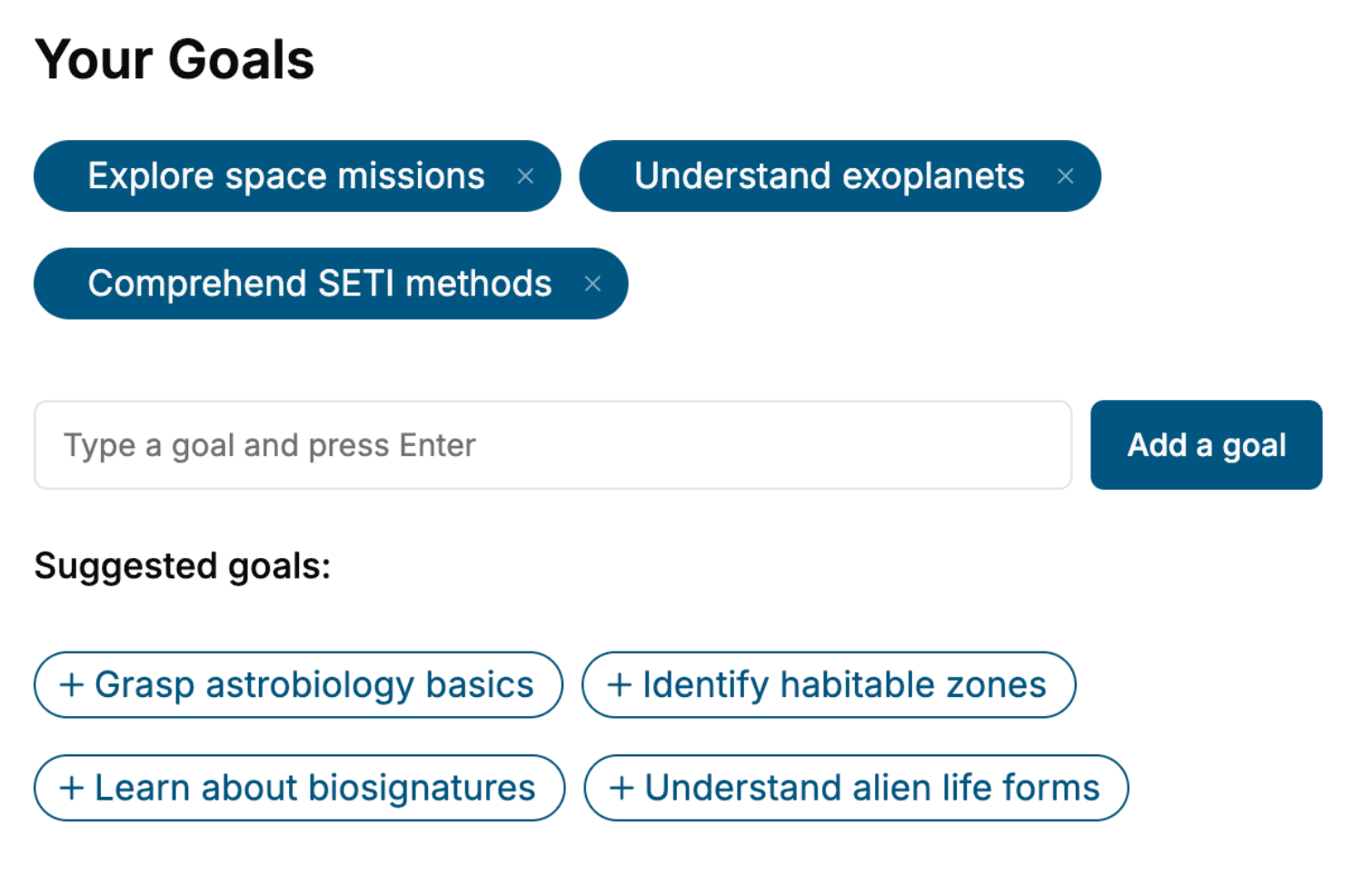
- tell us your goals, choose your topics, and the whole book is built around them.
- Learn effortlessly:
- Genetic Engineering book written for your specific background and expertise.
- Understand at a glance:
- includes charts, tables, timelines, checklists, decision trees, and more.
- Stay current:
- written the day you order it, not years ago.
- Trust what you read:
- every book is checked for accuracy, with real research when your subject needs it.
Create your unique book in 3 steps
- 1. Select your focus
Select the focus of your Genetic Engineering book and share your background
- 2. Personalize your book
Specify your goals and choose sub-topics to include
- 3. Get your tailored book
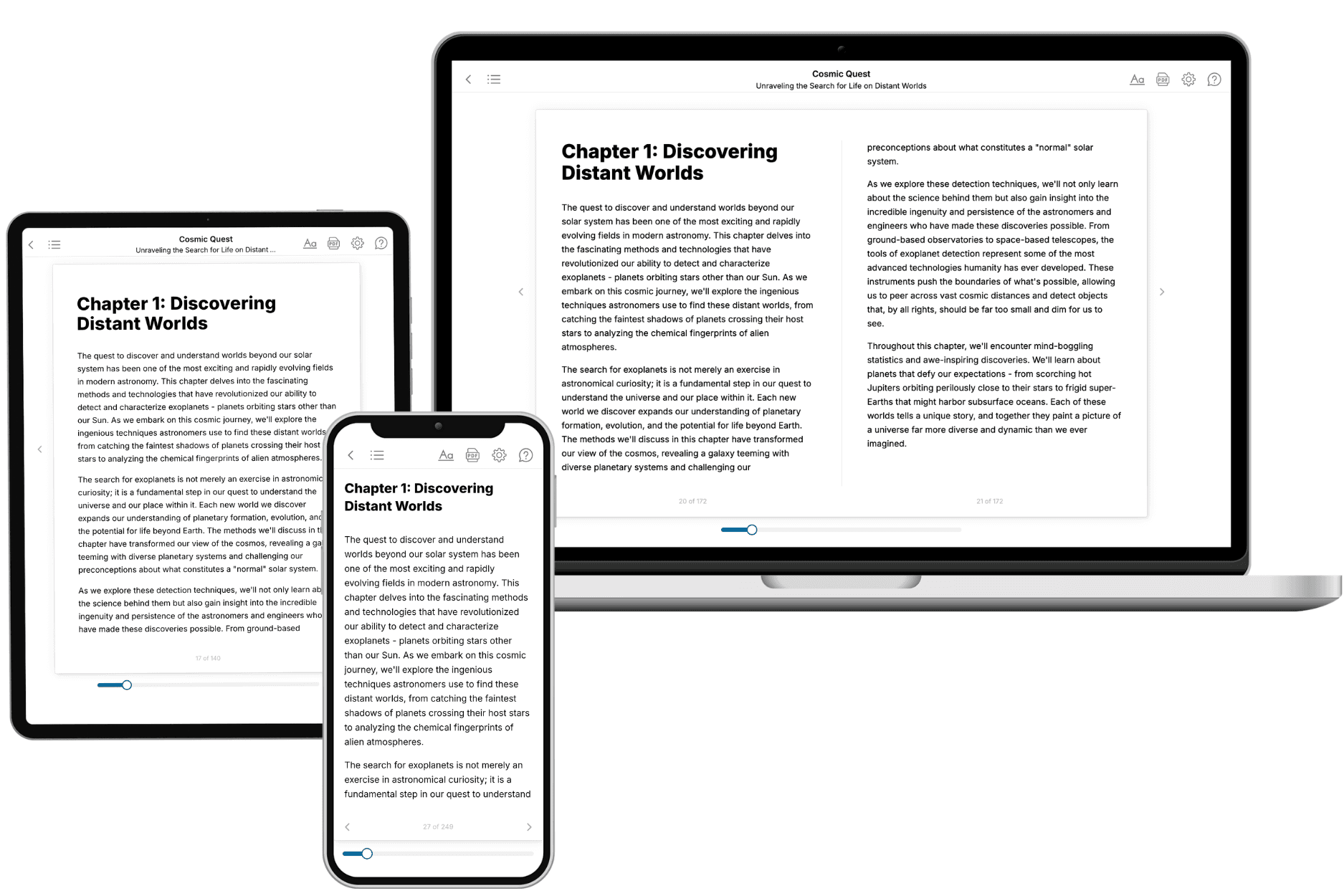
Your book is ready in 10 minutes. Read it online, download as EPUB or PDF, or send to Kindle.

Frequently asked questions
- What is TailoredRead?
TailoredRead creates complete, full-length nonfiction ebooks, written specifically for you. Tell us what you want to learn and why, and TailoredRead writes you a complete ebook on it, with charts, tables, and diagrams throughout. Read it online, on Kindle, or on any e-reader, or download it as a PDF or EPUB. Every book is written fresh the day you order it.
- How is the book tailored to me?
Before anything is written, you answer a few short questions about your goals, your background, and the topics you care about. Your book is then planned around your answers: written at your level, focused on your goals, and covering the topics you chose, instead of the one-size-fits-all book a store sells everyone.
- Will it read like generic AI content?
No. Your book isn't a chat transcript: it's planned chapter by chapter before a single word is written, told in a clear book voice, and explains ideas visually with charts, tables, and diagrams. After writing, every book goes through an editorial pass that polishes chapters so the book reads consistent from start to finish. Judge for yourself: browse thousands of sample books on our Explore Books page.
- How accurate is the content?
Our AI first checks whether your subject needs live research. Niche and fast-moving subjects are researched before writing, and the book plan and chapters are grounded in what it finds. After writing, every book goes through a quality pass that checks its facts and consistency, and researched books list their sources in a Notes section at the back.
- How long is the book?
You choose the length: Comprehensive (250-300 pages), Detailed (150-200 pages), Essential (70-100 pages), or Short (30-50 pages).
- Does the book include visuals?
Yes. Every book includes visual elements such as timelines, checklists, step-by-step guides, decision trees, comparison tables, and matrices, and many include bar charts. A typical book includes dozens of these visual elements.
- Can I read it on Kindle? What formats can I download?
Yes. Every book can be read in our online reader or downloaded as a PDF or EPUB. The EPUB can be opened with Kindle, Apple Books, Kobo, and any e-reader. The Commercial and Author licenses also include an editable Word (DOCX) and Markdown download.
- How much does it cost?
About the price of a regular ebook. The exact price depends on your book's length and complexity, from $2 for the shortest books to $35 for the most comprehensive, and it's shown when you review your book, before you commit to anything. Each book is a one-time purchase, yours to keep, no subscription. Licenses that let you share, teach, or publish your book range from $35.99 to $49.99.
- Can I preview the book before purchasing?
Before you pay, you'll see what your book will cover: the title, a detailed description, the estimated length, and the complete chapter-by-chapter table of contents, so you know what you're getting before you decide. The full text itself is written after you purchase.
- How long does it take to create a book?
About 10 minutes. You can start reading the opening chapters while the rest is still being written.