The Polytechnic Revolution
Reimagining Higher Education for the Industry 4.0 Era
In today's rapidly evolving technological landscape, traditional universities struggle to keep pace with industry demands and emerging fields.
222 pages11 chaptersAug 31, 2025Higher EducationCreated by Michael
About this book
The gap between academia and real-world application has never been wider, leaving many institutions at risk of becoming obsolete. "The Polytechnic Revolution" offers a bold new vision for higher education, tailored for university executives and leaders who are ready to embrace change. This comprehensive guide provides a roadmap for transforming your institution into a modern polytechnic powerhouse, equipping students with the skills and knowledge they need to thrive in the Industry 4.0 era. You'll discover innovative strategies for redesigning STEM curricula, fostering meaningful industry partnerships, and creating dynamic learning environments that blend cutting-edge technology with hands-on experience. From implementing AI-enhanced learning systems to establishing thriving innovation hubs, this book covers every aspect of the modern polytechnic model. By following the actionable insights and proven methodologies outlined in this book, you'll be able to boost research output, improve student retention, and position your institution at the forefront of technological innovation and interdisciplinary education. Don't let your university get left behind – join the Polytechnic Revolution and shape the future of higher education.
Table of contents
- IntroductionThe Polytechnic Revolution: A New Era in Higher Education, Challenges and Opportunities in the Industry 4.0 Era, Book Overview: Your Roadmap to TransformationRead below
- Chapter 1: Reimagining STEM Curriculum DesignAligning Curricula with Industry Needs, Embracing an Interdisciplinary Approach, Identifying and Integrating Future-Ready Skills, Building Flexibility and Adaptability into Curricula
- Chapter 2: Forging Strong Industry PartnershipsEffective Models for University-Industry Collaboration, Establishing Joint Research Initiatives, Creating and Leveraging Industry Advisory Boards, Developing Strategic Corporate R&D Alliances
- Chapter 3: Implementing AI-Enhanced Learning SystemsPersonalized Learning Paths through AI, AI-Driven Assessment and Feedback, Virtual and Augmented Reality in STEM Education, Intelligent Tutoring Systems and Chatbots
- Chapter 4: Fostering Interdisciplinary StudiesBreaking Down Departmental Silos, Designing Integrated Capstone Projects, Encouraging Multidisciplinary Faculty Collaboration, Creating New Interdisciplinary Degree Programs
- Chapter 5: Accelerating Research CommercializationStreamlining Technology Transfer Processes, Incubating University Startups, Effective Intellectual Property Management, Attracting and Managing Industry-Sponsored Research
- Chapter 6: Enhancing Experiential Learning OpportunitiesDeveloping Robust Industry Internship Programs, Implementing Project-Based Learning Across Curricula, Incorporating Real-World Industry Challenges, Facilitating Global Learning Experiences
- Chapter 7: Boosting Research Productivity and ImpactInvesting in Cutting-Edge Research Infrastructure, Building International Research Collaborative Networks, Diversifying Research Funding Strategies, Measuring and Maximizing Research Impact
- Chapter 8: Integrating Industry 4.0 SkillsEnhancing Digital Literacy and Computational Thinking, Incorporating Data Analytics and Visualization, Internet of Things (IoT) Integration in Curricula, Addressing Emerging Technologies and Their Applications
- Chapter 9: Cultivating Entrepreneurship EducationBuilding a Thriving Campus Startup Ecosystem, Integrating Entrepreneurship Across the Curriculum, Establishing Entrepreneurial Mentorship Networks, Organizing Pitch Competitions and Hackathons
- Chapter 10: Establishing Dynamic Innovation HubsDesigning Collaborative Innovation Spaces, Facilitating Industry-Academia Collaboration, Maximizing Student Engagement in Innovation Activities, Extending Innovation Hubs to the Broader Community
- Chapter 11: Creating State-of-the-Art Industry 4.0 LabsEquipping Labs with Cutting-Edge Technology, Implementing Virtual and Remote Lab Simulations, Leveraging Industry Partnerships for Lab Development, Ensuring Safety and Ethical Considerations in Advanced Labs
- ConclusionThe Future of Polytechnic Education, Key Action Steps for University Leaders
- AppendixCase Studies of Successful Polytechnic Transformations, Additional Resources and Tools
Introduction
The Polytechnic Revolution: A New Era in Higher Education
The landscape of higher education is undergoing a seismic shift, one that promises to redefine the very essence of how we prepare students for the challenges of tomorrow. This transformation, aptly termed the "Polytechnic Revolution," represents a paradigm shift in educational philosophy, methodology, and institutional structure. It's a response to the rapidly evolving demands of the global economy, the exponential growth of technological innovation, and the changing nature of work itself. As we stand on the cusp of this new era, it's crucial to understand the forces driving this revolution and the immense potential it holds for reshaping the future of education and industry alike.
At its core, the Polytechnic Revolution is about bridging the gap between traditional academic learning and real-world application. It's a recognition that the siloed approach to education, which has long dominated university structures, is no longer sufficient to prepare students for the complex, interconnected challenges of the 21st century. This revolution calls for a fundamental reimagining of how we structure curricula, conduct research, and engage with industry partners. It demands a more holistic, interdisciplinary approach that equips students not just with deep subject knowledge, but with the ability to synthesize information across multiple domains, think critically, and innovate in the face of unprecedented challenges.
The Polytechnic model isn't entirely new; institutions like MIT and CalTech have long exemplified aspects of this approach. However, what we're witnessing now is a broader recognition of the need for this model across the higher education landscape. Universities around the world are beginning to realize that to remain relevant and effective, they must evolve. This evolution involves integrating cutting-edge technologies into both the learning process and the subjects taught, fostering closer ties with industry partners, and creating dynamic, flexible learning environments that mirror the fast-paced, ever-changing nature of the modern workplace.
One of the key drivers of this revolution is the advent of Industry 4.0, often referred to as the Fourth Industrial Revolution. This term encompasses a range of emerging technologies and trends, including artificial intelligence, the Internet of Things, big data analytics, robotics, and advanced manufacturing techniques. These technologies are not just changing how industries operate; they're blurring the lines between physical, digital, and biological spheres. As a result, the skills and knowledge required for success in this new landscape are rapidly evolving, and traditional educational models are struggling to keep pace.
The Polytechnic Revolution seeks to address this challenge head-on by reimagining education as a more dynamic, adaptive process. It emphasizes hands-on learning, real-world problem-solving, and the development of transferable skills alongside deep technical knowledge. This approach recognizes that in a world where information is readily accessible, the ability to apply knowledge creatively and adapt to new situations is far more valuable than mere memorization of facts. It also acknowledges that the problems facing society today – from climate change to global health crises – are too complex to be solved within the confines of a single discipline.
Another crucial aspect of the Polytechnic Revolution is its focus on fostering innovation and entrepreneurship. In the traditional university model, research and learning often occurred in isolation from the commercial world. The new polytechnic approach seeks to create a more permeable boundary between academia and industry, encouraging the flow of ideas, talent, and resources in both directions. This is manifested in the creation of innovation hubs, incubators, and accelerators within university campuses, as well as in the development of more robust technology transfer and commercialization processes.
The impact of this revolution extends far beyond the walls of individual institutions. As universities transform into more dynamic, industry-aligned entities, they have the potential to become powerful engines of economic growth and social progress. They can serve as catalysts for regional development, attracting investment, fostering innovation ecosystems, and producing graduates who are not just job-ready, but capable of creating new industries and solving global challenges.
However, embracing the Polytechnic Revolution is not without its challenges. It requires significant investment in new technologies and infrastructure. It demands a shift in institutional culture and a willingness to break down long-standing departmental silos. It also necessitates a reimagining of faculty roles and the development of new pedagogical approaches. Perhaps most importantly, it requires a delicate balancing act between meeting the immediate needs of industry and maintaining the broader educational and research missions that have long been the hallmark of great universities.
As we delve deeper into the concepts and strategies that underpin the Polytechnic Revolution, it's important to remember that this is not a one-size-fits-all solution. Each institution must find its own path, taking into account its unique strengths, resources, and regional context. What works for a large research university may not be appropriate for a smaller liberal arts college. The key is to embrace the core principles of interdisciplinarity, innovation, and industry alignment while adapting them to fit the specific needs and goals of your institution.
In the chapters that follow, we will explore in detail the various facets of this revolution, from curriculum design and industry partnerships to the integration of AI-enhanced learning systems and the creation of innovation hubs. We'll examine case studies of successful transformations, discuss potential pitfalls and how to avoid them, and provide actionable strategies for implementing change. Whether you're a university president, a dean, or a faculty member looking to drive innovation within your institution, this book will serve as your guide to navigating the exciting and challenging terrain of the Polytechnic Revolution.
Challenges and Opportunities in the Industry 4.0 Era
The dawn of Industry 4.0 has ushered in an era of unprecedented technological advancement and economic transformation. This new industrial revolution, characterized by the fusion of digital, physical, and biological technologies, presents both significant challenges and extraordinary opportunities for higher education institutions. Understanding these challenges and opportunities is crucial for university leaders seeking to navigate the complexities of this new landscape and position their institutions at the forefront of innovation and education.
One of the primary challenges facing universities in the Industry 4.0 era is the rapid pace of technological change. The half-life of skills is shrinking, with some estimates suggesting that the shelf life of technical skills is now less than five years[1]. This means that the knowledge and skills students acquire during their university years may become obsolete shortly after graduation. For universities, this presents a fundamental challenge to traditional models of curriculum design and delivery. How can institutions ensure that their programs remain relevant when the target is constantly moving? This challenge is compounded by the fact that many of the jobs that today's students will hold in the future don't yet exist, making it difficult to predict exactly what skills will be needed.
Another significant challenge is the growing skills gap between what universities are producing and what industries need. A 2018 study by McKinsey found that 87% of companies worldwide believed they would face a skills gap in the near future[2]. This gap is particularly pronounced in STEM fields, where the rapid evolution of technologies like artificial intelligence, machine learning, and robotics is creating demand for new skill sets that traditional educational programs struggle to provide. Bridging this gap requires not just updating curricula, but fundamentally rethinking how education is delivered and how universities interact with industry partners.
The changing nature of work itself presents another challenge. The rise of the gig economy, remote work, and project-based employment means that students need to be prepared for a much more fluid and uncertain career landscape. They need not only technical skills but also the ability to adapt quickly, learn continuously, and navigate complex social and professional networks. This requires a shift in focus from purely technical education to a more holistic approach that emphasizes soft skills, entrepreneurial thinking, and lifelong learning capabilities.
Funding and resource allocation present ongoing challenges for many institutions. Implementing the kind of sweeping changes required to fully embrace the Polytechnic model often requires significant investment in new technologies, facilities, and faculty development. In an era of tightening budgets and increased scrutiny of the value of higher education, finding the resources to make these investments can be difficult. This is particularly challenging for smaller or less well-resourced institutions, which may struggle to keep pace with larger, better-funded competitors.
The need for interdisciplinary approaches in both teaching and research presents both a challenge and an opportunity. While there's growing recognition of the importance of breaking down silos between disciplines to address complex real-world problems, implementing this in practice can be difficult. It requires overcoming entrenched departmental structures, aligning different academic cultures, and developing new frameworks for collaboration and assessment. However, institutions that successfully navigate this challenge can position themselves at the cutting edge of research and innovation.
Despite these challenges, the Industry 4.0 era also presents enormous opportunities for universities willing to embrace change. One of the most significant opportunities lies in the potential to revolutionize the learning experience through technology. Artificial intelligence and machine learning can enable personalized learning at scale, adapting to individual student needs and learning styles in ways that were previously impossible. Virtual and augmented reality technologies offer new possibilities for immersive, experiential learning, particularly in fields like engineering, medicine, and the sciences.
The growing demand for upskilling and reskilling in the workforce presents another major opportunity. As technologies evolve and job requirements change, there's an increasing need for continuous education throughout one's career. Universities that can develop flexible, modular learning programs and micro-credentials stand to tap into a vast new market of lifelong learners. This not only provides new revenue streams but also allows institutions to maintain ongoing relationships with alumni and industry partners.
Closer collaboration with industry offers multiple benefits. It can provide students with real-world experience and improve their employability, enhance the relevance and impact of research, and open up new funding sources. Industry partnerships can also lead to the co-creation of curricula and research agendas, ensuring that universities remain aligned with the latest technological developments and industry needs.
The emphasis on innovation and entrepreneurship in the Industry 4.0 era provides universities with the opportunity to position themselves as key drivers of economic growth and social progress. By fostering a culture of innovation and providing support for startups and technology commercialization, universities can become hubs of regional development, attracting investment and talent. This not only enhances the institution's prestige and impact but can also create new revenue streams through equity stakes in successful startups or licensing of intellectual property.
The global nature of the challenges posed by Industry 4.0 also presents opportunities for increased international collaboration. Universities can leverage technology to create global learning communities, conduct cross-border research projects, and prepare students for careers in an increasingly interconnected world. This global perspective is crucial for addressing the complex, transnational challenges of the 21st century, from climate change to cybersecurity.
Finally, the Industry 4.0 era offers universities the chance to redefine their role in society. As traditional sources of authority and expertise are challenged by the democratization of information, universities have the opportunity to position themselves as trusted guides in navigating the complexities of the modern world. By emphasizing critical thinking, ethical reasoning, and the ability to synthesize information from multiple sources, universities can play a crucial role in developing informed, engaged citizens capable of thriving in a rapidly changing world.
Navigating these challenges and opportunities requires visionary leadership, strategic planning, and a willingness to embrace change. It demands a careful balancing act between preserving the core values and strengths of higher education while adapting to the new realities of the Industry 4.0 era. The institutions that succeed in this endeavor will not only survive but thrive, emerging as leaders in a new educational paradigm that is more responsive, more relevant, and more impactful than ever before.
Book Overview: Your Roadmap to Transformation
"The Polytechnic Revolution: Reimagining Higher Education for the Industry 4.0 Era" is designed to be your comprehensive guide to transforming traditional universities into cutting-edge polytechnic institutions. This book serves as a roadmap, providing you with the strategies, insights, and practical tools needed to navigate the complex landscape of higher education in the age of rapid technological advancement and changing industry demands. As you embark on this journey of institutional transformation, each chapter will address a crucial aspect of the polytechnic model, offering both theoretical frameworks and actionable advice.
The book begins by laying the groundwork for understanding the Polytechnic Revolution and its implications for higher education. Chapter 1, "Reimagining STEM Curriculum Design," delves into the heart of educational transformation. You'll explore strategies for aligning curricula with industry needs, embracing interdisciplinary approaches, and integrating future-ready skills into your programs. This chapter will guide you through the process of building flexibility and adaptability into your curricula, ensuring that your institution can keep pace with the rapidly evolving demands of Industry 4.0.
Chapter 2, "Forging Strong Industry Partnerships," addresses one of the key pillars of the polytechnic model. You'll discover effective models for university-industry collaboration, learn how to establish joint research initiatives, and gain insights into creating and leveraging industry advisory boards. This chapter also covers the development of strategic corporate R&D alliances, providing you with the tools to build meaningful, mutually beneficial relationships with industry partners.
In Chapter 3, "Implementing AI-Enhanced Learning Systems," you'll explore the cutting-edge of educational technology. This chapter covers the implementation of personalized learning paths through AI, AI-driven assessment and feedback systems, and the use of virtual and augmented reality in STEM education. You'll also learn about intelligent tutoring systems and chatbots, understanding how these technologies can enhance the learning experience and improve student outcomes.
Chapter 4, "Fostering Interdisciplinary Studies," tackles the challenge of breaking down traditional departmental silos. You'll learn strategies for encouraging multidisciplinary faculty collaboration, designing integrated capstone projects, and creating new interdisciplinary degree programs. This chapter will help you cultivate an institutional culture that embraces cross-disciplinary thinking and problem-solving.
The book then moves on to address the crucial area of research and innovation. Chapter 5, "Accelerating Research Commercialization," provides guidance on streamlining technology transfer processes, incubating university startups, and effectively managing intellectual property. You'll also learn strategies for attracting and managing industry-sponsored research, creating new revenue streams and enhancing your institution's impact.
Chapter 6, "Enhancing Experiential Learning Opportunities," focuses on bridging the gap between theory and practice. This chapter covers the development of robust industry internship programs, implementation of project-based learning across curricula, and incorporation of real-world industry challenges into the educational experience. You'll also explore ways to facilitate global learning experiences, preparing students for careers in an increasingly interconnected world.
In Chapter 7, "Boosting Research Productivity and Impact," you'll learn about investing in cutting-edge research infrastructure, building international research collaborative networks, and diversifying research funding strategies. This chapter also addresses the important topic of measuring and maximizing research impact, helping you ensure that your institution's research efforts translate into tangible benefits for society and industry.
Chapter 8, "Integrating Industry 4.0 Skills," dives deep into the specific competencies needed in the modern workforce. You'll explore strategies for enhancing digital literacy and computational thinking, incorporating data analytics and visualization into curricula, and addressing emerging technologies and their applications. This chapter will help you ensure that your graduates are equipped with the skills they need to thrive in the Industry 4.0 era.
Chapter 9, "Cultivating Entrepreneurship Education," addresses the growing importance of entrepreneurial thinking in the modern economy. You'll learn how to build a thriving campus startup ecosystem, integrate entrepreneurship across the curriculum, establish entrepreneurial mentorship networks, and organize pitch competitions and hackathons. This chapter will help you foster a culture of innovation and risk-taking among your students and faculty.
In Chapter 10, "Establishing Dynamic Innovation Hubs," you'll explore the creation of physical and virtual spaces that facilitate collaboration and innovation. This chapter covers the design of collaborative innovation spaces, strategies for facilitating industry-academia collaboration, and ways to maximize student engagement in innovation activities. You'll also learn about extending innovation hubs to the broader community, enhancing your institution's role as a driver of regional economic development.
Chapter 11, "Creating State-of-the-Art Industry 4.0 Labs," focuses on the practical aspects of equipping your institution with cutting-edge technology. You'll learn about implementing virtual and remote lab simulations, leveraging industry partnerships for lab development, and ensuring safety and ethical considerations in advanced labs. This chapter will help you create learning environments that mirror the most advanced industry settings, preparing students for the realities of the modern workplace.
The book concludes with a forward-looking chapter that explores the future of polytechnic education and provides key action steps for university leaders. This final chapter will help you synthesize the insights from the preceding chapters and develop a concrete plan for implementing change at your institution.
Throughout the book, you'll find case studies of successful polytechnic transformations, providing real-world examples of the principles and strategies in action. These case studies offer valuable lessons learned and best practices that you can adapt to your own institutional context. Additionally, each chapter includes practical tools, frameworks, and checklists to help you implement the ideas presented.
By the time you finish "The Polytechnic Revolution," you'll have a comprehensive understanding of what it takes to transform a traditional university into a cutting-edge polytechnic institution. You'll be equipped with the knowledge, strategies, and tools needed to lead your institution through this transformative process, positioning it at the forefront of STEM education, industry collaboration, and innovation in the Industry 4.0 era.
This is the end of the free sample. The full book has 11 chapters.
Want this book written for you?
Tell us your goals and background, and get your own version of this book, tailored by AI to you.


Benefits of AI-tailored books
- Read one book, not ten:
- all the Higher Education knowledge you need, gathered into a single book.
- Save days of learning:
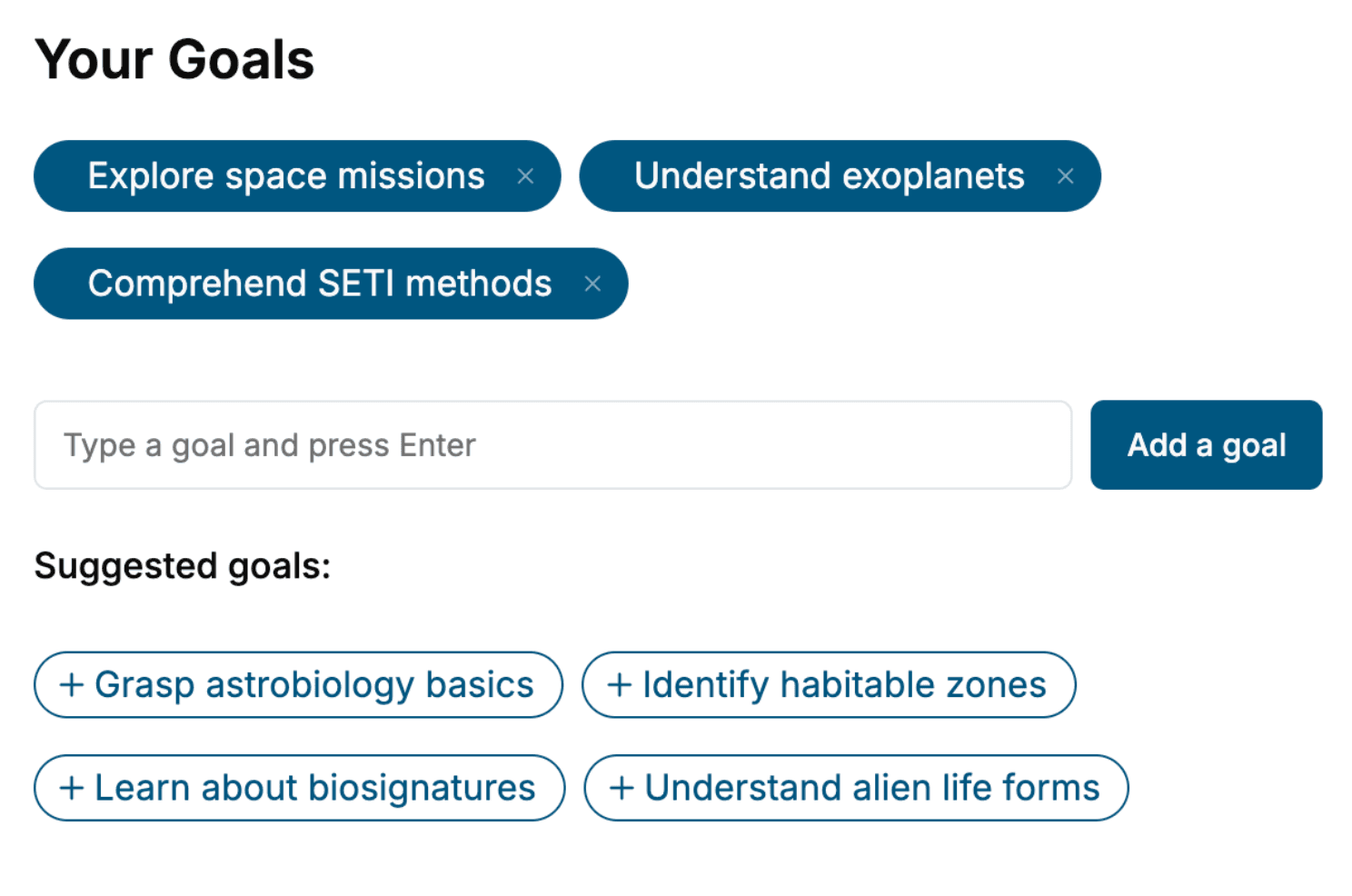
- tell us your goals, choose your topics, and the whole book is built around them.
- Learn effortlessly:
- Higher Education book written for your specific background and expertise.
- Understand at a glance:
- includes charts, tables, timelines, checklists, decision trees, and more.
- Stay current:
- written the day you order it, not years ago.
- Trust what you read:
- every book is checked for accuracy, with real research when your subject needs it.
Create your unique book in 3 steps
- 1. Select your focus
Select the focus of your Higher Education book and share your background
- 2. Personalize your book
Specify your goals and choose sub-topics to include
- 3. Get your tailored book
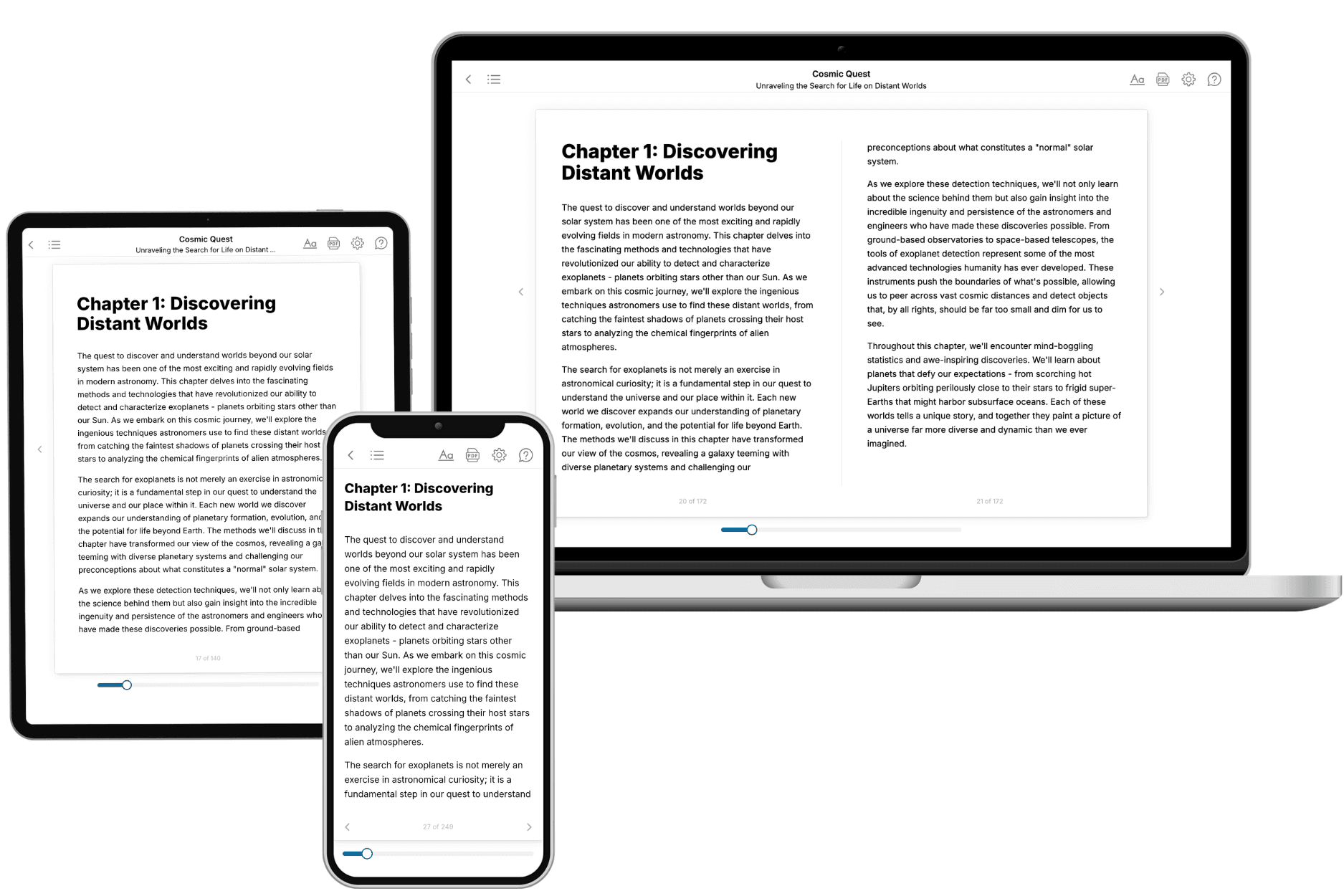
Your book is ready in 10 minutes. Read it online, download as EPUB or PDF, or send to Kindle.

Frequently asked questions
- What is TailoredRead?
TailoredRead creates complete, full-length nonfiction ebooks, written specifically for you. Tell us what you want to learn and why, and TailoredRead writes you a complete ebook on it, with charts, tables, and diagrams throughout. Read it online, on Kindle, or on any e-reader, or download it as a PDF or EPUB. Every book is written fresh the day you order it.
- How is the book tailored to me?
Before anything is written, you answer a few short questions about your goals, your background, and the topics you care about. Your book is then planned around your answers: written at your level, focused on your goals, and covering the topics you chose, instead of the one-size-fits-all book a store sells everyone.
- Will it read like generic AI content?
No. Your book isn't a chat transcript: it's planned chapter by chapter before a single word is written, told in a clear book voice, and explains ideas visually with charts, tables, and diagrams. After writing, every book goes through an editorial pass that polishes chapters so the book reads consistent from start to finish. Judge for yourself: browse thousands of sample books on our Explore Books page.
- How accurate is the content?
Our AI first checks whether your subject needs live research. Niche and fast-moving subjects are researched before writing, and the book plan and chapters are grounded in what it finds. After writing, every book goes through a quality pass that checks its facts and consistency, and researched books list their sources in a Notes section at the back.
- How long is the book?
You choose the length: Comprehensive (250-300 pages), Detailed (150-200 pages), Essential (70-100 pages), or Short (30-50 pages).
- Does the book include visuals?
Yes. Every book includes charts, tables, and diagrams: timelines, checklists, step-by-step guides, decision trees, comparison tables, matrices, and bar charts. A typical book includes dozens of these visual elements.
- Can I read it on Kindle? What formats can I download?
Yes. Every book can be read in our online reader or downloaded as a PDF or EPUB. The EPUB can be opened with Kindle, Apple Books, Kobo, and any e-reader. The Commercial and Author licenses also include an editable Word (DOCX) and Markdown download.
- How much does it cost?
About the price of a regular ebook. The exact price depends on your book's length and complexity, from $2 for the shortest books to $35 for the most comprehensive, and it's shown when you review your book, before you commit to anything. Each book is a one-time purchase, yours to keep, no subscription. Licenses that let you share, teach, or publish your book range from $35.99 to $49.99.
- Can I preview the book before purchasing?
Before you pay, you'll see what your book will cover: the title, a detailed description, the estimated length, and the complete chapter-by-chapter table of contents, so you know what you're getting before you decide. The full text itself is written after you purchase.
- How long does it take to create a book?
About 10 minutes. You can start reading the opening chapters while the rest is still being written.