Power and Society
Understanding How Politics Shapes Our World
Discover how politics operates far beyond elections and government buildings.
207 pages9 chaptersAug 16, 2026Political Science
About this book
This book reveals the hidden mechanisms through which power shapes society and society shapes politics. You'll learn how social institutions—from families to schools to media—quietly influence political beliefs and behaviors, why some groups wield disproportionate influence while others struggle to be heard, and how ordinary people mobilize to challenge existing power structures. By examining real-world examples and contemporary issues, you'll gain the analytical tools to understand political conflicts, social movements, and institutional change. Whether you're interested in why democracies function differently across nations, how inequality perpetuates itself politically, or what drives social transformation, this book provides the conceptual framework to make sense of our complex political world. Move beyond surface-level political commentary to grasp the deeper sociological forces that determine who gets what, when, and how in any society.
Table of contents
- IntroductionWhat Is Political Sociology?, Why Political Sociology Matters Today, How to Use This BookRead below
- Chapter 1: Foundations of Power and SocietyDefining Power: Beyond Simple Definitions, The Three Dimensions of Power, How Power Operates in Daily Life
- Chapter 2: Social Institutions and Political InfluenceUnderstanding Social Institutions, The Family as a Political Institution, Education and Political Socialization, Media, Information, and Political Reality
- Chapter 3: Political Culture and Belief SystemsWhat Is Political Culture?, How Ideologies Form and Persist, Political Culture Across Different Societies
- Chapter 4: Inequality and Political StratificationUnderstanding Social Stratification, How Inequality Shapes Political Access, Representation Gaps and Democratic Deficits
- Chapter 5: Political Socialization and Identity FormationThe Political Socialization Process, Agents of Political Socialization, Identity, Group Membership, and Political Behavior
- Chapter 6: Collective Action and Social MovementsUnderstanding Collective Action, How Social Movements Emerge and Grow, Strategies, Tactics, and Movement Outcomes
- Chapter 7: Political Institutions and Structural ConstraintsAnalyzing Political Institutions, How Institutions Shape Political Behavior, Institutional Change and Reform
- Chapter 8: Contemporary Challenges in Political SociologyGlobalization and Transnational Politics, Technology and New Forms of Political Engagement, Polarization, Fragmentation, and Democratic Challenges
- Chapter 9: Applying Political Sociology to Real-World IssuesUsing Political Sociology as an Analytical Tool, Contemporary Political Issues Through a Sociological Lens, Developing Critical Political Thinking
- ConclusionKey Takeaways and Synthesis, The Future of Political Sociology
- Glossary of Key Terms
- Further Reading and Resources
Introduction
A city council meeting runs three hours past its scheduled end time. Residents argue over a proposed apartment complex, some citing property values, others citing housing shortages, a few citing memories of who was and was not consulted when the last development went up. No one in the room holds elected office beyond the council members themselves, yet the meeting is saturated with politics: coalitions forming, arguments about legitimacy, appeals to fairness, and quiet calculations about who will show up to vote in the next election. This is the raw material of political sociology, a field that treats politics as something that happens in council chambers and classrooms, newsrooms and dinner tables, factory floors and family arguments.
Political sociology asks a deceptively simple question: who gets what, and how do they keep it? Answering that question requires looking past formal titles and official procedures toward the social structures that quietly determine outcomes long before any vote is cast. A zoning dispute is never just about buildings. It reflects patterns of wealth, race, and access that were built up over decades, reproduced through institutions like banks, schools, and local media, and reinforced by the beliefs people absorbed from their families about who belongs where.
This book treats those structures and beliefs as objects of serious analysis rather than background noise. Each chapter builds a piece of an analytical toolkit: concepts like Power, Social Institution, Political Culture, Social Stratification, and Collective Action Problem that let you take apart a political event and see its moving parts. Later chapters connect these pieces to lived processes, including how people acquire political identities over a lifetime, how movements organize against entrenched interests, and how institutions bend or resist change.
The chapters that follow move from abstract to concrete. Early chapters establish what power is and how it is distributed through institutions and culture. Middle chapters examine inequality, socialization, and collective action, the human-level processes that turn structures into lived experience. Later chapters turn to institutions as formal arrangements, then to the pressures reshaping politics worldwide, before closing with a chapter dedicated to applying every concept to real cases. This introduction sets the terms for that journey.
What Is Political Sociology?
Political sociology sits at the meeting point of two disciplines that often talk past each other. Political science tends to focus on formal structures: constitutions, elections, legislatures, courts. Sociology tends to focus on social life: families, communities, class, culture. Political sociology insists that these cannot be separated, because formal political structures are built and operated by people whose behavior is shaped by social forces that have nothing to do with formal rules. A senator's vote on healthcare legislation is a formal political act, but it is also the product of donor networks, constituent pressure, media coverage, and the senator's own upbringing.
The field's central move is to treat politics as a social process rather than a set of institutions frozen on paper. This means asking how Power actually operates between people and groups, not just how a constitution says it should operate. Max Weber, one of the discipline's foundational thinkers, defined power as the chance that one actor within a social relationship can carry out their own will despite resistance, a definition broad enough to cover a parent, a boss, or a president[1]. That breadth is the point: power shows up everywhere social relationships exist, not only in government buildings.
Consider a concrete case: a debate over a new curriculum standard in public schools. On paper, this is a technical decision made by an elected school board following administrative procedure. Political sociology looks underneath that surface and asks a different set of questions.
- Which social groups have the resources and time to attend board meetings and organize campaigns?
- Whose version of history or values gets treated as neutral fact, and whose gets labeled as controversial?
- How do local media outlets frame the dispute, and who do they treat as credible voices?
- What did school board members themselves absorb growing up that shapes their instincts on the issue?
Each of these questions pulls in a different institution: family, media, education, and culture all at once. This layered approach is what separates political sociology from a narrower civics-class account of how a bill becomes a law. It also explains why the field draws on such a wide range of thinkers. C. Wright Mills argued that a small, interlocking elite across business, military, and government circles shaped major decisions in American life, often without any single formal vote[2]. Pierre Bourdieu, working from a different angle, showed how cultural tastes and educational credentials function as a form of capital that reproduces class advantage across generations[3].
These are not competing theories so much as complementary lenses, each illuminating a different mechanism through which power travels through society. Weber points to power as a relationship. Mills points to power as concentrated among networks of elites. Bourdieu points to power as embedded in culture and credentials, often invisible to the people who benefit from it. This book draws on all three traditions and more, organizing them around a consistent vocabulary so that a discussion of Ideological Power in one chapter connects naturally to a discussion of Elite Capture in another.
What ties the field together, across all its different thinkers, is a refusal to treat political outcomes as simply the sum of individual choices or the neutral output of legal rules. A national election result is never just a tally of preferences. It reflects who was registered to vote, whose district lines were drawn favorably, which messages reached which audiences, and which social identities felt mobilized or alienated by the campaign. Political sociology gives a structured way to trace those threads instead of treating the outcome as self-explanatory. That structured tracing is the skill this book aims to build.
By the end of the book, this analytical habit should feel familiar enough to apply on your own. Instead of asking only who won
after a political event, you will be equipped to ask why the contest was shaped the way it was, whose voice was structurally amplified or muted, and what deeper social arrangement the outcome reinforces or disrupts. That shift in questioning is the practical payoff of treating politics as a social phenomenon rather than a purely legal or procedural one.
Why Political Sociology Matters Today
Trust in major institutions has been sliding across many democracies for decades, and political sociology offers tools for understanding why rather than simply lamenting it. Surveys tracking confidence in government, media, and other major institutions across numerous countries have documented long-term declines, particularly among younger cohorts[4]. A purely political explanation, blaming a particular leader or scandal, misses the deeper pattern. A sociological explanation looks at shifting economic structures, changing media environments, and generational differences in how people were socialized into political life, all interacting at once.
Consider the spread of disinformation during recent election cycles across multiple countries. A narrow view treats this as a technology problem: platforms should simply remove false content faster. Political sociology adds a deeper layer by asking why certain false claims find receptive audiences in the first place. People do not absorb information neutrally. They filter it through existing group loyalties, prior beliefs absorbed from family and community, and a general sense of which institutions deserve trust. Disinformation succeeds not because people are simply gullible, but because it fits into pre-existing social and cultural patterns that make some claims feel true regardless of evidence.
The same logic applies to the wave of protest movements that have reshaped politics over the past two decades, from climate strikes to labor organizing to demonstrations against police violence. News coverage often treats these movements as sudden eruptions triggered by a single incident. Political sociology instead asks about the slower buildup: years of grievance accumulation, networks of organizers quietly building capacity, and shifts in what sociologists call the Political Opportunity Structure, the conditions that make a movement's success more or less likely at a given moment. A protest that looks spontaneous on the surface usually rests on years of less visible groundwork.
Understanding inequality also requires this deeper lens. Debates about wealth gaps, racial disparities, or gender gaps in political representation often stall because participants argue past each other, one side citing individual effort and the other citing structural barriers. Political sociology provides a framework for holding both realities at once: individuals do make choices, but those choices happen within structures, shaped by Social Stratification, that make some paths easier and others harder from the start. This framework does not resolve every political argument, but it clarifies what is actually being argued about.
There is also a practical, everyday payoff to this kind of thinking that goes beyond following the news. Once you can recognize how Agents of Socialization like family, school, and media shape political attitudes, you become better equipped to notice those same forces working on you. This does not mean becoming cynical about every belief you hold. It means being able to ask where a strongly held political conviction actually came from, and whether it would survive contact with someone raised in a very different social environment.
Workplaces, too, are sites where these dynamics play out constantly, even when no one calls them political. A debate over remote work policy, a unionization drive, or a dispute over promotion criteria all involve questions of power, legitimacy, and whose interests get treated as the organization's default interests. Recognizing the political sociology embedded in ordinary institutional life makes it possible to participate more effectively, whether that means organizing coworkers, understanding management's incentives, or simply recognizing why a seemingly neutral policy affects different groups unevenly.
None of this is abstract for its own sake. Every major issue dominating headlines today, from housing affordability to immigration policy to the regulation of new technologies, sits at the intersection of institutions, culture, inequality, and collective action that this book examines chapter by chapter. Learning to see these connections is not a substitute for following current events closely. It is what makes following current events genuinely useful rather than an endless stream of disconnected headlines.
How to Use This Book
The chapters are arranged to build on each other, moving from foundational concepts toward increasingly applied territory. The chapter on Foundations of Power and Society establishes the vocabulary of power that every later chapter relies on, including the distinction between Authority, Coercion, and subtler forms of influence like Agenda-Setting. Reading that chapter first, even if you are tempted to skip to a topic that interests you more, will make every subsequent chapter easier to follow, since terms introduced there get reused rather than redefined.
From there, the chapter on Social Institutions and Political Influence and the chapter on Political Culture and Belief Systems work as a pair, examining how families, schools, and media transmit political beliefs and how those beliefs solidify into durable cultural patterns. The chapter on Inequality and Political Stratification and the chapter on Political Socialization and Identity Formation then shift attention to how those structural and cultural forces play out in individual lives, shaping both access to political power and personal political identity. Reading these four chapters in sequence builds a coherent picture of how structure becomes belief becomes behavior.
The chapter on Collective Action and Social Movements marks a turn toward change rather than reproduction, examining how people organize to challenge the arrangements described in earlier chapters. The chapter on Political Institutions and Structural Constraints then examines the formal side of politics, showing how institutions can absorb, redirect, or resist pressure for change. Together these two chapters explain both how challenges to power arise and why so many of them stall or get absorbed without producing lasting change.
The chapter on Contemporary Challenges in Political Sociology applies the entire toolkit to forces reshaping politics right now, including globalization, digital technology, and polarization. The chapter on Applying Political Sociology to Real-World Issues then works as a capstone, walking through how to use every concept from earlier chapters to analyze a live political issue from start to finish. If you read only one chapter after this introduction, that capstone chapter will show most concretely what the whole book was building toward.
Each chapter follows a consistent internal structure to make navigation easier.
- An opening subsection that introduces the core concept with a concrete example.
- A middle subsection that breaks the concept into its component mechanisms.
- A closing subsection that connects the concept to broader patterns or current events.
Key terms appear in bold the first time they are defined in depth, and the same term is used consistently across chapters rather than being replaced with a synonym. This consistency is deliberate. Political sociology already involves enough genuinely difficult ideas without adding confusion over whether Ideological Power in one chapter means the same thing as Agenda-Setting in another. When a concept from an earlier chapter becomes relevant again later, it will be referenced by name so you can look back if the details have faded.
A glossary near the end of the book collects every key term in one place, useful both for quick review and for checking a definition without flipping back through an entire chapter. A further reading section follows, pointing toward foundational texts and more specialized studies for anyone who wants to go deeper into a particular topic, whether that is social movement theory, comparative political culture, or the sociology of institutions. Neither section is required reading to follow the main argument of the book, but both are there for whenever curiosity outpaces the current chapter.
One practical suggestion before moving forward: keep a running list, even a mental one, of current political events as you read. When the chapter on political culture discusses how values vary across societies, pause and think of a recent international news story that fits. When the chapter on collective action discusses resource mobilization, think of a movement you have followed and ask what resources it relied on. The concepts in this book are not meant to stay abstract. They are meant to become a lens you can point at whatever is happening in the news on any given week.
Notes
Introduction
This is the end of the free sample. The full book has 9 chapters.
Want this book written for you?
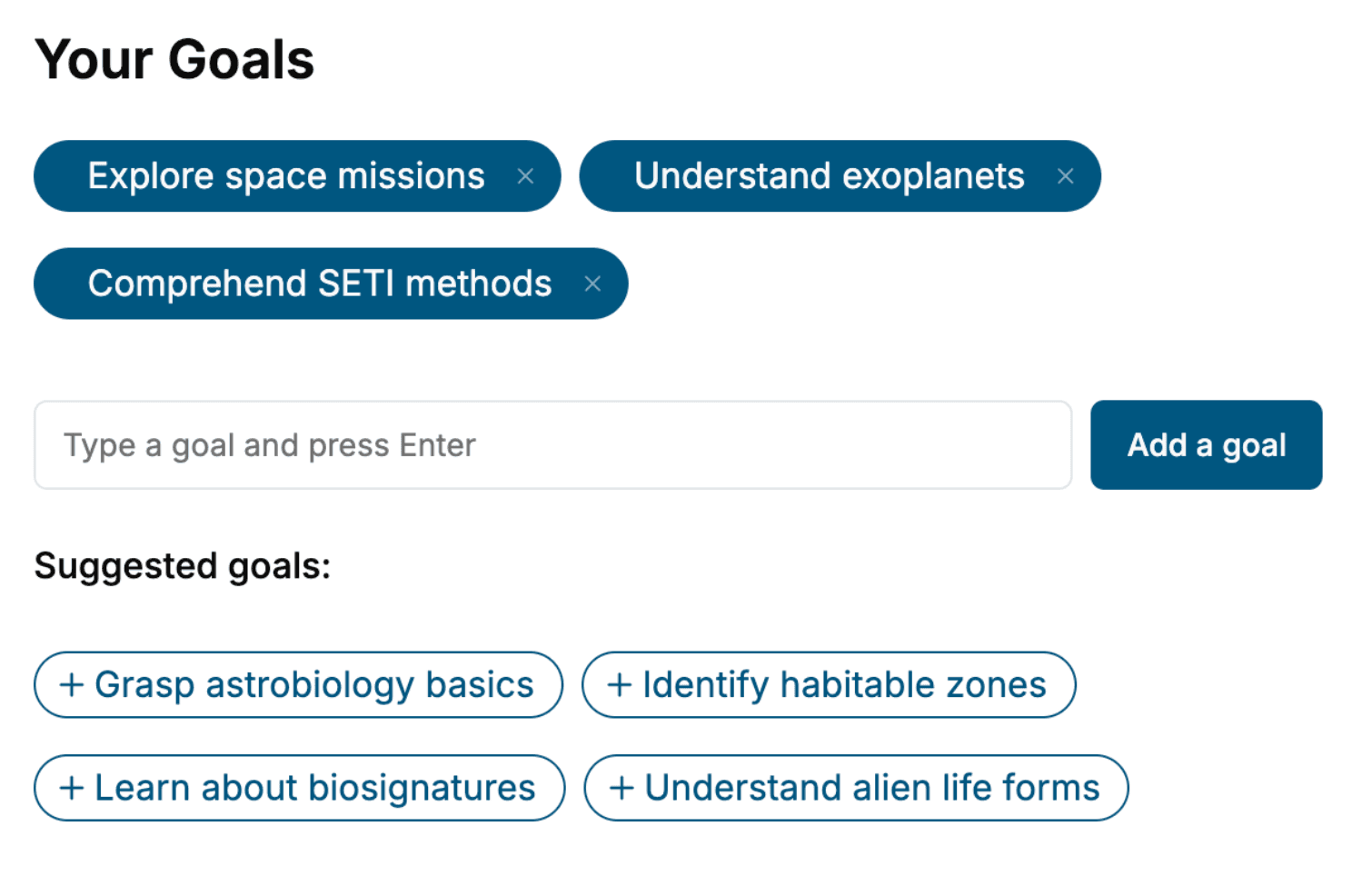
Tell us your goals and background, and get your own version of this book, tailored by AI to you.


Benefits of AI-tailored books
- Read one book, not ten:
- all the Political Science knowledge you need, gathered into a single book.
- Save days of learning:
- tell us your goals, choose your topics, and the whole book is built around them.
- Learn effortlessly:
- Political Science book written for your specific background and expertise.
- Understand at a glance:
- includes charts, tables, timelines, checklists, decision trees, and more.
- Stay current:
- written the day you order it, not years ago.
- Trust what you read:
- every book is checked for accuracy, with real research when your subject needs it.
Create your unique book in 3 steps
- 1. Select your focus
Select the focus of your Political Science book and share your background
- 2. Personalize your book
Specify your goals and choose sub-topics to include
- 3. Get your tailored book
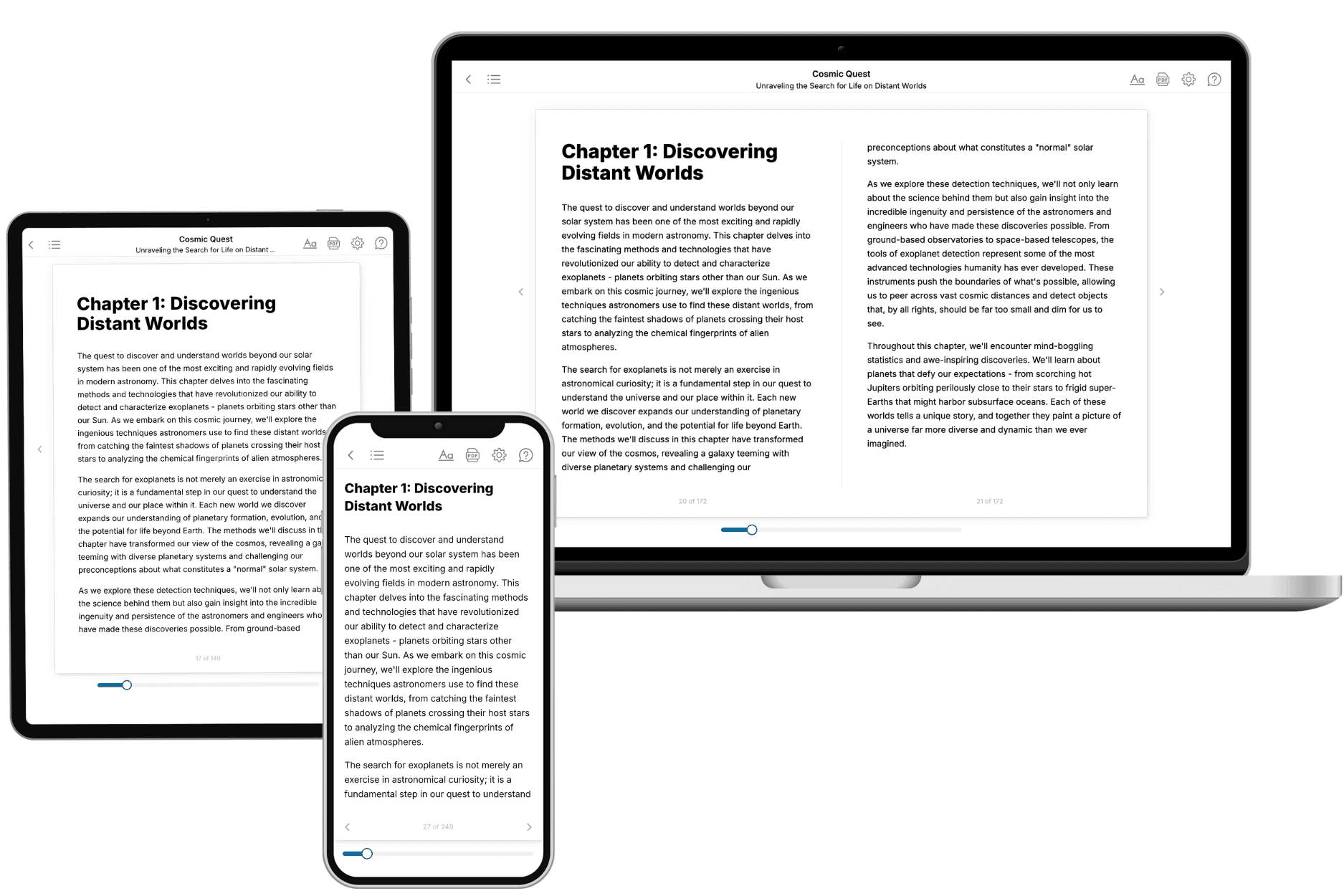
Your book is ready in 10 minutes. Read it online, download as EPUB or PDF, or send to Kindle.

Frequently asked questions
- What is TailoredRead?
TailoredRead creates complete, full-length nonfiction ebooks, written specifically for you. Tell us what you want to learn and why, and TailoredRead writes you a complete ebook on it, with charts, tables, and diagrams throughout. Read it online, on Kindle, or on any e-reader, or download it as a PDF or EPUB. Every book is written fresh the day you order it.
- How is the book tailored to me?
Before anything is written, you answer a few short questions about your goals, your background, and the topics you care about. Your book is then planned around your answers: written at your level, focused on your goals, and covering the topics you chose, instead of the one-size-fits-all book a store sells everyone.
- Will it read like generic AI content?
No. Your book isn't a chat transcript: it's planned chapter by chapter before a single word is written, told in a clear book voice, and explains ideas visually with charts, tables, and diagrams. After writing, every book goes through an editorial pass that polishes chapters so the book reads consistent from start to finish. Judge for yourself: browse thousands of sample books on our Explore Books page.
- How accurate is the content?
Our AI first checks whether your subject needs live research. Niche and fast-moving subjects are researched before writing, and the book plan and chapters are grounded in what it finds. After writing, every book goes through a quality pass that checks its facts and consistency, and researched books list their sources in a Notes section at the back.
- How long is the book?
You choose the length: Comprehensive (250-300 pages), Detailed (150-200 pages), Essential (70-100 pages), or Short (30-50 pages).
- Does the book include visuals?
Yes. Every book includes charts, tables, and diagrams: timelines, checklists, step-by-step guides, decision trees, comparison tables, matrices, and bar charts. A typical book includes dozens of these visual elements.
- Can I read it on Kindle? What formats can I download?
Yes. Every book can be read in our online reader or downloaded as a PDF or EPUB. The EPUB can be opened with Kindle, Apple Books, Kobo, and any e-reader. The Commercial and Author licenses also include an editable Word (DOCX) and Markdown download.
- How much does it cost?
About the price of a regular ebook. The exact price depends on your book's length and complexity, from $2 for the shortest books to $35 for the most comprehensive, and it's shown when you review your book, before you commit to anything. Each book is a one-time purchase, yours to keep, no subscription. Licenses that let you share, teach, or publish your book range from $35.99 to $49.99.
- Can I preview the book before purchasing?
Before you pay, you'll see what your book will cover: the title, a detailed description, the estimated length, and the complete chapter-by-chapter table of contents, so you know what you're getting before you decide. The full text itself is written after you purchase.
- How long does it take to create a book?
About 10 minutes. You can start reading the opening chapters while the rest is still being written.