Premature Birth: A Complete Guide to Understanding and Managing Early Arrival
What Every Parent Needs to Know About Complications, Care, and Recovery
Discovering that your baby will arrive early can feel overwhelming and frightening.
222 pages10 chaptersJul 8, 2026Neonatology
About this book
This guide cuts through the medical jargon and emotional fog to give you clear, practical information about premature birth and its complications. You'll learn what causes early delivery, which complications are most common, how the NICU works, and what to expect during your baby's stay and recovery. Whether you're facing a high-risk pregnancy, currently in the NICU, or supporting someone who is, this book provides the knowledge and perspective you need to feel more prepared and less alone. Written in accessible language with real-world insights, it covers everything from understanding medical terminology to managing your own emotional wellbeing, feeding your premature infant, and navigating the transition home. This is the comprehensive resource you wish someone had given you when you needed it most.
Table of contents
- IntroductionWhy This Book Matters, How to Use This Guide, What to Expect in These PagesRead below
- Chapter 1: Understanding Premature BirthDefining Prematurity: Gestational Age and Categories, How Common Is Premature Birth?, Why Babies Are Born Early
- Chapter 2: Risk Factors and Prevention StrategiesMaternal Health Conditions That Increase Risk, Lifestyle Factors and Prevention, Monitoring and Early Warning Signs, Medical Interventions to Prevent Early Delivery
- Chapter 3: Common Complications of Premature BirthRespiratory Distress Syndrome and Breathing Challenges, Infections and Sepsis, Feeding and Digestive Complications, Brain Development and Neurological Concerns
- Chapter 4: The NICU: What You Need to KnowUnderstanding the NICU Environment, Medical Equipment and Monitoring Devices, Your Baby's Care Team and Their Roles, Your Role as a Parent in the NICU
- Chapter 5: Medical Treatments and InterventionsRespiratory Support Options, Common Medications and Therapies, When Surgery May Be Necessary, Understanding Medical Procedures and Tests
- Chapter 6: Feeding Your Premature InfantThe Importance of Breast Milk for Premature Babies, Feeding Methods: Tube, Bottle, and Breast, Nutrition, Growth, and Developmental Feeding
- Chapter 7: Managing the Emotional JourneyUnderstanding Your Emotional Response, Bonding and Attachment in the NICU, Finding Support and Resources, Supporting Your Partner and Family
- Chapter 8: Preparing for Discharge and Going HomeSigns Your Baby Is Ready to Go Home, Preparing Your Home and Family, Discharge Planning and Follow-Up Care
- Chapter 9: Caring for Your Premature Baby at HomeUnderstanding Corrected Age and Development, Feeding and Nutrition at Home, Health Monitoring and Recognizing Problems, Developmental Milestones and Early Intervention
- Chapter 10: Long-Term Outcomes and DevelopmentFactors That Influence Long-Term Outcomes, Addressing Developmental Delays and Disabilities, School Years and Beyond
- ConclusionMoving Forward with Confidence, Final Thoughts and Encouragement
- Glossary of Medical Terms
- Additional Resources and Support
Introduction
No one plans for their baby to arrive early. Whether you received the news gradually, through weeks of monitoring a high-risk pregnancy, or suddenly, in a rush of emergency decisions and unfamiliar medical terms, the experience of premature birth tends to arrive with a particular kind of shock. One moment you are imagining a full-term delivery, a healthy newborn placed on your chest, a quiet drive home. The next, you are standing in a neonatal intensive care unit, looking at a baby smaller than you ever imagined, surrounded by machines you cannot name and a team of specialists speaking a language you are still learning.
That disorientation is completely normal. It does not mean you are unprepared or incapable. It means you are human, and you have just been handed one of the most challenging experiences a parent can face. What helps, more than almost anything else in those early days, is information. Not the overwhelming, jargon-heavy kind that leaves you more confused than when you started, but clear, honest, practical knowledge about what is happening, why it is happening, and what comes next. That is exactly what this guide is designed to give you.
Premature birth, defined as delivery before 37 weeks of pregnancy, affects roughly one in ten babies born in the United States each year.[1] That is more than 380,000 families annually navigating the NICU, learning about respiratory support and feeding tubes, and trying to bond with a baby through the walls of an incubator. You are not alone in this experience, even when it feels that way. This book was written to sit beside you through every stage of that journey, from the first frightening hours to the long road of recovery, development, and life at home.
The chapters ahead cover a wide range of topics, from the medical causes and complications of prematurity to the emotional weight of the NICU experience, from feeding strategies to long-term developmental outcomes. Some sections will be directly relevant to where you are right now. Others may feel more useful later, when your baby has grown and new questions have emerged. This guide is meant to be returned to, not just read once and set aside. Think of it as a reference you can trust at every stage of your premature baby's journey.
Why This Book Matters
When a baby is born prematurely, parents are immediately thrust into a world of medical complexity that most people have never encountered before. Terms like respiratory distress syndrome, necrotizing enterocolitis, and intraventricular hemorrhage appear in conversations and on charts without much explanation. Decisions need to be made quickly, often under enormous emotional pressure. In those moments, having a foundational understanding of what these terms mean and what these conditions involve can make a real difference in how confidently you can participate in your baby's care.
Research consistently shows that parents who are well-informed about their premature baby's condition are better equipped to communicate with medical teams, advocate for their child, and cope with the stress of the NICU environment.[2] Knowledge does not eliminate fear, but it does give fear a shape you can work with. Instead of feeling helpless in the face of the unknown, you begin to understand what questions to ask, what signs to watch for, and what progress actually looks like for a baby born weeks or months too soon.
There is also a deeper reason this book matters. The NICU experience does not end when your baby comes home. Many premature infants require ongoing follow-up care, developmental monitoring, and early intervention services for months or even years after discharge. Parents who understand the long-term landscape of prematurity are better prepared to recognize when their child needs additional support and to access the right resources before small challenges become larger ones. Early action, guided by informed parents, genuinely changes outcomes.
Beyond the medical dimension, premature birth carries a significant emotional weight that is often underestimated. Feelings of grief, guilt, anxiety, and isolation are extremely common among parents of premature infants, yet many families feel they cannot express these emotions openly because their focus is supposed to be on the baby. This book takes those feelings seriously. Emotional wellbeing is not a luxury or a secondary concern. It is a core part of surviving and thriving through this experience, and it deserves the same attention as any medical topic covered in these pages.
Finally, this book matters because the landscape of premature birth care has changed dramatically in recent decades. Survival rates for extremely premature infants have improved significantly, and the medical community's understanding of how to support early development continues to advance.[3] Most children born prematurely go on to live healthy, full lives. That is not a platitude. It is a fact grounded in decades of neonatal research, and it is something worth holding onto during the hardest moments of this journey.
Understanding what premature birth means today, with all the tools and knowledge modern medicine has developed, gives you a more accurate and ultimately more hopeful picture than fear alone can provide. This book is built on that foundation: honest about the challenges, clear about the uncertainties, and grounded in the very real possibility of a positive outcome for your child and your family.
How to Use This Guide
This guide is organized to follow the natural progression of the premature birth experience, from understanding what prematurity is and why it happens, through the NICU stay, and into life at home and beyond. However, it is not designed to be read only from front to back. Depending on where you are in your journey, some chapters will be immediately urgent and others can wait. The structure is intentional, but the reading order is yours to decide.
If you are currently pregnant and have been told you are at risk for preterm delivery, you might start with Chapters 1 and 2, which cover the basics of prematurity and the risk factors involved. These chapters will help you understand what your medical team is monitoring and why certain interventions may be recommended. From there, Chapter 3 on common complications gives you a realistic picture of what challenges a premature baby might face, so you are not encountering these concepts for the first time in a moment of crisis.
If your baby is already in the NICU, Chapters 4 and 5 are likely your most immediate resources. They walk through the NICU environment, the equipment you will see, the care team members you will meet, and the medical treatments your baby may be receiving. Chapter 6 on feeding is also highly relevant during this phase, since nutrition is one of the central challenges of caring for a premature infant and one where parents can play a meaningful role from early on.
Chapter 7 on emotional support is relevant at every stage, but it is especially important not to skip it during the NICU period. Many parents set aside their own emotional needs during this time, telling themselves they will deal with their feelings later. The problem is that unaddressed emotional distress affects your ability to be present for your baby, to communicate clearly with medical staff, and to make sound decisions. Taking care of yourself is not separate from taking care of your child. It is part of the same effort.
Chapters 8 and 9 focus on the transition home and the early weeks of caring for a premature baby outside the hospital. These chapters are worth reading before discharge, not after, because preparation makes the transition significantly smoother. Chapter 10 on long-term outcomes is designed for the longer view, helping you understand what developmental monitoring looks like over time and how to support your child's growth through the school years and beyond.
Throughout the book, you will find specific examples, practical frameworks, and concrete steps you can take at each stage. Medical terms are explained in plain language when they first appear, and a full glossary at the back of the book provides quick reference definitions for the terminology you will encounter most often. The additional resources section lists organizations, hotlines, and online communities that offer support beyond what any single book can provide.
A note on how to approach the medical information in this guide: this book is designed to inform and support, not to replace the guidance of your baby's medical team. Every premature infant is different, and the specifics of your baby's care will depend on factors that only the clinicians working directly with your child can fully assess. Use this guide to understand the landscape, ask better questions, and feel more confident in conversations with your care team. Never use it to second-guess or override medical advice without discussion.
You may find that some sections are difficult to read, not because the information is unclear, but because it is emotionally heavy. That is okay. It is completely reasonable to put the book down, take a breath, and come back to it. There is no timeline for absorbing this material. The goal is not to read it all at once but to have it available when you need it, in whatever form is most useful to you at that moment.
What to Expect in These Pages
This guide covers the full arc of the premature birth experience, from the earliest medical definitions to the long-term developmental picture. Each chapter is designed to be thorough without being overwhelming, giving you enough detail to genuinely understand what is happening while keeping the language accessible and the focus practical. Here is a brief overview of what each part of the book addresses, so you can orient yourself before diving in.
Chapters 1 and 2 lay the groundwork. Chapter 1 defines prematurity, explains the different categories of gestational age, and describes how common premature birth actually is. Chapter 2 examines the risk factors that increase the likelihood of early delivery, including maternal health conditions, lifestyle factors, and pregnancy-specific circumstances. It also covers the monitoring strategies and medical interventions that can sometimes prevent or delay preterm birth. Understanding this context helps you make sense of the decisions made before and during delivery.
Chapter 3 addresses the complications that premature infants most commonly face. This includes respiratory challenges, infections, digestive difficulties, and neurological concerns. Each complication is explained in terms of what it is, why premature babies are vulnerable to it, how it is typically managed, and what the outlook generally looks like. This chapter is one of the most medically detailed in the book, and it is worth reading carefully even if some of it feels difficult. Being familiar with these conditions before they arise, or while they are being treated, gives you a much stronger foundation for understanding your baby's care.
Chapters 4 and 5 take you inside the NICU. Chapter 4 describes the physical environment, the equipment, and the roles of the various specialists who make up your baby's care team. Chapter 5 goes deeper into the specific treatments and interventions your baby may receive, from respiratory support devices to medications to surgical procedures. These chapters are designed to demystify the NICU experience and help you feel less like a bystander and more like an informed participant in your baby's care.
Chapter 6 is dedicated entirely to feeding, which is one of the most complex and emotionally charged aspects of caring for a premature infant. It covers the benefits of breast milk for premature babies, the different feeding methods used in the NICU, and how nutrition supports growth and development. Whether you plan to breastfeed, pump, use formula, or some combination, this chapter provides practical guidance for navigating the feeding journey with a premature baby.
Chapter 7 turns to the emotional dimension of the experience. It addresses the grief, anxiety, guilt, and isolation that many NICU parents feel, and it offers concrete strategies for managing these emotions, building connection with your baby, and finding support. It also addresses the impact of the NICU experience on partners and other family members, because premature birth affects the whole family system, not just the parents most directly involved in daily care.
Chapters 8 and 9 focus on the transition home. Chapter 8 covers what discharge readiness looks like, how to prepare your home and family, and what follow-up care will be needed after leaving the hospital. Chapter 9 addresses the day-to-day realities of caring for a premature baby at home, including understanding corrected age, monitoring health, managing feeding, and recognizing warning signs that require medical attention. These chapters are grounded in the practical realities that families face once the NICU stay is over.
Chapter 10 takes the long view, examining the factors that influence long-term outcomes for premature infants, how developmental delays and disabilities are identified and addressed, and what the school years and beyond typically look like for children born early. This chapter is honest about the challenges some premature children face while also reflecting the genuine optimism that current research supports. Most premature infants grow into healthy children and adults, and understanding the full picture helps you support your child's development with both realism and hope.
Throughout all of these chapters, you will find specific examples drawn from common NICU scenarios, practical checklists and frameworks, and clear explanations of medical terminology. The goal at every point is to give you information you can actually use, not just information that sounds comprehensive. Premature birth is a complex experience, but it is one that hundreds of thousands of families navigate every year. The knowledge in these pages reflects what those families, and the medical professionals who care for their babies, have learned along the way.
What you will not find in this book is false reassurance. Premature birth is serious, and some of the complications described in these pages are genuinely frightening. Acknowledging that honestly is more respectful to you than softening the reality. What you will find, alongside the honest information, is context, perspective, and the consistent reminder that you are not facing this alone. Medical teams, support communities, and resources exist specifically to help families in exactly your situation. This book is one part of that larger network of support, and it is here for you whenever you need it.
Notes
Introduction
- 1. Centers for Disease Control and Prevention, "Preterm Birth," 2023
- 2. L. S. Franck and A. Axelin, "Differences in parents', nurses' and physicians' views of NICU parent support," Acta Paediatrica, 2013
- 3. B. J. Stoll and others, "Trends in Care Practices, Morbidity, and Mortality of Extremely Preterm Neonates, 1993-2012," JAMA, 2015
This is the end of the free sample. The full book has 10 chapters.
Want this book written for you?
Tell us your goals and background, and get your own version of this book, tailored by AI to you.


Benefits of AI-tailored books
- Read one book, not ten:
- all the Neonatology knowledge you need, gathered into a single book.
- Save days of learning:
- tell us your goals, choose your topics, and the whole book is built around them.
- Learn effortlessly:
- Neonatology book written for your specific background and expertise.
- Understand at a glance:
- includes charts, tables, timelines, checklists, decision trees, and more.
- Stay current:
- written the day you order it, not years ago.
- Trust what you read:
- every book is checked for accuracy, with real research when your subject needs it.
Create your unique book in 3 steps
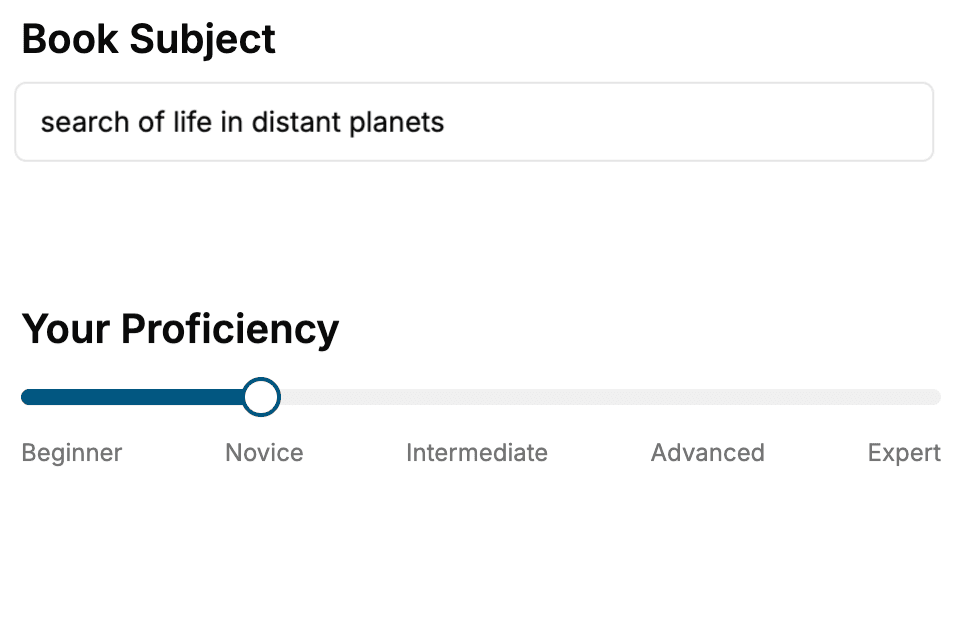
- 1. Select your focus
Select the focus of your Neonatology book and share your background
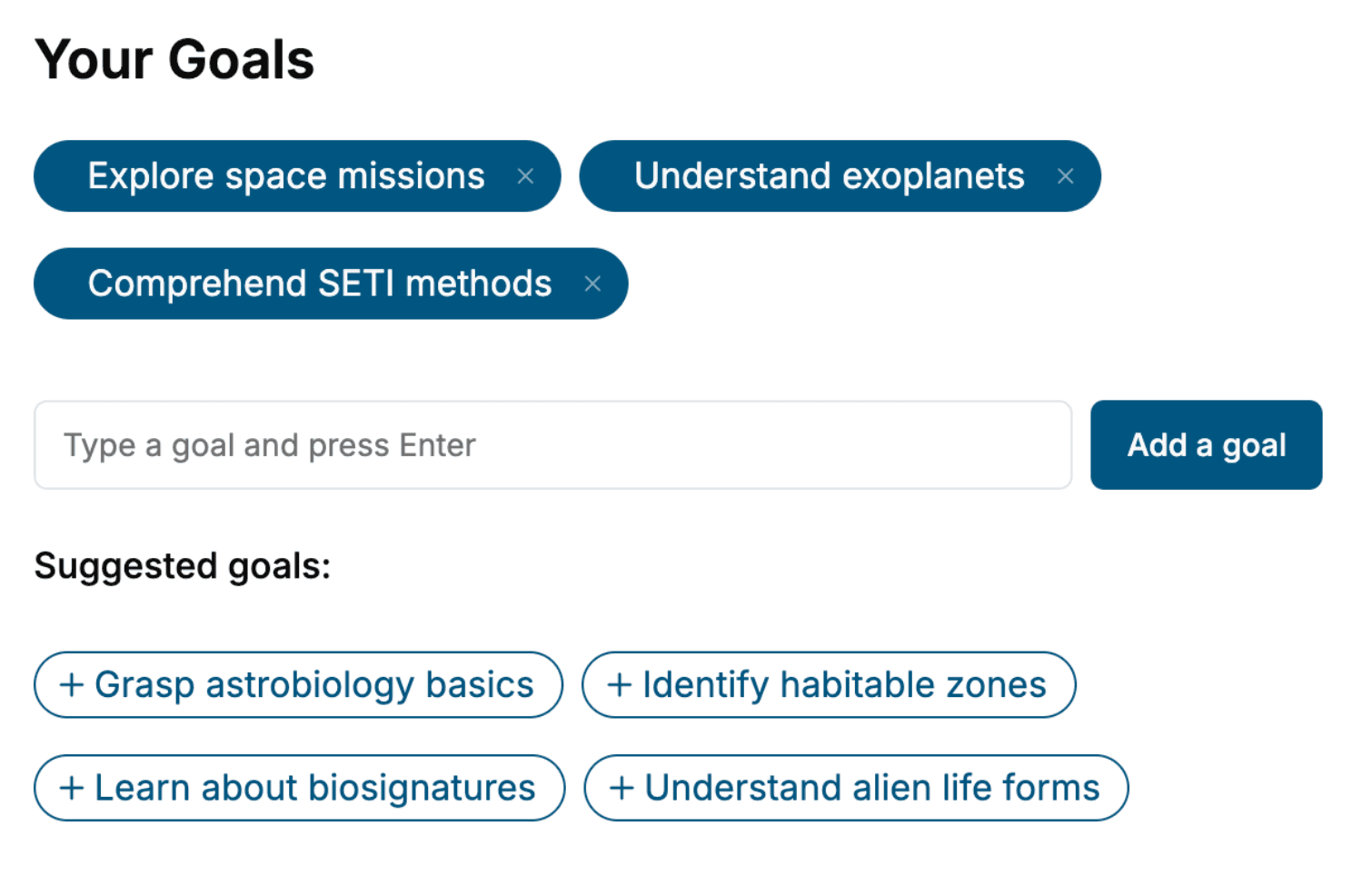
- 2. Personalize your book
Specify your goals and choose sub-topics to include
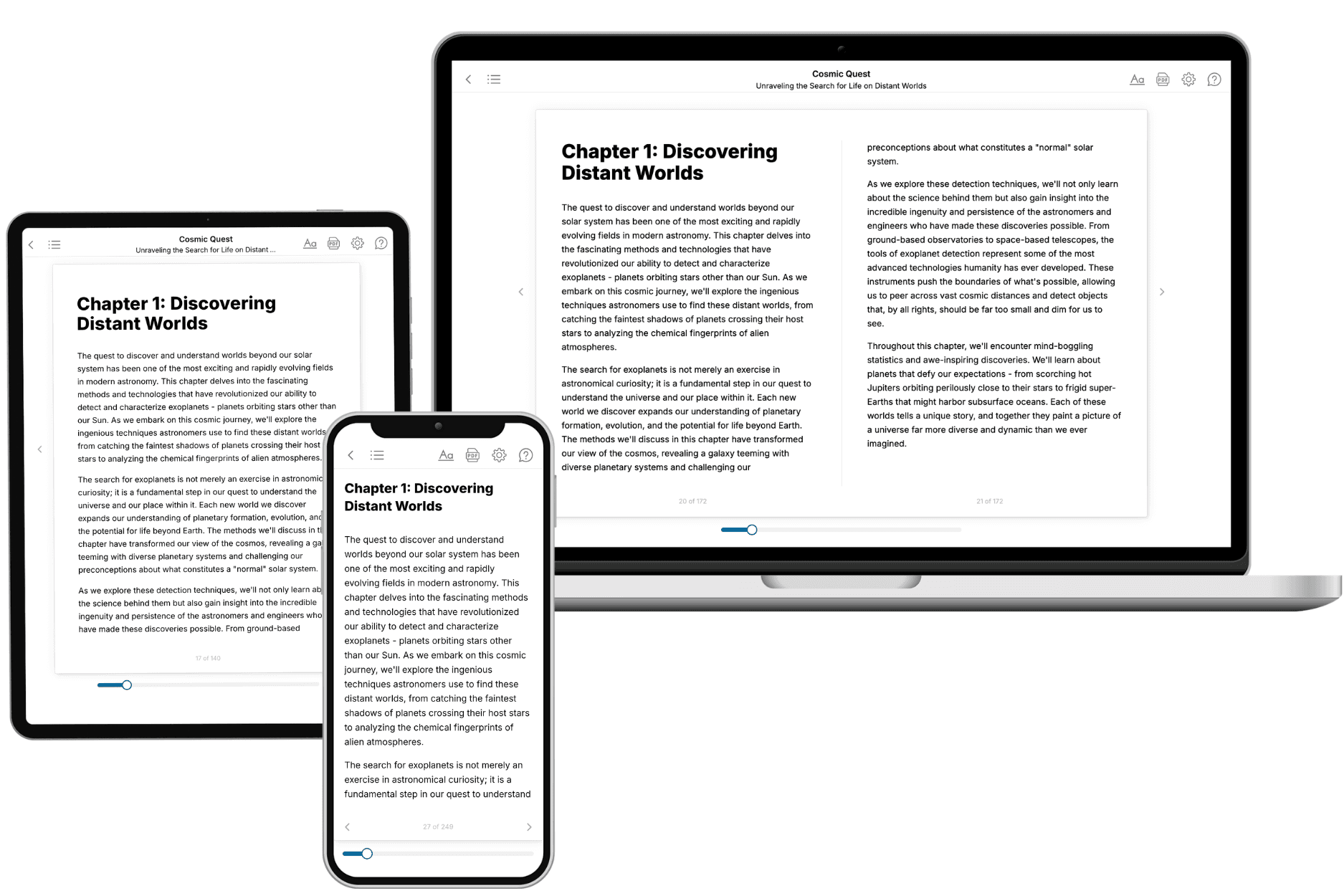
- 3. Get your tailored book
Your book is ready in 10 minutes. Read it online, download as EPUB or PDF, or send to Kindle.
Frequently asked questions
- What is TailoredRead?
TailoredRead creates complete, full-length nonfiction ebooks, written specifically for you. Tell us what you want to learn and why, and TailoredRead writes you a complete ebook on it, with charts, tables, and diagrams throughout. Read it online, on Kindle, or on any e-reader, or download it as a PDF or EPUB. Every book is written fresh the day you order it.
- How is the book tailored to me?
Before anything is written, you answer a few short questions about your goals, your background, and the topics you care about. Your book is then planned around your answers: written at your level, focused on your goals, and covering the topics you chose, instead of the one-size-fits-all book a store sells everyone.
- Will it read like generic AI content?
No. Your book isn't a chat transcript: it's planned chapter by chapter before a single word is written, told in a clear book voice, and explains ideas visually with charts, tables, and diagrams. After writing, every book goes through an editorial pass that polishes chapters so the book reads consistent from start to finish. Judge for yourself: browse thousands of sample books on our Explore Books page.
- How accurate is the content?
Our AI first checks whether your subject needs live research. Niche and fast-moving subjects are researched before writing, and the book plan and chapters are grounded in what it finds. After writing, every book goes through a quality pass that checks its facts and consistency, and researched books list their sources in a Notes section at the back.
- How long is the book?
You choose the length: Comprehensive (250-300 pages), Detailed (150-200 pages), Essential (70-100 pages), or Short (30-50 pages).
- Does the book include visuals?
Yes. Every book includes charts, tables, and diagrams: timelines, checklists, step-by-step guides, decision trees, comparison tables, matrices, and bar charts. A typical book includes dozens of these visual elements.
- Can I read it on Kindle? What formats can I download?
Yes. Every book can be read in our online reader or downloaded as a PDF or EPUB. The EPUB can be opened with Kindle, Apple Books, Kobo, and any e-reader. The Commercial and Author licenses also include an editable Word (DOCX) and Markdown download.
- How much does it cost?
About the price of a regular ebook. The exact price depends on your book's length and complexity, from $2 for the shortest books to $35 for the most comprehensive, and it's shown when you review your book, before you commit to anything. Each book is a one-time purchase, yours to keep, no subscription. Licenses that let you share, teach, or publish your book range from $35.99 to $49.99.
- Can I preview the book before purchasing?
Before you pay, you'll see what your book will cover: the title, a detailed description, the estimated length, and the complete chapter-by-chapter table of contents, so you know what you're getting before you decide. The full text itself is written after you purchase.
- How long does it take to create a book?
About 10 minutes. You can start reading the opening chapters while the rest is still being written.