The Professional Edge
Master Workplace Etiquette and Sales Excellence
What if the difference between a stalled career and rapid advancement came down to something as simple as knowing the unwritten rules of professional conduct?
191 pages9 chaptersApr 25, 2026Etiquette
About this book
In today's competitive workplace, technical skills alone aren't enough. Your ability to navigate social dynamics, communicate with intention, and build genuine relationships directly impacts your earning potential and career trajectory. This book reveals the specific etiquette principles that top performers use to command respect, close deals, and create lasting professional relationships. You'll discover how to present yourself with confidence, master both traditional and digital communication, and leverage proper conduct as a competitive advantage in sales. Whether you're building your first client relationship or refining your executive presence, these practical strategies will help you operate at a higher level and achieve measurable results.
Table of contents
- IntroductionWhy Etiquette Matters in Modern Business, The Direct Connection Between Etiquette and Sales Success, How to Use This Book for Maximum ImpactRead below
- Chapter 1: The Foundation of Professional PresenceCreating Powerful First Impressions, Appearance and Grooming Standards, Mastering Body Language and Posture
- Chapter 2: Verbal Communication ExcellenceControlling Tone, Pace, and Volume, The Power of Active Listening, Navigating Professional Conversations
- Chapter 3: Digital Communication and Virtual ProfessionalismEmail Communication Standards, Video Conference and Virtual Meeting Conduct, Professional Social Media Presence
- Chapter 4: Networking and Relationship BuildingMastering Professional Networking Events, Making and Facilitating Business Introductions, Maintaining Professional Relationships Over Time
- Chapter 5: Sales Etiquette and Client RelationsEthical Sales Approaches and Respect for Prospects, Conducting Professional Client Meetings, Follow-Up and Relationship Nurturing
- Chapter 6: Dining and Entertainment EtiquetteBusiness Meal Etiquette and Table Manners, Hosting Clients and Business Associates, Navigating Alcohol and Social Boundaries
- Chapter 7: Handling Difficult Situations with GraceDe-escalating Conflict Professionally, Managing Difficult Conversations, Recovering from Etiquette Mistakes
- Chapter 8: Workplace Hierarchy and RespectShowing Respect to Leadership and Authority, Building Peer Relationships with Integrity, Mentoring and Supporting Junior Colleagues
- Chapter 9: Cultural Awareness and Inclusive EtiquetteUnderstanding Cultural Communication Differences, Practicing Inclusive and Respectful Conduct, Navigating Global Business Etiquette
- ConclusionYour Competitive Advantage, Committing to Continuous Professional Growth
- Further Reading and Resources
Introduction
Picture two sales professionals walking into the same client meeting. Both have identical product knowledge, similar pricing, and comparable experience. One lands the contract. The other leaves empty-handed. The difference rarely comes down to what they said about the product. More often, it comes down to how they carried themselves, how they listened, how they made the client feel, and whether they followed up with the right message at the right time. That invisible layer of professional conduct is what this book is about.
Workplace etiquette is one of the most underestimated career tools available to any professional. It is not about memorizing which fork to use at a dinner table, though that knowledge certainly helps. It is about understanding that every interaction you have at work sends a signal. Your punctuality, your handshake, your email tone, your ability to stay composed under pressure, all of these communicate something about your competence and your character before your credentials ever come up. In competitive environments, those signals can make or break opportunities.
This book was built for professionals who already have some workplace experience and want to operate at a higher level. You are not starting from zero. You have navigated meetings, managed client relationships, and handled your share of difficult conversations. But there is a gap between performing adequately and performing with genuine distinction. The principles in these pages are designed to close that gap. They are practical, specific, and grounded in how real business relationships actually work. By the time you finish, you will have a clear framework for presenting yourself with confidence, communicating with precision, and building the kind of professional reputation that opens doors consistently.
Why Etiquette Matters in Modern Business
There is a common misconception that etiquette is a relic of a more formal era, something relevant to boardrooms of the 1950s but out of place in today's open-plan offices and Slack-driven workplaces. That view is not just wrong; it is actively costly to the people who hold it. The standards have evolved, but the underlying principle has not changed at all. People do business with people they trust, and trust is built through consistent, respectful, and considerate behavior over time.
Research consistently supports this. A study by the Center for Professional Excellence at York College of Pennsylvania found that professionalism, which includes conduct, communication, and appearance, is one of the top factors employers and clients use to evaluate individuals in business settings.[1] The same behaviors that impress a hiring manager also impress a prospective client. The connection between etiquette and outcomes is not theoretical. It shows up in promotions, in closed deals, and in the quality of professional networks people build over time.
Modern business has also introduced entirely new arenas where etiquette matters. Digital communication, virtual meetings, and social media have created situations that previous generations of professionals never had to navigate. A poorly worded email can damage a relationship just as effectively as a rude comment in person. A cluttered, unprofessional video call background sends a message about your attention to detail. These new contexts do not replace traditional etiquette; they extend it into spaces that require additional awareness and intentionality.
Consider what happens in organizations where etiquette is treated as optional. Meetings run long because no one respects the agenda. Emails go unanswered for days because there is no shared standard for response time. Client relationships erode because follow-up is inconsistent. These are not personality problems or skill gaps in the traditional sense. They are etiquette failures, and they have measurable consequences for productivity, morale, and revenue. When etiquette is treated as a shared professional standard, the entire organization operates more smoothly and more credibly.
It is also worth addressing the idea that etiquette is somehow inauthentic, that following social conventions means suppressing your real personality. The opposite is actually true. Strong etiquette gives you a reliable framework so that your personality can come through clearly, without friction or misunderstanding. When you know how to handle introductions, manage difficult conversations, and communicate with clarity, you spend less mental energy on logistics and more on genuine connection. Etiquette is not a mask. It is a foundation.
The professionals who rise fastest in competitive environments are almost always the ones who combine technical competence with strong interpersonal conduct. They are the people others want to work with, refer business to, and advocate for in rooms they are not in. That combination is not accidental. It is the result of deliberate attention to how they show up, communicate, and treat the people around them. That is exactly what this book will help you develop.
A practical reality check: Think about the last time you formed a strong negative impression of a colleague or client. Was it because of their technical skills, or was it because of something they said, how they said it, or how they behaved in a specific situation? Etiquette failures are almost always the source of lasting negative impressions in professional settings.
The Direct Connection Between Etiquette and Sales Success
Sales is fundamentally a relationship business. Products can be replicated, pricing can be matched, and features can be copied. What cannot be easily replicated is the experience of working with someone who makes you feel respected, heard, and valued throughout the entire buying process. That experience is created almost entirely through etiquette. The way a salesperson greets a prospect, listens during a discovery call, follows up after a meeting, and handles objections all communicate something about what it would be like to be their client long-term.
The numbers behind this are striking. According to research by Salesforce, 84% of business buyers say the experience a company provides is as important as its products and services.[2] That experience is not delivered by the product itself. It is delivered by the people representing it, through every interaction, from the first cold outreach to the post-sale check-in. When your conduct throughout that process is consistently professional, respectful, and attentive, you are not just selling a product. You are selling confidence in the relationship itself.
Think about the difference between two common sales approaches. The first involves a salesperson who talks more than they listen, pushes for a close before the prospect is ready, and sends generic follow-up emails that feel copy-pasted. The second involves someone who asks thoughtful questions, takes notes, acknowledges the prospect's specific concerns, and follows up with a personalized message that references the actual conversation. Both may have the same product knowledge. But the second approach, which is entirely an etiquette difference, creates a dramatically different experience for the buyer.
Etiquette also plays a critical role in how sales professionals handle rejection and setbacks. How you respond when a deal falls through, when a client is unhappy, or when a prospect says no reveals your character more clearly than any successful close ever could. Professionals who handle these moments with grace, without defensiveness, blame, or pressure, often find that those same prospects come back later or refer others. The long game in sales is almost always won through conduct, not tactics.
There is also a trust dimension that is easy to overlook. Buyers today are more informed and more skeptical than at any previous point in business history. They have access to reviews, comparisons, and peer recommendations before they ever speak to a salesperson. What they cannot get from a Google search is a sense of whether they can trust the person they are about to do business with. That trust is built through consistent, professional behavior across every touchpoint. Etiquette is the mechanism through which trust is communicated and reinforced.
The connection between etiquette and sales success is not limited to client-facing interactions either. Internal relationships matter enormously. Sales professionals who treat their colleagues, support staff, and managers with the same respect they show clients tend to get better resources, stronger backing, and more collaborative support. The culture of conduct you create around yourself internally shapes your external effectiveness in ways that are easy to underestimate.
Here is a concrete example that illustrates the full picture. Imagine a sales professional named Marcus who works in B2B software. Marcus is technically knowledgeable and genuinely believes in his product. But he consistently arrives a few minutes late to client calls, interrupts prospects when they are speaking, and sends follow-up emails that are vague and poorly formatted. His close rate is mediocre despite strong leads. A colleague with similar product knowledge but sharper etiquette habits consistently outperforms him. The gap is not talent. It is conduct. This scenario plays out in sales organizations every day, and it is entirely preventable.
- Etiquette builds trust faster than any sales script or product demonstration.
- Respectful conduct during rejection keeps doors open for future opportunities.
- Consistent follow-up behavior signals reliability, which is a core buying criterion for most clients.
- Active listening during sales conversations uncovers needs that generic pitches always miss.
- Professional appearance and communication reduce buyer hesitation before the pitch even begins.
How to Use This Book for Maximum Impact
This book is organized to take you through professional etiquette in a logical sequence, starting with how you present yourself physically and verbally, moving through digital communication and networking, and then diving deep into sales-specific conduct, dining etiquette, conflict management, workplace hierarchy, and cultural awareness. Each chapter builds on the previous one, but they are also designed to stand alone. If you have a specific challenge right now, such as an upcoming client dinner or a difficult conversation you need to navigate, you can go directly to the relevant chapter and find actionable guidance immediately.
The most effective way to use this book is not to read it once and set it aside. Professional etiquette is a practice, not a checklist. The goal is to internalize these principles so that they become natural habits rather than conscious rules you have to remember under pressure. That kind of internalization happens through repeated application. As you read each chapter, identify one or two specific behaviors you want to implement in the coming week. Small, consistent changes compound into significant professional transformation over time.
Each chapter includes concrete examples, practical frameworks, and specific scenarios drawn from real workplace and sales situations. These are not hypothetical edge cases. They are the kinds of situations you encounter regularly, and the guidance is designed to be immediately applicable. Pay particular attention to the examples of what not to do. Understanding the specific behaviors that undermine professional credibility is just as valuable as knowing the right approach, sometimes more so, because those mistakes are often invisible to the people making them.
You will also notice that many of the principles in this book overlap and reinforce each other. Active listening, for example, appears in the context of verbal communication, sales etiquette, and conflict resolution. That repetition is intentional. The most powerful professional habits are not isolated techniques. They are consistent ways of engaging with people that show up across every context. When you see the same principle applied in multiple settings, that is a signal that it deserves particular attention and practice.
Consider keeping a simple journal or notes document as you work through this material. After each chapter, write down one situation from your recent professional experience where the principles you just read would have applied. Then write down specifically what you would do differently. This reflection process accelerates learning significantly. It connects abstract principles to your actual professional life, which is where the real growth happens.
Here is a suggested approach for getting the most out of each chapter:
- Read the full chapter without stopping to take notes on the first pass. Get the full picture before focusing on details.
- Identify your current gaps. Be honest about which behaviors you already practice well and which ones need work. Self-awareness is the starting point for all professional development.
- Choose one priority behavior to focus on for the next two weeks. Trying to change everything at once leads to changing nothing.
- Apply it in a real situation as soon as possible. The closer the application is to the reading, the stronger the learning.
- Reflect on the outcome. Did the behavior produce the result you expected? What would you adjust next time?
- Return to the chapter after a month. You will notice things you missed the first time, because your experience will have given you new context.
One more important note about mindset. The principles in this book are not about performing professionalism for an audience. They are about genuinely respecting the people you work with and do business with. When etiquette comes from a place of authentic respect rather than calculated impression management, it is far more effective and far more sustainable. People can tell the difference. Clients can tell the difference. The goal is not to seem professional. The goal is to be professional, consistently, in ways that create real value for everyone you interact with.
A note on application: The professionals who benefit most from books like this are not the ones who read the most carefully. They are the ones who act the most quickly. Reading without application is just entertainment. Every chapter in this book contains at least one thing you can do differently tomorrow. Find it, and do it.
The chapters ahead cover a wide range of professional situations, from the moment you walk into a room to the way you handle a client complaint months into a relationship. Some of the material will confirm things you already do well. Some of it will challenge habits you have had for years. Both of those experiences are valuable. The professionals who advance fastest are the ones who stay curious about their own conduct and remain genuinely open to refining it. That openness is the most important thing you can bring to this book.
What follows is a practical, honest, and comprehensive guide to operating at the highest level of professional conduct. The principles here have been applied by top performers across industries, from enterprise sales to executive leadership, and they work because they are grounded in something timeless: the human desire to be treated with respect, clarity, and genuine consideration. Master these principles, and you will not just be better at your job. You will become the kind of professional that others actively seek out, trust deeply, and want to work with for the long term.
This is the end of the free sample. The full book has 9 chapters.
Want this book written for you?
Tell us your goals and background, and get your own version of this book, tailored by AI to you.


Benefits of AI-tailored books
- Read one book, not ten:
- all the Etiquette knowledge you need, gathered into a single book.
- Save days of learning:
- tell us your goals, choose your topics, and the whole book is built around them.
- Learn effortlessly:
- Etiquette book written for your specific background and expertise.
- Understand at a glance:
- includes charts, tables, timelines, checklists, decision trees, and more.
- Stay current:
- written the day you order it, not years ago.
- Trust what you read:
- every book is checked for accuracy, with real research when your subject needs it.
Create your unique book in 3 steps
- 1. Select your focus
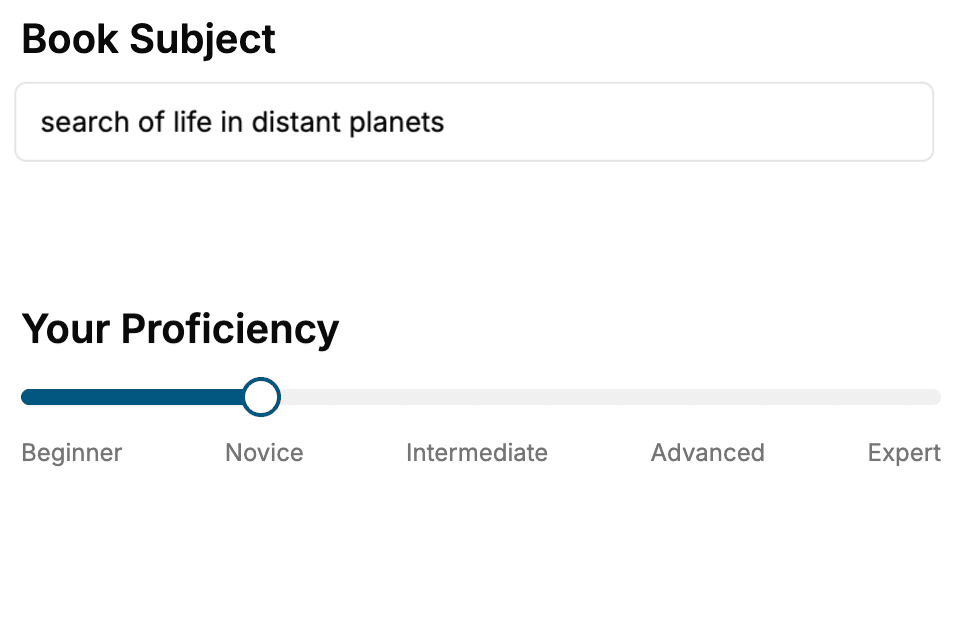
Select the focus of your Etiquette book and share your background
- 2. Personalize your book
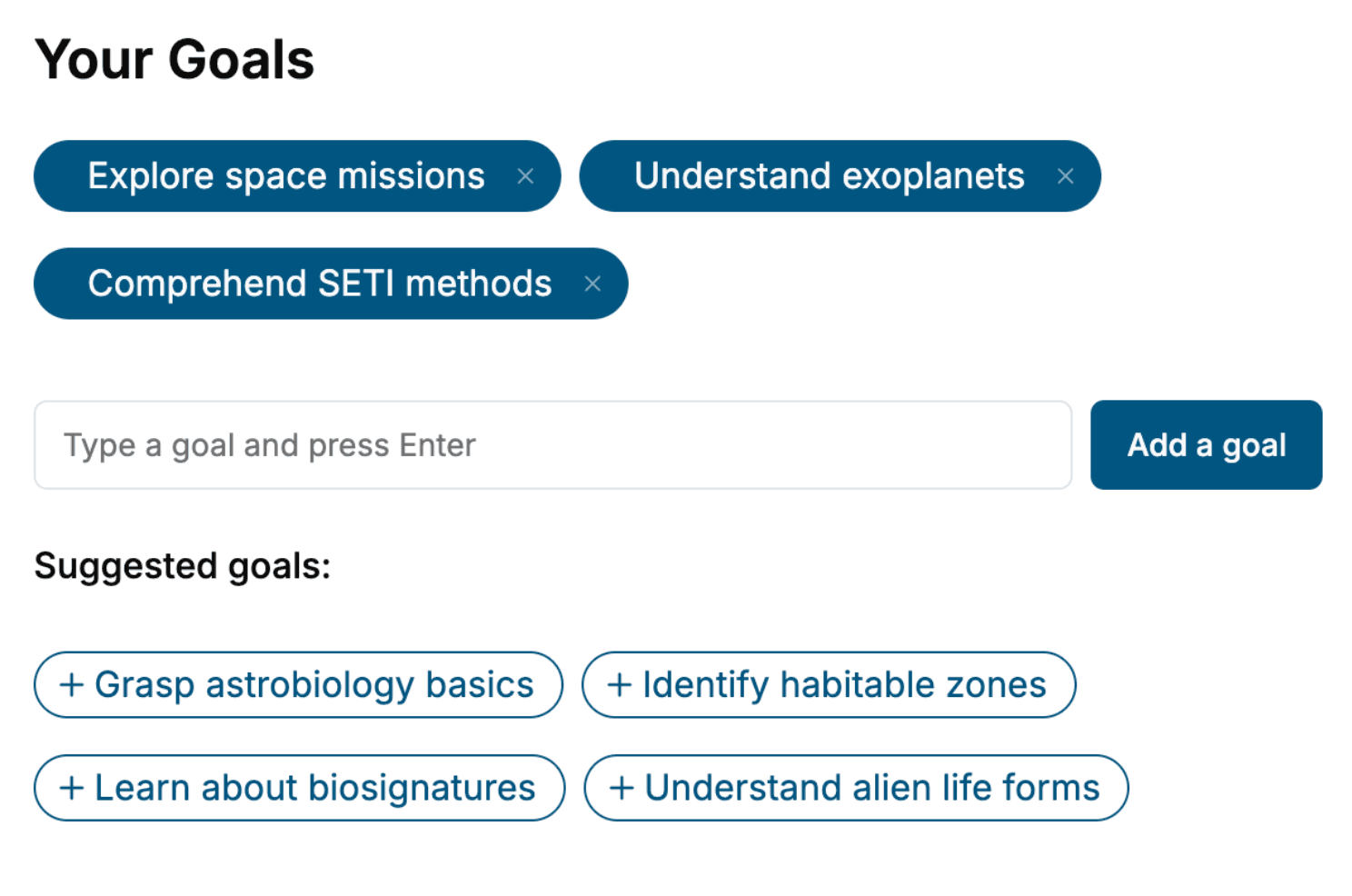
Specify your goals and choose sub-topics to include
- 3. Get your tailored book
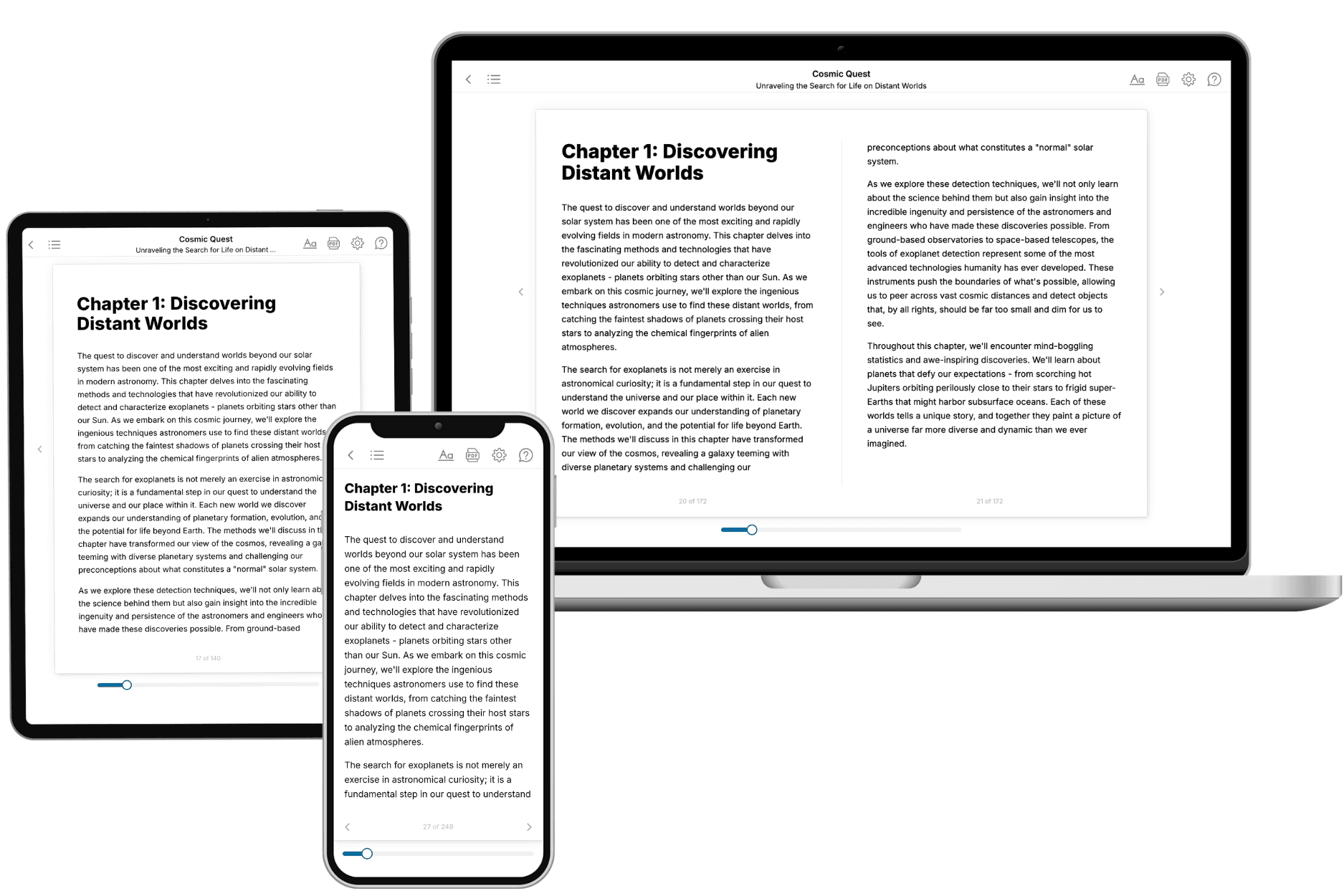
Your book is ready in 10 minutes. Read it online, download as EPUB or PDF, or send to Kindle.
Frequently asked questions
- What is TailoredRead?
TailoredRead creates complete, full-length nonfiction ebooks, written specifically for you. Tell us what you want to learn and why, and TailoredRead writes you a complete ebook on it, with charts, tables, and diagrams throughout. Read it online, on Kindle, or on any e-reader, or download it as a PDF or EPUB. Every book is written fresh the day you order it.
- How is the book tailored to me?
Before anything is written, you answer a few short questions about your goals, your background, and the topics you care about. Your book is then planned around your answers: written at your level, focused on your goals, and covering the topics you chose, instead of the one-size-fits-all book a store sells everyone.
- Will it read like generic AI content?
No. Your book isn't a chat transcript: it's planned chapter by chapter before a single word is written, told in a clear book voice, and explains ideas visually with charts, tables, and diagrams. After writing, every book goes through an editorial pass that polishes chapters so the book reads consistent from start to finish. Judge for yourself: browse thousands of sample books on our Explore Books page.
- How accurate is the content?
Our AI first checks whether your subject needs live research. Niche and fast-moving subjects are researched before writing, and the book plan and chapters are grounded in what it finds. After writing, every book goes through a quality pass that checks its facts and consistency, and researched books list their sources in a Notes section at the back.
- How long is the book?
You choose the length: Comprehensive (250-300 pages), Detailed (150-200 pages), Essential (70-100 pages), or Short (30-50 pages).
- Does the book include visuals?
Yes. Every book includes visual elements such as timelines, checklists, step-by-step guides, decision trees, comparison tables, and matrices, and many include bar charts. A typical book includes dozens of these visual elements.
- Can I read it on Kindle? What formats can I download?
Yes. Every book can be read in our online reader or downloaded as a PDF or EPUB. The EPUB can be opened with Kindle, Apple Books, Kobo, and any e-reader. The Commercial and Author licenses also include an editable Word (DOCX) and Markdown download.
- How much does it cost?
About the price of a regular ebook. The exact price depends on your book's length and complexity, from $2 for the shortest books to $35 for the most comprehensive, and it's shown when you review your book, before you commit to anything. Each book is a one-time purchase, yours to keep, no subscription. Licenses that let you share, teach, or publish your book range from $35.99 to $49.99.
- Can I preview the book before purchasing?
Before you pay, you'll see what your book will cover: the title, a detailed description, the estimated length, and the complete chapter-by-chapter table of contents, so you know what you're getting before you decide. The full text itself is written after you purchase.
- How long does it take to create a book?
About 10 minutes. You can start reading the opening chapters while the rest is still being written.