Proof of Stake Explained
Understanding One-Way Functions and the Algorithms Behind Blockchain Consensus
What if the security of an entire blockchain didn't depend on solving complex mathematical puzzles, but instead on economic incentives and cryptographic proofs?
222 pages10 chaptersMar 14, 2026Proof of Stake
About this book
Proof of Stake represents a fundamental shift in how distributed systems achieve consensus, yet many struggle to understand the computer science beneath the surface. This book bridges that gap by connecting Proof of Stake to core algorithmic concepts and one-way functions that make it work. You'll discover how hash functions create unforgeable commitments, how validator selection algorithms prevent centralization, and how economic incentives align with cryptographic security. Whether you're a developer building on blockchain networks, a researcher exploring consensus mechanisms, or a technologist wanting to understand the mathematics behind modern distributed systems, this book provides the clarity you need. By the end, you'll grasp not just how Proof of Stake works, but why it works—and the algorithmic principles that make it possible.
Table of contents
- IntroductionWhy Consensus Matters in Distributed Systems, From Proof of Work to Proof of Stake, What You'll Learn in This BookRead below
- Chapter 1: Foundations of One-Way FunctionsDefining One-Way Functions, Key Properties and Characteristics, One-Way Functions in Modern Cryptography
- Chapter 2: Hash Functions and Cryptographic PrimitivesHash Function Basics and Properties, Collision Resistance and Preimage Resistance, Hash Functions in Blockchain Systems
- Chapter 3: Understanding Proof of Stake FundamentalsProof of Stake vs. Proof of Work, Stake as a Security Mechanism, The Role of Validators in Proof of Stake
- Chapter 4: Validator Selection AlgorithmsRandomness and Fairness in Validator Selection, Weighted Selection Based on Stake, Preventing Centralization Through Algorithm Design
- Chapter 5: Cryptographic Commitments and ProofsCommitment Schemes and Their Properties, Zero-Knowledge Proofs in Consensus, Proving Stake Without Revealing Private Keys
- Chapter 6: Economic Game Theory in Proof of StakeAligning Incentives with Honest Behavior, Slashing Conditions and Penalty Mechanisms, The Economics of Attacking a Proof of Stake Network
- Chapter 7: Finality and Consensus GuaranteesHow Proof of Stake Achieves Finality, Fork Choice Rules and Block Selection, Safety and Liveness Guarantees
- Chapter 8: Computational Complexity and Security AnalysisComplexity Classes and Security Assumptions, Analyzing Attack Vectors and Their Feasibility, Security Parameters and Their Impact
- Chapter 9: Scalability and Trade-offsScalability Challenges in Proof of Stake, Balancing Throughput, Security, and Decentralization, Sharding and Layer Solutions
- Chapter 10: Real-World Implementations and Case StudiesEthereum's Proof of Stake Implementation, Other Notable Proof of Stake Systems, Lessons Learned from Production Systems
- ConclusionBringing It All Together, The Future of Proof of Stake
- Glossary
- Further Reading and Resources
Introduction
Blockchain technology has a trust problem. Not a trust problem in the sense that people distrust it, but a deeper, more fundamental one: how do thousands of computers that have never met, spread across the globe, with no central authority to appeal to, agree on a single version of the truth? This question sits at the heart of every distributed ledger system ever built. The answer to it determines whether a blockchain is secure, efficient, fair, and worth using at all. The mechanism that solves this problem is called a consensus algorithm, and understanding it is the key to understanding everything else about how blockchains work.
For most of blockchain's early history, the dominant answer to the consensus problem was Proof of Work. The idea was elegant in its brutality: make it computationally expensive to propose a new block, so that only someone willing to spend real energy and hardware could do so. Bitcoin, launched in 2009, made this approach famous. But Proof of Work carries significant costs. It consumes enormous amounts of electricity, creates hardware arms races, and concentrates power in the hands of those who can afford the most mining equipment. These are not minor inconveniences. They are structural limitations that have driven researchers and developers to search for something better.
That search led to Proof of Stake. Instead of requiring validators to burn electricity to earn the right to propose blocks, Proof of Stake asks them to lock up economic value as collateral. The core insight is that you can achieve the same security guarantees through economic incentives and cryptographic proofs that Proof of Work achieves through raw computation. This shift sounds simple, but it rests on a surprisingly deep foundation of computer science concepts, from one-way functions and hash algorithms to game theory and complexity analysis. This book is about that foundation. It is about understanding not just what Proof of Stake does, but precisely why it works and what mathematical and algorithmic principles make it possible.
This is not a book for complete beginners. It assumes you are comfortable with basic algorithm analysis, have some exposure to cryptography concepts, and are curious about the engineering decisions behind real blockchain systems. Whether you are a developer building on Ethereum, a researcher studying distributed systems, or a technically minded person who wants to move beyond surface-level explanations, this book is designed to give you the depth you are looking for. Each chapter builds on the last, connecting abstract computer science principles to concrete implementation decisions in real-world systems.
Why Consensus Matters in Distributed Systems
To appreciate why Proof of Stake is significant, you first need to understand the problem it is solving. In a centralized system, consensus is trivial. A bank's database says your account has $500, and that is the truth because the bank controls the database. There is one authoritative source. But in a distributed system, there is no single authority. Hundreds or thousands of nodes each hold a copy of the ledger, and they must all agree on its contents without any of them being in charge. This is a genuinely hard problem, and it has been studied in computer science for decades.
The theoretical foundation for this challenge is captured in a result known as the Byzantine Generals Problem, formalized by Leslie Lamport, Robert Shostak, and Marshall Pease in 1982.[1] The problem describes a scenario where a group of generals must coordinate an attack, but some of them may be traitors sending false messages. The question is: can the loyal generals reach agreement despite the traitors? In distributed computing terms, this translates to: can a network of nodes reach consensus even when some nodes are faulty or malicious? The answer is yes, but only under specific conditions and with the right protocols.
What makes blockchain consensus especially challenging is the open, permissionless nature of most public networks. In a traditional distributed database, you know who the participants are. You can vet them, assign them identities, and design protocols that assume a bounded number of failures. In a public blockchain, anyone can join or leave at any time, and you have no way to verify who is who. This is called the Sybil problem: a single malicious actor can create thousands of fake identities and flood the network with dishonest votes. Any viable consensus mechanism must have a way to make Sybil attacks expensive or impossible.
Proof of Work solves the Sybil problem by tying voting power to computational work. Creating a thousand fake identities does not help you if each identity needs to perform the same amount of computation to have influence. Proof of Stake solves it differently, by tying voting power to locked economic value. Creating a thousand fake validator accounts does not help you if each account needs to hold a meaningful stake. Both approaches make Sybil attacks costly, but they do so through fundamentally different mechanisms with very different trade-offs.
The stakes of getting consensus right are enormous. A consensus failure does not just mean a software bug. It can mean double-spending attacks, where the same funds are spent twice. It can mean chain splits, where different parts of the network disagree on which transactions are valid. It can mean the complete collapse of trust in a system that may be holding billions of dollars in value. Ethereum's transition to Proof of Stake, completed in September 2022 in an event called The Merge, was one of the most carefully engineered consensus transitions in the history of distributed systems precisely because the consequences of failure were so severe.[2]
Understanding consensus also means understanding the fundamental trade-offs that every distributed system must navigate. These trade-offs are often summarized in terms of three properties:
- Safety: The network never confirms two conflicting transactions. All honest nodes agree on the same history.
- Liveness: The network keeps making progress. New transactions eventually get confirmed.
- Decentralization: No single entity or small group controls the outcome of consensus.
This is why consensus is not just a technical detail. It is the core design decision of any blockchain system. Every other property of the network, its security, its efficiency, its fairness, its resistance to attack, flows directly from how consensus is achieved. Proof of Stake represents a specific, carefully reasoned answer to the consensus problem, and this book will show you exactly how that answer is constructed from first principles.
From Proof of Work to Proof of Stake
To understand where Proof of Stake comes from, it helps to understand what Proof of Work actually does at a technical level. In a Proof of Work system, validators (called miners) compete to find a number called a nonce such that when it is combined with the block data and passed through a hash function, the output meets a specific target. For example, the output might need to start with a certain number of leading zeros. Finding this nonce requires brute-force trial and error, which is computationally expensive. But verifying that a found nonce is correct takes only a single hash computation, which is nearly instant.
This asymmetry between finding a solution and verifying it is not accidental. It is a direct application of a one-way function, a concept that will be central to this entire book. A one-way function is easy to compute in one direction but computationally infeasible to reverse. Hash functions are the most common example. Given a nonce and block data, computing the hash is trivial. Given only the hash output and the target, finding the nonce that produced it requires enormous computation. This asymmetry is what makes Proof of Work secure: cheating requires more work than playing honestly.
Proof of Work has proven remarkably robust. Bitcoin has been running continuously since 2009 without a successful double-spend attack on its main chain. But its costs are real and well-documented. At its peak, Bitcoin's annual energy consumption was estimated to rival that of entire countries like Argentina or Norway.[4] This energy expenditure is not a bug in the design; it is the feature. The security of the network is directly proportional to the amount of energy being burned. But this creates a system where security is expensive in a very literal, physical sense.
The idea of replacing computational work with economic stake was proposed early in Bitcoin's history. A user named QuantumMechanic on the Bitcointalk forum outlined the basic concept in 2011.[5] The core intuition was straightforward: if you want to prevent someone from attacking the network, make the attack economically self-destructive. If a validator has locked up a large amount of cryptocurrency as collateral, and attacking the network causes that collateral to be destroyed, then rational actors will not attack. Security comes from economic incentives rather than physical energy expenditure.
Translating this intuition into a working system required solving several hard problems. Consider the nothing-at-stake problem, one of the earliest critiques of Proof of Stake. In Proof of Work, a miner can only mine on one chain at a time because mining requires real computational resources. If the chain forks, the miner must choose which fork to extend. In a naive Proof of Stake system, a validator can vote on every fork simultaneously at no cost, because voting does not consume physical resources. This means validators have no incentive to converge on a single chain, which breaks consensus. Solving this problem required the development of slashing conditions, cryptographic mechanisms that punish validators for voting on conflicting chains by destroying their stake.
The evolution from early Proof of Stake proposals to modern implementations like Ethereum's Casper protocol represents years of research into how to make economic incentives and cryptographic proofs work together reliably. Key milestones in this evolution include:
- Peercoin (2012): The first cryptocurrency to implement a hybrid Proof of Work and Proof of Stake system, introducing the concept of coin age as a factor in validator selection.
- Tendermint (2014): A Byzantine Fault Tolerant consensus protocol that provided formal safety guarantees for Proof of Stake systems, introducing the concept of explicit finality.
- Casper the Friendly Finality Gadget (2017): Vitalik Buterin and Virgil Griffith's proposal for adding finality to Ethereum's consensus, introducing formal slashing conditions.[6]
- Ethereum's Beacon Chain (2020): The launch of Ethereum's Proof of Stake chain running in parallel with the existing Proof of Work chain, eventually merging in 2022.
Each of these milestones addressed specific technical challenges and introduced new algorithmic ideas. The progression is not just a history of blockchain development. It is a history of applied cryptography and distributed systems research, with each step requiring deeper engagement with the mathematical foundations of secure computation. Understanding this progression is essential context for understanding why modern Proof of Stake systems are designed the way they are.
The shift from Proof of Work to Proof of Stake also represents a philosophical change in how we think about security in distributed systems. Proof of Work grounds security in physics: the laws of thermodynamics make computation expensive, and that expense is what protects the network. Proof of Stake grounds security in economics and cryptography: rational actors will not destroy their own wealth, and cryptographic proofs make cheating detectable and punishable. Both approaches work, but they have very different implications for energy use, hardware requirements, validator accessibility, and the distribution of power within the network.
What You'll Learn in This Book
This book is structured to build your understanding from the ground up, starting with the mathematical primitives that make everything else possible and working toward the complex, real-world systems that use them. Each chapter introduces new concepts while connecting them to what came before. By the end, you will have a complete picture of how Proof of Stake works at every level, from the mathematical properties of hash functions to the economic game theory that keeps validators honest.
Chapters 1 and 2 lay the mathematical foundation. Chapter 1 introduces one-way functions: what they are, what properties they must have, and why they are the cornerstone of modern cryptography. You will learn the formal definition of a one-way function, understand why their existence is tied to deep open questions in computational complexity theory, and see how they appear throughout cryptographic systems. Chapter 2 builds on this by examining hash functions specifically, the most practically important class of one-way functions. You will understand properties like collision resistance and preimage resistance, and see how these properties are used in blockchain systems to create unforgeable commitments and tamper-evident data structures.
Chapter 3 introduces Proof of Stake as a system, contrasting it with Proof of Work and explaining the role of validators. This chapter bridges the abstract mathematics of the first two chapters with the concrete mechanics of a consensus protocol. You will understand what it means to "stake" cryptocurrency, how validators are selected to propose and attest to blocks, and what economic and cryptographic guarantees the system provides. This chapter also introduces the key vocabulary you will need for the rest of the book.
Chapters 4 and 5 go deeper into two critical algorithmic components of Proof of Stake. Chapter 4 examines validator selection algorithms, focusing on how randomness is generated and used to select validators fairly without allowing any single party to predict or manipulate the outcome. You will learn about verifiable random functions (VRFs), weighted selection based on stake, and the algorithmic techniques used to prevent centralization. Chapter 5 covers cryptographic commitments and proofs, including commitment schemes, zero-knowledge proofs, and the specific techniques validators use to prove their stake without revealing their private keys.
Chapter 6 takes a step back from pure computer science to examine the economic game theory underlying Proof of Stake. Security in these systems depends not just on cryptographic hardness but on rational actors making economically sensible decisions. You will learn how incentive structures are designed to make honest behavior more profitable than dishonest behavior, how slashing conditions create credible threats that deter attacks, and how to analyze the economics of various attack scenarios. This chapter draws on concepts from mechanism design and game theory to explain why Proof of Stake systems are stable under normal conditions.
Chapter 7 addresses one of the most important and subtle properties of any consensus system: finality. In Proof of Work, finality is probabilistic. A transaction becomes more secure as more blocks are added on top of it, but it is never absolutely final. Proof of Stake systems can achieve economic finality, a state where reversing a confirmed transaction would require destroying so much staked value that it becomes practically impossible. You will learn how fork choice rules work, how different Proof of Stake protocols define and achieve finality, and what safety and liveness guarantees different designs provide.
Chapter 8 provides a rigorous security analysis, connecting Proof of Stake to formal complexity theory. You will learn about the complexity classes that underpin cryptographic security assumptions, analyze specific attack vectors against Proof of Stake systems, and understand how security parameters are chosen and what they mean in practice. This chapter is the most technically demanding in the book, but it provides the analytical tools needed to evaluate the security claims of any Proof of Stake implementation.
Chapter 9 examines scalability, one of the most pressing practical challenges for Proof of Stake systems. You will learn about the fundamental tension between throughput, security, and decentralization, often called the blockchain trilemma, and explore the algorithmic approaches used to address it. Topics include sharding, layer-2 solutions, and the specific trade-offs that different designs make. This chapter connects the theoretical concepts from earlier chapters to the practical engineering decisions that determine how many transactions per second a network can handle.
Chapter 10 grounds everything in real-world implementations. You will examine Ethereum's Proof of Stake system in detail, including its beacon chain architecture, the RANDAO randomness mechanism, and the Casper finality protocol. You will also look at other notable implementations, including Cardano's Ouroboros protocol and Algorand's pure Proof of Stake design, comparing their algorithmic choices and the trade-offs they reflect. The chapter closes with lessons learned from running these systems in production, including the unexpected challenges and the solutions that emerged from real-world experience.
Throughout the book, you will find concrete examples, worked algorithms, and references to primary research. The goal is not just to describe how these systems work but to give you the tools to reason about them independently. After reading this book, you should be able to:
- Explain the cryptographic properties that make Proof of Stake secure, with reference to specific mathematical concepts.
- Analyze a validator selection algorithm and identify its strengths and weaknesses.
- Evaluate the security claims of a Proof of Stake implementation using complexity-theoretic reasoning.
- Understand the economic incentive structures that keep validators honest and identify conditions under which they might fail.
- Compare different Proof of Stake designs and articulate the trade-offs each one makes.
- Read primary research papers on consensus mechanisms with enough background to follow the technical arguments.
One important note about scope: this book focuses on the computer science and mathematics of Proof of Stake. It does not cover investment advice, token economics in the sense of market dynamics, or the regulatory landscape around cryptocurrencies. Those are important topics, but they are not this book's subject. The focus here is on algorithms, cryptography, and distributed systems theory. If you want to understand the engineering beneath the surface of modern blockchain systems, you are in the right place.
The journey from a simple hash function to a fully functioning, economically secure, globally distributed consensus system is one of the most fascinating stories in applied computer science. It involves elegant mathematics, clever engineering, hard-won lessons from production failures, and ongoing research that is still actively evolving. This book is your guide to that journey. Start with the foundations, and the rest will follow.
Notes
Introduction
- 1. L. Lamport and others, "The Byzantine Generals Problem," ACM Transactions on Programming Languages and Systems, 1982
- 2. Ethereum Foundation, The Merge. ethereum.org/en/roadmap/merge/, 2022
- 3. E. Brewer, "Towards Robust Distributed Systems," Proceedings of the 19th Annual ACM Symposium on Principles of Distributed Computing, 2000
- 4. Cambridge Centre for Alternative Finance, Cambridge Bitcoin Electricity Consumption Index. ccaf.io/cbnsi/cbeci, 2023
- 5. QuantumMechanic, "Proof of Stake instead of Proof of Work," Bitcointalk.org forum post, 2011
- 6. V. Buterin and V. Griffith, Casper the Friendly Finality Gadget. arXiv:1710.09437, 2017
This is the end of the free sample. The full book has 10 chapters.
Want this book written for you?
Tell us your goals and background, and get your own version of this book, tailored by AI to you.


Benefits of AI-tailored books
- Read one book, not ten:
- all the Proof of Stake knowledge you need, gathered into a single book.
- Save days of learning:
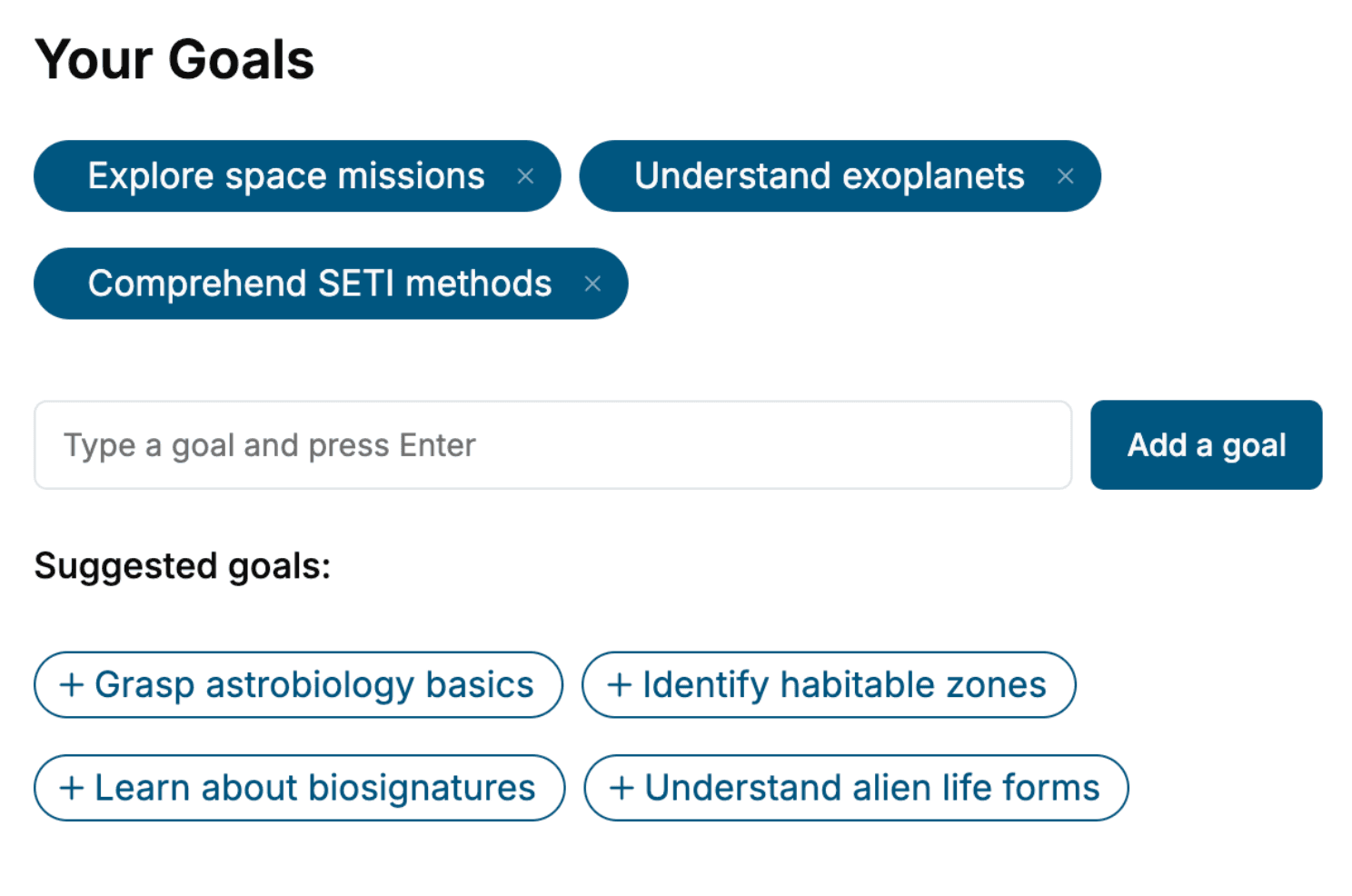
- tell us your goals, choose your topics, and the whole book is built around them.
- Learn effortlessly:
- Proof of Stake book written for your specific background and expertise.
- Understand at a glance:
- includes charts, tables, timelines, checklists, decision trees, and more.
- Stay current:
- written the day you order it, not years ago.
- Trust what you read:
- every book is checked for accuracy, with real research when your subject needs it.
Create your unique book in 3 steps
- 1. Select your focus
Select the focus of your Proof of Stake book and share your background
- 2. Personalize your book
Specify your goals and choose sub-topics to include
- 3. Get your tailored book
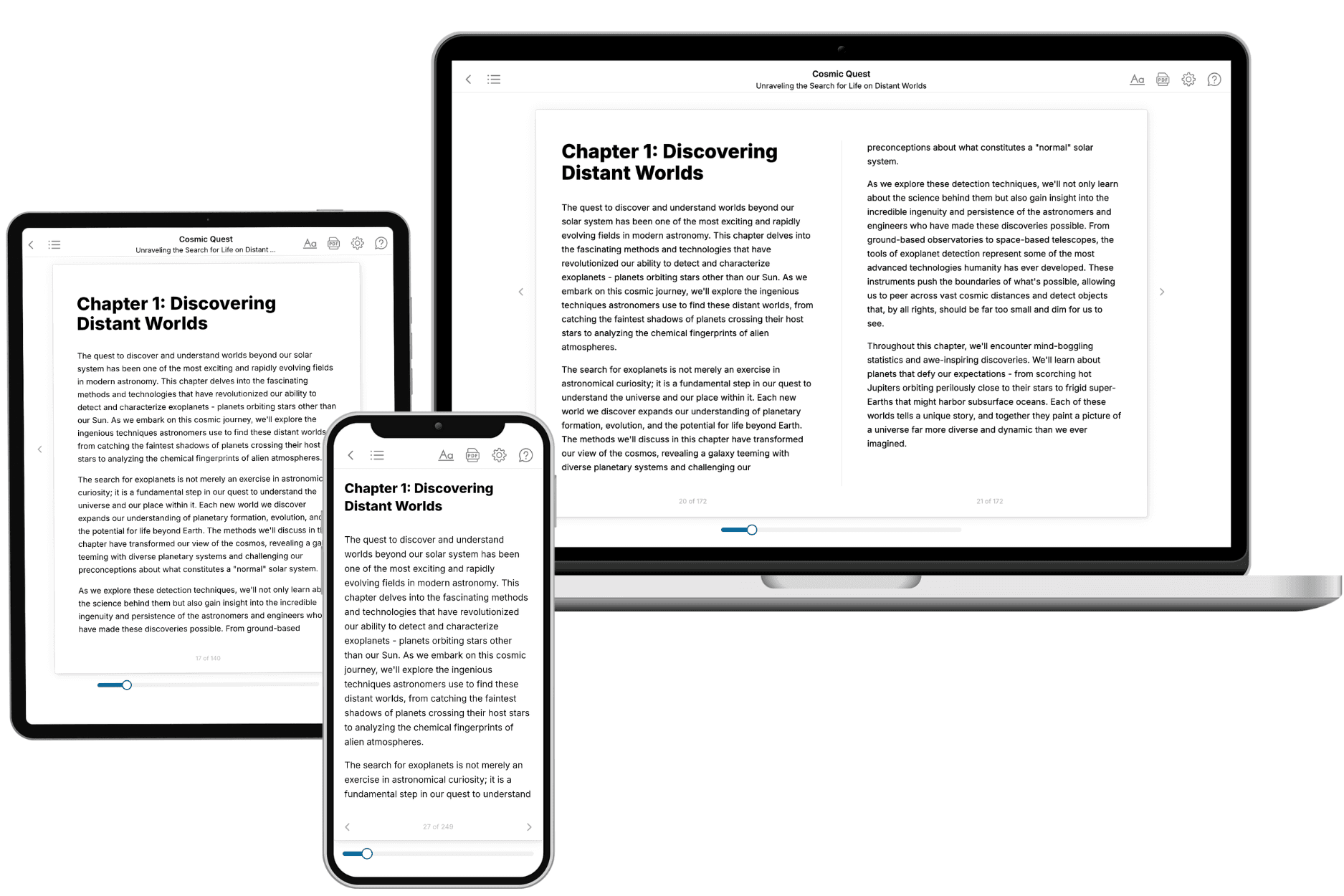
Your book is ready in 10 minutes. Read it online, download as EPUB or PDF, or send to Kindle.

Frequently asked questions
- What is TailoredRead?
TailoredRead creates complete, full-length nonfiction ebooks, written specifically for you. Tell us what you want to learn and why, and TailoredRead writes you a complete ebook on it, with charts, tables, and diagrams throughout. Read it online, on Kindle, or on any e-reader, or download it as a PDF or EPUB. Every book is written fresh the day you order it.
- How is the book tailored to me?
Before anything is written, you answer a few short questions about your goals, your background, and the topics you care about. Your book is then planned around your answers: written at your level, focused on your goals, and covering the topics you chose, instead of the one-size-fits-all book a store sells everyone.
- Will it read like generic AI content?
No. Your book isn't a chat transcript: it's planned chapter by chapter before a single word is written, told in a clear book voice, and explains ideas visually with charts, tables, and diagrams. After writing, every book goes through an editorial pass that polishes chapters so the book reads consistent from start to finish. Judge for yourself: browse thousands of sample books on our Explore Books page.
- How accurate is the content?
Our AI first checks whether your subject needs live research. Niche and fast-moving subjects are researched before writing, and the book plan and chapters are grounded in what it finds. After writing, every book goes through a quality pass that checks its facts and consistency, and researched books list their sources in a Notes section at the back.
- How long is the book?
You choose the length: Comprehensive (250-300 pages), Detailed (150-200 pages), Essential (70-100 pages), or Short (30-50 pages).
- Does the book include visuals?
Yes. Every book includes charts, tables, and diagrams: timelines, checklists, step-by-step guides, decision trees, comparison tables, matrices, and bar charts. A typical book includes dozens of these visual elements.
- Can I read it on Kindle? What formats can I download?
Yes. Every book can be read in our online reader or downloaded as a PDF or EPUB. The EPUB can be opened with Kindle, Apple Books, Kobo, and any e-reader. The Commercial and Author licenses also include an editable Word (DOCX) and Markdown download.
- How much does it cost?
About the price of a regular ebook. The exact price depends on your book's length and complexity, from $2 for the shortest books to $35 for the most comprehensive, and it's shown when you review your book, before you commit to anything. Each book is a one-time purchase, yours to keep, no subscription. Licenses that let you share, teach, or publish your book range from $35.99 to $49.99.
- Can I preview the book before purchasing?
Before you pay, you'll see what your book will cover: the title, a detailed description, the estimated length, and the complete chapter-by-chapter table of contents, so you know what you're getting before you decide. The full text itself is written after you purchase.
- How long does it take to create a book?
About 10 minutes. You can start reading the opening chapters while the rest is still being written.