PyTorch Mastery
Build Production-Ready LLM and Computer Vision Applications at Scale
Imagine deploying a large language model that responds in milliseconds, or running a computer vision system that processes thousands of images daily without breaking your infrastructure budget.
238 pages13 chaptersEnglishFeb 9, 2026PyTorchCreated by Iraklis
About this book
This comprehensive guide takes you from intermediate PyTorch knowledge to production-ready expertise. You'll master GPU memory optimization techniques that let you train models 10x larger, implement custom loss functions tailored to your specific problems, and architect Vision Transformers that rival state-of-the-art systems. Learn how to fine-tune pre-trained models efficiently, build end-to-end NLP pipelines that handle real-world complexity, and deploy multimodal systems combining vision and language. Discover distributed training strategies that scale across clusters, optimize inference latency for real-time applications, and debug performance bottlenecks with professional-grade tools. Whether you're building semantic segmentation models, object detection systems, or transformer-based applications, this book provides the practical knowledge and battle-tested patterns you need to succeed in production environments.
Table of contents
- IntroductionWhy PyTorch Matters for Modern Deep Learning, Your Learning Roadmap, Prerequisites and SetupRead below
- Chapter 1: PyTorch Fundamentals and ArchitectureTensors and Core Operations, Understanding the Autograd System, Building Blocks: Modules and Layers
- Chapter 2: GPU Memory Optimization and AccelerationGPU Memory Management Fundamentals, Gradient Checkpointing for Large Models, Mixed Precision Training and Inference, Dynamic Batching and Memory Efficiency
- Chapter 3: Custom Loss Functions and Evaluation MetricsDesigning Custom Loss Functions, Evaluation Metrics for Classification Tasks, Metrics for Regression and Ranking
- Chapter 4: Convolutional Neural Network DesignCNN Architecture Principles and Patterns, Building Image Classification Pipelines, Modern CNN Architectures and Variants
- Chapter 5: Vision Transformers and Advanced Vision ModelsTransformer Architecture Fundamentals, Implementing Vision Transformers from Scratch, Semantic Segmentation with Transformers, Object Detection Systems and DETR Models
- Chapter 6: Transfer Learning and Fine-Tuning StrategiesTransfer Learning Principles and Best Practices, Fine-Tuning Pre-trained Models Effectively, Domain Adaptation and Few-Shot Learning
- Chapter 7: Large Language Models and NLP FoundationsTransformers for Natural Language Processing, Mastering Attention Mechanisms, Tokenization and Data Preprocessing
- Chapter 8: LLM Prompt Engineering and OptimizationEffective Prompt Design Techniques, Few-Shot and Chain-of-Thought Prompting, Optimizing Prompts for Specific Tasks
- Chapter 9: End-to-End NLP Pipeline DevelopmentDesigning Robust NLP Pipelines, Efficient Data Loading and Preprocessing, Inference and Model Serving
- Chapter 10: Multimodal Model Training and Vision-Language ModelsMultimodal Architecture Design, Building Vision-Language Models, Training Techniques for Multimodal Systems
- Chapter 11: Distributed Training and ScalingDistributed Training Fundamentals, Data Parallelism and Synchronization, Gradient Accumulation Strategies, Model Parallelism and Pipeline Parallelism
- Chapter 12: Inference Latency Optimization and DeploymentUnderstanding Inference Latency, Quantization and Model Pruning, Production Deployment Strategies
- Chapter 13: PyTorch Profiling and DebuggingPyTorch Profiling Tools and Techniques, Performance Analysis and Bottleneck Identification, Debugging Strategies for Complex Models
- ConclusionKey Takeaways and Next Steps, Staying Current in Deep Learning
Introduction
Deep learning has transformed from an academic curiosity into the backbone of modern artificial intelligence systems. Every day, millions of people interact with models that recognize faces in photos, translate languages in real-time, generate human-like text, and power autonomous vehicles. Behind these remarkable applications lies PyTorch, a framework that has become the de facto standard for researchers and practitioners building production-grade deep learning systems. This book bridges the gap between knowing PyTorch basics and mastering the advanced techniques required to build, optimize, and deploy models that perform reliably at scale in real-world environments.
The journey from training your first neural network to deploying a production system serving millions of requests involves navigating countless technical challenges. How do you train a model that exceeds your GPU memory capacity? What's the most efficient way to fine-tune a pre-trained language model for your specific domain? How do you reduce inference latency from seconds to milliseconds without sacrificing accuracy? These questions represent the daily reality of data scientists working on production systems, and answering them requires deep technical knowledge combined with practical experience. This book provides both, drawing on battle-tested patterns and techniques used by teams building state-of-the-art systems.
You'll discover that production deep learning is fundamentally different from experimental work. While research focuses on achieving the highest possible accuracy, production systems must balance multiple competing objectives: accuracy, latency, throughput, memory efficiency, cost, and maintainability. A model that achieves 95% accuracy but takes ten seconds to respond is useless for real-time applications. Similarly, a highly accurate model that requires eight expensive GPUs to serve traffic may be economically infeasible. This book teaches you to think holistically about these trade-offs and make informed architectural decisions that align technical capabilities with business requirements.
The landscape of deep learning continues to evolve rapidly, with new architectures and techniques emerging constantly. Vision Transformers have revolutionized computer vision, challenging the decade-long dominance of convolutional neural networks. Large language models have grown from millions to hundreds of billions of parameters, requiring entirely new training and deployment strategies. Multimodal models that seamlessly combine vision and language capabilities are opening new application possibilities. Throughout this book, you'll learn not just how to implement these cutting-edge techniques, but more importantly, when to use them and how to adapt them to your specific needs.
Why PyTorch Matters for Modern Deep Learning
PyTorch has emerged as the dominant framework for deep learning research and increasingly for production deployments. Unlike earlier frameworks that required defining static computation graphs before execution, PyTorch introduced dynamic computation graphs that feel natural to Python developers. This design philosophy means you can use standard Python control flow, debug with familiar tools, and iterate rapidly on model architectures. When Facebook AI Research released PyTorch in 2016, it quickly gained traction in the research community precisely because it removed the friction between ideas and implementation. Today, the majority of papers at top machine learning conferences use PyTorch for their implementations.
The framework's success extends far beyond its intuitive API. PyTorch provides a comprehensive ecosystem of tools and libraries that address every stage of the deep learning workflow. TorchVision offers pre-trained models and utilities for computer vision tasks. TorchText simplifies natural language processing pipelines. TorchServe enables production model serving with minimal configuration. The Hugging Face Transformers library, built on PyTorch, has become the standard for working with pre-trained language models. This rich ecosystem means you rarely need to build everything from scratch, allowing you to focus on the unique aspects of your problem rather than reinventing common patterns.
Performance optimization in PyTorch has matured significantly, making it viable for demanding production workloads. The framework now includes native support for mixed precision training through Automatic Mixed Precision (AMP), which can reduce training time by 2-3x while maintaining model quality. TorchScript allows you to convert dynamic PyTorch models into optimized static representations for faster inference. The torch.compile feature introduced in PyTorch 2.0 uses graph optimization and kernel fusion to accelerate models without code changes. These capabilities mean you no longer need to sacrifice the development experience of PyTorch to achieve production-grade performance.
Distributed training capabilities in PyTorch enable scaling from a single GPU to clusters of hundreds of machines. The torch.distributed package provides multiple backends for inter-process communication, supporting both data parallelism and model parallelism strategies. PyTorch's Distributed Data Parallel (DDP) implementation achieves near-linear scaling efficiency across multiple GPUs, making it possible to train models that would be impossible on a single device. For extremely large models, Fully Sharded Data Parallel (FSDP) shards model parameters, gradients, and optimizer states across devices, enabling training of models with hundreds of billions of parameters. These distributed training capabilities are essential for working with modern large-scale models.
The framework's flexibility extends to supporting cutting-edge research while maintaining backward compatibility. PyTorch's modular design allows researchers to experiment with novel architectures and training techniques without fighting the framework. Custom autograd functions enable implementing new differentiable operations. The ability to mix high-level abstractions with low-level tensor operations means you can optimize critical paths while keeping most code readable and maintainable. This flexibility has made PyTorch the foundation for breakthrough research in areas like Vision Transformers, diffusion models, and large language models, with production implementations following shortly after.
Industry adoption of PyTorch has accelerated dramatically in recent years. Major technology companies including Meta, Microsoft, Tesla, and OpenAI use PyTorch for production systems serving billions of users. Tesla's Autopilot system processes camera feeds using PyTorch models running on custom hardware. Meta's content understanding systems analyze millions of images and videos daily using PyTorch-based computer vision models. This production track record demonstrates that PyTorch scales beyond research prototypes to handle real-world demands. The framework's active development community and strong corporate backing ensure it will remain relevant as deep learning continues to evolve.
Understanding PyTorch deeply provides transferable knowledge that applies across the entire deep learning landscape. The concepts you'll master—gradient computation, memory management, distributed training, inference optimization—are fundamental to any deep learning framework. However, PyTorch's combination of flexibility, performance, ecosystem maturity, and industry adoption makes it the optimal choice for building production systems today. Whether you're developing computer vision applications, natural language processing systems, or multimodal models, PyTorch provides the tools and abstractions you need to succeed. This book will teach you to leverage these capabilities effectively.
Your Learning Roadmap
This book follows a carefully structured progression that builds your expertise systematically. The early chapters establish essential foundations, ensuring you understand PyTorch's architecture and core concepts deeply. You'll explore tensors, the autograd system, and the module abstraction that underlies all PyTorch models. These fundamentals are critical because advanced techniques build upon them—you cannot effectively optimize GPU memory usage without understanding how PyTorch manages tensors, and you cannot debug distributed training issues without grasping the autograd system's behavior. Even if you've used PyTorch before, these chapters will deepen your understanding and reveal subtleties that impact production systems.
The middle chapters focus on optimization techniques that separate production-grade implementations from experimental code. You'll learn GPU memory optimization strategies including gradient checkpointing, which enables training models that would otherwise exceed available memory. Mixed precision training techniques will show you how to accelerate training by 2-3x while maintaining numerical stability. Custom loss functions and evaluation metrics receive detailed treatment because they directly impact model quality and must be tailored to specific business objectives. These chapters provide the practical knowledge needed to train large models efficiently and evaluate them meaningfully, skills that are essential for any serious deep learning practitioner.
Computer vision receives comprehensive coverage across multiple chapters, reflecting its importance in production applications. You'll start with convolutional neural network design principles, understanding why certain architectural patterns work and how to adapt them to your problems. The Vision Transformers chapter explores this paradigm shift in computer vision, showing you how to implement and train these models effectively. Specialized topics including semantic segmentation and object detection receive dedicated attention because they require different architectures and loss functions than standard classification. By the end of these chapters, you'll be equipped to build state-of-the-art computer vision systems for diverse applications.
Natural language processing and large language models form another major focus area. You'll learn transformer architectures from first principles, understanding attention mechanisms deeply enough to implement custom variants. The chapters progress from fundamentals through prompt engineering to building complete end-to-end NLP pipelines. This progression is intentional: you need to understand how transformers work internally before you can effectively prompt them or optimize their inference. The NLP pipeline chapter ties everything together, showing you how to handle real-world complexity including data preprocessing, tokenization, batching, inference, and post-processing in production environments.
Multimodal models represent the cutting edge of deep learning, combining vision and language capabilities to enable powerful applications. The dedicated chapter on multimodal training teaches you specialized techniques for training models that process multiple input modalities simultaneously. You'll learn how to design architectures that effectively fuse information from different sources, handle modality-specific preprocessing, and train these complex systems efficiently. Vision-language models like CLIP and Flamingo have demonstrated remarkable capabilities, and understanding how to build and adapt them opens new possibilities for your applications.
Scaling and deployment chapters address the critical challenges of moving from prototype to production. Distributed training coverage includes data parallelism, model parallelism, and pipeline parallelism, with practical guidance on when to use each approach. You'll learn gradient accumulation strategies that enable training with effective batch sizes larger than your hardware can accommodate. The inference optimization chapter focuses on reducing latency through quantization, pruning, and architectural choices, because fast inference is often as important as high accuracy for production systems. These chapters provide the knowledge needed to deploy models that serve real users reliably and efficiently.
The final chapters on profiling and debugging equip you with essential diagnostic skills. PyTorch's profiling tools can identify performance bottlenecks in complex models, but using them effectively requires understanding what to measure and how to interpret results. You'll learn systematic approaches to performance analysis, from identifying memory leaks to optimizing data loading pipelines. Debugging strategies for complex models help you diagnose issues that arise in production, from numerical instability to unexpected gradient behavior. These skills are invaluable because production systems inevitably encounter issues that require deep technical investigation to resolve.
Throughout the book, concepts are reinforced with concrete examples and practical implementations. Rather than presenting abstract theory, each chapter includes specific code patterns, real-world scenarios, and actionable advice you can apply immediately. The examples progress in complexity, starting with focused demonstrations of individual concepts and building toward complete systems. This approach ensures you not only understand the theory but can also implement these techniques in your own projects. By the end of this journey, you'll have the comprehensive knowledge and practical skills needed to build production-ready deep learning systems with confidence.
Prerequisites and Setup
This book assumes you have intermediate PyTorch experience and are comfortable with fundamental deep learning concepts. You should be able to build and train basic neural networks, understand backpropagation conceptually, and work with PyTorch's Dataset and DataLoader abstractions. Familiarity with Python programming is essential, including object-oriented programming, decorators, and context managers, as these language features appear frequently in advanced PyTorch code. If you've completed introductory deep learning courses or tutorials and trained models on standard datasets like MNIST or CIFAR-10, you have sufficient background to benefit from this book. The focus here is on advancing from basics to production-grade implementations.
Mathematical prerequisites include linear algebra, calculus, and probability at an undergraduate level. You should understand matrix operations, derivatives, and basic probability distributions. However, this book emphasizes practical implementation over mathematical proofs. When mathematical concepts are necessary for understanding a technique—such as the attention mechanism in transformers or the formulation of custom loss functions—they're explained with intuition and visual aids rather than formal derivations. The goal is to provide enough mathematical understanding to use these techniques effectively without requiring advanced mathematics background. If you can follow the math in typical machine learning papers, you'll be fine.
Your development environment should include a modern GPU for training models efficiently. While you can run some examples on CPU, many techniques covered in this book—particularly GPU memory optimization, mixed precision training, and distributed training—require GPU hardware to demonstrate meaningfully. An NVIDIA GPU with at least 8GB of memory is recommended, though 16GB or more is ideal for working with larger models. Cloud platforms like AWS, Google Cloud, or Azure provide GPU instances if you don't have local hardware. The code examples use CUDA-specific features, as NVIDIA GPUs remain the standard for deep learning workloads, though PyTorch increasingly supports other accelerators.
Software setup requires PyTorch 2.0 or later, which includes significant performance improvements and new features referenced throughout the book. Install PyTorch with CUDA support matching your GPU's CUDA version by following the official installation instructions at pytorch.org. Additional libraries you'll need include:
- torchvision for computer vision utilities and pre-trained models
- transformers from Hugging Face for working with pre-trained language models
- tensorboard for visualizing training metrics and profiling results
- numpy and pandas for data manipulation
- matplotlib and seaborn for visualization
- pytest for testing your implementations
Familiarity with version control using Git is important for managing code and collaborating with others. Production deep learning projects involve substantial codebases that evolve over time, and version control is essential for tracking changes, experimenting with different approaches, and maintaining reproducibility. You should also be comfortable with command-line interfaces and basic Linux operations, as most deep learning infrastructure runs on Linux systems. Understanding how to use SSH for remote server access, manage processes, and monitor system resources will help you work effectively with cloud-based GPU instances and production deployment environments.
Experience with Jupyter notebooks is helpful for exploratory work and following along with examples, though production code should ultimately be organized into proper Python modules and packages. The book's examples are designed to work both in notebooks for interactive exploration and as standalone scripts for production use. You'll learn to structure code professionally, separating data loading, model definitions, training loops, and evaluation logic into maintainable modules. This organizational discipline is crucial for production systems where code must be tested, reviewed, and maintained by teams over time.
Access to computational resources varies widely among readers, so the book provides guidance on adapting examples to different hardware constraints. If you have limited GPU memory, you'll learn techniques like gradient accumulation and gradient checkpointing that enable training larger models on smaller hardware. If you have access to multiple GPUs, you'll learn to leverage them through distributed training. Cloud platform specifics are kept minimal to avoid dating the content, but general principles for working with remote GPU instances are covered. The focus remains on techniques and patterns that apply regardless of your specific infrastructure setup.
Finally, cultivate a mindset of experimentation and systematic debugging. Production deep learning involves substantial trial and error, and not every technique works for every problem. You'll need to experiment with different architectures, hyperparameters, and optimization strategies to find what works for your specific use case. When things don't work—and they often won't initially—systematic debugging skills are essential. This book teaches you to approach problems methodically: form hypotheses about what might be wrong, design experiments to test those hypotheses, and iterate based on results. This scientific approach to debugging is as important as any specific technical skill for succeeding with production deep learning systems.
This is the end of the free sample. The full book has 13 chapters.
Want this book written for you?
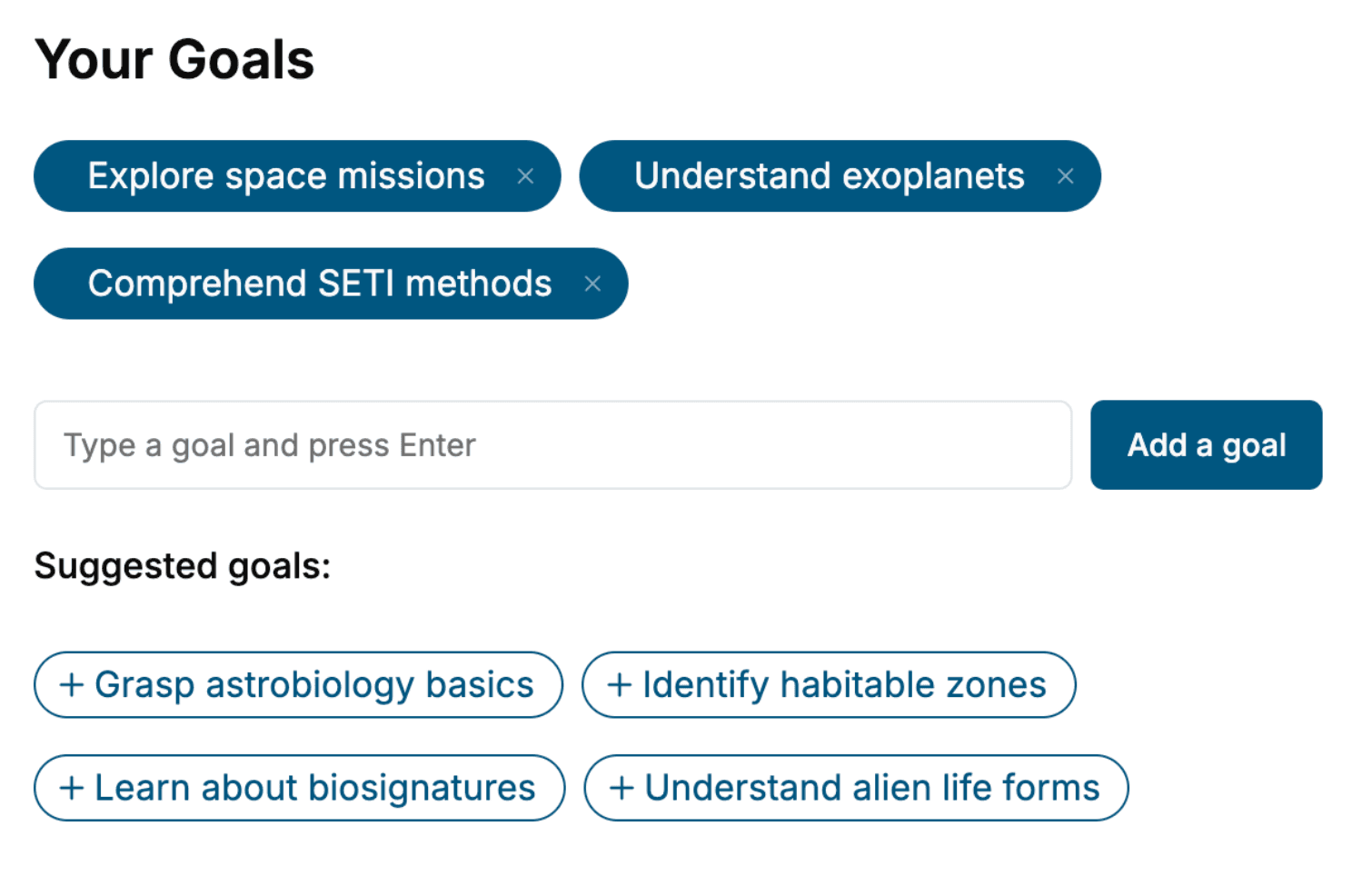
Tell us your goals and background, and get your own version of this book, tailored by AI to you.


Benefits of AI-tailored books
- Read one book, not ten:
- all the PyTorch knowledge you need, gathered into a single book.
- Save days of learning:
- tell us your goals, choose your topics, and the whole book is built around them.
- Learn effortlessly:
- PyTorch book written for your specific background and expertise.
- Understand at a glance:
- includes charts, tables, timelines, checklists, decision trees, and more.
- Stay current:
- written the day you order it, not years ago.
- Trust what you read:
- every book is checked for accuracy, with real research when your subject needs it.
Create your unique book in 3 steps
- 1. Select your focus
Select the focus of your PyTorch book and share your background
- 2. Personalize your book
Specify your goals and choose sub-topics to include
- 3. Get your tailored book
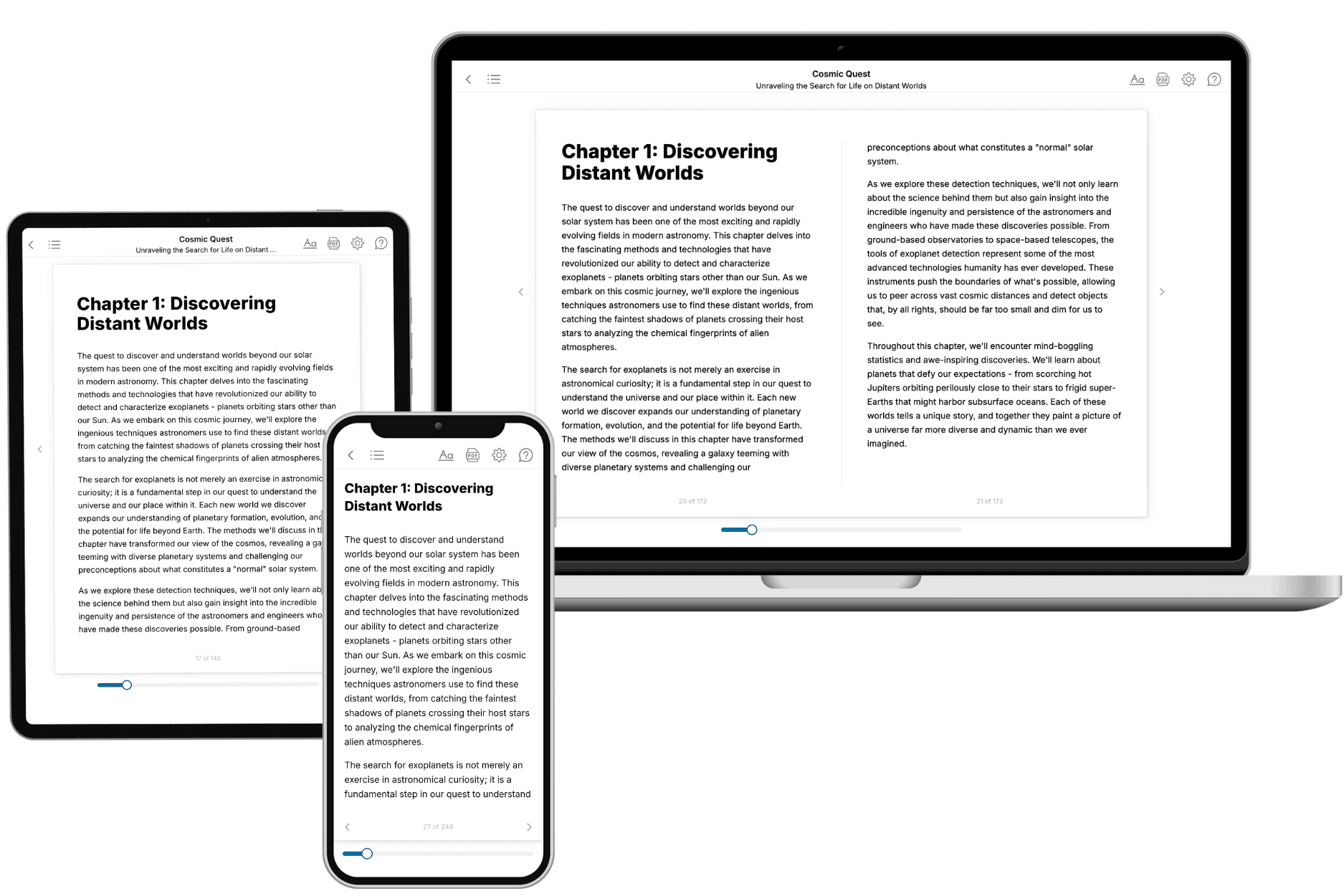
Your book is ready in 10 minutes. Read it online, download as EPUB or PDF, or send to Kindle.

Frequently asked questions
- What is TailoredRead?
TailoredRead creates complete, full-length nonfiction ebooks, written specifically for you. Tell us what you want to learn and why, and TailoredRead writes you a complete ebook on it, with charts, tables, and diagrams throughout. Read it online, on Kindle, or on any e-reader, or download it as a PDF or EPUB. Every book is written fresh the day you order it.
- How is the book tailored to me?
Before anything is written, you answer a few short questions about your goals, your background, and the topics you care about. Your book is then planned around your answers: written at your level, focused on your goals, and covering the topics you chose, instead of the one-size-fits-all book a store sells everyone.
- Will it read like generic AI content?
No. Your book isn't a chat transcript: it's planned chapter by chapter before a single word is written, told in a clear book voice, and explains ideas visually with charts, tables, and diagrams. After writing, every book goes through an editorial pass that polishes chapters so the book reads consistent from start to finish. Judge for yourself: browse thousands of sample books on our Explore Books page.
- How accurate is the content?
Our AI first checks whether your subject needs live research. Niche and fast-moving subjects are researched before writing, and the book plan and chapters are grounded in what it finds. After writing, every book goes through a quality pass that checks its facts and consistency, and researched books list their sources in a Notes section at the back.
- How long is the book?
You choose the length: Comprehensive (250-300 pages), Detailed (150-200 pages), Essential (70-100 pages), or Short (30-50 pages).
- Does the book include visuals?
Yes. Every book includes charts, tables, and diagrams: timelines, checklists, step-by-step guides, decision trees, comparison tables, matrices, and bar charts. A typical book includes dozens of these visual elements.
- Can I read it on Kindle? What formats can I download?
Yes. Every book can be read in our online reader or downloaded as a PDF or EPUB. The EPUB can be opened with Kindle, Apple Books, Kobo, and any e-reader. The Commercial and Author licenses also include an editable Word (DOCX) and Markdown download.
- How much does it cost?
About the price of a regular ebook. The exact price depends on your book's length and complexity, from $2 for the shortest books to $35 for the most comprehensive, and it's shown when you review your book, before you commit to anything. Each book is a one-time purchase, yours to keep, no subscription. Licenses that let you share, teach, or publish your book range from $35.99 to $49.99.
- Can I preview the book before purchasing?
Before you pay, you'll see what your book will cover: the title, a detailed description, the estimated length, and the complete chapter-by-chapter table of contents, so you know what you're getting before you decide. The full text itself is written after you purchase.
- How long does it take to create a book?
About 10 minutes. You can start reading the opening chapters while the rest is still being written.