Qdrant Mastery
Advanced Techniques for Vector Search Optimization and System Architecture
Vector search is often misunderstood as a simple plug-and-play solution, but the reality is far more nuanced.
284 pages14 chaptersJun 9, 2025Software Development
About this book
Many developers struggle to harness its full potential, especially when dealing with complex, multimodal data and large-scale systems. "Qdrant Mastery" dives deep into the intricacies of vector search optimization and system architecture using Qdrant. You'll gain hands-on experience with advanced techniques that go beyond basic implementations, learning how to fine-tune your vector search engine for peak performance and scalability. From mastering multimodal search to optimizing vector indexing for lightning-fast queries, this book equips you with the tools and knowledge to build sophisticated, high-performance search systems. Whether you're working on recommendation engines, semantic search, or complex data retrieval systems, you'll find practical strategies to elevate your Qdrant implementations to the next level.
Table of contents
- IntroductionVector Search: An Overview, Introduction to Qdrant, Book Structure and How to Use It, Prerequisites and SetupRead below
- Chapter 1: Vector Search FundamentalsUnderstanding Vector Representations, Similarity Measures in Vector Space, The Curse of Dimensionality, Approximate Nearest Neighbor Search
- Chapter 2: Qdrant Architecture Deep DiveCore Components of Qdrant, Storage Engine and Data Model, Query Execution Pipeline, Distributed Architecture Design
- Chapter 3: Data Preprocessing for Vector SearchFeature Extraction Techniques, Dimensionality Reduction Methods, Vector Normalization Techniques, Data Augmentation for Robust Search
- Chapter 4: Advanced Vector Indexing TechniquesIndexing Algorithms in Qdrant, HNSW Index Optimization, Vector Quantization Techniques, Dynamic Indexing Strategies
- Chapter 5: Query Optimization StrategiesQuery Planning and Execution, Caching Strategies for Fast Retrieval, Parallel Query Processing, Query Routing in Distributed Setups
- Chapter 6: Implementing Multimodal SearchMultimodal Data Representation, Early and Late Fusion Techniques, Cross-Modal Retrieval Strategies, Multimodal Ranking and Scoring
- Chapter 7: Advanced Filtering and Post-processingImplementing Complex Filters, Re-ranking Techniques for Improved Relevance, Faceted Search Implementation, Semantic Filtering Approaches
- Chapter 8: Scaling Qdrant for Large-Scale ApplicationsHorizontal Scaling Strategies, Data Sharding Techniques, Load Balancing and Request Distribution, Consistency Models in Distributed Setups
- Chapter 9: Performance Tuning and OptimizationHardware Optimization for Qdrant, Memory Management Techniques, I/O Optimization Strategies, Query Profiling and Optimization
- Chapter 10: Monitoring and AnalyticsKey Performance Metrics for Vector Search, Logging and Tracing in Qdrant, Setting Up Alerting Systems, Performance Visualization Techniques
- Chapter 11: Security and Privacy ConsiderationsImplementing Access Control, Data Encryption at Rest and in Transit, Privacy-Preserving Search Techniques, Audit Logging and Compliance
- Chapter 12: Integration and Deployment StrategiesDesigning Robust APIs for Vector Search, Containerization and Orchestration, CI/CD Pipelines for Qdrant Deployments, Cloud Deployment Best Practices
- Chapter 13: Advanced Use Cases and ApplicationsBuilding Semantic Search Engines, Recommendation Systems with Qdrant, Image Similarity Search, Anomaly Detection in High-Dimensional Data
- Chapter 14: Future Trends in Vector SearchEmerging Algorithms and Techniques, Hardware Acceleration for Vector Search, Federated Learning and Vector Search, Quantum Computing and Vector Search
- ConclusionKey Takeaways, Future Outlook for Qdrant and Vector Search
- AppendixBenchmarking Tools for Vector Search, Qdrant Configuration Reference
- Glossary
Introduction
In the rapidly evolving landscape of data science and artificial intelligence, vector search has emerged as a powerful tool for handling complex, high-dimensional data. As you embark on this journey to master Qdrant and advanced vector search techniques, you're stepping into a world where the boundaries of information retrieval are constantly being pushed. This book is designed to be your comprehensive guide, taking you from the fundamentals of vector search to the cutting-edge techniques that are shaping the future of data retrieval and analysis.
Vector search is not just a buzzword; it's a paradigm shift in how we approach information retrieval. Traditional search methods often fall short when dealing with the nuanced, contextual nature of modern data. Vector search, on the other hand, allows us to capture and query the essence of information, whether it's text, images, audio, or any other form of data that can be represented in a high-dimensional space. This capability opens up a world of possibilities, from more accurate recommendation systems to sophisticated natural language processing applications.
However, with great power comes great complexity. Vector search is often misunderstood as a simple plug-and-play solution, but the reality is far more nuanced. Many developers and data scientists struggle to harness its full potential, especially when dealing with complex, multimodal data and large-scale systems. This is where Qdrant comes into play – a powerful, open-source vector similarity search engine designed to handle the challenges of modern vector search applications.
Throughout this book, we'll dive deep into the intricacies of vector search optimization and system architecture using Qdrant. You'll gain hands-on experience with advanced techniques that go beyond basic implementations, learning how to fine-tune your vector search engine for peak performance and scalability. From mastering multimodal search to optimizing vector indexing for lightning-fast queries, this book equips you with the tools and knowledge to build sophisticated, high-performance search systems.
Whether you're working on recommendation engines, semantic search, or complex data retrieval systems, you'll find practical strategies to elevate your Qdrant implementations to the next level. We'll explore the theoretical foundations that underpin vector search, but more importantly, we'll focus on practical, real-world applications and best practices that you can immediately apply to your projects.
As we progress through the chapters, we'll tackle the challenges that come with scaling vector search systems, optimizing query performance, and implementing advanced features like multimodal search and complex filtering. We'll also delve into crucial aspects of system design, including data preprocessing, efficient indexing strategies, and performance tuning techniques that can make the difference between a good search system and a great one.
Vector Search: An Overview
Vector search, at its core, is a method of information retrieval that operates on vector representations of data. Unlike traditional search methods that rely on exact matching or keyword-based algorithms, vector search allows for similarity-based queries in a high-dimensional space. This approach is particularly powerful when dealing with complex data types or when semantic understanding is crucial.
The fundamental idea behind vector search is to represent each item in your dataset as a vector – essentially, a list of numbers that capture the item's characteristics or features. These vectors are then stored in a way that allows for efficient similarity comparisons. When a query is made, it too is converted into a vector, and the search engine finds the most similar vectors in the database. This similarity is typically measured using distance metrics such as cosine similarity or Euclidean distance.
One of the key advantages of vector search is its ability to capture nuanced relationships between data points. For example, in a text-based system, vector search can understand that "automobile" and "car" are closely related concepts, even if they don't share any characters. This semantic understanding extends to other domains as well – in image search, vector representations can capture visual similarities that go beyond simple pixel matching.
The applications of vector search are vast and growing. In natural language processing, it's used for semantic search, question answering, and document classification. In computer vision, it enables content-based image retrieval and facial recognition. Recommendation systems use vector search to find similar products or content. Even in more specialized fields like bioinformatics, vector search is used to analyze genetic sequences and protein structures.
However, implementing an effective vector search system comes with its own set of challenges. As the dimensionality of the vectors increases, so does the computational complexity of similarity calculations. This phenomenon, known as the "curse of dimensionality," can lead to performance issues in large-scale systems. Additionally, as datasets grow, the storage and retrieval of vectors become non-trivial problems that require sophisticated indexing and optimization techniques.
Another challenge lies in the creation of meaningful vector representations. For text data, this often involves using pre-trained language models or custom embeddings. For images, convolutional neural networks are commonly used to generate feature vectors. The choice of embedding method can significantly impact the quality of search results and must be carefully considered based on the specific use case.
As we delve deeper into Qdrant and advanced vector search techniques, we'll explore how to address these challenges and leverage the full potential of vector search. We'll look at state-of-the-art indexing algorithms, optimization strategies, and system architectures that enable fast and accurate similarity search at scale. We'll also discuss the importance of data preprocessing, query optimization, and post-processing techniques in building robust vector search systems.
Throughout this book, we'll emphasize the practical aspects of implementing vector search. You'll learn not just the theory, but also the hands-on skills needed to build and optimize vector search systems using Qdrant. We'll cover everything from setting up a basic search engine to implementing advanced features like multimodal search and distributed architectures.
As we progress, keep in mind that vector search is a rapidly evolving field. New algorithms, hardware optimizations, and use cases are constantly emerging. This book will provide you with a solid foundation and advanced knowledge, but it's also designed to equip you with the understanding needed to stay abreast of future developments in the field.
In the next sections, we'll introduce Qdrant, the powerful vector similarity search engine that will be our primary tool throughout this book. We'll then outline the structure of the book and provide guidance on how to make the most of the material presented. Finally, we'll cover the prerequisites and setup needed to follow along with the practical examples and exercises in the upcoming chapters.
Introduction to Qdrant
Qdrant is an open-source vector similarity search engine that has quickly gained popularity in the world of high-performance information retrieval. Designed with a focus on efficiency and scalability, Qdrant offers a robust solution for managing and querying large collections of vector embeddings. Its name, derived from "quadrant," reflects its ability to efficiently partition and search multidimensional vector spaces.
At its core, Qdrant is built to handle the challenges that come with modern vector search applications. It provides a flexible and powerful platform for building sophisticated search systems, recommendation engines, and other applications that rely on similarity-based retrieval. What sets Qdrant apart is its combination of high performance, rich feature set, and developer-friendly design.
One of Qdrant's key strengths is its support for approximate nearest neighbor search algorithms, particularly the Hierarchical Navigable Small World (HNSW) graph. This algorithm allows for extremely fast similarity searches, even in high-dimensional spaces and with large datasets. Qdrant's implementation of HNSW is highly optimized, providing a balance between search speed and accuracy that can be fine-tuned to suit specific use cases.
Another notable feature of Qdrant is its support for payload-based filtering. This allows you to associate additional metadata with each vector and use this information to refine search results. For example, in a product recommendation system, you could filter results based on attributes like price range or category, in addition to vector similarity. This combination of vector search and traditional filtering provides a powerful tool for creating nuanced and context-aware search systems.
Qdrant is designed with scalability in mind. It supports distributed deployments, allowing you to scale your search system horizontally across multiple nodes. This is crucial for handling large datasets and high query loads. The distributed architecture of Qdrant ensures that you can grow your system as your data and user base expand, without sacrificing performance.
From a developer's perspective, Qdrant offers a clean and intuitive API that makes it easy to integrate into existing systems. It supports multiple programming languages through its HTTP API and official client libraries. The engine can be run as a standalone application or embedded into your own software, providing flexibility in how you deploy and manage your search infrastructure.
Qdrant also places a strong emphasis on data consistency and durability. It implements write-ahead logging and supports point-in-time recovery, ensuring that your data remains safe and consistent even in the face of system failures. For applications where data integrity is critical, these features provide peace of mind and reduce the operational overhead of managing a large-scale search system.
As we progress through this book, we'll explore Qdrant's features in depth, from its core functionality to advanced usage patterns. You'll learn how to leverage Qdrant's capabilities to build sophisticated search systems, optimize performance, and scale your applications. We'll cover topics such as index construction, query optimization, distributed deployments, and integration with other tools in the data processing pipeline.
It's worth noting that while Qdrant is a powerful tool, it's not a silver bullet. Like any technology, it has its strengths and limitations. Throughout this book, we'll discuss not just how to use Qdrant, but also when and why to use it. We'll explore scenarios where Qdrant excels and discuss alternative approaches for cases where other solutions might be more appropriate.
By the end of this book, you'll have a deep understanding of Qdrant's architecture, capabilities, and best practices for implementation. Whether you're building a new search system from scratch or optimizing an existing one, the knowledge you gain will enable you to make informed decisions and leverage Qdrant to its full potential.
Book Structure and How to Use It
This book is structured to take you on a comprehensive journey through the world of advanced vector search using Qdrant. It's designed to build your knowledge progressively, starting from the fundamentals and moving towards more complex and specialized topics. Each chapter is crafted to provide both theoretical understanding and practical skills, ensuring that you can apply what you learn to real-world scenarios.
We begin with an exploration of vector search fundamentals in Chapter 1. This chapter lays the groundwork for understanding vector representations, similarity measures, and the challenges inherent in high-dimensional spaces. Even if you're already familiar with these concepts, this chapter serves as a crucial refresher and ensures that all readers start with a solid foundation.
Chapter 2 dives deep into Qdrant's architecture. Here, you'll gain insight into the core components of Qdrant, its storage engine, query execution pipeline, and distributed architecture design. This knowledge is essential for understanding how Qdrant works under the hood and will inform many of the optimization strategies discussed later in the book.
The next few chapters focus on the key aspects of building an effective vector search system. Chapter 3 covers data preprocessing, a critical step that often determines the quality of search results. Chapter 4 delves into advanced vector indexing techniques, exploring how Qdrant implements and optimizes these for performance. Chapter 5 discusses query optimization strategies, teaching you how to fine-tune your searches for speed and accuracy.
As we progress, we'll tackle more advanced topics. Chapter 6 introduces multimodal search, a powerful technique for combining different types of data in your search system. Chapter 7 covers advanced filtering and post-processing techniques, showing you how to refine and enhance your search results. Chapters 8 and 9 focus on scalability and performance tuning, crucial skills for building systems that can handle large datasets and high query loads.
The later chapters of the book cover important operational aspects of running a vector search system. Chapter 10 discusses monitoring and analytics, helping you keep your system running smoothly. Chapter 11 addresses security and privacy considerations, increasingly important topics in today's data-driven world. Chapter 12 covers integration and deployment strategies, guiding you through the process of incorporating Qdrant into your broader technology stack.
We conclude with two forward-looking chapters. Chapter 13 explores advanced use cases and applications, providing inspiration and practical examples for applying what you've learned. Chapter 14 discusses future trends in vector search, helping you stay ahead of the curve in this rapidly evolving field.
To get the most out of this book, we recommend reading it sequentially, as later chapters build on concepts introduced earlier. However, each chapter is also designed to stand alone to some extent, allowing you to focus on specific areas of interest or refer back to particular topics as needed.
Throughout the book, you'll find code examples, diagrams, and case studies that illustrate key concepts. We encourage you to experiment with these examples, modifying them and applying them to your own datasets. The hands-on experience you gain from working through these examples will be invaluable in cementing your understanding and developing practical skills.
At the end of each chapter, you'll find a summary of key points and a set of exercises or discussion questions. These are designed to reinforce your learning and encourage deeper reflection on the topics covered. We strongly recommend working through these exercises, as they often reveal nuances and practical considerations that aren't immediately apparent from the text alone.
Remember, learning is an active process. As you read, try to relate the concepts to your own experiences and projects. Consider how you might apply what you're learning to solve real-world problems. Don't hesitate to experiment with Qdrant, even if you're not yet confident in your understanding – often, the best way to learn is by doing.
Finally, keep in mind that this book is not just a one-time read, but a reference that you can return to as you work on vector search projects. The detailed table of contents and index are designed to help you quickly locate specific information when you need it. As you gain experience and tackle more complex projects, you may find yourself revisiting certain chapters with a new perspective and deeper appreciation for the nuances of vector search optimization.
Prerequisites and Setup
Before diving into the advanced topics covered in this book, it's important to ensure that you have the necessary background knowledge and tools set up. While this book is designed to be comprehensive, it assumes a certain level of technical proficiency and familiarity with key concepts in software development and data science.
First and foremost, you should have a solid understanding of programming concepts and be comfortable with at least one high-level programming language. Python is used extensively in the examples throughout this book, so familiarity with Python is highly recommended. If you're not comfortable with Python, you should be able to follow along and translate the concepts to your preferred language, but you may need to put in extra effort to adapt the code examples.
A basic understanding of data structures and algorithms is also crucial. You should be familiar with concepts such as arrays, hash tables, graphs, and complexity analysis (Big O notation). These fundamentals will help you understand the inner workings of vector search algorithms and indexing structures.
Knowledge of linear algebra is important for grasping the mathematical foundations of vector search. You should be comfortable with concepts such as vectors, matrices, dot products, and vector spaces. If you need a refresher, there are many excellent online resources available, such as the linear algebra courses on platforms like Khan Academy or Coursera.
Familiarity with machine learning concepts, particularly in the areas of feature extraction and embeddings, will be beneficial. While we'll cover these topics as they relate to vector search, having a background in machine learning will help you understand the broader context and potential applications of the techniques we discuss.
Experience with databases and information retrieval systems is also valuable. While we'll explain Qdrant-specific concepts in detail, understanding general principles of data storage, indexing, and querying will give you a head start.
In terms of software and tools, you'll need the following setup to follow along with the examples and exercises in this book:
- A computer running a recent version of Linux, macOS, or Windows
- Python 3.7 or later installed on your system
- Docker, which we'll use for running Qdrant and some of the example applications
- A code editor or IDE of your choice (VS Code, PyCharm, or similar)
- Git for version control and accessing example code repositories
To install Qdrant, you have several options. The easiest method for getting started is to use Docker. You can pull the Qdrant Docker image with the following command:
docker pull qdrant/qdrantFor local development and testing, you can run Qdrant in a Docker container with this command:
docker run -p 6333:6333 -p 6334:6334 \
    -v $(pwd)/qdrant_storage:/qdrant/storage:z \
    qdrant/qdrant
This command runs Qdrant and maps its API port (6333) and web interface port (6334) to your local machine. It also creates a persistent storage volume in the current directory.
For production deployments or if you prefer not to use Docker, you can install Qdrant directly on your system. Detailed installation instructions for various platforms can be found in the official Qdrant documentation.
To interact with Qdrant from Python, you'll need to install the Qdrant client library. You can do this using pip:
pip install qdrant-clientThroughout the book, we'll introduce additional libraries and tools as needed. We'll provide installation instructions for these as they come up.
It's a good idea to set up a virtual environment for working with the code examples in this book. This will help you manage dependencies and avoid conflicts with other projects. You can create a virtual environment using Python's built-in venv module:
python -m venv qdrant_env
source qdrant_env/bin/activate  # On Windows, use qdrant_env\Scripts\activate
Remember to activate this environment whenever you're working on exercises from this book.
Lastly, we recommend keeping an eye on the official Qdrant documentation and GitHub repository. The field of vector search is rapidly evolving, and new features or optimizations may be introduced during the lifetime of this book. The online resources will provide the most up-to-date information on Qdrant's capabilities and best practices.
With these prerequisites in place and your development environment set up, you're ready to embark on your journey into advanced vector search with Qdrant. In the next chapter, we'll dive into the fundamentals of vector search, building the theoretical foundation that will support your understanding of more advanced topics.
This is the end of the free sample. The full book has 14 chapters.
Want this book written for you?
Tell us your goals and background, and get your own version of this book, tailored by AI to you.


Benefits of AI-tailored books
- Read one book, not ten:
- all the Software Development knowledge you need, gathered into a single book.
- Save days of learning:
- tell us your goals, choose your topics, and the whole book is built around them.
- Learn effortlessly:
- Software Development book written for your specific background and expertise.
- Understand at a glance:
- includes charts, tables, timelines, checklists, decision trees, and more.
- Stay current:
- written the day you order it, not years ago.
- Trust what you read:
- every book is checked for accuracy, with real research when your subject needs it.
Create your unique book in 3 steps
- 1. Select your focus
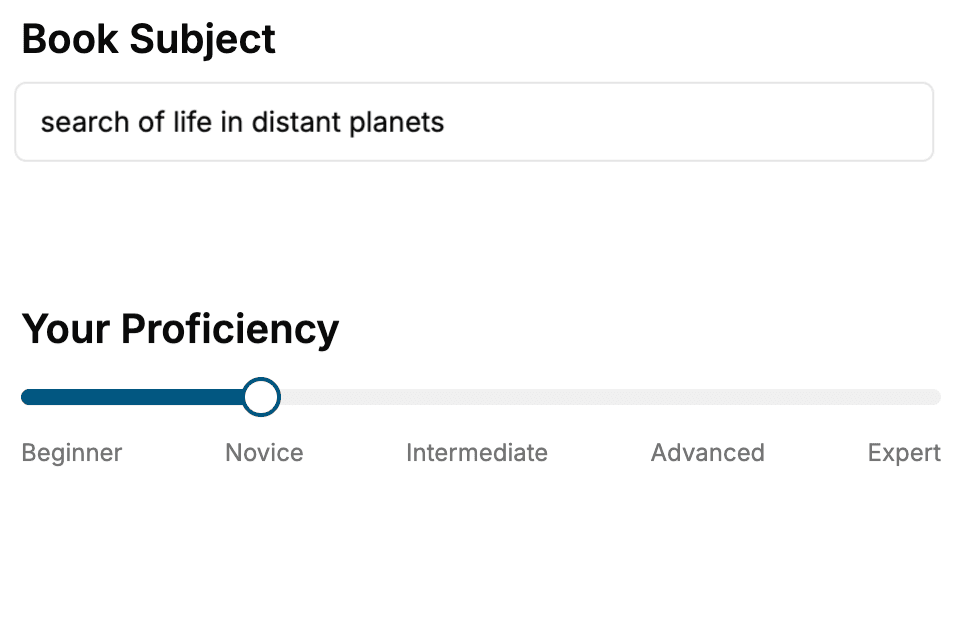
Select the focus of your Software Development book and share your background
- 2. Personalize your book
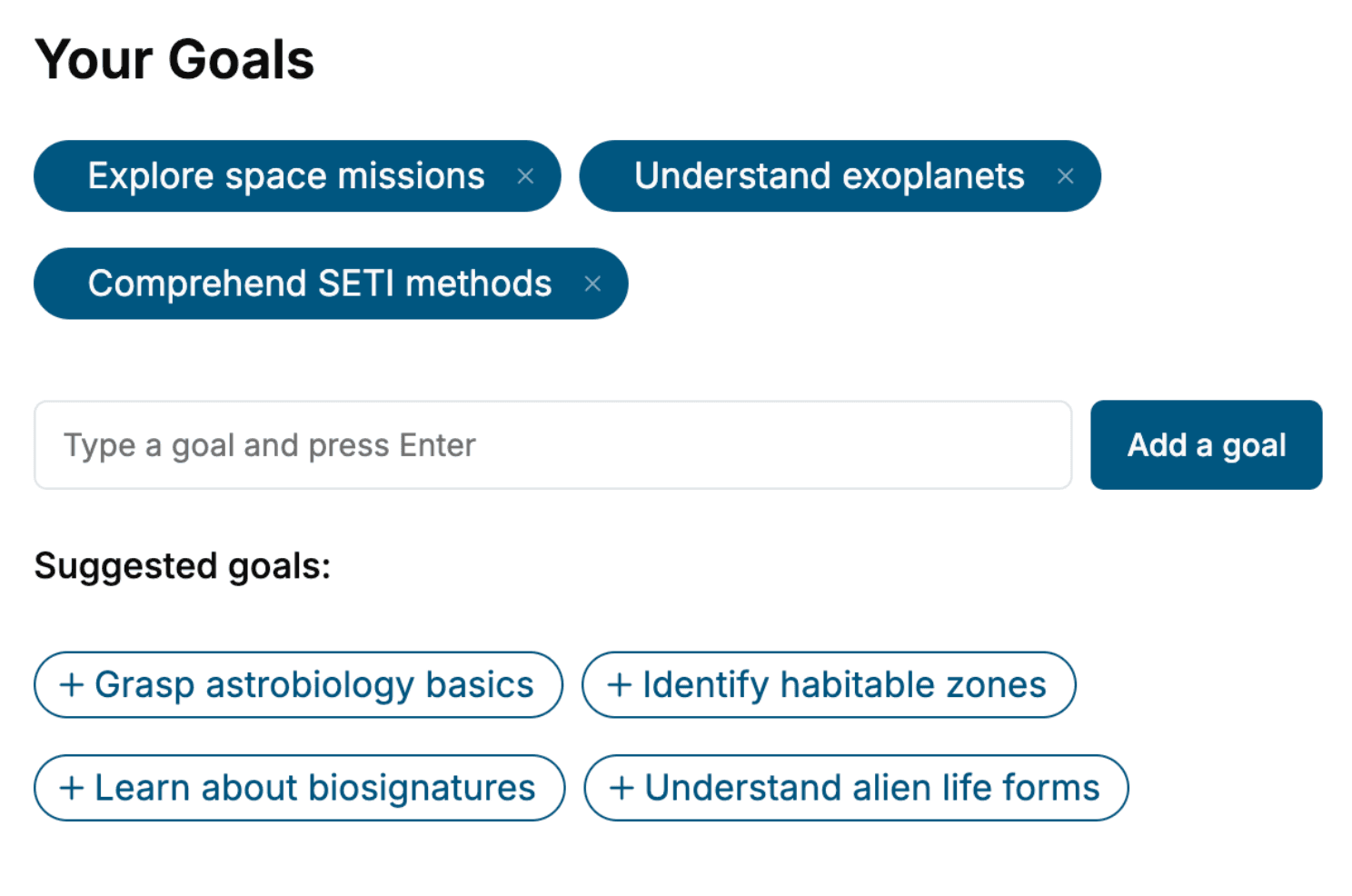
Specify your goals and choose sub-topics to include
- 3. Get your tailored book
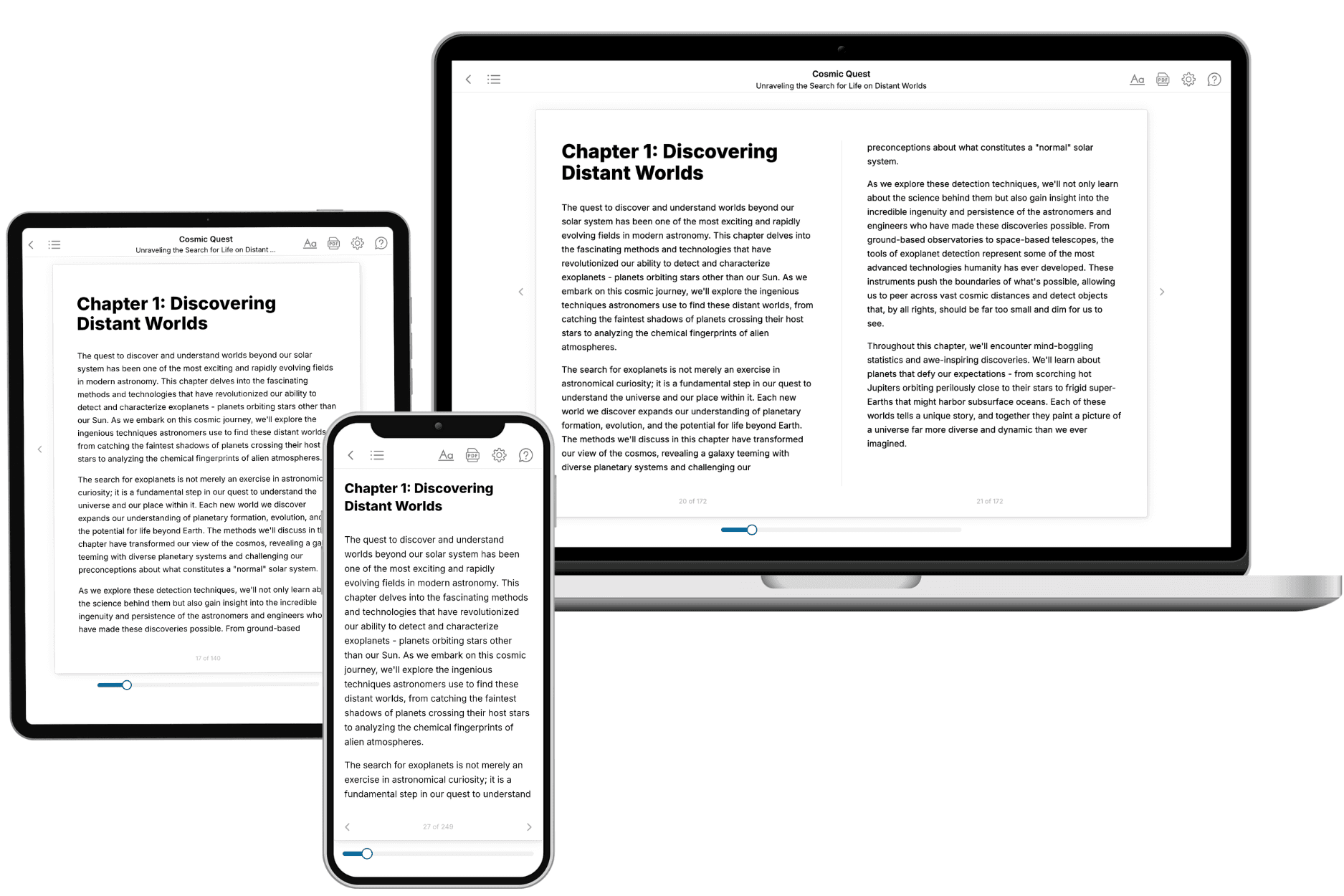
Your book is ready in 10 minutes. Read it online, download as EPUB or PDF, or send to Kindle.
Frequently asked questions
- What is TailoredRead?
TailoredRead creates complete, full-length nonfiction ebooks, written specifically for you. Tell us what you want to learn and why, and TailoredRead writes you a complete ebook on it, with charts, tables, and diagrams throughout. Read it online, on Kindle, or on any e-reader, or download it as a PDF or EPUB. Every book is written fresh the day you order it.
- How is the book tailored to me?
Before anything is written, you answer a few short questions about your goals, your background, and the topics you care about. Your book is then planned around your answers: written at your level, focused on your goals, and covering the topics you chose, instead of the one-size-fits-all book a store sells everyone.
- Will it read like generic AI content?
No. Your book isn't a chat transcript: it's planned chapter by chapter before a single word is written, told in a clear book voice, and explains ideas visually with charts, tables, and diagrams. After writing, every book goes through an editorial pass that polishes chapters so the book reads consistent from start to finish. Judge for yourself: browse thousands of sample books on our Explore Books page.
- How accurate is the content?
Our AI first checks whether your subject needs live research. Niche and fast-moving subjects are researched before writing, and the book plan and chapters are grounded in what it finds. After writing, every book goes through a quality pass that checks its facts and consistency, and researched books list their sources in a Notes section at the back.
- How long is the book?
You choose the length: Comprehensive (250-300 pages), Detailed (150-200 pages), Essential (70-100 pages), or Short (30-50 pages).
- Does the book include visuals?
Yes. Every book includes charts, tables, and diagrams: timelines, checklists, step-by-step guides, decision trees, comparison tables, matrices, and bar charts. A typical book includes dozens of these visual elements.
- Can I read it on Kindle? What formats can I download?
Yes. Every book can be read in our online reader or downloaded as a PDF or EPUB. The EPUB can be opened with Kindle, Apple Books, Kobo, and any e-reader. The Commercial and Author licenses also include an editable Word (DOCX) and Markdown download.
- How much does it cost?
About the price of a regular ebook. The exact price depends on your book's length and complexity, from $2 for the shortest books to $35 for the most comprehensive, and it's shown when you review your book, before you commit to anything. Each book is a one-time purchase, yours to keep, no subscription. Licenses that let you share, teach, or publish your book range from $35.99 to $49.99.
- Can I preview the book before purchasing?
Before you pay, you'll see what your book will cover: the title, a detailed description, the estimated length, and the complete chapter-by-chapter table of contents, so you know what you're getting before you decide. The full text itself is written after you purchase.
- How long does it take to create a book?
About 10 minutes. You can start reading the opening chapters while the rest is still being written.