Quality Circles Mastery
Building Employee-Driven Excellence Through Toyota Production System Principles
You'll discover how to harness the collective intelligence of your workforce through proven Quality Circle methodologies that have revolutionized manufacturing excellence worldwide.
284 pages16 chaptersOct 1, 2025Quality Control and Management
About this book
This comprehensive guide reveals the systematic approach to creating self-directed teams that identify problems, analyze root causes, and implement lasting solutions that drive measurable improvements in quality, efficiency, and employee engagement. Drawing from decades of Toyota Production System success, you'll learn the essential frameworks for establishing Quality Circles that generate real results. From selecting and training team members to facilitating productive meetings and measuring impact, every aspect of Quality Circle implementation is covered with practical tools and proven strategies. You'll master the art of transforming your workplace culture from reactive problem-solving to proactive continuous improvement. The book provides step-by-step guidance for overcoming common implementation challenges, sustaining long-term engagement, and scaling Quality Circle success across your entire organization. Whether you're launching your first Quality Circle or enhancing existing programs, this resource equips you with the knowledge and confidence to create a workplace where every employee contributes to operational excellence and takes ownership of quality outcomes.
Table of contents
- IntroductionThe Quality Revolution That Changed Manufacturing, From Command-and-Control to Employee Empowerment, The Toyota Legacy and Global Impact, Your Path to Quality Circle ExcellenceRead below
- Chapter 1: Foundations of Quality CirclesDefining Quality Circles in Modern Manufacturing, Historical Evolution and Global Adoption, Core Principles and Philosophy, Measurable Benefits and Expected Outcomes
- Chapter 2: Toyota Production System IntegrationTPS Fundamentals and Quality Circle Alignment, The Kaizen Connection and Continuous Improvement, Jidoka Principles and Error Prevention, Lean Manufacturing Integration Strategies
- Chapter 3: Organizational Readiness AssessmentEvaluating Your Current Culture, Securing Leadership Commitment and Support, Resource Planning and Infrastructure Requirements, Readiness Metrics and Success Indicators
- Chapter 4: Strategic Team FormationMember Selection Criteria and Process, Optimal Team Composition and Size, Role Definition and Responsibility Matrix, Volunteer Recruitment and Motivation Strategies
- Chapter 5: Facilitator Development and TrainingSelecting and Preparing Quality Circle Facilitators, Essential Facilitation Skills and Techniques, Meeting Management and Group Dynamics, Coaching and Mentoring Circle Members
- Chapter 6: Problem-Solving MethodologiesSystematic Problem-Solving Framework, Root Cause Analysis Techniques, Fishbone Diagrams and Cause-Effect Analysis, The Five Whys Method and Deep Investigation
- Chapter 7: Essential Quality Tools and TechniquesThe Seven Basic Quality Tools, Statistical Methods for Quality Circles, Data Collection and Analysis Techniques, Visual Management and Display Methods
- Chapter 8: Effective Meeting Structure and ProcessMeeting Planning and Agenda Development, Structured Discussion Techniques, Consensus Building and Decision-Making, Action Planning and Follow-up Systems
- Chapter 9: Project Selection and PrioritizationIdentifying Improvement Opportunities, Project Selection Criteria and Matrix, Scope Definition and Boundary Setting, Resource Assessment and Timeline Planning
- Chapter 10: Solution Implementation StrategiesImplementation Planning and Risk Assessment, Pilot Testing and Validation Methods, Change Management and Stakeholder Buy-in, Full-Scale Rollout and Execution
- Chapter 11: Measurement and Evaluation SystemsDefining Success Metrics and KPIs, Data Tracking and Monitoring Systems, Impact Assessment and ROI Calculation, Continuous Monitoring and Adjustment
- Chapter 12: Communication and Reporting SystemsEstablishing Effective Communication Channels, Progress Reporting and Documentation, Management Presentations and Updates, Knowledge Sharing and Best Practice Distribution
- Chapter 13: Recognition and Motivation ProgramsDesigning Effective Recognition Systems, Celebration Methods and Milestone Marking, Building Intrinsic Motivation and Engagement, Career Development and Growth Opportunities
- Chapter 14: Overcoming Common Implementation ChallengesManaging Resistance and Skepticism, Addressing Low Participation and Engagement, Working Within Resource Constraints, Maintaining Momentum Through Setbacks
- Chapter 15: Long-term Sustainability StrategiesEmbedding Quality Circles in Organizational Culture, Succession Planning and Knowledge Transfer, Program Evolution and Continuous Adaptation, Renewal Strategies and Fresh Perspectives
- Chapter 16: Scaling and Expansion Across the OrganizationStrategic Expansion Planning and Phasing, Multi-site Coordination and Standardization, Cross-functional Integration and Collaboration, Creating Network Effects and Synergies
- ConclusionYour Quality Circle Transformation Journey, Next Steps and Action Planning
Introduction
Manufacturing excellence has never been more critical than it is today. In an era of global competition, razor-thin margins, and ever-increasing customer expectations, organizations must harness every available resource to maintain their competitive edge. The most powerful resource available to any manufacturing organization isn't found in the latest technology or sophisticated equipment—it's found in the collective intelligence, creativity, and problem-solving capability of the workforce. Quality Circles represent the systematic approach to unlocking this tremendous potential, transforming ordinary workers into quality champions and continuous improvement agents.
The journey you're about to embark upon will fundamentally change how you view employee engagement and operational excellence. Quality Circles aren't simply another management initiative or temporary improvement program—they represent a philosophical shift toward recognizing that the people closest to the work often possess the deepest insights into how that work can be improved. This approach has proven its worth across decades of implementation in manufacturing environments worldwide, generating measurable improvements in quality, efficiency, safety, and employee satisfaction.
Throughout this comprehensive guide, you'll discover the proven methodologies, practical tools, and strategic frameworks that enable organizations to build sustainable Quality Circle programs. From the foundational principles rooted in the Toyota Production System to the advanced techniques for scaling programs across multiple facilities, every aspect of Quality Circle implementation is covered with the depth and specificity needed for real-world application. You'll learn not just what to do, but how to do it, when to do it, and how to overcome the inevitable challenges that arise during implementation.
The Quality Revolution That Changed Manufacturing
The transformation of global manufacturing through Quality Circles began in post-war Japan, where organizations faced the monumental challenge of rebuilding their industrial capacity while competing against established Western manufacturers. Traditional command-and-control management structures had proven inadequate for achieving the levels of quality and efficiency required for global competitiveness. Japanese manufacturers, led by companies like Toyota, recognized that sustainable competitive advantage would come not from working harder, but from working smarter—and that working smarter required engaging the minds of every employee in the improvement process.
The revolutionary insight that sparked the Quality Circle movement was deceptively simple: workers who perform tasks daily possess unique knowledge about those tasks that management cannot access through observation or analysis alone. This knowledge includes understanding of process variations, awareness of recurring problems, insights into root causes, and ideas for practical solutions. However, traditional organizational structures provided no systematic mechanism for capturing, evaluating, and implementing this worker-generated knowledge. Quality Circles filled this critical gap by creating structured forums where employees could apply problem-solving methodologies to workplace challenges.
The results achieved by early Quality Circle implementations were nothing short of remarkable. Toyota's production system, built around employee-driven continuous improvement, enabled the company to achieve defect rates measured in parts per million rather than percentages, inventory turns that exceeded industry averages by factors of ten or more, and productivity improvements that compounded year after year[1]. These achievements weren't the result of superior technology or larger capital investments—they emerged from systematically engaging workers in identifying problems, analyzing root causes, and implementing solutions.
The Quality Circle approach fundamentally redefined the relationship between management and workers. Instead of viewing employees as pairs of hands to execute predetermined tasks, organizations began recognizing workers as thinking partners in the improvement process. This shift required new skills, new structures, and new ways of measuring success. Management's role evolved from directing and controlling to facilitating and supporting. Workers' roles expanded from task execution to include problem identification, analysis, and solution development.
The global adoption of Quality Circle principles accelerated throughout the 1970s and 1980s as Western manufacturers struggled to compete with Japanese quality and efficiency standards. Companies across industries discovered that Quality Circles weren't just applicable to automotive manufacturing—they generated improvements in electronics, aerospace, chemicals, food processing, and virtually every other manufacturing sector. The universality of Quality Circle benefits stemmed from their focus on fundamental human capabilities: observation, analysis, creativity, and collaboration.
Modern Quality Circle implementations have evolved far beyond their original scope, incorporating advanced statistical methods, digital collaboration tools, and sophisticated measurement systems. However, the core principles remain unchanged:
- Employees closest to the work possess valuable improvement insights
- Systematic problem-solving methodologies amplify individual capabilities
- Small, focused teams can achieve breakthrough improvements
- Voluntary participation generates higher engagement and better results
- Recognition and celebration sustain long-term motivation
Today's manufacturing environment presents both new opportunities and new challenges for Quality Circle implementation. Advanced manufacturing technologies generate vast amounts of data that Quality Circles can analyze to identify improvement opportunities. Global supply chains create complexity that requires collaborative problem-solving approaches. Workforce demographics are shifting toward employees who expect meaningful participation in workplace decisions. These trends make Quality Circles more relevant than ever, provided they're implemented with understanding of both traditional principles and contemporary requirements.
The quality revolution that began with Quality Circles continues to evolve, but its fundamental promise remains compelling: organizations that systematically engage their workforce in continuous improvement will outperform those that rely solely on management-directed initiatives. The question isn't whether Quality Circles can generate improvements—decades of evidence confirm their effectiveness. The question is whether your organization is ready to embrace the cultural transformation required to unlock their full potential.
From Command-and-Control to Employee Empowerment
The traditional manufacturing management model, rooted in early 20th-century industrial practices, operated on the assumption that thinking and doing should be separated. Managers and engineers were responsible for thinking—analyzing problems, designing solutions, and making decisions. Workers were responsible for doing—executing predetermined tasks according to detailed specifications. This division of labor seemed logical and efficient, but it systematically wasted the intellectual capacity of the workforce while creating bottlenecks in problem identification and resolution.
Command-and-control structures created several fundamental limitations that became increasingly problematic as manufacturing complexity increased. First, they concentrated problem-solving responsibility in a small number of individuals who were often removed from day-to-day operations. Second, they discouraged worker initiative and creativity, leading to passive compliance rather than active engagement. Third, they created communication barriers that prevented valuable information from flowing upward through the organization. Fourth, they generated adversarial relationships between management and workers, reducing collaboration and trust.
Quality Circles represent a systematic approach to overcoming these limitations through structured employee empowerment. Empowerment in this context doesn't mean giving workers unlimited authority to make changes—it means providing them with the tools, training, and authority needed to identify problems, analyze root causes, and propose solutions within defined boundaries. This approach maintains necessary organizational structure while unleashing the problem-solving potential of the entire workforce.
The transition from command-and-control to employee empowerment requires fundamental changes in management mindset and organizational systems. Managers must learn to view their role as facilitating worker success rather than directing worker activities. They need to develop coaching and mentoring skills to support Quality Circle activities. They must create psychological safety that encourages workers to identify problems without fear of blame or punishment. Most importantly, they need to demonstrate genuine commitment to implementing worker-generated solutions, even when those solutions challenge existing practices or assumptions.
Employee empowerment through Quality Circles generates multiple organizational benefits that extend far beyond immediate problem-solving results. Workers who participate in Quality Circles develop enhanced analytical skills, improved communication abilities, and deeper understanding of business operations. They become more engaged in their work because they see direct connections between their efforts and organizational success. They develop stronger relationships with colleagues through collaborative problem-solving activities. They gain confidence in their ability to contribute meaningfully to organizational improvement.
The empowerment process must be carefully structured to ensure success. Workers need training in problem-solving methodologies, statistical analysis techniques, and group dynamics. They need access to relevant data and information about organizational goals and constraints. They need clear guidelines about the scope of problems they can address and the authority they have to implement solutions. They need regular feedback about the impact of their improvement efforts. Without these supporting elements, empowerment initiatives can create frustration and cynicism rather than engagement and results.
Successful employee empowerment creates a virtuous cycle of continuous improvement. As workers experience success in solving problems and implementing improvements, their confidence and capabilities increase. As management sees positive results from worker-generated solutions, their trust and support for empowerment initiatives grows. As the organization develops systematic approaches to capturing and implementing worker insights, the rate and impact of improvements accelerate. This cycle generates sustainable competitive advantages that are difficult for competitors to replicate.
The measurement of empowerment success requires new metrics that go beyond traditional productivity and quality indicators. Organizations need to track participation rates in improvement activities, the number and quality of worker-generated suggestions, the implementation rate of proposed solutions, and the measurable impact of implemented improvements. They also need to monitor employee engagement levels, job satisfaction scores, and retention rates to ensure that empowerment initiatives are creating positive workplace experiences.
Modern empowerment approaches leverage technology to enhance traditional Quality Circle activities. Digital collaboration platforms enable virtual Quality Circle meetings and cross-site knowledge sharing. Data analytics tools help workers identify patterns and trends that might not be visible through manual analysis. Mobile applications allow real-time problem reporting and solution tracking. However, technology should enhance rather than replace the fundamental human elements of empowerment: trust, respect, collaboration, and shared commitment to improvement.
The Toyota Legacy and Global Impact
Toyota's implementation of Quality Circles within the broader Toyota Production System (TPS) created the most compelling and well-documented case study of employee-driven continuous improvement in manufacturing history. The company's approach went far beyond simply forming worker groups to discuss problems—it created an integrated system where Quality Circles became the foundation for organizational learning, innovation, and competitive advantage. Understanding Toyota's approach provides essential insights for any organization seeking to implement effective Quality Circle programs.
The Toyota model integrated Quality Circles with several complementary systems that amplified their effectiveness. The suggestion system provided formal mechanisms for workers to propose improvements, with management committed to evaluating and responding to every suggestion within specified timeframes. The standardized work system ensured that improvements identified by Quality Circles could be systematically implemented and sustained across the organization. The visual management system made problems visible and tracked improvement progress in real-time. The just-in-time production system created urgency around problem-solving by eliminating buffers that could hide inefficiencies.
Toyota's Quality Circle implementation demonstrated several critical success factors that have become benchmarks for other organizations. First, management participation was genuine and sustained—executives regularly attended Quality Circle presentations and implemented recommended solutions. Second, training was comprehensive and ongoing—workers received extensive education in problem-solving tools, statistical methods, and presentation skills. Third, recognition was meaningful and public—successful Quality Circles received company-wide recognition and their solutions were shared across all facilities. Fourth, measurement was rigorous and transparent—the impact of Quality Circle activities was tracked and reported at all organizational levels.
The measurable results achieved by Toyota's Quality Circle program established new standards for manufacturing excellence. By the 1980s, Toyota workers were generating over one million improvement suggestions annually, with implementation rates exceeding 90%[2]. These improvements contributed to defect rates measured in parts per million, inventory levels that were fractions of industry averages, and productivity improvements that compounded year after year. More importantly, Toyota's approach created a self-reinforcing culture where continuous improvement became embedded in daily work routines.
The global impact of Toyota's Quality Circle success extended far beyond the automotive industry. Manufacturing companies worldwide began implementing similar programs, adapting Toyota's principles to their specific contexts and challenges. The results varied significantly based on implementation quality, management commitment, and cultural factors, but successful implementations consistently generated substantial improvements in quality, efficiency, and employee engagement. Organizations that treated Quality Circles as quick fixes or superficial programs typically achieved disappointing results, while those that embraced the underlying philosophy of employee empowerment achieved transformational outcomes.
Toyota's approach to Quality Circle sustainability provides valuable lessons for long-term program success. The company recognized that initial enthusiasm for Quality Circles would naturally decline unless the program continuously evolved and renewed itself. They addressed this challenge through several mechanisms:
- Regular rotation of Quality Circle membership to bring fresh perspectives
- Advanced training programs for experienced participants
- Cross-functional Quality Circles that addressed complex, multi-departmental issues
- Integration of new technologies and methodologies into Quality Circle activities
- Expansion of Quality Circle principles to supplier organizations
The Toyota legacy also demonstrates the importance of adapting Quality Circle principles to different cultural and organizational contexts. While the fundamental principles of employee empowerment and systematic problem-solving are universal, their implementation must reflect local values, communication styles, and organizational structures. Successful global implementations of Toyota-inspired Quality Circle programs have maintained core principles while adapting specific practices to fit their unique environments.
Modern organizations can learn from both Toyota's successes and the challenges faced by companies that attempted to copy Toyota's approach without understanding its underlying principles. The key insight is that Quality Circles are not a standalone program that can be implemented in isolation—they must be integrated with broader organizational systems, supported by genuine management commitment, and sustained through continuous evolution and renewal. Organizations that understand and apply these lessons can achieve results that rival Toyota's legendary performance.
The continuing evolution of Toyota's approach to employee-driven improvement demonstrates that Quality Circle principles remain relevant in today's manufacturing environment. The company has integrated digital technologies, advanced analytics, and global collaboration tools into their improvement processes while maintaining the fundamental focus on employee empowerment and systematic problem-solving. This evolution provides a roadmap for other organizations seeking to modernize their Quality Circle programs while preserving their essential effectiveness.
Your Path to Quality Circle Excellence
Your journey toward Quality Circle excellence begins with understanding that successful implementation requires more than enthusiasm and good intentions—it demands systematic planning, disciplined execution, and sustained commitment to cultural transformation. The path ahead will challenge existing assumptions about employee capabilities, management roles, and organizational improvement processes. However, organizations that successfully navigate this journey consistently achieve breakthrough improvements in quality, efficiency, and employee engagement that provide sustainable competitive advantages.
The roadmap for Quality Circle excellence consists of several interconnected phases, each building upon the previous phase's achievements while preparing for subsequent challenges. The foundation phase focuses on assessing organizational readiness, securing leadership commitment, and establishing the infrastructure needed to support Quality Circle activities. The pilot phase involves launching initial Quality Circles with carefully selected participants and well-defined projects to demonstrate early wins and build momentum. The expansion phase scales successful approaches across broader organizational areas while refining processes based on lessons learned. The maturation phase integrates Quality Circles into standard organizational practices while continuously evolving to maintain effectiveness and engagement.
Success in each phase requires specific capabilities and resources that must be developed systematically. Leadership capabilities include the ability to coach rather than direct, to facilitate rather than control, and to support employee initiatives even when they challenge existing practices. Facilitator capabilities include group dynamics management, problem-solving methodology expertise, and the ability to guide teams through complex analytical processes. Participant capabilities include systematic thinking, data analysis skills, and collaborative problem-solving techniques. Organizational capabilities include measurement systems, communication processes, and recognition programs that support Quality Circle activities.
The measurement of progress along your Quality Circle journey requires both quantitative metrics and qualitative indicators that capture the full scope of transformation. Quantitative metrics include participation rates, project completion rates, implementation rates of proposed solutions, and measurable improvements in quality, efficiency, and cost performance. Qualitative indicators include employee engagement levels, management support behaviors, cultural shifts toward continuous improvement, and the development of problem-solving capabilities throughout the organization. Tracking both types of indicators provides comprehensive visibility into program effectiveness and areas needing attention.
Your journey will inevitably encounter obstacles and setbacks that test organizational commitment and resilience. Common challenges include initial skepticism from workers who have experienced failed improvement initiatives, resistance from middle managers who fear loss of authority, resource constraints that limit training and support activities, and the natural tendency for enthusiasm to decline after initial successes. Successful organizations anticipate these challenges and develop specific strategies for overcoming them, including communication plans that address concerns proactively, training programs that build necessary capabilities, and recognition systems that sustain motivation through difficult periods.
The transformation process requires patience and persistence because cultural change occurs gradually through accumulated experiences rather than dramatic events. Workers need time to develop confidence in their problem-solving abilities and trust in management's commitment to implementing their suggestions. Managers need time to develop coaching skills and comfort with employee-driven initiatives. The organization needs time to develop systems and processes that support Quality Circle activities effectively. Rushing this transformation process typically generates superficial compliance rather than genuine engagement and sustainable results.
Your path to Quality Circle excellence will be unique to your organization's specific context, challenges, and opportunities. However, the fundamental principles and proven practices covered in this guide provide a reliable framework for navigating the journey successfully. The key is to maintain focus on the ultimate goal—creating an organization where every employee is engaged in continuous improvement—while remaining flexible about the specific approaches and timelines needed to achieve that goal in your particular environment.
The investment required for Quality Circle excellence extends beyond financial resources to include management time, employee training, and organizational energy. However, the returns on this investment are substantial and sustainable. Organizations that achieve Quality Circle excellence consistently outperform competitors in quality, efficiency, innovation, and employee satisfaction. They develop capabilities that enable them to adapt quickly to changing market conditions and customer requirements. Most importantly, they create workplace environments where employees find meaning and satisfaction in their work while contributing to organizational success.
As you begin this journey, remember that Quality Circle excellence is not a destination but an ongoing process of organizational learning and improvement. The most successful organizations view their Quality Circle programs as living systems that continuously evolve to meet new challenges and opportunities. They maintain the fundamental principles of employee empowerment and systematic problem-solving while adapting specific practices to reflect changing technologies, market conditions, and workforce expectations. This approach ensures that Quality Circle programs remain effective and relevant throughout their organizational lifecycle.
This is the end of the free sample. The full book has 16 chapters.
Want this book written for you?
Tell us your goals and background, and get your own version of this book, tailored by AI to you.


Benefits of AI-tailored books
- Read one book, not ten:
- all the Quality Control and Management knowledge you need, gathered into a single book.
- Save days of learning:
- tell us your goals, choose your topics, and the whole book is built around them.
- Learn effortlessly:
- Quality Control and Management book written for your specific background and expertise.
- Understand at a glance:
- includes charts, tables, timelines, checklists, decision trees, and more.
- Stay current:
- written the day you order it, not years ago.
- Trust what you read:
- every book is checked for accuracy, with real research when your subject needs it.
Create your unique book in 3 steps
- 1. Select your focus
Select the focus of your Quality Control and Management book and share your background
- 2. Personalize your book
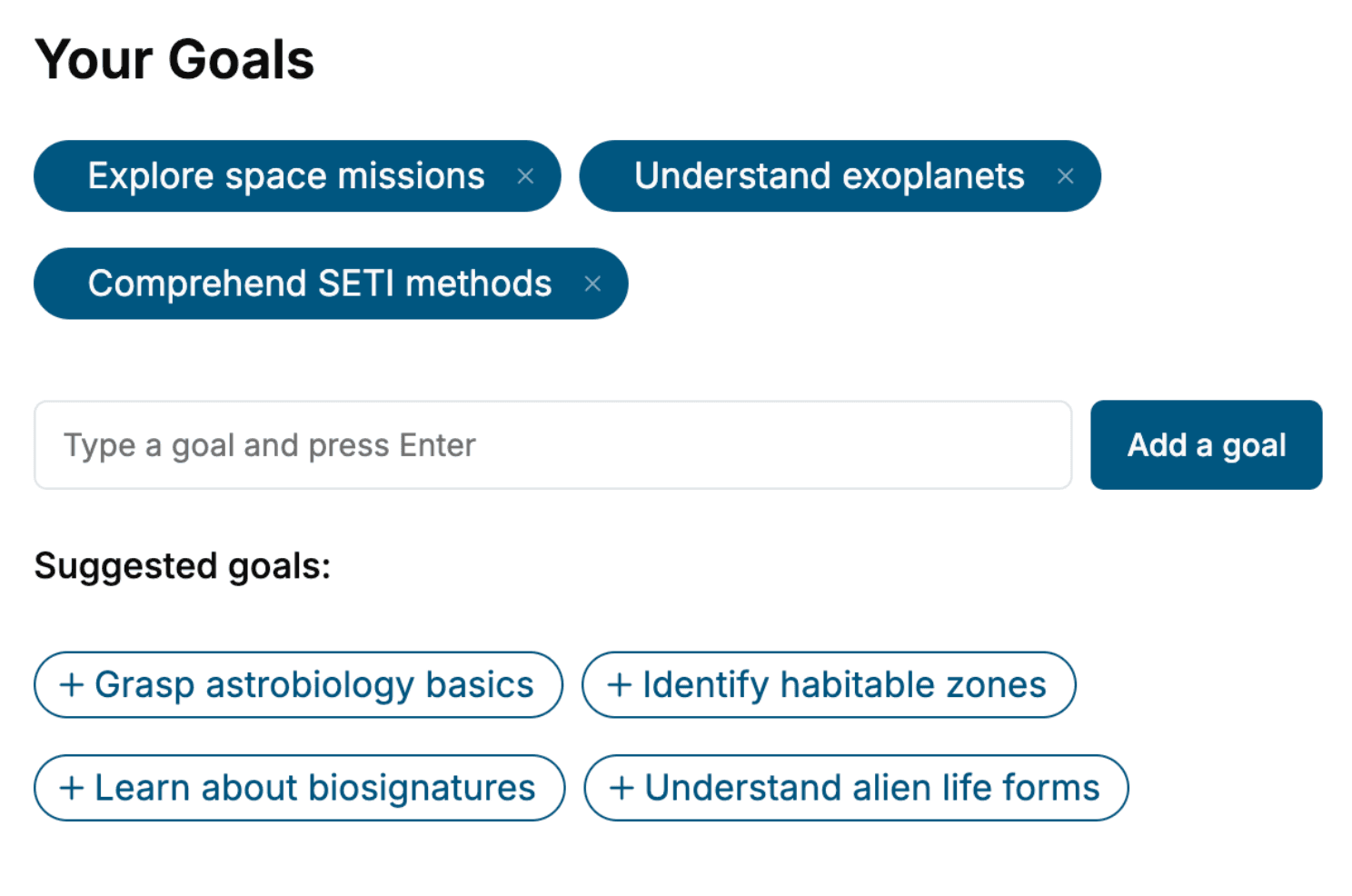
Specify your goals and choose sub-topics to include
- 3. Get your tailored book
Your book is ready in 10 minutes. Read it online, download as EPUB or PDF, or send to Kindle.

Frequently asked questions
- What is TailoredRead?
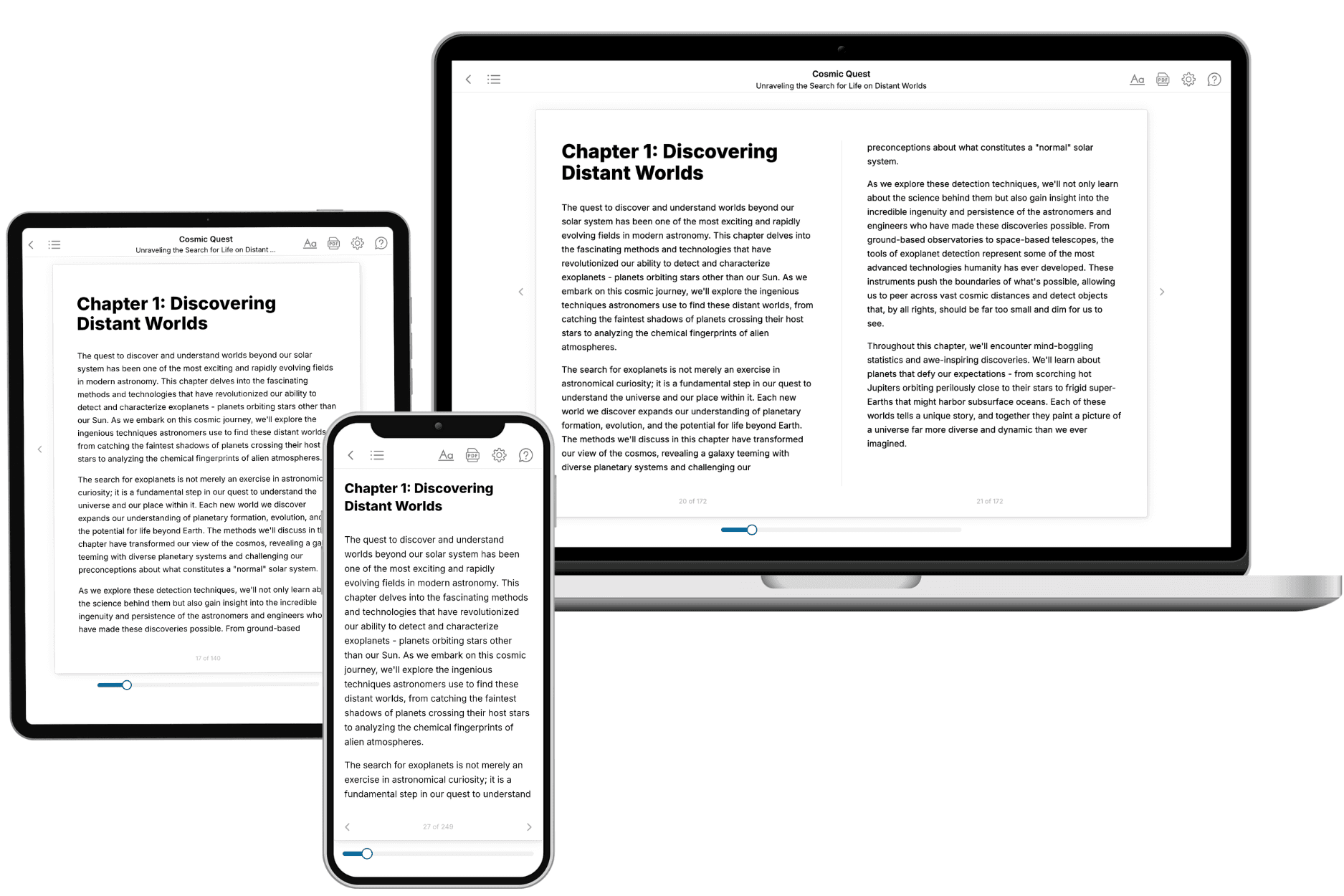
TailoredRead creates complete, full-length nonfiction ebooks, written specifically for you. Tell us what you want to learn and why, and TailoredRead writes you a complete ebook on it, with charts, tables, and diagrams throughout. Read it online, on Kindle, or on any e-reader, or download it as a PDF or EPUB. Every book is written fresh the day you order it.
- How is the book tailored to me?
Before anything is written, you answer a few short questions about your goals, your background, and the topics you care about. Your book is then planned around your answers: written at your level, focused on your goals, and covering the topics you chose, instead of the one-size-fits-all book a store sells everyone.
- Will it read like generic AI content?
No. Your book isn't a chat transcript: it's planned chapter by chapter before a single word is written, told in a clear book voice, and explains ideas visually with charts, tables, and diagrams. After writing, every book goes through an editorial pass that polishes chapters so the book reads consistent from start to finish. Judge for yourself: browse thousands of sample books on our Explore Books page.
- How accurate is the content?
Our AI first checks whether your subject needs live research. Niche and fast-moving subjects are researched before writing, and the book plan and chapters are grounded in what it finds. After writing, every book goes through a quality pass that checks its facts and consistency, and researched books list their sources in a Notes section at the back.
- How long is the book?
You choose the length: Comprehensive (250-300 pages), Detailed (150-200 pages), Essential (70-100 pages), or Short (30-50 pages).
- Does the book include visuals?
Yes. Every book includes charts, tables, and diagrams: timelines, checklists, step-by-step guides, decision trees, comparison tables, matrices, and bar charts. A typical book includes dozens of these visual elements.
- Can I read it on Kindle? What formats can I download?
Yes. Every book can be read in our online reader or downloaded as a PDF or EPUB. The EPUB can be opened with Kindle, Apple Books, Kobo, and any e-reader. The Commercial and Author licenses also include an editable Word (DOCX) and Markdown download.
- How much does it cost?
About the price of a regular ebook. The exact price depends on your book's length and complexity, from $2 for the shortest books to $35 for the most comprehensive, and it's shown when you review your book, before you commit to anything. Each book is a one-time purchase, yours to keep, no subscription. Licenses that let you share, teach, or publish your book range from $35.99 to $49.99.
- Can I preview the book before purchasing?
Before you pay, you'll see what your book will cover: the title, a detailed description, the estimated length, and the complete chapter-by-chapter table of contents, so you know what you're getting before you decide. The full text itself is written after you purchase.
- How long does it take to create a book?
About 10 minutes. You can start reading the opening chapters while the rest is still being written.