Quantitative Research Methods
A Practical Guide to Designing, Conducting, and Analyzing Rigorous Studies
You're ready to move beyond basic statistics and develop a comprehensive understanding of quantitative research methods.
238 pages12 chaptersOct 17, 2025Research Methods
About this book
Whether you're designing your first major study or refining your analytical skills, this book provides the clarity and practical guidance you need to conduct rigorous research with confidence. You'll discover how to formulate research questions that lead to meaningful insights, select appropriate research designs that match your objectives, and choose statistical methods that align with your data and hypotheses. Through clear explanations and real-world applications, you'll learn to navigate the complexities of sampling, measurement, and data analysis while avoiding common pitfalls that compromise research quality. This book bridges the gap between statistical theory and practical application, showing you not just how to run tests, but when to use them and how to interpret results in context. You'll gain the skills to evaluate research critically, make informed methodological decisions, and communicate your findings effectively. By the end, you'll have a solid foundation for conducting quantitative research that stands up to scrutiny and contributes valuable knowledge to your field.
Table of contents
- IntroductionWhat Is Quantitative Research?, Why Quantitative Methods Matter, How to Use This BookRead below
- Chapter 1: Foundations of Quantitative ResearchThe Scientific Method and Quantitative Inquiry, Research Paradigms and Philosophical Approaches, Types of Quantitative Research, Research Ethics and Integrity
- Chapter 2: Formulating Research Questions and HypothesesDeveloping Strong Research Questions, Conducting a Literature Review, Constructing Testable Hypotheses, Variables and Operationalization
- Chapter 3: Research Design FundamentalsExperimental and Quasi-Experimental Designs, Non-Experimental and Correlational Designs, Internal and External Validity, Common Threats to Validity
- Chapter 4: Sampling Methods and Sample SizeProbability Sampling Techniques, Non-Probability Sampling Techniques, Determining Appropriate Sample Size, Sampling Error and Bias
- Chapter 5: Measurement and ScalesLevels of Measurement, Reliability in Measurement, Validity in Measurement
- Chapter 6: Data Collection StrategiesSurveys and Questionnaires, Observational Methods, Using Secondary Data Sources, Ensuring Data Quality and Integrity
- Chapter 7: Descriptive StatisticsMeasures of Central Tendency, Measures of Variability, Understanding Distributions, Data Visualization Techniques
- Chapter 8: Probability and Statistical InferenceProbability Fundamentals, Sampling Distributions, Confidence Intervals, Hypothesis Testing Framework
- Chapter 9: Comparing GroupsT-Tests for Mean Comparisons, Analysis of Variance (ANOVA), Non-Parametric Tests
- Chapter 10: Examining Relationships and AssociationsCorrelation Analysis, Chi-Square Tests for Categorical Data, Simple Linear Regression, Multiple Regression Analysis
- Chapter 11: Advanced Analytical TechniquesLogistic Regression, Factor Analysis, Introduction to Multivariate Methods
- Chapter 12: Interpreting and Reporting ResultsStatistical Significance vs. Practical Significance, Effect Sizes and Their Interpretation, Common Interpretation Mistakes, Reporting Standards and Best Practices
- ConclusionIntegrating Quantitative Methods into Your Work, Continuing Your Development as a Researcher
- AppendixStatistical Tables and Critical Values, Guide to Statistical Software, Common Formulas Reference
Introduction
Quantitative research stands as one of the most powerful tools available for understanding the world around us. From testing new educational interventions to evaluating public health programs, from understanding consumer behavior to measuring environmental changes, quantitative methods provide the systematic framework needed to answer questions with numerical precision. Yet many researchers, graduate students, and professionals find themselves struggling to bridge the gap between basic statistical knowledge and the practical skills needed to design, conduct, and analyze rigorous studies. This book exists to close that gap, offering you a comprehensive guide that moves beyond formulas and theory to show you how quantitative research actually works in practice.
The journey from research question to meaningful findings involves numerous decisions, each with implications for the quality and interpretability of your results. Which research design best suits your question? How large should your sample be? What statistical test should you use, and why? How do you know if your measurements are reliable? These questions often feel overwhelming, particularly when textbooks present methods in isolation without showing how they connect to real research challenges. This book takes a different approach, treating quantitative research as an integrated process where each methodological choice builds upon previous decisions and shapes subsequent steps.
Throughout these pages, you'll find practical guidance grounded in real-world application. Rather than simply explaining what statistical tests do, you'll learn when to use them, how to interpret their results, and what to do when your data doesn't meet textbook assumptions. You'll discover frameworks for making methodological decisions, strategies for avoiding common pitfalls, and techniques for communicating your findings effectively. Whether you're designing your first major study or seeking to strengthen your existing research skills, this book provides the clarity and confidence you need to conduct quantitative research that stands up to scrutiny and contributes valuable knowledge to your field.
The approach taken here recognizes that you already have foundational knowledge of statistics and research concepts. You're not starting from zero—you understand basic statistical ideas and have likely encountered research studies in your field. What you need now is deeper understanding of how to apply these methods systematically, how to make informed choices among competing approaches, and how to navigate the complexities that arise in actual research situations. This book meets you at that intermediate level, building on what you know while expanding your capabilities in meaningful ways.
What Is Quantitative Research?
Quantitative research is fundamentally about transforming questions into numbers and using systematic analysis to extract meaning from those numbers. At its core, this approach involves collecting numerical data, analyzing it using statistical methods, and drawing conclusions based on patterns, relationships, or differences revealed through that analysis. Unlike qualitative research, which explores meaning, experiences, and perspectives through words and observations, quantitative research seeks to measure, count, and quantify phenomena in ways that allow for statistical testing and generalization. This doesn't make one approach superior to the other—they serve different purposes and answer different types of questions.
The defining characteristics of quantitative research extend beyond simply working with numbers. This approach emphasizes objectivity, seeking to minimize researcher bias through standardized procedures and predetermined protocols. It relies on structured data collection instruments like surveys, tests, or measurement devices that produce consistent, comparable data across participants or observations. Quantitative research also prioritizes replicability, meaning other researchers should be able to follow your methods and obtain similar results. These characteristics make quantitative methods particularly well-suited for testing hypotheses, establishing relationships between variables, and making predictions based on observed patterns.
Consider a concrete example: suppose you want to understand whether a new teaching method improves student performance. A quantitative approach would involve measuring student performance numerically (perhaps through test scores), comparing groups who received different teaching methods, and using statistical tests to determine whether observed differences are likely due to the teaching method or simply random variation. You might measure performance before and after the intervention, control for factors like prior achievement or demographic characteristics, and calculate the size of the effect to understand its practical importance. This systematic, numerical approach allows you to make evidence-based claims about the teaching method's effectiveness.
Quantitative research encompasses several distinct types of inquiry, each with its own strengths and appropriate applications:
- Descriptive research aims to characterize populations or phenomena by measuring their features systematically, such as surveying community health behaviors or documenting demographic trends
- Correlational research examines relationships between variables without manipulating them, helping identify associations that might warrant further investigation
- Experimental research involves actively manipulating variables to establish cause-and-effect relationships under controlled conditions
- Quasi-experimental research tests causal hypotheses in situations where full experimental control isn't possible or ethical
The power of quantitative research lies in its ability to handle large amounts of data systematically and to make inferences that extend beyond the specific cases studied. When you survey 500 people randomly selected from a population of 50,000, statistical methods allow you to estimate characteristics of the entire population with known levels of confidence. When you test whether two groups differ significantly, statistical tests help you determine whether observed differences reflect real effects or merely sampling variation. This capacity for generalization and inference makes quantitative methods invaluable for informing policy, guiding practice, and building cumulative knowledge.
However, quantitative research also has inherent limitations that you must understand and acknowledge. It reduces complex phenomena to measurable variables, potentially missing nuances that don't fit into predetermined categories. It assumes that the constructs being measured can be meaningfully quantified and that the measurement instruments accurately capture what they claim to measure. It typically examines variables in isolation or in simplified combinations, which may not reflect the full complexity of real-world situations. Recognizing these limitations doesn't diminish the value of quantitative research—it simply means understanding when these methods are appropriate and when they should be complemented by other approaches.
The relationship between quantitative and qualitative research deserves clarification, as they're often presented as opposing paradigms. In reality, they represent different tools in the researcher's toolkit, each valuable for different purposes. Quantitative methods excel at testing specific hypotheses, measuring prevalence, identifying patterns across large samples, and establishing statistical relationships. Qualitative methods excel at exploring new phenomena, understanding context and meaning, capturing complexity, and generating hypotheses. Many research questions benefit from mixed-methods approaches that combine both types of inquiry, using each to address different aspects of the problem or to triangulate findings from multiple perspectives.
Understanding what quantitative research is also means understanding what it isn't. It's not simply about using numbers—you can count things qualitatively without engaging in quantitative research. It's not inherently more rigorous or scientific than qualitative research—rigor depends on how well methods match research questions and how carefully they're applied. It's not value-free or completely objective—researchers make subjective decisions throughout the research process, from choosing what to study to interpreting results. Recognizing these realities helps you approach quantitative research with appropriate sophistication, understanding both its strengths and its boundaries.
Why Quantitative Methods Matter
Quantitative research methods matter because they provide systematic ways to answer questions that shape decisions affecting people's lives. When policymakers decide whether to fund a program, when educators choose between teaching approaches, when healthcare providers evaluate treatment options, or when organizations assess the impact of their initiatives, they need evidence that goes beyond anecdotes and intuition. Quantitative research provides that evidence through rigorous measurement, systematic comparison, and statistical analysis that accounts for uncertainty and variation. The ability to conduct and interpret quantitative research empowers you to contribute to evidence-based decision-making in your field.
The demand for quantitative research skills continues to grow across virtually every sector. Academic researchers need these skills to publish in peer-reviewed journals and secure funding for their work. Practitioners in education, healthcare, social services, and business need them to evaluate programs and demonstrate outcomes to stakeholders. Government agencies need them to assess policies and allocate resources effectively. Nonprofit organizations need them to measure impact and report to funders. Even in fields traditionally dominated by qualitative approaches, quantitative methods have become increasingly important as funders and stakeholders demand measurable outcomes and evidence of effectiveness.
Consider the practical impact of well-conducted quantitative research through a specific example. In the early 2000s, researchers conducted large-scale randomized controlled trials to test whether smaller class sizes improved student achievement. These studies, involving thousands of students across multiple schools, used rigorous quantitative methods to measure achievement, control for confounding variables, and estimate effect sizes. The findings showed that class size reduction produced modest but meaningful improvements, particularly for younger students and those from disadvantaged backgrounds. This quantitative evidence influenced education policy decisions involving billions of dollars in funding and affected millions of students. Without rigorous quantitative methods, such policy decisions would rest on speculation and anecdote rather than systematic evidence.
Quantitative methods also matter because they provide a common language for communicating findings across disciplines and contexts. When you report that an intervention produced a statistically significant improvement with an effect size of 0.5, researchers in different fields understand what that means. When you describe your sampling method and sample size, others can assess the generalizability of your findings. When you report confidence intervals, readers can gauge the precision of your estimates. This standardization facilitates cumulative knowledge building, allowing researchers to compare findings across studies, conduct meta-analyses, and identify consistent patterns that might not be apparent in individual studies.
The ability to critically evaluate quantitative research is equally important as the ability to conduct it. Every day, you encounter research findings in news articles, professional publications, and organizational reports. Understanding quantitative methods allows you to assess the quality of this research and make informed judgments about its credibility. You can identify methodological flaws that might compromise findings, recognize when conclusions overreach the data, and distinguish between statistical significance and practical importance. This critical literacy protects you from being misled by poorly conducted research or misleading presentations of findings.
Quantitative methods matter for your professional development and career advancement. In many fields, the ability to design studies, analyze data, and interpret results has become an essential competency rather than a specialized skill. Job postings increasingly list quantitative research skills among required or preferred qualifications. Professionals who can conduct rigorous evaluations, analyze program data, and present findings effectively have competitive advantages in the job market. Moreover, these skills transfer across contexts—the ability to think systematically about research design, measurement, and analysis applies whether you're studying educational outcomes, health behaviors, organizational effectiveness, or environmental impacts.
Beyond practical applications, quantitative research methods cultivate valuable ways of thinking. They train you to formulate precise questions, operationalize abstract concepts, consider alternative explanations, and draw conclusions proportionate to your evidence. They develop your ability to think probabilistically, recognizing that certainty is rare and that conclusions come with degrees of confidence. They encourage systematic thinking about causation, helping you distinguish between correlation and causation and identify factors that might confound relationships. These thinking skills extend beyond research contexts, enhancing your ability to analyze problems and make evidence-based decisions in various professional and personal situations.
The importance of quantitative methods also lies in their role in advancing social justice and equity. Rigorous quantitative research can document disparities, identify systemic barriers, and evaluate interventions designed to promote equity. For example, quantitative studies have documented achievement gaps between demographic groups, measured the impact of discrimination on health outcomes, and evaluated programs designed to increase access to opportunities. While quantitative methods alone cannot address these issues, they provide essential evidence for understanding problems and assessing solutions. The ability to conduct and interpret such research empowers you to contribute to efforts addressing important social challenges.
Finally, quantitative methods matter because they complement and enhance other forms of inquiry. When combined with qualitative research, they provide a more complete understanding than either approach alone. Quantitative methods can test hypotheses generated through qualitative exploration, measure the prevalence of phenomena identified qualitatively, or identify patterns that warrant deeper qualitative investigation. This integration of methods strengthens research by leveraging the unique strengths of each approach. Understanding quantitative methods well positions you to engage in sophisticated mixed-methods research that addresses complex questions from multiple angles.
How to Use This Book
This book is designed as both a comprehensive guide you can read sequentially and a practical reference you can consult for specific topics as needed. The chapters follow a logical progression that mirrors the research process itself, beginning with foundational concepts and moving through research design, data collection, analysis, and interpretation. If you're new to conducting quantitative research or seeking to build a systematic understanding, reading chapters in order will provide the most coherent learning experience. Each chapter builds on concepts introduced earlier, creating a cumulative understanding of how different aspects of quantitative research connect and inform each other.
However, you don't need to read this book cover to cover before finding it useful. If you're facing a specific research challenge—perhaps you need to determine an appropriate sample size, choose between statistical tests, or interpret regression results—you can jump directly to the relevant chapter. Each chapter is written to stand alone while also connecting to related content elsewhere in the book. Cross-references throughout the text point you to related discussions when deeper understanding of a concept requires knowledge from other chapters. This flexibility allows you to use the book in whatever way best serves your immediate needs and learning style.
The structure of each chapter follows a consistent pattern designed to facilitate learning and application. Chapters begin by establishing the context and importance of the topic, helping you understand why it matters for your research. They then present core concepts with clear explanations that avoid unnecessary jargon while introducing essential terminology. Throughout each chapter, you'll find concrete examples that illustrate how concepts apply in real research situations. These examples span multiple disciplines, demonstrating that quantitative methods apply broadly while showing how they adapt to different contexts. The examples include specific details—actual numbers, realistic scenarios, and practical considerations—rather than abstract illustrations.
As you read, pay particular attention to the practical guidance embedded throughout the chapters. This book emphasizes not just what different methods are, but when to use them, how to apply them, and how to interpret results. You'll find frameworks for making methodological decisions, checklists for ensuring you've addressed important considerations, and troubleshooting advice for common challenges. This practical orientation reflects the book's purpose: to help you actually conduct quantitative research, not just understand it theoretically. When you encounter these practical sections, consider how they apply to your own research context and what adaptations might be necessary for your specific situation.
The book includes several features designed to enhance your learning and provide ongoing reference value:
- Concrete examples throughout each chapter illustrate concepts with specific details and realistic scenarios
- Step-by-step processes break down complex procedures into manageable actions you can follow
- Common pitfalls sections alert you to mistakes researchers frequently make and how to avoid them
- Decision frameworks help you choose among alternative approaches based on your research situation
- Interpretation guidance shows you how to make sense of statistical results in context
- Cross-references connect related concepts across chapters for deeper understanding
To get the most from this book, engage actively with the content rather than reading passively. When you encounter a new concept, think about how it applies to research questions in your field. When you read about a statistical test, consider what types of questions it could help you answer. When you see an example, think about how you might adapt it to your own research context. This active engagement transforms reading from information absorption into skill development. Consider keeping notes about how specific concepts or methods might apply to your current or future research projects.
The book assumes you have foundational knowledge of basic statistics and research concepts. You should be familiar with fundamental ideas like variables, hypotheses, means, and standard deviations. You should have encountered basic statistical tests, even if you don't fully understand when and how to use them. You should understand that research involves systematic inquiry guided by questions or hypotheses. If you find yourself struggling with basic concepts, you may benefit from reviewing introductory statistics material before or alongside reading this book. However, the book does not assume advanced statistical knowledge or extensive research experience—it's designed to build on basic foundations to develop intermediate-level competence.
Different readers will approach this book with different backgrounds and goals. Graduate students designing thesis or dissertation research might read it comprehensively while focusing particularly on chapters addressing research design and methodology. Professionals evaluating programs or conducting applied research might focus more on chapters addressing practical data collection and analysis. Researchers seeking to strengthen specific skills might concentrate on chapters addressing those areas while skimming others. All these approaches are valid—use the book in whatever way best serves your learning needs and research goals.
As you progress through the book, you'll notice that later chapters assume familiarity with concepts introduced earlier. For example, chapters on specific statistical tests assume you understand hypothesis testing frameworks, sampling distributions, and statistical significance. Chapters on interpretation assume you understand effect sizes and confidence intervals. If you encounter unfamiliar concepts while reading a later chapter, use the cross-references to locate relevant earlier discussions. The index at the back of the book also helps you locate specific topics quickly when you need to refresh your understanding or find information on a particular concept.
Finally, remember that this book is a guide, not a rulebook. Quantitative research involves judgment and decision-making, not just following prescribed procedures. The guidance provided here reflects generally accepted practices and principles, but your specific research context may require adaptations or exceptions. As you develop your skills, you'll become better at recognizing when standard approaches apply and when modifications are necessary. The goal is not to memorize rules but to develop understanding deep enough to make informed methodological decisions. Use this book as a foundation for developing that understanding, supplemented by consultation with experienced researchers, engagement with methodological literature in your field, and reflection on your own research experiences.
This is the end of the free sample. The full book has 12 chapters.
Want this book written for you?
Tell us your goals and background, and get your own version of this book, tailored by AI to you.


Benefits of AI-tailored books
- Read one book, not ten:
- all the Research Methods knowledge you need, gathered into a single book.
- Save days of learning:
- tell us your goals, choose your topics, and the whole book is built around them.
- Learn effortlessly:
- Research Methods book written for your specific background and expertise.
- Understand at a glance:
- includes charts, tables, timelines, checklists, decision trees, and more.
- Stay current:
- written the day you order it, not years ago.
- Trust what you read:
- every book is checked for accuracy, with real research when your subject needs it.
Create your unique book in 3 steps
- 1. Select your focus
Select the focus of your Research Methods book and share your background
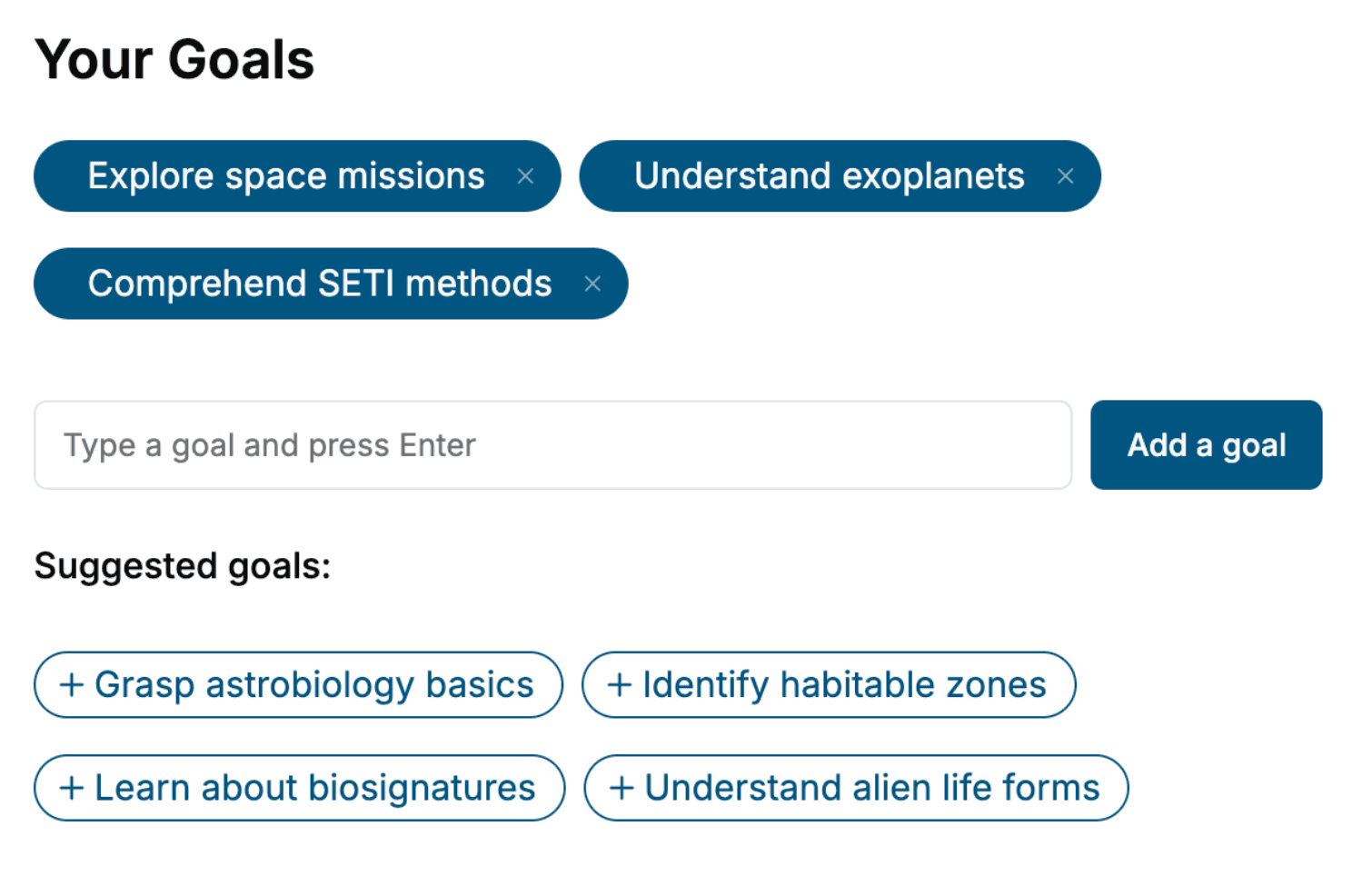
- 2. Personalize your book
Specify your goals and choose sub-topics to include
- 3. Get your tailored book
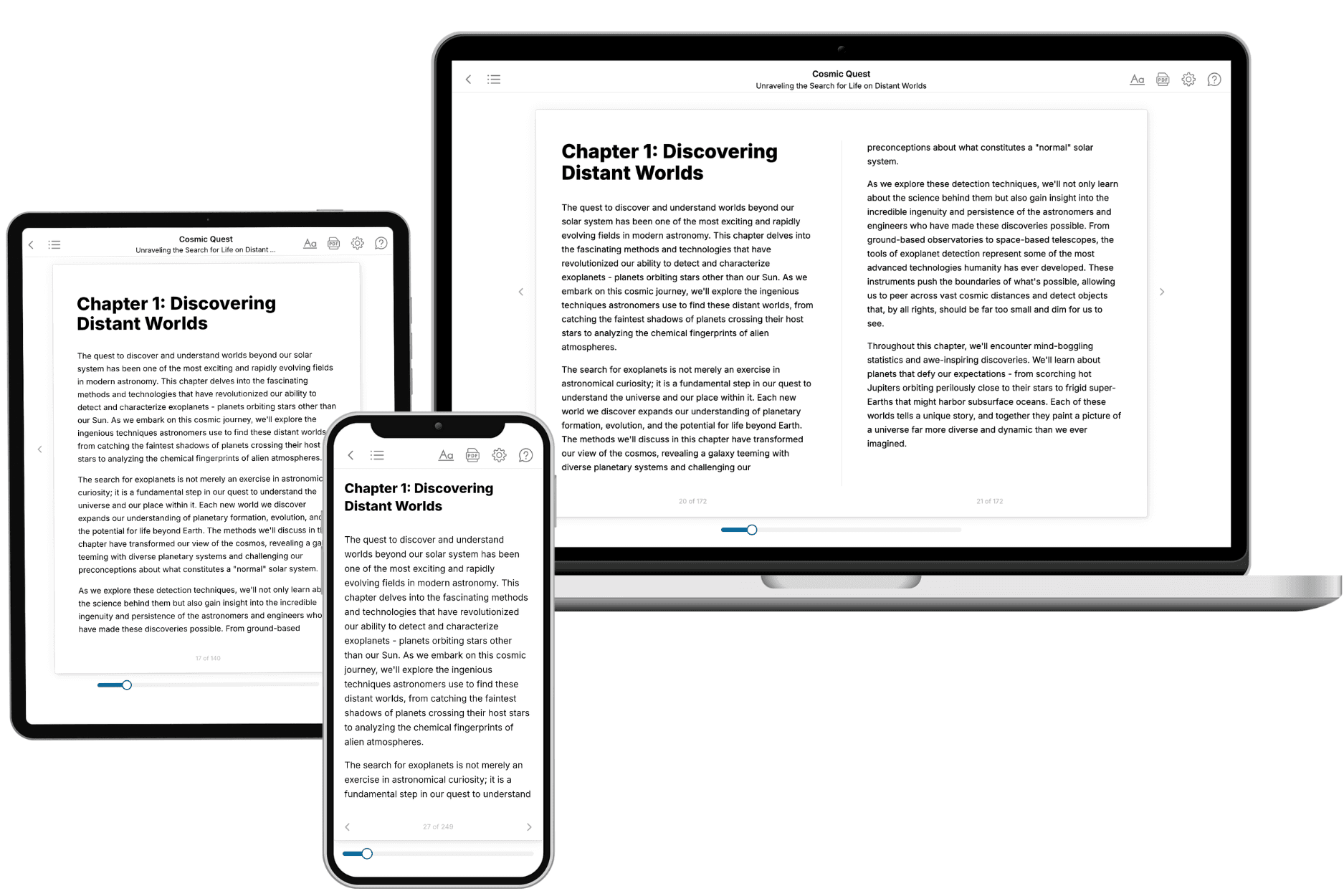
Your book is ready in 10 minutes. Read it online, download as EPUB or PDF, or send to Kindle.

Frequently asked questions
- What is TailoredRead?
TailoredRead creates complete, full-length nonfiction ebooks, written specifically for you. Tell us what you want to learn and why, and TailoredRead writes you a complete ebook on it, with charts, tables, and diagrams throughout. Read it online, on Kindle, or on any e-reader, or download it as a PDF or EPUB. Every book is written fresh the day you order it.
- How is the book tailored to me?
Before anything is written, you answer a few short questions about your goals, your background, and the topics you care about. Your book is then planned around your answers: written at your level, focused on your goals, and covering the topics you chose, instead of the one-size-fits-all book a store sells everyone.
- Will it read like generic AI content?
No. Your book isn't a chat transcript: it's planned chapter by chapter before a single word is written, told in a clear book voice, and explains ideas visually with charts, tables, and diagrams. After writing, every book goes through an editorial pass that polishes chapters so the book reads consistent from start to finish. Judge for yourself: browse thousands of sample books on our Explore Books page.
- How accurate is the content?
Our AI first checks whether your subject needs live research. Niche and fast-moving subjects are researched before writing, and the book plan and chapters are grounded in what it finds. After writing, every book goes through a quality pass that checks its facts and consistency, and researched books list their sources in a Notes section at the back.
- How long is the book?
You choose the length: Comprehensive (250-300 pages), Detailed (150-200 pages), Essential (70-100 pages), or Short (30-50 pages).
- Does the book include visuals?
Yes. Every book includes charts, tables, and diagrams: timelines, checklists, step-by-step guides, decision trees, comparison tables, matrices, and bar charts. A typical book includes dozens of these visual elements.
- Can I read it on Kindle? What formats can I download?
Yes. Every book can be read in our online reader or downloaded as a PDF or EPUB. The EPUB can be opened with Kindle, Apple Books, Kobo, and any e-reader. The Commercial and Author licenses also include an editable Word (DOCX) and Markdown download.
- How much does it cost?
About the price of a regular ebook. The exact price depends on your book's length and complexity, from $2 for the shortest books to $35 for the most comprehensive, and it's shown when you review your book, before you commit to anything. Each book is a one-time purchase, yours to keep, no subscription. Licenses that let you share, teach, or publish your book range from $35.99 to $49.99.
- Can I preview the book before purchasing?
Before you pay, you'll see what your book will cover: the title, a detailed description, the estimated length, and the complete chapter-by-chapter table of contents, so you know what you're getting before you decide. The full text itself is written after you purchase.
- How long does it take to create a book?
About 10 minutes. You can start reading the opening chapters while the rest is still being written.