Quantum-Inspired Machine Learning
Advanced Algorithms and Neural Network Integration for the Modern Developer
Master the art of creating cutting-edge machine learning algorithms that harness the power of quantum computing principles.
269 pages13 chaptersApr 20, 2025Machine LearningCreated by Stanley
About this book
This comprehensive guide takes you on a deep dive into the fascinating world where classical computing meets quantum-inspired techniques, empowering you to revolutionize your approach to AI and neural network development. Discover how to optimize your machine learning algorithms for unprecedented efficiency and performance. You'll learn to leverage parallel computing techniques, explore the potential of neuromorphic processors, and integrate advanced neural networks seamlessly into your projects. With a focus on practical implementation, this book equips you with the tools to develop robust ML frameworks that can tackle complex problems in fields ranging from robotics to compiler design. Whether you're looking to enhance your AI algorithms, dive into quantum-inspired machine learning, or push the boundaries of neural network integration, this book provides the advanced knowledge and hands-on techniques you need. Elevate your skills and stay at the forefront of the rapidly evolving field of machine learning and artificial intelligence.
Table of contents
- IntroductionThe Current Machine Learning Landscape, The Quantum Computing Revolution, Book Overview and Learning PathRead below
- Chapter 1: Foundations of Quantum-Inspired Machine LearningReview of Classical Machine Learning Algorithms, Introduction to Quantum Computing Principles, Bridging Quantum Concepts with Machine Learning, Advantages of Quantum-Inspired Machine Learning
- Chapter 2: Quantum Machine Learning AlgorithmsQuantum Neural Networks, Quantum Support Vector Machines, Quantum Clustering Algorithms, Quantum Optimization Techniques
- Chapter 3: Parallel Machine Learning AlgorithmsFundamentals of Parallel Computing, Data Parallelism in Machine Learning, Model Parallelism Techniques, Distributed Machine Learning Systems
- Chapter 4: Neuromorphic Computing and ProcessorsPrinciples of Neuromorphic Computing, Neuromorphic Hardware Architectures, Spiking Neural Networks, Machine Learning on Neuromorphic Platforms
- Chapter 5: Advanced Neural Network ArchitecturesDeep Belief Networks, Generative Adversarial Networks, Transformer Networks, Graph Neural Networks
- Chapter 6: Quantum-Inspired Optimization TechniquesQuantum Annealing Algorithms, Quantum Approximate Optimization Algorithm (QAOA), Variational Quantum Eigensolver (VQE), Quantum-Inspired Classical Algorithms
- Chapter 7: Machine Learning Security and EncryptionQuantum Threats to Classical Encryption, Post-Quantum Cryptography, Homomorphic Encryption for Machine Learning, Secure Multi-Party Computation in ML
- Chapter 8: Human-Computer Interaction in ML SystemsDesigning Intuitive ML Interfaces, Explainable AI and Model Interpretability, Interactive Machine Learning, Visualization Techniques for ML Outputs
- Chapter 9: Programming Languages for Machine LearningMachine Learning with Java, C# for Machine Learning Applications, Comparing ML Frameworks Across Languages, Polyglot Machine Learning Development
- Chapter 10: Developing Custom Machine Learning FrameworksDesigning ML Framework Architecture, Implementing Core ML Components, Optimizing Framework Performance, Integrating with Existing ML Ecosystems
- Chapter 11: Compiler Optimization for Machine LearningML-Specific Compiler Optimizations, Auto-Vectorization Techniques, Memory Access Optimization, Just-In-Time Compilation for ML
- Chapter 12: Machine Learning in Robotics SystemsML for Robot Perception, Motion Planning and Control with ML, Robot Learning from Demonstration, ML in Multi-Robot Systems
- Chapter 13: Future Directions in Quantum-Inspired Machine LearningEmerging Quantum ML Hardware, Hybrid Quantum-Classical Algorithms, Potential Applications of Quantum ML, Ethical Considerations in Advanced ML
- ConclusionKey Takeaways, Future Outlook for Quantum-Inspired ML
- Glossary
- Further Reading
Introduction
Welcome to the cutting-edge world of quantum-inspired machine learning, where the boundaries of classical computing and quantum principles converge to revolutionize artificial intelligence. As an experienced developer with a Ph.D. in Computer Science, you are about to embark on a journey that will expand your horizons and equip you with the knowledge and skills to push the frontiers of machine learning and quantum computing. This book serves as your comprehensive guide to mastering advanced algorithms, exploring quantum computing applications, and innovating AI techniques with a focus on neural network integration and parallel computing.
In this rapidly evolving field, staying ahead of the curve is crucial. The fusion of quantum concepts with classical machine learning algorithms opens up new possibilities for solving complex problems and optimizing performance. Throughout this book, you will discover how quantum-inspired algorithms can significantly enhance machine learning capabilities, how parallel computing techniques are essential for improving algorithm efficiency, and how neuromorphic computing offers novel paradigms for AI and neural network development. By integrating these cutting-edge concepts, you will be well-equipped to tackle the most challenging problems in AI and contribute to groundbreaking advancements in the field.
As we delve into the intricacies of quantum-inspired machine learning, you will gain insights into advanced neural network architectures optimized for specific ML tasks, explore the importance of quantum-resistant encryption for securing ML systems against future threats, and learn how to apply human-computer interaction principles to design effective ML interfaces. Moreover, you will harness the power of Java and C# to implement sophisticated ML algorithms and leverage compiler optimization techniques to dramatically improve ML code performance. The knowledge you gain will not only enhance your understanding of machine learning but also enable you to apply these advanced techniques to real-world applications, including robotics systems that benefit greatly from ML and neural network integration.
The Current Machine Learning Landscape
The field of machine learning has undergone a remarkable transformation in recent years, driven by advancements in computing power, data availability, and algorithmic innovations. Today's machine learning landscape is characterized by a diverse array of techniques and applications that span across industries and scientific domains. From computer vision and natural language processing to predictive analytics and autonomous systems, machine learning has become an indispensable tool for solving complex problems and extracting valuable insights from vast amounts of data.
One of the most significant developments in the current ML landscape is the rise of deep learning. Deep neural networks, with their multiple layers of interconnected nodes, have demonstrated unprecedented performance in tasks such as image recognition, speech processing, and game playing. The success of deep learning has been fueled by the availability of large datasets and the development of specialized hardware, such as GPUs and TPUs, which can efficiently perform the massive parallel computations required for training these models. This has led to breakthroughs in areas like autonomous vehicles, medical diagnosis, and natural language understanding[1].
Another key trend in the current ML landscape is the growing emphasis on interpretability and explainable AI. As machine learning models become more complex and are deployed in critical decision-making scenarios, there is an increasing need to understand how these models arrive at their conclusions. This has led to the development of techniques for model interpretation, such as LIME (Local Interpretable Model-agnostic Explanations) and SHAP (SHapley Additive exPlanations), which aim to provide human-understandable explanations for model predictions[2].
The current ML landscape is also characterized by a shift towards more efficient and scalable learning algorithms. Techniques such as transfer learning and few-shot learning have gained prominence, allowing models to leverage knowledge from related tasks and learn from limited examples. This has significant implications for domains where large labeled datasets are scarce or expensive to obtain. Additionally, there is a growing focus on developing ML models that can operate on edge devices with limited computational resources, leading to innovations in model compression and efficient inference techniques.
Reinforcement learning (RL) has emerged as another powerful paradigm in the current ML landscape. RL algorithms, which learn through interaction with an environment to maximize cumulative rewards, have achieved remarkable success in areas such as game playing, robotics, and autonomous control systems. The combination of deep learning with reinforcement learning, known as deep reinforcement learning, has led to breakthroughs like AlphaGo, which defeated world champions in the game of Go[3].
The integration of machine learning with other emerging technologies is also shaping the current landscape. For instance, the combination of ML with Internet of Things (IoT) devices is enabling smart cities, predictive maintenance, and personalized healthcare solutions. Similarly, the fusion of ML with blockchain technology is opening up new possibilities for secure and decentralized learning systems.
As the field of machine learning continues to evolve, there is an increasing focus on addressing ethical concerns and ensuring responsible AI development. Issues such as bias in ML models, privacy preservation, and the societal impact of AI are receiving greater attention from researchers, practitioners, and policymakers. This has led to the development of techniques for fair and privacy-preserving machine learning, as well as efforts to establish ethical guidelines and governance frameworks for AI systems.
The current machine learning landscape is also witnessing a shift towards more collaborative and open research practices. Platforms like arXiv and GitHub have facilitated rapid dissemination of research findings and code sharing, accelerating the pace of innovation in the field. Moreover, the availability of open-source ML frameworks and pre-trained models has democratized access to advanced ML capabilities, enabling developers and researchers worldwide to contribute to and benefit from the latest advancements.
In summary, the current machine learning landscape is characterized by rapid innovation, interdisciplinary collaboration, and a growing emphasis on practical applications and responsible development. As we stand on the cusp of integrating quantum computing principles with classical machine learning, the potential for groundbreaking advancements is immense. The following sections will explore how quantum-inspired techniques can further revolutionize this dynamic field, opening up new frontiers in artificial intelligence and computational capabilities.
The Quantum Computing Revolution
The quantum computing revolution represents a paradigm shift in computational capabilities, promising to solve complex problems that are intractable for classical computers. At its core, quantum computing harnesses the principles of quantum mechanics, such as superposition and entanglement, to perform calculations in ways that are fundamentally different from classical computing. This revolutionary approach to computation has the potential to transform various fields, including cryptography, drug discovery, financial modeling, and, most relevantly for our discussion, machine learning and artificial intelligence.
The foundation of quantum computing lies in the quantum bit, or qubit, which is the quantum analog of the classical bit. Unlike classical bits that can only be in one of two states (0 or 1), qubits can exist in a superposition of states, effectively holding multiple values simultaneously. This property allows quantum computers to perform certain calculations exponentially faster than classical computers for specific problems. For instance, Shor's algorithm, a quantum algorithm for integer factorization, can potentially break many of the cryptographic systems currently in use, highlighting both the power and the disruptive potential of quantum computing[4].
The quantum computing revolution is not just a theoretical concept; it is rapidly moving from research laboratories to practical implementations. Tech giants like IBM, Google, and Microsoft, as well as specialized companies like D-Wave Systems and Rigetti Computing, are investing heavily in quantum hardware development. In 2019, Google claimed to have achieved quantum supremacy, demonstrating that their quantum processor could perform a specific calculation significantly faster than the world's most powerful supercomputer[5]. While this claim has been debated, it underscores the rapid progress in the field and the growing competition to develop practical quantum computers.
The implications of the quantum computing revolution for machine learning are profound. Quantum machine learning (QML) algorithms have the potential to dramatically speed up certain computational tasks, such as linear algebra operations, which are fundamental to many ML techniques. For example, the HHL algorithm (named after its inventors Harrow, Hassidim, and Lloyd) can solve certain linear systems of equations exponentially faster than classical algorithms, which could lead to significant improvements in various ML applications[6].
Quantum-inspired algorithms represent an exciting frontier in the quantum computing revolution. These algorithms draw inspiration from quantum principles but can be implemented on classical hardware, offering a bridge between quantum and classical computing. For instance, the quantum approximate optimization algorithm (QAOA) has shown promise in solving combinatorial optimization problems, which are relevant to various ML tasks such as feature selection and clustering. Similarly, tensor network methods, inspired by quantum many-body physics, have been applied to machine learning tasks, demonstrating improved performance in certain scenarios.
The quantum computing revolution is also driving innovations in quantum-resistant cryptography, which is crucial for ensuring the security of ML systems in a post-quantum world. As quantum computers threaten to break many current encryption schemes, researchers are developing new cryptographic methods that can withstand attacks from both classical and quantum computers. This has led to the field of post-quantum cryptography, which aims to develop algorithms that are secure against quantum attacks and can be implemented on classical computers.
Another exciting aspect of the quantum computing revolution is its potential to simulate quantum systems efficiently. This capability could revolutionize fields such as materials science and drug discovery, where understanding quantum interactions is crucial. In the context of machine learning, quantum simulators could potentially be used to train quantum neural networks or to develop new ML algorithms inspired by quantum phenomena.
The quantum computing revolution is also fostering interdisciplinary collaboration between physicists, computer scientists, mathematicians, and engineers. This cross-pollination of ideas is leading to novel approaches in algorithm design, error correction, and hardware development. For instance, topological quantum computing, which uses exotic quantum states of matter to perform computations, represents a convergence of condensed matter physics and quantum information science.
As the quantum computing revolution progresses, it is important to note that it complements rather than replaces classical computing. Many practical applications will likely involve hybrid quantum-classical systems, where quantum processors are used for specific subroutines within larger classical algorithms. This hybrid approach is particularly relevant for near-term quantum devices, which are limited in size and prone to errors, but can still offer advantages for certain computational tasks.
In conclusion, the quantum computing revolution represents a transformative force in computational science, with far-reaching implications for machine learning and artificial intelligence. As quantum hardware continues to improve and quantum algorithms become more sophisticated, we can expect to see groundbreaking advancements in computational capabilities. The following sections will explore how these quantum principles and techniques can be integrated with classical machine learning approaches to create powerful new tools for solving complex problems and advancing the field of AI.
Book Overview and Learning Path
This book, "Quantum-Inspired Machine Learning: Advanced Algorithms and Neural Network Integration for the Modern Developer," is designed to guide you through the exciting intersection of quantum computing principles and advanced machine learning techniques. As an experienced developer with a Ph.D. in Computer Science, you are well-positioned to explore these cutting-edge concepts and apply them to push the boundaries of AI and computational capabilities. The learning path outlined in this book will take you on a comprehensive journey from foundational concepts to advanced applications, equipping you with the knowledge and skills to innovate in this rapidly evolving field.
The book is structured to provide a logical progression through key topics, starting with the foundations and gradually building up to more complex and specialized areas. Each chapter is designed to be both informative and practical, offering a blend of theoretical understanding and hands-on implementation. Throughout the book, you will find code examples, case studies, and practical exercises that will help you apply the concepts to real-world scenarios. The learning path is carefully crafted to ensure that you not only grasp the theoretical underpinnings but also gain the practical skills necessary to implement quantum-inspired machine learning techniques in your projects.
We begin our journey with Chapter 1, "Foundations of Quantum-Inspired Machine Learning," which provides a comprehensive review of classical machine learning algorithms and introduces key quantum computing principles. This chapter serves as a bridge between your existing knowledge and the quantum-inspired techniques you will learn throughout the book. You will explore how quantum concepts can be applied to enhance machine learning algorithms and understand the advantages of quantum-inspired approaches.
Chapter 2, "Quantum Machine Learning Algorithms," delves into specific quantum algorithms that have direct applications in machine learning. You will learn about quantum neural networks, quantum support vector machines, and quantum clustering algorithms. This chapter will provide you with a deep understanding of how quantum principles can be leveraged to create more powerful and efficient machine learning models.
In Chapter 3, "Parallel Machine Learning Algorithms," we explore techniques for optimizing machine learning performance through parallelization. You will learn about data parallelism, model parallelism, and distributed machine learning systems. This chapter is crucial for understanding how to scale your machine learning algorithms to handle large datasets and complex models efficiently.
Chapter 4 introduces you to the fascinating world of "Neuromorphic Computing and Processors." You will explore how brain-inspired computing architectures can be used to implement efficient machine learning algorithms. This chapter covers topics such as spiking neural networks and machine learning on neuromorphic platforms, providing insights into alternative computing paradigms for AI.
As we progress, Chapter 5 focuses on "Advanced Neural Network Architectures," where you will learn about cutting-edge models such as deep belief networks, generative adversarial networks, transformer networks, and graph neural networks. This chapter will equip you with the knowledge to design and implement sophisticated neural network architectures tailored to specific machine learning tasks.
Chapter 6, "Quantum-Inspired Optimization Techniques," explores how quantum principles can be applied to solve optimization problems in machine learning. You will learn about quantum annealing, the quantum approximate optimization algorithm (QAOA), and other quantum-inspired classical algorithms that can enhance the performance of your machine learning models.
Security is a critical concern in any machine learning system, and Chapter 7 addresses this with "Machine Learning Security and Encryption." You will explore quantum threats to classical encryption, post-quantum cryptography, and techniques for secure multi-party computation in machine learning. This chapter is essential for ensuring that your ML systems remain secure in the face of advancing quantum computing capabilities.
Chapter 8 focuses on "Human-Computer Interaction in ML Systems," teaching you how to design intuitive interfaces for machine learning applications. You will learn about explainable AI, interactive machine learning, and visualization techniques for ML outputs, ensuring that your advanced algorithms remain accessible and interpretable to users.
In Chapter 9, "Programming Languages for Machine Learning," we explore how to implement sophisticated ML algorithms using Java and C#. You will compare ML frameworks across different languages and learn about polyglot machine learning development, enabling you to choose the best tools for your specific projects.
Chapter 10 guides you through "Developing Custom Machine Learning Frameworks," where you will learn to design and implement your own ML framework architecture. This chapter covers core ML components, framework optimization, and integration with existing ML ecosystems, empowering you to create tailored solutions for complex machine learning problems.
Chapter 11 delves into "Compiler Optimization for Machine Learning," teaching you how to dramatically improve ML code performance through techniques such as auto-vectorization, memory access optimization, and just-in-time compilation for ML.
In Chapter 12, we explore "Machine Learning in Robotics Systems," showing you how to apply advanced ML techniques to robot perception, motion planning, and multi-robot systems. This chapter demonstrates the practical applications of quantum-inspired machine learning in the field of robotics.
Finally, Chapter 13 looks at "Future Directions in Quantum-Inspired Machine Learning," discussing emerging quantum ML hardware, hybrid quantum-classical algorithms, and potential applications of quantum ML. This chapter also addresses ethical considerations in advanced ML, ensuring that you are prepared to navigate the complex landscape of AI development responsibly.
Throughout this learning path, you will be challenged to think critically, apply your knowledge to practical problems, and explore the cutting edge of machine learning and quantum computing. By the end of this book, you will have gained a comprehensive understanding of quantum-inspired machine learning techniques and be well-equipped to innovate in this exciting field. Whether you're looking to enhance existing AI algorithms, develop new quantum-inspired approaches, or apply these advanced techniques to real-world problems, this book will provide you with the knowledge and skills to excel in the rapidly evolving world of machine learning and artificial intelligence.
Notes
Introduction
- 1. Y. LeCun and others, "Deep learning," Nature, 2015
- 2. M. T. Ribeiro and others, ""Why Should I Trust You?": Explaining the Predictions of Any Classifier," Proceedings of the 22nd ACM SIGKDD International Conference on Knowledge Discovery and Data Mining, 2016
- 3. D. Silver and others, "Mastering the game of Go with deep neural networks and tree search," Nature, 2016
- 4. P. W. Shor, "Polynomial-Time Algorithms for Prime Factorization and Discrete Logarithms on a Quantum Computer," SIAM Review, 1999
- 5. F. Arute and others, "Quantum supremacy using a programmable superconducting processor," Nature, 2019
- 6. A. W. Harrow and others, "Quantum algorithm for linear systems of equations," Physical Review Letters, 2009
This is the end of the free sample. The full book has 13 chapters.
Want this book written for you?
Tell us your goals and background, and get your own version of this book, tailored by AI to you.


Benefits of AI-tailored books
- Read one book, not ten:
- all the Machine Learning knowledge you need, gathered into a single book.
- Save days of learning:
- tell us your goals, choose your topics, and the whole book is built around them.
- Learn effortlessly:
- Machine Learning book written for your specific background and expertise.
- Understand at a glance:
- includes charts, tables, timelines, checklists, decision trees, and more.
- Stay current:
- written the day you order it, not years ago.
- Trust what you read:
- every book is checked for accuracy, with real research when your subject needs it.
Create your unique book in 3 steps
- 1. Select your focus
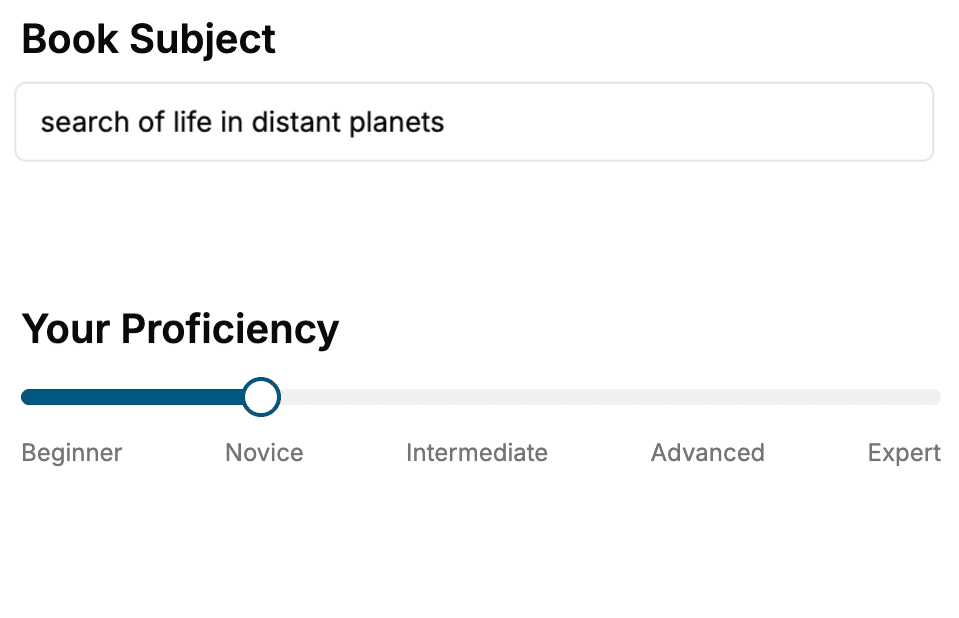
Select the focus of your Machine Learning book and share your background
- 2. Personalize your book
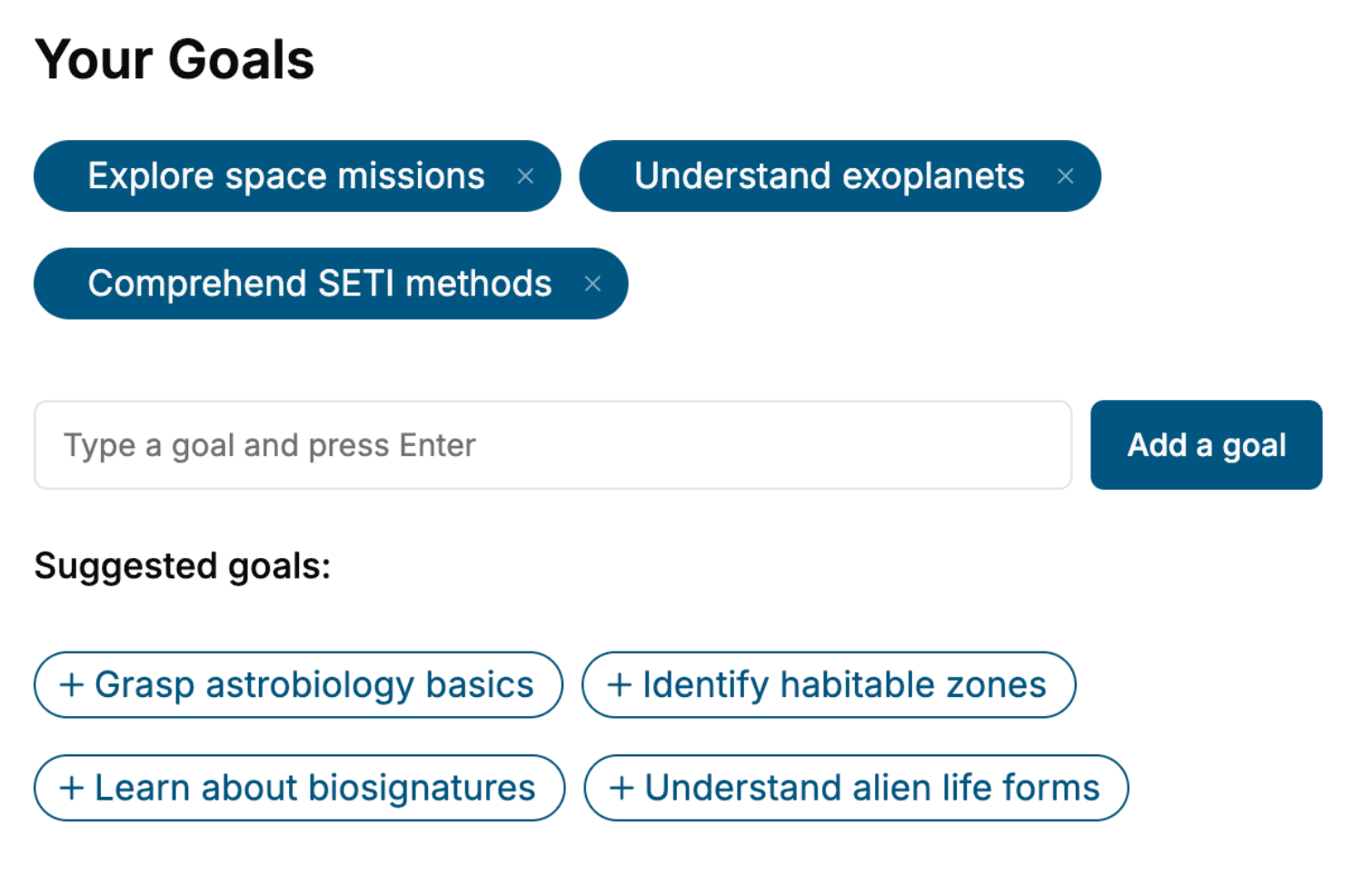
Specify your goals and choose sub-topics to include
- 3. Get your tailored book
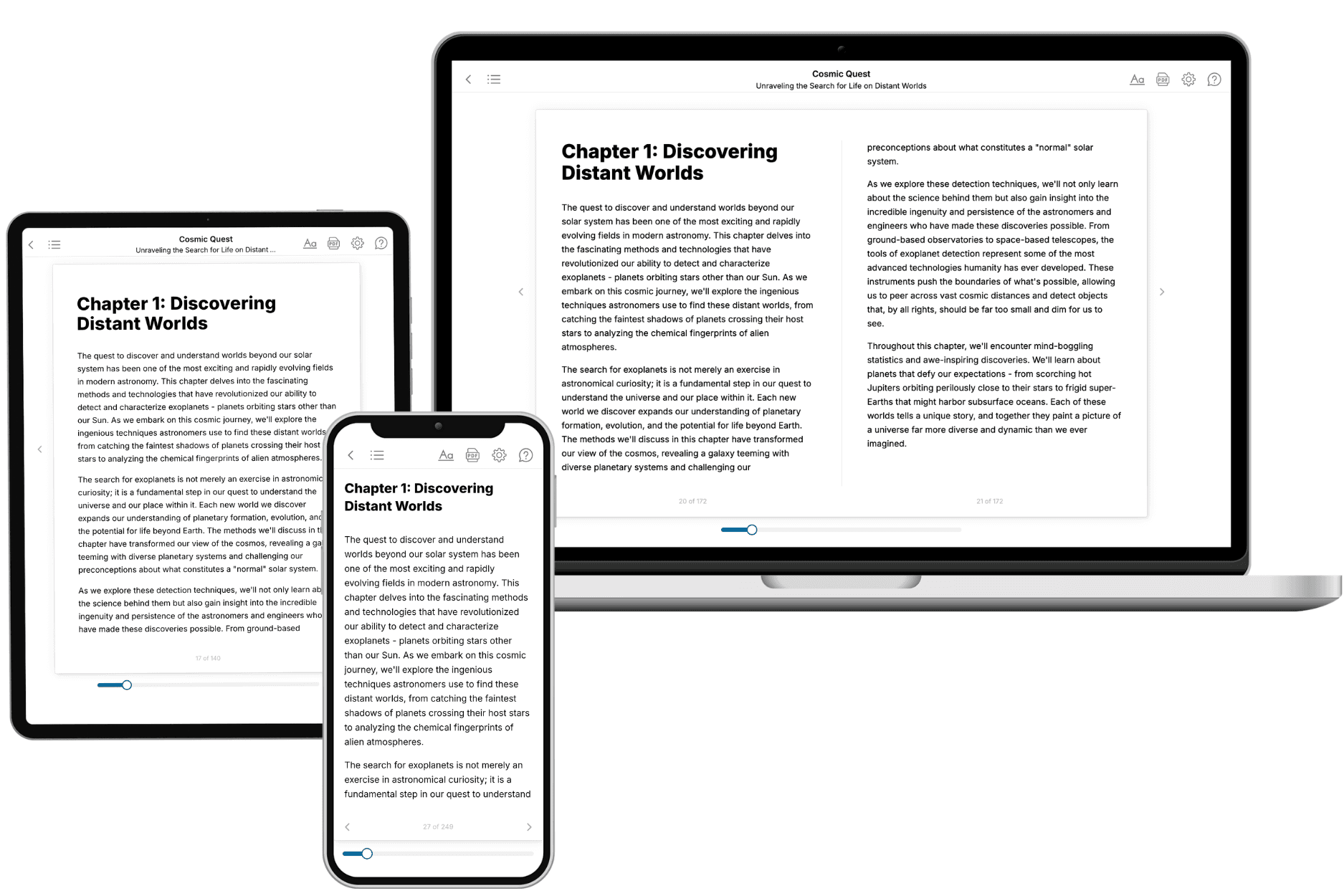
Your book is ready in 10 minutes. Read it online, download as EPUB or PDF, or send to Kindle.
Frequently asked questions
- What is TailoredRead?
TailoredRead creates complete, full-length nonfiction ebooks, written specifically for you. Tell us what you want to learn and why, and TailoredRead writes you a complete ebook on it, with charts, tables, and diagrams throughout. Read it online, on Kindle, or on any e-reader, or download it as a PDF or EPUB. Every book is written fresh the day you order it.
- How is the book tailored to me?
Before anything is written, you answer a few short questions about your goals, your background, and the topics you care about. Your book is then planned around your answers: written at your level, focused on your goals, and covering the topics you chose, instead of the one-size-fits-all book a store sells everyone.
- Will it read like generic AI content?
No. Your book isn't a chat transcript: it's planned chapter by chapter before a single word is written, told in a clear book voice, and explains ideas visually with charts, tables, and diagrams. After writing, every book goes through an editorial pass that polishes chapters so the book reads consistent from start to finish. Judge for yourself: browse thousands of sample books on our Explore Books page.
- How accurate is the content?
Our AI first checks whether your subject needs live research. Niche and fast-moving subjects are researched before writing, and the book plan and chapters are grounded in what it finds. After writing, every book goes through a quality pass that checks its facts and consistency, and researched books list their sources in a Notes section at the back.
- How long is the book?
You choose the length: Comprehensive (250-300 pages), Detailed (150-200 pages), Essential (70-100 pages), or Short (30-50 pages).
- Does the book include visuals?
Yes. Every book includes visual elements such as timelines, checklists, step-by-step guides, decision trees, comparison tables, and matrices, and many include bar charts. A typical book includes dozens of these visual elements.
- Can I read it on Kindle? What formats can I download?
Yes. Every book can be read in our online reader or downloaded as a PDF or EPUB. The EPUB can be opened with Kindle, Apple Books, Kobo, and any e-reader. The Commercial and Author licenses also include an editable Word (DOCX) and Markdown download.
- How much does it cost?
About the price of a regular ebook. The exact price depends on your book's length and complexity, from $2 for the shortest books to $35 for the most comprehensive, and it's shown when you review your book, before you commit to anything. Each book is a one-time purchase, yours to keep, no subscription. Licenses that let you share, teach, or publish your book range from $35.99 to $49.99.
- Can I preview the book before purchasing?
Before you pay, you'll see what your book will cover: the title, a detailed description, the estimated length, and the complete chapter-by-chapter table of contents, so you know what you're getting before you decide. The full text itself is written after you purchase.
- How long does it take to create a book?
About 10 minutes. You can start reading the opening chapters while the rest is still being written.