Raft Consensus Explained
Building Reliable Distributed Systems with Raft
You'll navigate through the fundamental concepts of distributed consensus and discover why Raft has become the go-to algorithm for building reliable backend systems.
207 pages11 chaptersJun 21, 2026Consensus Algorithms
About this book
Starting with the core principles of leader election and log replication, you'll progress through practical implementation details that matter in production environments. The book walks you through how Raft maintains consistency across multiple servers, handles failures gracefully, and ensures no committed data is ever lost. You'll explore real-world challenges like network partitions, server crashes, and membership changes, learning proven strategies to address each. By the end, you'll understand not just how Raft works, but when to use it, how to optimize it for your specific needs, and how to troubleshoot issues when they arise. Whether you're building databases, distributed caches, or coordination services, this book equips you with the knowledge to implement robust consensus mechanisms that your systems can depend on.
Table of contents
- IntroductionWhy Consensus Matters in Distributed Systems, Raft vs. Other Consensus Algorithms, What You'll Learn in This BookRead below
- Chapter 1: Foundations of Distributed ConsensusThe Core Challenges of Distributed Systems, Understanding Consistency Models, The Consensus Problem Explained
- Chapter 2: Raft Architecture and Core ConceptsRaft System Overview, Server States: Leader, Follower, and Candidate, Terms and Voting Mechanism
- Chapter 3: Leader Election in RaftHow Leader Election Works, Randomized Timeouts and Election Safety, Handling Split Votes and Re-elections
- Chapter 4: Log Replication and ConsistencyUnderstanding the Replicated Log, The AppendEntries RPC Mechanism, Log Matching Property and Consistency
- Chapter 5: Safety Guarantees and CorrectnessElection Safety: Preventing Conflicting Leaders, Leader Completeness Property, State Machine Safety and Committed Entries
- Chapter 6: Practical Implementation ConsiderationsPersistent State and Durability, Volatile State and In-Memory Structures, Implementing RPC Calls Reliably
- Chapter 7: Handling Failures and Network PartitionsRecovering from Server Crashes, Dealing with Network Partitions, Managing Partial Failures and Timeouts
- Chapter 8: Advanced Topics: Snapshotting and CompactionThe Log Growth Problem, Implementing Snapshots, Log Compaction and Cleanup Strategies
- Chapter 9: Cluster Membership ChangesChallenges in Changing Cluster Membership, Joint Consensus Approach, Adding and Removing Servers Safely
- Chapter 10: Performance Optimization and TuningFactors Affecting Latency and Throughput, Batching and Pipelining Techniques, Tuning Timeouts and Configuration Parameters
- Chapter 11: Real-World Applications and Case StudiesRaft in Distributed Databases, Raft for Service Coordination and Configuration, Lessons from Production Deployments
- ConclusionKey Takeaways and Next Steps, When to Use Raft and When to Consider Alternatives
Introduction
Distributed systems are everywhere. The database backing your web application, the configuration service keeping your microservices in sync, the coordination layer ensuring only one worker processes a given job at a time — all of these rely on some form of agreement between multiple machines. Getting that agreement right is harder than it sounds. Machines crash, networks drop packets, and clocks drift. Building software that stays correct in the face of all that chaos is one of the most demanding challenges in backend engineering.
At the heart of many reliable distributed systems is a consensus algorithm: a protocol that allows a group of servers to agree on a sequence of values, even when some of those servers fail or become temporarily unreachable. For years, the dominant algorithm in this space was Paxos, first described by Leslie Lamport in the late 1980s. Paxos is theoretically sound, but it has a well-earned reputation for being difficult to understand and even harder to implement correctly. Many engineers who have tried to build Paxos-based systems from scratch have discovered that the gap between the paper and a working, production-ready implementation is enormous.
That gap is exactly what motivated Diego Ongaro and John Ousterhout to design Raft. Published in their 2014 paper "In Search of an Understandable Consensus Algorithm," Raft was built from the ground up with one explicit goal: understandability.[1] The authors decomposed the consensus problem into three relatively independent subproblems — leader election, log replication, and safety — and designed clear, well-defined mechanisms for each. The result is an algorithm that is just as correct as Paxos but far more approachable for working engineers.
Since its publication, Raft has been adopted widely across the industry. Systems like etcd (the backbone of Kubernetes), CockroachDB, TiKV, and Consul all use Raft or Raft-inspired protocols to maintain consistency across distributed nodes. If you work with any of these systems, or if you are building something that needs strong consistency guarantees, understanding Raft is not just academically interesting — it is practically essential. This book gives you that understanding, from the foundational concepts all the way through to production-level implementation details.
This introduction sets the stage for everything that follows. It explains why consensus is such a critical problem in distributed systems, how Raft compares to the alternatives you might have heard of, and what you can expect to learn as you work through the chapters ahead. Whether you are coming to this book with a solid background in distributed systems or you are building that foundation now, the goal is the same: to leave you with a clear, confident understanding of how Raft works and how to put it to use.
Why Consensus Matters in Distributed Systems
Imagine a simple key-value store running on a single server. A client writes a value, and the server stores it. Another client reads it back. The logic is straightforward because there is only one machine making decisions. Now imagine spreading that store across five servers to improve availability and handle more traffic. Suddenly, a simple write becomes a coordination problem. Which server accepts the write? How do the others learn about it? What happens if one server crashes mid-write? What if two servers disagree about the current value? These questions do not have easy answers, and getting them wrong leads to data loss, stale reads, or split-brain scenarios where different parts of your system believe different things are true.
This is the core problem that consensus algorithms solve. A consensus algorithm ensures that a group of servers can agree on a single, ordered sequence of values, even in the presence of failures. Once a value is committed — meaning a majority of servers have acknowledged it — it is guaranteed to survive any future failures that do not wipe out the entire cluster. This guarantee is what makes distributed systems reliable enough to trust with critical data.
The importance of consensus shows up in a surprising number of places. Consider these common distributed system components that depend on it:
- Distributed databases: Systems like CockroachDB and TiDB use consensus to replicate transactions across nodes, ensuring that a committed transaction is never lost even if a server fails immediately after the commit.
- Coordination services: Tools like etcd and ZooKeeper use consensus to store configuration data and distributed locks, providing a single source of truth for entire clusters of services.
- Distributed queues and logs: Systems like Apache Kafka use consensus-like mechanisms to replicate log partitions, ensuring that messages are not lost when brokers go down.
- Leader election: Many distributed applications need exactly one process to act as a leader at any given time. Consensus is the mechanism that makes that election safe and reliable.
Without consensus, distributed systems fall back on weaker guarantees. Some systems use eventual consistency, where replicas may temporarily disagree but will converge over time. This is acceptable for some use cases, like a social media feed where a slightly stale post count does not matter. But for financial transactions, configuration management, or any scenario where correctness is non-negotiable, eventual consistency is not enough. You need strong consistency, and strong consistency requires consensus.
The challenge is that consensus is provably hard in certain conditions. The FLP impossibility result, published in 1985 by Fischer, Lynch, and Paterson, proved that no deterministic consensus algorithm can guarantee progress in an asynchronous system where even a single process might fail.[2] In practice, this means consensus algorithms must make trade-offs. Raft, like most practical algorithms, assumes a partially synchronous network — one that is usually timely but may occasionally experience delays. Under that assumption, Raft can guarantee both safety (never returning incorrect results) and liveness (eventually making progress) in the presence of up to a minority of failed servers.
Understanding these trade-offs is not just theoretical background. It directly affects how you design and operate systems built on Raft. For example, knowing that Raft requires a majority quorum to commit entries tells you that a five-node cluster can tolerate two simultaneous failures, but a three-node cluster can only tolerate one. That knowledge shapes decisions about cluster sizing, deployment topology, and failure response procedures. Consensus is not a black box you plug in and forget — it is a set of guarantees and constraints that your entire system architecture must account for.
The good news is that Raft makes these trade-offs explicit and understandable. Unlike some algorithms that bury their assumptions in dense mathematical notation, Raft's design is structured around clarity. Each mechanism has a clear purpose, and the safety properties are stated in plain terms that you can reason about directly. That clarity is what makes Raft not just a good algorithm, but a good foundation for building systems you can actually understand, debug, and trust.
Raft vs. Other Consensus Algorithms
Before Raft, the consensus algorithm most engineers encountered was Paxos. Lamport's original Paxos paper described a single-decree consensus protocol — a way to agree on one value. Extending it to agree on a sequence of values (which is what you actually need for a replicated log) requires Multi-Paxos, a protocol that Lamport described only informally. The result is that every team implementing Paxos has had to fill in the gaps themselves, leading to a wide variety of implementations that differ in subtle but important ways. Google's Chubby lock service, for example, is based on Paxos, but the engineering team noted that the protocol was difficult to implement and required significant effort to make production-ready.[3]
Raft addresses this directly. Rather than leaving the multi-value extension as an exercise for the implementer, Raft specifies the full protocol for a replicated log from the start. Every aspect of the algorithm — how leaders are elected, how log entries are replicated, how conflicts are resolved — is defined precisely. This completeness is one of Raft's biggest practical advantages over Paxos.
Here is a side-by-side comparison of the key differences:
- Understandability: Raft was explicitly designed to be easier to understand. In user studies conducted by Ongaro and Ousterhout, participants who learned Raft performed significantly better on comprehension questions than those who learned Paxos.[1]
- Leader-based vs. leaderless: Raft uses a strong leader model where all writes flow through a single elected leader. Paxos (in its basic form) does not require a persistent leader, which adds flexibility but also complexity.
- Log management: Raft defines explicit rules for how logs are compared and reconciled during leader election, making it straightforward to reason about log consistency. Paxos leaves much of this to the implementer.
- Membership changes: Raft includes a defined protocol for safely adding and removing servers from the cluster. Paxos does not specify this at all in the original formulation.
Another algorithm worth comparing is Viewstamped Replication (VR), developed by Liskov and Cowling. VR is actually quite similar to Raft in structure — it uses a primary-backup model with a replicated log and a view change protocol analogous to Raft's leader election. The two algorithms were developed independently and arrived at similar designs, which is a good sign that the approach is sound. The main practical difference is that Raft has far more documentation, tooling, and community support, making it the more accessible choice for most teams today.
Zab (ZooKeeper Atomic Broadcast) is the protocol used by Apache ZooKeeper. Like Raft, it uses a leader-based approach with a replicated log. Zab and Raft share many properties, but Zab was designed specifically for ZooKeeper's use case and is not as general-purpose. If you are building a new system from scratch, Raft gives you more flexibility and a cleaner separation between the consensus layer and your application logic.
More recently, Byzantine fault-tolerant (BFT) algorithms like PBFT (Practical Byzantine Fault Tolerance) and newer variants like HotStuff have gained attention, particularly in blockchain and distributed ledger contexts. These algorithms can tolerate not just crashed servers but actively malicious ones — servers that send incorrect or conflicting messages. Raft, like Paxos and VR, assumes crash fault tolerance only: servers either work correctly or stop responding. If you need to defend against malicious nodes, Raft is not the right tool. But for the vast majority of distributed systems running in trusted environments, crash fault tolerance is exactly what you need, and Raft delivers it efficiently.
The practical takeaway is this: Raft is not the only consensus algorithm, and it is not always the best choice for every situation. But for building reliable, strongly consistent distributed systems in environments where you trust your servers to behave correctly (even if they crash), Raft offers the best combination of correctness, completeness, and understandability available today. That is why it has become the default choice for so many production systems, and why it is worth investing the time to understand it deeply.
A note on Paxos: Dismissing Paxos entirely would be a mistake. Many battle-tested systems are built on it, and understanding Paxos helps you appreciate the design choices Raft makes. But if you are starting a new project and need to implement consensus yourself, Raft is almost certainly the better starting point.
What You'll Learn in This Book
This book is structured to take you from foundational concepts to production-ready knowledge in a logical progression. Each chapter builds on the previous ones, so by the time you reach the advanced topics, you will have the context needed to understand why those details matter. Here is a roadmap of what lies ahead.
Chapter 1: Foundations of Distributed Consensus establishes the groundwork. It covers the core challenges that make distributed systems hard — partial failures, network unreliability, and the absence of a global clock — and explains the consistency models that distributed systems can offer. It then frames the consensus problem precisely, giving you the vocabulary and mental models you will use throughout the rest of the book.
Chapters 2 through 5 form the core of the book, covering Raft's fundamental mechanisms in depth:
- Chapter 2 introduces Raft's overall architecture, the three server states (leader, follower, and candidate), and the concept of terms that Raft uses to track time and detect stale information.
- Chapter 3 dives into leader election — how a new leader is chosen when the current one fails, how randomized timeouts prevent election conflicts, and how the algorithm handles the tricky case of split votes.
- Chapter 4 covers log replication in detail, explaining how the leader propagates entries to followers, how the AppendEntries RPC works, and how Raft's log matching property ensures consistency across the cluster.
- Chapter 5 examines Raft's safety guarantees — the formal properties that ensure correctness — including election safety, leader completeness, and state machine safety.
Chapters 6 and 7 shift from theory to practice. Chapter 6 covers the implementation details that matter in real systems: what state must be persisted to disk, what can be kept in memory, and how to implement the RPC calls that Raft depends on reliably. Chapter 7 addresses failure handling — what happens when servers crash and restart, how network partitions affect the cluster, and how to manage the partial failures and timeouts that are inevitable in production environments.
Chapters 8 and 9 tackle two advanced topics that every production Raft deployment must address. Chapter 8 explains the log growth problem and how snapshotting and log compaction solve it, keeping memory and disk usage bounded over time. Chapter 9 covers cluster membership changes — the surprisingly complex problem of safely adding or removing servers from a running Raft cluster without risking split-brain scenarios.
Chapters 10 and 11 round out the book with performance and real-world context. Chapter 10 examines the factors that affect Raft's latency and throughput, and covers optimization techniques like batching, pipelining, and careful timeout tuning. Chapter 11 looks at how Raft is used in real production systems — distributed databases, coordination services, and more — drawing lessons from actual deployments that you can apply to your own work.
Throughout the book, you will find concrete examples, implementation patterns, and specific guidance on common pitfalls. The goal is not just to explain how Raft works in the abstract, but to give you the knowledge to make good decisions when you are sitting in front of a real codebase or a real production incident. By the end, you should be able to:
- Explain Raft's core mechanisms clearly to a colleague or in a design review.
- Identify the key implementation decisions that affect correctness and performance.
- Reason about how your Raft-based system will behave under various failure scenarios.
- Evaluate existing Raft libraries and frameworks with a critical eye.
- Know when Raft is the right tool for a given problem and when a different approach might serve you better.
One thing this book does not assume is that you will implement Raft from scratch. Many teams will use an existing library like etcd/raft, hashicorp/raft, or a database that already embeds Raft internally. Even in those cases, understanding the algorithm deeply pays dividends. When something goes wrong in production — and in distributed systems, something always eventually goes wrong — the engineers who understand the underlying protocol are the ones who can diagnose the problem quickly and fix it correctly. That understanding is what this book is designed to give you.
A few practical notes before you dive in. The code examples in this book use pseudocode and Go-style syntax to illustrate concepts. You do not need to be a Go expert to follow along — the examples are written to be readable by any engineer familiar with a C-style language. Where specific implementation details vary between languages or frameworks, the text will call that out explicitly. The focus throughout is on concepts and principles that apply regardless of which language or library you ultimately use.
Distributed systems can feel intimidating, and consensus algorithms in particular have a reputation for being the domain of specialists. That reputation is not entirely undeserved — these are genuinely complex topics. But complexity is not the same as inaccessibility. Raft was designed to be understood, and this book was written with the same goal in mind. Take it one chapter at a time, work through the examples, and by the end you will find that what once seemed mysterious is actually quite logical. Let's get started.
Notes
Introduction
- 1. D. Ongaro and J. Ousterhout, In Search of an Understandable Consensus Algorithm, USENIX Annual Technical Conference (ATC '14), 2014
- 2. M. J. Fischer and others, "Impossibility of Distributed Consensus with One Faulty Process," Journal of the ACM, 1985
- 3. M. Burrows, "The Chubby Lock Service for Loosely-Coupled Distributed Systems," OSDI '06: Proceedings of the 7th Symposium on Operating Systems Design and Implementation, 2006
- 1. D. Ongaro and J. Ousterhout, In Search of an Understandable Consensus Algorithm, USENIX Annual Technical Conference (ATC '14), 2014
This is the end of the free sample. The full book has 11 chapters.
Want this book written for you?
Tell us your goals and background, and get your own version of this book, tailored by AI to you.


Benefits of AI-tailored books
- Read one book, not ten:
- all the Consensus Algorithms knowledge you need, gathered into a single book.
- Save days of learning:
- tell us your goals, choose your topics, and the whole book is built around them.
- Learn effortlessly:
- Consensus Algorithms book written for your specific background and expertise.
- Understand at a glance:
- includes charts, tables, timelines, checklists, decision trees, and more.
- Stay current:
- written the day you order it, not years ago.
- Trust what you read:
- every book is checked for accuracy, with real research when your subject needs it.
Create your unique book in 3 steps
- 1. Select your focus
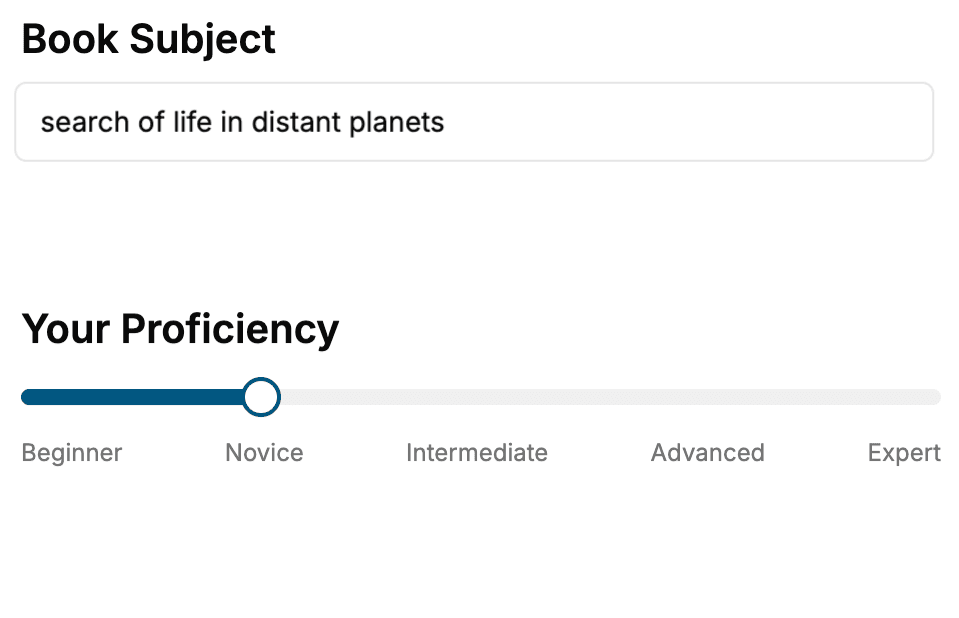
Select the focus of your Consensus Algorithms book and share your background
- 2. Personalize your book
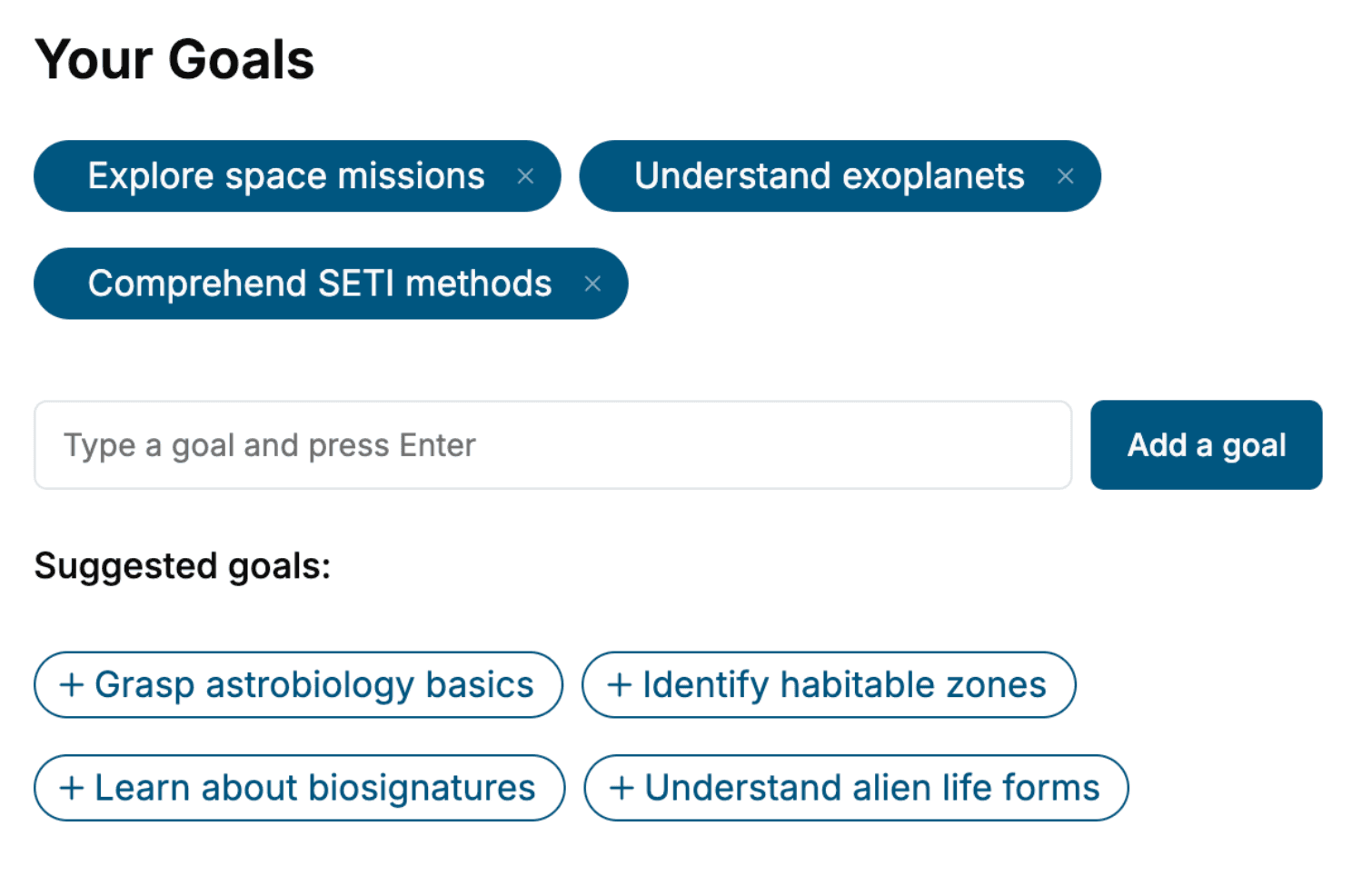
Specify your goals and choose sub-topics to include
- 3. Get your tailored book
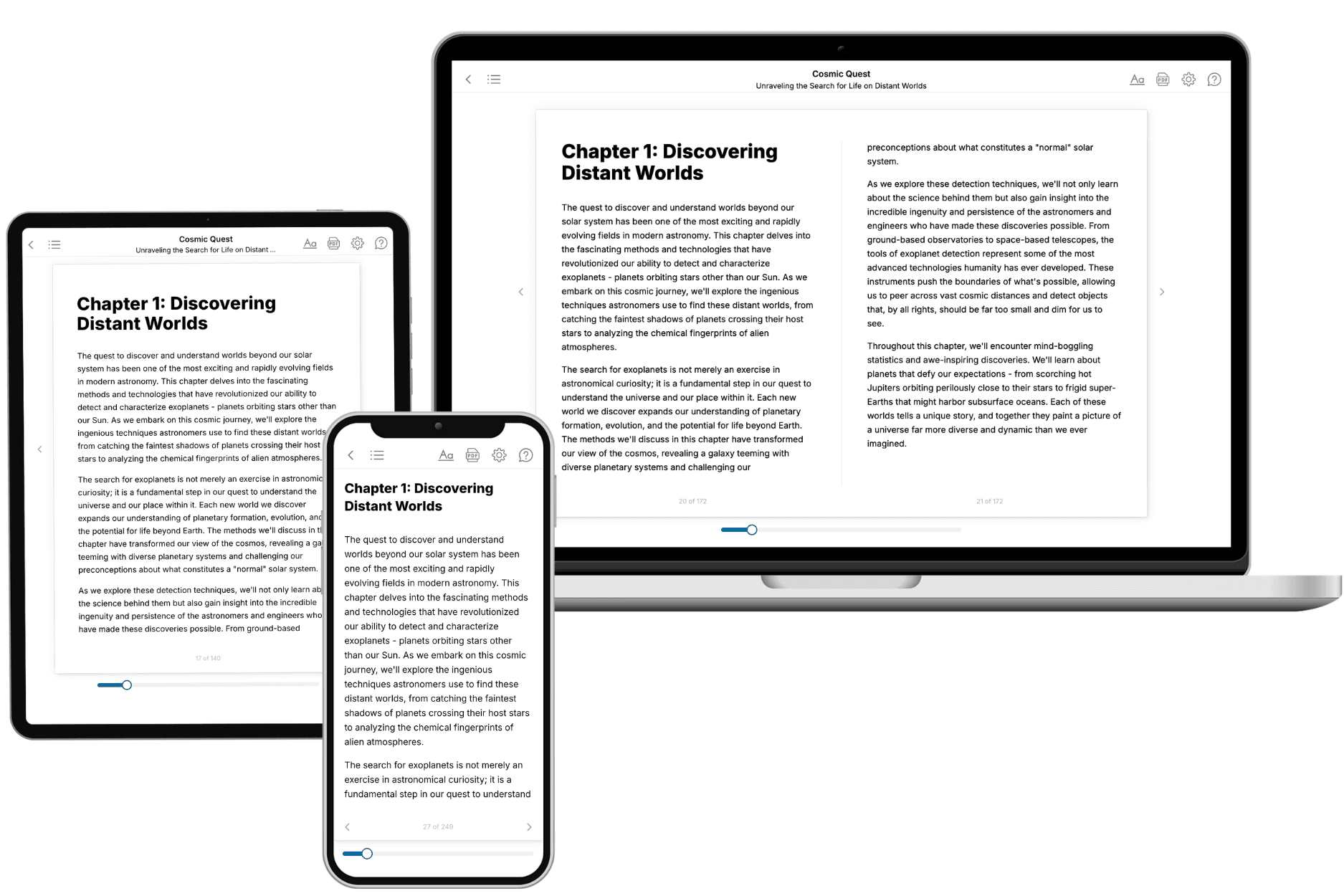
Your book is ready in 10 minutes. Read it online, download as EPUB or PDF, or send to Kindle.
Frequently asked questions
- What is TailoredRead?
TailoredRead creates complete, full-length nonfiction ebooks, written specifically for you. Tell us what you want to learn and why, and TailoredRead writes you a complete ebook on it, with charts, tables, and diagrams throughout. Read it online, on Kindle, or on any e-reader, or download it as a PDF or EPUB. Every book is written fresh the day you order it.
- How is the book tailored to me?
Before anything is written, you answer a few short questions about your goals, your background, and the topics you care about. Your book is then planned around your answers: written at your level, focused on your goals, and covering the topics you chose, instead of the one-size-fits-all book a store sells everyone.
- Will it read like generic AI content?
No. Your book isn't a chat transcript: it's planned chapter by chapter before a single word is written, told in a clear book voice, and explains ideas visually with charts, tables, and diagrams. After writing, every book goes through an editorial pass that polishes chapters so the book reads consistent from start to finish. Judge for yourself: browse thousands of sample books on our Explore Books page.
- How accurate is the content?
Our AI first checks whether your subject needs live research. Niche and fast-moving subjects are researched before writing, and the book plan and chapters are grounded in what it finds. After writing, every book goes through a quality pass that checks its facts and consistency, and researched books list their sources in a Notes section at the back.
- How long is the book?
You choose the length: Comprehensive (250-300 pages), Detailed (150-200 pages), Essential (70-100 pages), or Short (30-50 pages).
- Does the book include visuals?
Yes. Every book includes charts, tables, and diagrams: timelines, checklists, step-by-step guides, decision trees, comparison tables, matrices, and bar charts. A typical book includes dozens of these visual elements.
- Can I read it on Kindle? What formats can I download?
Yes. Every book can be read in our online reader or downloaded as a PDF or EPUB. The EPUB can be opened with Kindle, Apple Books, Kobo, and any e-reader. The Commercial and Author licenses also include an editable Word (DOCX) and Markdown download.
- How much does it cost?
About the price of a regular ebook. The exact price depends on your book's length and complexity, from $2 for the shortest books to $35 for the most comprehensive, and it's shown when you review your book, before you commit to anything. Each book is a one-time purchase, yours to keep, no subscription. Licenses that let you share, teach, or publish your book range from $35.99 to $49.99.
- Can I preview the book before purchasing?
Before you pay, you'll see what your book will cover: the title, a detailed description, the estimated length, and the complete chapter-by-chapter table of contents, so you know what you're getting before you decide. The full text itself is written after you purchase.
- How long does it take to create a book?
About 10 minutes. You can start reading the opening chapters while the rest is still being written.