RAG Mastery
Advanced Techniques for ChatGPT, Milvus, and ElasticSearch Integration
Level up your AI engineering skills with RAG Mastery, the definitive guide to implementing cutting-edge Retrieval-Augmented Generation systems.
346 pages19 chaptersApr 21, 2025Artificial IntelligenceCreated by Chris
About this book
This comprehensive resource delves deep into the integration of ChatGPT, Milvus, and ElasticSearch, providing you with the knowledge and tools to build sophisticated AI-powered search and retrieval solutions. You'll gain hands-on experience in optimizing vector databases, enhancing search accuracy, and scaling AI applications to new heights. From mastering vector indexing and semantic search to implementing distributed RAG and multimodal systems, this book covers the entire spectrum of advanced RAG techniques. Packed with practical insights, real-world examples, and expert strategies, RAG Mastery will empower you to architect robust AI pipelines, fine-tune models for peak performance, and innovate AI architectures. Whether you're looking to streamline RAG workflows, boost AI response quality, or create cutting-edge AI knowledge bases, this book is your ultimate guide to pushing the boundaries of AI system design.
Table of contents
- IntroductionOverview of Retrieval-Augmented Generation, Book Structure and Learning Path, ChatGPT, Milvus, and ElasticSearch: The RAG Tech Stack, Prerequisites and SetupRead below
- Chapter 1: Foundations of Advanced RAG SystemsVector Indexing Fundamentals, Semantic Search Principles, Understanding Embedding Models, RAG System Architecture Overview
- Chapter 2: Data Preprocessing for RAGText Extraction and Cleaning, Advanced Chunking Techniques, Metadata Enrichment Strategies, Data Augmentation for RAG
- Chapter 3: Mastering Vector Databases with MilvusMilvus Architecture Deep Dive, Indexing Strategies in Milvus, Sharding and Scaling Milvus, Query Optimization in Milvus
- Chapter 4: ElasticSearch Integration for RAGElasticSearch Relevance Tuning, Optimizing ElasticSearch Mappings, Leveraging ElasticSearch Aggregations, Efficient Data Retrieval with Scroll API
- Chapter 5: Implementing Hybrid SearchCombining Vector and Keyword Search, Ranking Fusion Techniques, Multi-Index Search Strategies, Evaluating Hybrid Search Performance
- Chapter 6: Query Optimization TechniquesQuery Expansion Strategies, AI-Powered Query Rewriting, Leveraging Contextual Embeddings, Intelligent Query Routing
- Chapter 7: Advanced Retrieval StrategiesDense Retrieval Techniques, Sparse Retrieval Methods, Multi-Stage Retrieval Pipelines, Retrieval Fusion Approaches
- Chapter 8: RAG Prompt EngineeringDesigning Effective Prompt Templates, Context Injection Techniques, Few-Shot Prompting for RAG, Prompt Optimization Strategies
- Chapter 9: Fine-tuning for RAG SystemsFine-tuning Embedding Models, Fine-tuning ChatGPT for RAG, Domain-Specific Adaptation, Continual Learning in RAG Systems
- Chapter 10: Designing Distributed RAG SystemsDistributed RAG Architectures, Load Balancing Strategies, Data Partitioning Techniques, Distributed Inference Optimization
- Chapter 11: Latency Optimization in RAGAI Caching Strategies, Query Parallelization Techniques, Vector Compression Methods, Approximate Nearest Neighbor Search
- Chapter 12: AI Pipeline Design for RAGCore Pipeline Components, Optimizing Data Flow, Pipeline Monitoring and Logging, Error Handling and Fallback Strategies
- Chapter 13: Integrating Knowledge Graphs in RAGKnowledge Graph Construction, Knowledge Graph Embeddings, Reasoning over Knowledge Graphs, Fusing KG and RAG Outputs
- Chapter 14: Implementing Multimodal RAGImage-Text RAG Systems, Audio-Text RAG Integration, Video Content in RAG, Multimodal Information Fusion
- Chapter 15: Incremental Indexing and UpdatesReal-Time Indexing Strategies, Efficient Delta Updates, Index Versioning and Rollback, Maintaining Consistency in Dynamic Indexes
- Chapter 16: Cross-Encoder RerankingFundamentals of Reranking, Cross-Encoder Model Architecture, Integrating Reranking in RAG Pipeline, Optimizing Reranking Performance
- Chapter 17: Streaming RAG ImplementationsStream Processing Fundamentals, Real-Time Indexing in Streaming RAG, Streaming RAG System Architecture, Challenges and Solutions in Streaming RAG
- Chapter 18: RAG Evaluation Metrics and TechniquesRelevance and Accuracy Metrics, Latency and Performance Metrics, User Satisfaction Measurement, Implementing Continuous Evaluation
- Chapter 19: RAG with LangChainLangChain Fundamentals, Building RAG Systems with LangChain, Customizing LangChain for Advanced RAG, Integrating LangChain with Existing Systems
- ConclusionFuture Trends in RAG Technology, Best Practices and Key Takeaways
- AppendixTools and Resources, Glossary of RAG Terms
Introduction
Welcome to the cutting-edge world of Retrieval-Augmented Generation (RAG) systems. As a highly experienced Principal Software Engineer with an MSc in Computer Science, you're about to embark on a journey that will elevate your AI engineering skills to new heights. This book is designed to be your comprehensive guide to mastering advanced RAG techniques, with a focus on integrating ChatGPT, Milvus, and ElasticSearch to build sophisticated AI-powered search and retrieval solutions.
In today's rapidly evolving landscape of artificial intelligence, RAG systems have emerged as a powerful paradigm for enhancing the capabilities of large language models. By combining the strengths of retrieval-based and generative approaches, RAG enables AI systems to access and leverage vast amounts of external knowledge, resulting in more accurate, contextually relevant, and up-to-date responses. As you progress through this book, you'll gain the knowledge and practical skills necessary to architect, implement, and optimize state-of-the-art RAG systems that can scale to meet the demands of enterprise-level applications.
The integration of ChatGPT, Milvus, and ElasticSearch forms the core of our RAG tech stack, offering a powerful combination of natural language processing, vector similarity search, and traditional keyword-based search capabilities. This synergy allows for the creation of hybrid search systems that can understand and process complex queries with unprecedented accuracy and efficiency. Throughout this book, you'll learn how to harness the full potential of these technologies, fine-tuning them to work seamlessly together in advanced RAG architectures.
As we delve into the intricacies of RAG systems, you'll discover that the journey ahead is both challenging and rewarding. From mastering vector indexing and semantic search to implementing distributed RAG architectures and exploring multimodal capabilities, each chapter will build upon your existing knowledge, introducing new concepts and techniques that push the boundaries of what's possible in AI-powered search and retrieval.
By the end of this book, you'll be equipped with the expertise to design, implement, and optimize RAG systems that can handle complex queries, scale to massive datasets, and deliver results with exceptional speed and accuracy. Whether you're looking to enhance existing AI applications or build entirely new systems from the ground up, the skills you'll acquire will position you at the forefront of AI engineering, ready to tackle the most demanding challenges in the field.
Let's begin our exploration of advanced RAG techniques, starting with a comprehensive overview of Retrieval-Augmented Generation and its significance in the current AI landscape.
Overview of Retrieval-Augmented Generation
Retrieval-Augmented Generation (RAG) represents a paradigm shift in how we approach natural language processing and AI-powered information retrieval. At its core, RAG combines the strengths of two fundamental approaches in AI: retrieval-based methods and generative models. This synergy allows AI systems to access vast repositories of information and generate responses that are not only contextually relevant but also grounded in factual knowledge.
The concept of RAG emerged as a solution to some of the inherent limitations of large language models (LLMs) like GPT-3 and its successors. While these models demonstrate remarkable capabilities in natural language understanding and generation, they are constrained by the knowledge encoded in their parameters during training. This limitation can lead to several issues:
- Outdated information: LLMs can't access real-time or recently updated information beyond their training cutoff date.
- Hallucinations: In the absence of grounded knowledge, LLMs may generate plausible-sounding but factually incorrect information.
- Limited domain expertise: While broad in scope, LLMs may lack deep, specialized knowledge in specific domains.
- Inability to cite sources: Traditional LLMs can't provide references or citations for the information they generate.
RAG addresses these challenges by introducing an external knowledge retrieval step into the generation process. Here's a high-level overview of how a typical RAG system operates:
- Query Processing: The system receives a user query or prompt.
- Information Retrieval: Relevant information is retrieved from an external knowledge base or corpus.
- Context Augmentation: The retrieved information is used to augment the original query or prompt.
- Generation: An LLM generates a response based on the augmented input.
- Post-processing: The generated response may be further refined or formatted.
The advantages of RAG systems are numerous and significant:
- Improved Accuracy: By grounding responses in retrieved information, RAG systems can provide more accurate and factual answers.
- Up-to-date Knowledge: RAG allows AI systems to access and utilize the most current information available in the knowledge base.
- Expanded Knowledge Base: The system's knowledge is no longer limited to what was learned during training but can be easily extended by updating the external corpus.
- Transparency and Explainability: RAG systems can often provide sources or references for the information they use, enhancing trust and explainability.
- Domain Adaptability: By changing the underlying knowledge base, RAG systems can be quickly adapted to new domains or specialized areas of expertise.
- Reduced Hallucinations: The retrieval step helps anchor the model's outputs to factual information, reducing the likelihood of generating false or misleading content.
As you progress through this book, you'll gain a deep understanding of each component that makes up a RAG system. You'll learn how to optimize the retrieval process using advanced vector indexing techniques, implement sophisticated semantic search algorithms, and fine-tune language models for optimal performance in RAG contexts. Moreover, you'll explore cutting-edge approaches to scaling RAG systems, handling multimodal data, and integrating RAG into real-time, streaming architectures.
The field of RAG is rapidly evolving, with new techniques and optimizations emerging regularly. Some of the latest advancements that we'll explore in depth include:
- Hybrid search methods that combine dense and sparse retrieval for improved accuracy
- Multi-stage retrieval pipelines that leverage both fast approximate search and precise re-ranking
- Dynamic prompt engineering techniques that adapt to the retrieved context
- Integration of knowledge graphs to enhance the reasoning capabilities of RAG systems
- Distributed RAG architectures for handling massive-scale knowledge bases and high-throughput queries
As we delve deeper into the world of RAG, it's important to note that while the concept is powerful, its implementation requires careful consideration of various factors. These include the quality and relevance of the retrieved information, the balance between retrieval and generation, and the computational resources required for real-time operation. Throughout this book, we'll address these challenges head-on, providing you with strategies and best practices to overcome them.
The impact of RAG extends far beyond simple question-answering systems. Its applications span a wide range of industries and use cases, including:
- Enterprise search and knowledge management
- Customer support and chatbots
- Content creation and summarization
- Scientific research and literature review
- Legal and compliance document analysis
- Personalized education and tutoring systems
In the next section, we'll outline the structure of this book and the learning path that will guide you from the foundations of RAG to its most advanced implementations. This roadmap will help you navigate the complex landscape of RAG technologies and ensure that you build a comprehensive skill set that covers all aspects of designing, implementing, and optimizing RAG systems.
Book Structure and Learning Path
This book is structured to provide a comprehensive and logical progression through the world of advanced Retrieval-Augmented Generation (RAG) systems. Each chapter builds upon the knowledge and skills acquired in previous sections, gradually increasing in complexity and depth. This carefully designed learning path ensures that you'll develop a thorough understanding of RAG technologies, from foundational concepts to cutting-edge techniques.
The book is divided into several key sections, each focusing on a critical aspect of RAG system design and implementation:
- Foundations: Chapters 1-4 cover the essential building blocks of RAG systems, including vector indexing, semantic search, embedding models, and the core components of RAG architecture.
- Data and Indexing: Chapters 5-7 delve into advanced data preprocessing techniques, mastering vector databases with Milvus, and integrating ElasticSearch for hybrid search capabilities.
- Retrieval and Generation: Chapters 8-11 focus on optimizing the retrieval process, implementing advanced query techniques, and fine-tuning language models for RAG applications.
- Scaling and Performance: Chapters 12-15 address the challenges of building distributed RAG systems, optimizing for low latency, and designing efficient AI pipelines.
- Advanced Techniques: Chapters 16-19 explore cutting-edge topics such as knowledge graph integration, multimodal RAG, incremental indexing, and cross-encoder reranking.
- Evaluation and Integration: The final chapters cover evaluation metrics, continuous improvement strategies, and integration with frameworks like LangChain.
As you progress through the book, you'll engage with increasingly complex concepts and practical implementations. Each chapter is designed to provide both theoretical understanding and hands-on experience, with code examples, case studies, and best practices drawn from real-world applications. This approach ensures that you not only grasp the underlying principles but also gain the practical skills necessary to implement and optimize RAG systems in production environments.
To make the most of this learning journey, it's recommended to follow these guidelines:
- Sequential Reading: While chapters can be read independently, following the book's structure will provide the most coherent learning experience.
- Hands-on Practice: Implement the concepts and techniques as you learn them. Set up a development environment and experiment with the provided code examples.
- Project Application: Consider a personal or professional project where you can apply RAG techniques. This will help reinforce your learning and provide practical context.
- Reflection and Review: After each chapter, take time to reflect on how the concepts relate to your existing knowledge and potential applications in your work.
- Exploration: Use the references and additional resources provided to dive deeper into topics that particularly interest you or are relevant to your specific use cases.
Throughout the book, you'll find several recurring elements designed to enhance your learning experience:
- Code Snippets: Practical examples in Python, showcasing implementations of key concepts.
- Diagrams and Illustrations: Visual aids to help clarify complex architectures and workflows.
- Case Studies: Real-world examples of RAG applications across various industries.
- Best Practices: Insights and recommendations based on industry experience and research.
- Performance Tips: Strategies for optimizing the efficiency and effectiveness of your RAG systems.
- Challenges and Solutions: Common pitfalls in RAG implementation and how to overcome them.
As you progress through the book, you'll build a comprehensive toolkit for designing, implementing, and optimizing RAG systems. By the conclusion, you'll be equipped to:
- Architect scalable and efficient RAG systems using ChatGPT, Milvus, and ElasticSearch.
- Implement advanced vector indexing and semantic search techniques.
- Optimize query processing and retrieval strategies for improved accuracy and performance.
- Design distributed RAG architectures capable of handling large-scale data and high query volumes.
- Integrate multimodal capabilities into your RAG systems.
- Implement sophisticated evaluation metrics and continuous improvement processes.
- Leverage cutting-edge techniques like cross-encoder reranking and knowledge graph integration.
Remember that the field of AI and RAG is rapidly evolving. While this book provides a solid foundation and advanced techniques, it's crucial to stay informed about new developments and continue experimenting with emerging technologies. The skills and knowledge you gain here will serve as a springboard for further innovation in your AI engineering career.
In the next section, we'll take a closer look at the core technologies that form the backbone of our RAG implementations: ChatGPT, Milvus, and ElasticSearch. Understanding the strengths and capabilities of each of these components is crucial for building effective and efficient RAG systems.
ChatGPT, Milvus, and ElasticSearch: The RAG Tech Stack
The power and flexibility of advanced Retrieval-Augmented Generation (RAG) systems stem from the synergistic combination of cutting-edge technologies. In this book, we focus on a powerful tech stack comprising ChatGPT, Milvus, and ElasticSearch. Each of these components brings unique strengths to the table, and understanding their roles and capabilities is crucial for building effective RAG systems.
Let's begin by examining each technology in detail:
- ChatGPT:
- Role in RAG: Serves as the core language model for understanding queries and generating responses.
- Key Features:
- Advanced natural language understanding and generation capabilities
- Ability to process and generate human-like text across a wide range of topics
- Contextual awareness, allowing for coherent multi-turn conversations
- Flexibility in handling various input formats and generating diverse output styles
- Advantages for RAG:
- Enables sophisticated query interpretation and reformulation
- Facilitates natural language interactions with users
- Capable of synthesizing information from multiple sources into coherent responses
- Can be fine-tuned for specific domains or tasks
- Milvus:
- Role in RAG: Provides high-performance vector similarity search capabilities.
- Key Features:
- Designed specifically for large-scale vector data management
- Supports multiple indexing methods for optimized search performance
- Offers both exact and approximate nearest neighbor search
- Scalable architecture supporting distributed deployments
- Advantages for RAG:
- Enables efficient retrieval of semantically similar content
- Scales to handle massive datasets with millions or billions of vectors
- Provides low-latency search capabilities crucial for real-time RAG systems
- Supports hybrid search combining vector and scalar filtering
- ElasticSearch:
- Role in RAG: Complements vector search with powerful text-based search and analytics capabilities.
- Key Features:
- Full-text search engine with advanced query capabilities
- Supports structured and unstructured data indexing
- Offers robust aggregation and analytics features
- Highly scalable and distributed architecture
- Advantages for RAG:
- Enables keyword and phrase-based search to complement semantic search
- Provides powerful filtering and faceting capabilities
- Supports real-time indexing for up-to-date information retrieval
- Offers rich text analysis features for preprocessing and enriching textual data
The integration of these technologies creates a powerful synergy that addresses the key requirements of advanced RAG systems:
- Semantic Understanding: ChatGPT provides deep natural language understanding, allowing the system to interpret complex queries and generate contextually appropriate responses.
- Efficient Retrieval: Milvus enables fast and accurate retrieval of relevant information based on semantic similarity, crucial for handling large-scale knowledge bases.
- Hybrid Search: The combination of Milvus and ElasticSearch allows for sophisticated hybrid search strategies, leveraging both semantic similarity and keyword relevance.
- Scalability: Both Milvus and ElasticSearch are designed for distributed architectures, enabling RAG systems to scale to massive datasets and high query volumes.
- Flexibility: This tech stack supports a wide range of data types and query patterns, making it adaptable to various domains and use cases.
Throughout this book, we'll explore how to leverage the strengths of each component to build robust and efficient RAG systems. Some key areas of focus will include:
- Optimizing vector embeddings for use with Milvus, ensuring high-quality semantic representations of your data.
- Implementing advanced indexing strategies in Milvus to balance search speed and accuracy.
- Designing hybrid search pipelines that combine the strengths of Milvus and ElasticSearch.
- Fine-tuning ChatGPT for domain-specific applications and optimizing its integration with the retrieval components.
- Implementing efficient data preprocessing and indexing workflows to keep your knowledge base up-to-date.
- Developing sophisticated query processing techniques that leverage the full capabilities of the tech stack.
It's important to note that while this tech stack provides a powerful foundation for RAG systems, the field is rapidly evolving. Throughout the book, we'll also discuss emerging technologies and techniques that can complement or enhance this core stack. This includes:
- Integration of knowledge graphs for enhanced reasoning capabilities
- Exploration of alternative vector databases and search engines
- Incorporation of specialized models for tasks like cross-encoder reranking
- Techniques for handling multimodal data, including images and audio
In the next section, we'll outline the prerequisites for working with this tech stack and guide you through the initial setup process. This will ensure that you're ready to dive into the practical implementations and exercises that form a crucial part of your learning journey.
Prerequisites and Setup
Before diving into the advanced techniques and implementations covered in this book, it's essential to ensure that you have the necessary background knowledge and a properly configured development environment. This section will outline the prerequisites and guide you through the initial setup process, setting the stage for a smooth and productive learning experience.
Technical Prerequisites:
- Programming Skills:
- Proficiency in Python (version 3.7+)
- Familiarity with object-oriented programming concepts
- Experience with asynchronous programming (asyncio)
- Data Science and Machine Learning:
- Understanding of basic machine learning concepts
- Experience with popular libraries like NumPy, Pandas, and Scikit-learn
- Familiarity with deep learning frameworks (preferably PyTorch)
- Natural Language Processing:
- Basic understanding of NLP concepts (tokenization, embeddings, etc.)
- Experience with NLP libraries like NLTK or spaCy
- Database and Search Systems:
- Familiarity with database concepts and SQL
- Basic understanding of information retrieval principles
- Web Development:
- Basic knowledge of RESTful APIs
- Familiarity with web frameworks like Flask or FastAPI
- DevOps and Cloud:
- Experience with containerization (Docker)
- Basic understanding of cloud services (AWS, GCP, or Azure)
While having experience in all these areas is ideal, don't worry if you're not an expert in every domain. The book is designed to provide necessary context and explanations, allowing you to build your skills progressively. However, a solid foundation in Python programming and basic machine learning concepts is crucial.
Development Environment Setup: To follow along with the examples and exercises in this book, you'll need to set up your development environment. Here's a step-by-step guide:
- Python Installation:
- Install Python 3.7 or later from python.org or use a distribution like Anaconda.
- Set up a virtual environment for the project to manage dependencies.
- Required Libraries:
- Install the following core libraries:
pip install numpy pandas scikit-learn torch transformers sentence-transformers pymilvus elasticsearch - Additional libraries will be introduced and installed as needed throughout the book.
- Install the following core libraries:
- ChatGPT Access:
- Sign up for an OpenAI API key at openai.com.
- Store your API key securely as an environment variable.
- Milvus Setup:
- Install Docker and Docker Compose on your system.
- Follow the Milvus quick start guide to set up a standalone Milvus instance using Docker.
- ElasticSearch Setup:
- Download and install ElasticSearch from elastic.co.
- Alternatively, use the Docker image for a containerized setup.
- IDE or Text Editor:
- Choose an IDE or text editor you're comfortable with (e.g., PyCharm, VSCode, or Jupyter Notebook).
- Ensure your chosen environment supports Python debugging and code completion.
Optional but Recommended Tools:
- Git for version control
- Postman or cURL for API testing
- Jupyter Notebook for interactive data exploration
- A cloud account (AWS, GCP, or Azure) for deploying scalable solutions
Throughout the book, we'll provide detailed instructions for any additional setup required for specific chapters or advanced topics. It's recommended to review the setup instructions at the beginning of each chapter to ensure you have all necessary components installed.
Data and Resources: To support the examples and exercises in this book, we'll be using a combination of publicly available datasets and custom datasets created specifically for this course. Here's what you need to know:
- Dataset Access: Links to download required datasets will be provided at the beginning of relevant chapters.
- Storage Requirements: Ensure you have at least 20GB of free disk space to accommodate datasets and model files.
- Preprocessing Scripts: We'll provide scripts to help you preprocess and prepare the data for use with our RAG systems.
As you progress through the book, you'll be building increasingly complex RAG systems. To make the most of this learning experience:
- Follow Along: Implement the examples as you read, experimenting with the code and adapting it to your specific interests or use cases.
- Explore Further: Use the provided resources and references to dive deeper into topics that particularly interest you.
- Join the Community: Engage with other readers and AI practitioners through the book's online forum or social media channels. Sharing experiences and asking questions can greatly enhance your learning.
- Apply Your Knowledge: Look for opportunities to apply RAG techniques to your own projects or work challenges. Real-world application is key to solidifying your understanding.
With your development environment set up and a clear understanding of the prerequisites, you're now ready to embark on your journey into the world of advanced Retrieval-Augmented Generation. The next chapter will dive into the foundations of RAG systems, starting with an in-depth look at vector indexing and semantic search principles. These fundamental concepts will form the bedrock upon which we'll build increasingly sophisticated RAG architectures throughout the book.
This is the end of the free sample. The full book has 19 chapters.
Want this book written for you?
Tell us your goals and background, and get your own version of this book, tailored by AI to you.


Benefits of AI-tailored books
- Read one book, not ten:
- all the Artificial Intelligence knowledge you need, gathered into a single book.
- Save days of learning:
- tell us your goals, choose your topics, and the whole book is built around them.
- Learn effortlessly:
- Artificial Intelligence book written for your specific background and expertise.
- Understand at a glance:
- includes charts, tables, timelines, checklists, decision trees, and more.
- Stay current:
- written the day you order it, not years ago.
- Trust what you read:
- every book is checked for accuracy, with real research when your subject needs it.
Create your unique book in 3 steps
- 1. Select your focus
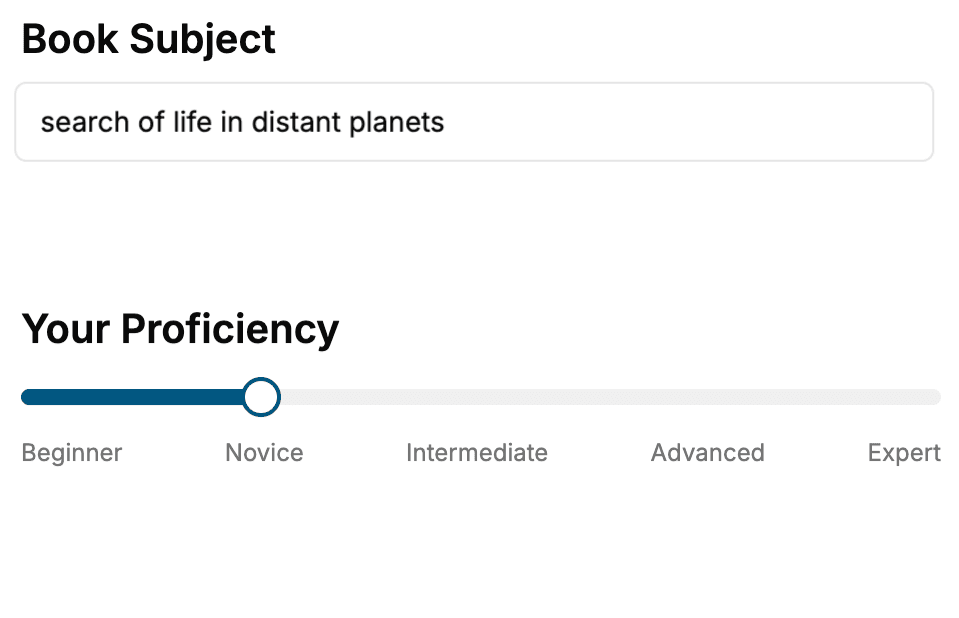
Select the focus of your Artificial Intelligence book and share your background
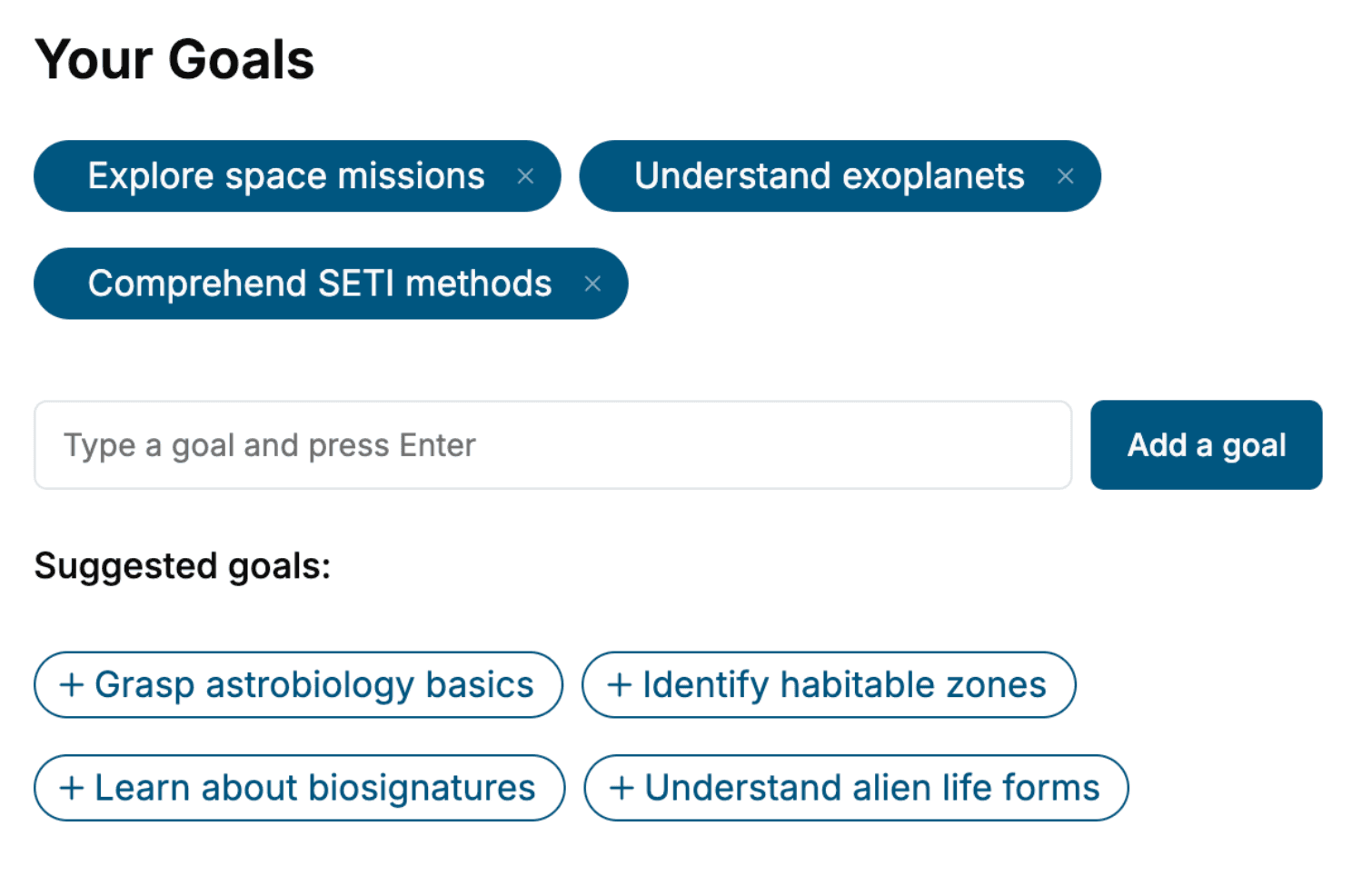
- 2. Personalize your book
Specify your goals and choose sub-topics to include
- 3. Get your tailored book
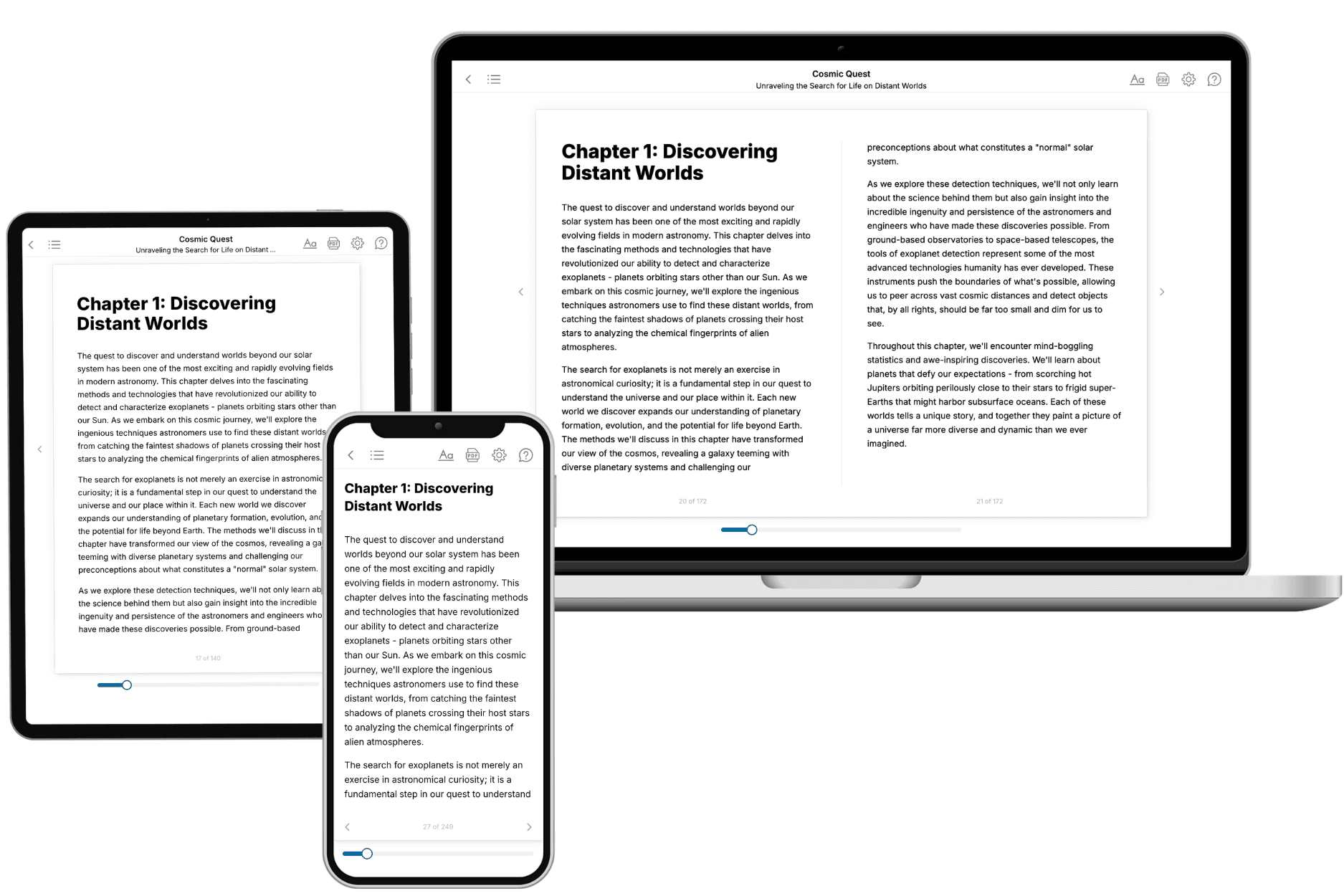
Your book is ready in 10 minutes. Read it online, download as EPUB or PDF, or send to Kindle.
Frequently asked questions
- What is TailoredRead?
TailoredRead creates complete, full-length nonfiction ebooks, written specifically for you. Tell us what you want to learn and why, and TailoredRead writes you a complete ebook on it, with charts, tables, and diagrams throughout. Read it online, on Kindle, or on any e-reader, or download it as a PDF or EPUB. Every book is written fresh the day you order it.
- How is the book tailored to me?
Before anything is written, you answer a few short questions about your goals, your background, and the topics you care about. Your book is then planned around your answers: written at your level, focused on your goals, and covering the topics you chose, instead of the one-size-fits-all book a store sells everyone.
- Will it read like generic AI content?
No. Your book isn't a chat transcript: it's planned chapter by chapter before a single word is written, told in a clear book voice, and explains ideas visually with charts, tables, and diagrams. After writing, every book goes through an editorial pass that polishes chapters so the book reads consistent from start to finish. Judge for yourself: browse thousands of sample books on our Explore Books page.
- How accurate is the content?
Our AI first checks whether your subject needs live research. Niche and fast-moving subjects are researched before writing, and the book plan and chapters are grounded in what it finds. After writing, every book goes through a quality pass that checks its facts and consistency, and researched books list their sources in a Notes section at the back.
- How long is the book?
You choose the length: Comprehensive (250-300 pages), Detailed (150-200 pages), Essential (70-100 pages), or Short (30-50 pages).
- Does the book include visuals?
Yes. Every book includes charts, tables, and diagrams: timelines, checklists, step-by-step guides, decision trees, comparison tables, matrices, and bar charts. A typical book includes dozens of these visual elements.
- Can I read it on Kindle? What formats can I download?
Yes. Every book can be read in our online reader or downloaded as a PDF or EPUB. The EPUB can be opened with Kindle, Apple Books, Kobo, and any e-reader. The Commercial and Author licenses also include an editable Word (DOCX) and Markdown download.
- How much does it cost?
About the price of a regular ebook. The exact price depends on your book's length and complexity, from $2 for the shortest books to $35 for the most comprehensive, and it's shown when you review your book, before you commit to anything. Each book is a one-time purchase, yours to keep, no subscription. Licenses that let you share, teach, or publish your book range from $35.99 to $49.99.
- Can I preview the book before purchasing?
Before you pay, you'll see what your book will cover: the title, a detailed description, the estimated length, and the complete chapter-by-chapter table of contents, so you know what you're getting before you decide. The full text itself is written after you purchase.
- How long does it take to create a book?
About 10 minutes. You can start reading the opening chapters while the rest is still being written.