The Rainwater Harvesting ROI Blueprint
Calculate Your Returns and Build a Profitable Water-Smart Garden
Most homeowners considering rainwater harvesting face a critical challenge: they don't know if the investment will actually pay off financially.
191 pages9 chaptersJul 9, 2026Rainwater Harvesting
About this book
Without a clear understanding of costs versus savings, many abandon the idea or make poor system choices that drain their budget without delivering returns. This book provides a practical, step-by-step framework for calculating the true ROI of rainwater harvesting systems tailored to your specific situation. You'll learn how to accurately measure water consumption, factor in all hidden costs, account for local water rates and rainfall patterns, and project realistic savings over time. Whether you're considering a simple barrel system or a comprehensive cistern installation, you'll discover exactly how long it takes to break even and what your long-term financial gains look like. By the end, you'll have the confidence to make an informed investment decision backed by real numbers, not guesswork. You'll understand which system type makes sense for your garden, how to maximize returns through complementary water-saving techniques, and how to leverage available incentives to reduce costs. Transform rainwater harvesting from an uncertain expense into a calculated, profitable investment.
Table of contents
- IntroductionWhy ROI Matters for Rainwater Harvesting, Common Misconceptions About Costs and Savings, How to Use This Book to Make Your DecisionRead below
- Chapter 1: Understanding Rainwater Harvesting SystemsTypes of Rainwater Harvesting Systems, Barrel and Small-Scale Systems, Cistern and Medium-Scale Systems, Underground and Large-Scale Systems
- Chapter 2: Calculating Your Current Water CostsReading and Analyzing Your Water Bill, Measuring Your Garden's Water Consumption, Accounting for Seasonal Water Demand Variations
- Chapter 3: Determining Upfront System CostsEquipment and Material Costs, Installation and Labor Expenses, Permits, Inspections, and Regulatory Costs, Hidden Costs You Shouldn't Overlook
- Chapter 4: Projecting Long-Term Maintenance and RepairsRoutine Maintenance Requirements and Costs, Component Replacement and Lifespan, Planning for Unexpected Repairs
- Chapter 5: Analyzing Local Rainfall and Water AvailabilityGathering and Interpreting Rainfall Data, Calculating Your Roof's Water Catchment Potential, Accounting for Evaporation and System Losses
- Chapter 6: Building Your ROI Calculation ModelThe ROI Formula and What It Means, Calculating Your Payback Period, Setting Up Your ROI Spreadsheet, Running Sensitivity Analysis for Different Scenarios
- Chapter 7: Leveraging Incentives and RebatesGovernment Rebates and Incentive Programs, Tax Credits and Deductions, Finding Incentives in Your Area
- Chapter 8: Maximizing ROI Through Complementary TechniquesMulching and Soil Improvement Strategies, Efficient Irrigation System Design, Choosing Drought-Resistant Plants
- Chapter 9: Real-World ROI Case StudiesCase Study: Simple Barrel System in Temperate Climate, Case Study: Cistern System in Arid Region, Case Study: Underground System in High Water-Cost Area
- ConclusionMaking Your Final Investment Decision, Next Steps to Implementation
- Appendix: Tools and ResourcesROI Calculator Template, Water Rate Database by Region, System Vendors and Installation Contacts
Introduction
Every year, millions of gallons of rainwater fall on residential rooftops across the country, flow into gutters, and disappear into storm drains. Meanwhile, homeowners pay steadily rising water bills to keep their gardens alive through dry summers. The idea of capturing that free water and putting it to work sounds appealing, almost obvious. But when it comes time to actually invest in a rainwater harvesting system, a very reasonable question stops most people cold: Will this actually save me money?
That question deserves a real answer, not a vague promise. The honest truth is that rainwater harvesting can be an excellent financial investment for some homeowners and a poor one for others. The difference comes down to specific numbers: your local water rates, your annual rainfall, your garden's water demand, the cost of the system you choose, and a handful of other factors that vary dramatically from one property to the next. Without working through those numbers carefully, you're essentially guessing, and guessing with several thousand dollars on the line is not a comfortable position.
This book exists to eliminate the guesswork. It gives you a structured, step-by-step framework for calculating the true return on investment (ROI) of a rainwater harvesting system built around your specific situation. You won't find generic enthusiasm here, or vague claims about "saving the planet and your wallet at the same time." Instead, you'll find practical tools, real formulas, and honest guidance that helps you figure out whether a system makes financial sense for your home, and if so, which type to choose and how to maximize your returns.
The chapters ahead cover everything from understanding system types and calculating your current water costs, to projecting long-term maintenance expenses, analyzing local rainfall data, and building a complete ROI model in a spreadsheet. Along the way, you'll learn how to find government rebates that can cut your upfront costs significantly, how to pair your system with complementary water-saving techniques, and how to interpret real-world case studies that mirror situations similar to your own. By the time you reach the conclusion, you'll have a clear, data-backed answer to that original question.
Why ROI Matters for Rainwater Harvesting
Return on investment is a concept most people associate with stocks or rental properties, not garden infrastructure. But any time you spend money on something that's supposed to save you money over time, ROI is exactly the right lens to use. A rainwater harvesting system is a capital investment. You pay a significant amount upfront, and in return, you expect to reduce your ongoing water costs. Whether that trade-off actually works in your favor depends entirely on the numbers behind it.
Consider a straightforward example. A homeowner in Phoenix, Arizona installs a 1,500-gallon cistern system for $3,200. Their water rates are high, roughly $0.008 per gallon for outdoor irrigation, and their garden consumes around 80,000 gallons per year. If the system captures and delivers 40,000 gallons annually, that's a savings of about $320 per year. At that rate, the payback period is exactly 10 years. Now compare that to a homeowner in Seattle, Washington with lower water rates of $0.004 per gallon and a smaller garden. The same system might only save $160 per year, pushing the payback period to 20 years. Same system, very different financial outcome.
This is why ROI matters so much in this context. The physical mechanics of rainwater harvesting are the same everywhere: collect water from your roof, store it, use it in your garden. But the financial mechanics are highly location-dependent. Water rates in the United States range from under $0.002 per gallon in some rural areas to over $0.015 per gallon in water-stressed cities like San Diego or Tucson.[1] That's nearly an eightfold difference, and it has an enormous impact on how quickly any system pays for itself.
Beyond water rates, ROI thinking forces you to account for costs that enthusiasm often glosses over. Installation labor, permits, ongoing maintenance, replacement parts, and potential repairs all chip away at your net savings. A system that looks profitable on the surface can turn into a financial drain if those hidden costs aren't factored in from the start. Working through a proper ROI calculation protects you from that outcome.
There's also a planning benefit to ROI analysis that goes beyond the final number. When you build a financial model for your system, you gain a much clearer picture of which variables matter most. You might discover that your payback period is highly sensitive to water rate increases, which makes your investment look better over time as rates rise. Or you might find that a smaller, cheaper system actually delivers a better ROI than a larger one because it matches your actual water demand more efficiently. These insights only emerge when you do the math.
Finally, ROI analysis gives you a defensible basis for your decision. Whether you're convincing a skeptical spouse, justifying the expense to yourself, or comparing rainwater harvesting against other home improvement investments, having real numbers makes the conversation much more productive. A well-constructed ROI model transforms rainwater harvesting from a feel-good idea into a serious financial proposition, one that either earns its place in your budget or doesn't.
Key insight: ROI analysis isn't about being pessimistic about rainwater harvesting. It's about being precise. The goal is to find out whether the investment works for your specific situation, not whether it works in theory.
It's also worth noting that ROI doesn't have to be purely financial to be valid. Some homeowners place real value on water independence, reduced environmental impact, or resilience during drought restrictions. Those benefits are real, even if they're harder to quantify. This book focuses primarily on financial ROI because that's what most people need help calculating. But the framework here can be adapted to include non-financial value if that matters to your decision.
Common Misconceptions About Costs and Savings
Before diving into the calculations, it's worth clearing the air on a few widespread misconceptions about rainwater harvesting costs and savings. These myths circulate freely in gardening forums, sustainability blogs, and even some product marketing materials. Believing them can lead to poor investment decisions, either causing you to overspend on a system that won't pay off, or causing you to dismiss a genuinely good investment because you've been given inaccurate information.
Misconception 1: Rainwater harvesting always saves money. This is the most common and most damaging myth. The reality is that in areas with very low water rates, high rainfall (which reduces the scarcity value of captured water), or short gardening seasons, the financial case for rainwater harvesting can be weak. A homeowner in the Pacific Northwest with low municipal water rates and a small garden might find that even a modest barrel system takes 15 or more years to pay back its cost. That's not a good investment by most financial standards.
Misconception 2: The savings are mostly from replacing tap water. Many people calculate their savings by simply multiplying the gallons they capture by their water rate. That's a reasonable starting point, but it misses important nuances. Your water bill likely includes fixed service charges that don't decrease no matter how little water you use. Tiered pricing structures mean the savings per gallon depend on which pricing tier you're currently in. And if you're on a combined water and sewer billing system, you may only save on the water portion, not the sewer portion, since sewer charges are often based on indoor water use rather than outdoor irrigation.
Misconception 3: Installation is the only significant cost. The upfront equipment and installation cost is the most visible expense, but it's far from the only one. Permits can add $100 to $500 or more depending on your municipality. Gutters may need upgrading or rerouting to feed your collection system. First-flush diverters, filters, pumps, and overflow management components add to the equipment bill. Then there are ongoing costs: annual cleaning, filter replacement, pump maintenance, and eventual component replacement. Over a 10-year period, these ongoing costs can easily add up to 20-40% of the original installation cost.
Misconception 4: Bigger systems always deliver better ROI. Larger systems capture more water, but they also cost significantly more to install and maintain. If your garden's water demand is modest, a large cistern will sit partially full for much of the year, meaning you're paying for storage capacity you're not using. The best ROI often comes from right-sizing your system to match your actual demand, not from maximizing collection capacity. This is a concept covered in detail in later chapters.
Misconception 5: Rainwater is completely free. The water itself falls from the sky at no charge, but capturing, storing, and delivering it is not free. Every gallon you use from your rainwater system has an effective cost that includes a proportional share of your system's total investment and maintenance expenses. Calculating this "cost per gallon" from your system and comparing it to your municipal water rate is one of the most useful exercises in this book. In some cases, the cost per gallon from a poorly designed or oversized system can actually exceed the municipal rate.
Understanding these misconceptions doesn't mean rainwater harvesting is a bad idea. It means that the decision deserves careful analysis rather than assumption. The homeowners who get the best results from rainwater harvesting are the ones who go in with accurate expectations, choose the right system size, account for all costs, and take advantage of available incentives. That's exactly what this book helps you do.
There's one more misconception worth addressing, and it's a subtle one. Many people assume that because rainwater harvesting is environmentally beneficial, it must also be financially beneficial. Environmental value and financial value are related but not identical. A system can be genuinely good for the environment while still being a poor financial investment for a specific homeowner. Conversely, a system with a strong ROI is also delivering real environmental benefits. The goal here is to help you find situations where both are true, where the numbers work and the environmental impact is positive.
How to Use This Book to Make Your Decision
This book is designed to be both a learning resource and a working tool. You can read it cover to cover to build a complete understanding of rainwater harvesting economics, or you can use it as a reference guide, jumping to the chapters most relevant to where you are in your decision-making process. Either approach works, but the most effective way to use it is to work through the calculations as you read, applying each concept to your own situation in real time.
Here's a practical roadmap for how the chapters fit together:
- Chapters 1 through 3 build your foundation. Chapter 1 explains the different types of systems and their cost structures. Chapters 2 and 3 help you establish two critical numbers: what you're currently spending on water, and what a new system would cost you upfront.
- Chapter 4 adds the long-term maintenance picture, so your ROI model reflects the full cost of ownership, not just the purchase price.
- Chapter 5 focuses on your local rainfall data and how much water your roof can realistically capture. This is where many people discover that their theoretical savings need significant adjustment.
- Chapter 6 brings everything together into a complete ROI model with a payback period calculation and sensitivity analysis.
- Chapter 7 covers incentives and rebates that can dramatically improve your numbers, and Chapter 8 shows how complementary techniques can amplify your returns.
- Chapter 9 presents three detailed case studies that illustrate how the framework plays out in real-world scenarios.
To get the most out of this process, gather a few pieces of information before you start. Pull out your last 12 months of water bills so you have a full year of usage data. Note your address or zip code so you can look up local rainfall averages. Measure or estimate your roof's square footage, since that determines your maximum collection potential. And if you already have a system type in mind, jot down any quotes or price estimates you've received. Having this information on hand will make the calculations in each chapter much more concrete and useful.
Throughout the book, you'll find worked examples that walk through calculations step by step. These examples use realistic but hypothetical homeowners in different climates and situations. Pay attention to how the numbers change across different scenarios. The homeowner in a high-water-cost, arid climate often sees a very different ROI than the one in a temperate, low-cost region. Identifying which scenario most closely resembles your own situation will help you calibrate your expectations early.
The appendix at the back of the book contains a ready-to-use ROI calculator template, a regional water rate reference guide, and a list of resources for finding local incentive programs. These tools are designed to save you time and reduce the friction of doing your own calculations. The ROI template in particular is structured to mirror the framework developed in Chapter 6, so by the time you reach the appendix, you'll know exactly how to use it.
A word on precision: the calculations in this book are designed to be accurate and useful, not perfect. Water consumption varies from year to year. Rainfall is unpredictable. Water rates change. Component lifespans depend on maintenance quality and local conditions. The goal of your ROI model is not to predict the future with certainty, but to give you a well-informed range of likely outcomes. A system that looks financially strong across multiple scenarios and assumptions is a much safer bet than one that only works under the most optimistic conditions.
It's also worth being honest about what this book doesn't cover in depth. It focuses on financial ROI for residential garden irrigation systems. It doesn't cover potable water systems, greywater recycling, or large-scale agricultural applications, all of which involve different regulatory frameworks, cost structures, and technical requirements. If your interest extends into those areas, the principles here will still be useful, but you'll need additional specialized resources.
Finally, approach this process with an open mind about the outcome. Some readers will work through the numbers and discover that rainwater harvesting is a genuinely excellent investment for their situation, with a payback period under five years and strong long-term returns. Others will find that the numbers don't work in their favor right now, perhaps because local water rates are too low or their garden is too small. Both outcomes are valuable. Knowing that a system isn't financially viable for your current situation saves you from a costly mistake. And if the numbers do work, you'll have the confidence to move forward knowing exactly what to expect.
A note on water rates and inflation: Municipal water rates in the United States have increased at an average of 3-5% per year over the past decade, outpacing general inflation.[2] This trend is expected to continue as aging infrastructure requires replacement and water scarcity increases in many regions. When you build your ROI model, factoring in even modest annual water rate increases can significantly improve your projected returns over a 10-15 year horizon.
The decision to invest in rainwater harvesting is ultimately yours, and it should be based on your numbers, your priorities, and your specific circumstances. This book gives you the tools to make that decision with confidence. The calculations aren't complicated, but they do require some attention and honest data. Put in that effort, and you'll come out the other side with a clear, defensible answer to the question that brought you here in the first place.
This is the end of the free sample. The full book has 9 chapters.
Want this book written for you?
Tell us your goals and background, and get your own version of this book, tailored by AI to you.


Benefits of AI-tailored books
- Read one book, not ten:
- all the Rainwater Harvesting knowledge you need, gathered into a single book.
- Save days of learning:
- tell us your goals, choose your topics, and the whole book is built around them.
- Learn effortlessly:
- Rainwater Harvesting book written for your specific background and expertise.
- Understand at a glance:
- includes charts, tables, timelines, checklists, decision trees, and more.
- Stay current:
- written the day you order it, not years ago.
- Trust what you read:
- every book is checked for accuracy, with real research when your subject needs it.
Create your unique book in 3 steps
- 1. Select your focus
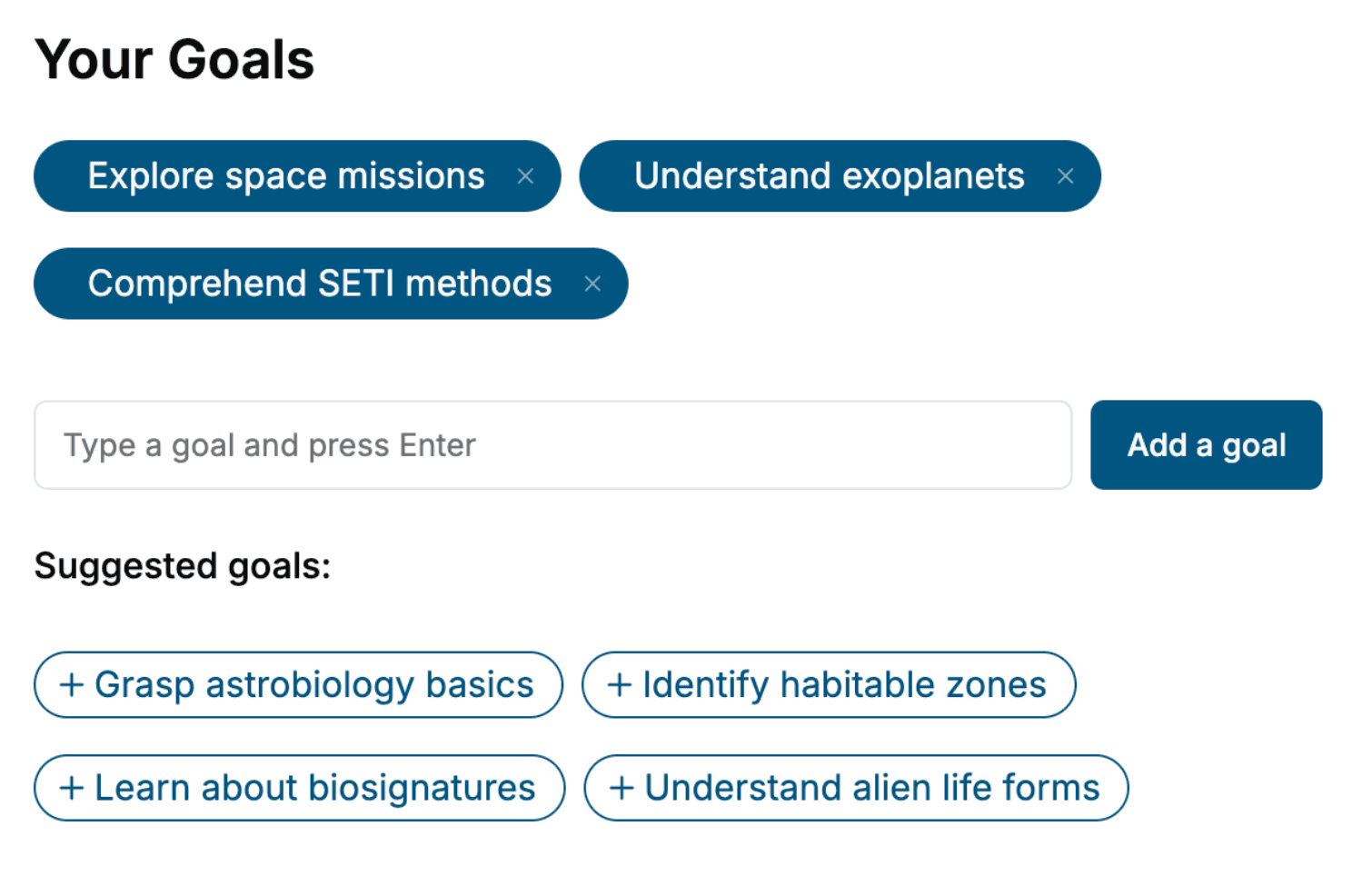
Select the focus of your Rainwater Harvesting book and share your background
- 2. Personalize your book
Specify your goals and choose sub-topics to include
- 3. Get your tailored book
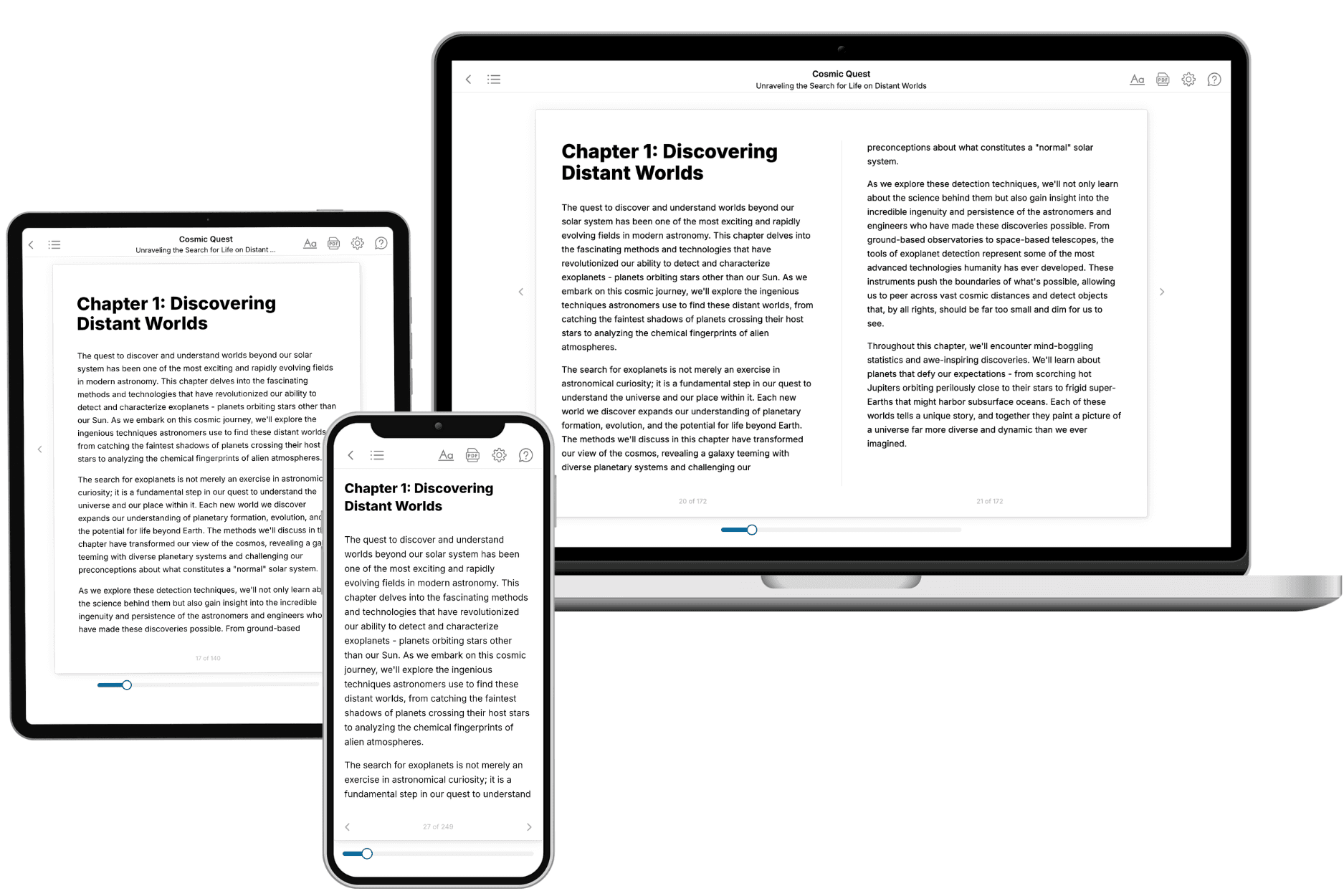
Your book is ready in 10 minutes. Read it online, download as EPUB or PDF, or send to Kindle.

Frequently asked questions
- What is TailoredRead?
TailoredRead creates complete, full-length nonfiction ebooks, written specifically for you. Tell us what you want to learn and why, and TailoredRead writes you a complete ebook on it, with charts, tables, and diagrams throughout. Read it online, on Kindle, or on any e-reader, or download it as a PDF or EPUB. Every book is written fresh the day you order it.
- How is the book tailored to me?
Before anything is written, you answer a few short questions about your goals, your background, and the topics you care about. Your book is then planned around your answers: written at your level, focused on your goals, and covering the topics you chose, instead of the one-size-fits-all book a store sells everyone.
- Will it read like generic AI content?
No. Your book isn't a chat transcript: it's planned chapter by chapter before a single word is written, told in a clear book voice, and explains ideas visually with charts, tables, and diagrams. After writing, every book goes through an editorial pass that polishes chapters so the book reads consistent from start to finish. Judge for yourself: browse thousands of sample books on our Explore Books page.
- How accurate is the content?
Our AI first checks whether your subject needs live research. Niche and fast-moving subjects are researched before writing, and the book plan and chapters are grounded in what it finds. After writing, every book goes through a quality pass that checks its facts and consistency, and researched books list their sources in a Notes section at the back.
- How long is the book?
You choose the length: Comprehensive (250-300 pages), Detailed (150-200 pages), Essential (70-100 pages), or Short (30-50 pages).
- Does the book include visuals?
Yes. Every book includes charts, tables, and diagrams: timelines, checklists, step-by-step guides, decision trees, comparison tables, matrices, and bar charts. A typical book includes dozens of these visual elements.
- Can I read it on Kindle? What formats can I download?
Yes. Every book can be read in our online reader or downloaded as a PDF or EPUB. The EPUB can be opened with Kindle, Apple Books, Kobo, and any e-reader. The Commercial and Author licenses also include an editable Word (DOCX) and Markdown download.
- How much does it cost?
About the price of a regular ebook. The exact price depends on your book's length and complexity, from $2 for the shortest books to $35 for the most comprehensive, and it's shown when you review your book, before you commit to anything. Each book is a one-time purchase, yours to keep, no subscription. Licenses that let you share, teach, or publish your book range from $35.99 to $49.99.
- Can I preview the book before purchasing?
Before you pay, you'll see what your book will cover: the title, a detailed description, the estimated length, and the complete chapter-by-chapter table of contents, so you know what you're getting before you decide. The full text itself is written after you purchase.
- How long does it take to create a book?
About 10 minutes. You can start reading the opening chapters while the rest is still being written.