The Rational Illusion
How Behavioral Economics Reveals Why We Make the Choices We Do
You believe you make rational decisions based on careful analysis and self-interest.
207 pages10 chaptersMay 27, 2026Behavioral Economics
About this book
Yet research in behavioral economics reveals a more complex truth: your choices are shaped by cognitive biases, emotional responses, and social influences that operate largely outside your awareness. From how you spend money to the career paths you choose, invisible forces guide your decisions in ways that often contradict your stated values and long-term goals. This book demystifies the psychological mechanisms behind human behavior, exploring why we make predictable mistakes and how understanding these patterns can help you make better choices. Through real-world examples and accessible explanations, you'll discover the hidden architecture of decision-making and gain practical tools to recognize and counteract your own biases. Whether you're interested in personal finance, business strategy, or simply understanding yourself better, behavioral economics offers insights that traditional economics cannot explain.
Table of contents
- IntroductionWhy Traditional Economics Fails to Explain Real Behavior, What Is Behavioral Economics and Why It Matters, How to Use This Book to Improve Your DecisionsRead below
- Chapter 1: The Myth of the Rational ActorThe Problem with Homo Economicus, Bounded Rationality: The Real Limits of Human Thinking, Why Emotions Matter More Than Logic
- Chapter 2: Heuristics and Mental ShortcutsThe Availability Heuristic: When Recent Equals Likely, Representativeness: Judging by Stereotypes, Anchoring: How First Numbers Stick
- Chapter 3: Loss Aversion and Risk PerceptionUnderstanding Loss Aversion: Why Losses Hurt More, Prospect Theory: How We Actually Evaluate Risk, Risk Perception in Investments, Insurance, and Health
- Chapter 4: Framing Effects and PresentationHow Framing Changes Everything, Gain Frames Versus Loss Frames, Recognizing Framing in Marketing and Politics
- Chapter 5: Time, Patience, and Present BiasPresent Bias: Why We Prioritize Now Over Later, Hyperbolic Discounting and Changing Preferences, Overcoming Present Bias in Savings and Health
- Chapter 6: Social Influence and ConformitySocial Proof: Following the Crowd, Conformity Pressure and Group Thinking, Herding in Markets and Consumer Behavior
- Chapter 7: Cognitive Biases in Judgment and BeliefConfirmation Bias: Seeing What We Expect, Overconfidence and Illusion of Control, The Sunk Cost Fallacy: Throwing Good Money After Bad
- Chapter 8: Behavioral Economics in Personal FinanceUnderstanding Your Spending Patterns and Impulses, Behavioral Strategies for Better Saving and Investing, Making Smarter Financial Decisions Under Uncertainty
- Chapter 9: Behavioral Economics in Organizations and MarketsHow Biases Affect Workplace Decisions and Culture, Market Anomalies and Behavioral Finance, Using Nudges to Improve Organizational Outcomes
- Chapter 10: Designing Better Choices: Nudges and Choice ArchitectureThe Power of Choice Architecture, Effective Nudges in Real-World Settings, Designing Nudges for Your Own Life
- ConclusionBecoming Aware of Your Own Biases, Practical Next Steps for Better Decision-Making
- Further Reading and Resources
Introduction
Picture this: you walk into a coffee shop intending to buy a simple black coffee. You leave fifteen minutes later with a large caramel latte, a blueberry muffin you didn't plan on, and a loyalty card you'll probably forget about. Nothing forced you to make those choices. You made them freely, in the moment, and they felt completely reasonable at the time. But were they really the product of careful, rational deliberation? Almost certainly not. They were the product of something far more interesting and far more human.
For most of the twentieth century, mainstream economics operated on a foundational assumption: people are rational. They gather information, weigh costs and benefits, and make decisions that maximize their own well-being. This model, elegant in its simplicity, powered decades of economic theory, policy design, and business strategy. It also had one significant problem. It didn't describe how real people actually behave. Real people are inconsistent, emotional, easily influenced, and remarkably predictable in their irrationality. The gap between the model and reality turned out to be enormous.
Behavioral economics emerged to close that gap. By combining insights from psychology, neuroscience, and economics, it offers a richer, more accurate account of human decision-making. It doesn't just describe our mistakes; it explains why we make them, when we're most vulnerable to them, and what we can do about them. This book is your guide to that field. It's written for anyone who has ever wondered why they made a decision they later regretted, why they keep putting off things they know are good for them, or why they sometimes feel like their own worst enemy when it comes to money, health, or long-term planning.
The chapters ahead cover the major findings of behavioral economics in a way that's grounded in research but never loses sight of practical application. You'll encounter ideas that challenge comfortable assumptions about your own rationality. Some of them may feel unsettling. That's a good sign. The goal isn't to make you feel bad about your decisions; it's to give you the self-awareness and the tools to make better ones going forward. Understanding the hidden architecture of your own mind is one of the most valuable things you can do, and this book is designed to help you do exactly that.
Why Traditional Economics Fails to Explain Real Behavior
Traditional economics built its entire framework on a character that doesn't exist: Homo economicus, or "economic man." This hypothetical person has perfect information, unlimited cognitive capacity, and unwavering self-interest. He calculates every decision with mathematical precision, never lets emotions cloud his judgment, and always acts in ways that maximize his utility. He is, in short, nothing like you or anyone you've ever met. Yet for decades, this fictional character served as the foundation for economic models that shaped government policy, financial markets, and business strategy around the world.
The cracks in this model were visible long before behavioral economics gave them a name. In the 1950s, economist Maurice Allais presented a set of lottery choices that revealed a consistent pattern: people's preferences violated the basic axioms of expected utility theory, the mathematical backbone of rational choice.[1] People weren't making random errors. They were making systematic, predictable ones. That distinction matters enormously. Random errors cancel out over time. Systematic errors compound.
Consider a simple real-world example. Standard economic theory predicts that people should be indifferent between receiving $50 for certain and a 50% chance of winning $100, since both have the same expected value. In practice, most people strongly prefer the guaranteed $50. But the same people, when facing a choice between a certain loss of $50 and a 50% chance of losing $100, will often gamble on the uncertain option. The math is identical in both cases. The emotional experience is completely different. Traditional economics has no good explanation for this asymmetry. Behavioral economics does.
The failure of traditional economics isn't just academic. It has real consequences. Pension systems designed around rational saving behavior left millions of people financially unprepared for retirement because the models assumed people would save optimally when given the choice. They didn't. Health campaigns built on the assumption that providing information changes behavior found that knowledge alone rarely translates into action. Financial regulations premised on efficient markets failed to anticipate the irrational exuberance and panic that drive boom-and-bust cycles.[2] The cost of ignoring human psychology in economic design has been staggering.
What traditional economics got right was the importance of incentives. People do respond to prices, rewards, and penalties. What it got wrong was the mechanism. The process by which people evaluate options, weigh trade-offs, and arrive at decisions is not a clean calculation. It's a messy, context-dependent, emotionally influenced process that is shaped by factors the rational model never accounted for: how a choice is framed, what options are presented alongside it, what happened recently, and what other people around us are doing.
This doesn't mean people are stupid or helpless. It means they are human. The brain is an extraordinary organ that evolved to solve survival problems quickly and efficiently, not to optimize complex financial portfolios or evaluate long-term health trade-offs. The mental shortcuts that served our ancestors well on the savanna can lead us astray in modern environments filled with credit cards, social media, and 401(k) plans. Recognizing this mismatch is the starting point for understanding why traditional economics falls short and why a more psychologically realistic approach is needed.
The good news is that once you understand the patterns, you can work with them rather than against them. The predictability of human irrationality is actually a feature, not a bug. Because our biases follow consistent patterns, they can be anticipated, studied, and in many cases, corrected. That's the promise behavioral economics delivers on, and it's a promise grounded in decades of rigorous experimental research rather than theoretical assumptions about how people ought to behave.
What Is Behavioral Economics and Why It Matters
Behavioral economics is the study of how psychological, social, and emotional factors influence the economic decisions people make. It sits at the intersection of psychology and economics, drawing on experimental methods from cognitive science to test and refine economic models. Rather than assuming rationality and building theory from there, behavioral economics starts with observation: what do people actually do, and why? The answers it has uncovered over the past fifty years have fundamentally changed how we think about human choice.
The field gained serious academic momentum in the 1970s through the work of psychologists Daniel Kahneman and Amos Tversky. Their research on heuristics and biases demonstrated that human judgment under uncertainty follows predictable patterns that deviate systematically from rational norms.[3] Their later development of Prospect Theory provided a mathematically rigorous alternative to expected utility theory, one that actually matched how people behave when facing gains and losses. Kahneman was awarded the Nobel Prize in Economics in 2002 for this body of work, a remarkable recognition given that he is a psychologist, not an economist.
Richard Thaler, another central figure in the field, extended these insights into economics proper. His work on mental accounting showed that people don't treat money as fungible; they categorize it into mental "buckets" and make very different decisions depending on which bucket the money comes from. His concept of the "endowment effect" demonstrated that people value things more simply because they own them, a finding that has profound implications for markets, negotiations, and consumer behavior.[4] Thaler received his own Nobel Prize in Economics in 2017.
Behavioral economics matters for several interconnected reasons. First, it produces better predictions. Models that incorporate realistic assumptions about human psychology outperform traditional models in forecasting actual behavior in markets, health decisions, and policy responses. Second, it enables better design. When you understand how people actually make decisions, you can design systems, products, and policies that work with human psychology rather than against it. Third, and most personally relevant, it gives you a map of your own mind. Understanding the biases that affect your judgment is the first step toward making more intentional choices.
The practical applications of behavioral economics span an impressive range of domains. Here are some of the most significant areas where it has already made a measurable difference:
- Personal finance: Automatic enrollment in retirement savings plans, pioneered by Thaler and Shlomo Benartzi, dramatically increased participation rates by changing the default option rather than the incentives.[5]
- Public health: Organ donation rates in countries with opt-out systems (where donation is the default) are dramatically higher than in opt-in countries, demonstrating the power of default settings on life-or-death decisions.
- Energy conservation: Showing households how their energy use compares to their neighbors reduced consumption more effectively than financial incentives alone.
- Marketing and consumer behavior: Understanding anchoring, scarcity cues, and social proof has transformed how products are priced, positioned, and sold.
- Organizational management: Insights about loss aversion and fairness perceptions have reshaped how companies design compensation, feedback, and performance systems.
It's worth being clear about what behavioral economics is not. It is not a license to manipulate people. The same insights that can be used to nudge people toward better choices can also be exploited to push them toward worse ones. Recognizing this dual-use nature of the field is important. Throughout this book, the focus is on using behavioral insights to help you make better decisions for yourself, and to recognize when others might be using these same insights to influence you in ways that don't serve your interests.
Behavioral economics is also not a replacement for traditional economics. Supply and demand, price signals, and incentive structures remain powerful explanatory tools. Behavioral economics adds a layer of psychological realism to these tools. Think of it as upgrading the operating system. The hardware of economic logic is still there; behavioral economics just makes it run more accurately in the real world where humans, not robots, are making the decisions.
One of the most important contributions of behavioral economics is the concept of bounded rationality, introduced by Nobel laureate Herbert Simon. Simon argued that humans don't optimize; they satisfice. They search for a solution that is good enough given their cognitive limitations and the information available to them, then stop.[6] This insight reframes human decision-making not as a failure to be rational, but as a reasonable adaptation to a complex world with limited time and cognitive resources. Understanding this reframing changes how you approach your own decision-making and how you design systems for others.
How to Use This Book to Improve Your Decisions
This book is organized to take you on a progressive journey through the major findings of behavioral economics, from foundational concepts to practical applications. Each chapter builds on the ones before it, so reading in order will give you the most coherent understanding. That said, if a particular topic is especially relevant to your life right now, such as financial decision-making or workplace behavior, you can jump to those chapters and still find them accessible and useful.
The structure of the book follows a deliberate logic. The early chapters establish the theoretical foundation: why the rational model fails, how heuristics work, and what loss aversion and framing effects look like in practice. The middle chapters explore specific domains where these biases show up most powerfully, including time preferences, social influence, and belief formation. The later chapters shift toward application, examining how behavioral economics is used in personal finance, organizations, and policy design, and how you can apply these principles in your own life.
To get the most out of each chapter, consider approaching the material with a specific mindset. Rather than reading passively, try to actively connect each concept to your own experience. When you read about anchoring, think about the last time you negotiated a price or evaluated a salary offer. When you read about present bias, think about the last time you chose Netflix over the gym. This kind of active reflection is what transforms interesting information into genuine self-knowledge.
Here are some practical ways to engage with the material as you read:
- Keep a decision journal. For one week, write down three significant decisions you make each day and note what factors influenced them. After reading each chapter, revisit your journal entries and see if you can identify the biases at work.
- Apply the "outside view." When a concept is introduced, ask yourself: how would this look to an outside observer watching my behavior? This perspective shift is one of the most effective tools for reducing bias.
- Look for the bias in both directions. Each chapter discusses how a bias can work against you, but also how understanding it can work in your favor. Pay attention to both sides.
- Share what you learn. Explaining a concept to someone else is one of the best ways to solidify your own understanding. Try discussing one idea from each chapter with a friend, colleague, or family member.
A word of caution before you dive in: learning about cognitive biases can create a new bias of its own. Psychologists call it the bias blind spot: the tendency to recognize biases in others while remaining convinced that you yourself are largely immune to them.[7] Research consistently shows that people who score highest on measures of cognitive sophistication are not necessarily less biased; they are sometimes better at rationalizing their biases after the fact. Knowing about a bias does not automatically protect you from it. What it does is give you a fighting chance, especially when you combine awareness with deliberate strategies and well-designed systems.
The goal of this book is not to turn you into a perfectly rational decision-maker. That's neither possible nor, arguably, desirable. Emotions, intuitions, and social connections are not bugs in human cognition; they are features that make life meaningful. The goal is something more realistic and more valuable: to help you make decisions that are more aligned with your actual values and long-term goals, and less driven by cognitive shortcuts that were never designed for the modern world's complexity.
Throughout the book, you'll encounter a mix of research findings, real-world examples, and practical frameworks. The research is drawn from peer-reviewed studies and the work of leading behavioral economists and psychologists. The examples are chosen to illustrate concepts in contexts that are immediately recognizable, from grocery shopping and salary negotiations to investment decisions and health choices. The frameworks are designed to be genuinely usable, not just theoretically interesting.
By the time you reach the conclusion, you should have a working vocabulary for the major biases and heuristics that shape human behavior, a clear understanding of how these forces operate in specific domains of life, and a set of concrete strategies for making better decisions. More than that, you should have a new way of seeing: a lens that reveals the hidden architecture of choice in everything from the layout of a supermarket to the structure of your own retirement plan.
The journey from believing you're rational to understanding how you actually think is one of the most illuminating trips you can take. It requires intellectual honesty and a willingness to be surprised by your own mind. But the payoff, in terms of better decisions, greater self-awareness, and a richer understanding of human behavior, is well worth the discomfort of having a few comfortable illusions challenged along the way. Welcome to behavioral economics. Let's begin.
Notes
Introduction
- 1. M. Allais, "Le comportement de l'homme rationnel devant le risque," Econometrica, 1953
- 2. R. H. Thaler and C. R. Sunstein, Nudge: Improving Decisions About Health, Wealth, and Happiness, Yale University Press, 2008
- 3. D. Kahneman and A. Tversky, "Judgment under Uncertainty," Science, 1974
- 4. R. H. Thaler, "Toward a Positive Theory of Consumer Choice," Journal of Economic Behavior & Organization, 1980
- 5. R. H. Thaler and S. Benartzi, "Save More Tomorrow: Using Behavioral Economics to Increase Employee Saving," Journal of Political Economy, 112(S1), S164-S187, 2004
- 6. H. A. Simon, "A Behavioral Model of Rational Choice," The Quarterly Journal of Economics, 1955
- 7. E. Pronin and others, "The Bias Blind Spot," Personality and Social Psychology Bulletin, 2002
This is the end of the free sample. The full book has 10 chapters.
Want this book written for you?
Tell us your goals and background, and get your own version of this book, tailored by AI to you.


Benefits of AI-tailored books
- Read one book, not ten:
- all the Behavioral Economics knowledge you need, gathered into a single book.
- Save days of learning:
- tell us your goals, choose your topics, and the whole book is built around them.
- Learn effortlessly:
- Behavioral Economics book written for your specific background and expertise.
- Understand at a glance:
- includes charts, tables, timelines, checklists, decision trees, and more.
- Stay current:
- written the day you order it, not years ago.
- Trust what you read:
- every book is checked for accuracy, with real research when your subject needs it.
Create your unique book in 3 steps
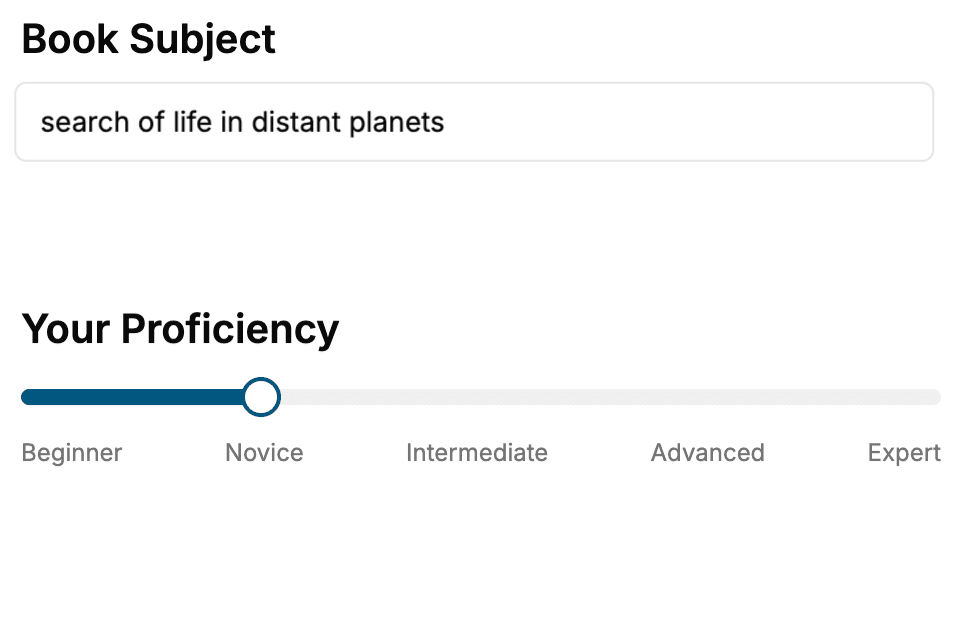
- 1. Select your focus
Select the focus of your Behavioral Economics book and share your background
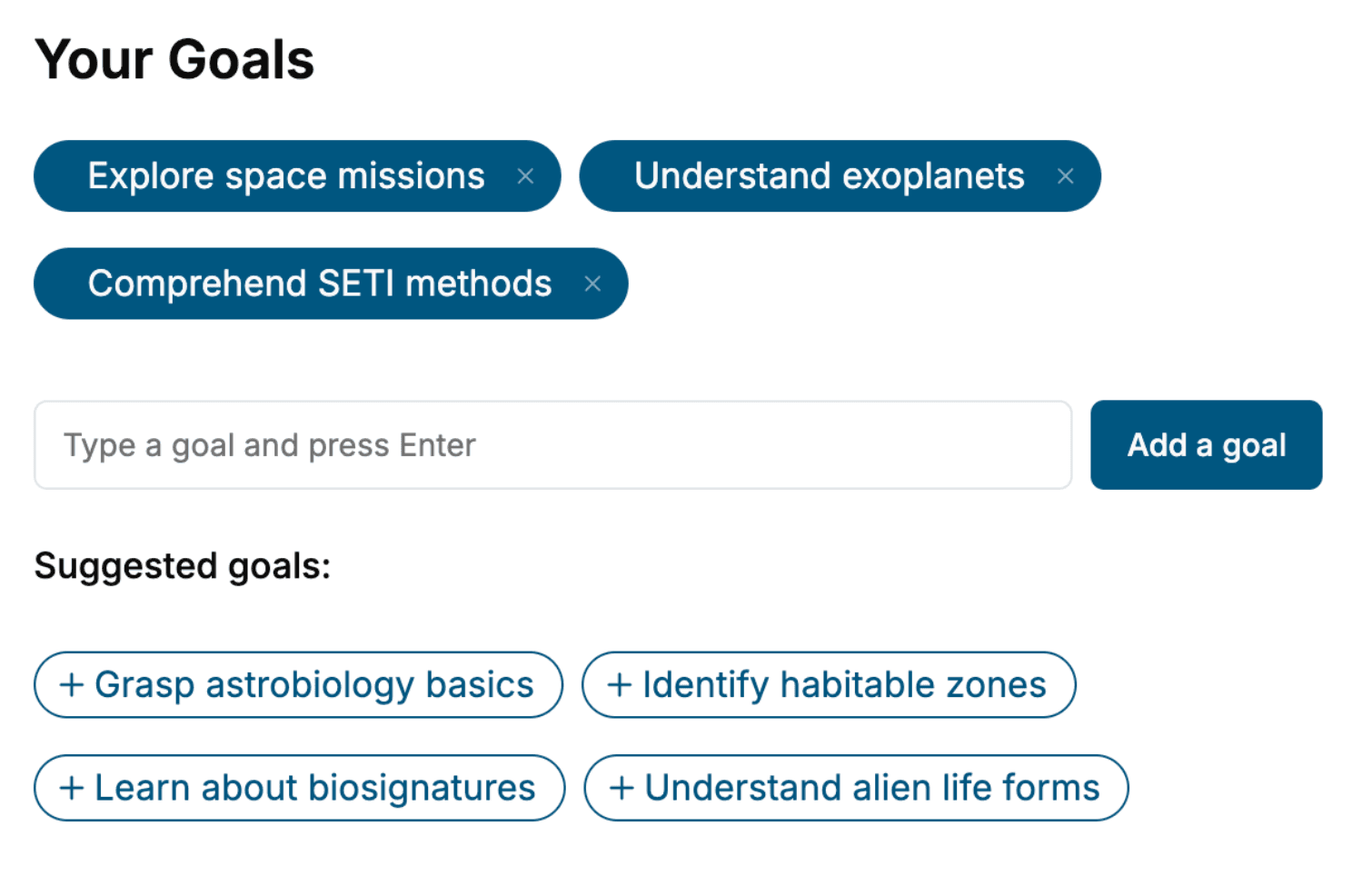
- 2. Personalize your book
Specify your goals and choose sub-topics to include
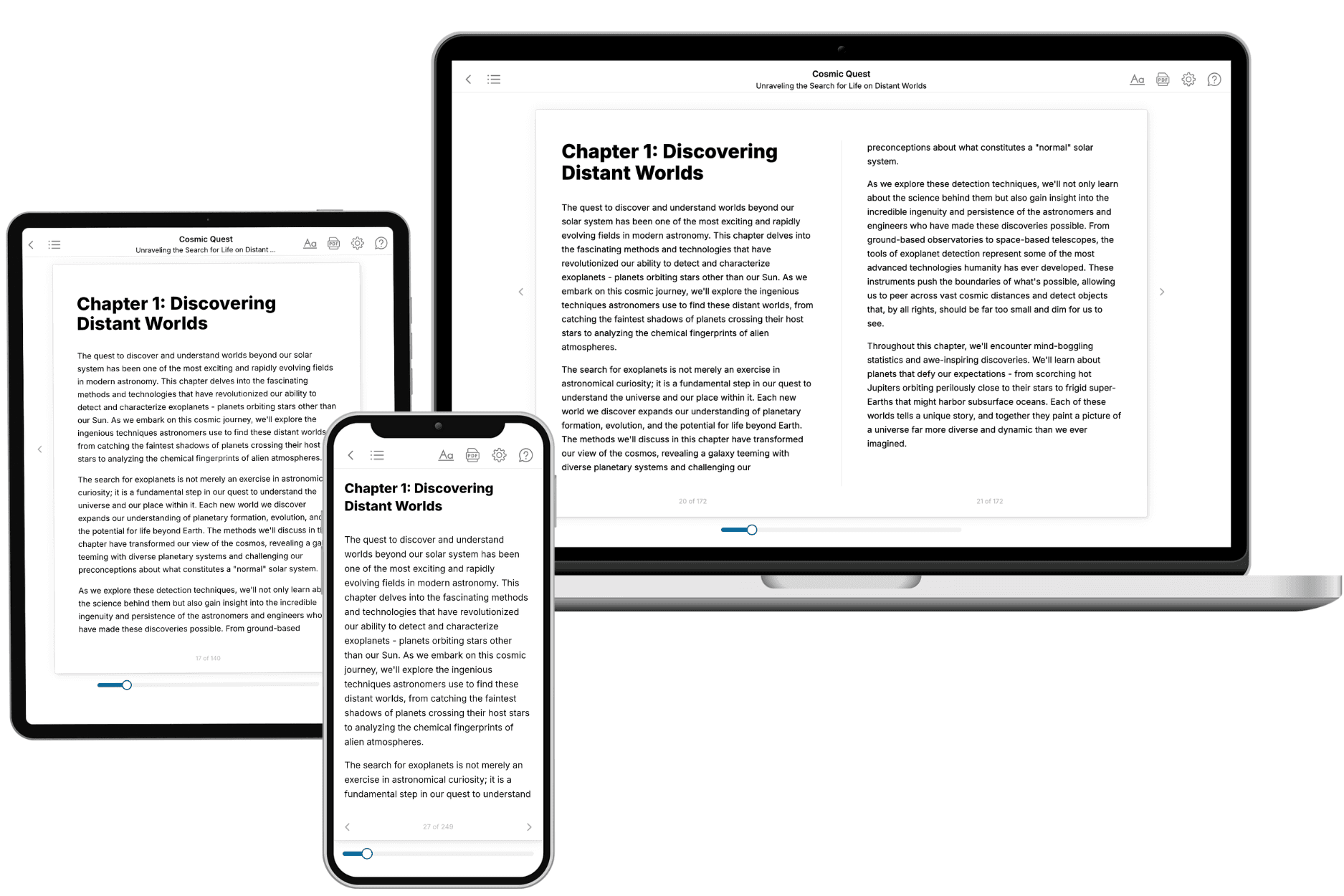
- 3. Get your tailored book
Your book is ready in 10 minutes. Read it online, download as EPUB or PDF, or send to Kindle.
Frequently asked questions
- What is TailoredRead?
TailoredRead creates complete, full-length nonfiction ebooks, written specifically for you. Tell us what you want to learn and why, and TailoredRead writes you a complete ebook on it, with charts, tables, and diagrams throughout. Read it online, on Kindle, or on any e-reader, or download it as a PDF or EPUB. Every book is written fresh the day you order it.
- How is the book tailored to me?
Before anything is written, you answer a few short questions about your goals, your background, and the topics you care about. Your book is then planned around your answers: written at your level, focused on your goals, and covering the topics you chose, instead of the one-size-fits-all book a store sells everyone.
- Will it read like generic AI content?
No. Your book isn't a chat transcript: it's planned chapter by chapter before a single word is written, told in a clear book voice, and explains ideas visually with charts, tables, and diagrams. After writing, every book goes through an editorial pass that polishes chapters so the book reads consistent from start to finish. Judge for yourself: browse thousands of sample books on our Explore Books page.
- How accurate is the content?
Our AI first checks whether your subject needs live research. Niche and fast-moving subjects are researched before writing, and the book plan and chapters are grounded in what it finds. After writing, every book goes through a quality pass that checks its facts and consistency, and researched books list their sources in a Notes section at the back.
- How long is the book?
You choose the length: Comprehensive (250-300 pages), Detailed (150-200 pages), Essential (70-100 pages), or Short (30-50 pages).
- Does the book include visuals?
Yes. Every book includes charts, tables, and diagrams: timelines, checklists, step-by-step guides, decision trees, comparison tables, matrices, and bar charts. A typical book includes dozens of these visual elements.
- Can I read it on Kindle? What formats can I download?
Yes. Every book can be read in our online reader or downloaded as a PDF or EPUB. The EPUB can be opened with Kindle, Apple Books, Kobo, and any e-reader. The Commercial and Author licenses also include an editable Word (DOCX) and Markdown download.
- How much does it cost?
About the price of a regular ebook. The exact price depends on your book's length and complexity, from $2 for the shortest books to $35 for the most comprehensive, and it's shown when you review your book, before you commit to anything. Each book is a one-time purchase, yours to keep, no subscription. Licenses that let you share, teach, or publish your book range from $35.99 to $49.99.
- Can I preview the book before purchasing?
Before you pay, you'll see what your book will cover: the title, a detailed description, the estimated length, and the complete chapter-by-chapter table of contents, so you know what you're getting before you decide. The full text itself is written after you purchase.
- How long does it take to create a book?
About 10 minutes. You can start reading the opening chapters while the rest is still being written.