React Server-Side Rendering
Build Fast, SEO-Friendly Web Applications with MERN
Most React developers struggle with the performance and SEO limitations of client-side rendering.
191 pages9 chaptersJul 15, 2026React.js
About this book
Your single-page applications load slowly, search engines can't properly index your content, and users on slower networks experience frustrating delays. Server-side rendering solves these problems, but implementing it correctly requires understanding multiple complex concepts and avoiding common pitfalls. This book provides a practical, hands-on guide to mastering React server-side rendering within the MERN stack. You'll learn when and why to use SSR, how to implement it effectively with Next.js, and how to integrate it seamlessly with your Express backend. Through real-world examples and best practices, you'll discover how to optimize performance, improve SEO rankings, and deliver faster, more reliable applications. Whether you're building a new project or optimizing an existing one, this book equips you with the knowledge and techniques to implement production-ready server-side rendering.
Table of contents
- IntroductionWhy Server-Side Rendering Matters Today, What You'll Learn in This Book, How to Use This BookRead below
- Chapter 1: Rendering FundamentalsClient-Side Rendering: How It Works and Its Limitations, Server-Side Rendering: The Complete Picture, Static Generation and Hybrid Approaches
- Chapter 2: Performance and SEO BenefitsImproving Page Load Speed and Core Web Vitals, SEO Optimization Through Server-Side Rendering, Enhancing User Experience on Slow Networks
- Chapter 3: Next.js FundamentalsWhy Next.js is the Industry Standard, Setting Up Your First Next.js Project, Understanding File-Based Routing
- Chapter 4: Data Fetching PatternsUsing getServerSideProps for Dynamic Data, Using getStaticProps for Static Generation, Incremental Static Regeneration (ISR)
- Chapter 5: Hydration and Client-Side InteractivityUnderstanding the Hydration Process, Debugging and Fixing Hydration Mismatches, Building Interactive Components with SSR
- Chapter 6: Integrating with Your MERN BackendCommunicating with Express APIs from Next.js, Implementing Authentication in SSR Applications, Querying MongoDB Directly from Server-Side Code
- Chapter 7: Advanced SSR TechniquesCustom Middleware and Request Handling, Caching Strategies for Performance, Error Handling and Fallback Strategies
- Chapter 8: Performance OptimizationCode Splitting and Bundle Optimization, Image Optimization for SSR Applications, Monitoring Performance Metrics in Production
- Chapter 9: Deployment and Production ConsiderationsDeploying Next.js Applications to Production, Environment Configuration and Secrets Management, Scaling and Ensuring Reliability
- ConclusionKey Takeaways and Next Steps
- Further Reading and Resources
Introduction
There is a moment every React developer eventually faces. You have built something you are proud of: a clean single-page application, smooth transitions, a well-organized component tree. Then you run a Lighthouse audit, or a client asks why Google is not indexing the product pages, or a user on a mobile connection complains that the screen stays blank for several seconds before anything appears. That moment is frustrating, and it is also a turning point. It is the moment you realize that how your application renders matters just as much as what it renders.
Client-side rendering made React applications feel modern and fast once the JavaScript bundle loaded. But that loading step became a liability as applications grew larger, networks stayed unpredictable, and search engines demanded content they could read immediately. Server-side rendering emerged as the answer, and for good reason. When the server sends a fully formed HTML page instead of an empty shell, users see content faster, search engines index it reliably, and the overall experience improves in measurable ways. The tradeoff is complexity, and that complexity is exactly what this book is designed to help you manage.
This book is written for intermediate React developers who already understand components, state, props, and the basics of the MERN stack. You do not need to be an expert in Node.js or Express, but you should be comfortable working with them. The goal here is not to teach React from scratch. The goal is to take what you already know and extend it into the server, giving you the tools to build applications that are faster, more discoverable, and more reliable in production environments. Every concept is grounded in practical examples, and every chapter builds toward a working understanding you can apply immediately.
The journey through this book follows a deliberate path. It starts with the fundamentals of rendering strategies, moves through the practical mechanics of Next.js and data fetching, dives into the nuances of hydration and MERN integration, and finishes with production-grade concerns like performance optimization and deployment. By the end, you will have a complete picture of server-side rendering in the React ecosystem, not just the theory, but the hands-on knowledge to implement it confidently.
Why Server-Side Rendering Matters Today
The web has changed dramatically since React popularized the single-page application model around 2013. Back then, client-side rendering felt like a revelation. Pages no longer needed full reloads. Interactions felt instant. Developers could build rich, app-like experiences in the browser. But as SPAs became the default, a set of structural problems began to surface that client-side rendering was not well-equipped to solve.
The core issue with client-side rendering is simple: the browser receives an almost-empty HTML file and then has to download, parse, and execute JavaScript before any meaningful content appears on screen. On a fast connection with a small bundle, this delay is barely noticeable. On a slow 3G connection with a 500KB JavaScript bundle, it can mean three to five seconds of a blank or loading screen. Research from Google consistently shows that 53% of mobile users abandon a site if it takes longer than three seconds to load.[1] That is not a small problem. That is a direct hit to user retention and revenue.
Search engine optimization is the other major pressure point. While Google's crawler has improved its ability to execute JavaScript, it still does not process client-rendered content as reliably or as quickly as static HTML. Other search engines like Bing, and social media crawlers used by platforms like Twitter and LinkedIn, often cannot execute JavaScript at all. This means that a client-rendered React application may show up in search results with missing titles, empty descriptions, and no meaningful content preview. For any application that depends on organic traffic or social sharing, this is a serious competitive disadvantage.
Server-side rendering addresses both of these problems at the source. When a request hits the server, the server runs the React components, fetches the necessary data, and returns a complete HTML document. The browser can display that content immediately, before any JavaScript has loaded. This dramatically improves the First Contentful Paint (FCP) and Largest Contentful Paint (LCP) metrics, which are two of Google's Core Web Vitals that directly influence search rankings as of 2021.[2]
Consider a real-world scenario: an e-commerce product page. With client-side rendering, a user navigating to that page sees a loading spinner while the JavaScript bundle downloads, then another wait while the app fetches product data from an API. With server-side rendering, the server fetches the product data, renders the full page including the product name, images, price, and description, and sends it all in one HTML response. The user sees the product immediately. The search engine indexes the full content. The difference in both user experience and SEO performance is significant and measurable.
Beyond performance and SEO, SSR also improves accessibility. Screen readers and assistive technologies work best with content that is present in the HTML from the start. Applications that rely entirely on JavaScript to render content can create barriers for users who depend on these tools. Server-rendered HTML is inherently more accessible by default, which matters both ethically and legally in many jurisdictions where web accessibility standards are enforced.
It is also worth noting that SSR is not a new idea. Before React and the SPA era, every web application worked this way. PHP, Ruby on Rails, and Django all rendered HTML on the server. What makes modern SSR with React different is that it combines the benefits of server rendering with the interactivity and component model that React provides. You get the fast initial load of traditional server rendering and the rich, dynamic experience of a React application. That combination is what makes SSR so compelling for production applications today.
The business case for SSR has never been stronger. Faster pages convert better. Better SEO drives more organic traffic. Improved Core Web Vitals scores directly affect Google search rankings. For any application where performance and discoverability matter, which is most applications, server-side rendering is not a nice-to-have. It is a competitive necessity.
What You'll Learn in This Book
This book covers server-side rendering in React from the ground up, moving from foundational concepts to advanced production techniques. Each chapter is designed to build on the previous one, so by the time you reach the later chapters on caching, authentication, and deployment, you will have the context to understand why those decisions matter and how they connect to everything else.
Here is a clear picture of what each part of the book covers:
- Rendering Fundamentals (Chapter 1): A thorough comparison of client-side rendering, server-side rendering, and static generation. You will understand the mechanics of each approach, their tradeoffs, and how to choose the right strategy for different parts of your application.
- Performance and SEO Benefits (Chapter 2): A deep dive into Core Web Vitals, how SSR improves them, and how to structure your pages for maximum search engine visibility. This chapter includes practical guidance on meta tags, structured data, and Open Graph tags.
- Next.js Fundamentals (Chapter 3): An introduction to Next.js, the framework that makes SSR practical for most React developers. You will set up a project, understand file-based routing, and learn why Next.js has become the industry standard for React SSR.
- Data Fetching Patterns (Chapter 4): A hands-on guide to
getServerSideProps,getStaticProps, and Incremental Static Regeneration. You will learn when to use each pattern and how to fetch data efficiently on the server. - Hydration and Client-Side Interactivity (Chapter 5): An explanation of the hydration process, common hydration errors, and how to build interactive components that work correctly in an SSR context.
- Integrating with Your MERN Backend (Chapter 6): Practical patterns for connecting Next.js to an Express API, implementing authentication with SSR, and querying MongoDB directly from server-side code.
- Advanced SSR Techniques (Chapter 7): Custom middleware, caching strategies, and error handling patterns that make your SSR application more robust and performant.
- Performance Optimization (Chapter 8): Code splitting, image optimization, and production monitoring techniques specific to SSR applications.
- Deployment and Production Considerations (Chapter 9): How to deploy Next.js applications to platforms like Vercel, AWS, and DigitalOcean, manage environment variables securely, and scale your application reliably.
Throughout the book, you will work with concrete code examples that reflect real-world patterns. These are not toy examples built to illustrate a single concept in isolation. They are the kinds of patterns you will actually use when building a product listing page, a user dashboard, a blog with dynamic content, or an authenticated application with protected routes.
One of the most important things this book will teach you is how to think about rendering decisions. SSR is not always the right choice. Static generation is often faster and cheaper. Client-side rendering still makes sense for certain types of content. By the end of this book, you will have a clear mental model for evaluating these tradeoffs and making confident decisions for your specific application needs.
You will also come away with a solid understanding of the hydration process, which is one of the most misunderstood aspects of SSR. Hydration errors are a common source of bugs in SSR applications, and knowing how to debug and prevent them will save you significant time. Chapter 5 covers this in detail, including specific examples of what causes mismatches and how to fix them.
The MERN integration chapters are particularly valuable if you are working on an existing application or building a new one with a Node.js backend. You will learn how to communicate between your Next.js frontend and your Express API, how to handle authentication tokens in an SSR context, and how to query MongoDB directly from server-side functions when that approach makes more sense than going through an API layer.
By the end of this book, you will be able to build a production-ready, server-side rendered React application integrated with a MERN backend, optimized for performance and SEO, and deployed to a scalable hosting environment.
That is a concrete, achievable outcome. Every chapter is written with that goal in mind, and every concept is chosen because it contributes directly to getting you there.
How to Use This Book
This book is structured to be read sequentially, especially if you are new to server-side rendering. The early chapters build the conceptual foundation that the later chapters depend on. If you skip straight to Chapter 4 on data fetching without reading Chapter 1 on rendering fundamentals, you may find yourself confused about why certain patterns exist or when to use them. The sequence is intentional.
That said, if you already have experience with Next.js and understand the basics of SSR, you can use this book as a reference. Each chapter is self-contained enough that you can jump to the topic you need. If you are struggling with hydration errors, go to Chapter 5. If you need to implement authentication in an SSR context, go to Chapter 6. The table of contents and the clear subchapter structure make it easy to find what you need quickly.
Here are some practical recommendations for getting the most out of this book:
- Set up your development environment before you start. You will need Node.js (version 18 or later is recommended), a package manager like npm or yarn, and a code editor. VS Code with the ESLint and Prettier extensions is a solid choice. Having MongoDB installed locally or a free MongoDB Atlas cluster ready will also help for the later chapters.
- Type the code examples yourself. It is tempting to copy and paste, but typing the code forces you to read every line and builds muscle memory for the patterns. When something does not work as expected, that is a learning opportunity, not a failure.
- Run the examples and experiment. After you get an example working, try changing something. What happens if you move a data fetch from
getServerSidePropsto a client-sideuseEffect? What changes in the network tab? Experimentation is how concepts move from understood to internalized. - Pay attention to the "why" not just the "how." Every pattern in this book exists for a reason. Understanding the reason helps you adapt the pattern to situations that do not exactly match the example.
- Use the footnotes and further reading. The footnotes throughout the book point to official documentation, research, and additional resources. When a concept is particularly important or nuanced, following those links will deepen your understanding significantly.
The code examples in this book use modern JavaScript and TypeScript where appropriate. Most examples are written in JavaScript for accessibility, but TypeScript versions are noted where the type definitions add meaningful clarity. If you are not yet using TypeScript in your React projects, this book is a good opportunity to start getting comfortable with it, since Next.js has excellent TypeScript support out of the box.
You will notice that this book does not try to cover every possible feature of Next.js or every edge case of SSR. That would make it a reference manual, not a practical guide. Instead, the focus is on the patterns and concepts that matter most for building real applications. The official Next.js documentation is an excellent companion resource for the details that fall outside the scope of this book, and it is referenced frequently throughout the chapters.
A note on versions: this book is written with Next.js 14 and the App Router in mind, while also covering the Pages Router for developers working on existing applications. Where the two approaches differ significantly, both are explained. The React version used throughout is React 18, which introduced important changes to how SSR and hydration work. If you are using an older version of either Next.js or React, most concepts will still apply, but some specific APIs may differ.
One of the most common mistakes developers make when learning SSR is trying to apply it everywhere immediately. SSR adds server infrastructure requirements and complexity that are not always justified. As you work through this book, keep asking yourself: does this page need to be server-rendered, or would static generation or even client-side rendering serve the user just as well? The goal is not to use SSR for its own sake. The goal is to deliver the best possible experience to your users, and SSR is one powerful tool for doing that.
Finally, approach this material with patience. Server-side rendering involves multiple moving parts: the server, the client, the network, the build process, and the deployment environment. It takes time to build a clear mental model of how all these pieces interact. The early chapters lay the groundwork carefully so that the later chapters feel logical rather than overwhelming. Trust the process, work through the examples, and by the time you reach the conclusion, you will have a level of understanding that most React developers simply do not have.
The web is moving toward faster, more accessible, and more discoverable applications. Server-side rendering is a core part of that movement. This book is your guide to being part of it.
This is the end of the free sample. The full book has 9 chapters.
Want this book written for you?
Tell us your goals and background, and get your own version of this book, tailored by AI to you.


Benefits of AI-tailored books
- Read one book, not ten:
- all the React.js knowledge you need, gathered into a single book.
- Save days of learning:
- tell us your goals, choose your topics, and the whole book is built around them.
- Learn effortlessly:
- React.js book written for your specific background and expertise.
- Understand at a glance:
- includes charts, tables, timelines, checklists, decision trees, and more.
- Stay current:
- written the day you order it, not years ago.
- Trust what you read:
- every book is checked for accuracy, with real research when your subject needs it.
Create your unique book in 3 steps
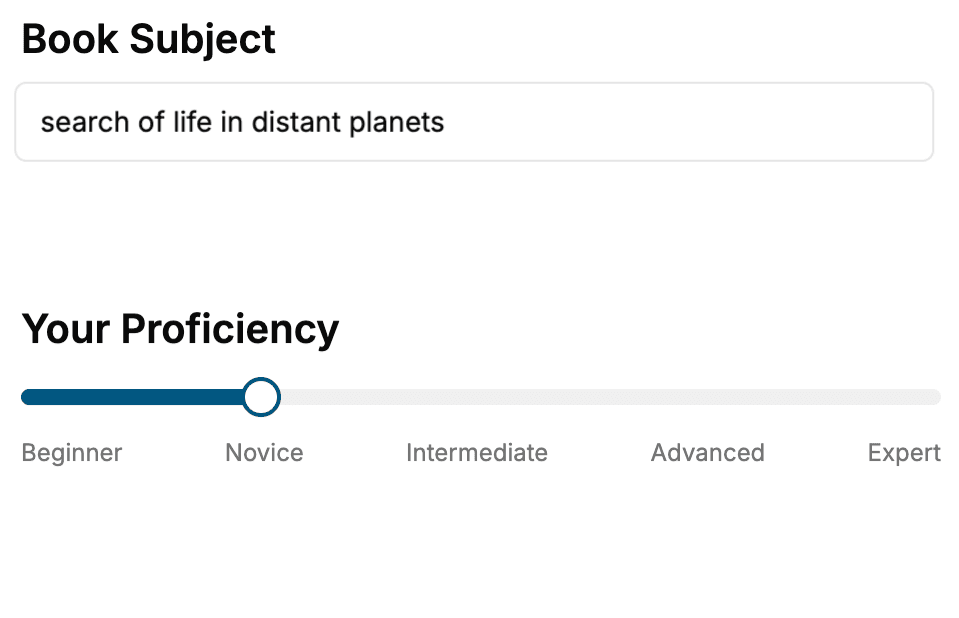
- 1. Select your focus
Select the focus of your React.js book and share your background
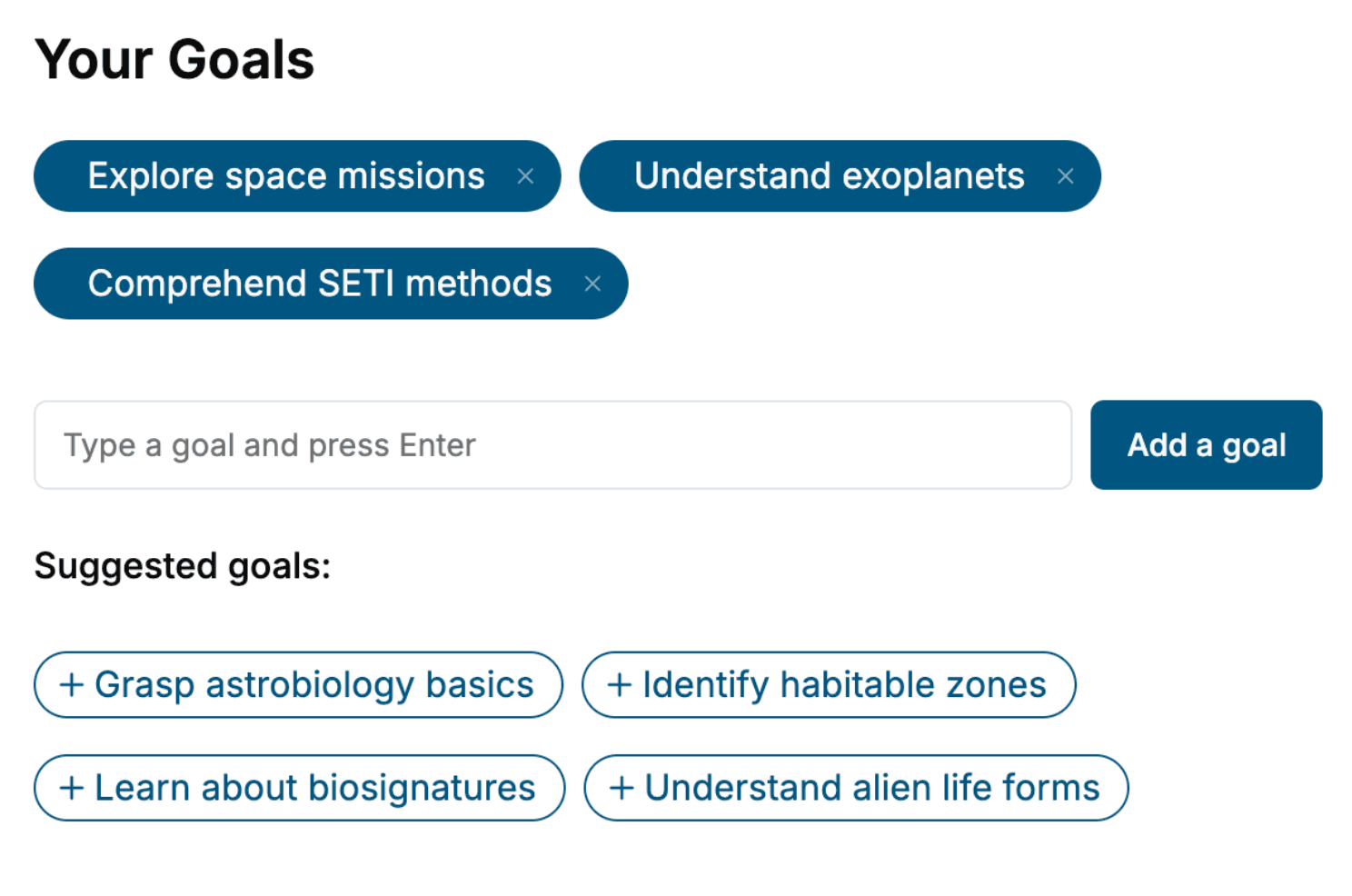
- 2. Personalize your book
Specify your goals and choose sub-topics to include
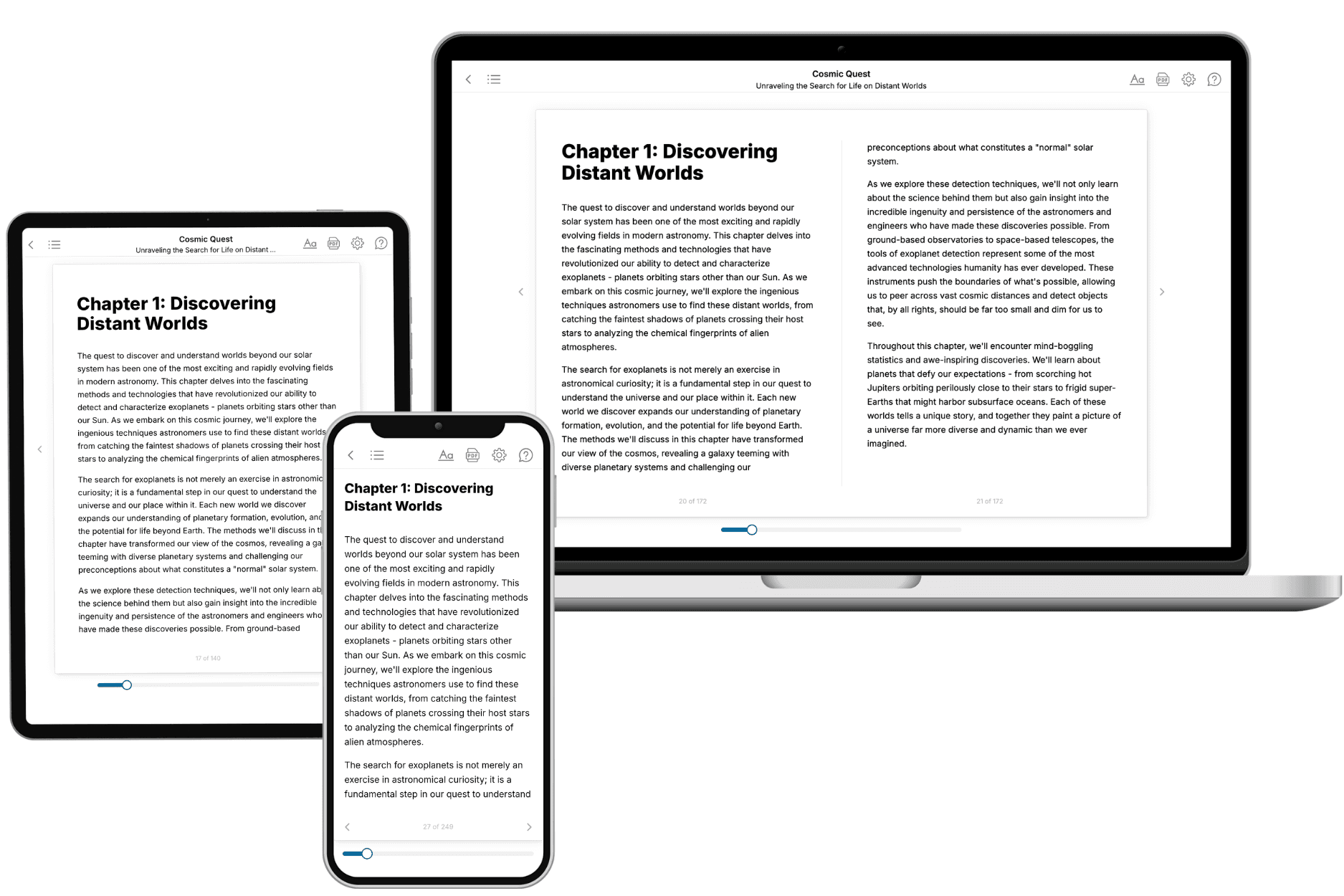
- 3. Get your tailored book
Your book is ready in 10 minutes. Read it online, download as EPUB or PDF, or send to Kindle.
Frequently asked questions
- What is TailoredRead?
TailoredRead creates complete, full-length nonfiction ebooks, written specifically for you. Tell us what you want to learn and why, and TailoredRead writes you a complete ebook on it, with charts, tables, and diagrams throughout. Read it online, on Kindle, or on any e-reader, or download it as a PDF or EPUB. Every book is written fresh the day you order it.
- How is the book tailored to me?
Before anything is written, you answer a few short questions about your goals, your background, and the topics you care about. Your book is then planned around your answers: written at your level, focused on your goals, and covering the topics you chose, instead of the one-size-fits-all book a store sells everyone.
- Will it read like generic AI content?
No. Your book isn't a chat transcript: it's planned chapter by chapter before a single word is written, told in a clear book voice, and explains ideas visually with charts, tables, and diagrams. After writing, every book goes through an editorial pass that polishes chapters so the book reads consistent from start to finish. Judge for yourself: browse thousands of sample books on our Explore Books page.
- How accurate is the content?
Our AI first checks whether your subject needs live research. Niche and fast-moving subjects are researched before writing, and the book plan and chapters are grounded in what it finds. After writing, every book goes through a quality pass that checks its facts and consistency, and researched books list their sources in a Notes section at the back.
- How long is the book?
You choose the length: Comprehensive (250-300 pages), Detailed (150-200 pages), Essential (70-100 pages), or Short (30-50 pages).
- Does the book include visuals?
Yes. Every book includes visual elements such as timelines, checklists, step-by-step guides, decision trees, comparison tables, and matrices, and many include bar charts. A typical book includes dozens of these visual elements.
- Can I read it on Kindle? What formats can I download?
Yes. Every book can be read in our online reader or downloaded as a PDF or EPUB. The EPUB can be opened with Kindle, Apple Books, Kobo, and any e-reader. The Commercial and Author licenses also include an editable Word (DOCX) and Markdown download.
- How much does it cost?
About the price of a regular ebook. The exact price depends on your book's length and complexity, from $2 for the shortest books to $35 for the most comprehensive, and it's shown when you review your book, before you commit to anything. Each book is a one-time purchase, yours to keep, no subscription. Licenses that let you share, teach, or publish your book range from $35.99 to $49.99.
- Can I preview the book before purchasing?
Before you pay, you'll see what your book will cover: the title, a detailed description, the estimated length, and the complete chapter-by-chapter table of contents, so you know what you're getting before you decide. The full text itself is written after you purchase.
- How long does it take to create a book?
About 10 minutes. You can start reading the opening chapters while the rest is still being written.