Reading the Body: Environmental Sensing and Physiological Detection
A Beginner's Guide to Sensors, Signals, and Scientific Measurement
Imagine understanding the invisible signals your body constantly broadcasts—thermal patterns, chemical emissions, electrical activity—and having the tools to measure them scientifically.
222 pages11 chaptersSep 24, 2026Electronic SensorsCreated by Hi
About this book
This book guides you through the fascinating intersection of human physiology and sensor technology, starting from the ground up. You'll discover how your body emits thermal radiation, how sweat glands conduct electrical signals, and how environmental sensors can detect stress responses before you consciously feel them. Through clear explanations and practical examples, you'll learn the fundamentals of sensor technology, physiological measurement, and scientific observation. You'll explore how researchers design experiments to study mind-body connections, validate their measurements against gold standards, and interpret complex data ethically. Whether you're curious about emerging detection technologies, interested in neuroscience, or exploring how electronics and biology intersect, this book builds your scientific literacy step by step, equipping you with the conceptual foundation to understand cutting-edge research in physiological sensing.
Table of contents
- IntroductionWhy We Measure What Bodies Do, What You'll Learn in This Book, How to Use This GuideRead below
- Module 1: Foundations: How Bodies CommunicateThe Invisible Signals Your Body Emits, Understanding Thermal Radiation, How Stress Changes Your Body, Why Scientists Measure These Signals
- Module 2: Sensor Fundamentals: Tools for DetectionWhat Sensors Are and How They Work, Thermal Imaging Sensors Explained, Detecting Radiation from Living Bodies, Measuring Volatile Organic Compounds
- Module 3: Physiology Essentials: Understanding Your SystemsThe Autonomic Nervous System: Your Body's Control Center, Stress Response Pathways and Physiological Markers, How Your Body Emits Heat, Sweat Glands and Electrical Conductivity
- Module 4: Measurement Basics: From Theory to PracticeEstablishing Baseline Measurements, Calibrating Sensors for Accuracy, Identifying Noise and Artifacts, Quality Assurance in Data Collection
- Module 5: Environmental Sensing: Measuring Your SurroundingsMeasuring Environmental Baseline Conditions, Understanding Environmental Confounding Variables, How Temperature and Humidity Affect Measurements, Environmental Monitoring Sensor Setup
- Module 6: Signal Processing: Making Sense of DataSignal Processing Fundamentals, Filtering Noise from Meaningful Signals, Recognizing Temporal Patterns in Signals, Integrating Data from Multiple Sensors
- Module 7: Advanced Sensing Technologies: Emerging ToolsTerahertz Imaging Technology Explained, Infrared Spectroscopy for Detection, Metabolomics and NMR Spectroscopy Basics, Cerebrospinal Fluid Biomarkers and Analysis
- Module 8: Behavioral and Neurological MeasurementBehavioral Observation Methods and Coding, Classifying Behavioral States, Detecting Neurological Signals, Understanding Psychophysiological Coupling
- Module 9: Research Design and Experimental MethodsExperimental Design Principles, Designing Longitudinal Studies, Validating Sensors Against Gold Standards, Statistical Analysis of Sensor Data
- Module 10: Genetics, Individual Variation, and AdaptationHow Genetics Influence Physiological Responses, Natural Genetic Adaptations in Sensory Capabilities, Understanding Baseline Physiological Variability, Circadian Rhythm Detection and Individual Differences
- Module 11: Ethics, Validation, and Scientific IntegrityResearch Ethics in Sensing Studies, Sensor Validation and Standardization, Critical Literature Analysis and Evaluation, Maintaining Scientific Integrity in Your Work
- Conclusion: Your Path ForwardKey Takeaways from This Book, Next Steps in Your Learning Journey, Resources for Continued Learning
- Glossary of Key Terms
Introduction
Right now, without doing anything special, the body is sending out signals in every direction. Heat leaves the skin as invisible light. Tiny gas molecules drift off the surface of the skin and out of the lungs with every breath. Sweat glands quietly change how well the skin conducts electricity, second by second, based on what the nervous system decides is happening. None of this needs a special occasion. It is simply what a living body does, all day and all night, whether anyone is watching or not.
This book is about learning to notice those signals on purpose and turning them into something a scientist can measure, record, and compare. That means learning about sensors, the devices built to catch a specific kind of signal and turn it into a number or an image. It also means learning about the parts of the body that create those signals in the first place, and about the careful habits scientists use to make sure their measurements can be trusted rather than accidental or misleading.
Module Outcomes:
- Explain, in plain terms, why the human body constantly gives off measurable signals
- Describe the overall structure of the book and how later chapters build on one another
- Identify the kind of background knowledge expected before starting Chapter 1
- Adopt a practical strategy for reading, taking notes, and practicing exercises throughout the book
When to use this module: turn to it before starting Chapter 1, or return to it any time later chapters feel disconnected from the bigger picture. It works as an orientation, showing where each future topic, sensors, physiology, environmental control, signal processing, and research ethics, fits into a single connected story about measuring the human body.
No prior background in electronics, biology, or statistics is assumed. Every technical term introduced later in the book gets explained the first time it appears, and the pace is designed to build gradually from very basic ideas toward more advanced ones. What matters most at this stage is curiosity about how invisible things become visible through careful measurement, and a willingness to slow down and think through examples rather than skim past them.
Why We Measure What Bodies Do
Lesson Outcomes:
- Explain why scientists care about measuring physiological signals rather than just observing them by eye
- Give examples of physiological signals that are invisible without instruments
- Describe why numbers and images are more useful to science than personal impressions
A person can often tell, just by looking, that a friend seems nervous or tired. But seems nervous
is not something a scientist can write down and compare across a hundred people, or check again next week to see if it changed. Measurement solves that problem. It turns a fuzzy impression into a number, a temperature reading, a chemical concentration, an electrical value, that can be recorded, repeated, and shared with anyone else studying the same question. This is the starting point for every idea in this book: turning invisible bodily activity into visible, comparable data.
Consider skin temperature as a simple example. Skin does not glow with visible light under normal conditions, but it does constantly release thermal radiation, a form of invisible light tied directly to how hot an object is. A sensor built to detect that radiation can produce an actual temperature map of a face or a hand, showing patterns a human eye would never catch on its own. That map might reveal a fever, a stress response, or a change caused by exercise. None of that information exists in a form usable to science until an instrument records it as a number or an image.
Some physiological signals are strange enough that they only make sense once you understand there is a sensor built specifically to catch them. Sweat, for instance, is normally thought of as a cooling mechanism, yet it also changes how the skin conducts a small electrical current. That change, called electrodermal activity, links tightly to activity in the nervous system and rises quickly during moments of stress or excitement, often before someone consciously notices feeling nervous. A dedicated sensor can catch that shift in real time, long before it would show up in a person's voice or facial expression.
Volatile organic compounds offer another example worth sitting with. These are small gas molecules that float off the skin and out of the breath constantly, carrying traces of what is happening inside the body chemically. A specialized sensor tuned to detect these compounds can pick up patterns related to diet, metabolism, or physical state, none of which a human nose or eye could reliably notice. Learning to measure these compounds means learning an entirely new vocabulary for what a body is saying
without ever making a sound.
None of these examples work without careful setup. A thermal sensor pointed at a face in a cold, drafty room will record something different than the same sensor in a warm, still room, even if the person's actual body temperature has not changed at all. This is why measurement is never just about owning the right device. It is about understanding conditions well enough to know whether a reading reflects the body or reflects the room. That distinction runs through nearly every chapter that follows, and it is one of the most important habits a beginning researcher can build.
Scientists also measure physiological signals because doing so opens a path toward understanding systems that cannot be observed directly at all. The autonomic nervous system, for example, controls things like heart rate, sweating, and blood flow automatically, without conscious thought, and no one can watch it work directly with the naked eye. But its effects show up in electrodermal activity, in skin temperature shifts, and in other measurable signals. By tracking those outward effects carefully, researchers build an indirect picture of an inner system that would otherwise stay completely hidden. Every later chapter on physiology depends on this basic idea: measurable signals act as windows into systems that cannot be seen directly.
Practice Tasks:
- List three physiological signals mentioned in this lesson and note which sensor type would detect each one
- Write two sentences describing why
looking nervous
is not the same as a measured value a scientist could record - Think of one everyday situation (like walking into a cold room) where the environment could confuse a physiological measurement, and explain why
Key Takeaways:
- The body constantly emits signals such as heat, gas molecules, and electrical changes in the skin
- Measurement turns invisible or vague signals into numbers and images that can be recorded and compared
- Sensors act as translators between hidden bodily activity and usable scientific data
- Environmental conditions can distort a physiological reading if not carefully controlled
- Indirect signals, like skin changes, can reveal the activity of inner systems that cannot be observed directly
What You'll Learn in This Book
Lesson Outcomes:
- Describe the overall progression of topics across the book's chapters
- Explain how early chapters on sensors and physiology support later chapters on research design
- Identify which chapters to revisit for specific topics like ethics, genetics, or advanced sensing tools
The book is organized so that each idea builds on the one before it, rather than presenting chapters as isolated topics. The early chapters lay a foundation: what physiological signals exist, what sensors are, and how the body's own systems generate the signals worth measuring. Later chapters shift toward practical skills, how to set up a measurement correctly, how to account for the room a measurement happens in, and how to turn raw sensor output into something meaningful. The final stretch of chapters moves into research-level thinking: designing real studies, accounting for individual differences between people, and following ethical standards throughout the process.
Chapter 1 starts with the basics of how bodies communicate physiologically, covering thermal radiation and simple stress physiology as an entry point into the whole subject. Chapter 2 introduces sensors themselves as tools, explaining how a thermal camera, a radiation detector, and a volatile organic compound sensor each do a different job. These two chapters together answer the most basic question in the whole book: what is being measured, and what device catches it. Everything after this point assumes a comfortable grasp of these two chapters, so returning to them if a later idea feels unclear is always a reasonable move.
Chapter 3 goes deeper into the body's own machinery, focusing on the autonomic nervous system, the hypothalamus, and how sweat glands generate measurable electrical changes. This chapter answers a different kind of question than Chapter 2: not what tool catches a signal, but what part of the body actually produces it and why. Chapters 4 and 5 then turn practical, covering baseline measurement, sensor calibration, noise, and how the surrounding environment itself must be measured and controlled so it does not get mistaken for a physiological change.
Chapter 6 explains how raw numbers coming out of a sensor become usable information, through signal processing, filtering, and combining data from multiple sensors at once. Chapter 7 introduces more advanced and less familiar sensing tools: terahertz field-effect transistor imaging, Fourier transform infrared spectroscopy, nuclear magnetic resonance spectroscopy, and analysis of cerebrospinal fluid. These represent tools at the edge of current research, well beyond a simple thermometer or camera, and this chapter shows how they extend everything covered earlier into more specialized territory.
Chapter 8 connects physiological measurement to behavior and neurological activity, covering how researchers observe and classify behavioral states and how those states couple with measurable physiological signals. This sets up Chapter 9, which covers how to design an actual scientific study: choosing a structure, validating a sensor against a trusted gold standard, and analyzing results with appropriate statistics. Chapter 10 then explains how genetics and individual variation shape physiological baselines, a topic essential for understanding why one person's normal reading might be another person's warning sign. Chapter 11 closes the technical material with research ethics, validation standards, and scientific integrity, the practices that make sensing research trustworthy rather than misleading.
Reading the chapters in order is the most effective approach, since later material regularly depends on vocabulary and concepts introduced earlier. A reader who already feels confident about sensors and physiology, however, could move more quickly through Chapters 1 through 3 and spend more time on the practical measurement chapters or the research design chapters, depending on personal interest. The book is built to support both a steady front-to-back read and a more selective path through specific chapters, as long as the connections between them stay in mind.
Practice Tasks:
- Sketch a simple list of the eleven chapter titles in order, noting one keyword for what each one covers
- Identify which chapter would be most relevant if the goal were designing an actual experiment
- Identify which chapter would be most relevant if the goal were understanding why two people show different stress readings under the same conditions
Key Takeaways:
- Chapters build progressively, moving from basic signals and sensors toward advanced tools and full research design
- Chapters 1 and 2 form the conceptual foundation the rest of the book depends on
- Chapters 3 through 5 connect body systems to practical measurement setup
- Chapters 6 and 7 cover turning raw data into meaning and introduce advanced sensing modalities
- Chapters 8 through 11 move toward full research practice, covering behavior, experimental design, individual variation, and ethics
How to Use This Guide
Lesson Outcomes:
- Apply a simple reading and note-taking strategy suited to a technical subject like this one
- Use the practice tasks and key takeaways sections in each lesson effectively
- Identify a workable pace and study rhythm for working through the book
Each lesson in this book follows the same basic shape on purpose, so the pattern becomes familiar quickly. A lesson opens with a short list of outcomes describing exactly what should be possible after finishing it. It then works through the main ideas with explanations and examples. It closes with a short set of practice tasks and a bullet list of key takeaways. Reading the outcomes first, before the main content, helps set expectations for what to pay attention to, almost like a preview of the destination before starting the trip.
One effective habit is to keep a small notebook or document specifically for new terms. Every time a bolded technical term shows up for the first time, such as sensor calibration or psychophysiological coupling, write it down along with a one-sentence explanation in plain language. By the middle of the book, that running list becomes a personal glossary built from the reader's own words, which tends to stick in memory far better than simply rereading the official definition later. This habit costs only a minute or two per lesson but pays off heavily by the time research-design chapters arrive.
The practice tasks at the end of each lesson are not optional extras. They are built specifically to check whether an idea has actually been absorbed, not just read. A task asking for three examples, or a short written explanation in a reader's own words, forces active recall rather than passive recognition. Skipping these tasks and moving straight to the next lesson tends to create a false sense of understanding that falls apart once a later chapter assumes the earlier material is solid. Spending even five minutes on each set of tasks before moving forward is a far better investment than reading twice as fast.
Pace matters more than speed in a subject like this one. A chapter that introduces several new physiological systems or several new sensor types in a row can feel overwhelming if rushed, but becomes manageable at a slower pace with short breaks between lessons. There is no fixed schedule that fits everyone, but treating each lesson as its own small unit, with a short pause afterward to mentally review the key takeaways, tends to work well for most beginners tackling a technical subject for the first time.
It also helps to treat the examples throughout the book as small experiments to picture in the mind rather than facts to memorize. When a lesson describes a thermal sensor picking up a stress-related change in skin temperature, it helps to imagine the actual scene: a person sitting in a room, a camera pointed at their face, a number appearing on a screen. Building that mental picture turns an abstract description into something closer to a memory, which supports understanding far more than memorizing a definition word for word ever could.
Finally, this book is meant to be revisited rather than read only once. A concept introduced briefly in Chapter 3 might make far more sense after finishing Chapter 6, once signal processing has been explained in more depth. Flipping backward when a later chapter references an earlier idea is a normal and useful part of learning a technical subject, not a sign of falling behind. The structure of outcomes, main content, tasks, and takeaways in every lesson makes it easy to jump back into a specific section without rereading an entire chapter from the start.
Practice Tasks:
- Start a personal glossary document and add the first three bolded terms encountered so far in this introduction
- Write a one-sentence prediction of what Chapter 1 will cover, based only on its title and subsection titles
- Plan a rough pace, such as one lesson per sitting, for working through the next three chapters
Key Takeaways:
- Every lesson follows the same structure: outcomes, main content, practice tasks, and key takeaways
- Keeping a running glossary of bolded terms builds stronger long-term understanding
- Practice tasks should be completed, not skipped, since they check real understanding
- A slower, steady pace with short breaks works better than rushing through technical material
- Revisiting earlier lessons after finishing later chapters is a normal and useful study habit
This is the end of the free sample. The full book has 11 chapters.
Want this book written for you?
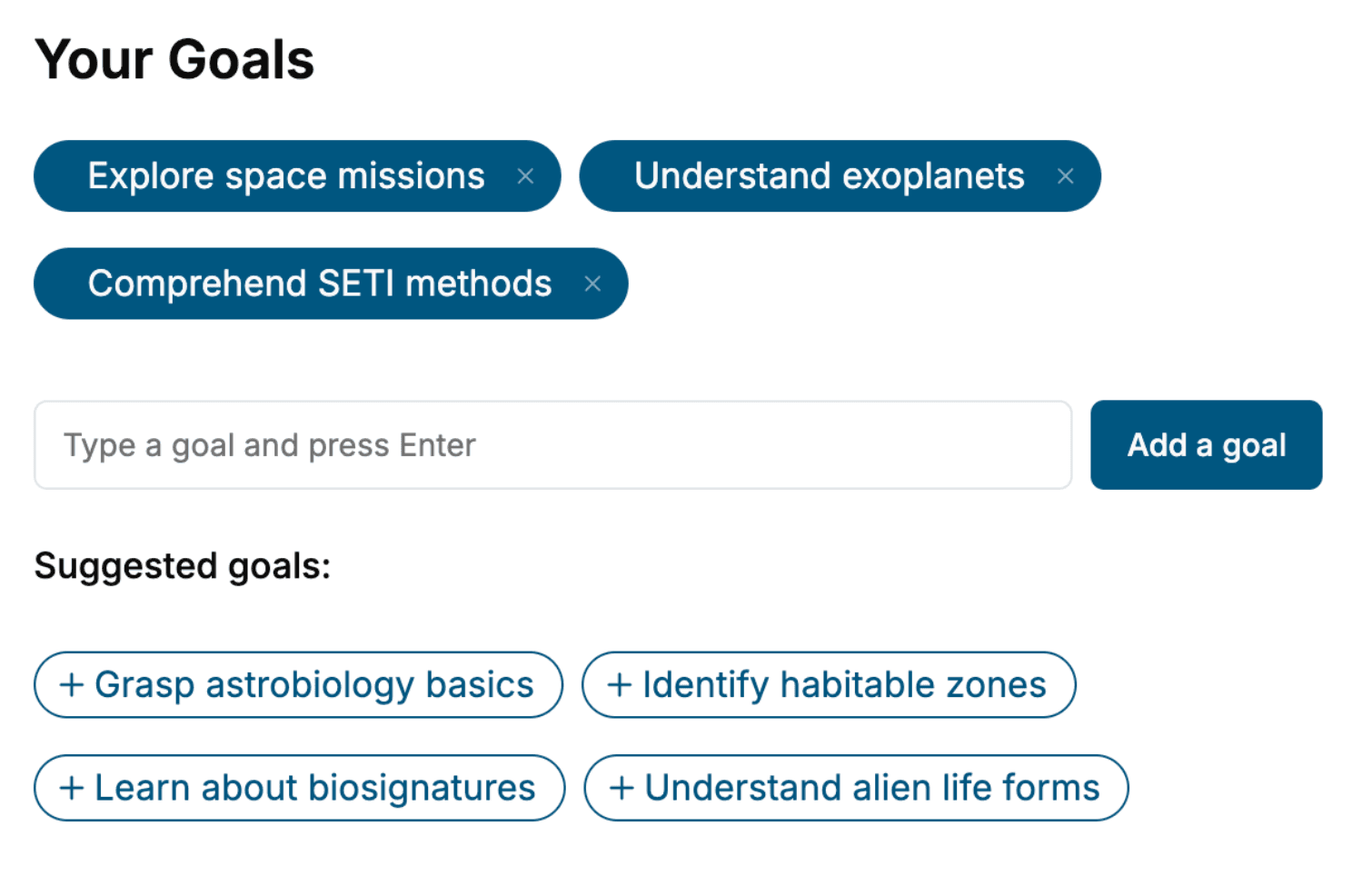
Tell us your goals and background, and get your own version of this book, tailored by AI to you.


Benefits of AI-tailored books
- Read one book, not ten:
- all the Electronic Sensors knowledge you need, gathered into a single book.
- Save days of learning:
- tell us your goals, choose your topics, and the whole book is built around them.
- Learn effortlessly:
- Electronic Sensors book written for your specific background and expertise.
- Understand at a glance:
- includes charts, tables, timelines, checklists, decision trees, and more.
- Stay current:
- written the day you order it, not years ago.
- Trust what you read:
- every book is checked for accuracy, with real research when your subject needs it.
Create your unique book in 3 steps
- 1. Select your focus
Select the focus of your Electronic Sensors book and share your background
- 2. Personalize your book
Specify your goals and choose sub-topics to include
- 3. Get your tailored book
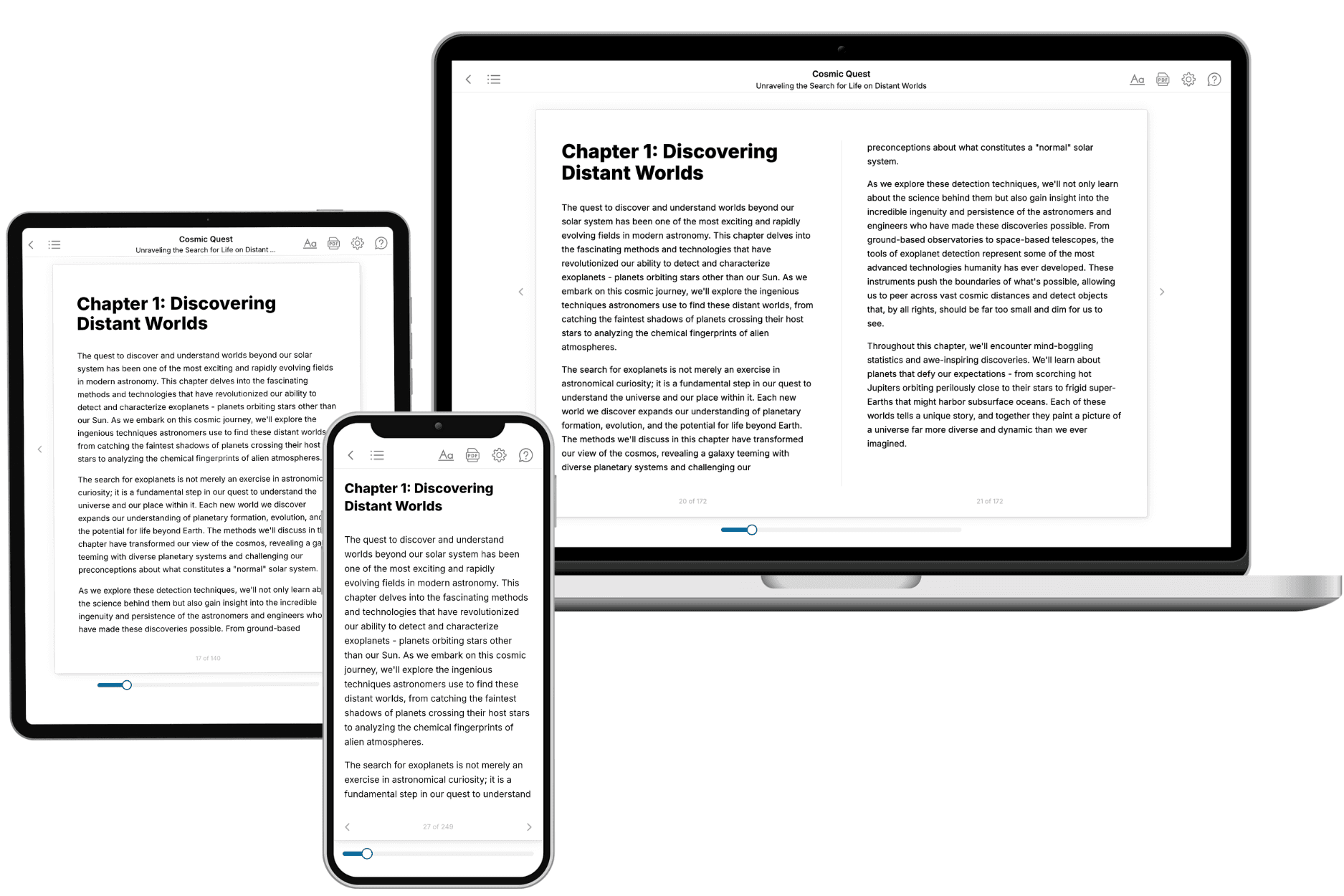
Your book is ready in 10 minutes. Read it online, download as EPUB or PDF, or send to Kindle.

Frequently asked questions
- What is TailoredRead?
TailoredRead creates complete, full-length nonfiction ebooks, written specifically for you. Tell us what you want to learn and why, and TailoredRead writes you a complete ebook on it, with charts, tables, and diagrams throughout. Read it online, on Kindle, or on any e-reader, or download it as a PDF or EPUB. Every book is written fresh the day you order it.
- How is the book tailored to me?
Before anything is written, you answer a few short questions about your goals, your background, and the topics you care about. Your book is then planned around your answers: written at your level, focused on your goals, and covering the topics you chose, instead of the one-size-fits-all book a store sells everyone.
- Will it read like generic AI content?
No. Your book isn't a chat transcript: it's planned chapter by chapter before a single word is written, told in a clear book voice, and explains ideas visually with charts, tables, and diagrams. After writing, every book goes through an editorial pass that polishes chapters so the book reads consistent from start to finish. Judge for yourself: browse thousands of sample books on our Explore Books page.
- How accurate is the content?
Our AI first checks whether your subject needs live research. Niche and fast-moving subjects are researched before writing, and the book plan and chapters are grounded in what it finds. After writing, every book goes through a quality pass that checks its facts and consistency, and researched books list their sources in a Notes section at the back.
- How long is the book?
You choose the length: Comprehensive (250-300 pages), Detailed (150-200 pages), Essential (70-100 pages), or Short (30-50 pages).
- Does the book include visuals?
Yes. Every book includes charts, tables, and diagrams: timelines, checklists, step-by-step guides, decision trees, comparison tables, matrices, and bar charts. A typical book includes dozens of these visual elements.
- Can I read it on Kindle? What formats can I download?
Yes. Every book can be read in our online reader or downloaded as a PDF or EPUB. The EPUB can be opened with Kindle, Apple Books, Kobo, and any e-reader. The Commercial and Author licenses also include an editable Word (DOCX) and Markdown download.
- How much does it cost?
About the price of a regular ebook. The exact price depends on your book's length and complexity, from $2 for the shortest books to $35 for the most comprehensive, and it's shown when you review your book, before you commit to anything. Each book is a one-time purchase, yours to keep, no subscription. Licenses that let you share, teach, or publish your book range from $35.99 to $49.99.
- Can I preview the book before purchasing?
Before you pay, you'll see what your book will cover: the title, a detailed description, the estimated length, and the complete chapter-by-chapter table of contents, so you know what you're getting before you decide. The full text itself is written after you purchase.
- How long does it take to create a book?
About 10 minutes. You can start reading the opening chapters while the rest is still being written.