Remember Everything That Matters
Master Spaced Repetition to Think Smarter, Decide Better, and Solve Problems Faster
You face decisions every day that require knowledge you don't have readily available.
191 pages9 chaptersAug 17, 2026Memory Improvement
About this book
You solve problems by searching for information, losing precious time and mental energy. You study or learn new skills, only to forget what you learned weeks later. This book shows you how spaced repetition systems transform the way you think, decide, and solve problems by making critical knowledge permanently accessible in your mind. Through practical frameworks and real-world applications, you'll discover how spacing your review of important information creates stronger neural connections, sharpens your metacognitive awareness, and enables faster, more confident decision-making. You'll learn to build a personal knowledge system that works with your brain's natural learning mechanisms, turning scattered information into organized wisdom. By the end, you'll have a complete system for retaining what matters, recognizing what you don't know, and accessing knowledge precisely when you need it most.
Table of contents
- IntroductionWhy Memory Matters More Than You Think, The Forgetting Problem: Why Traditional Learning Fails, Spaced Repetition as Your Cognitive Solution, What You'll Learn in This BookRead below
- Chapter 1: The Science Behind Spaced RepetitionThe Spacing Effect: How Timing Changes Everything, Understanding the Forgetting Curve, The Neural Mechanisms of Spaced Learning
- Chapter 2: Metacognition: Knowing What You KnowWhat Metacognition Really Means, The Illusion of Competence and How Spaced Repetition Exposes It, Using Spaced Repetition for Better Self-Assessment, Calibrating Your Confidence Through Spacing
- Chapter 3: Building Your Personal Knowledge SystemCore Principles of Knowledge System Design, Choosing What's Worth Remembering, Organizing Information for Optimal Spacing, Digital Tools Versus Analog Methods
- Chapter 4: Spaced Repetition and Decision-MakingHow Knowledge Availability Shapes Decisions, Reducing Cognitive Load Through Internalized Knowledge, Improving Decision Quality with Accessible Knowledge, Using Spaced Repetition to Reduce Decision Biases
- Chapter 5: Problem-Solving Through Strategic MemoryHow Memory Supports Problem-Solving, Building Pattern Recognition Through Spaced Repetition, Transferring Knowledge Across Different Problems, Accessing Creative Solutions Through Deep Memory
- Chapter 6: Implementing Your First Spaced Repetition SystemGetting Started: Your First Steps, Creating Effective Review Cards and Prompts, Scheduling Your Review Sessions, Tracking Progress and Adjusting Your System
- Chapter 7: Advanced Techniques and OptimizationInterleaving: Mixing Topics for Deeper Learning, Elaboration Techniques to Strengthen Memory, Optimizing Retrieval Practice
- Chapter 8: Overcoming Common ChallengesMaintaining Motivation Over Time, Avoiding System Overwhelm and Burnout, Adapting Your System as Your Goals Evolve, Troubleshooting Common Problems
- Chapter 9: Real-World Applications Across DomainsProfessional Development and Career Advancement, Academic Learning and Exam Preparation, Mastering Complex Skills and Expertise
- ConclusionYour Cognitive Future Starts Now, Your Next Steps
- Appendix: Quick Reference GuideRecommended Spacing Schedules, Tools and Resources for Spaced Repetition, Key Terms and Definitions
Introduction
A senior product manager sits across from a client who asks a simple question about a feature shipped eight months ago. The manager knows the answer exists somewhere, in a Slack thread, a spec document, a meeting note. But in the moment, nothing surfaces. The client waits. The manager promises to circle back,
and the meeting moves on, slightly weaker for it. This is not a failure of intelligence or effort. It is a failure of memory design, and it happens dozens of times a day across every profession that depends on knowledge.
This book starts from a specific claim: the quality of your thinking depends on what you can recall without searching for it. Search engines, notes apps, and internal wikis have made information abundant, but abundance is not the same as access in the moment a decision requires it. The gap between having information stored somewhere and having it available in your mind is where good decisions slip into mediocre ones, and where problem-solving slows to a crawl.
Spaced Repetition closes that gap. It is a method for reviewing information at deliberately timed intervals so that it stays retrievable for years, not days. The technique itself is not new, but its application as a tool for professional judgment, not just academic memorization, is still underused by people who would benefit most from it.
The four sections ahead build the case for why memory deserves strategic attention, why the usual ways of learning quietly fail you, how spaced repetition addresses that failure directly, and what the rest of this book will help you build from there.
Why Memory Matters More Than You Think
Consider two financial analysts reviewing the same market event. One has internalized years of pricing models, historical precedents, and regulatory details, so their assessment forms in seconds. The other has the same documents saved in folders but has to reopen and re-read them before forming an opinion. Both may reach similar conclusions eventually, but only one can act, advise, or negotiate while the moment is still relevant. Speed of thought is not a personality trait. It is a direct product of what has been made available in memory ahead of time.
The modern assumption is that external storage has made internal memory optional. Cloud notes, search engines, and reference apps hold more facts than any person could memorize in a lifetime, so the instinct is to outsource remembering entirely. This works for trivia. It fails for judgment. Decisions, negotiations, diagnoses, and creative leaps all happen in real time, and no search bar can retrieve nuance, context, or the connections between ideas fast enough to matter in that instant.
There is a meaningful difference between information you can find and knowledge you can use. A cardiologist who has to look up the standard treatment protocol for a common arrhythmia during an active case is not practicing at the level their training implies. The protocol has to already live in memory, ready before the patient walks in. The same logic applies with less dramatic stakes to a lawyer citing precedent, an engineer troubleshooting a failure, or a manager responding to a sudden budget question.
Later chapters explore in depth how this internalized readiness changes decision quality and enables the kind of pattern recognition that separates experienced professionals from competent beginners. For now, the point is narrower and more practical: memory is not a backup system for when technology fails. It is the primary engine of fast, confident, well-informed action.
Two consultants prepare for the same client pitch. One rehearses the underlying industry data until it feels obvious. The other plans to reference slides if questioned. When the client interrupts with an unscripted objection, only one of them can respond without breaking stride.
This contrast repeats constantly across careers, and it compounds. The professional who can think fluently, without pausing to retrieve basic facts, has more mental bandwidth left over for the harder work: weighing tradeoffs, spotting inconsistencies, and generating original solutions. The one who spends that bandwidth on retrieval has less left for judgment, even if both people technically know
the same material somewhere in a file.
None of this argues against notes, references, or search tools. They remain essential for storing detail that does not need to be memorized. The argument is narrower: a specific, deliberately chosen set of knowledge needs to live in memory, not in a folder, because it gets used constantly and under time pressure. Identifying that set, and keeping it retrievable, is the practical skill this book builds toward.
Treating memory as a design problem, rather than a fixed trait some people have and others lack, changes what becomes possible. Memory capacity is often discussed as though it were static, something you either have a knack for or do not. What actually varies is not raw capacity but method. The chapters ahead treat memory as something built through a repeatable process, not something inherited or left to chance.
The Forgetting Problem: Why Traditional Learning Fails
A new hire attends a three-day onboarding program packed with product details, internal tools, and company processes. Two weeks later, most of it is gone. Not because the training was poorly delivered, but because a single exposure to new material, however clear, was never designed to survive contact with time. This pattern shows up after every conference, workshop, and orientation session, and it is treated as a mild inconvenience rather than the predictable outcome it actually is.
Traditional learning environments, from school classrooms to corporate training rooms, are built around a single pass through material followed by a test, then a move to the next topic. This structure rewards short-term recall long enough to pass an assessment, but it does nothing to protect that knowledge afterward. Once the test ends, so does the incentive to retain the information, and forgetting proceeds largely unchecked from there.
The scientific study of this decay goes back to the nineteenth century, when psychologist Hermann Ebbinghaus ran a series of memory experiments on himself, testing how quickly newly learned material slipped away without review[1]. That early research laid the groundwork for what the next chapter examines in detail as the Forgetting Curve. For now, the practical takeaway is simpler: without deliberate review, forgetting is not a risk. It is the default outcome.
The professional cost of this default is easy to underestimate because it rarely shows up as a dramatic failure. It shows up as a manager re-explaining a decision made six months ago because nobody quite remembers the reasoning. It shows up as a team relearning a lesson from a project that failed the same way two years earlier. It shows up as hours spent re-searching information that was already read, understood, and then lost. None of this looks catastrophic in isolation, but it adds up to enormous, quiet inefficiency.
Formal education compounds the problem by training people, from an early age, to study for exams rather than for retention. Cramming the night before a test produces a convincing short-term result: a passing grade. But the underlying memory was never built to last, and most of it disappears within weeks. Millions of people carry the lesson from this experience that they are simply bad at remembering things,
when the more accurate lesson is that they were taught a method that was never designed to produce lasting memory in the first place.
Certain fields cannot tolerate this kind of decay without real consequences. A pilot who has forgotten an emergency procedure, a surgeon who hesitates over a step they learned once years ago, or a compliance officer who misremembers a regulatory threshold are not dealing with minor inconvenience. These are domains where forgotten knowledge translates directly into risk, which is exactly why fields like aviation and medicine have leaned early and heavily on structured, repeated review rather than one-time training.
The rise of constant internet access has not solved this problem and may have made a subtler version of it worse. Easy searchability encourages skimming: reading just enough to feel informed in the moment, then moving on without ever building a durable version of that knowledge. The feeling of understanding something while looking at it is not the same as being able to recall and apply it later, unprompted, when the reference material is not in front of you.
What traditional learning is missing is not effort, intelligence, or good material. It is a mechanism for revisiting information at the right moments, before it fades past the point of easy recovery. That mechanism is not complicated once you understand how forgetting behaves, and building it deliberately is the entire premise of the method this book is built around.
Spaced Repetition as Your Cognitive Solution
Spaced repetition works from a simple insight: reviewing information right before it would otherwise be forgotten strengthens it far more than reviewing it while it is still fresh. Instead of studying something once and hoping it sticks, or cramming it repeatedly in a single sitting, you revisit it at deliberately increasing intervals, a day later, then a week later, then a month later, and so on. Each successful recall pushes the next necessary review further into the future.
Medical students preparing for board exams offer a clear working example. Many rely on digital flashcard systems built specifically around spaced intervals, working through thousands of clinical facts over months or years rather than cramming them into a final stretch before the test. The goal is not to pass a single exam and forget the material afterward, but to retain clinical knowledge permanently, since it will be needed unprompted at the bedside years later.
The contrast with cramming is direct and easy to picture. Two students study the same 100 facts for an exam three weeks away. One reviews the material in one long session the night before. The other reviews smaller portions five separate times, spaced according to how well each fact is being retained. Both may score similarly on the test itself. Three months later, the crammer remembers almost nothing, while the spaced learner still recalls most of it without effort.
The mechanism behind why spaced review works this way, and how forgetting and relearning interact at a cognitive level, is the subject of the chapter on the science behind spaced repetition. What matters at this stage is the practical shift in mindset it requires: treating memory as something maintained on a schedule, not something assumed to persist automatically after a single exposure.
This book treats spaced repetition as more than a memorization shortcut. Every review session is also a small, honest test of what you actually know versus what you assume you know. That distinction, examined closely in the chapter on metacognition, turns a simple study technique into a tool for confronting Illusion of Competence, the false sense of mastery that comes from passive familiarity rather than genuine recall.
A manager reviews notes from a strategy meeting and feels confident the plan is understood. Weeks later, asked to explain the reasoning behind a key decision, the details will not come. The feeling of understanding while reading was never tested against the harder task of recalling without the notes in front of them.
Beyond memorization and self-assessment, the value of spaced repetition extends into how decisions get made and how problems get solved. Knowledge that is reliably available in memory, rather than scattered across files and half-remembered meetings, changes how quickly and confidently you can respond to a novel situation. Chapters on decision-making and problem-solving unpack this connection directly, showing how internalized knowledge reduces the mental load of everyday judgment calls.
None of this happens automatically just by using flashcard software. It requires a system: choosing what deserves to be remembered, organizing it so review stays sustainable, and scheduling sessions consistently enough that the spacing intervals actually do their work. Building that system is a skill in itself, one that later chapters walk through step by step, starting from a single review card and building toward a durable personal practice.
What You'll Learn in This Book
The chapters ahead follow a deliberate progression, moving from the underlying science of memory to the practical systems and applications that make it useful in daily work. Rather than jumping straight into tools and templates, the early chapters build the reasoning first, so the later practical steps make sense in context rather than feeling like arbitrary instructions to follow.
The first stretch of the book establishes the foundation:
- The cognitive science explaining why spacing works better than repetition crammed into a single sitting
- How spaced repetition sharpens Metacognition, your ability to judge accurately what you do and do not know
- How to design a personal Knowledge System that decides what deserves to be remembered and how it should be organized
From there, the focus shifts toward application, specifically how strengthened memory changes real-world thinking:
- How reliably available knowledge improves the speed and quality of decisions under pressure
- How deep, well-spaced memory supports pattern recognition and creative problem-solving across unfamiliar situations
- How to reduce common decision biases that creep in when judgment relies on incomplete or surface-level recall
The middle section of the book turns practical, walking through the concrete steps of building a spaced repetition practice from the ground up. This includes writing your first review cards, setting a realistic review schedule, and tracking whether the system is actually working. It also covers optimization techniques such as interleaving related topics and using elaboration to deepen recall, which go beyond the basics once a foundational habit is in place.
A dedicated section addresses what happens when the system starts to break down, since nearly every spaced repetition practice eventually runs into friction. Motivation fades, review backlogs pile up into what later chapters call Review Debt, and life circumstances shift in ways that make an old system stop fitting current goals. Rather than treating these breakdowns as personal failure, the book treats them as predictable design problems with specific, practical fixes.
The closing chapters apply everything built so far to three concrete domains: professional development, academic study, and the long-term pursuit of mastery in a complex skill. Each domain has its own pressures and constraints, and seeing spaced repetition adapted specifically to each one makes the general principles easier to apply to your own particular situation, whatever that happens to be.
Getting the most from this material depends less on reading speed and more on willingness to actually build and run a system alongside the reading. Concepts like spacing intervals and confidence calibration are easy to nod along with on the page, but they only become useful once tested against a real review session with real material you care about retaining. Treat the chapters ahead as a working manual, not a summary to skim through once and set aside.
The chapters that follow assume no prior experience with formal spaced repetition tools, though they build quickly toward genuinely advanced application. Whatever knowledge currently sits scattered across notebooks, saved articles, and half-remembered meetings has the potential to become a reliable, permanent part of how you think. The next chapter starts with the science that makes that possible.
Notes
Introduction
- 1. Hermann Ebbinghaus, "Memory: A Contribution to Experimental Psychology," Teachers College Columbia University, 1885
This is the end of the free sample. The full book has 9 chapters.
Want this book written for you?
Tell us your goals and background, and get your own version of this book, tailored by AI to you.


Benefits of AI-tailored books
- Read one book, not ten:
- all the Memory Improvement knowledge you need, gathered into a single book.
- Save days of learning:
- tell us your goals, choose your topics, and the whole book is built around them.
- Learn effortlessly:
- Memory Improvement book written for your specific background and expertise.
- Understand at a glance:
- includes charts, tables, timelines, checklists, decision trees, and more.
- Stay current:
- written the day you order it, not years ago.
- Trust what you read:
- every book is checked for accuracy, with real research when your subject needs it.
Create your unique book in 3 steps
- 1. Select your focus
Select the focus of your Memory Improvement book and share your background
- 2. Personalize your book
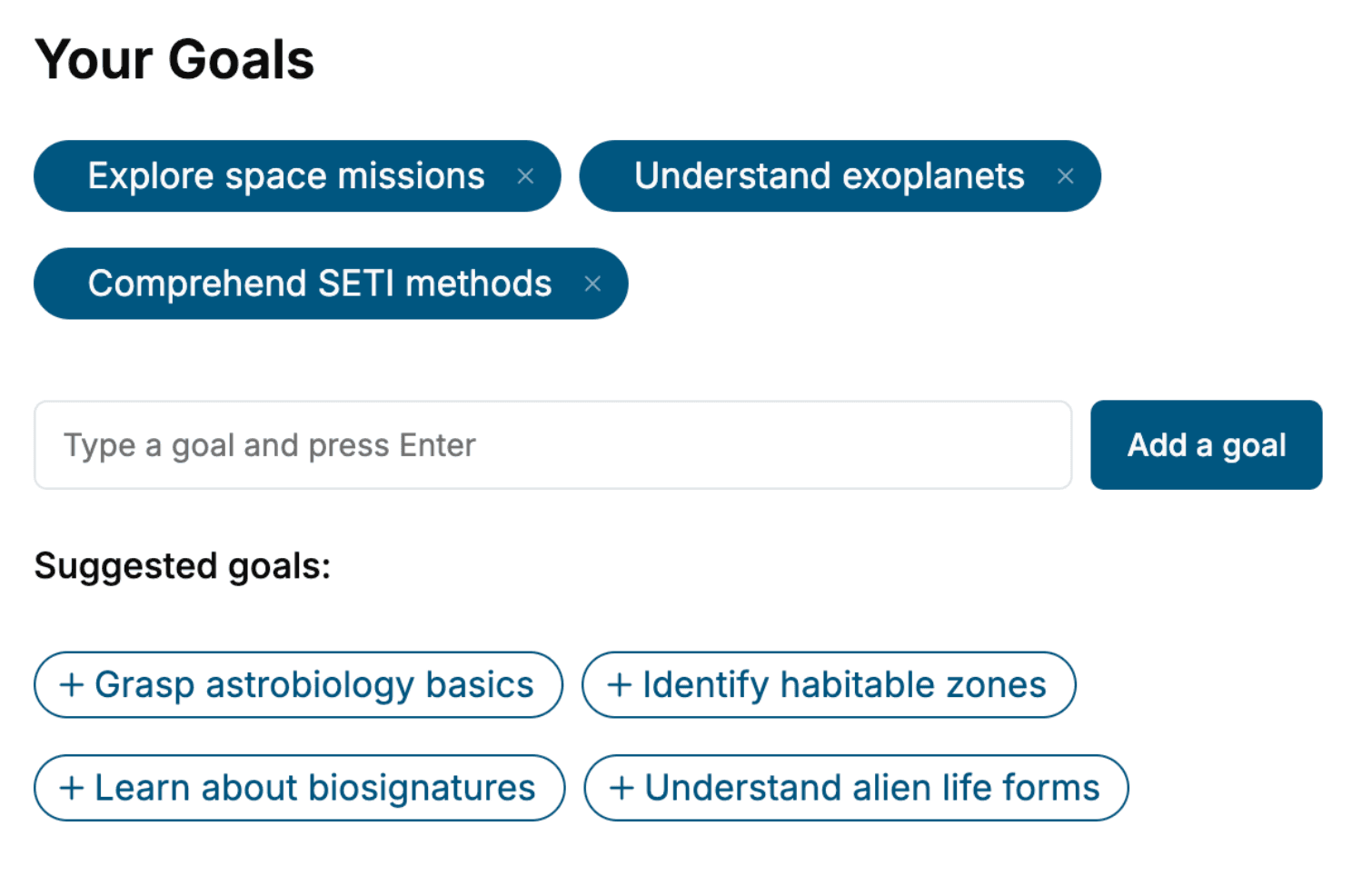
Specify your goals and choose sub-topics to include
- 3. Get your tailored book
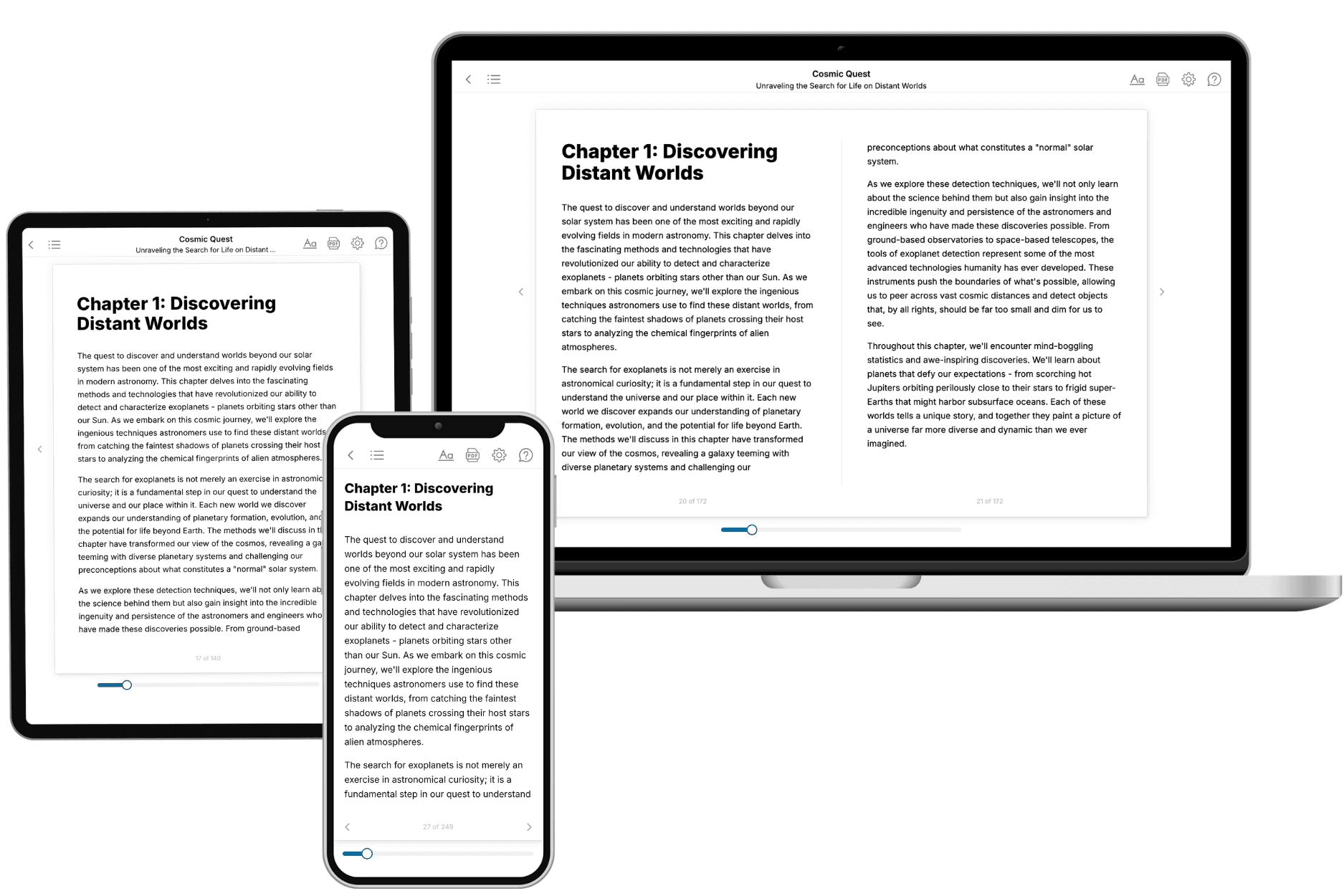
Your book is ready in 10 minutes. Read it online, download as EPUB or PDF, or send to Kindle.

Frequently asked questions
- What is TailoredRead?
TailoredRead creates complete, full-length nonfiction ebooks, written specifically for you. Tell us what you want to learn and why, and TailoredRead writes you a complete ebook on it, with charts, tables, and diagrams throughout. Read it online, on Kindle, or on any e-reader, or download it as a PDF or EPUB. Every book is written fresh the day you order it.
- How is the book tailored to me?
Before anything is written, you answer a few short questions about your goals, your background, and the topics you care about. Your book is then planned around your answers: written at your level, focused on your goals, and covering the topics you chose, instead of the one-size-fits-all book a store sells everyone.
- Will it read like generic AI content?
No. Your book isn't a chat transcript: it's planned chapter by chapter before a single word is written, told in a clear book voice, and explains ideas visually with charts, tables, and diagrams. After writing, every book goes through an editorial pass that polishes chapters so the book reads consistent from start to finish. Judge for yourself: browse thousands of sample books on our Explore Books page.
- How accurate is the content?
Our AI first checks whether your subject needs live research. Niche and fast-moving subjects are researched before writing, and the book plan and chapters are grounded in what it finds. After writing, every book goes through a quality pass that checks its facts and consistency, and researched books list their sources in a Notes section at the back.
- How long is the book?
You choose the length: Comprehensive (250-300 pages), Detailed (150-200 pages), Essential (70-100 pages), or Short (30-50 pages).
- Does the book include visuals?
Yes. Every book includes charts, tables, and diagrams: timelines, checklists, step-by-step guides, decision trees, comparison tables, matrices, and bar charts. A typical book includes dozens of these visual elements.
- Can I read it on Kindle? What formats can I download?
Yes. Every book can be read in our online reader or downloaded as a PDF or EPUB. The EPUB can be opened with Kindle, Apple Books, Kobo, and any e-reader. The Commercial and Author licenses also include an editable Word (DOCX) and Markdown download.
- How much does it cost?
About the price of a regular ebook. The exact price depends on your book's length and complexity, from $2 for the shortest books to $35 for the most comprehensive, and it's shown when you review your book, before you commit to anything. Each book is a one-time purchase, yours to keep, no subscription. Licenses that let you share, teach, or publish your book range from $35.99 to $49.99.
- Can I preview the book before purchasing?
Before you pay, you'll see what your book will cover: the title, a detailed description, the estimated length, and the complete chapter-by-chapter table of contents, so you know what you're getting before you decide. The full text itself is written after you purchase.
- How long does it take to create a book?
About 10 minutes. You can start reading the opening chapters while the rest is still being written.