The Resistance Training Blueprint
Build Muscle, Burn Fat, and Transform Your Body with Science-Based Training
Most people fail at building muscle and losing fat simultaneously because they lack a clear, science-based system.
222 pages11 chaptersApr 25, 2026Strength Training
About this book
You might be spinning your wheels with random workouts, unsure if your form is correct, confused about nutrition timing, or frustrated by plateaus that seem impossible to break through. The real problem isn't effort—it's strategy. This book cuts through the noise and gives you the exact framework used by coaches and athletes to transform body composition. You'll learn how progressive overload drives muscle growth, why compound movements matter more than isolation exercises, how to design training splits that fit your life, and how to optimize nutrition without obsessive tracking. Discover the hormonal science behind fat loss, master proper lifting technique to prevent injuries, understand realistic timelines so you stay motivated, and build habits that stick for life. Whether you're new to resistance training or stuck on a plateau, this guide provides actionable protocols, evidence-based strategies, and the mindset shifts needed to achieve lasting results.
Table of contents
- IntroductionWhy Body Composition Transformation Matters, The Most Common Training Mistakes (And How to Avoid Them), How to Use This Book for Maximum ResultsRead below
- Chapter 1: The Science of Muscle Growth and Fat LossUnderstanding Muscle Fiber Types and Recruitment Patterns, How Protein Synthesis Drives Muscle Growth, The Role of Caloric Deficit in Fat Loss, Tracking Body Composition Beyond the Scale
- Chapter 2: Progressive Overload: The Engine of ProgressCore Progressive Overload Principles, Managing Volume Load and Training Frequency, Breaking Through Plateaus with Strategic Adjustments, Autoregulation: Adjusting Load Based on Performance
- Chapter 3: Mastering Compound MovementsWhy Compound Movements Deliver Superior Results, Barbell Squat Variations and Technique Mastery, Deadlift Variations and Form Correction, Pressing and Rowing Movements: Building Upper Body Strength
- Chapter 4: Lifting Form and Injury PreventionCommon Form Mistakes and How to Fix Them, Injury Prevention Protocols and Risk Management, Mobility Work Integration for Better Movement Quality, Eccentric Training Methods for Strength and Hypertrophy
- Chapter 5: Designing Your Personalized Training SplitTraining Split Design Based on Your Schedule and Goals, Optimizing Training Frequency for Muscle Growth, Antagonist Muscle Pairing and Exercise Selection, Unilateral Movement Benefits and Implementation
- Chapter 6: Hypertrophy Training Science and PeriodizationHypertrophy Training Science: Rep Ranges and Intensity, Periodization Strategies for Continuous Progress, Tempo Training Protocols and Time Under Tension, Balancing Strength and Muscular Endurance
- Chapter 7: Nutrition for Muscle Gain and Fat LossCaloric Deficit Optimization Without Extreme Restriction, Protein Intake and Amino Acid Timing Protocols, Carb Cycling Strategies and Glycogen Management, Nutrient Partitioning Optimization for Body Composition
- Chapter 8: Recovery, Sleep, and Hormonal OptimizationRecovery Optimization Methods and Active Recovery, Sleep Quality Optimization for Muscle Growth, Hormonal Response to Exercise and Optimization, Cortisol Management Through Training and Lifestyle
- Chapter 9: Metabolic Adaptation and Advanced StrategiesUnderstanding Metabolic Adaptation and Plateau Prevention, Metabolic Rate Enhancement Through Training, Insulin Sensitivity Training and Metabolic Health, Metabolic Conditioning Workouts for Fat Loss
- Chapter 10: Supplements, Tracking, and Habit FormationSupplement Efficacy Evidence and Safety, Progress Tracking Methods and Data Analysis, Habit Formation Psychology for Consistency, Realistic Fitness Timelines and Expectation Setting
- Chapter 11: Building a Sustainable LifestyleSustainable Lifestyle Integration and Long-Term Success, Training Consistency Tracking and Accountability, Changing Bad Habits and Building New Ones
- ConclusionYour Next Steps: Creating Your Action Plan, Final Thoughts on Your Transformation Journey
- Frequently Asked QuestionsAnabolic Window Myth Debunking, Micronutrient Deficiency Prevention, Grip Strength Development and Forearm Training, Isometric Strength Building and Plateau Breaking
Introduction
Most people who walk into a gym have a clear goal in mind. They want to look better, feel stronger, and move through life with more energy and confidence. Yet despite months or even years of consistent effort, a frustrating number of them end up stuck. The scale barely moves. The mirror tells the same story week after week. Workouts feel like they're going through the motions. The problem, almost universally, is not a lack of effort or dedication. It's a lack of a clear, science-backed system that actually works.
Resistance training is one of the most powerful tools available for transforming body composition. Research consistently shows that combining structured weight training with appropriate nutrition produces results that cardio alone simply cannot match.[1] Building lean muscle tissue raises your resting metabolic rate, improves insulin sensitivity, strengthens bones and connective tissue, and reshapes the body in ways that create a lasting, functional physique. But the key word is structured. Random workouts, inconsistent effort, and guesswork nutrition will not get you there.
This book exists to close the gap between what most people do in the gym and what the science actually supports. Every chapter is built around evidence-based principles drawn from exercise physiology, nutritional science, and behavioral psychology. You will not find fads here, no miracle protocols, no extreme approaches that collapse after two weeks. What you will find is a complete, practical framework for building muscle, reducing body fat, and sustaining those results over the long term. Whether you have been training for a year or five years, this guide will give you the clarity and direction to move forward with purpose.
The chapters ahead cover everything from the cellular mechanics of muscle growth to the psychology of habit formation. You will learn how to design a training split that fits your actual life, how to eat in a way that supports both muscle gain and fat loss, how to manage recovery so your body can actually adapt, and how to recognize and break through the plateaus that stop most people cold. Each section builds on the last, creating a complete picture of what it takes to transform your body composition in a sustainable, intelligent way.
Why Body Composition Transformation Matters
Body composition refers to the ratio of fat mass to lean mass in your body. Two people can weigh exactly the same and look completely different, because one carries significantly more muscle and less fat than the other. This distinction matters enormously, not just for aesthetics, but for long-term health. Higher muscle mass is associated with better metabolic health, lower risk of type 2 diabetes, improved cardiovascular markers, and greater functional independence as you age.[2]
The scale is one of the most misleading tools in fitness. Someone who loses ten pounds of fat while gaining five pounds of muscle has made a dramatic physical transformation, but the scale only shows a net loss of five pounds. Meanwhile, their clothes fit differently, their strength has increased, their energy levels have improved, and their metabolic rate is higher than before. Focusing exclusively on scale weight causes people to misread their own progress and make poor decisions as a result.
Improving body composition also has a compounding effect over time. More muscle tissue means your body burns more calories at rest, which makes maintaining a healthy weight progressively easier. This is the opposite of what happens with crash dieting, where muscle loss slows the metabolism and makes weight regain almost inevitable. Building muscle while losing fat creates a biological environment that supports long-term leanness rather than fighting against it.
There is also a powerful psychological dimension to this process. Strength gains are measurable and motivating in a way that scale weight is not. When you add ten pounds to your squat, or complete a set of pull-ups for the first time, or notice that your shoulders have taken on a new shape, those are concrete markers of progress that reinforce the behaviors that created them. This feedback loop between effort and visible result is one of the most powerful drivers of long-term consistency.
Consider a practical example. A 35-year-old who begins a structured resistance training program and loses 15 pounds of fat while gaining 8 pounds of muscle over six months has not just changed how they look. They have fundamentally changed how their body functions. Their resting metabolic rate is higher. Their joints are better supported. Their hormonal profile has shifted in a favorable direction. Their risk of metabolic disease has decreased. These are not cosmetic changes. They are physiological upgrades with real consequences for quality of life.
Understanding why body composition transformation matters at this deeper level changes how you approach the process. It shifts the goal from a number on a scale to a genuine investment in your long-term health and capability. That shift in perspective is one of the most important things this book can offer, because it reframes the entire journey from short-term sacrifice to long-term gain.
The good news is that the tools required to make this transformation are well understood. The science of muscle hypertrophy, fat metabolism, and nutritional optimization has advanced significantly over the past two decades. What was once reserved for elite athletes and professional coaches is now accessible to anyone willing to learn and apply it consistently. That is exactly what this book is designed to help you do.
The Most Common Training Mistakes (And How to Avoid Them)
Before diving into the framework, it is worth naming the most common mistakes that keep intermediate trainees stuck. These are not beginner errors. They are the subtle, persistent patterns that derail people who are already putting in real effort. Recognizing them is the first step toward eliminating them from your own training.
Mistake 1: Training without progressive overload. This is the single most common reason people plateau. Progressive overload means systematically increasing the demands placed on your muscles over time, through more weight, more reps, more sets, or reduced rest. Without it, your body has no reason to adapt. Many intermediate trainees fall into a comfortable routine, lifting the same weights for the same reps week after week, and then wonder why nothing is changing. The body is extraordinarily efficient at adapting to a fixed stimulus and then maintaining that adaptation with minimal effort.
Mistake 2: Neglecting compound movements in favor of isolation work. Bicep curls and cable flyes have their place, but they should not be the foundation of a program. Compound movements like squats, deadlifts, bench presses, and rows recruit multiple muscle groups simultaneously, trigger greater hormonal responses, and produce far more total muscle stimulus per unit of time. Many trainees spend the majority of their gym time on isolation exercises and wonder why their overall physique is not developing as expected.
Mistake 3: Inconsistent or inadequate protein intake. Muscle protein synthesis, the process by which your body builds new muscle tissue, requires a consistent supply of amino acids. Research suggests that most people aiming to build muscle benefit from consuming approximately 0.7 to 1 gram of protein per pound of body weight per day.[3] Many intermediate trainees hit this target some days and fall well short on others, creating an inconsistent anabolic environment that limits muscle growth.
Mistake 4: Underestimating the importance of recovery. Training is the stimulus. Recovery is where the adaptation actually happens. Sleep deprivation, chronic stress, and insufficient rest between sessions all impair the body's ability to repair and grow muscle tissue. Many people respond to a plateau by training more, when the real solution is often to recover better. This counterintuitive reality is one of the most important concepts in this entire book.
Mistake 5: Poor form that limits muscle recruitment and increases injury risk. Lifting with compromised technique does two things simultaneously: it reduces the stimulus to the target muscle and increases the load on joints and connective tissue. Both outcomes are bad. A squat performed with excessive forward lean and caved knees does not effectively train the quads and glutes, and it places dangerous stress on the lower back and knees. Fixing form is not just about safety. It is about making every rep count.
Here is a quick summary of the most common mistakes and their solutions:
- No progressive overload: Track your lifts and aim to increase weight or reps each week or every two weeks.
- Too much isolation work: Build your program around compound movements and add isolation exercises as accessories.
- Inconsistent protein intake: Plan your meals to hit your protein target every day, not just on training days.
- Ignoring recovery: Prioritize 7 to 9 hours of sleep and schedule rest days as seriously as training days.
- Poor lifting form: Film yourself, work with a coach, or use a mirror to identify and correct technique errors.
- Unrealistic timelines: Expect 0.5 to 1 percent of body weight per week in fat loss, and 1 to 2 pounds of muscle per month under good conditions.
There is also a subtler mistake that does not get discussed enough: program hopping. This is the habit of switching training programs every few weeks before any program has had time to produce results. Muscle adaptation takes time. A well-designed program needs at least 8 to 12 weeks of consistent execution before you can accurately assess whether it is working. Jumping from program to program based on what looks exciting or what someone posted online is one of the most effective ways to guarantee that you never make meaningful progress.
Finally, many intermediate trainees make the mistake of treating nutrition and training as separate concerns. They are not. They are two sides of the same system. Training without adequate nutrition is like building a house without materials. You can have the best blueprint in the world, but if the raw materials are not there, nothing gets built. The chapters on nutrition in this book are just as important as the chapters on training, and they should be treated that way.
How to Use This Book for Maximum Results
This book is designed to be read in order, at least the first time through. Each chapter builds on the concepts introduced in the previous one. The science of muscle growth in Chapter 1 informs the progressive overload principles in Chapter 2. The compound movement techniques in Chapter 3 connect directly to the injury prevention strategies in Chapter 4. The training split design in Chapter 5 only makes full sense once you understand the hypertrophy science in Chapter 6. Reading out of sequence is possible, but you will get more from each chapter if you have the context that precedes it.
That said, this book is also designed to be a reference you return to repeatedly. Once you have read it through, you will find yourself coming back to specific sections as your training evolves. When you hit a plateau, Chapter 9 on metabolic adaptation will be your first stop. When you want to refine your nutrition approach, Chapter 7 will give you the tools to do it. When you are designing a new training block, Chapters 5 and 6 will guide your decisions. Think of this book as a coaching resource you can consult at any stage of your journey.
Each chapter ends with actionable takeaways. These are not vague suggestions. They are specific steps you can implement immediately. The goal is to make the gap between reading and doing as small as possible. Knowledge without application is just entertainment. The real value of this book comes from what you do with it after you put it down.
Here is a recommended approach for getting the most out of this material:
- Read the full book once to build a complete mental model of the system before changing anything about your training.
- Assess your current program against the principles in Chapters 2 through 6 to identify the biggest gaps.
- Audit your nutrition using the frameworks in Chapter 7 to determine whether your intake supports your goals.
- Evaluate your recovery using Chapter 8 to identify whether sleep, stress, or rest days are limiting your progress.
- Design or redesign your training split using Chapter 5, incorporating the progressive overload principles from Chapter 2.
- Track your progress using the methods in Chapter 10, and revisit the relevant chapters when you encounter specific challenges.
One important note about the science presented in this book. Exercise science is a living field, and research continues to refine our understanding of how the body responds to training and nutrition. The principles in this book are grounded in the best available evidence at the time of writing, with citations provided throughout. However, individual responses to training vary. Genetics, training history, sleep quality, stress levels, and dozens of other factors influence how quickly and dramatically any given person responds to a program. Use the principles here as a framework, not a rigid prescription, and adjust based on how your own body responds.
It is also worth being honest about timelines. Meaningful body composition change takes months, not weeks. A realistic expectation for someone following a well-designed program with appropriate nutrition is a loss of 0.5 to 1 percent of body weight per week in fat, while preserving or gaining muscle mass. Over six months, that adds up to a genuinely significant transformation. But it requires patience, consistency, and the willingness to trust the process even when progress feels slow. This book will help you stay on track by giving you the tools to measure real progress, not just scale weight.
The FAQ section at the back of the book addresses specific questions that come up frequently among intermediate trainees, including common myths about the anabolic window, grip strength development, isometric training, and micronutrient considerations. If you have a specific question that is not addressed in the main chapters, check there first.
Finally, approach this material with a growth mindset. Some of what you read here may challenge things you have believed about training for years. That is a good thing. The willingness to update your approach based on better information is one of the most valuable traits any athlete or fitness enthusiast can develop. The goal is not to be right about what you have been doing. The goal is to get better results going forward. With that mindset in place, everything that follows becomes a genuine opportunity rather than a critique.
The most successful trainees are not the ones who work the hardest. They are the ones who work the smartest, consistently, over a long enough period of time for the results to compound. That is what this book is designed to help you do.
What follows is a complete system for transforming your body composition through resistance training. It is grounded in science, built for real-world application, and designed to produce results that last. The work ahead is demanding, but it is also deeply rewarding. Every rep, every meal, every night of quality sleep is an investment in a version of yourself that is stronger, leaner, and more capable than the one who opened this book. Let's get started.
Notes
Introduction
- 1. W. L. Westcott, "Resistance Training is Medicine," Current Sports Medicine Reports, 2012
- 2. P. Srikanthan and A. S. Karlamangla, "Muscle Mass Index as a Predictor of Longevity in Older Adults," The American Journal of Medicine, 2014
- 3. R. W. Morton and others, "A systematic review, meta-analysis and meta-regression of the effect of protein supplementation on resistance training-induced gains in muscle mass and strength," British Journal of Sports Medicine, 2018
This is the end of the free sample. The full book has 11 chapters.
Want this book written for you?
Tell us your goals and background, and get your own version of this book, tailored by AI to you.


Benefits of AI-tailored books
- Read one book, not ten:
- all the Strength Training knowledge you need, gathered into a single book.
- Save days of learning:
- tell us your goals, choose your topics, and the whole book is built around them.
- Learn effortlessly:
- Strength Training book written for your specific background and expertise.
- Understand at a glance:
- includes charts, tables, timelines, checklists, decision trees, and more.
- Stay current:
- written the day you order it, not years ago.
- Trust what you read:
- every book is checked for accuracy, with real research when your subject needs it.
Create your unique book in 3 steps
- 1. Select your focus
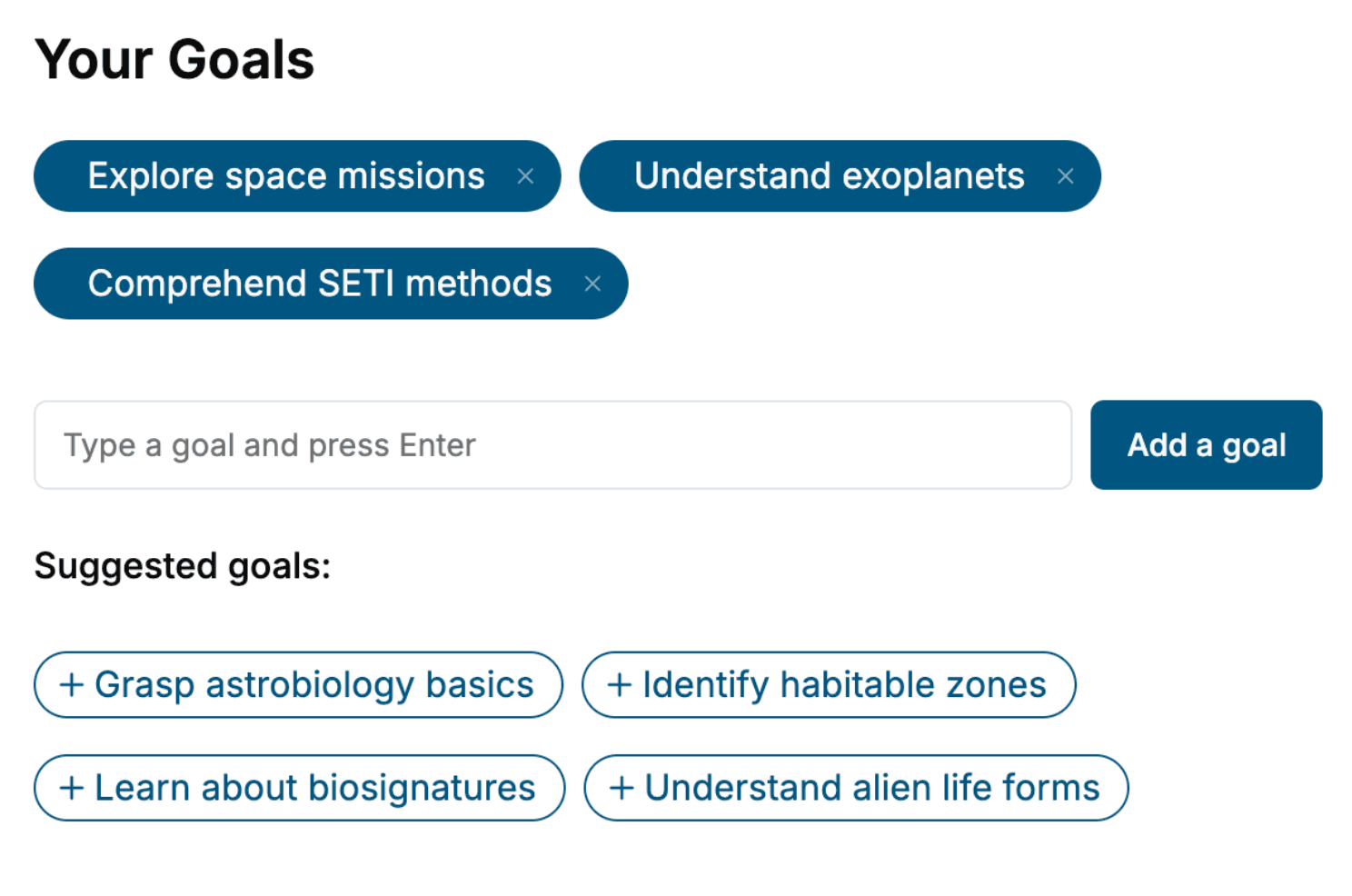
Select the focus of your Strength Training book and share your background
- 2. Personalize your book
Specify your goals and choose sub-topics to include
- 3. Get your tailored book
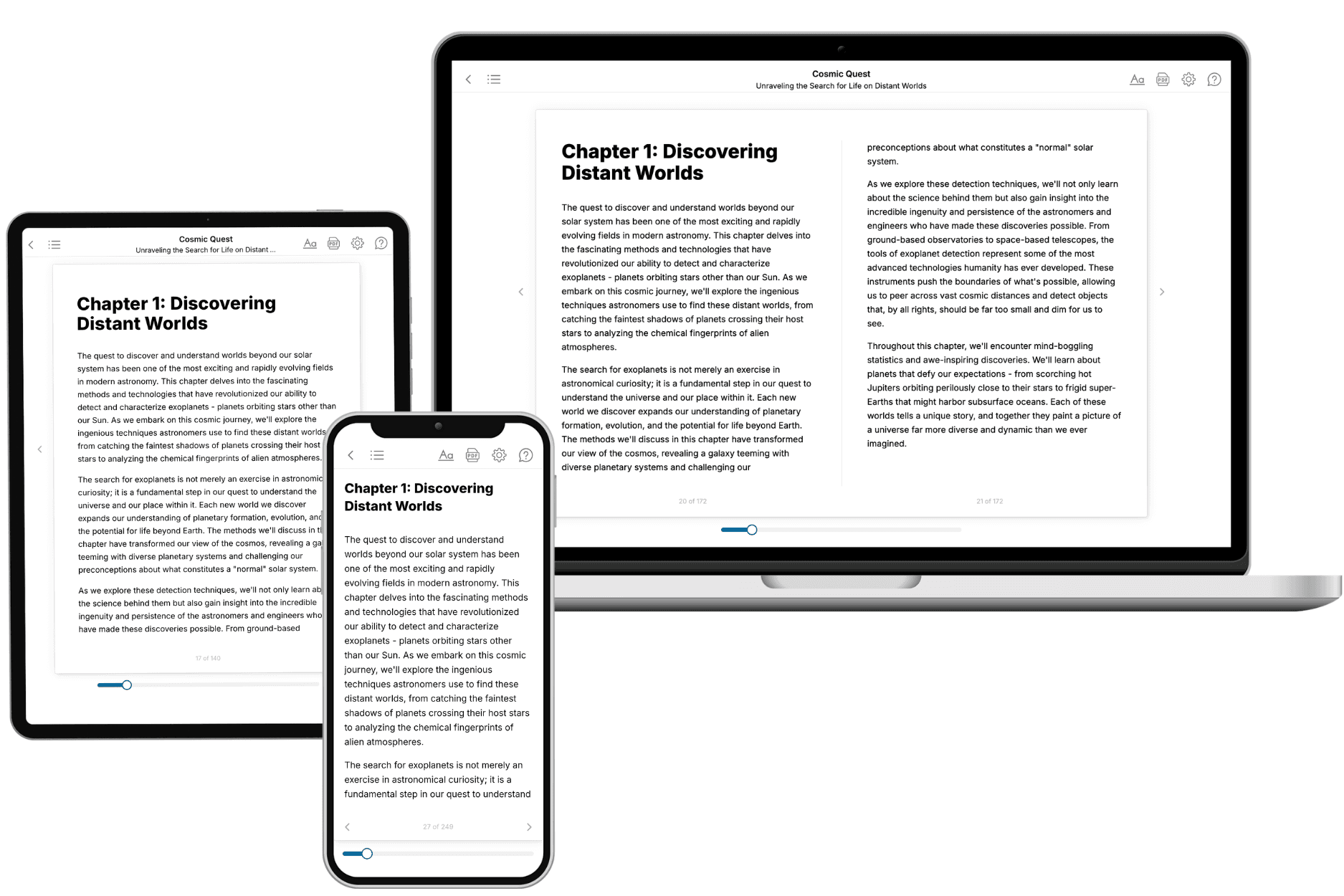
Your book is ready in 10 minutes. Read it online, download as EPUB or PDF, or send to Kindle.

Frequently asked questions
- What is TailoredRead?
TailoredRead creates complete, full-length nonfiction ebooks, written specifically for you. Tell us what you want to learn and why, and TailoredRead writes you a complete ebook on it, with charts, tables, and diagrams throughout. Read it online, on Kindle, or on any e-reader, or download it as a PDF or EPUB. Every book is written fresh the day you order it.
- How is the book tailored to me?
Before anything is written, you answer a few short questions about your goals, your background, and the topics you care about. Your book is then planned around your answers: written at your level, focused on your goals, and covering the topics you chose, instead of the one-size-fits-all book a store sells everyone.
- Will it read like generic AI content?
No. Your book isn't a chat transcript: it's planned chapter by chapter before a single word is written, told in a clear book voice, and explains ideas visually with charts, tables, and diagrams. After writing, every book goes through an editorial pass that polishes chapters so the book reads consistent from start to finish. Judge for yourself: browse thousands of sample books on our Explore Books page.
- How accurate is the content?
Our AI first checks whether your subject needs live research. Niche and fast-moving subjects are researched before writing, and the book plan and chapters are grounded in what it finds. After writing, every book goes through a quality pass that checks its facts and consistency, and researched books list their sources in a Notes section at the back.
- How long is the book?
You choose the length: Comprehensive (250-300 pages), Detailed (150-200 pages), Essential (70-100 pages), or Short (30-50 pages).
- Does the book include visuals?
Yes. Every book includes visual elements such as timelines, checklists, step-by-step guides, decision trees, comparison tables, and matrices, and many include bar charts. A typical book includes dozens of these visual elements.
- Can I read it on Kindle? What formats can I download?
Yes. Every book can be read in our online reader or downloaded as a PDF or EPUB. The EPUB can be opened with Kindle, Apple Books, Kobo, and any e-reader. The Commercial and Author licenses also include an editable Word (DOCX) and Markdown download.
- How much does it cost?
About the price of a regular ebook. The exact price depends on your book's length and complexity, from $2 for the shortest books to $35 for the most comprehensive, and it's shown when you review your book, before you commit to anything. Each book is a one-time purchase, yours to keep, no subscription. Licenses that let you share, teach, or publish your book range from $35.99 to $49.99.
- Can I preview the book before purchasing?
Before you pay, you'll see what your book will cover: the title, a detailed description, the estimated length, and the complete chapter-by-chapter table of contents, so you know what you're getting before you decide. The full text itself is written after you purchase.
- How long does it take to create a book?
About 10 minutes. You can start reading the opening chapters while the rest is still being written.