Rising From the Ashes
Real Stories of Resilience, Redemption, and Reclaiming Your Life
What if the worst thing that ever happened to you could become the catalyst for your greatest transformation?
207 pages10 chaptersNov 7, 2025Resilience
About this book
Adversity strikes without warning—job loss, illness, relationship breakdown, financial ruin, or personal tragedy. In those moments, it's easy to believe your story is over. But what if it's actually just beginning? This book brings together powerful real-world narratives from people who faced seemingly insurmountable challenges and not only survived but emerged stronger, wiser, and more purposeful. You'll discover the psychological principles behind resilience, learn the specific strategies that helped others rebuild, and find practical tools you can apply immediately to your own situation. Whether you're currently in crisis or supporting someone who is, these stories and frameworks will help you understand that recovery isn't about returning to who you were—it's about becoming who you're meant to be. Your adversity doesn't define you. Your response to it does.
Table of contents
- IntroductionWhy This Book Matters Now, What You'll Discover in These Pages, How to Use This Book for Maximum ImpactRead below
- Chapter 1: Understanding AdversityWhat Adversity Really Is, Common Forms of Life-Altering Challenges, The Immediate Aftermath: What Happens First
- Chapter 2: The Psychology of ResilienceResilience: More Than Just Bouncing Back, How Your Brain Adapts to Crisis, The Core Components of Resilience, Myths About Resilience We Need to Abandon
- Chapter 3: From Survival to AcceptanceThe Survival Phase: Getting Through the Worst, Navigating the Emotional Rollercoaster, Moving Toward Acceptance Without Giving Up
- Chapter 4: Stories of TransformationFrom Financial Ruin to Rebuilding: Marcus's Journey, Beyond Illness: How Sarah Reclaimed Her Identity, Breaking the Cycle: James's Path to Freedom, Finding Purpose After Loss: Elena's New Beginning
- Chapter 5: Reframing Your NarrativeShifting From Victim to Author of Your Story, Finding Meaning in Difficult Experiences, Practical Techniques for Changing Your Perspective
- Chapter 6: Building Your Support SystemWhy Connection Is Your Greatest Asset, Overcoming Barriers to Asking for Support, Finding and Leveraging Community Resources, When and How to Seek Professional Help
- Chapter 7: Practical Strategies for Daily RecoveryThe Power of Small, Consistent Actions, Building a Self-Care Foundation That Works, Handling Setbacks Without Losing Progress
- Chapter 8: Reclaiming Your IdentityUnderstanding Identity Loss After Adversity, The Process of Rediscovering Who You Are, Integrating Your Experience Into Your New Identity, Aligning Your Life With Your Core Values
- Chapter 9: From Healing to GrowthMoving Beyond Recovery to Genuine Growth, Understanding Post-Traumatic Growth, Discovering Strengths You Didn't Know You Had
- Chapter 10: Creating Your Personal Resilience PlanAssessing Your Current Resilience Level, Setting Meaningful Recovery Goals, Building Your Personalized Action Plan, Creating Accountability and Tracking Progress
- ConclusionYour Next Chapter Begins Now
- Additional Resources and Support
Introduction
There's a moment that arrives in every life-altering crisis when time seems to stop. Your heart pounds, your mind races, and a single thought echoes through your consciousness: How will I survive this?
Perhaps you're in that moment right now. Maybe you've recently emerged from it, still disoriented and searching for solid ground. Or possibly you're watching someone you care about struggle through their darkest hour, feeling helpless to ease their pain. Whatever brought you to these pages, you've taken an important step—you're seeking a way forward when the path ahead seems impossibly obscured.
This book exists because adversity is not an aberration in the human experience—it's an inevitable part of it. Yet despite its universality, facing significant challenges can feel profoundly isolating. When crisis strikes, it's easy to believe you're uniquely broken, that your situation is somehow different from everyone else's, that recovery might be possible for others but not for you. These beliefs, while understandable, are fundamentally untrue. The stories and strategies in these pages will demonstrate that transformation after adversity is not only possible but remarkably common when approached with the right mindset, tools, and support.
What makes this book different from other self-help resources is its foundation in authentic human experience combined with evidence-based psychological principles. You won't find empty platitudes or oversimplified solutions here. Instead, you'll discover real stories from people who faced genuine hardship—financial devastation, serious illness, relationship collapse, addiction, loss, and trauma—and found ways not just to survive but to build lives of greater meaning and purpose than they had before. These narratives are paired with practical frameworks drawn from resilience research, trauma psychology, and behavioral science, giving you both inspiration and actionable strategies you can implement immediately.
Why This Book Matters Now
We're living through an era of unprecedented disruption and uncertainty. Economic volatility, public health crises, social upheaval, environmental challenges, and rapid technological change have created conditions where adversity touches more lives more frequently than in previous generations. The traditional support structures that once helped people weather difficult times—extended family networks, stable employment, tight-knit communities, and established institutions—have weakened or transformed in ways that leave many feeling unmoored when crisis arrives. At the same time, social media creates a distorted perception of others' lives, making your struggles feel even more isolating when everyone else appears to be thriving effortlessly.
Research from the American Psychological Association indicates that stress levels have been rising steadily over the past decade, with significant percentages of adults reporting that they're overwhelmed by the challenges they face[1]. Financial insecurity affects millions, with unexpected expenses creating cascading crises for households without adequate savings. Health challenges, both physical and mental, impact individuals and families in ways that ripple through every aspect of life. Relationship breakdowns leave people questioning their judgment and worth. Career disruptions force painful reassessments of identity and purpose. These aren't abstract statistics—they represent real people facing real pain, searching for real solutions.
What's particularly challenging about modern adversity is the speed at which circumstances can change. A diagnosis can arrive in a single appointment. A job can disappear in one meeting. A relationship can end in one conversation. A financial foundation can crumble in one market shift. The velocity of these changes often outpaces our psychological capacity to process and adapt, leaving us in a state of shock and disorientation. Traditional advice to stay positive
or just push through
feels inadequate when facing challenges of this magnitude. You need more than motivational slogans—you need a comprehensive understanding of how adversity affects you and a practical roadmap for navigating the recovery process.
This book matters now because it addresses the gap between where you are and where you want to be with honesty and specificity. It acknowledges that recovery is difficult, non-linear, and often frustrating. It doesn't promise quick fixes or miraculous transformations. Instead, it offers something more valuable: a realistic framework for understanding your experience, evidence that others have successfully navigated similar challenges, and concrete strategies you can adapt to your unique circumstances. The goal isn't to minimize your pain or rush you through your process—it's to provide companionship, guidance, and hope for the journey ahead.
Beyond individual recovery, this book matters because resilience is contagious. When you learn to navigate adversity effectively, you become a resource for others facing their own challenges. Your transformation creates ripples that extend far beyond your immediate circumstances. The strategies you develop, the perspective you gain, and the strength you build don't just benefit you—they position you to support family members, friends, colleagues, and community members who will inevitably face their own difficult seasons. By investing in your own recovery, you're simultaneously building capacity to contribute to the resilience of those around you.
The timing of this book also reflects growing recognition within psychology and neuroscience that adversity, while painful, can catalyze profound positive change. The concept of post-traumatic growth—the idea that people can emerge from difficult experiences with enhanced capabilities, deeper relationships, greater appreciation for life, and stronger sense of purpose—has moved from theoretical construct to well-documented phenomenon[2]. This doesn't mean adversity is good or that suffering is necessary for growth. It simply means that when difficult experiences occur, as they inevitably do, you have the capacity to transform them into catalysts for positive development rather than permanent setbacks.
Finally, this book matters because you matter. Your struggles are valid. Your pain is real. Your desire for a better future is legitimate. You deserve access to the knowledge, strategies, and support that can help you move from where you are to where you want to be. The fact that you're reading these words indicates you haven't given up, even if you've felt like giving up. That persistence, that small flame of hope that brought you here, is the foundation upon which everything else will be built. This book will help you nurture that flame into something stronger and more sustainable.
What You'll Discover in These Pages
This book is structured to take you on a journey from understanding adversity to actively transforming your life in its aftermath. Each chapter builds on the previous one, creating a comprehensive framework for recovery and growth. You'll begin by developing a deeper understanding of what adversity actually is, how it affects you psychologically and physiologically, and why your initial reactions are normal responses to abnormal circumstances. This foundation is essential because you can't effectively navigate something you don't understand, and misunderstanding your own responses can create additional suffering on top of the original challenge.
The early chapters explore the psychology of resilience in depth, dismantling common myths and replacing them with evidence-based understanding. You'll learn that resilience isn't an innate trait that some people have and others lack—it's a set of skills, perspectives, and practices that can be developed regardless of your starting point. You'll discover how your brain responds to crisis, why certain reactions feel overwhelming, and what's happening beneath the surface during the recovery process. This knowledge transforms your relationship with your own experience, replacing self-judgment with self-compassion and replacing confusion with clarity.
One of the most powerful elements of this book is the collection of authentic transformation stories woven throughout. You'll meet Marcus, who rebuilt his life after financial devastation left him homeless and hopeless. You'll follow Sarah's journey as she reclaimed her identity after a serious illness threatened to define her entire existence. You'll witness James breaking free from cycles that had trapped him for years. You'll accompany Elena as she discovered unexpected purpose after devastating loss. These aren't sanitized success stories with all the messy parts removed—they're honest accounts that include setbacks, doubts, and moments of despair alongside the breakthroughs and victories. Each story includes specific strategies the person used, obstacles they encountered, and insights they gained that you can apply to your own situation.
The middle chapters focus on practical application, providing you with specific techniques and frameworks you can implement immediately. You'll learn how to reframe your narrative, shifting from a victim mindset to an author mindset without minimizing the reality of what you've experienced. You'll discover how to build and leverage support systems, overcoming the barriers that prevent many people from asking for help when they need it most. You'll explore daily practices that create momentum even when motivation is low, and you'll develop strategies for managing setbacks without losing the progress you've made. These aren't theoretical concepts—they're actionable approaches with step-by-step guidance.
As the book progresses, you'll move from basic recovery toward genuine growth and transformation. You'll explore how adversity affects identity and learn processes for rediscovering who you are beyond your challenges. You'll understand the phenomenon of post-traumatic growth and how to position yourself to experience it. You'll identify strengths you've developed through your struggles that you might not have recognized. This section helps you see your adversity not as a detour from your life path but as an integral part of your journey that has shaped you in valuable ways.
The final chapters bring everything together into a personalized resilience plan. You'll assess your current resilience level across multiple dimensions, set meaningful recovery goals that align with your values, and create a specific action plan tailored to your circumstances. You'll establish accountability systems and progress tracking methods that keep you moving forward even when the path gets difficult. This isn't a generic template—it's a customizable framework that you'll adapt to your unique situation, challenges, and aspirations. By the end of the book, you'll have both the understanding and the tools necessary to continue your recovery journey with confidence.
Throughout these pages, you'll also find important supplementary elements that enhance your learning and application:
- Research-backed insights: Key findings from psychology, neuroscience, and resilience studies that explain why certain approaches work
- Practical exercises: Specific activities you can complete to apply concepts to your own life
- Reflection questions: Prompts that help you process your experience and gain clarity about your path forward
- Common pitfalls: Warnings about mistakes people frequently make during recovery and how to avoid them
- Resource recommendations: Guidance on additional support, tools, and information for specific challenges
What you won't find in this book is equally important to understand. You won't find judgment about where you are or how you got there. You won't find oversimplified solutions that ignore the complexity of real human challenges. You won't find pressure to recover on someone else's timeline or according to someone else's definition of success. You won't find toxic positivity that dismisses legitimate pain or difficulty. Instead, you'll find respect for your experience, acknowledgment of the genuine difficulty of what you're facing, and support for moving forward at a pace that works for you while still maintaining forward momentum.
How to Use This Book for Maximum Impact
While you can certainly read this book straight through from beginning to end, you'll gain more value by engaging with it actively rather than passively consuming it. Think of this book as a workbook and companion for your recovery journey rather than simply a text to read once and set aside. Keep a journal or notebook nearby as you read, and take time to work through the exercises, answer the reflection questions, and document your insights. The act of writing engages different cognitive processes than reading alone, helping you internalize concepts more deeply and apply them more effectively to your specific situation.
Consider your current state and needs when deciding how to approach the material. If you're in acute crisis—if the adversity is very recent or you're still in survival mode—you might benefit most from starting with Chapter 3, which addresses the immediate aftermath of crisis and provides strategies for getting through the worst moments. Once you've stabilized somewhat, you can return to the earlier chapters to build deeper understanding. There's no shame in meeting yourself where you are rather than where you think you should be. The book will be here when you're ready for each piece.
If you're further along in your recovery journey but feeling stuck or uncertain about next steps, you might focus initially on the middle chapters that address reframing your narrative, building support systems, and implementing daily practices. If you're supporting someone else through adversity, the chapters on understanding adversity and the psychology of resilience will help you comprehend what they're experiencing and how to offer meaningful support. The transformation stories throughout the book can provide hope and perspective regardless of where you are in your own journey.
As you read the transformation stories, resist the temptation to compare your progress to someone else's timeline or to judge yourself for not being further along. These stories are meant to illustrate possibilities and provide concrete examples of strategies in action, not to set standards you must meet. Every person's journey is unique, shaped by their specific circumstances, resources, personality, history, and countless other factors. Take what resonates, adapt what seems useful, and leave what doesn't fit your situation. Your recovery doesn't need to look like anyone else's to be valid and valuable.
Make the exercises and reflection questions a priority rather than skipping over them to get to the next section. These interactive elements are where the real transformation happens. Reading about resilience is helpful; practicing resilience-building activities is transformative. Set aside dedicated time to work through these components thoughtfully. You might complete some exercises multiple times as your understanding deepens or your circumstances change. There's no such thing as doing them wrong—the value comes from the process of engaging with them honestly.
Consider creating a structured approach to working through the book:
- Set a sustainable pace: Decide whether you'll read one chapter per week, one section per day, or another rhythm that fits your life and energy level
- Create a dedicated space: Designate a comfortable, quiet place where you can read and reflect without interruption
- Schedule your reading time: Put it on your calendar like any other important appointment to ensure it actually happens
- Prepare your materials: Have your journal, pens, and any other tools you need readily available
- Minimize distractions: Turn off notifications, let others know you need uninterrupted time, and create conditions for focused engagement
- Review and reflect regularly: Periodically look back at what you've written and learned to recognize your progress and reinforce key insights
Don't hesitate to mark up the book if you're reading a physical copy. Highlight passages that resonate, write notes in the margins, flag pages you want to return to, and make the book your own. If you're reading digitally, use whatever annotation tools your platform provides. The goal is active engagement, not pristine preservation. A well-worn book covered in your notes and reflections is infinitely more valuable than a pristine copy that sits unread on a shelf.
Consider sharing your journey with a trusted friend, family member, therapist, or support group. Discussing what you're learning and how you're applying it creates accountability, provides opportunities for feedback and encouragement, and helps you process insights more deeply. You might even read the book alongside someone else who's facing their own challenges, creating a shared framework for supporting each other. The vulnerability required to share your struggles and progress can itself be a powerful catalyst for growth and connection.
Pay attention to your emotional responses as you read. Some sections may trigger difficult feelings or memories. This is normal and doesn't mean you're doing something wrong or that the book isn't right for you. When strong emotions arise, pause and practice self-compassion. Take breaks when needed. Engage in grounding techniques or self-care practices. If certain sections feel too intense, it's okay to skip them temporarily and return when you're ready. Your wellbeing always takes priority over completing any book, including this one.
Finally, remember that reading this book is just the beginning, not the entirety of your recovery journey. The real work happens in the days, weeks, and months after you close these pages, as you implement what you've learned, practice new skills, and gradually rebuild your life. Return to the book periodically as a reference and reminder. Your understanding will deepen with each reading as you bring new experiences and perspectives to the material. The goal isn't to finish the book—it's to use the book as a tool for creating lasting positive change in your life.
Your willingness to engage with this material, to seek understanding and strategies for moving forward, is itself an act of courage and resilience. Whatever brought you to this moment, whatever challenges you're facing, you've already demonstrated that you haven't given up. That matters more than you might realize. The journey ahead won't always be easy, but you don't have to walk it alone or without guidance. These pages contain the wisdom of those who've walked similar paths before you, the insights of researchers who've studied resilience and recovery, and practical tools you can use starting today. Your next chapter is waiting to be written, and you hold the pen.
This is the end of the free sample. The full book has 10 chapters.
Want this book written for you?
Tell us your goals and background, and get your own version of this book, tailored by AI to you.


Benefits of AI-tailored books
- Read one book, not ten:
- all the Resilience knowledge you need, gathered into a single book.
- Save days of learning:
- tell us your goals, choose your topics, and the whole book is built around them.
- Learn effortlessly:
- Resilience book written for your specific background and expertise.
- Understand at a glance:
- includes charts, tables, timelines, checklists, decision trees, and more.
- Stay current:
- written the day you order it, not years ago.
- Trust what you read:
- every book is checked for accuracy, with real research when your subject needs it.
Create your unique book in 3 steps
- 1. Select your focus
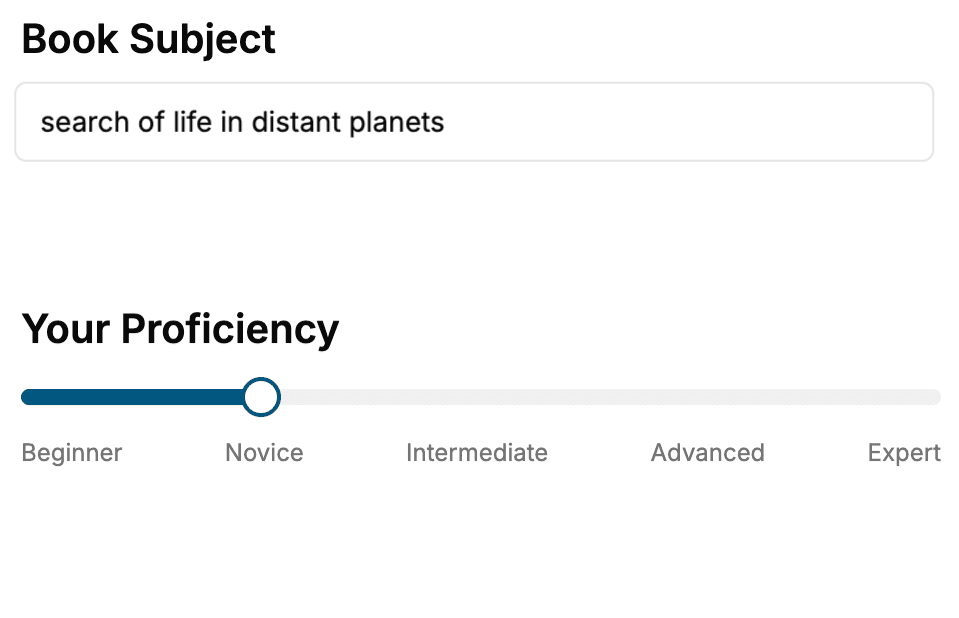
Select the focus of your Resilience book and share your background
- 2. Personalize your book
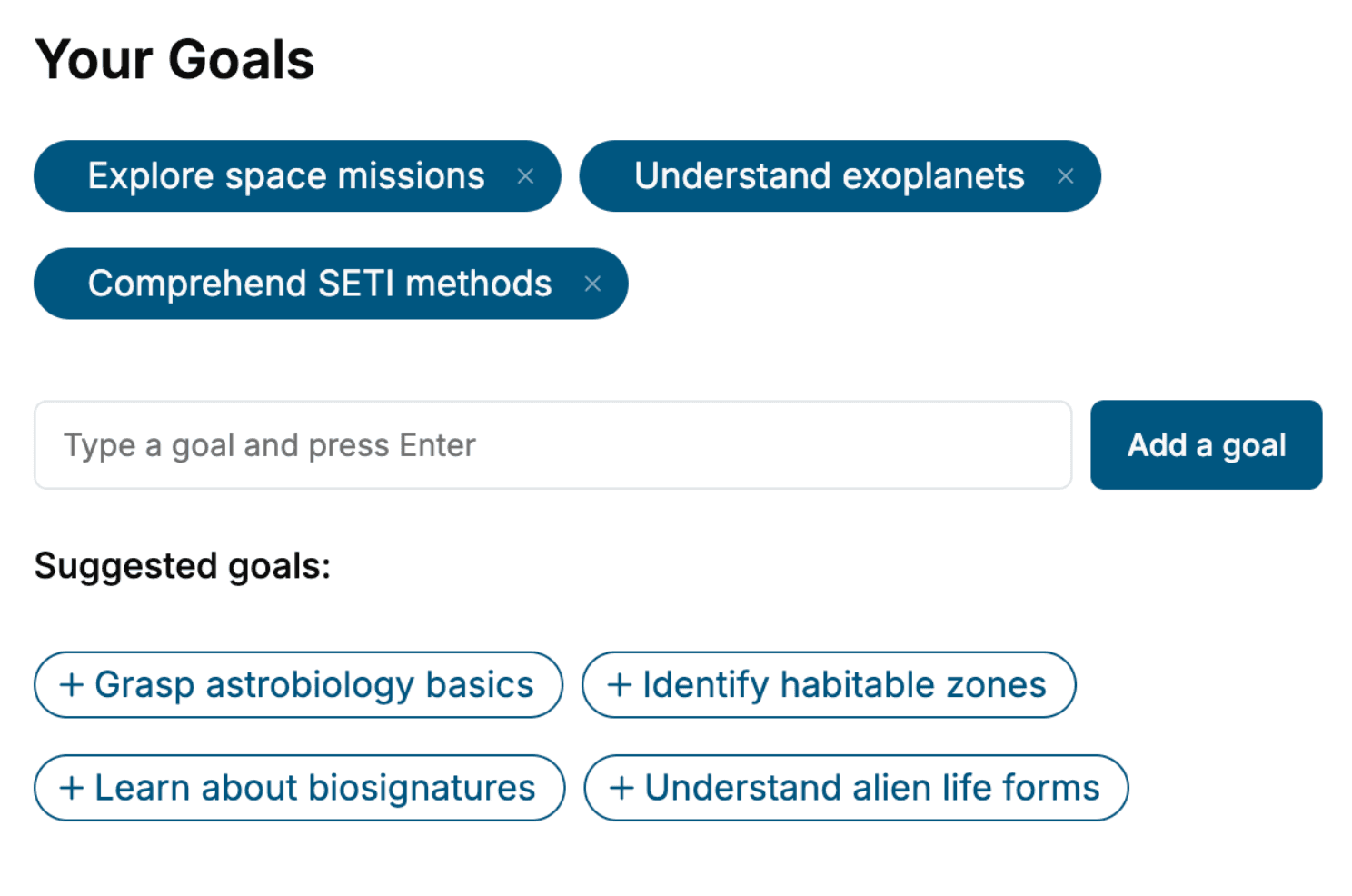
Specify your goals and choose sub-topics to include
- 3. Get your tailored book
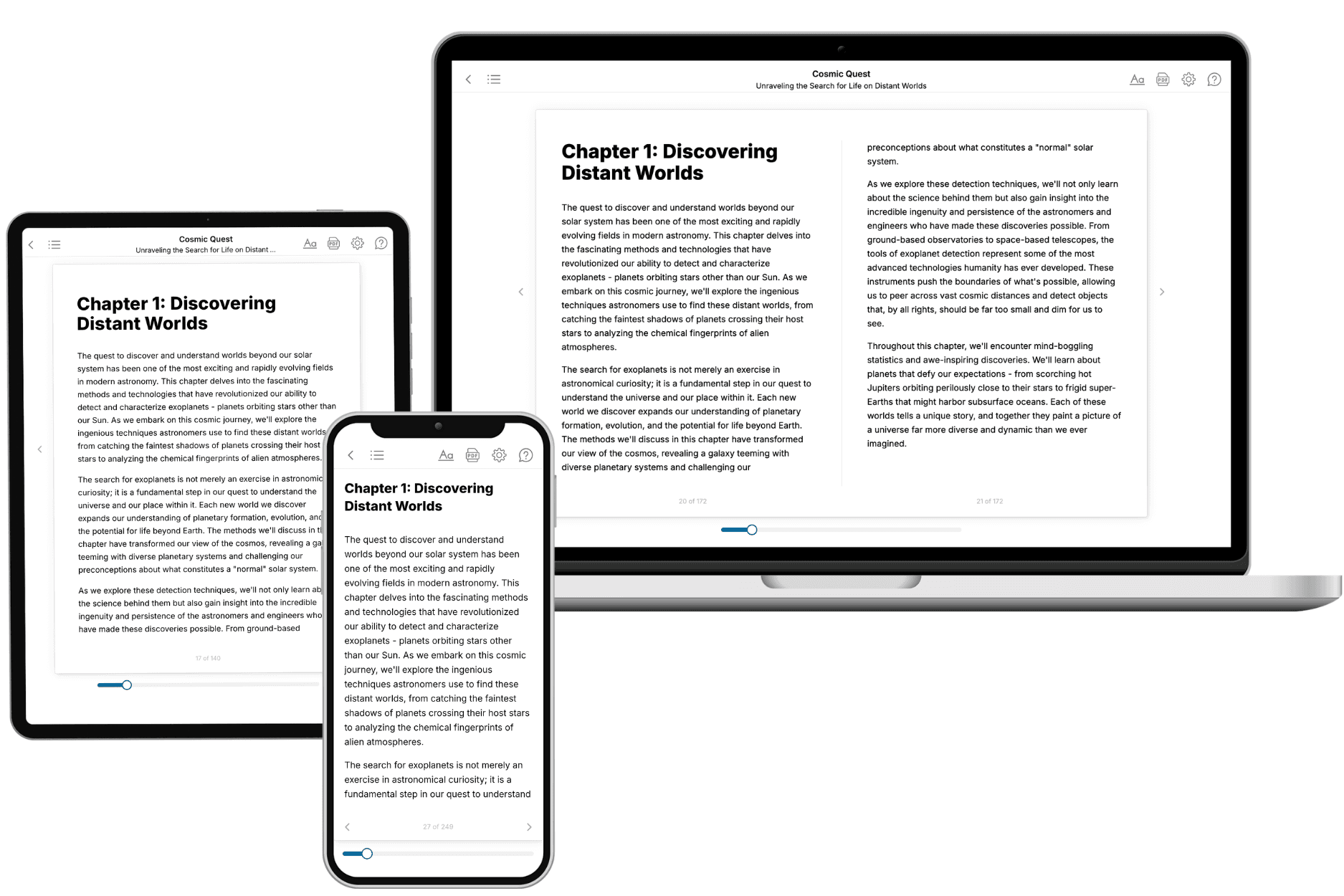
Your book is ready in 10 minutes. Read it online, download as EPUB or PDF, or send to Kindle.
Frequently asked questions
- What is TailoredRead?
TailoredRead creates complete, full-length nonfiction ebooks, written specifically for you. Tell us what you want to learn and why, and TailoredRead writes you a complete ebook on it, with charts, tables, and diagrams throughout. Read it online, on Kindle, or on any e-reader, or download it as a PDF or EPUB. Every book is written fresh the day you order it.
- How is the book tailored to me?
Before anything is written, you answer a few short questions about your goals, your background, and the topics you care about. Your book is then planned around your answers: written at your level, focused on your goals, and covering the topics you chose, instead of the one-size-fits-all book a store sells everyone.
- Will it read like generic AI content?
No. Your book isn't a chat transcript: it's planned chapter by chapter before a single word is written, told in a clear book voice, and explains ideas visually with charts, tables, and diagrams. After writing, every book goes through an editorial pass that polishes chapters so the book reads consistent from start to finish. Judge for yourself: browse thousands of sample books on our Explore Books page.
- How accurate is the content?
Our AI first checks whether your subject needs live research. Niche and fast-moving subjects are researched before writing, and the book plan and chapters are grounded in what it finds. After writing, every book goes through a quality pass that checks its facts and consistency, and researched books list their sources in a Notes section at the back.
- How long is the book?
You choose the length: Comprehensive (250-300 pages), Detailed (150-200 pages), Essential (70-100 pages), or Short (30-50 pages).
- Does the book include visuals?
Yes. Every book includes charts, tables, and diagrams: timelines, checklists, step-by-step guides, decision trees, comparison tables, matrices, and bar charts. A typical book includes dozens of these visual elements.
- Can I read it on Kindle? What formats can I download?
Yes. Every book can be read in our online reader or downloaded as a PDF or EPUB. The EPUB can be opened with Kindle, Apple Books, Kobo, and any e-reader. The Commercial and Author licenses also include an editable Word (DOCX) and Markdown download.
- How much does it cost?
About the price of a regular ebook. The exact price depends on your book's length and complexity, from $2 for the shortest books to $35 for the most comprehensive, and it's shown when you review your book, before you commit to anything. Each book is a one-time purchase, yours to keep, no subscription. Licenses that let you share, teach, or publish your book range from $35.99 to $49.99.
- Can I preview the book before purchasing?
Before you pay, you'll see what your book will cover: the title, a detailed description, the estimated length, and the complete chapter-by-chapter table of contents, so you know what you're getting before you decide. The full text itself is written after you purchase.
- How long does it take to create a book?
About 10 minutes. You can start reading the opening chapters while the rest is still being written.